


Cartoon – Misunderstood


The time is now! Voting in the presidential election will begin in many states in just a few weeks – as early as Sept. 4 in North Carolina. Every state’s regulations and procedures are different, so it is vital that you understand the requirements and opportunities to vote where you live.
Here’s how to make sure you’re ready to vote, and that your vote will count.
Make sure that you are registered to vote at your current address. You may not have voted in a while. You may have moved or changed your name. You may have forgotten when you last registered to vote. Calling or visiting your secretary of state’s office or local Board of Elections may be a good place to start.
You can also visit Vote.org, Rock the Vote, I am a voter or the U.S. Vote Foundation, all nonprofit, nonpartisan websites providing lots of detailed information about voting rights, registration and the process of voting. It took only a few minutes online for me to verify my own registration and voter ID number.
The federal government offers lots of useful voting information, too.
If you’re not registered – whether you have never registered or your registration is out of date – there is still time. September 22 is National Voter Registration Day, when millions of individuals register to vote.
Each state has its own process and deadlines, and you may be able to register online through Vote.org, which can take less than two minutes.
If you’d rather register to vote on paper, download and print a simple form from the federal government, which asks you to provide some personal information, like your name and address. The instructions give state-specific details and provide the mailing address you need to send the form to.
While you’re at it, encourage your friends to register too.
Not everyone who is registered to vote actually casts a ballot. You’re more likely to actually vote if you make a plan.
You’ll need to find out when to vote in person and where to do it. Election Day is Tuesday, Nov. 3, 2020 – but different cities and towns have different voting hours. Many communities have several polling places, and you need to go to the right one, depending on where you live. Make sure you know where to go.
In some places you can vote in person for some number of days ahead of Election Day, often at the main municipal government building. Your town office – and its website – will likely have the dates and location information prominently displayed.
If you don’t want to vote in person, either because of your work or personal schedule, or because of the pandemic, think about voting by mail. Some states will mail you a ballot automatically, either because they conduct their elections by mail or because they have made special provisions to do so as a result of the pandemic. In other states you have to request one – and sometimes you need to provide a specific excuse for wanting to avoid in-person voting.
If you’re voting by mail, you may need to pay postage to send your ballot back in. Call your local election office and ask how much you’ll need – and get the right postage. You can order postage online for free delivery – and splitting the cost of a book of stamps is another great opportunity to share voting with a friend.
In 2016, nearly one-quarter of U.S. votes were cast by mail. Research and evidence show that it is safe and reliable – though with large numbers of people expected to vote by mail this year, it’s best to mail your ballot back as early as possible to make sure it has plenty of time to arrive before it needs to be counted. The U.S. Postal Service recommends mailing your ballot at least a week before the deadline.
Large amounts of mail also might mean you don’t get your ballot in the mail until just before the election. If it arrives with less than a week to go, call your local Board of Elections or municipal clerk immediately to find out what your options are. You may be able to drop off the ballot rather than mailing it in, and you should also still have the option to vote in person, either on or before Election Day.
If you’re worried about the safety of voting by mail, there are plenty of administrative and legal protections for mailed-in ballots, and steep penalties for those who tamper with election mail.
Many people set reminders for all sorts of important things: medical appointments, friends’ birthdays, bill payment dates and so on. Add voting to your calendar – including alerts to request a mail-in ballot, to vote early, to mail your ballot and certainly for Election Day itself.
Every vote that is cast is a vital contribution to the nation’s future. Encourage everyone you know to vote. You can even invite people to your calendar events – or share your plans on social media, in an email to family and friends. Send texts to people you know. Pledge to call 10 people and ask them to vote, and ask each of them to call 10 more people.
If you make your plan and follow the requirements of your state and local government, you can cast your ballot and be certain that your vote will count.
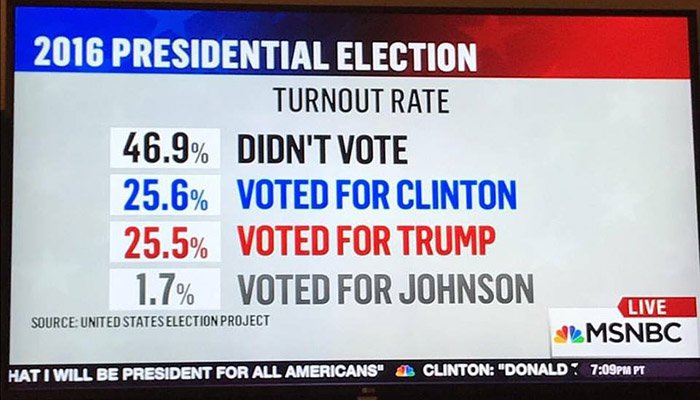
You may encounter people claiming there could be “widespread” voter fraud or that the election is somehow “rigged.” But the biggest problem is that so few people actually vote: In 2016, 40% of eligible American voters didn’t cast a ballot.
It is your right to vote. Exercise that right proudly and make your voice heard.


The results of a survey completed by 1,500 of Beaumont Health’s 5,000 physicians revealed a lack of confidence in the Southfield, Mich.-based system’s leadership and concern about its proposed merger with Advocate Aurora Health, according to Crain’s Detroit Business.
Crain’s reported the results of the survey after the results were presented to Beaumont’s board. The system confirmed this week that it is postponing a vote on the planned merger with Advocate Aurora until physician grievances are addressed.
The survey asked physicians to indicate whether they agreed or disagreed with several statements. Seventy-six percent of the physicians who answered the survey said they strongly or somewhat disagree with the statement “I have confidence in corporate leadership,” while 13 percent said they strongly or somewhat agree and 11 percent said they neither agree nor disagree, according to Crain’s.
Physicians were also asked about the proposed merger with Advocate Aurora, which has dual headquarters in Milwaukee and Downers Grove, Ill. According to Crain’s, 70 percent of physicians said they strongly or somewhat disagree with the following statement: “The proposed merger with Advocate Aurora Health is likely to enhance our capacity to provide compassionate, extraordinary care.” Nine percent of physicians said they somewhat or strongly agree with the statement and 21 percent said they neither agree nor disagree, according to the report.
In a statement to Becker’s Hospital Review, Beaumont said it is working to address the physicians’ concerns.
“Our physicians provided valuable input and feedback to us through the survey,” the health system said. “We take our physicians’ responses seriously and we have already started addressing many of their concerns. We know our talented and skilled physicians, nurses and staff have helped to make Beaumont the region’s leading health system and they are also key to our future. Our caregivers truly live our mission of providing compassionate, extraordinary care, every day. We recognize the importance of having an open dialogue. That’s why we continue to meet with numerous groups of physicians, nurses and staff to listen to them, address their concerns and work together with them to determine the best path forward for Beaumont.”
Beaumont and Advocate Aurora signed a nonbinding letter of intent in June to create a health system spanning Michigan, Wisconsin and Illinois. The merger would create a $17 billion system with 36 hospitals.
Martina Navratilova was once asked,
“How do you maintain your focus, physique and sharp game even at the age of 43?”

She gave a humble reply, “The ball doesn’t know how old I am”. You need to stop yourself from stopping yourself.
Every game in life is actually played on a 6-inch ground – the space between your two ears.
We don’t live in bungalows, duplexes, or flats. We live in our mind which is an unlimited area. Life is great when things are sorted and uncluttered there. Keeping the mind messy with hatred growing on the table, regrets piling up in the corner, expectations boiling in the kitchen, secrets stuffed under the carpet, and worries littered everywhere ruin this real home.
The key factor to performing well in life and in every arena is the ability to control the quality and quantity of your “internal dialogue”.
Performance is potential minus internal interference.

Live in peace, not in pieces.
https://www.leadershipnow.com/leadingblog/2012/04/all_in_its_culture_that_drives.html
IN THE New York Times, Stephen I. Sadove, chairman and chief executive of Saks Inc., explains that it is culture that drives results:
It starts with leadership at the top, which drives a culture. Culture drives innovation and whatever else you’re trying to drive within a company — innovation, execution, whatever it’s going to be. And that then drives results.
When I talk to Wall Street, people really want to know your results, what are your strategies, what are the issues, what it is that you’re doing to drive your business. They’re focused on the bottom line. Never do you get people asking about the culture, about leadership, about the people in the organization. Yet, it’s the reverse, because it’s the people, the leadership, the culture and the ideas that are ultimately driving the numbers and the results.
While we know that our most important resource is our people, it’s not so easy to get people “all in”—convincing people to “truly buy into their ideas and the strategy they’ve put forward, to give that extra push that leads to outstanding results.”
All In by Adrian Gostick and Chester Elton explains why some managers are able to get their employees to commit wholeheartedly to their culture and give that extra push that leads to outstanding results and how managers at any level, can build and sustain a profitable, vibrant work-group culture of their own. All In takes the principles found in their previous books—The Orange Revolution and The Carrot Principle—and expands on them and places them in a wider context.
They begin by explaining that it all rests on the “belief factor.” People want to believe, but given the fact that “failure could cost them their future security why shouldn’t they be at least a little dubious about your initiatives?” But belief is key. “As leaders we must first allow people on our teams to feel like valuable individuals, respecting their views and opening up to their ideas and inputs, even while sharing a better way forward. It’s a balancing act that requires some wisdom.”
To have a culture of belief employees must feel not only engaged, but enabled and energized. What’s more, “each element of E+E+E can be held hostage by an imbalance in the other two.”
The authors have created a 7 step guide to develop a culture where people buy-in:
Define your burning platform. “Your ability to identify and define the key “burning” issue you face and separate it from the routine challenges of the day is the first step in galvanizing your employees to believe in you and in your vision and strategy.”
Create a customer focus. “Your organization must evolve into one that not only rewards employees who spot customer trends or problems, but one that finds such challenges invigorating, one that empowers people at all levels to respond with alacrity and creativity.”
Develop agility. “Employees are more insistent than ever that their managers see into the future and do a decent job of addressing the coming challenges and capitalizing on new opportunities.”
Share everything. “When we aren’t sure what’s happening around us, we become distrustful….In a dark work environment, where information is withheld or not communicated properly, employees tend to suspect the worst and rumors take the place of facts. It is openness that drives out the gray and helps employees regain trust in culture.”
Partner with your talent. “Your people have more energy and creativity to give. There are employees now in your organization walking around with brilliant ideas in their pocket. Some will never share them because they don’t have the platform to launch those ideas on their own. Most, however, will never reveal them because they don’t feel like a partner in the organization.”
Root for each other. “Our research shows incontrovertible evidence that employees respond best when they are recognized for things they are good at and for those actions where they had to stretch. It is this reinforcement that makes people want to grow to their full shape and stature.”
Establish clear accountability. “To grow a great culture, you need to cultivate a place where people have to do more than show up and fog a mirror; they have to fulfill promises—not only collectively but individually.” And this has to be a positive idea.
Gostick and Elton explain that the “modern leader provides the why, keeps an ear close to those they serve, is agile and open, treats their people with deference, and creates a place where every step forward is noted and applauded.”
The authors skillfully examine high-performing cultures and present the elements that produce them. A leader at any level can implement these ideas to drive results. A great learning tool.
https://www.leadershipnow.com/leadingblog/2020/08/five_frequencies_that_are_driv.html
IS YOUR CULTURE holding you back? Are the signals you are broadcasting as a leader, creating the culture you want—you need?
Culture experts Jeff Grimshaw, Tanya Mann, Lynne Viscio, and Jennifer Landis say in Five Frequencies that to make a good culture great, leaders must deliberately transmit strong and steady signals. Leaders create culture for better or worse, through the signals they are consciously or unconsciously broadcasting over five frequencies. To change a culture, you need to broadcast a strong, steady signal on each of these frequencies:
Their Decisions and Actions
Example is everything—especially when it is inconvenient and costs you something. If it is truly a “value,” what are you willing to pay for it? Think in the long-term. “Go long-term greedy.” “This can mean avoiding ethical shortcuts, hiring people smarter than you, delegating more, and helping prepare high performers for success beyond your team.”
What They Reward and Recognize
Reward the behaviors you want to see more of. “You are responsible for the dysfunctional behaviors that so bother you.” Everyone brings their emotions to work. “Understand and leverage the emotional algorithms that motivate your people.” Understand that it is all relative, scarcity and timing matter, and everyone appreciates being appreciated.
What They Tolerate (Or Don’t)
“Leaders are ultimately defined by what they tolerate.” Be sure the boundaries are clearly defined as well as the consequences. And don’t make excuses because you don’t want to feel bad or you can’t hold a particular star performer accountable, or because it’s really no big deal. It’s all-important, and consistency is vital.
What you tolerate or don’t tolerate is a balance. “When you decide to become more tolerant of some things (like where people work), you must become, if anything, less tolerant of other things (like the work not getting done). As Harvard professor Gary P. Pisano puts it:”
A tolerance for failure requires an intolerance for incompetence. A willingness to experiment requires rigorous discipline. Psychological safety requires comfort with brutal candor. Collaboration must be balanced with individual accountability.
How They Show Up Informally
When you show up, you “bring the weather.” People notice a leader’s tone, mood, and focus. They are weather in any organization. What do kind of weather do you bring?
When considering how you show up, the authors advise you to relinquish your raft. They introduce the concept with a story:
A traveler on an important journey comes to a raging river. It seems there’s no way to cross. And that’s terrible news because this is an important journey. Fortunately, she spots a rickety old raft on the bank, off in the brush. With trepidation, she pushes the raft into the water, hops on, and amazingly, uses it to reach the other side. She’s able to continue her important journey. She thinks: I may encounter other raging rivers down the path, so I must keep this raft. So she carries the raft on her back as she continues her journey. It’s a heavy raft, and it slows her down. When fellow travelers point this out, she’s incredulous: “You don’t understand,” she says. “If it wasn’t for this raft, I wouldn’t be where I am today!” And she’s right. That’s literally true. The problem is: If she doesn’t put down the raft, she may not get to where she needs to go on her important journey.
It’s your baggage. It’s your reactive tendencies that may have worked for you in the past that are no longer getting you where you need to be. Reactive tendencies like going with the flow, control, the need to be the hero, or being overly protective of your ego, eventually bring you diminishing returns.
Their Formal Communications
Formal communications don’t work on their own, but they serve to reinforce the other four frequencies. Approach your communications as a story to make it memorable. And say it over and over. “Go past the puke point because that’s often the turning point where employees are just starting to truly get it.”
Have a backstory. Know where you came from. “Look for stories of people demonstrating the behavior you want to see more of, especially when it’s not easy for them to do so.” Fill the communication vacuums. “Don’t push your people to the black market.”
Know, Feel, Do
To establish a reliable culture, you need to measure where you are and where you need to go. The authors call it Know, Feel, Do: what employees know, what they feel, and what they do.
The authors advise us to work backward and forwards. Looking forward, they ask, “What is the culture that makes this outcome possible and probable? What will employees consistently KNOW? FEEL? DO?” Looking at each of the five signals, what will you need to broadcast to your employees in each of the five signal areas?
It is also necessary to look backward and see where your current culture came from. What did each of the signals contribute to your current culture? It will help you to know what to change in order to close the gap from where to are to where you want to be.

 HENRY KOTULA