Trump Medicaid proposal sparks bipartisan warnings

Trump Medicaid proposal sparks bipartisan warnings

Image result for Medicaid cuts

Republicans and Democrats alike are warning that a recent proposal from the Trump administration could lead to billions of dollars in cuts to Medicaid, forcing states to eliminate benefits, reduce enrollment or cut payments to health providers.

In a rare sign of unity, hospitals, insurers, patient advocates and members of both political parties are on the same page in their opposition to the Trump administration’s plan, and most have urged the administration to withdraw a proposal they say would “cripple” Medicaid, the federal-state partnership that provides health care for the poor.

The proposal hasn’t received as much attention as the administration’s other efforts to reform Medicaid, such as implementing work requirements, but it could have the most damaging effect because of how far-reaching it is, experts argue.

“This is high stakes,” said Matt Salo, executive director of the National Association of Medicaid Directors, whose board urged the administration to completely withdraw the proposal.

Trump allies have also voiced their concerns.

“The Medicaid fiscal accountability rule is a concern to my governor, and the stakeholders are worried the rule as proposed could lead to hospital closures, problems with access to care and threaten the safety net,” Sen. John Cornyn (R-Texas) told Department of Health and Human Services Secretary Alex Azar last week during a hearing on the agency’s fiscal 2021 budget request.

Sen. Mark Warner (D-Va.) warned during the same hearing that the proposal could “dramatically affect Medicaid eligibility” and “wreak havoc on budgets in red states and blue states all across the country.”

The proposal would overhaul the complex payment arrangements states use to raise money for their Medicaid programs — funding that is then matched by the federal government.

The administration argues some states use questionable methods of raising funds so they can leverage more money from Washington. One approach used by states consists of taxing providers who stand to benefit from more Medicaid funds flowing into the state.

But governors and state Medicaid directors argue those long-standing arrangements are both legal and necessary as states look for ways to keep up with escalating health care costs.

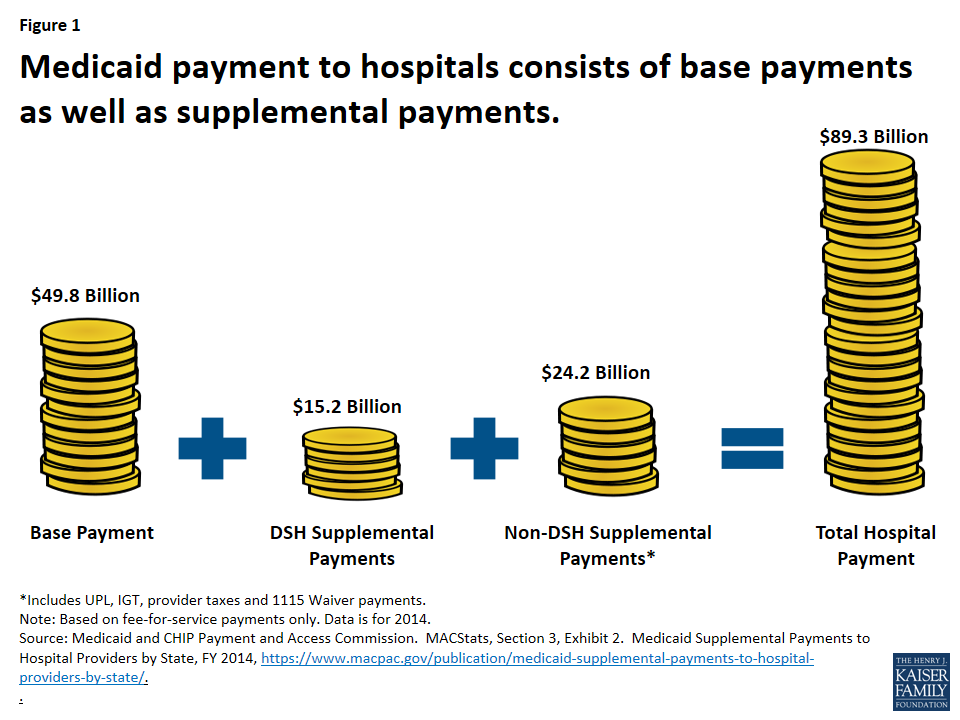
The proposal would allow the Centers for Medicare and Medicaid Services (CMS) to limit the extra payments from states to providers serving high numbers of uninsured patients or Medicaid patients. Opponents say such changes could result in providers deciding not to accept Medicaid patients.

Dozens of states wrote public comments to CMS Administrator Seema Verma, urging her to withdraw the proposal, including conservative states that are typically supportive of her work.

“If the rule is finalized as proposed, it will immediately disrupt the Medicaid program in Alabama and we believe across the country,” wrote Stephanie McGee Azar, commissioner of the Alabama Medicaid Agency, who is not related to Alex Azar. She added that it would have “unintended consequences that will affect access to care in Alabama to our most vulnerable populations.”

Florida Gov. Ron DeSantis’s (R) administration warned the effect of the proposal would be “immediate and crippling.”

Meanwhile, a letter signed by state Medicaid officials in Michigan, Missouri, New York, Oregon, Pennsylvania, South Carolina, Tennessee, Illinois, Louisiana, Colorado, Pennsylvania and Washington argued the proposal would likely “force states to cut Medicaid eligibility, benefits and/or provider payments, which would have the effect of decreasing low-income individuals’ access to important health care services.”

The public comment period closed Jan. 31. CMS now needs to go through the 4,000 comments before deciding whether to finalize the rule.

Verma and her supporters argue the proposal is not intended to cut Medicaid but instead aims to improve transparency and accountability in the $600 billion a year program.

“It’s not surprising providers and the states are objecting when they are getting federal money for free,” argued Brian Blase, who previously served on President Trump’s National Economic Council, where he worked on health care issues. “They don’t want transparency and they don’t want their financing gimmicks checked.”

Blase predicted the rule, if implemented as proposed, would reduce Medicaid spending by a “very small amount.”

Verma also pushed back on opponents, criticizing a study commissioned by the American Hospital Association that estimated the rule could reduce Medicaid funding by as much as $49 billion annually.

“This proposed rule is not intended to reduce Medicaid payments, and alarmist estimates that this rule, if finalized, will suddenly remove billions of dollars from the program and threaten beneficiary access are overblown and without credibility,” she wrote in a blog post last week.

Some experts disagree with her, pointing to other actions the administration has taken on Medicaid, including work requirements.

“I think one should view this rule not in isolation, but in combination with the broader agenda of this administration on Medicaid,” said Edwin Park, a research professor at Georgetown University McCourt School of Public Policy. “Their ultimate agenda is about cutting the Medicaid program, changing the Medicaid program as it currently stands.”

State officials have complained that they were not asked for their input before the proposal was released, nor did CMS conduct a regulatory analysis of potential effects.

A nonpartisan agency that advises Congress on Medicaid policy wrote to Alex Azar advising he not implement the rule because CMS has not fully assessed the possible effects.

“The Commission is concerned that the proposed changes could reduce payments to providers in ways that could jeopardize access to care for Medicaid enrollees,” the advisory group wrote.

For example, Maine’s Department of Health and Human Services has planned to make $86 million in supplemental payments to hospitals in fiscal 2020, which began July 1.

The rule “would require significant changes to MaineCare and could force the State to cut back on eligibility or services,” Jeanne Lambrew wrote in the department’s public comment.

The administration hasn’t given any signals that it plans to back down from the proposal, despite considerable pushback from stakeholders, states and bipartisan members of Congress.

“We will work with states to help them recreate their practices in ways that are in conformity with the statute and try to be fair and equitable in all our dealings with states,” Alex Azar told lawmakers last week on Capitol Hill.



Budget Cuts Target Medicaid, Medicare

https://www.healthcarefinancenews.com/news/president-trumps-budget-cuts-target-medicaid-medicare?mkt_tok=eyJpIjoiTW1JMFptSmhNR1F4WVRNeSIsInQiOiJOK3RWYTlrV0djQ1JEYWcyRlhqZDlHVGF2ejRRWXE3UDdHaGpcL2R5bVwvMHlHOUgyY0V0d1wvUE8rK3pMRlFFSXJsZGEzTVwvRVZRVHh3OGdLT0pOWG5LVDZaNFNadTVmYVFWdkFTamFcL2JhZUpPd3lia1hySCtzVlhROXpmWTh1Zm1mIn0%3D

Image result for medicare and medicaid budget cuts

Blueprint includes cuts for care in hospital outpatient departments, teaching hospitals and post-acute care providers, AHA says.

President Trump’s proposed $4.8 trillion budget slashes billions of dollars from Medicaid, food stamps and other safety net programs in an attempt to shrink the federal deficit.

Medicaid and the Affordable Care Act see about $1 trillion in cuts over the next decade, according to The Hill. The budget eliminates the enhanced federal match for Medicaid expansion enrollees. An additional $150 billion is expected to be shaved off of Medicaid from the implementation of work requirements, which is expected to result in people losing their healthcare coverage.

The “President’s health reform vision” to ax the Affordable Care Act takes $844 billion over 10 years from the ACA, the report said.

The decrease in federal spending on Medicare would total about $750 billion over 10 years, but that includes shifting two programs out of the budget. After accounting for those changes, the reduction is just over $500 billion, according to CNN. Much of that cut comes from reducing payments to providers.

The budget needs Congressional approval and is not expected to get past a Democratic-controlled House without changes.

House Speaker Nancy Pelosi tweeted: “The budget is a statement of values. Once again, the #TrumpBudget makes it painfully clear how little the President values the good health, financial security and well-being of America’s hard-working families.”

Ways and Means Committee Chairman Richard E. Neal, D-MA, said, “When I saw the President’s proposed budget today, I felt an immense sense of relief – relief that there is absolutely no chance of his ruthless cuts to critical programs ever becoming law. Slashing billions from Medicare and Medicaid will only make it harder for Americans to access the healthcare they need.

Cutting nutrition assistance and Social Security benefits for the disabled won’t enable people to get back on their feet financially.”

Senator Lamar Alexander, R-Tenn said, “Under the Constitution, it is Congress’ job to set spending priorities and pass appropriations bills, and as a member of the Senate Appropriations Committee, my priorities will continue to be making sure our national defense, national laboratories, the National Institutes of Health and national parks have the resources they need. I am encouraged to see the president is calling to end surprise medical billing.”

The budget adds money to the National Institutes of Health. The NIH will invest $50 million for new research on chronic diseases, using AI and related approaches, according to the White House briefing. It adds $7 billion over 10 years to fight opioid abuse and for mental health in the Medicaid program.

WHY THIS MATTERS

Cuts to Medicare and Medicaid mean uncompensated care to providers, or a reduction in the government payments.

The American Hospital Association said, “The budget request, which is not binding, proposes hundreds of billions of dollars in reductions to Medicare and Medicaid over 10 years.”

AHA President and CEO Rick Pollack said, “Every year, we adapt to a constantly changing environment, but every year, the Administration aims to gut our nation’s healthcare infrastructure. The proposals in this budget would result in hundreds of billions of dollars in cuts that sacrifice the health of seniors, the uninsured and low-income individuals. This includes the one in five Americans who depend on Medicaid, of which 43% of enrollees are children.

“In addition to the hundreds of billions in proposed reductions to Medicare, the blueprint includes cuts we strongly oppose for care in hospital outpatient departments, teaching hospitals and post-acute care providers.

These cuts fail to recognize the crucial role hospitals serve for their communities, such as providing 24/7 emergency services. Post-acute cuts threaten care for patients with the most medically complex conditions.”


President Trump releases his budget and suffers a loss in court

https://mailchi.mp/0ee433170414/the-weekly-gist-february-14-2020?e=d1e747d2d8

Image result for healthcare policy

This week, the Trump administration unveiled its $4.8T federal budget for the upcoming fiscal year, including major cuts to spending on healthcare programs.

Rather than proposing specific spending cuts, however, the President’s budget calls for Congress to put forward plans to “advance the President’s health reform vision”—which presumably includes the administration’s recent proposal to allow states to partially convert Medicaid to a block-grant structure—with promised savings of $844B over the coming decade.

Coupled with additional proposals targeting specific changes to Medicaid reimbursement (including further implementation of work requirements for Medicaid enrollees) and reductions in subsidies for Affordable Care Act (ACA) marketplace consumers, the budget envisions a total of $1T in healthcare cuts over the next 10 years.

Complicating the administration’s vision for Medicaid transformation, however, a federal appeals court on Friday unanimously ruled that the version of Medicaid work requirements proposed by Arkansas is unlawful, because it does not further the statutory purpose of the Medicaid program.

Although the ruling does not impact work requirements programs elsewhere, it does cast a shadow over the administration’s larger attempt to encourage states to implement such policies.

Like the broader fate of the ACA, the future of Medicaid work requirements will ultimately lie in the hands of the US Supreme Court.

The President’s budget, however, will face immediate opposition in Congress, where House Speaker Nancy Pelosi (D-CA) called it “a complete reversal of the promises [President Trump] made in the campaign and a contradiction of the statements he made in the State of the Union.”

As the general election approaches, voters will eventually have to choose between the conservative vision for healthcare underpinning the President’s budget, and progressive proposals being advanced by Democratic candidates. With healthcare being the number one issue on the mind of the electorate, that choice could not be more stark.


Appeals court strikes down Trump approval of Medicaid work requirements

Appeals court strikes down Trump approval of Medicaid work requirements

Image result for Appeals court strikes down Trump approval of Medicaid work requirements

A federal appeals court on Friday struck down the Trump administration’s approval of Medicaid work requirements in Arkansas, the latest legal blow to one of President Trump‘s signature health initiatives. 

The U.S. Court of Appeals for the D.C. Circuit affirmed a lower court ruling that the approval of the work requirements was “arbitrary and capricious.

More than 18,000 people lost coverage in Arkansas due to the work requirements before they were halted by a lower court.

The court found that the Trump administration disregarded the statutory purpose of Medicaid — to provide health coverage — and did not adequately account for the coverage losses that would result from the work requirements. 

“Failure to consider whether the project will result in coverage loss is arbitrary and capricious,” Judge David Sentelle, an appointee of President Reagan, wrote in the opinion.

Requiring Medicaid recipients to work or else lose coverage is a top priority of Centers for Medicare and Medicaid Services Administrator Seema Verma. She argues that the policy helps lift people out of poverty by getting them jobs and out of Medicaid into employer-based insurance.

But Democrats and health care advocates have denounced the move, saying it imposes burdensome paperwork requirements on low-income people that cause them to lose coverage even if they are working.

The policy has also faced a string of legal losses, with courts ruling that Congress would need to act to authorize the work requirements. 

Arkansas was the only state where the requirements went into effect before being blocked by the courts. Several other states’ efforts were approved, but the initiatives have been halted as the issue works its way through the courts.

“The Court recognized the tragic harm that these work requirements have caused people in Arkansas doing their best to get ahead,” said Kevin De Liban, an attorney at Legal Aid of Arkansas, which helped challenge the requirements. “Now, more than two hundred thousand Arkansans on the program can rest easier knowing that they’ll have health care when they need it.”

Conservative changes to Medicaid have been a leading priority of the Trump administration, which also recently announced plans to let states block-grant their funding for the program. That move was also denounced by Democrats as inevitably leading to coverage losses and is also likely to be challenged in court.

Kentucky had originally also been part of the work requirement litigation, but a Democratic governor, Andy Beshear, was elected last year and ended the initiative.


President Trump’s budget cuts target Medicaid, Medicare

https://www.healthcarefinancenews.com/news/president-trumps-budget-cuts-target-medicaid-medicare?mkt_tok=eyJpIjoiWVRnM01UZzNaR0V6TTJFNSIsInQiOiJ6aXpsQnNCRjhHdCs4SnN0UytlZnJVUlZUeFdreEZyQ2V6RWE0YklvYmFMOGJnbWpXT3ZHeG0rOHMwNkJPcE9rMUlGb3NzVkpId3NrZHNkZmR2VlZISXZCVGgrbU94cFV3aVlNR1NYamlhazF1R1kzaXd3RXVISm9OSGJoYmVrVCJ9

Image result for medicaid cuts

Blueprint includes cuts for care in hospital outpatient departments, teaching hospitals and post-acute care providers, AHA says.

President Trump’s proposed $4.8 trillion budget slashes billions of dollars from Medicaid, food stamps and other safety net programs in an attempt to shrink the federal deficit.

Medicaid and the Affordable Care Act see about $1 trillion in cuts over the next decade, according to The Hill. The budget eliminates the enhanced federal match for Medicaid expansion enrollees. An additional $150 billion is expected to be shaved off of Medicaid from the implementation of work requirements, which is expected to result in people losing their healthcare coverage.

The “President’s health reform vision” to ax the Affordable Care Act takes $844 billion over 10 years from the ACA, the report said.

The decrease in federal spending on Medicare would total about $750 billion over 10 years, but that includes shifting two programs out of the budget. After accounting for those changes, the reduction is just over $500 billion, according to CNN. Much of that cut comes from reducing payments to providers.

The budget needs Congressional approval and is not expected to get past a Democratic-controlled House without changes.

House Speaker Nancy Pelosi tweeted: “The budget is a statement of values. Once again, the #TrumpBudget makes it painfully clear how little the President values the good health, financial security and well-being of America’s hard-working families.”

Ways and Means Committee Chairman Richard E. Neal, D-MA, said, “When I saw the President’s proposed budget today, I felt an immense sense of relief – relief that there is absolutely no chance of his ruthless cuts to critical programs ever becoming law. Slashing billions from Medicare and Medicaid will only make it harder for Americans to access the healthcare they need.

Cutting nutrition assistance and Social Security benefits for the disabled won’t enable people to get back on their feet financially.”

Senator Lamar Alexander, R-Tenn said, “Under the Constitution, it is Congress’ job to set spending priorities and pass appropriations bills, and as a member of the Senate Appropriations Committee, my priorities will continue to be making sure our national defense, national laboratories, the National Institutes of Health and national parks have the resources they need. I am encouraged to see the president is calling to end surprise medical billing.”

The budget adds money to the National Institutes of Health. The NIH will invest $50 million for new research on chronic diseases, using AI and related approaches, according to the White House briefing. It adds $7 billion over 10 years to fight opioid abuse and for mental health in the Medicaid program.

WHY THIS MATTERS

Cuts to Medicare and Medicaid mean uncompensated care to providers, or a reduction in the government payments.

The American Hospital Association said, “The budget request, which is not binding, proposes hundreds of billions of dollars in reductions to Medicare and Medicaid over 10 years.”

AHA President and CEO Rick Pollack said, “Every year, we adapt to a constantly changing environment, but every year, the Administration aims to gut our nation’s healthcare infrastructure. The proposals in this budget would result in hundreds of billions of dollars in cuts that sacrifice the health of seniors, the uninsured and low-income individuals. This includes the one in five Americans who depend on Medicaid, of which 43% of enrollees are children.

“In addition to the hundreds of billions in proposed reductions to Medicare, the blueprint includes cuts we strongly oppose for care in hospital outpatient departments, teaching hospitals and post-acute care providers. These cuts fail to recognize the crucial role hospitals serve for their communities, such as providing 24/7 emergency services. Post-acute cuts threaten care for patients with the most medically complex conditions.”


Trump budget calls for cutting Medicaid, ACA by about $1 trillion

Trump budget calls for cutting Medicaid, ACA by about $1 trillion

President Trump’s proposed budget includes about $1 trillion in cuts to Medicaid and the Affordable Care Act over a decade, analysts said.

The budget released Monday includes $844 billion over 10 years in cuts from the “President’s health reform vision,” a stand-in for the repeal and replacement of ObamaCare. There are also more than $150 billion in additional cuts from implementing Medicaid work requirements and other changes to the program, which would result in some people losing coverage if they did not meet the requirements.

The cuts drew swift condemnation from Democrats, who pointed out that Trump himself promised not to cut Medicaid, the health insurance program for the poor, during his 2016 campaign.

“I’m not going to cut Medicare or Medicaid,” Trump said in 2015, adding, “Every other Republican is going to cut it.”

“Americans’ quality, affordable health care will never be safe with President Trump,” Speaker Nancy Pelosi (D-Calif.) said in a statement on the budget proposal.

A senior administration official defended the Medicaid cuts, arguing reforms will help preserve the program for people who need it most. “The Budget protects and preserves Medicaid by putting it on a sustainable path, so it can continue to provide vital services to those who need it the most, including children, the disabled, elderly and pregnant women,” the official said.

In contrast to previous years, the budget does not spell out how Trump proposes to repeal and replace ObamaCare. Instead, the budget gives a savings number of $844 billion that could come from any number of possible changes to Medicaid or the health law’s exchanges and subsidies. 

One policy that is specified is that the budget calls for ending the additional federal funding that helped states expand Medicaid to cover more people under the Affordable Care Act, with officials arguing states can step up their spending if they want to expand the program.

Payers, providers urge CMS to scrap rule targeting supplemental Medicaid payments

https://www.healthcaredive.com/news/payers-providers-urge-cms-to-scrap-rule-targeting-supplemental-medicaid-pa/571573/

Image result for supplemental Medicaid payments"

Dive Brief:

  • Payer and provider lobbying groups are urging CMS to pull back a proposed rule that aims to clamp down on supplemental Medicaid payments in order to contain spending growth.
  • The American Hospital Association wants CMS to withdraw the rule, warning it would “severely curtail the availability of health care services to millions of individuals,” according to comments it submitted in response to the proposal.
  • The insurance lobby wants CMS to start with a “more limited initial step” and focus on gathering data so it can “fully assess the current landscape of state Medicaid funding and payment mechanisms,” America’s Health Insurance Plans said in its comments. The Association for Community Affiliated Plans also asked the agency to withdraw the rule.

Dive Insight:

A sharp rise in these supplemental Medicaid payments caught the attention of CMS as spending has continued to increase and much of the growth has come from the federal share of the program, according to the agency.

These supplemental payments from the federal government to the states have risen from 9.4% of all other payments in fiscal year 2010 to 17.5% in 2017. This growth comes with “an urgent responsibility to ensure sound stewardship and oversight of the Medicaid program,” CMS said in November as it rolled out the proposed rule called Medicaid Fiscal Accountability Regulation.

A 2015 Government Accountability Office report found that states are increasingly relying on providers to help them finance the state’s portion of Medicaid funding. “A small number of providers supplied funds to the state for the nonfederal share, generally through intergovernmental fund transfers or provider taxes, and in turn received large supplemental payments, enabling states to obtain billions of dollars in additional federal matching funds,” according to the report.

CMS argues the proposed rule, which calls for states to provide more detailed information on these supplemental payments, including provider-specific payment data, would help beef up its oversight of the program.

AHA warned, however, the rule could cut Medicaid payments to hospitals by up to $31 billion annually, or nearly 17% of total hospital program payments. The group also argued the changes violate the Administrative Procedures Act and due process protections in the Constitution.

The Association of American Medical Colleges also opposed the rule, saying it would “limit the federal government’s congressionally mandated responsibility to the Medicaid program and could result in reductions in coverage, access, and quality care for the millions of vulnerable patients who rely on this critical program.”

CMS and the GAO report have noted a lack of data about these payments once they reach the states, making it hard to do any sort of analysis. In fact, GAO complained that the state of California did not have data on these payments for the agency to do an assessment.


Public Charge Rule Could Erode Enrollment in Insurance Coverage

Public Charge Rule Could Erode Enrollment in Insurance Coverage

Mother and baby at clinic with doctor. Baby is looking directly into the camera.

In a 5-4 vote reflecting the ideological split among the justices, the US Supreme Court on January 27 decided to allow the Trump administration to commence enforcement (PDF) of its “public charge” rule nationwide. Only Illinois, where a statewide injunction is currently in effect, will not begin enforcing the rule. The regulation was slated to take effect last October, but federal judges in California, Illinois, Maryland, New York, and Washington blocked its implementation after states and immigrant rights groups challenged its legality. Federal appeals courts later lifted all but New York’s nationwide injunction and Illinois’ statewide injunction. The Supreme Court has now “stayed,” or put on hold, New York’s injunction, allowing the rule to take effect while the litigation continues.Essential Coverage

The US Citizenship and Immigration Services agency said the new rule will become effective February 24.

The public charge rule sparked controversy because it “would expand the government’s ability to refuse green cards or visas for legal immigrants determined to be a ‘public charge,’ or dependent on public assistance,” Susannah Luthi explained in Politico. “Those using or likely to use Medicaid, food stamps, and other safety-net programs would face greater scrutiny from immigration officials.”

Experts have warned of a “chilling effect” among immigrant communities, meaning that even those who are not subject to the public charge rule could disenroll or avoid public benefits out of fear. The Institute for Community Health estimated that 195,000 to 455,000 California children in need of medical attention could leave Medi-Cal if the rule takes effect. Including adults, this estimate grows to between 317,000 and 741,000 Californians disenrolling from Medi-Cal, according to researchers from UCLA and UC Berkeley (PDF).

The chilling effect has been documented on a national scale. According to the Urban Institute, in 2018, the year when the Trump administration proposed expanding the public charge rule, about 14% of adults in immigrant families reported that fear prompted them or a family member not to apply for a public benefit program or to disenroll from one. Of the adults who experienced chilling effects, 42% said they or their family members did not participate in Medicaid or the Children’s Health Insurance Program.

Soon after the rule was finalized last year, Eisner Health, a community clinic in Los Angeles, started getting phone calls from patients enrolled in Medi-Cal and CalFresh who wanted to end their families’ coverage, Claudia Boyd-Barrett reported in California Health Report. Many of those patients were not yet permanent residents or were members of mixed immigration status families who feared being penalized for using public benefits.

New Rule Doesn’t Apply to Many Immigrants

It is important to note that many immigrants are not subject to the new public charge rule. “It is urgent that all of us working with immigrant communities — via government, legal aid, health care, and more — have accurate and accessible information for families,” Sandra R. Hernández, president and CEO of CHCF, wrote on Twitter.

Mark Ghaly, California Health and Human Services Agency secretary, released a statement emphasizing that immigrant families should learn their rights. “You can find a list of nonprofit organizations providing free legal immigration services on the California Department of Social Services (CDSS) website, here,” Ghaly said.

CDSS offers a list of legal services providers across California who can assist with public charge questions. Protecting Immigrant Families (a partnership of the National Immigration Law Center and The Center for Law and Social Policy) also has resources on the public charge rule.

Following the Supreme Court’s order to stay the nationwide injunction, California Attorney General Xavier Becerra reiterated his commitment to fighting the rule. “We are a nation of immigrants, so we will lean forward in the face of heartless attacks on working families,” Becerra said in a statement. “Together, we’ll continue our fight to stand up for the right of each and every person who calls the United States their home.”

The legal challenges to the public charge rule will continue to move forward in courts around the nation — including in California — the New York Times’s Adam Liptak reported.

Medicaid Block Grants Could Reduce Access for Many

The Trump administration has announced its plan to let states volunteer to convert a portion of their Medicaid funding into block grants. The program, which has been branded a “Healthy Adult Opportunity,” represents a radical change in financing for Medicaid. Medicaid programs, which are operated by states with significant federal funding and oversight, constitute the nation’s health insurance program for Americans with low incomes. Covering over 75 million people, or one in five Americans, Medicaid programs provide services to 83% of children from low-income families, 48% of children with special health care needs, and 45% of nonelderly adults with disabilities.

On January 30, the administrator of the US Centers for Medicare & Medicaid Services, Seema Verma, sent to state Medicaid directors a letter (PDF) about the new block grant program. Verma gave states “the possibility of trading away an entitlement program that expands and contracts depending on how many poor people need the government health coverage,” Amy Goldstein wrote in the Washington Post. “In exchange, for able-bodied adults in the program, states could apply to receive a fixed federal payment and freedom from many of the program’s rules.”

Additionally, participating states would be allowed to limit the health benefits and drugs offered by their Medicaid programs, Rachel Roubein and Dan Diamond reported for Politico. According to one official, patients with behavioral health needs or HIV would be protected under the new plan.

Criticism from Medicaid advocates was swift. Twenty-seven patient and consumer groups, including the American Lung Association, American Cancer Society, and National Alliance on Mental Illness, issued a statement expressing strong opposition to the new guidance. “Block grants and per capita caps will reduce access to quality and affordable health care for patients with serious and chronic health conditions and are therefore unacceptable to our organizations,” they wrote.

“Worst Medicaid Idea Ever”

Frederick Isasi, executive director of Families USA, said in a statement, “Having spent many years working with governors and Medicaid programs, block grants are possibly the worst Medicaid idea ever presented to states by a federal administration. They would allow the federal government to off-load shared Medicaid responsibility at the expense of deep cuts to state budgets, vital programs supported by states, and the people who rely on those programs.”

Joan Alker, executive director and a cofounder of Georgetown University’s Center for Children and Families, warned in a statement that “if states accept a fixed cap on federal funding to meet their health care needs, they may be able to get by in the short term, but they put the health of their citizens and future state budgets at serious risk down the road.”

The block grant program is unlikely to affect California, which has invested heavily in expanding Medi-Cal access and is not expected to apply to participate.

Nonetheless, the block grant proposal shows that the Trump administration continues to prioritize changes that weaken the foundation of the nation’s health care safety net and could dramatically reduce health coverage for millions of Americans with low incomes.


Health care is Iowa’s only winner right now

https://www.axios.com/newsletters/axios-vitals-ded63eb6-2431-48d0-a186-2f3b52417f2f.html?utm_source=newsletter&utm_medium=email&utm_campaign=newsletter_axiosvitals&stream=top

Image result for health policy"

Iowa Democrats reported last night that their biggest priorities were beating President Trump and health care — but the meltdown of their election reporting systems left their presidential choices unresolved.

Why it matters: We’ve been writing for months that Democrats have a major choice ahead, either picking an advocate of Medicare for All — and siding with the plan that’s less popular with the rest of the country — or a public option advocate.

  • The Iowa debacle means the path the party will take won’t be clear for a while longer.

By the numbers: Several polls — including ones by NBC News, the National Exit Poll and AP Votecast — found that around four in 10 caucus voters said health care was their top issue.

  • Previous polling has found that Medicare for All is less popular overall than a public option, but both were popular among Democratic caucus-goers last night.
  • Seven in 10 said they back a single-payer plan, and almost nine in 10 said they support a public option, per AP Votecast, which was conducted by NORC at the University of Chicago for The Associated Press and Fox News.

Yes, but: Caucus-goers said they prefer a Democratic candidate who can beat Trump over one that agrees with them on issues, CNN reports.

The big picture: Republicans are more than happy to talk about Medicare for All — and its subsequent tax increases and expanded government role in health care — instead of protecting and building on the Affordable Care Act.

  • Whereas the former gives them an opportunity to go on offense, the latter puts the GOP on defense against its 2017 repeal-and-replace efforts and ongoing lawsuit that would strike down the whole health care law, including its protections for pre-existing conditions.


For 2020, California Goes Big On Health Care

https://khn.org/news/for-2020-california-goes-big-on-health-care/

https://www.comstocksmag.com/kaiser-health-news/2020-california-goes-big-health-care

California is known for progressive everything, including its health care policies, and, just a few weeks into 2020, state leaders aren’t disappointing.

The politicians’ health care bills and budget initiatives are heavy on ideas and dollars — and on opposition from powerful industries. They put California, once again, at the forefront.

The proposals would lower prescription drug costs, increase access to health coverage, and restrict and tax vaping. But most lawmakers agree that homelessness will dominate the agenda, including proposals to get people into housing while treating some accompanying physical and mental health problems.

“This budget doubles down on the war on unaffordability — from taking on health care costs and having the state produce our own generic drugs to expanding the use of state properties to build housing quickly,” Gov. Gavin Newsom said in a letter to the legislature, which accompanied the $222.2 billion budget proposal he unveiled last Friday. About a third of that money would be allocated to health and human services programs.

But even with a Democratic supermajority in the legislature, these proposals aren’t a slam-dunk. “There are other factors that come into play, like interest groups with strong presence in the Capitol,” including Big Pharma and hospitals, said Shannon McConville, a senior researcher at the nonpartisan Public Policy Institute of California.

Drug Pricing

Newsom’s plan to create a state generic drug label is perhaps his boldest health care proposal in this year’s budget, as it would make California the first state to enter the drug-manufacturing business. It may also be his least concrete.

Newsom wants the state to contract with one or more generics manufacturers to make drugs that would be available to Californians at lower prices. Newsom’s office provided little detail about how this would work or which drugs would be produced. The plan’s cost and potential savings are also unspecified. (Sen. Elizabeth Warren of Massachusetts, who is seeking the Democratic presidential nomination, proposed a similar plan at the federal level.)

Because the generics market is already competitive and generic drugs make up a small portion of overall drug spending, a state generic-drug offering would likely result in only modest savings, said Geoffrey Joyce, director of health policy at USC’s Leonard D. Schaeffer Center for Health Policy & Economics.

However, it could make a difference for specific drugs such as insulin, he said, which nearly doubled in price from 2012 to 2016. “It would reduce that type of price gouging,” he said.

Representatives of Big Pharma said they’re more concerned about a Newsom proposal to establish a single market for drug pricing in the state. Under this system, drug manufacturers would have to bid to sell their medications in California, and would have to offer prices at or below prices offered to any other state or country.

Californians could lose access to existing treatments and groundbreaking drugs, warned Priscilla VanderVeer, vice president for the Pharmaceutical Research and Manufacturers of America, the industry’s lobbying arm.

This proposal could “let the government decide what drugs patients are going to get,” she said. “When the governor sets an artificially low price for drugs, that means there will be less money to invest in innovation.”

Newsom’s drug pricing proposals build on his executive order from last year directing the state to negotiate drug prices for the roughly 13 million enrollees of Medi-Cal, the state’s Medicaid program for low-income residents. He also ordered a study of how state agencies could band together — and, eventually, with private purchasers such as health plans — to buy prescription drugs in bulk.


Homelessness

California has the largest homeless population in the nation, estimated at more than 151,000 people in 2019, according to the U.S. Department of Housing and Urban Development. About 72% of the state’s homeless slept outside or in cars rather than in shelters or temporary housing.

Newsom has asked for $1.4 billion in the 2020-21 state budget for homelessness, most of which would go to housing and health care. For instance, $695 million would boost health care and social services for homeless people via Medi-Cal. The money would fund programs such as recuperative care for homeless people who need a place to stay after they’ve been discharged from the hospital, and rental assistance if a person’s homelessness is tied to high medical costs.

A separate infusion of $24.6 million would go to the Department of State Hospitals for a pilot program to keep some people with mental health needs out of state hospitals and in community programs and housing.


Surprise Bills

California has some of the strongest protections against surprise medical bills in the nation, but millions of residents remain vulnerable to exorbitant charges because the laws don’t cover all insurance plans.

Surprise billing occurs when a patient receives care from a hospital or provider outside of their insurance network, and then the doctor or hospital bills the patient for the amount insurance didn’t cover.

Last year, state Assembly member David Chiu (D-San Francisco) introduced legislation that would have limited how much hospitals could charge privately insured patients for out-of-network emergency services. The bill would have required hospitals to work directly with health plans on billing, leaving the patients responsible only for their in-network copayments, coinsurance and deductibles.

But he pulled the measure because of strong opposition from hospitals, which criticized it as a form of rate setting.

Chiu said he plans to resume the fight this year, likely with amendments that have not been finalized. But hospitals remain opposed to the provision that would cap charges, a provision that Chiu says is essential.

“We continue to fully support banning surprise medical bills, but we believe it can be done without resorting to rate setting,” said Jan Emerson-Shea, a spokesperson for the California Hospital Association.


Medi-Cal For Unauthorized Immigrants

California is the first state to offer full Medicaid benefits to income-eligible residents up to age 26, regardless of their immigration status.

Now Democrats are proposing another first: California could become the first to open Medicaid to adults ages 65 and up who are in the country illegally.

Even though Medicaid is a joint state-federal program, California must fund full coverage of unauthorized immigrants on its own.

Newsom set aside $80.5 million in his 2020-21 proposed budget to cover about 27,000 older adults in the first year. His office estimated ongoing costs would be about $350 million a year.

Republicans vocally oppose such proposals. “Expanding such benefits would make it more difficult to provide health care services for current Medi-Cal enrollees,” state Sen. Patricia Bates (R-Laguna Niguel) said in a prepared statement.


Vaping

Dozens of California cities and counties have restricted the sale of flavored tobacco products in an effort to curb youth vaping.

But last year, state legislators punted on a statewide ban on flavored tobacco sales after facing pressure from the tobacco industry.

Now, state Sen. Jerry Hill (D-San Mateo) is back with his proposed statewide flavor ban, which may have more momentum this year. Since last summer, a mysterious vaping illness has sickened more than 2,600 people nationwide, leading to 60 deaths, according to the Centers for Disease Control and Prevention. In California, at least 199 people have fallen ill and four have died.

Hill’s bill would ban retail sales of flavored products related to electronic cigarettes, e-hookahs and e-pipes, including menthol flavor. It also would prohibit the sale of all flavored smokable and nonsmokable tobacco products, such as cigars, cigarillos, pipe tobacco, chewing tobacco, snuff and tobacco edibles.

Newsom has also called for a new tax on e-cigarette products — $2 for each 40 milligrams of nicotine, on top of already existing tobacco taxes on e-cigarettes. The tax would have to be approved by the legislature as part of the budget process and could face heavy industry opposition.

Tobacco-related bills are usually heard in the Assembly Governmental Organization Committee, “and that is where a lot of tobacco legislation, quite frankly, dies,” said Assembly member Jim Wood (D-Healdsburg), who supports vaping restrictions.