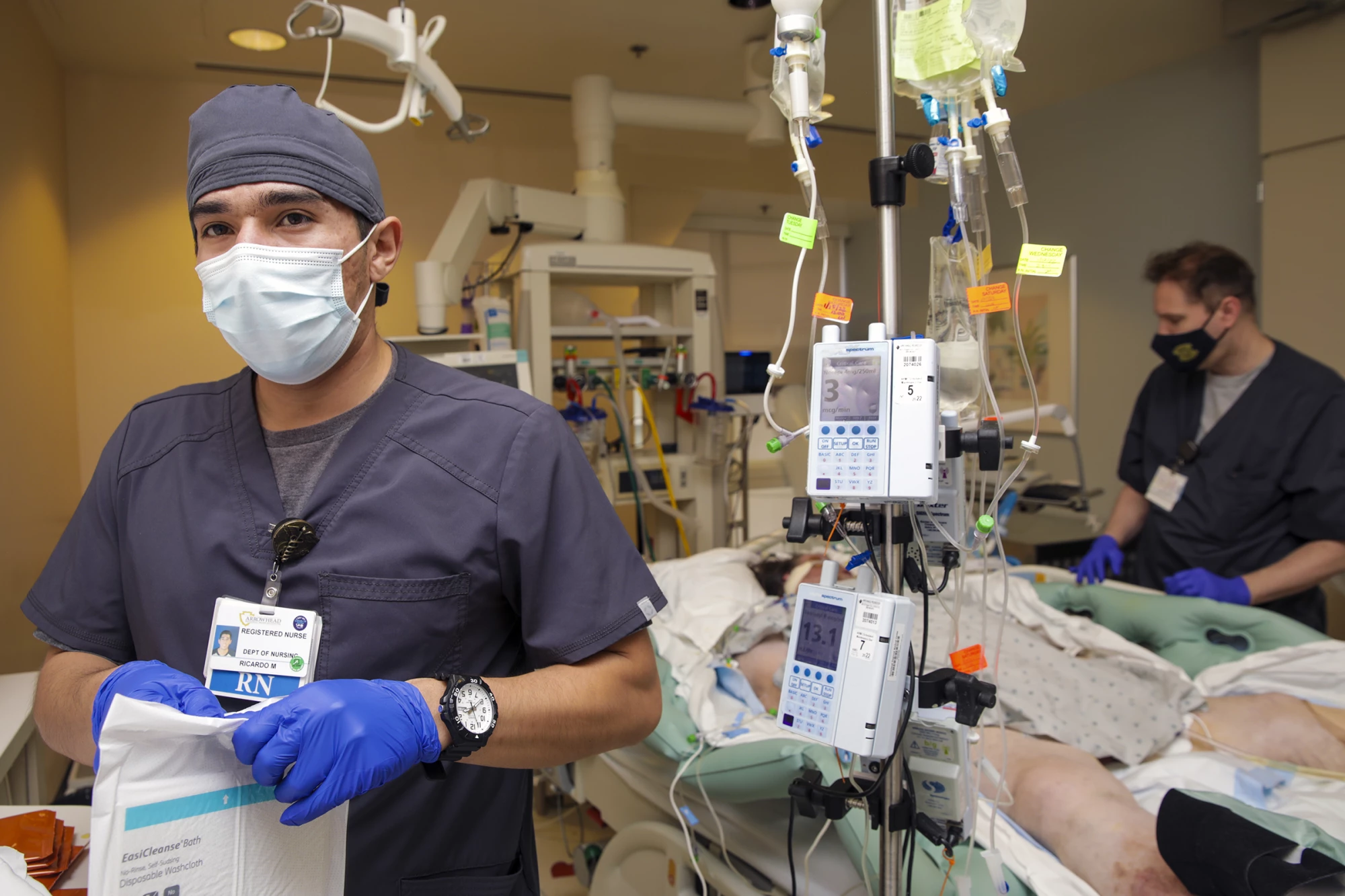
Why don’t hospitals just pay full-time nurses more?

Hospitals’ reliance on travel workers is nothing new. The pandemic intensified it and highlighted the gap between full-time workers’ pay and lucrative temporary contracts. 

While the average salary for a travel nurse can vary based on location, regional demand, hospital type and specialty, the compensation for a travel nurse has increased significantly compared to pre-pandemic, Bill Morgan, president of the Orlando, Fla.-based travel nurse staffing firm Jackson Nurse Professionals, told Becker’s in September. 

Meanwhile, hospitals and health systems have offered bonuses, increased wages and made other investments in employee retention for their staff workers. Still, the compensation gap between hospital employed nurses and travel or agency nurses remains stark. 

The gap poses the seemingly simple question: Why aren’t hospitals paying full-time staff more instead of paying higher prices for travel workers? 

Travel nursing’s start 

Taking a look back at the history of why hospitals started using travel nurses in the first place helps answer that question, said Kathy Sanford, DBA, RN, chief nursing officer at Chicago-based CommonSpirit Health. 

Dr. Sanford recalls first using local agencies and travel nurses in the 1980s as a cost-effective staffing strategy for periods when the patient census fluctuates, such as during flu epidemics. 

“When you have those fluctuations, you need to have a staffing strategy of what you want to do when the census goes up higher than we are staffed for, but it’s only going to last maybe a month, or a little longer,” she told Becker’s. “Because of the fluctuations, our nursing strategy for staffing was to use these non-employed nurses to fill in when there were gaps.” 

The COVID-19 pandemic, however, has created a situation where volumes are consistently higher than normal. And while rates for a travel or agency nurse have traditionally been higher than those of a hospital staff nurse, the current demand has pushed travel rates to record highs. 

Rising rates

Pittsburgh-based UPMC, for example, paid an estimated $85 an hour for a traveling nurse or a nurse from an agency before the pandemic. The health system is now experiencing rates between $225 and $250 an hour. Such rates have made nurses who may not have considered traveling before take the leap. 

“And the nurses are making more, and we don’t fault the nurses for taking advantage of that opportunity. But … now not only are nurses making more, but the agencies have taken the opportunity to triple their profits … and it shouldn’t be permitted during a pandemic, just like we don’t permit building companies to triple the price of lumber after a hurricane. It just shouldn’t be allowed,” said John Galley, chief human resource officer at UPMC. 

“Hospitals are all trying to fill the positions that need to be filled to help us get through this crisis with travel nurses, but because there aren’t enough, it becomes a cycle of bidding of who will pay me the most to travel,” Dr. Sanford said. Because of that, many nurses who may have never considered traveling before are now choosing to do so and leaving hospitals in areas of the country with a lower wage index, she said. 

Pay for travel nurses has always been higher for the same reasons hospitals pay float pool nurses more, Dr. Sanford explained. 

“Nurses are specialists and they work on a particular type of unit, and sometimes one unit’s census will be down and another unit’s census will be up,” she said. Float pool nurses are willing to shift to different units that need help “and it’s not a favorite thing for nurses to do,” Dr. Sanford said. “You have to pay them a little extra to be willing to learn different types of nursing and be willing to float.” 

The same line of thinking applies to agency or travel nurses. Travelers don’t have the perks that come with a full-time job, like job security and benefits. That coupled with the burden of travel itself and short-term assignments was the initial justification for why travel nurses had higher rates. 

Simply put, hospitals can’t afford to pay full-time staff wages that were meant for temporary assignments. 

“The bottom line is it would not be sustainable for hospitals to pay the kind of dollars that they’re paying right now for travel nurses in the long run. Because nurses are our backbone … they’re our heart, but they’re also our backbone. They’re the majority of our staff.” Dr. Sanford said. 

Mr. Galley of UPMC echoed that sentiment, noting that salaries and benefits make up about 50 percent of a health system’s entire expenses. “If you were to double a good portion of that — the nursing salaries — you’d completely wipe out any operating margin. Then you wouldn’t be able to invest in anything to keep the hospitals going,” he said. 

And healthcare has a lot of costly demands that would go unaddressed if such rates became the expectation for staff nurses. 

“There are a lot of needs that healthcare has in technology, and making sure that we have the equipment to take care of patients, and that we can do programs for the poor and vulnerable that we wouldn’t be able to afford if we pay these non-sustainable prices forever,” Dr. Sanford of CommonSpirit said. 

The value of in-house agencies

To combat skyrocketing travel nursing costs, some health systems have introduced their own travel agencies, including CommonSpirit and UPMC, where travel nurses work within the system.

Mr. Galley said UPMC started the agency for its 40-hospital system not only to combat the nursing shortage — and attract back nurses the health system has lost to outside travel agencies — but also to address increased rates from outside travel agencies. 

Nurses and surgical techs who qualify for UPMC’s in-house agency will earn $85 an hour and $63 an hour, respectively, in addition to a $2,880 stipend at the beginning of each six-week assignment.

Compensation for travel nurses at UPMC is still higher than full-time employees because the job comes with its own set of challenges. While full-time nurses get to know their facilities and have a more regular schedule, travel nurses are constantly on the move.

“They’re going to have assignments for a few weeks at a time at a particular location, then we’re going to pick them up and move them somewhere else, so they’re going to be constantly traveling, living out of a suitcase, and that’s what external travelers do, so we want to be just like the market, create roles like that and pay like that,” Mr. Galley said. “I think our employees understand the difference between that kind of a lifestyle that goes along with the higher salary.”

CommonSpirit’s internal agency plans to start traveling in the early spring and is in the process of hiring a national director for the program. The system’s goal is to have 500 nurses.

Dr. Sanford said the program will be beneficial because it will bring down competition, and people who want to travel can still be employees within the health system.

“It gives nurses who are our employees a choice if they want to be travelers or if they want to do it part time and then come back to a job within one of our hospitals or in one of our clinics. … They won’t lose their benefits, they won’t lose their seniority. They’ll be our employees,” Dr. Sanford said.

Other systems are exploring similar programs, such as Charlotte, N.C.-based Atrium Health, which recently ran a pilot in-house traveler program. The health system has also used outside agencies, which cost about triple compared to pre-pandemic.

This program was very successful, less expensive than using an external travel agency and worked really well across our large health system that covers multiple states,” said Patricia Mook, MSN, RN, vice president of nursing operations at Atrium Health.

But internal travel programs may not be easy for other health systems to mimic, especially smaller ones. Hospitals have to be of a certain size for an internal travel program to work, meaning an individual hospital wouldn’t be able to have one, Mr. Galley said.

More than that, it’s a complex undertaking, he said. 

“It’s not without its challenges,” Mr. Galley said. “I just think it’s something that takes the resources and thought leadership to be able to do. But you’re not going to find independent hospitals being able to mirror this.”

Dr. Sanford also recommends having a few different strategies in place to combat nurse shortages.

“Don’t make it your only strategy because there are so many issues that we could do better with our nursing staff. … You need to be looking at all of the different things that give nurses voice in your organization,” Dr. Sanford said.

More than 4K Stanford nurses vote to strike in California

UPDATE: April 14, 2022: Nurses will begin striking April 25 if they are unable to reach a deal with the system by then, according to a Wednesday statement from the union. The two sides have met with a federal mediator three times, and the strike would be open-ended.

Dive Brief:

  • Unionized nurses at Stanford hospitals in California voted in favor of authorizing a strike Thursday, meaning more than 4,500 nurses could walk off the job in a bid for better staffing, wages and mental health measures in new contracts.
  • Some 93% of nurses represented by the Committee for Recognition of Nursing Achievement voted in favor of the work stoppage, though the union did not set a date, according to a union release. It must give the hospitals 10 days notice before going on strike.
  • Nurses’ contracts expired March 31 and the union and hospital have engaged in more than 30 bargaining sessions over the past three months, including with a federal mediator, according to the union.

Dive Insight:

As the COVID-19 pandemic has worsened working conditions for nurses, some unions have made negotiating contracts a priority. Better staffing is key, along with higher wages and other benefits to help attract and retain employees amid ongoing shortages.

The California nurses’ demands in new contracts focus heavily on recruitment and retention of nursing staff “amid an industry-wide shortage and nurses being exhausted after working through the pandemic, many in short-staffed units,” the union said in the release.

They’re also asking for improved access to time off and more mental health support.

Nurses say their working conditions are becoming untenable and relying on travel staff and overtime shifts is not sustainable, according to the release.

The hospitals are taking precautionary steps to prepare for a potential strike and will resume negotiations with the union and a federal mediator Tuesday, according to a statement from Stanford.

But according to CRONA, nurses have filed significantly more assignment despite objections documents from 2020 to 2021 — forms that notify hospital supervisors of assignments nurses take despite personal objections around lacking resources, training or staff.

And a survey of CRONA nurses conducted in November 2021 founds that as many as 45% were considering quitting their jobs, according to the union.

That’s in line with other national surveys, including one from staffing firm Incredible Health released in March that found more than a third of nurses said they plan to leave their current jobs by the end of this year.

The CRONA nurses “readiness to strike demonstrates the urgency of the great professional and personal crisis they are facing and the solutions they are demanding from hospital executives,” the union said in the release.

No major strikes among healthcare workers have occurred so far this year, though several happened in 2021 and in 2020, the first year of the pandemic.

Rising turnover, agency costs compound hospital labor problems

Even as COVID admissions continue to wane, hospitals report that workforce shortages persist. The impact on hospital finances is stark: as shown in the graphic above, there has been an eight percent increase in clinical labor costs per patient day since the start of the pandemic, amounting to an additional $17M annually for an average 500-bed hospital. 

Two of the primary factors driving this increase—higher turnover among clinical staff and a continued reliance on travel nurses—are mutually reinforcing. 

Quarterly turnover rates for some nursing positions doubled from Q4 2019 to Q2 2021, as hospitals turned to expensive agency labor to fill resulting vacancies. Spiking demand for travel nurses, still running nearly three times higher than the pre-pandemic baseline, fueled more turnover, as more nurses left for these lucrative roles. 

It’s unclear how long increased labor costs will persist

Some HR tactics, like signing and retention bonuses, are one-time expenditures. But total hospital employment is still down two percent from pre-pandemic levels, pointing to a diminished healthcare labor supply. 

Permanent wage increases may end up being unavoidable, especially for lower-wage jobs, where a new compensation baseline for talent is being set by the market, both inside and outside the healthcare industry. 

Tennessee nurse convicted of negligent homicide for fatal medication error

A jury found former Vanderbilt Health nurse RaDonda Vaught guilty of negligent homicide and gross neglect of an impaired adult after she committed a fatal drug error in 2017. Vaught, who gave a patient a lethal dose of the paralytic agent vecuronium rather than the sedative Versed, overlooking several warning alerts, now faces up to six years in prison.

The Gist: Criminal charges for unintentional medical errors like this one are very unusual; discipline is normally the purview of licensing boards and civil courts. While Vaught certainly made an egregious mistake that directly led to a patient’s death, there’s a delicate line between holding caregivers accountable and making them criminally liable for unintentional errors. 

The American Nurses Association warns this verdict could set a dangerous precedent, and have a chilling effect on providers’ reporting errors. Health systems have worked diligently over decades to promote a culture of quality improvement and transparency—central to that is an environment that encourages providers to report all medical errors in order to improve patient safety. Many providers are now concerned that this conviction could reverse that progress. 

Stanford, Packard nurses greenlight strike

Thousands of nurses at Stanford and Lucile Packard Children’s hospitals in Palo Alto, Calif., have authorized the union representing them to call a strike. 

In an April 8 news release, the Committee for Recognition of Nursing Achievement said more than 4,500 nurses at Stanford and Packard, or 93 percent of all nurses eligible, voted in favor of strike authorization. They are calling on hospital management to adequately address staffing, citing consistent overtime and nurses’ complaints of inadequate resources, training or staff. They also seek improved access to mental health counseling, as well as competitive wages and benefits.

“The decision by members to overwhelmingly authorize a strike shows that we are fed up with the status quo of working conditions at the hospitals,” Colleen Borges, union president and a nurse in the pediatric oncology department, said in the release. “We need contracts that allow us to care for ourselves and our families so we can continue providing world-class care.”

Nurses authorized the strike after bargaining for the last 13 weeks and are working without contracts. The vote does not mean a strike will occur, but it gives the union the ability to issue an official strike notice. 

In a statement shared with Becker’s, Stanford expressed its support for negotiations rather than a strike.

“We are committed, through good faith bargaining, to reach agreement on new contracts that provide nurses a highly competitive compensation package, along with proposals that further our commitment to enhancing staffing and wellness benefits for nurses,” the statement said.

The hospital also said it is taking the steps to prepare for the possibility of a strike, while hoping a strike is averted.

“Given the progress we have made by working constructively with the union, we should be able to reach agreements that will allow us to continue to attract and retain the high caliber of nurses who so meaningfully contribute to our hospitals’ reputation for excellence,” the statement read. 

Wisconsin passes law making threats against healthcare workers a felony

Dive Brief:

  • Wisconsin Governor Tony Evers signed a bill Wednesday that makes it a felony to threaten a healthcare worker in the state, similar to laws covering police officers and other government workers.
  • The state already has a law making it a felony to commit battery against nurses, emergency care providers or those working in an emergency department.
  • “With significant workforce challenges in Wisconsin hospitals, we cannot afford to lose providers because they fear threats in the workplace,” Eric Borgerding, president of the state’s hospital association, said in a release. “Today’s new law will send a strong message to the public that threats against health care workers are taken seriously and not tolerated in Wisconsin.”

Dive Insight:

Healthcare workers have long been accustomed to both verbal and physical attacks in the workplace, often coming from distraught patients or family members.

In fact, workers in the healthcare and social service industries experience the highest rates of injuries caused by workplace violence and are five times as likely to get injured at work than workers overall, according to data from the Bureau of Labor Statistics.

A recent survey from staffing firm Incredible Health found nurses believe attacks are on the rise, partially due to ongoing COVID-19 guidelines. Some 65% of nurses said they had been verbally or physically attacked by a patient or patient’s family member in the past year, the survey found.

While 52% attributed that uptick to pandemic restrictions, 47% said it’s a result of longer wait times and other issues caused by a lack of staffing.

Hospitals across the country are grappling with dire staffing shortages as burned out healthcare workers quit, retire or leave for higher-paying traveling nurse positions two years into the COVID-19 pandemic.

recent report from the Wisconsin Hospital Association found 13 out of the 17 positions it surveyed had higher hospital vacancy rates in 2021 than the year prior, and seven of those positions had vacancy rates exceeding 10%.

“Threats against healthcare workers cause hospital staff to choose between caring for patients in the hospital or leaving the hospital altogether,” Borgerding said.

There are no federal laws that directly address violence against healthcare workers, though the Occupational Safety and Health Administration offers guidance for employers, and a handful of states have rules for employers or laws penalizing offenders.

Last April, the U.S. House of Representatives passed the Workplace Violence Prevention for Health Care and Social Service Workers Act, which would make healthcare employers develop and implement comprehensive workplace violence prevention plans, provide employees with annual training, keep detailed records of violent incidents and submit annual summaries to the federal labor department. The bill has yet to pass the Senate.

Labor unions representing healthcare workers, like National Nurses United, support that legislation and say a consistent and enforceable rule is necessary.

However, NNU opposes laws like Wisconsin’s that criminalize perpetrators of violence against healthcare workers, as those who do so are often vulnerable patients, the union said in an emailed statement.

How the supply chain crisis is worsening the workforce crisis

https://mailchi.mp/7788648545f0/the-weekly-gist-february-25-2022?e=d1e747d2d8

In our recent conversations with executives, we’ve heard that the workforce crisis continues to be the most urgent issue confronting health systems.

It’s a many-sided problem: early retirements hitting the nursing staff, leading to an overall loss of experience; early and mid-career nurses choosing to work for temporary staffing agencies for much higher pay, resulting in increased labor costs and resentment among remaining nurses; and a rising vacancy rate made more challenging by difficulty competing for talent against others offering higher pay and less stressful work environments.

But one factor undermining frontline nurse engagement hadn’t occurred to us, until we heard a chief nursing officer describe it this week. The lingering supply chain crisis is forcing hospitals to change where they purchase basic items—think IV tubing and bags, surgery kits, some basic drugs—which in turn forces nurses to adapt to using unfamiliar supplies on the fly, making for a less predictable work environment. On a busy and staff-constrained nursing unit, even small changes to standard procedures can be incredibly frustrating for nurses, and even lead to patient safety issues. Just another way in which the current environment is creating unprecedented pressure on healthcare workers, with little prospect for improvement anytime soon.

Cartoon – Consumer Centric Care

Nursing Care Cartoons and Comics - funny pictures from CartoonStock