


Cartoon – Most Common Surgical Procedure Today
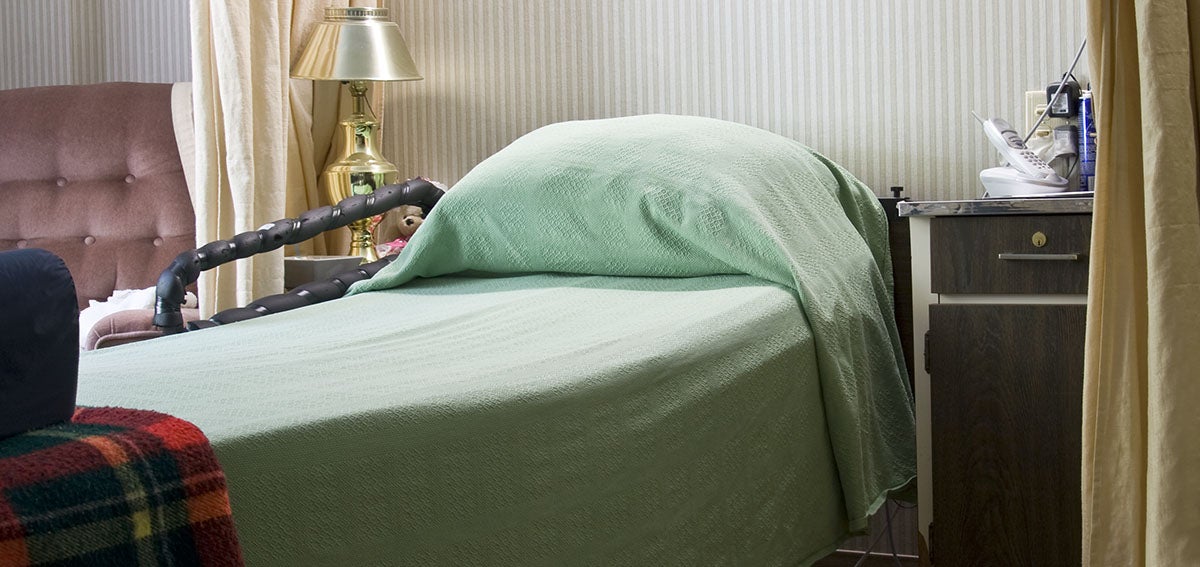
About 1 in 10 nursing homes in California and nationwide are owned by private equity (PE) investors, and new research suggests that death rates for residents of those facilities are substantially higher than at institutions with different forms of ownership.

Researchers from New York University, the University of Chicago, and the University of Pennsylvania found that the combination of subsidies from Medicare and Medicaid alongside incentives for PE owners to increase the value of their investments “could lead high-powered for-profit incentives to be misaligned with the social goal of affordable, quality care [PDF].” The researchers — Atul Gupta, Constantine Yannelis, Sabrina Howell, and Abhinav Gupta — reported that nursing homes owned by private equity entities were associated with a 10% increase in the short-term death rate of Medicare patients over a 12-year period. That means more than 20,000 people likely died prematurely in homes run by PE companies, according to their study, which was published in February by the National Bureau of Economic Research (NBER).
In addition to the higher short-term death rates, these homes were found to have sharper declines in measures of patient well-being, including lower mobility, increased pain intensity, and increased likelihood of taking antipsychotic medications, which the study said are discouraged in the elderly because the drugs increase mortality in this age group. Meanwhile, the study found that taxpayer spending per patient episode was 11% higher in PE-owned nursing homes.
The researchers were stunned by the data. “You don’t expect to find these types of mortality effects. And so, you know, we double-checked it, triple-checked it, quadruple-checked it,” Atul Gupta, a coauthor of the NBER study, told NPR reporter Gabrielle Emanuel.
There’s nothing new about for-profit nursing homes, but private equity firms are a unique subset that in recent years has made significant investments in the industry, Dylan Scott reported in Vox. PE firms typically buy companies in pursuit of higher profits for shareholders than could be obtained by investing in the shares of publicly traded stocks. They then sell their investments at a profit, often within seven years of purchase. They often take on debt to buy a company and then put that debt on the newly acquired company’s balance sheet.
They also have purchased a mix of large chains and independent facilities — “making it easier to isolate the specific effect of private equity acquisitions, rather than just a profit motive, on patient welfare.” About 11% of for-profit nursing homes are owned by PE, according to David Grabowski, professor of health care policy at Harvard Medical School. The NBER study covered 1,674 nursing homes acquired in 128 unique transactions.
While the owners of many nursing homes may not be planning to sell them, they also have strong incentives to keep costs low, which may not be good for patients. A study funded by CHCF, for instance, found that “early in the pandemic, for-profit nursing homes had COVID-19 case rates five to six times higher than those of nonprofit and government-run nursing homes. This was true of both independent nursing homes and those that are part of a corporate chain.”
Nationally, about 70% of nursing homes are operated by for-profit corporations, 24% of nursing homes are nonprofit, and 7% are government-owned. Corporate chains own 58%. In California, 84% of nursing homes are for-profit, 12% are nonprofit, and 3% are government-owned, according to the CHCF report.
Given the dramatic increase in PE ownership of nursing facilities coming out of the COVID-19 pandemic, the higher death rates are troubling. The year-over-year growth between 2019 and 2020 is especially striking. Before the pandemic, 2019 saw 33 private equity acquisitions of nursing homes valued at just over $483 million. In 2020, there were 43 deals valued at more than $1.5 billion, according to Bloomberg Law reporter Tony Pugh.
And PE interest in health care is not restricted to nursing homes, explained Gretchen Morgenson and Emmanuelle Saliba at NBC News. “Private equity’s purchases have included rural hospitals, physicians’ practices, nursing homes and hospice centers, air ambulance companies and health care billing management and debt collection systems.” Overall, PE investments in health care have increased more than 1,900% over the past two decades. In 2000, PE invested less than $5 billion. By 2017, investment had jumped to $100 billion.
Industry advocates argue that the investments are in nursing homes that would fail without an influx of PE capital. The American Investment Council said private equity firms invest in “nursing homes to help rescue, build, or grow businesses, often providing much-needed capital to strengthen struggling companies and employ Americans,” according to Bloomberg Law.
A bare-bones nursing staff is implicated in poorer quality at PE-owned nursing homes, both before and during the COVID-19 pandemic. Staff is generally the greatest expense in nursing homes and a key place to save money. “Labor is the main cost of any health care facility — accounting for nearly half of its operating costs — so cutting it to a minimum is the fastest profit-making measure owners can take, along with paying lower salaries,” journalist Annalisa Merelli explained in Quartz.
Staffing shrinks by 1.4% after a PE purchase, the NBER study found.
The federal government does not set specific patient-to-nurse ratios. California and other states have set minimum standards, but they are generally “well below the levels recommended by researchers and experts to consistently meet the needs of each resident,” according to the journal Policy, Politics, & Nursing Practice.
According to nursing assistant Adelina Ramos, “understaffing was so significant [during the pandemic] that she and her colleagues . . . often had to choose which dying or severely ill patient to attend first, leaving the others alone.”
Ramos worked at the for-profit Genesis Healthcare, the nation’s largest chain of nursing homes, which accepted $180 million in state and federal funds during the COVID-19 crisis but remained severely understaffed. She testified before the US Senate Finance Committee in March as a part of a week long look into how the pandemic affected nursing homes. “Before the pandemic, we had this problem,” she said of staffing shortages. “And with the pandemic, it made things worse.”
In addition, low pay at nursing homes compounds staffing shortages by leading to extremely high rates of turnover. Ramos and her colleagues were paid as little as $12.46 an hour.
“The average nursing home in the US has their entire nursing home staff change over the course of the calendar year. This is a horrible way to provide good, quality nursing home care,” Grabowski told NPR, speaking of his March 2021 study in Health Affairs.
Loss of front-line staff leads to reductions in therapies for healthier patients, which leads to higher death rates, according to the NBER study. The effect of these cuts is that front-line nurses spend fewer hours per day providing basic services to patients. “Those services, such as bed turning or infection prevention, aren’t medically intensive, but they can be critical to health outcomes,” wrote Scott at Vox.
Healthier patients tend to suffer the most from this lack of basic nursing. “Sicker patients have more regimented treatment that will be adhered to no matter who owns the facility,” the researchers said, “whereas healthier people may be more susceptible to the changes made under private equity ownership.”
In addition to the Senate Finance Committee hearings, the House Ways and Means Committee held a hearing at the end of last month about the excess deaths in nursing homes owned by PE. “Private equity’s business model involves buying companies, saddling them with mountains of debt, and then squeezing them like oranges for every dollar,” said Representative Bill Pascrell (D-New Jersey), who chairs the House Ways and Means Committee’s oversight subcommittee.
The office of Senator Elizabeth Warren (D-Massachusetts) will investigate the effects of nursing-home ownership on residents, she announced on March 17.
The hope is that the pandemic’s effect on older people will bring more attention to the issues that lead to substandard nursing home care. “Much more is needed to protect nursing home residents,” Denise Bottcher, the state director of AARP’s Louisiana office, told the Senate panel. “The consequence of not acting is that someone’s mother or father dies.”
The Biden administration has proposed giving rehabilitation facilities a 2.2% payment increase for the 2022 federal fiscal year that starts in October.
The payment rate outlined in a proposed rule released late Thursday is slightly below the 2.4% that CMS gave rehab facilities for the 2021 federal fiscal year. CMS proposed in a separate rule a 2.3% increase for payments to inpatient psychiatric facilities as well.
Both payment rules also give updates on outlier payments, which help facilities deal with the costs of treating extremely costly beneficiaries.
For rehab facilities, CMS proposes to maintain outlier payments to 3% of the total facility payments for fiscal 2022, which begins on Oct. 1.
CMS also aims to keep the outlier payments for psychiatric facilities at 2% for 2022.
A major change for both rules is a new addition aimed to track coverage of COVID-19 vaccinations among healthcare personnel.
CMS also wants to add vaccination coverage among healthcare personnel as a measure to the quality reporting program for psychiatric facilities. The program outlines quality metrics that facilities need to meet.
“This measure would be reported using the COVID-19 modules on the [Centers for Disease Control and Prevention’s] National Healthcare Safety Network web portal,” a fact sheet on the psychiatric payment rule said.
The agency also is proposing a similar measure for rehab facilities to report any vaccinations of healthcare personnel for COVID-19.
“This proposed measure is designed to assess whether [IRFs] are taking steps to limit the spread of COVID-19 among their [healthcare personnel], reduce the risk of transmission within their facilities and help sustain the ability of [rehabilitation facilities] to continue serving their communities through the public health emergency and beyond,” a fact sheet on the rehab rule said.
In the rehab facility rule, CMS also asked for comments on how to improve health equity for all patients.
CMS is seeking comments on whether to add more measures that address patient equity in standardized patient assessment data elements, which must be collected by facilities after post-acute care.
The agency also wants comments on ways to attain health equity for psychiatric facilities as well.
“CMS is committed to addressing the significant and persistent inequities in health outcomes in the United States through improving data collection to better measure and analyze disparities across programs and policies,” the agency said in a fact sheet.
Comments for both rules are due by June 7.

President Joe Biden proposed an ambitious budget for the next federal fiscal year that includes more money for fighting the opioid epidemic, bolstering public health and several other healthcare items.
The budget request to Congress, released Friday, acts as essentially a wish list of priorities for the administration for the next year.
It is doubtful how much would get approved by Congress but sends a message of what the administration prioritizes.
Here are three healthcare priorities outlined in the request:

All the things that could prolong the COVID-19 pandemic — that could make this virus a part of our lives longer than anyone wants — are playing out right in front of our eyes.
Driving the news: The British variant is driving another surge in cases in Michigan, and Gov. Gretchen Whitmer has resisted reimposing any of the lockdown measures she embraced earlier in the pandemic.
Between the lines: The concern isn’t necessarily that the facts on the ground right now could end up being disastrous, but rather that we’re getting a preview of the longer, darker coronavirus future the U.S. may face without sufficient vaccinations.

Today, W.S. in Florida asks:
I got my first Pfizer vaccine in January. Is it too late to get the second injection now, more than two months later? What should I do?
The second dose of Pfizer-BioNTech’s vaccine should ideally be given three weeks after the first. (Moderna’s second dose is meant to be given four weeks after the first, while the Johnson & Johnson/Janssen shot is delivered in a single dose.) But, well, sometimes life gets in the way. So what happens if you don’t make it to that second appointment?
Schedule another one as soon as you can, says Dr. Adam Ratner, a pediatric infectious disease doctor at NYU Langone Health and a vaccine researcher.
While a three- or four-week gap between shots is ideal, the U.S. Centers for Disease Control and Prevention (CDC) says you can get your second shot within 42 days of the first one and still mount a full immune response. “Beyond that, we start to operate in an area where there’s simply less data,” Ratner says.
That doesn’t mean your second shot will be ineffective if it’s given more than six weeks after the first. It only means that studies have not specifically measured how much protection the two-dose vaccines offer when the shots are given more than 42 days apart. Still, the CDC says you don’t have to start over if you can’t get a second vaccine within 42 days. Countries including the U.K. are even purposely delaying second shots so they can get first doses out to more people, and some experts in the U.S. advocate for the same policy.
Ratner says if he were in your shoes, he wouldn’t worry too much. “I would say get the second dose now and consider yourself fully vaccinated,” he says. Just make sure you get a second dose of the same vaccine, since the CDC does not recommend mixing and matching with different shots.
It may be tempting to just stick with the one dose you’ve got—after all, one recent study showed that a single dose of the vaccine was about 80% effective at preventing COVID-19 infections, compared to 90% protection after two doses. But “it is somewhat of a tenuous 80%,” National Institute of Allergy and Infectious Diseases Director Dr. Anthony Fauci said at a recent press briefing. “When you leave it at one dose, the question is, ‘How long does it last?’”
To get the vaccine’s full benefits, and to make sure they last as long as possible, you’ll need a second shot.

President Joe Biden moved to unwind Medicaid work requirements in Michigan and Wisconsin, after pulling the rules in Arkansas and New Hampshire.
CMS sent letters to health officials in Michigan and Wisconsin April 6 withdrawing their approval to implement work requirements for Medicaid beneficiaries. In both letters, CMS noted that combined with the COVID-19 pandemic, the work rules risk “significant coverage losses and harm to beneficiaries.”
In March, the Biden administration revoked approval for similar Medicaid work requirements in Arkansas and New Hampshire.
CDC director walks tightrope on pandemic messaging

Centers for Disease Control and Prevention (CDC) Director Rochelle Walensky finds herself in a delicate position as she seeks to balance the optimism of increasing vaccinations with the reality that the U.S. is still very much in the grip of a deadly pandemic.
Walensky started the CDC job with a reputation as a savvy communicator, tasked with salvaging the reputation of an agency that took a beating under the Trump administration.
“When I first started at CDC about two months ago, I made a promise to you: I would tell you the truth, even if it was not the news we wanted to hear,” Walensky told reporters recently.
Walensky’s expertise is in HIV research, like her predecessor Robert Redfield, and before being appointed to lead the CDC, she was head of infectious diseases at Massachusetts General Hospital.
While former colleagues say Walensky is the perfect fit for the CDC post, her skills are now being put to the test as she faces criticism for being both too negative and too hopeful.
“She is quite a compelling and clear communicator, but it’s a challenging set of messages to try and get out there,” said Chris Beyrer, a professor of epidemiology at Johns Hopkins Bloomberg School of Public Health.
Public health messaging during a global pandemic is complicated enough, but experts say this particular moment is especially difficult.
After weeks of decline and then stagnation, the rate of coronavirus infections has once again started to climb across much of the country. Cases are up about 12 percent nationally compared with the previous week, averaging around 62,000 cases per day, according to the CDC.
At the same time, nearly 100 million Americans have received at least one dose of a coronavirus vaccine. Many states are expanding vaccine eligibility, in some instances to all adults, and federal health officials say there will be enough supply for everyone to be vaccinated by the end of May.
Walensky tried to emphasize both aspects this week when she issued an emotional appeal to the public.
“We have so much to look forward to, so much promise and potential of where we are, and so much reason for hope. But right now I’m scared,” Walensky said, adding that she had a “sense of impending doom” if people continued to ignore public health precautions.
Yet almost in the next breath, she talked about a “tremendously encouraging” new study showing that vaccinated people were 90 percent protected from infection, meaning they pose an extremely low risk of spreading the virus.
While that may come across as mixed messaging, experts say it accurately reflects not only where things stand right now but also how the country has been reacting to the virus for the past year.
“Whiplash is a true reflection of how we’re all experiencing the epidemic and the response to it. So I’d rather she be honest about that and others be honest about that than give people something that they want … to make them feel better,” said Judith Auerbach, a professor in the University of California San Francisco School of Medicine.
Auerbach, who previously worked with Walensky on HIV research, praised the director’s openness, which she said had been missing from agency leadership during the Trump administration.
“She’s being really honest about her own emotions. That’s hard for a fed to do and get away with,” Auerbach said. “The science that says we all still need to be, in fact, quite scared because we’re in this race between the vaccines … versus the emergence of these variants, and she felt it at a visceral level, and she conveyed that in a way that I thought was quite telling.”
Glen Nowak, director of the Center for Health and Risk Communication at the University of Georgia and a former CDC media relations director, said Walensky’s candor helps establish credibility.
“She has embraced the fact that credibility comes from being transparent and honest and genuine about your fears and your concerns,” Nowak said.
The CDC declined to make Walensky available for an interview, but in a statement to The Hill, an agency spokesman said every communication reflects the latest science and epidemiology.
“At times, moments must balance hope that we will move out of the pandemic with the reality that we are not out of it yet,” the spokesman said.
“We acknowledge the challenge of conveying such hope and promise that vaccines offer with the reality that cases and deaths are rising. While we are sending the critical message that people cannot and should not let up on their prevention measures, we do remain very optimistic about what the future of a fully vaccinated public will offer,” the spokesman added.
On Friday, Walensky again came under criticism for her messaging. In updated guidance, the CDC said it is safe for people who have been fully vaccinated to travel.
But Walensky struck a cautionary tone by saying the CDC still recommends anyone, vaccinated or not, avoid nonessential travel because infection numbers are so high.
“We know that right now we have a surging number of cases,” Walensky said during a White House briefing. “I would advocate against general travel overall. Our guidance is silent on recommending or not recommending fully vaccinated people travel. Our guidance speaks to the safety of doing so.”
Nowak said part of what makes public health messaging so difficult is the fact that science doesn’t always deal in absolutes and that the public overall doesn’t do well with nuance.
“Often people don’t want to listen to the nuance; they want advice and guidance to be stable. They get frustrated with the changes or when it seems to be contradictory. They also get frustrated if it doesn’t match their everyday living experiences,” Nowak said.
With the travel guidance, Walensky attempted to spell out the balance she was trying to strike and asked the public for patience and understanding.
“I want to acknowledge today that providing guidance in the midst of a changing pandemic and its changing science is complex,” Walensky said.
“The science shows us that getting fully vaccinated allows you to do more things safely, and it’s important for us to provide that guidance, even in the context of rising cases. At the same time, we must balance the science with the fact that most Americans are not yet fully vaccinated, which is likely contributing to our rising cases,” she said.
Jen Kates, director for global health and HIV policy at the Kaiser Family Foundation, who has known Walensky for decades, said she thinks the CDC director is aware that she can’t escape criticism, especially when so many people have pandemic fatigue.
If the CDC is too strict and refuses to endorse relatively normal behavior, especially after people get vaccinated, it could risk others refusing to get the shot, Kates said.
But if the agency paints too rosy a picture, more people could act like the pandemic is over and risk further spread of the virus.
“It behooves public officials to always be cognizant that their words are being listened to and can be taken out of context or may be hard for people to grasp,” Kates said. “So I think Dr. Walensky is a great communicator, but that doesn’t mean that this is always easy to do and the balance is always straightforward.”


 HENRY KOTULA