As thousands of athletes get coronavirus tests, nurses wonder: What about us?

On her day off not long ago, emergency room nurse Jane Sandoval sat with her husband and watched her favorite NFL team, the San Francisco 49ers. She’s off every other Sunday, and even during the coronavirus pandemic, this is something of a ritual. Jane and Carlos watch, cheer, yell — just one couple’s method of escape.

“It makes people feel normal,” she says.

For Sandoval, though, it has become more and more difficult to enjoy as the season — and the pandemic — wears on. Early in the season, the 49ers’ Kyle Shanahan was one of five coaches fined for violating the league’s requirement that all sideline personnel wear face coverings. Jane noticed, even as coronavirus cases surged again in California and across the United States, that Levi’s Stadium was considering admitting fans to watch games.

But the hardest thing to ignore, Sandoval says, is that when it comes to coronavirus testing, this is a nation of haves and have-nots.

Among the haves are professional and college athletes, in particular those who play football. From Nov. 8 to 14, the NFL administered 43,148 tests to 7,856 players, coaches and employees. Major college football programs supply dozens of tests each day, an attempt — futile as it has been — to maintain health and prevent schedule interruptions. Major League Soccer administered nearly 5,000 tests last week, and Major League Baseball conducted some 170,000 tests during its truncated season.

Sandoval, meanwhile, is a 58-year-old front-line worker who regularly treats patients either suspected or confirmed to have been infected by the coronavirus. In eight months, she has never been tested. She says her employer, California Pacific Medical Center, refuses to provide testing for its medical staff even after possible exposure.

Watching sports, then, no longer represents an escape from reality for Sandoval. Instead, she says, it’s a signal of what the nation prioritizes.

“There’s an endless supply in the sports world,” she says of coronavirus tests. “You’re throwing your arms up. I like sports as much as the next person. But the disparity between who gets tested and who doesn’t, it doesn’t make any sense.”

This month, registered nurses gathered in Los Angeles to protest the fact that UCLA’s athletic department conducted 1,248 tests in a single week while health-care workers at UCLA hospitals were denied testing. Last week National Nurses United, the country’s largest nursing union, released the results of a survey of more than 15,000 members. About two-thirds reported they had never been tested.

Since August, when NFL training camps opened, the nation’s most popular and powerful sports league — one that generates more than $15 billion in annual revenue — has conducted roughly 645,000 coronavirus tests.

“These athletes and teams have a stockpile of covid testing, enough to test them at will,” says Michelle Gutierrez Vo, another registered nurse and sports fan in California. “And it’s painful to watch. It seemed like nobody else mattered or their lives are more important than ours.”

Months into the pandemic, and with vaccines nearing distribution, testing in the United States remains something of a luxury. Testing sites are crowded, and some patients still report waiting days for results. Sandoval said nurses who suspect they’ve been exposed are expected to seek out a testing site on their own, at their expense, and take unpaid time while they wait for results — in effect choosing between their paycheck and their health and potentially that of others.

“The current [presidential] administration did not focus on tests and instead focused on the vaccine,” says Mara Aspinall, a professor of biomedical diagnostics at Arizona State University. “We should have focused with the same kind of ‘warp speed’ on testing. Would we still have needed a vaccine? Yes, but we would’ve saved more lives in that process and given more confidence to people to go to work.”

After a four-month shutdown amid the pandemic’s opening wave, professional sports returned in July. More than just a contest on television, it was, in a most unusual year, a symbol of comfort and routine. But as the sports calendar has advanced and dramatic adjustments have been made, it has become nearly impossible to ignore how different everything looks, sounds and feels.

Stadiums are empty, or mostly empty, while some sports have bubbles and others just pretend their spheres are impermeable. Coaches stand on the sideline with fogged-up face shields; rosters and schedules are constantly reshuffled. On Saturday, the college football game between Clemson and Florida State was called off three hours before kickoff. Dodger Stadium, home of the World Series champions, is a massive testing site, with lines of cars snaking across the parking lot.

Sports, in other words, aren’t a distraction from a polarized nation and its response to a global pandemic. They have become a constant reminder of them. And when some nurses turn to sports for an attempt at escape, instead it’s just one more image of who gets priority for tests and, often, who does not.

“There is a disconnect when you watch sports now. It’s not the same. Covid changed everything,” says Gutierrez Vo, who works for Kaiser Permanente in Fremont, Calif. “I try not to think about it.”

Sandoval tries the same, telling herself that watching a game is among the few things that make it feel like February again. Back then, the coronavirus was a distant threat and the 49ers were in the Super Bowl.

That night, Sandoval had a shift in the ER, and between patients, she would duck into the break room or huddle next to a colleague checking the score on the phone. The 49ers were playing the Kansas City Chiefs, and Sandoval would recall that her favorite team blowing a double-digit lead represented the mightiest stress that day.

Now during shifts, Sandoval sometimes argues with patients who insist the virus that has infected them is a media-driven hoax. She masks up and wears a face shield even if a patient hasn’t been confirmed with the coronavirus, though she can’t help second-guessing herself.

“Did I wash my hands? Did I touch my glasses? Was I extra careful?” she says.

If Sandoval suspects she has been exposed, she says, she doesn’t bother requesting a test. She says the hospital will say there aren’t enough. So instead she self-monitors and loads up on vitamin C and zinc, hoping the tickle in her throat disappears. If symptoms persist, which she says hasn’t happened yet, she plans to locate a testing site on her own. But that would mean taking unpaid time, paying for costs out of pocket and staying home — and forfeiting a paycheck — until results arrive.

National Nurses United says some of its members are being told to report to work anyway as they wait for results that can take three to five days. Sutter Health, the hospital system that oversees California Pacific Medical Center, said in a statement to The Washington Post that it offers tests to employees whose exposure is deemed high-risk and to any employee experiencing symptoms. Symptomatic employees are placed on paid leave while awaiting test results, according to the statement.

“As long as an essential healthcare worker is asymptomatic,” Sutter’s statement read, “they can continue to work and self-monitor while awaiting the test result.”

Sandoval said employees have been told the hospital’s employee health division will contact anyone who has been exposed. Though she believes she’s exposed during every shift, Sandoval says employee health has never contacted her to offer a test or conduct contact tracing.

“If you feel like you need to get tested, you do that on your own,” she says. Sandoval suspects the imbalance is economic. In September, Forbes reported NFL team revenue was up 7 percent despite the pandemic. Last week Sutter Health reported a $607 million loss through the first nine months of 2020.

Sandoval tries to avoid thinking about that, so she keeps heading back to work and hoping for the best. Though she says her passion for sports is less intense now, she nonetheless likes to talk sports when a patient wears a team logo. She asks about a star player or a recent game. She says she is looking forward to the 49ers’ next contest and the 2021 baseball season.

Sometimes, Sandoval says, patients ask about her job and the ways she avoids contracting the coronavirus. She must be tested most every day, Sandoval says the patients always say.

And she just rolls her eyes and chuckles. That, she says, only happens if you’re an athlete.

Cartoon – Social Distancing

Image may contain: 1 person, meme and hat, text that says 'YOU WANNA SEE SOME SOCIAL DISTANCING? LEND THEM SOME MONEY.'

Sanford Health CEO out after two decades following mask controversy

Sanford Health, CEO Kelby Krabbenhoft part ways
  • Sanford Health’s CEO Kelby Krabbenhoft is leaving the top exec role after almost 25 years, according to a Tuesday announcement from the Sioux Falls, South Dakota-based system, following controversial statements the outgoing CEO made about mask wearing during the coronavirus pandemic.

Krabbenhoft, who has served as CEO since 1996, sent an internal memo to Sanford’s 50,000 employees on Wednesday arguing wearing a mask would defeat its purpose, as he’d already contracted COVID-19 and was therefore immune for at least seven months, as first reported by Forum News Service.

Experts dispute, however, that people previously infected with the novel coronavirus are entirely immune, as the data is not yet definitiveOther Sanford executives sent an email to employees Friday recommending mask wearing and contradicting Krabbenhoft’s claims.

On the heels of the news, Sanford’s board of trustees and Krabbenhoft have now “mutually agreed to part ways,” according to the release. The turnover comes at an acutely crucial time for the major Midwest health system, as it signed a letter of intent last month to merge with Salt Lake City-based Intermountain Healthcare.

If the deal closes, the two would operate 70 hospitals and 435 clinics — many of which will be located in rural communities across the country — and insure 1.1 million people. The merger would form one of the nation’s largest nonprofit health systems with more than $13 billion in combined annual revenue. It’s expected to close in 2021, pending regulatory approvals.

While Intermountain CEO Marc Harrison is slated to lead the combined organization, Krabbenhoft was poised to serve as president emeritus. It’s unclear what the plans are now after Krabbenhoft’s exit.

Sanford, which operates 46 hospitals in 26 states, did not reply to requests for comment by time of publication.

We’re celebrating Thanksgiving amid a pandemic. Here’s how we did it in 1918 – and what happened next

https://www.burlingtonfreepress.com/in-depth/news/nation/2020/11/21/covid-and-thanksgiving-how-we-celebrated-during-1918-flu-pandemic/6264231002/?fbclid=IwAR2ysUtYmaKIKy4m-5MgqSAwBSbxY1G4SpjuqTkELtATqomaB67R4WMbn5Y

https://www.gannett-cdn.com/indepth-static-assets/uploads/master/6264231002/a1496fdc-5d3f-42dd-ae44-dcc952df593f-topper-2520x1080.jpg

On Thanksgiving more than a century ago, many Americans were living under quarantines, and officials warned people to stay home for the holiday.

More than 200,000 dead since March. Cities in lockdown. Vaccine trials underway.

And a holiday message, of sorts: “See that Thanksgiving celebrations are restricted as much as possible so as to prevent another flare-up.”

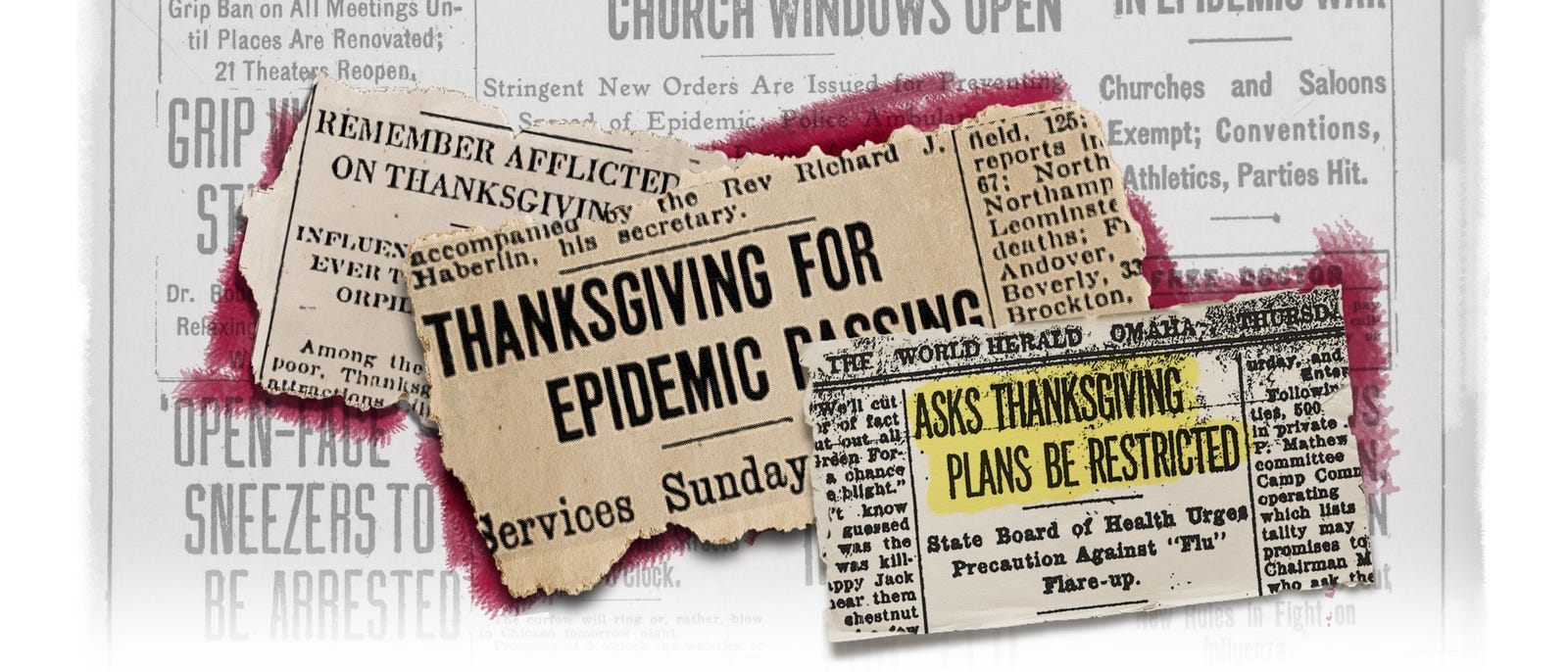
It isn’t the message of Thanksgiving 2020. It’s the Thanksgiving Day notice that ran in the Omaha World Herald on Nov. 28, 1918, when Americans found themselves in a similar predicament to the millions now grappling with how to celebrate the holiday season amid the coronavirus pandemic.

“Every time I hear someone say these are unprecedented times, I say no, no, they’re not,” said Brittany Hutchinson, assistant curator at the Chicago History Museum. “They did this in 1918.”

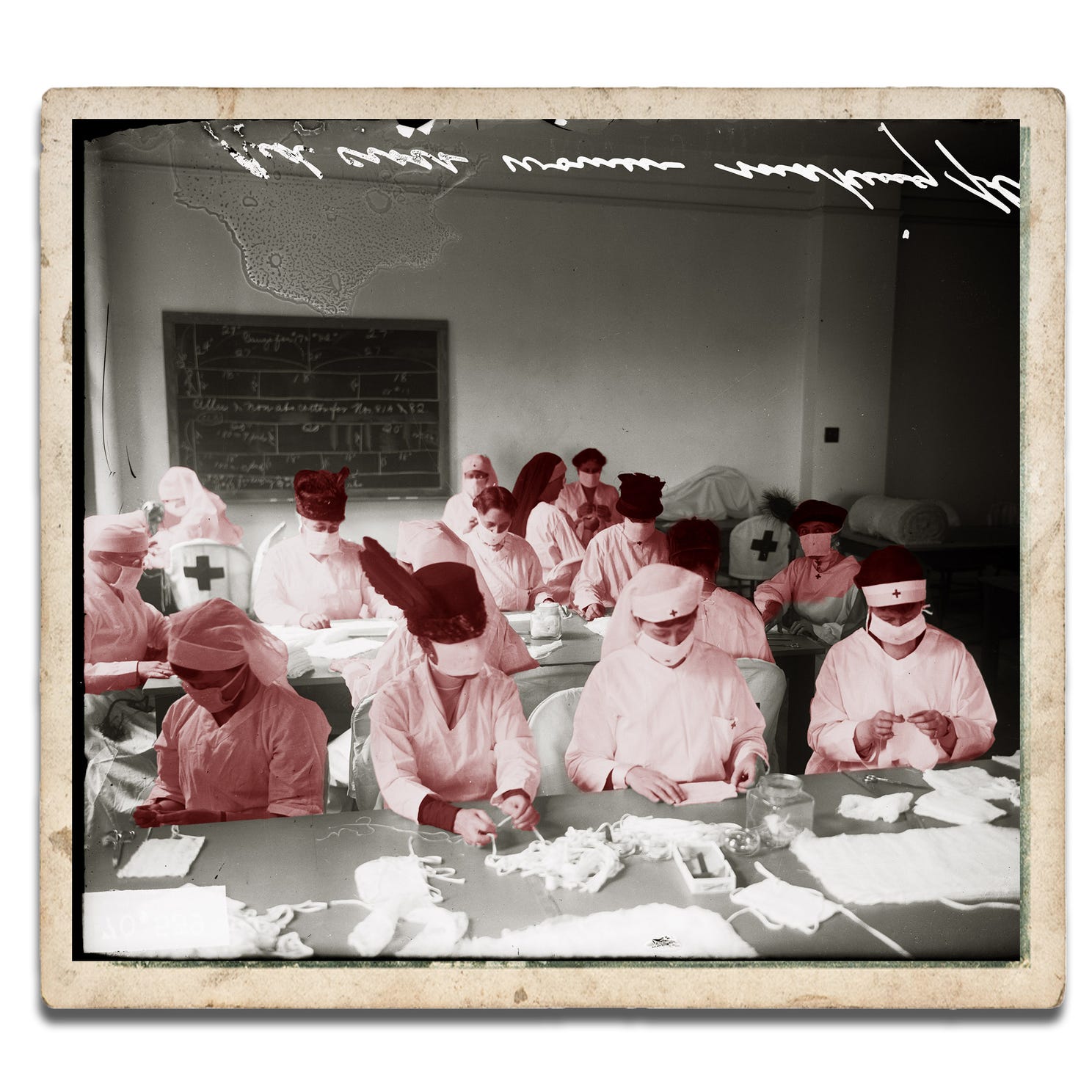
On Thanksgiving more than a century ago, many Americans, like today, lived under various phases of quarantines and face mask orders. Millions mourned loved ones. And health officials in many cities issued the same holiday warning: Stay home and stay safe.

Giving thanks for WWI victory, beating pandemic

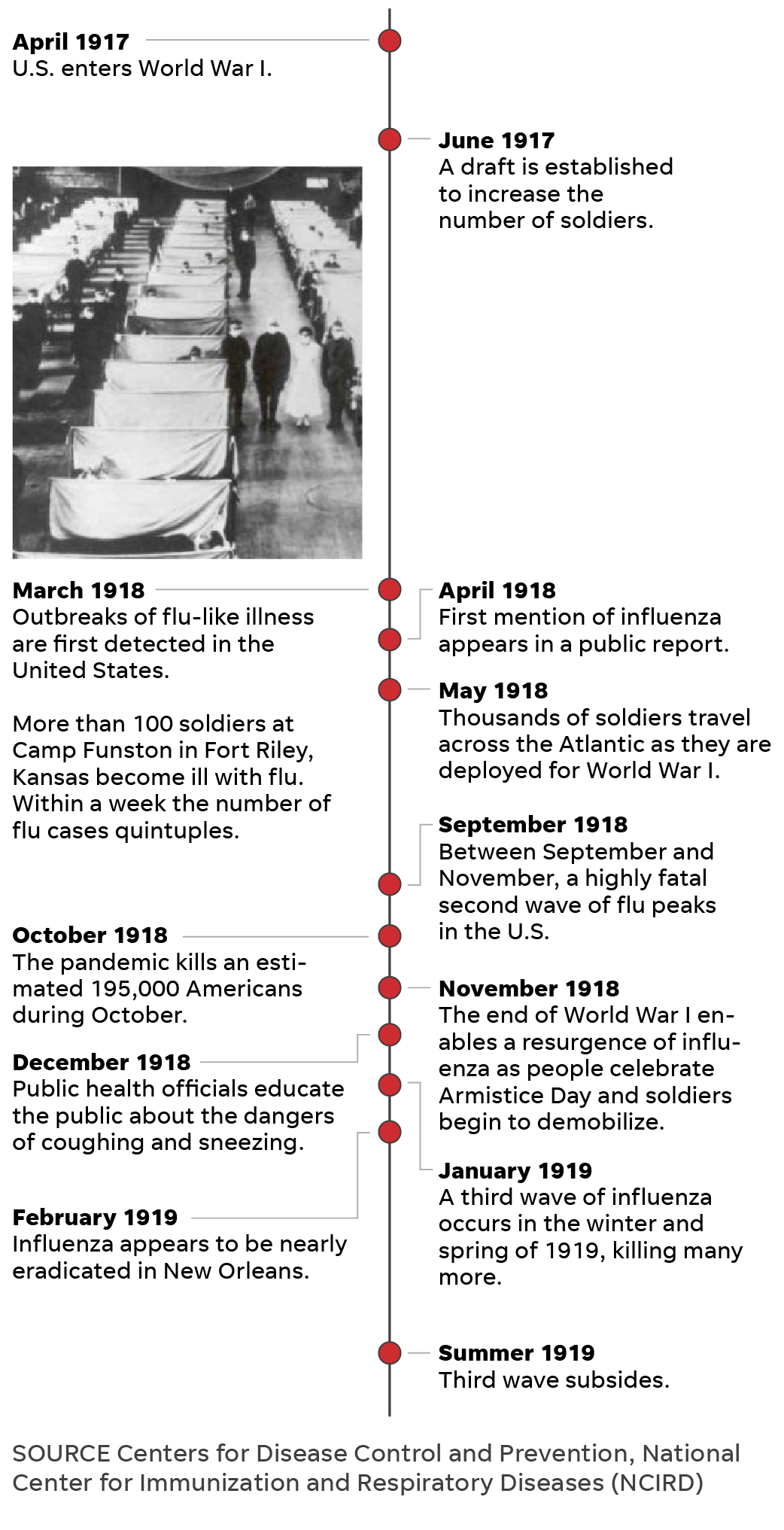
By late November 1918, the USA – in the midst of the suffrage movement, Jim Crow and the tail end of WWI – battled the ebbing second wave of the H1N1 influenza epidemic, also known as the Spanish flu.

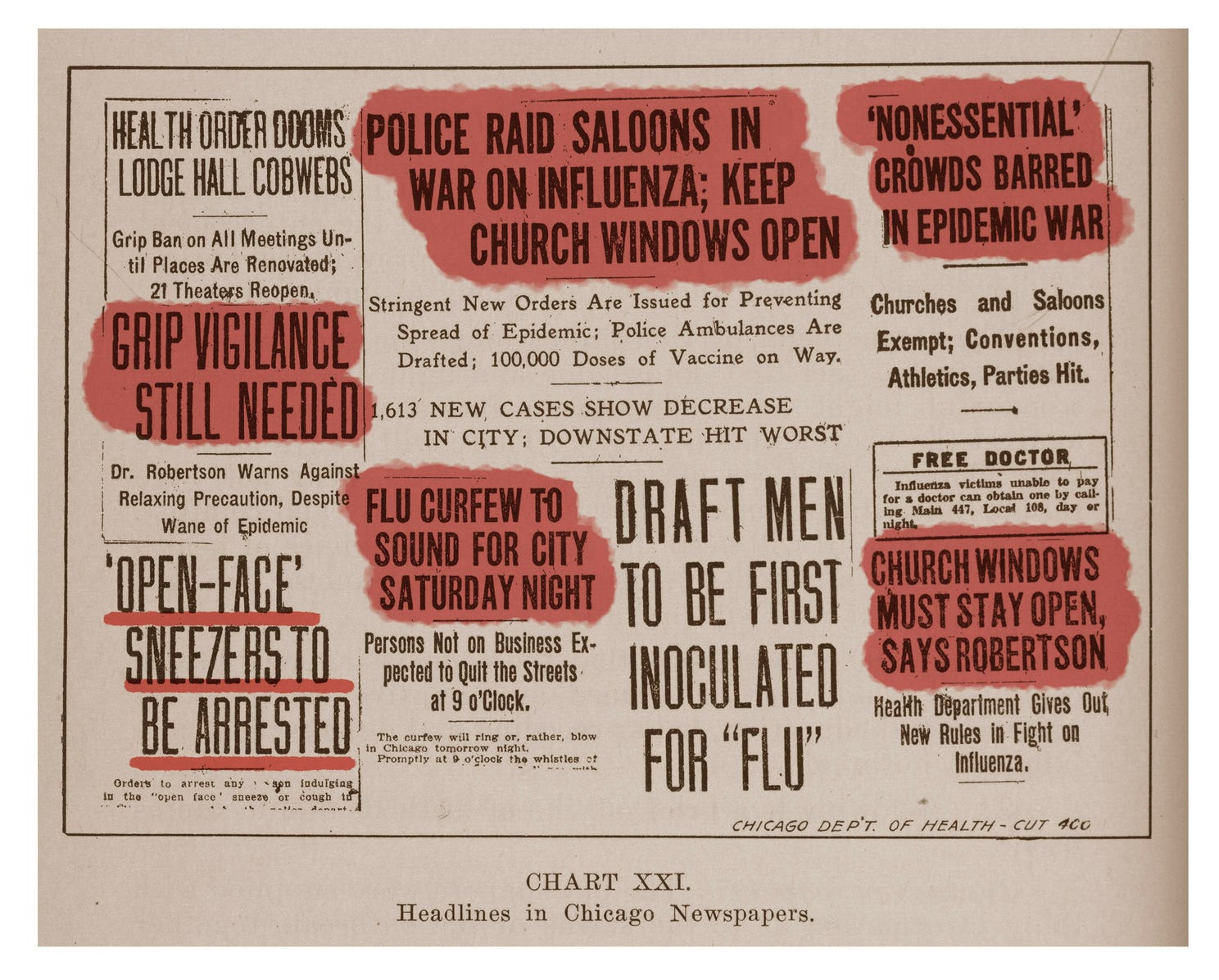
The first cases were detected in the USA in March of that year, growing exponentially by the fall. In October, the virus burned through the nation. Dozens of cities implemented face mask orders and curfews and locked down for two to three weeks, temporarily closing schools, libraries, theaters, movie houses, dance halls, churches, ice cream parlors and soda shops. The virus killed about 195,000 Americans during October alone.

As Thanksgiving rolled around, some cities celebrated the relaxation of flu-related restrictions– partly due to opposition campaigns by retailers, theater owners, unions, mass transportation companies and other economically stressed stakeholders. Washington, Indianapolis and Oakland, California, had lifted restrictions days before, and San Francisco was on the brink of lifting its mask mandate.

San Francisco had one of the nation’s largest anti-masking campaigns, spearheaded by the Anti-Mask League of San Francisco, according to Howard Markel, a professor of the history of medicine at the University of Michigan and co-editor-in chief of The American Influenza Epidemic of 1918-1919. Many people refused to wear masks and were arrested, and when the “line into the courtroom was so long, they laid off arresting people because the system couldn’t enforce it,” Markel said.

On Nov. 13, the San Francisco Examiner reported that “Thanksgiving Day will be celebrated in San Francisco by the discarding of gauze masks, if the present rate of decrease in influenza continues.”

A week later, San Franciscans ceremoniously removed their masks as a whistle sounded across the city at noon. “San Francisco Joyously Discards Masks In Twinkling; Faces Beam As Gauze Covers Come Off At Time Fixed,” the San Francisco Chronicle wrote on its front page Nov. 22.

Resistance to public health measures was not as “vociferous or widespread as today,” but it was there, Markel said. “A lot of these rules and regulations were wrapped up in the patriotism of World War I, and most people followed them. But we don’t have that unifying situation right now. You would think the pandemic would be unifying.”

In some cities, Thanksgiving rituals brought a welcome sense of normalcy. Many Americans returned to religious services, performed charity work and went through with planned football games, parties and performances.

In Portland, a “grand reunion service” was planned for the Sunday after Thanksgiving, “in honor of the reassembling after being debarred from worship on account of the epidemic for the last five weeks.” Members of various congregations were “ready to greet each other after the long absence,” according to the Oregon Daily Journal on Nov. 16.

“The chimes of church bells will once more be heard on Sunday morning throughout the city, beckoning one and all to attend their chosen place of worship, where a double celebration will be held, first over the suppression of autocracy and, second, over the eradication of a frightful plague,” the paper wrote.

Rabbis, priests, pastors and more conveyed a unified message, Hutchinson said – one of “forgiveness and compassion.”

“People are urging to be considerate of one another, to care for one another,” Hutchinson said. “There are messages of putting the smallness of the individual into perspective with the vastness of humanity.”

Other cities were still trending in the opposite direction.

Lockdowns, quarantines on Thanksgiving

By the end of November, cases were rising in cities such as Atlanta, Denver, Louisville, Kentucky, Milwaukee, Omaha, Nebraska, Portland, Oregon, and Richmond, Virginia. Many health experts attributed the “renewal of the grip epidemic” to festivities Nov. 11 – later designated as Armistice Day – when thousands flooded the streets to celebrate the end of WWI.

“It is not the lifting of the closure ban that is the cause of spreading of the epidemic but the putting aside of all precautions and restrictions by the people of Denver when they celebrated on Victory Day,” City Manager of Health and Charity William H. Sharpley told the Denver Post in a story Nov. 21.

On Nov. 27, the day before Thanksgiving, St. Louis reported its highest new daily case count since the epidemic began, and Buffalo, New York, reported its largest jump in daily cases since the lifting of its pandemic ban weeks earlier. Both cities subsequently cracked down on public gatherings, limited the number of passengers on streetcars and ordered those cars to be ventilated and cleaned.

In Salt Lake City, residents were under “quarantine” on Thanksgiving, shops were prohibited from holding sales and celebrations were postponed until Christmas Day. Placards indicating households infected with influenza were placed on the front and rear entrances of 2,000 homes.

“Owing to the influenza quarantine, the day’s festivities … had to be postponed till Christmas day. But Thanksgiving services of some sort are being held in nearly every home,” an article on the front page of the Desert Evening News said. “Because the influenza quarantine prevents public gatherings, the day in Utah is being observed quietly and without any spectacular features.”

Officials in Los Angeles promoted a “Stay at Home Week” over Thanksgiving. The Los Angeles Times issued a call on its front page to “REMEMBER AFFLICTED THANKSGIVING DAY; Influenza Ban Is Felt,” saying, “Thanksgiving Day held many attractions, although in a modified sense.”

“The salvation Army served fifty pounds of turkeys to fifty old men, but dispensed with its usual big dinner to the outcasts at the headquarters, because of the influenza ban,” the Times wrote.

Denver, which was under a face mask order, had just opened three emergency hospitals and issued an urgent call for nurses. Churches were expected to hold Thanksgiving services, but “extra precautions will be taken to guard against spread of epidemic,” the Rocky Mountain News reported the day before. 

“Special pains have been taken to provide all the ventilation necessary and to make attendance at the services safe in spite of the influenza epidemic. In a number of churches electric fans have been placed in the auditoriums so as to change the air every few minutes,” the article said.

In many cities, traditional Thanksgiving Day pageants were held outside. In Cincinnati, which saw a surge in cases among children and firemen, Thanksgiving “exercises” at school were held in auditoriums instead of classrooms to “avoid crowding,” the Cincinnati Enquirer wrote Nov. 28.

A handful of cities began to see a surge in cases on Thanksgiving.

Cities see cases rise on Thanksgiving

Cincinnati health officials “requested parents to forego children’s parties and gatherings during the Thanksgiving vacation,” but the number of hospitalized patients rose on the holiday. Schools added an extra day of vacation to the Thanksgiving holiday break to promote “a beneficial result in the influenza situation.”

“We are not in a happy frame of mind tonight,” Dr. Walter List, superintendent of the city’s General Hospital, told the Cincinnati Enquirer on Thanksgiving. “An institution such as this can stand the strain of an epidemic for five or six weeks, but when it continues for such a long period the situation is complicated.”

Kansas City saw a similar trend. The week of Thanksgiving, the number of flu cases at the city’s General Hospital doubled, and on Thanksgiving Day, city health officials reinstituted home quarantine for influenza victims and their families. Schools on break for Thanksgiving were closed until further notice.

Public dance halls and restaurants were closed on Thanksgiving in Spokane, Washington, and private parties were prohibited. The next day, the city’s emergency hospital received more applications for admission than on any other day during the entire epidemic. On Thanksgiving, “the hospital was filled and death a frequent visitor,” the Spokesman-Review wrote.

Jefferson, Iowa, physician C.W. Blake spent much of his Thanksgiving evening making house calls on people ill from influenza, author Thomas Morain wrote in his 1998 book, “Prairie Grass Roots.” Blake was attending a Thanksgiving dinner at a farm outside town and let the local phone operator know he would be available later in the day. When he received the call about patients in the early evening, the operator had a list of 54 patients who had come down with the flu that day.

“At one farm north of Jefferson a family of four was too sick even to make themselves the most simple meal,” Morain wrote. “While Blake checked each one, (his assistant) made a soup from ingredients on hand and left it for the family.”

Hopes of a vaccine on Thanksgiving

By the fall of 1918, scientists were working on an influenza vaccine, and many were developed and used over the course of the pandemic. Researchers in New York, Boston, Pittsburgh, New Orleans and Seattle developed vaccines, and thousands of people in those cities and many others were inoculated.

Days before Thanksgiving, health officers in Rochester, New York, encouraged people to obtain the vaccine available at a health bureau. In Salt Lake City, the emergency hospital gave more than 100 vaccinations Nov. 30. By early December, free inoculation clinics were established across the city, and thousands of residents lined up for their vaccinations.

The problem? Researchers didn’t know influenza was a virus.

“The vaccine that was made was a vaccine against (a bacteria), which they thought was the cause of influenza,” Markel said. “So not only were vaccines of this era crude and not all that effective, the vaccine that they did produce was for the wrong organism.”

Vaccine science was nowhere near the scientifically advanced level of 2020, said Markel, whose mother died from COVID-19 this year. The study of virology was in its infancy, and researchers didn’t have the tools to see viruses. Though bacteria are much larger and can be viewed under a light microscope, viruses require an electron microscope, which had not been invented in 1918, Markel said.

The vaccines that researchers developed did not stop an impending third wave of the flu.

Third wave of influenza surges after the holidays

Just as cases rose after Armistice Day celebrations, they rose again after Thanksgiving. Dallas, Minneapolis, San Antonio, San Francisco and Seattle saw surges. Omaha relaunched a public health campaign. Parts of Cleveland and its suburbs closed schools and enacted influenza bans in early December.

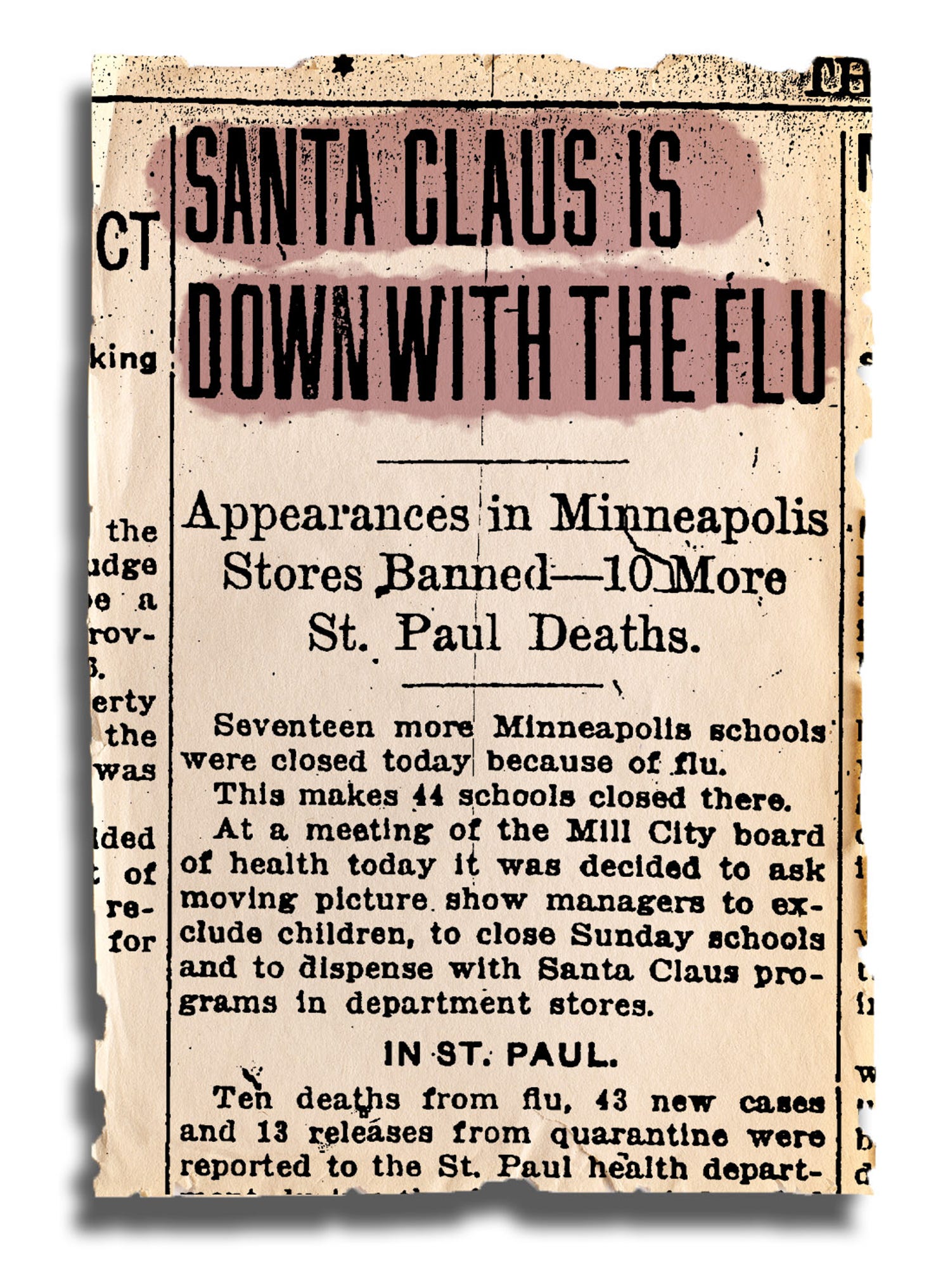
On Dec. 6, the St. Paul Daily News announced that more than 40 Minneapolis schools were closed because of the flu, below the headline “SANTA CLAUS IS DOWN WITH THE FLU.” Health officials asked “moving picture show” managers to exclude children, closed Sunday schools and ordered department stores to dispense with “Santa Claus programs.”

On Christmas Eve, health officials in Nebraska made influenza a mandatory quarantine disease, and fines ranged from $15 to $100 for violations. Approximately 1,000 homes in Omaha were placarded, meaning their occupants were unable to leave for at least four days after the fever had subsided.

In Denver, the Salvation Army canceled its annual Christmas parties for children, and the Women’s Press Club canceled its New Year’s Eve ball. School Christmas assemblies were canceled in Fall River, Massachusetts, and families with an influenza patient in their homes were warned not to entertain guests and barred from borrowing books from the library.

By January, the USA was fully engulfed in its third wave of influenza. The virus spread throughout the winter and spring, killing thousands more. It infected one-third of the world’s population and killed approximately 675,000 Americans before subsiding in the summer of 1919.

“What did they do wrong? That’s hard to say, but all of these measures are like Swiss cheese. They have holes, so you try to use as many layers as possible,” Markel said. “To me, those surges just represented whether there was social distancing or not. Flu didn’t stop circulating, the question was when did people go out and get exposed to it? And that’s what’s going on now.”

A warning for 2020: ‘Stay home and stay safe’

A century later, the nation has recorded more than 12 million cases of COVID-19, and more than 255,000 people in the USA have died. Dozens of states reimplemented coronavirus-related restrictions, and health officials echo the stay-at-home guidance issued decades ago.

“The risk of not traveling is less than the risk of traveling,” Anthony Fauci, the nation’s leading infectious disease expert, told USA TODAY Wednesday. “During this interesting period of a lot of infection going on, colder weather, indoors: Do you want to travel and go to a Thanksgiving meal where there may be 12, 15, 20 people?”

Fauci said his three adult daughters won’t come home for Thanksgiving this year. Hutchinson, the Chicago-based curator who had COVID-19 in April, said she plans to celebrate Thanksgiving at home with her dog and Facetime family members. Markel, in Ann Arbor, said he plans to eat Thanksgiving dinner alone, downsize from a full turkey to a sliced turkey breast and Zoom with family.

If history tells us anything, Markel said, it’s that “the risk of contracting the virus or spreading the virus by congregating in groups or even traditional holiday parties is right now too great.”

“It is disappointing, but let’s get through this, so we can celebrate many, many more Thanksgivings,” he said. “The better part of valor is to stay home and stay safe.”

Economists nervously watching pandemic for signs of further financial impacts

https://www.washingtonpost.com/politics/2020/11/23/finance-202-economists-nervously-watching-pandemic-signs-further-financial-impacts/

BLINKING RED: This is a critical week in the coronavirus pandemicEconomists are nervously watching as much of the nation experiences a worsening fall wave, with U.S. case counts near 200,000 a day and record hospitalizations in many parts of the country, my colleagues Paulina Firozi, Lena H. Sun and Hannah Knowles report

Whether a crest arrives soon could largely be determined by the Thanksgiving holiday, as the Centers for Disease Control and Prevention and health experts warn against traveling and many of the once commonplace rituals of family gatherings. 

  • Early data doesn’t look great: More than 1 million people went through Transportation Security Administration checkpoints in the nation’s airports on Friday — that’s the second-highest single-day rush since March 16. Meanwhile, nearly 80 percent of epidemiologists surveyed recently by the New York Times said they were having Thanksgiving celebrations with people only in their households or not at all.
  • One bright spotA third vaccine, made by AstraZeneca, is 90 percent effective if administered in two doses (a half-dose followed by a full-dose booster) and is easier to store than vaccines by Pfizer and Moderna, my colleagues reported this morning. 
  • “The Oxford-AstraZeneca vaccine is likely to be cheaper than those made by Pfizer and Moderna, and it does not need to be stored at subzero temperatures but can be kept in ordinary refrigerators in pharmacies and doctor’s offices,” they wrote.

A Season of COVID uncertainty

https://www.axios.com/season-covid-uncertainty-7558f740-88f8-4934-8686-2e799811a36d.html

Illustration of a dead tree with surgical masks on the branches blowing in the wind

The frightening, post-election COVID surge is making everything feel strange, different and unsettled all over again.

Why it matters: With Thanksgiving canceled, doctors quitting their practices and grocers limiting purchase quantities (again), Americans have the ambient sense that our safety net is unraveling. Not only are things not returning to normal, they may not return to normal for a long time.

The people and institutions we look toward for guidance and leadership — like elected officials and medical authorities — seem as flummoxed by the pandemic as we are. They issue new rules day by day (closing schools, restricting shopping, issuing curfews), yet look helpless and flailing as infections rise.

  • Our comforting touch points, like family get-togethers and holiday rituals, are suddenly off-limits.
  • There are fewer entertainments and distractions, with movie theaters closed and our appetites for TV bingeing satiated a long time ago.
  • For those who derive comfort from their faith, remote worship offers less fulfillment.

Strangely, CEOs and corporate America have been serving as a rare anchor in this unmoored reality, attempting to provide some moral suasion and fueling the engine behind the stock market’s rally.

  • Companies like Pfizer and Moderna are looking like the heroes of the day — though their vaccines can’t come soon enough to allay our worst fears.
  • Meanwhile, the restaurateurs and merchants who form the pillars of our communities are suffering with growing intensity before our eyes.

Economically, the nation is heading into uncharted territory, with COVID-related uncertainty obliterating all forecast attempts.

  • While many Americans are doing fine financially, it’s hard not to think that a lot of people’s personal finances may be poised to head off a cliff — and the promise of federal help is looking questionable.

Politically, the standoff between President Trump and the rightfully elected new administration has left a vacuum.

  • By all accounts, the situation is thwarting efforts to attack the coronavirus.

Socially, we feel isolated and trapped in our pandemic ruts, not even permitted to savor the promise of holidays we’ve been looking forward to.

  • Doctors say pandemic-induced loneliness will shorten life expectancies.

Culturally and intellectually, the arts, concerts, films and literary output that we rely on to enhance our lives are dampened or depressed by pandemic strictures.

Emotionally, we worry about ourselves, our loved ones and all of our futures. How will the pandemic stunt my child’s education, my career trajectory, my experience of the world? And what if I get sick and there’s no hospital bed available?

  • “Thousands of medical practices have closed during the pandemic,” per the NYT.

What’s next: “Next Thanksgiving will be different,” Anthony Fauci of the National Institute of Allergy and Infectious Diseases told CNN’s Chris Cuomo on Thursday.

  • Americans who persevere through 2021 will, we can all hope, weather this turmoil and see flourishing times ahead.

Over 1 million U.S. travelers flew on Friday, despite calls to avoid holiday travel

https://www.axios.com/1-million-air-travel-friday-holiday-plane-coronavirus-033f9f0e-5c13-40aa-a6b6-0affe81dbf60.html

Is Windows 10 an Impending Disaster for Microsoft? - Life, Liberty, and  Technology

More than 1 million people flew through U.S. airports on Friday, according to TSA data, the second highest number since the coronavirus pandemic began hit the U.S. in mid-March.

Why it mattersAs coronavirus cases and hospitalizations continued to soar this week, the CDC issued new guidance on Thursday advising Americans not to travel for Thanksgiving, warning doing so may increase the chance of getting and spreading COVID-19.

By the numbers: The 1,019,836 people TSA screened at U.S. airports on Friday is still less than half the number (2,550,459) that passed through screenings on the same weekday a year ago.

  • TSA screened 1,031,505 passengers on Oct. 18, the highest number since March 17.

Go deeper: Americans line up for coronavirus testing ahead of Thanksgiving

U.S. coronavirus hotspots far outpacing Europe’s

America’s coronavirus outbreak has surpassed Europe’s.

Why it mattersIt wasn’t long ago that public health experts were pointing to Europe as a warning sign for the U.S. But the U.S. now has a higher per capita caseload than the EU ever has during its recent surge.

By the numbers: As of Saturday, 15 states had higher per capita caseloads, averaged over seven days, than the European country with the highest caseload — Luxembourg.

  • The U.S. overall saw 52.4 cases per 100,000 people. The EU saw 37.6 per 100,000 on Saturday, and peaked at 46.7 cases per 100,000 on Nov. 8.

The big pictureEurope’s steady rise in coronavirus cases over the last couple of months prompted many countries to bring back lockdowns or other strict behavioral restrictions.

  • Meanwhile, in the U.S., some of the hardest-hit states — like Iowa — are just now adopting mask mandates, and airports over the weekend were packed with people traveling for Thanksgiving.

Yes, but: Cases in the hardest-hit states are starting to trend down, a sign that people are modifying their behavior on their own.

What we’re watching: There’s no sign that the number of U.S. cases nationally is going to stop rising anytime soon, especially in the absence of strong federal or state restrictions.

  • Hospitalizations and deaths lag behind cases by a few weeks. That means that Europe likely has easier days ahead, while America’s dark days are just getting started.
  • In the U.S., today’s overwhelmed hospitals will continue to keep getting hit with ever-growing caseloads for awhile.

Go deeper: See all U.S. states’ and EU countries’ per capita caseloads.

AstraZeneca vaccine up to 90% effective and easily transportable, company says

Coronavirus vaccine by AstraZeneca and Oxford up to 90 percent effective -  The Washington Post

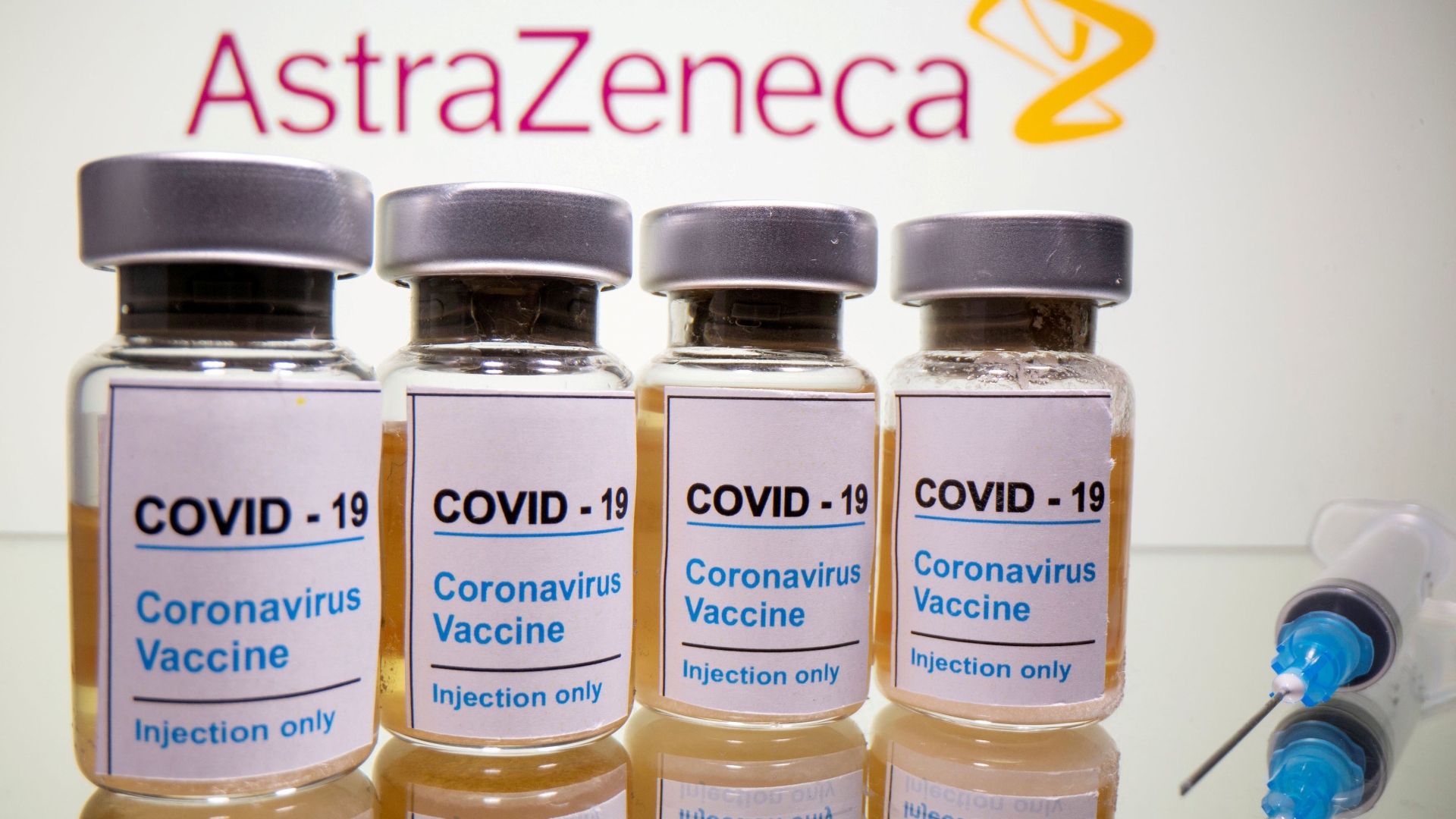
AstraZeneca on Monday became the third pharmaceutical company to announce remarkable results from late-stage trials of a coronavirus vaccine, saying that its candidate, developed by Oxford University, is up to 90 percent effective.

This is the third straight week to begin with buoyant scientific news that suggests, even as coronavirus cases surge to devastating levels in many countries, an end to the pandemic is in sight.

Pfizer and its German partner BioNTech and Moderna have each reported vaccines that are 95 percent effective in clinical trials. A direct comparison to the Oxford-AstraZeneca vaccine is complicated, due to the trial design, but the vaccine may be a more realistic option for much of the world, as it is likely to be cheaper and does not need to be stored at subzero temperatures.

Peter Piot, director of the London School of Hygiene & Tropical Medicine, who was instrumental in the battle against AIDS, said the positive results from three vaccine candidates cannot be overestimated.

“2020 will be remembered for the many lives lost from covid-19, lockdowns and the U.S. election. Science should now be added to this list,” said Piot, adding, “the only way to stop covid-19 in its tracks is having multiple effective and safe vaccines that can be deployed all around the world and in vast quantities.”

“I’m totally delighted,” said Hildegund C.J. Ertl, a vaccine expert at the Wistar Institute in Philadelphia. Adding to the results from Pfizer and Moderna, “what it tells me is this virus can be beaten quite easily: 90 to 95 percent efficacy is something we’d dream about for influenza virus, and we’d never get it.”

The Oxford-AstraZeneca team said in a video conference with journalists that its candidate offered 90 percent protection against the virus when a subject received a half-dose, followed with a full dose one month later. Efficacy was lower — 62 percent — when subjects received two full doses a month apart. The interim results, therefore, averaged to 70 percent efficacy.

Andrew Pollard, chief investigator of the Oxford trial, said the findings showed the vaccine would save many lives.

“Excitingly, we’ve found that one of our dosing regimens may be around 90 percent effective, and if this dosing regimen is used, more people could be vaccinated with planned vaccine supply,” he said.

Britain has preordered 100 million doses — which at a dose and a half per person would cover most of its population. The United States has ordered 300 million.

The results have yet to be peer-reviewed or published, and will be scrutinized by regulators. Many questions remain, including whether the vaccine can reduce transmission of the virus by people without symptoms, which would have repercussions for how soon people could stop wearing masks. It is also unclear how long the immunity from the vaccine lasts — a crucial question.

Sarah Gilbert, a lead Oxford researcher, cautioned that the dose-and-a-half regimen would have to be more closely studied to be fully understood. But she said the first half-dose might be priming a person’s immune system just enough, and that the second booster then encourages the body to produce a robust defense against sickness and infection.

AstraZeneca and Oxford have been conducting Phase 3 clinical trials worldwide, with the most recent data coming from an interim analysis based on 131 coronavirus infections in Britain and Brazil among 10,000 volunteers, with half getting the vaccine and half getting a placebo.

The company said it would present the results to Britain’s health-care products regulators immediately and would seek approval to fine-tune its clinical trials in the United States, to further assess the half-dose shot followed by a booster.

Because the vaccine is already in production, if approved, the first 4 million doses could be ready in December, and 40 million could be delivered in the first quarter of 2021, company executives said. By the spring, the company and its global partners in India, Brazil, Russia and the United States could be cranking out 100 million to 200 million doses a month.

British Health Secretary Matt Hancock said “should all that go well, the bulk of the rollout will be in the new year.”

In a statement to Parliament, Prime Minister Boris Johnson said that vaccines were “edging ever closer to liberating us from the virus, demonstrating emphatically that this is not a pandemic without end. We can take great heart from today’s news, which has the makings of a wonderful British scientific achievement.”

World markets have rallied on optimistic vaccine news, though shares in AstraZeneca were down Monday on the London stock exchange.

No participants who received the vaccine developed severe cases or required hospitalization, AstraZeneca said Monday. The drugmaker also said that no “serious safety events” were reported in connection with the vaccine, which was typically “well tolerated” by participants regardless of their dosing levels or ages.

The vaccine uses a harmless cold virus that typically infects chimpanzees to deliver to the body’s cells the genetic code of the spike protein that dots the outside of the coronavirus. That teaches the body’s immune system to recognize and block the real virus.

Although the reason the regimen with an initial half-dose worked better remains to be teased out, Ertl said that it could be related to the fact that the body’s immune system can develop a defense system to block the harmless virus that’s used to deliver the spike protein’s code. Giving a smaller initial dose may lessen those defenses, and make the vaccine more effective.

Several other vaccines in late-stage development use a similar technology, harnessing a harmless virus to deliver a payload that will teach the immune system how to fight off the real thing — including the Johnson & Johnson vaccine, the Russian vaccine being developed by the Gamaleya Research Institute and the vaccine made by CanSino Biologics in China.

While the results released by AstraZeneca indicate somewhat lower efficacy than Pfizer and Moderna, the vaccine can be stored and transported at normal refrigerated conditions for up to six months. That could make it significantly easier to roll out than Pfizer’s vaccine, which has to be stored at minus-70 degrees Celsius, or Moderna’s, which is stable in refrigerated conditions for only 30 days and must be frozen at minus-20 degrees Celsius after that.

The Oxford-AstraZeneca vaccine was first developed in a small laboratory running on a shoestring budget by Gilbert at Oxford and her team. The university kicked in 1 million pounds ($1.3 million) and then sought a manufacturing partner, before settling on AstraZeneca.

“We wanted to ensure there wouldn’t be any profiteering off the pandemic,” said Louise Richardson, the university’s vice chancellor, so that their vaccine would be widely distributed “and wouldn’t just be for the wealthy and the first world.”

The scientists said that although it appeared to be a race, or a competition, among the front-running vaccine developers, no one company could produce by itself the millions of doses needed to end the pandemic.

“We don’t have enough supply for the whole planet,” Pollard said, adding that the important message is that today there are at least three highly effective, safe vaccines, that also appear to work well among the elderly, and that they are produced using different technologies, ensuring the quickest route to manufacture the billions of doses that will be necessary.

Pollard said it is “unclear why” the different vaccines were producing different results, and he said he and the scientific community awaited full data sets from all the clinical trials to fully understand what is going on. He said different studies were also using different end points to describe efficacy.

“At this moment we can’t fully explain the differences,” Pollard said. “It’s critical to understand what everyone is measuring.”

1,000 Cleveland Clinic workers sidelined due to COVID-19

Cleveland Clinic fires doctor who posted anti-semitic comments, threats on  social media | Healthcare Finance News

Cleveland Clinic has about 1,000 employees away from work due to COVID-19, the health system told Becker’s Nov. 23.

The count includes 925 workers in Ohio and other workers across the health system, which also has locations in Florida and Las Vegas. It is an increase from about 800 Cleveland Clinic employees in Ohio reported sidelined as of Nov. 16.

Cleveland Clinic spokesperson Andrea Pacetti said the increase in the number of employees affected by COVID-19 reflects more spreading of the virus in the community and in Ohio, and most affected employees are contracting the virus in the community. 

Due to a surge in cases, Cleveland Clinic has taken steps to ensure enough staffing to meet patients’ needs, said Ms. Pacetti. This includes shifting some employees to different areas of the health system to enable Cleveland Clinic to expand bed capacity for COVID-19 patients.

“We are also evaluating our surgical schedule weekly based on hospital occupancy and admissions of patients with COVID-19,” Ms. Pacetti said. “Our leadership meets every day and reviews our staffing to ensure we can provide the highest quality care to all our patients.”

Cleveland Clinic also urges the public to help reduce the spread of the virus so the health system can continue to care for COVID-19 patients and patients who need care but who don’t have the coronavirus. 

“This isn’t just a Cleveland Clinic issue, but true for the whole state. We are asking the community to follow guidelines — wear masks, social distance and wash your hands — so we can keep our medical teams healthy,” Ms. Pacetti said.

Cleveland Clinic has about 50,000 employees in Ohio.