It’s Official: CDC Recommends Public Wear Face Masks

https://www.medpagetoday.com/infectiousdisease/covid19/85800?xid=NL_breakingnewsalert_2020-04-04&eun=g885344d0r&utm_source=Sailthru&utm_medium=email&utm_campaign=CDCMasksAlert_040420&utm_term=NL_Daily_Breaking_News_Active

A computer rendering of the coronavirus

Stresses use of cloth coverings, not medical grade, for ordinary people.

The CDC is now recommending that everyone should wear a cloth face covering when out in public places to protect others in case they are unknowingly infected with the virus.

Late Friday night, the agency updated its consumer-facing web page for COVID-19 self-protection as follows:

  • Cover your mouth and nose with a cloth face cover when around others.
  • You could spread COVID-19 to others even if you do not feel sick.
  • Everyone should wear a cloth face cover when they have to go out in public, for example to the grocery store or to pick up other necessities.
  • Cloth face coverings should not be placed on young children under age 2, anyone who has trouble breathing, or is unconscious, incapacitated or otherwise unable to remove the mask without assistance.
  • The cloth face cover is meant to protect other people in case you are infected.
  • Do NOT use a face mask meant for a healthcare worker.
  • Continue to keep about 6 feet between yourself and others. The cloth face cover is not a substitute for social distancing.

Because there is currently no vaccine nor approved treatment, the agency stressed that the best strategy for preventing illness is still to avoid exposure to the virus. Even asymptomatic people can spread coronavirus to others, the CDC stressed.

During a White House briefing on Friday evening, President Trump underscored the CDC’s advice to Americans who are not clinicians, that they not wear “medical-grade or surgical -grade” masks. These are now in shortage at many hospitals, forcing administrators to adopt last-ditch strategies to extend supplies.

But Trump said he has no plans to follow the recommendation himself to wear a mask in public. “I’m choosing not to do it,” he said at the Friday briefing.

The SARS-CoV-2 virus is transmitted primarily through person-to-person contact from people who are in close contact, meaning less than 6-feet apart; through respiratory droplets, projected in a sneeze or cough that land in the mouths and noses of people nearby and can be inhaled into their lungs, but importantly the virus can also be transmitted through talking.

Researchers reported earlier in the week that the coronavirus could be spread through normal breathing and speechLarge droplets remain one method of transmission, when they are inhaled by a person nearby or through contact with a contaminated surface and later touching one’s face. However, researchers noted that tiny particles in the air can also carry the virus.

Former FDA Commissioner Scott Gottlieb, MD, recommended last weekend that “everyone, including people without symptoms, should be encouraged to wear nonmedical fabric face masks while in public.”

While asymptomatic transmission of the virus outside of China was discovered in late January, White House officials had initially suggested that it was not an important driver of transmission. “You really need to just focus on the individuals that are symptomatic,” HHS Secretary Alex Azar told ABC News in March.


How hospital capacity varies dramatically across the country

https://www.healthcaredive.com/news/how-hospital-capacity-varies-dramatically-across-the-country/574892/

POPULATION                                    BED COUNT 

20M                      10M people                            0                          0                         25k beds                     50k

LUMEDX (@Lumedx) | Twitter

Healthcare Dive analyzed data to paint a picture of hospital capacity, pinpointing areas with a higher ratio of people to beds and signaling where there is a risk for capacity issues.

Fewer hospital beds in select regions make them especially vulnerable to the novel coronavirus as it’s expected to spread from big city hot spots to other areas of the country.

As the U.S. has become the next epicenter of the outbreak, hospitals are preparing for the worst. The pathogen threatens to overwhelm their facilities and resources, especially if mitigation efforts fail to blunt a surge of COVID-19 patients.

The latest figures from the Johns Hopkins Coronavirus Resource Center report more than 143,000 confirmed cases in the U.S. and more than 2,500 deaths as of Monday.

The New York City metro area has the most beds compared to the rest of the country. Still, that is not enough capacity to meet the crushing demand.

To illustrate hospital capacity across the country, Healthcare Dive sought to compare bed counts to population, and found population size isn’t always indicative of the number of beds available.

Population size is not always indicative of bed capacity in the top 20 metro areas

Below are the 20 most populated metro areas in the U.S., sorted by population. As you move down the chart, population size decreases, but bed counts do not always. Areas like D.C. and Seattle have fewer beds relative to population size, while Miami and Philadelphia have more beds relative to population.

Some areas like Washington, D.C., have relatively fewer beds compared to their population, while others like Miami, Philadelphia and St. Louis have more beds relative to the number of people in the region.

Some hospitals are turning to hotels and tents, and Vice President Mike Pence has said he’s working with the Department of Defense to get field hospitals and other options online.

Still, researchers cautioned there is a long way to go to meet projected demands. If America’s healthcare system was able to free up half of its beds by discharging patients, the country would still need three times as many beds, Ashish Jha, director of the Harvard Global Health Institute, told reporters during a call on Tuesday. That projection assumes 40% of Americans get infected over the next six months.

“What we know right now is that capacity to manage patients varies dramatically from community to community,” Jha said.

Areas with the highest ratio of people per bed

To paint a picture of hospital capacity across the country, Healthcare Dive used CMS cost reports and population data to calculate the ratio of people per bed in metropolitan areas and regions. In other words, how many residents are there for a single bed? It’s a way to pinpoint areas with a higher ratio of people to beds, signaling areas potentially at risk for capacity issues.

HOW HEALTHCARE DIVE ANALYZED HOSPITAL BED COUNTS

Hospitals certified by Medicare are required to submit annual cost reports to CMS, which include a vast array of information from bed counts to financials. Hospital beds analyzed in this report do not include all the beds a hospital may have reported to CMS.

Healthcare Dive excluded nursery, labor and delivery beds and psychiatric hospitals. In addition, due to the inconsistent reporting in ICU beds, Healthcare Dive did not highlight areas with higher ratios of people per ICU bed. It’s also important to note that some hospitals may have opened or closed since these latest CMS cost reports were published.

Healthcare Dive analyzed specific geographic areas, in this case metropolitan CBSAs, or core-based statistical areas, which are geographic areas that consist of an urban center of 50,000 people or more.

In the U.S., about 42% of the more than 143,000 cases are concentrated in New York, overwhelming available resources. Still, case counts are swelling in areas outside of New York including Chicago, Detroit and New Orleans. Indicating the outbreak is likely to be widespread in America.

Healthcare Dive found the Bloomsburg-Berwick, Pennsylvania, area has the lowest ratio in the nation with 86 people for each bed. Most areas have much higher ratios, the median being around 400 people per bed when comparing CBSAs. The metro area of New York City sits in the middle with 405 people per bed.

The Greeley, Colorado area has the nation’s highest ratio of people per bed, according to the data. About 60 miles northeast of Denver and with a population of more than 314,000, there are 1,397 people for every one hospital bed in the Greeley area.

The CMS data shows a total of 225 hospital beds in the Greeley area, operated by Banner Health’s North Colorado Medical Center.

However, a new 50-bed hospital opened recently and was not included in the most recent cost reports. It is operated by UCHealth.

Still, while those numbers may seem grim, Colorado’s hospital leaders cautioned that the state can and is working to tap into additional resources, citing freestanding emergency rooms and ambulatory surgical centers.

It’s imperative to look beyond just one locale or one hospital and consider the resources of the state as a whole, Colorado’s hospital leaders told Healthcare Dive.

Colorado has a total of 10,293 hospital beds (12,558 licensed beds) and at least 973 ICU beds, the Colorado Hospital Association said.

“It’s going to take the whole system for us to get through this,” Julie Lonborg, senior vice president at the Colorado Hospital Association, told Healthcare Dive.

There are only one or two hospitals in almost all of the 10 regions with the highest ratio of people per bed. Rounding out the top 10 areas with the highest ratio of people per bed following Greeley, include Albany, Oregon; Gettysburg, Pennsylvania; Merced, California; California-Lexington Park, Maryland; Bremerton-Silverdale, Washington; Lawrence, Kansas; Monroe, Michigan; Provo-Orem, Utah; and Ogden-Clearfield, Utah.

The data shows the total bed capacity in a region, but does not take into account the patients currently occupying those beds. However, in an effort to free up existing beds, many hospitals have halted elective surgeries, including in Greeley to free up resources and staff to be able to respond to a potential surge.

“UCHealth Greeley Hospital is caring for a large number of patients at this time, and by working together as a large system, UCHealth is able to redirect patients and admissions to other facilities to help even out our capacities at this and other hospitals,” Kelly Tracer, a spokesperson for the hospital, told Healthcare Dive.

In fact, many hospitals plan to lean on the larger systems they’re a part of to shuffle resources to respond to the pandemic.

In Gettysburg, Pennsylvania, there are 76 hospital beds and 1,353 people per hospital bed. WellSpan Health, which operates Gettysburg Hospital, said it plans to coordinate its response by using its eight other hospitals in different areas and some 200 locations.

“We are taking a comprehensive approach to this issue, developing a network of more than 10 outdoor testing locations across our five-county region and temporarily repurposing several of our outpatient medical practices to care locations dedicated solely for the treatment of patients who are suspected or confirmed to have COVID-19 and have non-emergency medical needs,” according to a statement WellSpan Health provided Healthcare Dive.

Other locations with the highest people per bed ratio are converting existing space into dedicated areas to treat COVID-19 patients to prepare for a crush of patients, including in Lawrence, Kansas, with 893 people for every bed.

Lawrence Memorial Hospital in Lawrence, Kansas, about 40 miles west of Kansas City, is prepared to up its capacity to 205, LMH said in a statement. The hospital reported 136 beds to CMS but said it is licensed for 174.

“At any given time we have upwards of 100 patients,” Traci Hoopingarner, vice president of clinical care and chief nursing officer for LMH Health, said in a statement.

As New York continues to grapple with mounting cases, leaders are issuing dire warnings to the rest of the country.

“New York is the canary in the coal mine. What happens to New York is going to wind up happening in California and Washington state and Illinois. It’s just a matter of time,” New York Gov. Andrew Cuomo said.

Below is an interactive table of hospital bed availability in different metros across the country. Search for your metro area to find the corresponding hospital capacity.


‘I just don’t understand why we’re not doing that’: Fauci calls for nationwide stay-at-home order, despite Trump’s resistance

https://www.washingtonpost.com/politics/2020/04/03/i-just-dont-understand-why-were-not-doing-that-fauci-calls-nationwide-stay-at-home-despite-trumps-resistance/?fbclid=IwAR0wkT53s_ATpUIp8aOHIU00KufxsoX8m5HgukQYwAtdZFMMhEJbmBsjTg0&utm_campaign=wp_main&utm_medium=social&utm_source=facebook

Fauci differs with Trump on nationwide stay-at-home orders - The ...

Trump has said certain states can treat the coronavirus outbreak differently. Fauci publicly disagreed Thursday night.

As certain states have continued to lag behind others in issuing stay-at-home orders, the White House has also resisted a more drastic step: demanding that states get with the program.

Vice President Pence made it clear Wednesday that President Trump has decided he doesn’t want to tell states what to do. “At the president’s direction, the White House coronavirus task force will continue to take the posture that we will defer to state and local health authorities on any measures that they deem appropriate,” Pence said.

Pressed again on Thursday after Georgia Gov. Brian Kemp (R) finally got on board with a stay-at-home order, Trump again signaled that the task force won’t seek to compel states. “I think it’s about 85 percent of the states have got the stay at home,” Trump said. “Brian’s a great governor; it’s his decision.”

The thing is, though, Trump is wrong. Eighty-five percent of states are not on board. A New York Times compilation shows that 12 states still have not taken this step. Localities within some of those state have, and the vast majority of the United States is under such orders, population-wise, but this is still not a blanket policy being applied across the country.

And for the first time, Anthony S. Fauci is signaling his frustration with that. After the White House had for days played off this question, the director of the National Institute of Allergy and Infectious Diseases appeared on CNN on Thursday night and for the first time made his position on that issue clear.

“If you look at what’s going on in this country, I just don’t understand why we’re not doing that,” he told Anderson Cooper. “We really should be.”

The question was about a federal mandate and not whether states should take this step themselves, and Fauci was careful to recognize valid questions about states’ rights. But he was also clear that he thinks this should be a nationwide policy, one way or another.

“I think so, Anderson,” Fauci added at another point. “I don’t understand why that’s not happening.”

Part of the reason it’s not happening is that this request has not been enunciated by the president like it was by Fauci on Thursday night. Florida Gov. Ron DeSantis (R) said earlier this week that he was waiting for Trump to tell him what to do. DeSantis eventually succumbed to the pressure himself, but in making his announcement, he cited Trump’s tone about the severity of the issue.

In other words, what the president says matters. And just like Florida and Georgia, all of the 12 remaining holdout states are run by Republican governors. Trump’s say-so would likely carry significant weight with them.

But Trump isn’t just declining to lean on them; he also continues to cling to the idea that certain areas of the country can treat the outbreak differently because they aren’t yet as hard-hit. Asked Wednesday why he wasn’t telling every state to do this, Trump said it was “because states are different.”

“There are some states that don’t have much of a problem,” Trump said. “There is some — well, they don’t have the problem. They don’t have thousands of people that are positive or thousands of people that even think they might have it, or hundreds of people in some cases.”

Trump added: “You have to give a little bit of flexibility. We have a state in the Midwest or if Alaska, as an example, doesn’t have a problem, it’s awfully tough to say close it down.”

About 24 hours later, Fauci offered a diametrically opposed view on this question, saying that every state should have a stay-at-home order. The statement both reinforced that there are certain disconnects between the president and his top health officials and added to pressure on everyone to fall in line.

Plenty of governors have resisted this step, only to succumb to the realities in their states. Fauci is essentially asking: Why are you waiting to be the next one?


Federal pandemic money fell for years. Trump’s budgets didn’t help

https://www.politifact.com/article/2020/mar/30/federal-pandemic-money-fell-years-trumps-budgets-d/?fbclid=IwAR3Z3CZ-bU6n4Q5IxIVgsFey0ELs2F6uplsqCHpkLlHN61m5-yQ637SKqeM

PolitiFact (@PolitiFact) | Twitter

IF YOUR TIME IS SHORT

  • Federal support to build state and local capacity to manage a new viral crisis fell by 50% after 2003.
  • The decline in federal aid spans three presidencies and many sessions of Congress.
  • President Donald Trump sought $100 million in cuts that would have made the situation harder.

President Donald Trump’s critics have charged that he undermined efforts that could have helped the nation respond faster and better to the coronavirus. He’s been criticized for downgrading the focus on pandemic threats on the National Security Council and chastised for seeking budget cuts at the Centers for Disease Control and Prevention.

That isn’t the full story of U.S. pandemic preparedness.

The broader picture is that money to prepare for this day has steadily dwindled over the past 15 years — across three presidents and many sessions of Congress.

The funds for pandemics remained about the same under Trump (and would have been lower if his budgets were enacted). But compared with where funding stood in 2003, support to build state and local capacity has fallen by half.

As hospitals and public health agencies aimed for leaner, more efficient operations, the combination of fewer federal dollars and market pressures left them with little cushion to meet the explosive demands of the novel coronavirus.

Over the years, Washington put more emphasis on fighting predictable problems, like the seasonal flu, and outright aggression in the form of chemical, biological and radiological terrorism.

Sandro Galea, dean of Boston University’s School of Public Health, said people like him have been hamstrung in the debate.

“Public health has been on the defensive,” Galea said. “There’s been no space except for talk of bioterrorism. The discussion about investing in the public health system has been utterly sidelined.”

The long-term decline

Frontline readiness for a pandemic depends on many factors.

There have to be enough people with the right skills; enough beds, equipment and materials to treat patients; and the right practices to coordinate efforts across a region. Federal money helps support all of that.

The Centers for Disease Control and Prevention distributes grants to state and local public health agencies, labs and hospitals. In nominal dollars, the funding for the CDC’s Public Health Emergency Preparedness grants went from $939 million in 2003 to $675 million in 2020.

Private health providers get money through a hospital preparedness program within the Health and Human Services Department. It helps local coalitions of hospitals, public health agencies and emergency managers plan and get ready for a sudden health threat. That money went from $515 million to $275 million in the same 17-year period.

Corrected for inflation, combined spending went from over $2 billion in 2003 to a bit under $1 billion in 2020.

These programs came to the fore after the Sept. 11 attacks when concern over bioterrorism spiked. For lawmakers, the concern was personal — letters tainted with anthrax reached Capitol Hill.

But the money gradually faded, and the capacity of state and local public health departments and labs did not keep pace with the likelihood of a viral disease like COVID-19.

“Health departments can’t retain workforce or modernize their disease surveillance and laboratory capacity without adequate, long-term funding,” said Dara Lieberman, director of government relations with Trust for America’s Health, a public health advocacy group. “Today, we’re paying the price.”

Local health systems needed to do their part, but the federal government was uniquely positioned to help.

“The purchasing power of the federal government is second to none, and it has failed to stockpile or otherwise negotiate pipelines to get access to the personal protective gear and medical equipment that it has known with certainty would be needed in a respiratory pandemic,” said Ellen Carlin at Georgetown University’s Center for Global Health Science and Security.

But the news hasn’t been all bad. 

After the Ebola scare in 2014, Washington and the states showed renewed interest in preparing for a naturally occurring viral threat.

Congress provided a bit of extra money, and according to a Health and Human Services study the improvement was striking: In 2014, about 70% of hospital administrators said they were unprepared for an emerging infectious disease like Ebola. Three years later, only 14% said they weren’t ready.

But hospital leaders also warned that it was hard for them to maintain that level “given competing priorities for hospital resources and staff time.”

Local hospitals and public health agencies have come a long way since 2003, said Crystal Watson, assistant professor, at the Johns Hopkins Center for Health Security and former staffer at the Homeland Security Department.

But she said they faced multiple pressures. In addition to falling federal support, Watson said the demand to maintain a healthy bottom line helped shape the situation today.

“Hospitals are under pressure to be efficient,” Watson said. “They don’t stockpile tons of equipment and materials and they don’t have tons of empty beds because that is not profitable. When you need more supplies, and more personnel, that’s when you learn what you lack.”

Today, Watson said, the lesson is clear.

“In retrospect, none of this has been funded at the level it should have been,” she said.

A thinly stocked stockpile

This crisis has also revealed the cracks in the Strategic National Stockpile, the current go-to source for ventilators, masks and other essential needs. States have clamored for supplies, and so far, deliveries have lagged far behind demand.

During her time with Homeland Security, Watson contributed to an assessment of the Strategic National Stockpile. Watson said the stockpile was designed with a long list of threats in mind, from chemical and biological terrorism to natural disasters. Something like COVID-19 would be just one threat among many.

“It’s primary purpose, and where it had more of a focus, was on bioterrorism,” Watson said. “That’s understandable. Who else but the government is going to buy a vaccine to protect the population against smallpox?”

The most recent strategic plan for the stockpile reflects the competing demands.

It mentions emerging infectious disease 15 times. Preparing for anthrax shows up nearly 50 times.

Criticisms of Trump need context

As the first cases emerged in the United States, Democrats criticized Trump’s preparedness on two fronts: He eliminated a key office in the National Security Council, and he tried to cut the CDC’s budget. 

The budget claims have merit. The complaints about the National Security Council  are reasonable, but could be more organizational streamlining than a loss of capability.

Until the spring of 2018, the National Security Council had an office that focused on global health and biodefense. When John Bolton took the lead on the council, he crafted an overall organizational reshuffle.

The functions of the global health division were absorbed into the council’s division that dealt with weapons of mass destruction and biodefense. The White House established a Biodefense Steering Committee headed by the Health and Human Services secretary, and issued a National Biodefense Strategy.

At the time, the Center for Strategic and International Studies think tank said the White House should name a senior-level leader to oversee the policy. The White House did not follow that advice.

The Trump campaign pointed to arguments from Bolton and the former senior director of the council, Tim Morrison, rejecting the idea that they lost their focus on this kind of threat.

On the budget, Trump unsuccessfully pressed for cuts in programs that relate directly to the current crisis. In his 2018 budget, he proposed cutting over $100 million from programs aimed specifically at strengthening public hospitals and labs — a 17% reduction. For fiscal year 2020, he wanted to cut $100 million, again about 17%, from programs that target emerging and zoonotic infectious diseases.

Congress ignored the president’s budget plans and largely kept the flow of dollars steady, even increasing them slightly. 

In 2018, Congress created a new Infectious Diseases Rapid Response Reserve Fund to provide quick money between the time when a crisis strikes and Congress delivers aid with real heft. The fund held $135 million when HHS secretary Alex Azar declared a health emergency in early February, which freed up that money.

That doesn’t mean the Trump administration’s preferences had no effect, said Tony Mazzaschi, with the Association of Schools and Programs of Public Health, a group that lobbies Congress on behalf of public health schools. The threat of cuts made the status quo seem like a win when it wasn’t.

“One of the perverse things that happens is the public health community has to play defense and can’t argue for increases,” Mazzaschi said.


California Hospitals Face Surge With Proven Fixes And Some Hail Marys

https://khn.org/news/california-hospitals-face-surge-with-proven-fixes-and-some-hail-marys/

California Hospitals Face Surge With Proven Fixes And Some Hail ...

California’s hospitals thought they were ready for the next big disaster.

They’ve retrofitted their buildings to withstand a major earthquake and  whisked patients out of danger during deadly wildfires. They’ve kept patients alive with backup generators amid sweeping power shutoffs and trained their staff to thwart would-be shooters.

But nothing has prepared them for a crisis of the magnitude facing hospitals today.

“We’re in a battle with an unseen enemy, and we have to be fully mobilized in a way that’s never been seen in our careers,” said Dr. Stephen Parodi, an infectious disease expert for Kaiser Permanente in California. (Kaiser Health News, which produces California Healthline, is not affiliated with Kaiser Permanente.)

As California enters the most critical period in the state’s battle against COVID-19, the state’s 416 hospitals — big and small, public and private — are scrambling to build the capacity needed for an onslaught of critically ill patients.

Hospitals from Los Angeles to San Jose are already seeing a steady increase in patients infected by the virus, and so far, hospital officials say they have enough space to treat them. But they also issued a dire warning: What happens over the next four to six weeks will determine whether the experience of California overall looks more like that of New York, which has seen an explosion of hospitalizations and deaths, or like that of the San Francisco Bay Area, which has so far managed to prevent a major spike in new infections, hospitalizations and death.

Some of their preparations share common themes: Postpone elective surgeries. Make greater use of telemedicine to limit face-to-face contact. Erect tents outside to care for less critical patients. Add beds — hospital by hospital, a few dozen at a time — to spaces like cafeterias, operating rooms and decommissioned wings.

But by necessity — because of shortages of testing, ventilators, personal protective equipment and even doctors and nurses — they’re also trying creative and sometimes untried strategies to bolster their readiness and increase their capacity.

In San Diego, hospitals may use college dormitories as alternative care sites. A large public hospital in Los Angeles is turning to 3D printing to manufacture ventilator parts. And in hard-hit Santa Clara County, with a population of nearly 2 million, public and private hospitals have joined forces to alleviate pressure on local hospitals by caring for patients at the Santa Clara Convention Center.

Yet some hospitals acknowledge that, despite their efforts, they may end up having to park patients in hallways.

“The need in this pandemic is so different and so extraordinary and so big that a hospital’s typical surge plan will be insufficient for what we’re dealing with in this state and across the nation,” said Carmela Coyle, president and CEO of the California Hospital Association.

Across the U.S., more than 213,000 cases of COVID-19 have been confirmed, and at least 4,750 people have died. California accounts for more than 9,400 cases and at least 199 deaths.

Health officials and hospital administrators are singling out April as the most consequential month in California’s effort to combat a steep increase in new infections. State Health and Human Services Secretary Mark Ghaly said Wednesday that the number of hospitalizations is expected to peak in mid-May.

Gov. Gavin Newsom said there were 1,855 COVID-19 cases in hospitals Wednesday, a number that had tripled in six days, and 774 patients in critical care. By mid-May, the number of critical care patients is expected to climb to 27,000, he said.

Newsom said the state needs nearly 70,000 more hospital beds, bringing its overall capacity to more than 140,000 — both inside hospitals and also at alternative care sites like convention centers. The state also needs 10,000 more ventilators than it normally has to aid the crush of patients needing help to breathe, he said, and so far has acquired fewer than half.

Newsom and state health officials worked with the Trump administration to bring a naval hospital ship to the Port of Los Angeles, where it is already treating patients not infected with the novel coronavirus. The state is working with the Army Corps of Engineers to deploy eight mobile field hospitals, including one in Santa Clara County. And it is bringing hospitals back online that were shuttered or slated to close, including one each in Daly City, Los Angeles, Long Beach and Costa Mesa.

The governor is also drafting a plan to make greater use of hotels and motels and nursing homes to house patients, if needed.

But the size of the surge that hits hospitals depends on how well the public follows social distancing and stay-at-home orders, said Newsom and hospital administrators. “This is not just about health care providers caring for the sick,” said Dr. Steve Lockhart, the chief medical officer of Sutter Health, which has 22 hospitals across Northern California.

While hospitals welcomed the state assistance, they’re also undertaking dramatic measures to prepare on their own.

“I’m genuinely very worried, and it scares me that so many people are still out there doing business as usual,” said Chris Van Gorder, CEO of Scripps Health, a system with five major hospitals in San Diego County. “It wouldn’t take a lot to overwhelm us.”

Internal projections show the hospital system could need 8,000 beds by June, he said. It has 1,200.

In addition to taking precautions to protect its health care workers — such as using baby monitors to observe patients without risking infection — it is working with area colleges to use dorm rooms as hospital rooms for patients with mild cases of COVID-19, among other efforts, he said.

“Honestly, I think we should have been better prepared than we are,” Van Gorder said. “But hospitals cannot take on this burden themselves.”

Van Gorder and other hospital administrators say a continued shortage of COVID-19 tests has hampered their response — because they still don’t know exactly which patients have the virus — as has the chronic underfunding of public health infrastructure.

Kaiser Permanente wants to double the capacity of its 36 California hospitals, Parodi said. It is also working with the garment industry to manufacture face masks, and eyeing hotel rooms for less critical patients.

Harbor-UCLA Medical Center, a 425-bed safety-net hospital in Los Angeles, is working to increase its capacity by 200%, said Dr. Anish Mahajan, the hospital’s chief medical officer.

Harbor-UCLA is using 3D printers to produce ventilator piping equipped to serve two patients per machine. And in March it transformed a new emergency wing into an intensive care unit for COVID-19 patients.

“This was a shocking thing to do,” Mahajan said of the unprecedented move to create extra space.

He said some measures are untested, but hospitals across the state are facing extreme pressure to do whatever they can to meet their greatest needs.

In March, Stanford Hospital in the San Francisco Bay Area launched a massive telemedicine overhaul of its emergency department to reduce the number of employees who interact with patients in person. This is the first time the hospital has used telemedicine like this, said Dr. Ryan Ribeira, an emergency physician who spearheaded the project.

Stanford also did some soul-searching, thinking about which of its staff might be at highest risk if they catch COVID-19, and has assigned them to parts of the hospital with no coronavirus patients or areas dedicated to telemedicine. “These are people that we might have otherwise had to drop off the schedule,” Ribeira said.

Nearby, several San Francisco hospitals that were previously competitors have joined forces to create a dedicated COVID-19 floor at Saint Francis Memorial Hospital with four dozen critical care beds.

The city currently has 1,300 beds, including 200 ICU beds. If the number of patients surges as it has in New York, officials anticipate needing 5,000 additional beds.

But the San Francisco Bay Area hasn’t yet seen the expected surge. UCSF Health had 15 inpatients with COVID-19 Tuesday. Zuckerberg San Francisco General Hospital and Trauma Center had 18 inpatients with the disease Wednesday.

While hospital officials are cautiously optimistic that local and state stay-at-home orders have worked to slow the spread of the virus, they are still preparing for what could be a major increase in admissions.

“The next two weeks is when we’re really going to see the surge,” said San Francisco General CEO Susan Ehrlich. “We’re preparing for the worst but hoping for the best.”


At the population level, the coronavirus is almost literally everywhere

https://www.washingtonpost.com/business/2020/04/01/population-level-coronavirus-is-almost-literally-everywhere/?fbclid=IwAR3yWJR5JNinRfMPebVblOi74KdH3klfAKwdf4x_-c6Wf2X0Zt1AyCjkugM&utm_campaign=wp_main&utm_medium=social&utm_source=facebook

At the population level, the coronavirus is almost literally ...

95 percent of Americans live in a county that has reported at least one case.

More than 6 in 10 Americans live in counties where people have died of the disease caused by the coronavirus, and about 95 percent live in places reporting at least one case, according to a Washington Post analysis of data compiled by Johns Hopkins University.

At the population level, in other words, the virus is almost literally everywhere, turning the epidemic into a crisis directly affecting the lives of nearly every single person in the United States.

Image without a caption

The first coronavirus case in the United States was confirmed on Jan. 20 in a man in Snohomish County, Wash., who had recently visited the epicenter of the global pandemic in Wuhan, China. In just over two months, the virus has spread to more than 2,000 counties representing at least 95 percent of the U.S. population, according to tracking data maintained by Johns Hopkins.

March 13 marks an inflection point in the virus’s spread. That day, it was reported in counties representing more than half the population. Coincidentally, it was a day after Americans woke up to news of travel restrictions on Europe, the cancellation of March Madness and Tom Hanks’s covid-19 diagnosis in Australia.

The virus continued its rapid spread to new segments of the population until about March 21, when confirmed cases reached counties representing 80 percent of Americans. Since then the rate of county-level exposure has slowed somewhat, if only because the virus is running out of new population centers to infect.

As of March 30, nearly every county in the United States with a population of 100,000 or more is reporting at least one coronavirus infection.

These numbers come with caveats. The virus is almost certainly already present in a number counties where no cases have yet been confirmed via testing. Many people who become infected show no or only mild signs of infection, so they may not seek testing. In many regions of the country, there still aren’t enough tests for every potential patient.

Image without a caption

Nevertheless, it’s instructive to see where the virus has not yet been reported. The map above, in which counties with no confirmed cases are in orange, is essentially an inverse population map. The orange counties are some of the least populated in the United States, including the wide belt of sparsely populated counties in the central plains.

These counties represent well over half the country’s land area, but only about 5 percent of its population. Their lack of cases illustrates an obvious but easy to forget point: The virus has a harder time spreading in places with fewer people. Density is one of cities’ great strengths, but during a pandemic it becomes a weakness, allowing an infection to spread rapidly among a tightly packed population.

It’s worth pointing out that while rural counties may be remote, they are not necessarily isolated. People living in these places often routinely travel to cities and towns to shop, receive health care and visit friends and family. Rural areas pride themselves on self-sufficiency, but they are nevertheless connected to the rest of the country via travel and trade.

Some rural areas, particularly vacation and second home destinations, are growing concerned at the prospect of city-dwellers fleeing to the country to ride out the pandemic, potentially bringing the virus with them. Many rural counties lack hospitals, making health care access a challenge even in normal times.

If city transplants cause a coronavirus outbreak disproportionate to the availability of hospital beds in a rural area, the results could be catastrophic.


As coronavirus spreads, so do reports of companies mistreating workers

https://www.washingtonpost.com/business/2020/03/31/worker-retaliation-mistreatment-coronavirus/?fbclid=IwAR1uQPecWtRM3G__toecrlhfYhszBQkDoYFkxsUrMYY_UZtKaTHpq3cblH4&utm_campaign=wp_main&utm_medium=social&utm_source=facebook

Workers complain of mistreatment as they try to cope with the ...

From nurses to retail salespeople, workers are walking off the job and facing retribution for speaking out.

She could wear her protective mask while seeing her patients. Many were, after all, elderly, with respiratory problems, susceptible to getting severely sick from the novel coronavirus. And so Laura Moreno, a nurse in Oklahoma City, wanted to protect them — as well as herself and her 12-year-old daughter, who has asthma and a thyroid condition.

She could not, however, wear her mask in the hallways, or the cafeteria or any of the hospital’s common areas, because her supervisors told her it would scare patients. “I was told if I wanted to wear a mask, I would not be working there,” she said. “So I said I’m not willing to put my life at risk, and my contract was terminated.”

Since the viral pandemic started ravaging the country in recent weeks, workers, unions and attorneys are seeing a dramatic rise in cases they say illustrate a wave of bad employer behavior, forcing workers into conditions they fear are unsafe, withholding protective equipment, and retaliating against those who speak up or walk out.

Moreno’s case was one of many that her attorney, Rachel Bussett, and her colleagues at the National Employment Lawyers Association have been inundated with as workers grow increasingly fearful of retribution from, as Bussett said, “employers who value the economy over people.”

A handful of workers at a McDonald’s outside San Francisco walked off the job to protest the lack of safety measures. So did about 50 workers at a Perdue chicken plant in Georgia, as well as workers at Instacart and Amazon, while the companies said they were taking steps to ensure their employees’ safety and well-being. (Amazon’s chief executive, Jeff Bezos, owns The Washington Post.)

Meanwhile, employees at several major retailers have circulated petitions urging the companies to close their stores and protect workers. And some workers have said they were fired outright for speaking their minds and pushing companies to look after them.

The complaints come as the virus’s toll mounts and health officials warned that extreme measures, such as lockdowns, would continue. On Sunday, health officials said social distancing guidelines would remain in place through April, and President Trump said the nation “will be well on its way to recovery” by June 1, not Easter, as he had said previously.

“This is a situation we’ve never had to deal with before,” said Heidi Burakiewicz, a D.C. attorney and a member of the employment lawyers association. “We’re doing everything we can to help these employees — not just about protecting jobs. But people’s lives are at stake, and people should never have to be faced with questions about whether they need to risk exposing themselves and their families or losing their jobs.”

The designations for “essential” businesses can vary by state but generally include supermarkets, pharmacies, hardware stores, auto repair shops and the defense industry.

Workers at a number of large retailers — such as craft stores, video-gaming shops and office supply chains — have questioned their employers’ decision to stay open despite stay-at-home orders across the country.

“It is unnecessary and unsafe to be open during a PANDEMIC,” Staples employees wrote in a petition. “We are not an essential store and corporate is fighting and begging to stay open, claiming Staples is essential and putting employees and their families at risk. Staples should temporarily close stores and pay their employees for the time being.”

Staples spokeswoman Meghan McCarrick said the company is “an essential provider of business and educational materials and products, household goods and cleaning supplies.” She said that an intensive care unit at a Baltimore hospital recently purchased ink and toner for a printer at Staples, while a hospital in Virginia bought webcams to set up remote telemedicine offices.

Last week, the Federal Bureau of Prisons turned away employees who said they had taken pain medications such as Advil, Tylenol or Motrin within four hours of reporting for work. That meant guards with balky hips or bad backs were forced to take sick leave, even if they had no fever or other symptoms of the virus, union officials said.

“You have unqualified people asking questions that are medically related,” said Sandy Parr, a union official. “They’re sending people home just because they took Motrin, which is decreasing the staff available to work — and that increases the danger.”

After guard workers complained and The Post inquired about the measure, the Bureau of Prisons said last week that it was discontinuing the practice.

Across the country, some health-care facilities are hoarding masks, goggles and gloves — forcing some workers to bring in their own, use the same equipment again and again, or go without.

“It’s in cabinets locked away, collecting dust while people need it now,” said Rebecca Reindel, the safety and health director of the AFL-CIO, who said the union has raised the issue “in every avenue we can.”

Moreno’s concern wasn’t the availability of the equipment — only her ability to use it. A contract nurse at Select Specialty Hospital, she felt she needed to wear a mask at all times, especially given that the patients she was treating were particularly susceptible to the worst effects of the virus. The hospital’s website says it provides “specialized care for patients with acute or chronic respiratory disorders. Our primary focus is to wean medically complex patients from mechanical ventilation and restore independent breathing.”

The state is under a “safer at home” order, which directs people over 65 and those with underlying medical conditions to stay home and limits gatherings to no more than 10 people, among other restrictions.

On Wednesday, however, Moreno was told her contract was being terminated because the hospital did not want her wearing a mask in common areas of the hospital, she said. But by the next afternoon, after The Post had contacted the hospital, she said hospital officials “had completely changed their tune” and decided to allow nurses to wear masks throughout the hospital and not just in patient rooms.

On Friday, she went back to work. In an email, a hospital spokeswoman said, “The nurse is still engaged with us and her upcoming scheduled shifts have been confirmed.”

The policy change “feels wonderful,” Moreno said, “because I know I will be protected and my friends and co-workers will be protected.”

Kevin Readel, another nurse in Oklahoma City, said he was fired for a similar reason — but in his case it was for insisting on wearing a mask while with patients.

He said he was told “point blank that I can’t wear a mask” because it “could cause fear and anxiety amongst the other nurses and the patients.”

He filed a suit against the Oklahoma Heart Hospital South for wrongful termination, claiming that “the hospital was more concerned about the perception of due diligence than actually performing due diligence.”

A spokesman for the hospital said he could not comment on pending litigation but said the hospital’s “entire focus is on making sure we protect the safety of our patients and health care professionals in preparation for an expected surge in COVID-19 patients. As part of our preparation, we are strictly complying with the guidelines on the personal protective equipment set forth by the World Health Organization and the Centers for Disease Control.”

Lauri Mazurkiewicz, a nurse who lives outside Chicago, grew nervous when she was repeatedly exposed to patients diagnosed with covid-19, the disease caused by the coronavirus. “This is so contagious. It’s spreading so fast. I need an N95 mask,” she said, referring to a specialty mask worn by many health-care workers.

She happened to have an N95 and began wearing it during her rounds at Northwestern Memorial Hospital, she said, but was told the hospital was prohibiting the use of N95 masks and using regular surgical masks instead.

She sent an email warning her colleagues that those masks were less effective. She was fired shortly afterward — the result, she alleged in a lawsuit against the hospital, of her attempts to “disclose public corruption and/or wrongdoing.”

A spokesman for the hospital declined to comment on the specifics of her complaint in the lawsuit, but said it is “committed to the safety of our employees who are on the frontlines of this global health care crisis.” He added that it follows “CDC guidance regarding the use of personal protective equipment for our health care providers.”

In a statement Monday, the American College of Emergency Physicians said it was “shocked and outraged by the growing reports of employers retaliating against frontline health workers who are trying to ensure they and their colleagues are protected while caring for patients in this pandemic. … Not only does this type of retribution remove healthy physicians from the frontlines, it encourages others to work in unsafe conditions, increasing their likelihood of getting sick.”

In the retail sector, employees at Michaels crafts stores said they were told the company’s shops would remain open because they serve “people who are bored at home” and double as UPS drop-off sites, according to an employee at a Phoenix store who is awaiting results for a coronavirus test.

The worker, who spoke on the condition of anonymity, has been home with a low-grade fever, cough and chest pain but says store managers have not been supportive.

“Every time I call in sick, there’s just an incredibly disappointed sound on the other end,” she said. “This is not an essential business — nobody in the history of mankind has ever dropped dead from boredom. They need to close their doors.”

Anjanette Coplin, a spokeswoman for Michaels, said its stores provide necessary products and services for parents and small-business owners. “We want to support and remain a lifeline for the teachers, parents and small businesses who rely on Michaels and our products to enable creative learning,” she said. Michaels is offering curbside pickup and has temporarily closed locations in certain states, including California, New York and Pennsylvania.

JoAnn craft stores, GameStop, Office Depot and Guitar Center have also come under fire for keeping stores open. A spokesman for Office Depot said the company is not requiring retail employees to come to work if they are not comfortable. Guitar Center, which furloughed 9,000 workers on Monday, said it is following state and local rules regarding store closures. JoAnn and GameStop did not respond to requests for comment.

In Plain City, Ohio, workers at a TenPoint Complete call center who administer automotive surveys by phone have been instructed to report to work even after the state issued a stay-at-home order, according to one employee who spoke on the condition of anonymity because she feared reprisal.

Her work, she said, consists of calling customers to ask about their experience at the body shop.

“This is not an essential job,” she said.

TenPoint Complete did not respond to a request for comment.

Even as other department stores, such as Nordstrom and Kohl’s, have temporarily shut their doors and kept paying their workers, Dillard’s has kept locations operating where government authorities allow it, making it one of the few remaining mall-based stores to remain open despite the pandemic, employees say.

That has sparked concern from employees, social media outrage by community members and a petition drive urging it to close that alleges, “Unlike other retailers who care about the safety and well-being of their employees and the guests they serve everyday, Dillard’s is choosing to run a blind eye in order to keep money funneling into their greedy pockets.”

Some employees who work for the company expressed fear about the stores remaining open, saying that they have been offered no assurances of pay if their stores close and that they had to pay more for their health insurance as their hours were cut.

One full-time Dillard’s employee based in Colorado, who requested anonymity to preserve her job, said that before her store closed in the middle of last week, she tried to use the vacation time she has accumulated to take off two weeks, but was told she couldn’t because the store was short-staffed. Her store has since closed because of local restrictions for nonessential businesses, and she said they were not being paid during the closure, other than for earned vacation leave. They have received little clear information about whether they would get their jobs back when the stores reopened, she said.

An employee in her 60s based in southwest Florida said she has not yet accumulated any paid time off, so if she were to get sick, she would have no paid leave. “They say you’re more than welcome to stay home, but that’s, of course, without pay,” at least for her.

She said the company has done little to directly encourage social distancing from customers making purchases. “They’re just telling us to relay to customers — politely — to stand back,” she said, but not putting up signage or tape to mark where customers should stand. “They are providing us at each register with a little small bottle of hand sanitizer. Mine has about a quarter of it left.”

In an email, Julie Johnson Guymon, a company spokeswoman, said “direct communication” with associates began Monday. In an earlier statement, she said Dillard’s is “fully cooperating with any government directives in our markets and promptly closing under those guidelines. Importantly, we are strictly following CDC guidelines for the safety of our associates and the customers who choose to visit us where open. No associate who is uncomfortable working is required to do so. We believe continuing to operate using current safety standards is the best thing we can do long term for our associates and for the economy.”


The outbreak won’t peak in every state at once

https://www.axios.com/newsletters/axios-vitals-838f492a-6bf5-4aab-b5e4-c291464cd538.html?utm_source=newsletter&utm_medium=email&utm_campaign=newsletter_axiosvitals&stream=top

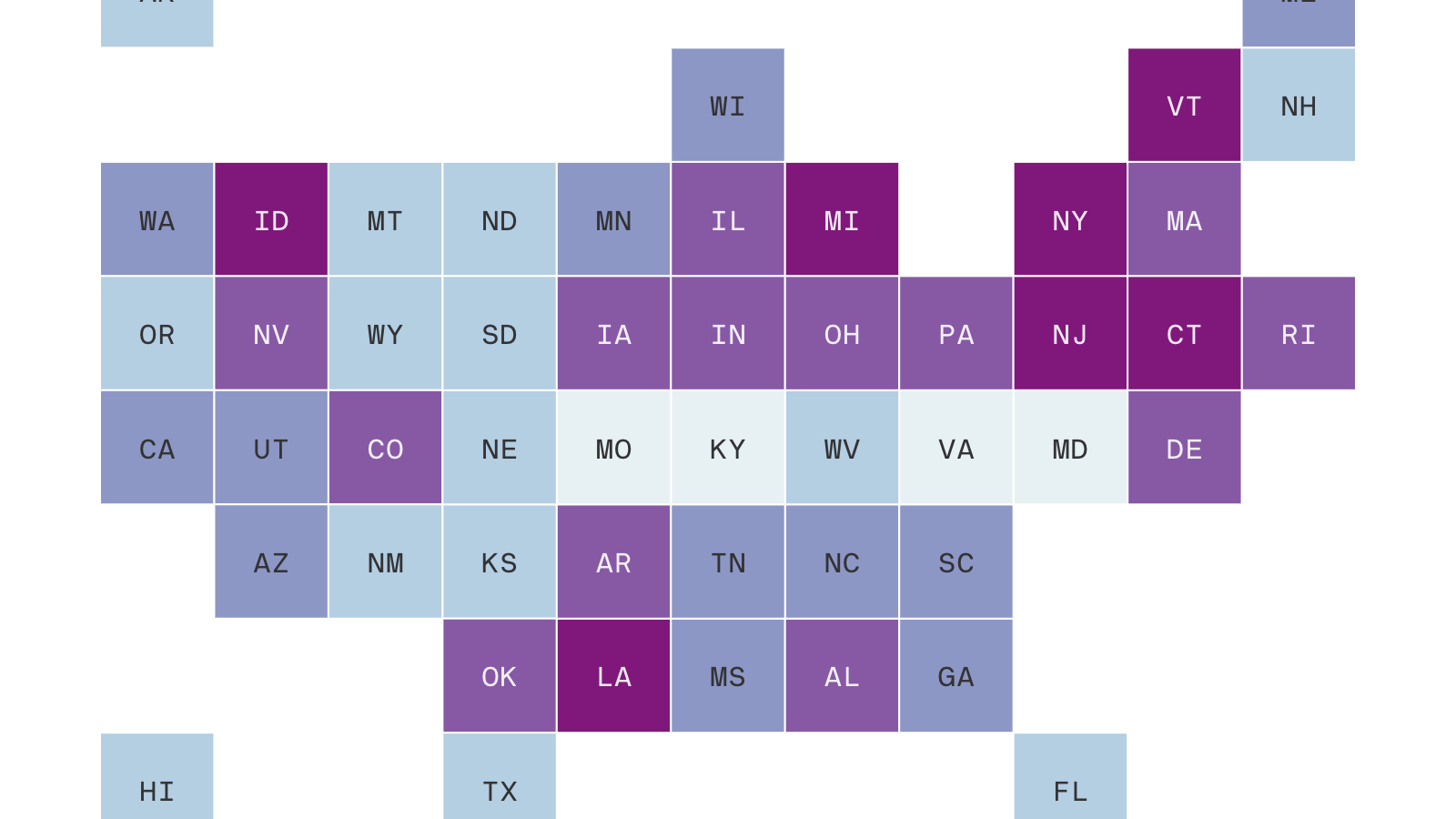
USA Projected date of peak hospital
resource demand due to COVID-19

The coronavirus projected peak date in each state - Axios


Although the coronavirus is expected to peak in the U.S. in two weeks, many states will see their individual peaks well after that, according to a model by the University of Washington’s Institute for Health Metrics and Evaluation.

Why it matters: States like Virginia and Maryland have more time to prepare for their systems to be maximally strained — if they make good use of that time.

States’ coronavirus peaks are defined as the point at which there is the most demand for resources, namely hospital beds and ventilators.

  • This is also the point at which the most health care workers will be needed to care for coronavirus patients.

Some experts warn that states expected to face the hardest hit later in the year aren’t using their lead time well.

  • “The states that are going to be affected last need to start husbanding resources now, because the feds could get tapped out … by some of these early states, particularly New York, which has absorbed a lot of federal resources,” former Food and Drug Administration commissioner Scott Gottlieb told me.
  • Even though they may not be seeing a huge number of cases now, states like Texas and Florida should stop doing elective surgeries now in order to preserve personal protective equipment — like masks, gowns and gloves — for their health care workers, Gottlieb added.

The bottom line: Coronavirus outbreaks, both globally and in the U.S., have seemed manageable until it’s too late. For states that so far aren’t hit hard, there’s no such thing as over-preparing.


An explosion of coronavirus cases cripples a federal prison in Louisiana

https://www.washingtonpost.com/national/an-explosion-of-coronavirus-cases-cripples-a-federal-prison-in-louisiana/2020/03/29/75a465c0-71d5-11ea-85cb-8670579b863d_story.html?fbclid=IwAR2rjY1fk7FF2H1vhUxaeZ4c8F3_Vi1HUJhCUkhP-bjFdc_tbuHV8KrKN80&utm_campaign=wp_main&utm_medium=social&utm_source=facebook

Federal prison in Louisiana crippled by coronavirus cases as ...

A federal prison in Louisiana has, within days, exploded with coronavirus cases, leading to the death of one inmate on Saturday, the admission of a guard into a hospital intensive care unit, and positive test results for another 30 inmates and staff.

Patrick Jones, 49, was the first inmate in the Federal Bureau of Prisons diagnosed with the novel coronavirus, which causes covid-19, and the first to die.

At least 60 inmates at the Oakdale prison are in quarantine and an unknown number of staff are self-quarantining at home, said Corey Trammel, a union representative for correctional officers at the 1,700-inmate facility about 110 miles northwest of Baton Rouge.

“It’s been simultaneous, just people getting sick back to back to back to back,” Trammel said. “We don’t know how to protect ourselves. Staff are working 36-hour shifts — there’s no way we can keep going on like this.”

The prison bureau is not releasing the names of other infected inmates or staff, citing medical and privacy concerns. Jones complained of a “persistent cough” on March 19, the prison bureau said, and was transported to a hospital where he was diagnosed and placed on a ventilator.

The prison bureau also said Jones had “long-term, preexisting medical conditions” that increased his risk of developing the disease. Jones was convicted in 2017 of possession with intent to distribute crack cocaine within 1,000 feet of a junior college. He was serving a 27-year sentence.

Louisiana ranks 10th highest among states for reported coronavirus cases, with more than 3,300 people who have tested positive and another 137 who have died, government reports show. A week before the Oakdale prison had its first positive case, Gov. John Bel Edwards (D) issued a stay-at-home order and closed all public schools.

Trammel said the prison bureau has been slow to respond to the crisis across the country. The bureau last week banned family and friends from visiting inmates, but the officers’ union had lobbied the federal prison system to take this action for weeks to keep the disease from infiltrating the prison walls.

The Bureau of Prisons updates confirmed coronavirus cases most afternoons on its website, but there has been a lag between cases reported by the officers’ union and prison officials. As of Sunday afternoon, the prison system had only confirmed 14 inmates and 13 staff have tested positive.

At Oakdale, Trammel said staff also asked prison officials — weeks before the first coronavirus case — to shut down a prison labor program within the facility, where more than 100 prisoners make inmate clothing. The program, Trammel said, was not shut down until after the first inmate tested positive.

The Bureau of Prisons — which operates 122 prisons with more than 175,000 inmates — did not immediately respond Sunday to a request for comment. Oakdale Warden Rod Myers could also not be reached for comment.

Trammel said he asked the prison bureau on Saturday to send specialized medical teams to the facility to help with staffing shortages. He’s also asking for hazard pay, which would increase their salaries by 25 percent as they respond to the crisis. And he’s asking for more robust protective gear, including masks with respirators and perhaps face shields.

“We are bringing inmates to the hospitals and are staying right beside them around the clock,” Trammel said. “All we have is these itty bitty masks — a piece of towel over our faces — and nurses are coming into the room for a few minutes and they are all suited up.”

He also said he believes all Oakdale prison staff have now been exposed to the virus. Days ago, he interacted with an inmate who had a fever and still doesn’t know if the prisoner has received a test.

“We should all be in quarantine,” Trammel said. “We should not be going in to spread this monster of a virus.”

Prison reform advocates, who have been pushing for the early release of elderly and severely ill inmates due to covid-19, said the death of a federal inmate illustrates why government officials need to be doing a better job of protecting people like Jones.

“The conditions and reality of incarceration make prisons and jails tinderboxes for the spread of disease,” said Udi Ofer, director of the American Civil Liberties Union’s Justice Division. “A prison sentence should not become a death sentence. Our leaders must immediately take steps to release those identified by the CDC as most vulnerable to covid-19. With every hour of inaction that passes, the greater the human tragedy.”