

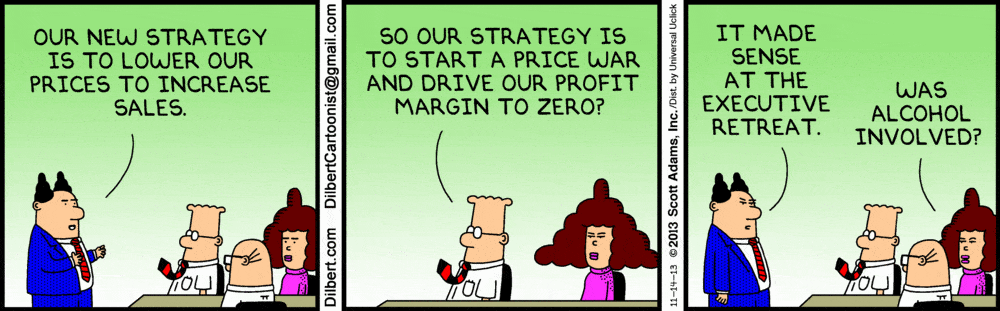
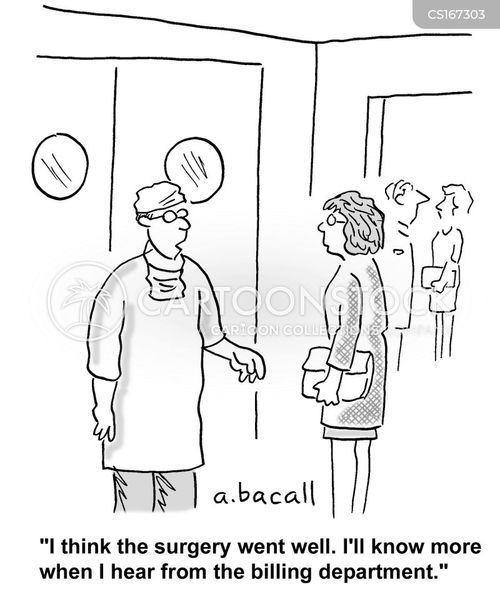
Cartoon – Our New Strategy

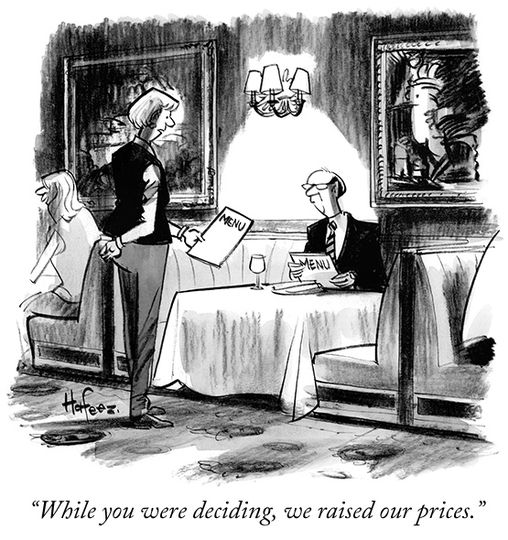
It’s not just you, and it’s not just in healthcare: Poor behavior ranging from the impolite to the violent is having a moment in society right now.
The Atlantic’s Olga Khazan spoke with more than a dozen experts on crime, psychology and social norms to suss out contributing factors to the spike in poor behavior, which she details in her piece, “Why People Are Acting So Weird,” published March 30.
Stress is one likely explanation for the bad behavior. Keith Humphreys, PhD, a psychiatry professor at Stanford, told Ms. Khazan the pandemic has created a lot of “high-stress, low-reward” situations, in which someone who has experienced a lot of loss due to the pandemic may be pushed over the edge by an inoffensive request.
Not only are people encountering more provocations — like staff shortages or mask mandates — but their mood is worse when provoked.
“Americans don’t really like each other very much right now,” Ryan Martin, PhD, a psychology professor at the University of Wisconsin at Green Bay who studies expressions of anger, told Ms. Khazan.
It doesn’t help that rudeness can be contagious. At work, people can spread negative emotions to colleagues, bosses and clients regardless of whether those people were the source of the negativity.
“People who witness rudeness are three times less likely to help someone else,” Christine Porath, PhD, a business professor at Georgetown University, said in the report.
Just as the pandemic has reaped high-stress, low-reward moments, it has brought on a level of isolation that has affected how people behave.
“We’re more likely to break rules when our bonds to society are weakened,” Robert Sampson, PhD, a Harvard sociologist, told Ms. Khazan. “When we become untethered, we tend to prioritize our own private interests over those of others or the public.”
Richard Rosenfeld, PhD, a criminologist at the University of Missouri at St. Louis, went one step further to describe society operating with “a generalized sense that the rules simply don’t apply.”
Ms. Khazan makes a point to distinguish mental health in the broader conversation about poor behavior.
“People with severe mental illness are only a tiny percentage of the population, and past research shows that they commit only 3 to 5 percent of violent acts, so they couldn’t possibly be responsible for the huge surge in misbehavior,” she said.
For a quantified look at how problematic behavior — including crime, dangerous driving, unruly passenger incidents and student disciplinary problems — has spiked, turn to journalist Matthew Yglesias’ deep dive, born from his observation that “the extent to which we seem to be living through a pretty broad rise in aggressive and antisocial behavior” is underdiscussed.



As the US approaches the grim statistic of one million deaths from COVID, journalist Ed Yong’s latest piece in The Atlantic takes a sobering look at how numb we’ve become to that astronomically high toll. In the early days of the pandemic, predictions of a few hundred thousand American deaths seemed shocking, but recent milestones of 800K and 900K lives lost have ticked by with little public attention.
Yong blames the invisibility of the virus: its worst impacts have been disproportionately concentrated among the disadvantaged—making it possible for COVID to more easily “disappear” from the lives of the healthy and economically advantaged. Case in point: while three percent of Americans have lost a close family member to COVID-19, the virus has taken a much larger toll on people of color, the elderly, and those with underlying health conditions.
The Gist: The pandemic has rendered us numb to the ongoing tragic loss of life, leading us to accept over 1,500 COVID deaths each day as “normal”.
As Yong points out, it’s hard to imagine we could turn a blind eye to this number of Americans perishing every day, compared to the number who perish from hurricanes or other weather disasters, for example. While permanent memorials are built for soldiers and victims of terror attacks, they are rarely erected for victims or medical heroes of pandemics, despite the far greater death toll.
While the pandemic is still far from over, we must ensure the difficult lessons learned are not forgotten by future generations—as has been the case with previous pandemics.

 HENRY KOTULA