Drivers of health and the coronavirus

Drivers of health and the coronavirus

Truck drivers under increased pressure due to coronavirus

I don’t have time for a fully formed post or column on this, but I want to make note of a few ways in which the COVID-19 pandemic is intersecting with drivers of health (which include social determinants and health system factors). The following list is not necessarily exhaustive and my focus is on the U.S.

  • Right now the health system cannot offer anything to prevent the consequences of COVID-19 infection. Prevention is entirely within the realm of public health measures and personal behaviors. In this way, this is a lot like HIV/AIDS before the mid-1990s. If one were engaged in an exercise of attributing COVID-19 deaths to various factors, personal behavior — degree of social distancing, hand washing, etc. — would get a significant share.
  • But, individuals do not fully control their own COVID-19 destiny. Not everyone can avoid all risk of exposure. Food and other necessities need to be brought into the house. We want some people to work (e.g., health care workers, those involved in producing and transporting food and medical supplies). Not everyone can control the behavior of everyone else in their household. Teens and young adults might sneak out, despite what their parents say.
  • Among those at highest risk will be people who don’t have the privilege of working from home. They need income and can’t get it without leaving the house. Peeling this onion leads back to the customary markers of socioeconomic status (education, income, rank/class, etc.) as drivers of health.
  • Those with privilege are more likely to find ways to get testing, care, and going forward, probably will be among the first (after health care workers) to get vaccinated. This is how it has always been in the U.S.
  • Policy clearly plays a role. Where leaders were slower to implement changes to increase or require social distancing, outbreaks are more widespread (relative to the counterfactual of those changes made sooner). Even national policy makers were slow to recognize the importance of preparing for a pandemic. Mistakes were made. Balls were dropped. So, policy/government is a driver, of course.
  • Finally, the health system clearly plays a role, not in prevention but in treatment. People can be saved, if the resources are there to save them and they can be accessed. Where and for whom health care is more available and accessible, people will be better off. This is complex because of the intersection of the effectiveness of health care, its accessibility (which is reduced for people losing job-based insurance, otherwise un- or under-insured, or without the resources to pay cost sharing, etc.), and the degree to which the health system has prepared for such a pandemic (which intersects with policy and health economics). So, the health system should get some blame/credit for deaths/saved lives, but it’s not so clear how much.

Fundamentally, it’s interesting how much we are reliant on collective resources — government through policy and shared health care infrastructure. The best thing we can do for ourselves individually is to engage in safe behaviors. But we also need collective action for our future well being. Yes/and, not either/or.


California Hospitals Face Surge With Proven Fixes And Some Hail Marys

https://khn.org/news/california-hospitals-face-surge-with-proven-fixes-and-some-hail-marys/

California Hospitals Face Surge With Proven Fixes And Some Hail ...

California’s hospitals thought they were ready for the next big disaster.

They’ve retrofitted their buildings to withstand a major earthquake and  whisked patients out of danger during deadly wildfires. They’ve kept patients alive with backup generators amid sweeping power shutoffs and trained their staff to thwart would-be shooters.

But nothing has prepared them for a crisis of the magnitude facing hospitals today.

“We’re in a battle with an unseen enemy, and we have to be fully mobilized in a way that’s never been seen in our careers,” said Dr. Stephen Parodi, an infectious disease expert for Kaiser Permanente in California. (Kaiser Health News, which produces California Healthline, is not affiliated with Kaiser Permanente.)

As California enters the most critical period in the state’s battle against COVID-19, the state’s 416 hospitals — big and small, public and private — are scrambling to build the capacity needed for an onslaught of critically ill patients.

Hospitals from Los Angeles to San Jose are already seeing a steady increase in patients infected by the virus, and so far, hospital officials say they have enough space to treat them. But they also issued a dire warning: What happens over the next four to six weeks will determine whether the experience of California overall looks more like that of New York, which has seen an explosion of hospitalizations and deaths, or like that of the San Francisco Bay Area, which has so far managed to prevent a major spike in new infections, hospitalizations and death.

Some of their preparations share common themes: Postpone elective surgeries. Make greater use of telemedicine to limit face-to-face contact. Erect tents outside to care for less critical patients. Add beds — hospital by hospital, a few dozen at a time — to spaces like cafeterias, operating rooms and decommissioned wings.

But by necessity — because of shortages of testing, ventilators, personal protective equipment and even doctors and nurses — they’re also trying creative and sometimes untried strategies to bolster their readiness and increase their capacity.

In San Diego, hospitals may use college dormitories as alternative care sites. A large public hospital in Los Angeles is turning to 3D printing to manufacture ventilator parts. And in hard-hit Santa Clara County, with a population of nearly 2 million, public and private hospitals have joined forces to alleviate pressure on local hospitals by caring for patients at the Santa Clara Convention Center.

Yet some hospitals acknowledge that, despite their efforts, they may end up having to park patients in hallways.

“The need in this pandemic is so different and so extraordinary and so big that a hospital’s typical surge plan will be insufficient for what we’re dealing with in this state and across the nation,” said Carmela Coyle, president and CEO of the California Hospital Association.

Across the U.S., more than 213,000 cases of COVID-19 have been confirmed, and at least 4,750 people have died. California accounts for more than 9,400 cases and at least 199 deaths.

Health officials and hospital administrators are singling out April as the most consequential month in California’s effort to combat a steep increase in new infections. State Health and Human Services Secretary Mark Ghaly said Wednesday that the number of hospitalizations is expected to peak in mid-May.

Gov. Gavin Newsom said there were 1,855 COVID-19 cases in hospitals Wednesday, a number that had tripled in six days, and 774 patients in critical care. By mid-May, the number of critical care patients is expected to climb to 27,000, he said.

Newsom said the state needs nearly 70,000 more hospital beds, bringing its overall capacity to more than 140,000 — both inside hospitals and also at alternative care sites like convention centers. The state also needs 10,000 more ventilators than it normally has to aid the crush of patients needing help to breathe, he said, and so far has acquired fewer than half.

Newsom and state health officials worked with the Trump administration to bring a naval hospital ship to the Port of Los Angeles, where it is already treating patients not infected with the novel coronavirus. The state is working with the Army Corps of Engineers to deploy eight mobile field hospitals, including one in Santa Clara County. And it is bringing hospitals back online that were shuttered or slated to close, including one each in Daly City, Los Angeles, Long Beach and Costa Mesa.

The governor is also drafting a plan to make greater use of hotels and motels and nursing homes to house patients, if needed.

But the size of the surge that hits hospitals depends on how well the public follows social distancing and stay-at-home orders, said Newsom and hospital administrators. “This is not just about health care providers caring for the sick,” said Dr. Steve Lockhart, the chief medical officer of Sutter Health, which has 22 hospitals across Northern California.

While hospitals welcomed the state assistance, they’re also undertaking dramatic measures to prepare on their own.

“I’m genuinely very worried, and it scares me that so many people are still out there doing business as usual,” said Chris Van Gorder, CEO of Scripps Health, a system with five major hospitals in San Diego County. “It wouldn’t take a lot to overwhelm us.”

Internal projections show the hospital system could need 8,000 beds by June, he said. It has 1,200.

In addition to taking precautions to protect its health care workers — such as using baby monitors to observe patients without risking infection — it is working with area colleges to use dorm rooms as hospital rooms for patients with mild cases of COVID-19, among other efforts, he said.

“Honestly, I think we should have been better prepared than we are,” Van Gorder said. “But hospitals cannot take on this burden themselves.”

Van Gorder and other hospital administrators say a continued shortage of COVID-19 tests has hampered their response — because they still don’t know exactly which patients have the virus — as has the chronic underfunding of public health infrastructure.

Kaiser Permanente wants to double the capacity of its 36 California hospitals, Parodi said. It is also working with the garment industry to manufacture face masks, and eyeing hotel rooms for less critical patients.

Harbor-UCLA Medical Center, a 425-bed safety-net hospital in Los Angeles, is working to increase its capacity by 200%, said Dr. Anish Mahajan, the hospital’s chief medical officer.

Harbor-UCLA is using 3D printers to produce ventilator piping equipped to serve two patients per machine. And in March it transformed a new emergency wing into an intensive care unit for COVID-19 patients.

“This was a shocking thing to do,” Mahajan said of the unprecedented move to create extra space.

He said some measures are untested, but hospitals across the state are facing extreme pressure to do whatever they can to meet their greatest needs.

In March, Stanford Hospital in the San Francisco Bay Area launched a massive telemedicine overhaul of its emergency department to reduce the number of employees who interact with patients in person. This is the first time the hospital has used telemedicine like this, said Dr. Ryan Ribeira, an emergency physician who spearheaded the project.

Stanford also did some soul-searching, thinking about which of its staff might be at highest risk if they catch COVID-19, and has assigned them to parts of the hospital with no coronavirus patients or areas dedicated to telemedicine. “These are people that we might have otherwise had to drop off the schedule,” Ribeira said.

Nearby, several San Francisco hospitals that were previously competitors have joined forces to create a dedicated COVID-19 floor at Saint Francis Memorial Hospital with four dozen critical care beds.

The city currently has 1,300 beds, including 200 ICU beds. If the number of patients surges as it has in New York, officials anticipate needing 5,000 additional beds.

But the San Francisco Bay Area hasn’t yet seen the expected surge. UCSF Health had 15 inpatients with COVID-19 Tuesday. Zuckerberg San Francisco General Hospital and Trauma Center had 18 inpatients with the disease Wednesday.

While hospital officials are cautiously optimistic that local and state stay-at-home orders have worked to slow the spread of the virus, they are still preparing for what could be a major increase in admissions.

“The next two weeks is when we’re really going to see the surge,” said San Francisco General CEO Susan Ehrlich. “We’re preparing for the worst but hoping for the best.”


Anthony Fauci’s security is stepped up as doctor and face of U.S. coronavirus response receives threats

https://www.washingtonpost.com/politics/anthony-faucis-security-is-stepped-up-as-doctor-and-face-of-us-coronavirus-response-receives-threats/2020/04/01/ff861a16-744d-11ea-85cb-8670579b863d_story.html?utm_campaign=wp_news_alert_revere&utm_medium=email&utm_source=alert&wpisrc=al_news__alert-hse–alert-national&wpmk=1

Nation's top coronavirus expert Dr. Anthony Fauci forced to beef ...

Anthony S. Fauci, the nation’s top infectious-diseases expert and the face of the U.S. response to the novel coronavirus pandemic, is facing growing threats to his personal safety, prompting the government to step up his security, according to people familiar with the matter.

The concerns include threats as well as unwelcome communications from fervent admirers, according to people with knowledge of deliberations inside the Department of Health and Human Services and the Department of Justice.

Fauci, 79, is the most outspoken member of the administration in favor of sweeping public health guidelines and is among the few officials willing to correct President Trump’s misstatements. Along with Deborah Birx, the coordinator for the White House’s task force, Fauci has encouraged the president to extend the timeline for social-distancing guidelines, presenting him with grim models about the possible toll of the pandemic.

“Now is the time, whenever you’re having an effect, not to take your foot off the accelerator and on the brake, but to just press it down on the accelerator,” he said Tuesday as the White House’s task force made some of those models public, warning of 100,000 to 240,000 deaths in the United States.

The exact nature of the threats against him was not clear. Greater exposure has led to more praise for the doctor but also more criticism.

Fauci has become a public target for some right-wing commentators and bloggers, who exercise influence over parts of the president’s base. As they press for the president to ease restrictions to reinvigorate economic activity, some of these figures have assailed Fauci and questioned his expertise.

Last month, an article depicting him as an agent of the “deep state” gained nearly 25,000 interactions on Facebook — meaning likes, comments and shares — as it was posted to large pro-Trump groups with titles such as “Trump Strong” and “Tampa Bay Trump Club.”

Alex Azar, the HHS secretary, recently grew concerned about Fauci’s safety as his profile rose and he endured more vitriolic criticism online, according to people familiar with the situation. In recent weeks, admirers have also approached Fauci, asking to him sign baseballs, along with other acts of adulation. It was determined that Fauci should have a security detail. Azar also has a security detail because he is in the presidential line of succession.

Asked Wednesday whether he was receiving security protection, Fauci told reporters, “I would have to refer you to HHS [inspector general] on that. I wouldn’t comment.”

The president interjected, saying, “He doesn’t need security. Everybody loves him.”

HHS asked the U.S. Marshals Service to deputize a group of agents in the office of the HHS inspector general to provide protective services for the doctor, according to an official with knowledge of the request.

The U.S. Marshals Service conveyed the request to the deputy attorney general, who has authority over deputations for the purpose of providing protective services, with the recommendation that it be approved, according to the official, who spoke on the condition of anonymity to reveal sensitive plans that the person was not authorized to discuss.

A Justice Department official signed paperwork Tuesday authorizing HHS to provide its own security detail to Fauci, according to an administration official.

An HHS spokesperson declined to discuss details of the doctor’s security but said: “Dr. Fauci is an integral part of the U.S. Government’s response against covid-19. Among other efforts, he is leading the development of a covid-19 vaccine and he regularly appears at White House press briefings and media interviews.”

At the briefings, Fauci, who has advised presidents of both parties as director of the National Institute of Allergy and Infectious Diseases, has spoken authoritatively about the spread of the coronavirus and the sacrifices involved in mitigating its effects.

He has at times corrected the president, in particular when prompted by reporters. After Trump said a covid-19 vaccine would be available in a couple of months, Fauci said it would in fact be available in about a year to a year and a half, at best.

His role has turned him into a hero for some. When he was absent from a briefing last month, followers who had grown accustomed to his frank assessments of the outbreak were alarmed that he might have been sidelined for his forthrightness. Many took to Twitter to ask, “Where is Dr. Fauci?” causing the question to trend on the platform.

He gained viral attention two days later when he placed his hand in front of his face in a gesture of apparent disbelief as Trump referred to the State Department as the “deep state department” from the White House briefing room.

Fauci has also given several interviews in which he has tempered praise for the president with doubts about his pronouncements, including about the viability of anti-malarial drugs as a treatment for the novel coronavirus. Most notably, he told the journal Science that he attempts to guide Trump’s statements but “can’t jump in front of the microphone and push him down.”

These moves have inspired fandom. But they have also drawn scorn from some of the president’s most vocal supporters, even as both men have sought to tamp down the appearance of tension.

“The president was right, and frankly Fauci was wrong,” Lou Dobbs said last week on his show on the Fox Business Network, referring to the use of experimental medicine.

Right-wing news and opinion sites have gone further, launching baseless smears against the doctor that have gained significant traction within pro-Trump communities online.

Outlets such as the Gateway Pundit and American Thinker seized on a 2013 email — released by WikiLeaks as part of a cache of communications hacked by Russian operatives — in which Fauci praised Hillary Clinton’s “stamina and capability” during her testimony as secretary of state before the congressional committee investigating the attacks in Benghazi, Libya.

The headline in the American Thinker referred to Fauci as a “Deep-State ­Hillary Clinton-loving stooge.” The author, Peter Barry Chowka, didn’t respond to requests for comment. When asked about the relevance of Fauci’s emails to his role in advising the White House’s coronavirus response, Jim Hoft, the editor of the Gateway Pundit, said, “I don’t have a problem with more information being shared about the doctor.”

The outlet has continued to criticize Fauci in recent days, saying that by offering new predictions about the possible death toll, Fauci and others were “going to destroy the U.S. economy based on total guesses and hysterical predictions.”

Several senior administration officials said that Trump respects Fauci and that the two generally have a good working relationship. Trump heeded the guidance of Fauci and Birx this week when he announced his administration would extend social-distancing guidelines for another 30 days. Last week, many health officials and experts grew worried when Trump said he hoped to reopen the country by Easter, even as coronavirus cases in the United States continue to rapidly climb.

The immunologist, who graduated first in his class from Cornell’s medical school, has been the director of the National Institute of Allergy and Infectious Diseases since 1984. Between 1983 and 2002, he was the 13th-most-cited scientist among the 2.5 million to 3 million authors worldwide and across all disciplines publishing in scientific journals, according to the Institute for Scientific Information.


Dr. Birx predicts up to 200,000 coronavirus deaths ‘if we do things almost perfectly’

https://www.yahoo.com/news/dr-birx-predicts-200-000-115800421.html

Dr. Birx predicts up to 200,000 U.S. coronavirus deaths 'if we do ...

The White House coronavirus response coordinator said Monday that she is “very worried about every city in the United States” and projects 100,000 to 200,000 American deaths as a best case scenario.

In an interview on “TODAY,” Dr. Deborah Birx painted a grim message about the expected fatalities, echoing that they could hit more than 2 million without any measures, as coronavirus cases continue to climb throughout the country.

“I think everyone understands now that you can go from five to 50 to 500 to 5,000 cases very quickly,” Birx said.

“I think in some of the metro areas we were late in getting people to follow the 15-day guidelines,” she added.

Birx said the projections by Dr. Anthony Fauci that U.S. deaths could range from 1.6 million to 2.2 million is a worst case scenario if the country did “nothing” to contain the outbreak, but said even “if we do things almost perfectly,” she still predicts up to 200,000 U.S. deaths.

Fauci, the director of the National Institute of Allergy and Infectious Diseases, reiterated Monday on CNN that “I don’t want to see it, I’d like to avoid it, but I wouldn’t be surprised if we saw 100,000 deaths.”

Politics

Birx said the best case scenario would be for “100 percent of Americans doing precisely what is required, but we’re not sure that all of America is responding in a uniform way to protect one another,” referencing images circulating online of people still congregating in big groups and ignoring guidelines from the Centers for Disease Control and Prevention.

Birx was also on “Meet the Press” on Sunday warning that “no state, no metro area will be spared,” a message she repeated Monday. Even if metro or rural areas don’t see the virus in the community now, by the time it does appear, the outbreak will be significant, she added.

How long Americans will be expected to comply with measures, including socially distancing and sheltering in place, remains unclear in this growing pandemic after several states and larger cities began implementing measures over the past couple of weeks.

President Trump announced Sunday that the administration’s guidelines on social distancing have been extended until April 30. Trump said last week that he wanted to see much of the country return to normal by Easter, April 12, despite warnings from top health experts that easing guidelines early could cause mass deaths. Now, Trump said he expects “great things to be happening” by June 1.

Birx said on Sunday that the choice to extend the guidelines had not been made lightly.

“We know it’s a huge sacrifice for everyone,” she added.


The Lost Month: How a Failure to Test Blinded the U.S. to Covid-19

The Lost Month: How a Failure to Test Blinded the U.S. to Covid-19 ...

Aggressive screening might have helped contain the virus in the United States. But technical flaws, regulatory hurdles and lapses in leadership let it spread undetected for weeks.

Early on, the dozen federal officials charged with defending America against the coronavirus gathered day after day in the White House Situation Room, consumed by crises. They grappled with how to evacuate the United States consulate in Wuhan, China, ban Chinese travelers and extract Americans from the Diamond Princess and other cruise ships.

The members of the coronavirus task force typically devoted only five or 10 minutes, often at the end of contentious meetings, to talk about testing, several participants recalled. The Centers for Disease Control and Prevention, its leaders assured the others, had developed a diagnostic model that would be rolled out quickly as a first step.

But as the deadly virus spread from China with ferocity across the United States between late January and early March, large-scale testing of people who might have been infected did not happen — because of technical flaws, regulatory hurdles, business-as-usual bureaucracies and lack of leadership at multiple levels, according to interviews with more than 50 current and former public health officials, administration officials, senior scientists and company executives.

The result was a lost month, when the world’s richest country — armed with some of the most highly trained scientists and infectious disease specialists — squandered its best chance of containing the virus’s spread. Instead, Americans were left largely blind to the scale of a looming public health catastrophe.

The absence of robust screening until it was “far too late” revealed failures across the government, said Dr. Thomas Frieden, the former C.D.C. director. Jennifer Nuzzo, an epidemiologist at Johns Hopkins, said the Trump administration had “incredibly limited” views of the pathogen’s potential impact. Dr. Margaret Hamburg, the former commissioner of the Food and Drug Administration, said the lapse enabled “exponential growth of cases.”

And Dr. Anthony S. Fauci, a top government scientist involved in the fight against the virus, told members of Congress that the early inability to test was “a failing” of the administration’s response to a deadly, global pandemic. “Why,” he asked later in a magazine interview, “were we not able to mobilize on a broader scale?”

Across the government, they said, three agencies responsible for detecting and combating threats like the coronavirus failed to prepare quickly enough. Even as scientists looked at China and sounded alarms, none of the agencies’ directors conveyed the urgency required to spur a no-holds-barred defense.

Dr. Robert R. Redfield, 68, a former military doctor and prominent AIDS researcher who directs the C.D.C., trusted his veteran scientists to create the world’s most precise test for the coronavirus and share it with state laboratories. When flaws in the test became apparent in February, he promised a quick fix, though it took weeks to settle on a solution.

The C.D.C. also tightly restricted who could get tested and was slow to conduct “community-based surveillance,” a standard screening practice to detect the virus’s reach. Had the United States been able to track its earliest movements and identify hidden hot spots, local quarantines might have confined the disease.

Dr. Stephen Hahn, 60, the commissioner of the Food and Drug Administration, enforced regulations that paradoxically made it tougher for hospitals, private clinics and companies to deploy diagnostic tests in an emergency. Other countries that had mobilized businesses were performing tens of thousands of tests daily, compared with fewer than 100 on average in the United States, frustrating local health officials, lawmakers and desperate Americans.

Alex M. Azar II, who led the Department of Health and Human Services, oversaw the two other agencies and coordinated the government’s public health response to the pandemic. While he grew frustrated as public criticism over the testing issues intensified, he was unable to push either agency to speed up or change course.

Mr. Azar, 52, who chaired the coronavirus task force until late February, when Vice President Mike Pence took charge, had been at odds for months with the White House over other issues. The task force’s chief liaison to the president was Mick Mulvaney, the acting White House chief of staff, who was being forced out by Mr. Trump. Without high-level interest — or demands for action — the testing issue festered.

At the start of that crucial lost month, when his government could have rallied, the president was distracted by impeachment and dismissive of the threat to the public’s health or the nation’s economy. By the end of the month, Mr. Trump claimed the virus was about to dissipate in the United States, saying: “It’s going to disappear. One day — it’s like a miracle — it will disappear.”

By early March, after federal officials finally announced changes to expand testing, it was too late. With the early lapses, containment was no longer an option. The tool kit of epidemiology would shift — lockdowns, social disruption, intensive medical treatment — in hopes of mitigating the harm.

Now, the United States has more than 100,000 coronavirus cases, the most of any country in the world. Deaths are rising, cities are shuttered, the economy is sputtering and everyday life is upended. And still, many Americans sickened by the virus cannot get tested.

In a statement, Judd Deere, a White House spokesman, said that “any suggestion that President Trump did not take the threat of Covid-19 seriously or that the United States was not prepared is false.” He added that at Mr. Trump’s direction, the administration had “expanded testing capacities.”

Dr. Bruce Aylward, a senior adviser at the World Health Organization, led an expert team to China last month to research the mysterious new virus. Testing, he said, was “absolutely vital” for understanding how to defeat a disease — what distinguishes it from others, the spectrum of illness and, most important, its path through populations.

“You want to know whether or not you have it,” Dr. Aylward said. “You want to know whether the people around you have it. Because you know what? Then you could stop it.”

“You can’t stop it,” he warned, “if you can’t see it.”

The first time Dr. Robert Redfield heard about the severity of the virus from his Chinese counterparts was around New Year’s Day, when he was on vacation with his family. He spent so much time on the phone that they barely saw him. And what he heard rattled him; in one grim conversation about the virus days later, George F. Gao, the director of the Chinese Center for Disease Control and Prevention, burst into tears.

Dr. Redfield, a longtime AIDS researcher, had never run a government agency before his appointment to lead the C.D.C. in 2018. Until then, his biggest priorities had been fighting the opioid epidemic and the spread of H.I.V. Suddenly, a man who preferred treating patients in Haiti or Africa to being in the public glare was facing a new pandemic threat.

At first, Dr. Redfield’s agency moved quickly.

On Jan. 7, the C.D.C. created an “incident management system for the coronavirus and advised travelers to Wuhan to take precautions. By Jan. 20, just two weeks after Chinese scientists shared the genetic sequence of the virus, the C.D.C. had developed its own test, as usual, and deployed it to detect the country’s first coronavirus case.

“That’s our prime mission,” Dr. Redfield said later in an interview, “to get eyes on this thing.”

Assessing the virus would prove challenging. It was so new that scientists had little information to work with. China provided limited data, and rebuffed an early attempt by Mr. Azar and Dr. Redfield to send C.D.C. experts there to learn more. That the virus could cause no symptoms and still spread — something not initially known — made it all the more difficult to understand.

To identify the virus, the C.D.C. test used three small genetic sequences to match up with portions of a virus’s genome extracted from a swab. A German-developed test that the W.H.O. was distributing to other countries used just two, potentially making it less precise.

But soon after the F.D.A. cleared the C.D.C. to share its test kits with state health department labs, some discovered a problem. The third sequence, or “probe,” gave inconclusive results. While the C.D.C. explored the cause — contamination or a design issue — it told those state labs to stop testing.

The startling setback stalled the C.D.C.’s efforts to track the virus when it mattered most. By mid-February, the nation was testing only about 100 samples per day, according to the C.D.C.’s website.

Dr. Redfield played down the problem in task force meetings and conversations with Mr. Azar, assuring him it would be fixed quickly, several administration officials said.

With capacity so limited, the C.D.C.’s criteria for who was tested remained extremely narrow for weeks to come: only people who had recently traveled to China or had been in contact with someone who had the virus.

The lack of tests in the states also meant local public health officials could not use another essential epidemiological tool: surveillance testing. To see where the virus might be hiding, nasal swab samples from people screened for the common flu would also be checked for the coronavirus.

The C.D.C. announced a plan on Feb. 14 to perform the screening in five high-risk cities: New York, Chicago, Los Angeles, San Francisco and Seattle. An agency official said it could provide “an early warning signal to trigger a change in our response strategy.” But most of the cities could not carry it out.

“Had we had done more testing from the very beginning and caught cases earlier,” said Dr. Nuzzo, of Johns Hopkins, “we would be in a far different place.”

The consequences became clear by the end of February. For the first time, someone with no known exposure to the virus or history of travel tested positive, in the Seattle area, where the U.S.’s first case had been detected more than a month earlier. The virus had probably been spreading there and elsewhere for weeks, researchers later concluded. Without a more complete picture of who had been infected, public health workers could not do “contact tracing” — finding all those with whom any contagious people had interacted and then quarantining them to stop further transmission.

The C.D.C. gave little thought to adopting the test being used by the W.H.O. The C.D.C.’s test was working in its own lab — still processing samples from states — which gave agency officials confidence. Dr. Anne Schuchat, the agency’s principal deputy director, would later say that the C.D.C. did not think “we needed somebody else’s test.”

And the German-designed W.H.O. test had not been through the American regulatory approval process, which would take time.

Throughout February, Dr. Redfield shuttled between Atlanta, where the C.D.C. is based, and Washington, holding multiple calls every day with Mr. Azar and participating in the coronavirus task force.

Mr. Azar’s take-charge style contrasted with the more deliberative manner of Dr. Redfield, who lacked the kind of commanding television presence that impressed Mr. Trump. He was “a consensus person,” as one colleague described him, who sought to avoid conflict. He relied heavily on some of the C.D.C.’s career scientists, like Dr. Schuchat and Dr. Nancy Messonnier, the director of the agency’s National Center for Immunization and Respiratory Diseases.

Under scrutiny from Congress, Dr. Redfield offered reassurances. Responding on Feb. 24 to a letter from 49 members of Congress about the need for testing in the states, he wrote, “CDC’s aggressive response enables us to identify potential cases early and make sure that they are properly handled.”

Days later, his agency provided a workaround, telling state and local health department labs that they could finally begin testing. Rather than awaiting replacements, they should use their C.D.C. test kits and leave out the problematic third probe.

Meanwhile, the agency’s epidemiologists were growing more concerned as the virus spread in South Korea and Italy. On Feb. 25, Dr. Messonnier gave a briefing with a much blunter warning than usual. “Disruption to everyday life might be severe,” she said.

Mr. Trump, returning from a trip to India, was furious, according to senior administration officials. Later that day, Mr. Azar seemed to be tamping down the level of concern. All Dr. Messonnier had meant, he said at a news conference, was that people should “start thinking about, in their own lives, what that might involve.”

“Might,” Mr. Azar repeated emphatically. “Might involve.”

Dr. Stephen Hahn’s first day as F.D.A. commissioner came just six weeks before Mr. Azar declared a public health emergency on Jan. 31.radiation oncologist and researcher who helped turn around MD Anderson in Houston, one of the nation’s leading cancer centers, Dr. Hahn had come to Washington to oversee a sprawling federal agency that regulates everything from lifesaving therapies to dog food.

But overnight, his mission — to manage 15,000 employees in a culture defined by precision and caution — was upended. A pathogen that Mr. Trump would later call the “invisible enemy” was hurtling toward the United States. It would fall to the newly arrived Dr. Hahn to help build a huge national capacity for testing by academic and private labs.

Instead, under his leadership, the F.D.A. became a significant roadblock, according to current and former officials as well as researchers and doctors at laboratories around the country.

Private-sector tests were supposed to be the next tier after the C.D.C. fulfilled its obligation to jump-start screening at public labs. In other countries hit hard by the coronavirus, governments acted quickly to speed tests to their populations. In South Korea, for example, regulators in early February summoned executives from 20 medical manufacturers, easing rules as they demanded tests.

But Dr. Hahn took a cautious approach. He was not proactive in reaching out to manufacturers, and instead deferred to his scientists, following the F.D.A.’s often cumbersome methods for approving medical screening.

Even the nation’s public health labs were looking for the F.D.A.’s help. “We are now many weeks into the response with still no diagnostic or surveillance test available outside of C.D.C. for the vast majority of our member laboratories,” Scott Becker, chief executive of the Association of Public Health Laboratories, wrote to Mr. Hahn in late February. “We believe a more expeditious route is needed at this time.”

Ironically, it was Mr. Azar’s emergency declaration that established the rules Dr. Hahn insisted on following. Designed to make it easier for drugmakers to pursue vaccines and other therapies during a crisis, such a declaration lets the F.D.A. speed approvals that could otherwise take a year or more.

But the emergency announcement created a new barrier for hospitals and laboratories that wanted to create their own tests to diagnose the coronavirus. Usually, they faced minimal federal regulation. But once Mr. Azar took action, they were subject to an F.D.A. process called an “emergency use authorization.”

Even though researchers around the country quickly began creating tests that could diagnose Covid-19, many said they were hindered by the F.D.A.’s approval process. The new tests sat unused at labs around the country.

Stanford was one of them. Researchers at the world-renowned university had a working test by February, based on protocols published by the W.H.O. The organization had already delivered more than 250,000 of the German-designed tests to 70 laboratories around the world, and doctors at the Stanford lab wanted to be prepared for a pandemic.

“Even if it didn’t come, it would be better to be ready than not to be ready,” said Dr. Benjamin Pinsky, the lab’s medical director.

But in the face of what he called “relatively tight” rules at the F.D.A., Dr. Pinsky and his colleagues decided against even trying to win permission. The Stanford clinical lab would not begin testing coronavirus samples until early March, when Dr. Hahn finally relaxed the rules.

Executives at bioMérieux, a French diagnostics company, had a similar experience. The company makes a countertop testing system, BioFire, that is routinely used to check for the flu and other respiratory illnesses in 1,700 hospitals around the country. It can provide results in about 45 minutes.

“A lot of us said, you know, your typical E.U.A. is just much too demanding,” said Dr. Mark Miller, the company’s chief medical officer, referring to the emergency approval. “It’s going to take much too much time. And can’t you do something to shorten that?”

Officials at the F.D.A. tried to be responsive, Dr. Miller said. But rather than throw out the rules, the agency only modified the regulatory requirements, still requiring weeks of discussions and negotiations.

After conversations with the F.D.A. in mid-February, the company received emergency approval for its BioFire test on March 24. (The company also began talking to the F.D.A. in January about another type of test, but decided not to pursue it in the United States for now.) Dr. Miller said that while he was ultimately satisfied with the F.D.A.’s actions, the overall response by the government was too slow, especially when it came to logistical questions like getting enough testing supplies to those who needed them.

“You’ve got other countries — and I’m sorry, unfortunately, the U.S. is one of those — where they’ve been slow, disorganized,” he said. “There are still not enough tests available there to test everybody who needs it.”

In an emailed statement, Dr. Hahn maintained that his agency had moved as quickly as it safely could to ensure that tests would be accurate. “Since the early days of this pandemic,” he said, “the F.D.A.’s doors have always been and still remain open to test developers.”

Alex Azar had sounded confident at the end of January. At a news conference in the hulking H.H.S. headquarters in Washington, he said he had the government’s response to the new coronavirus under control, pointing out high-ranking jobs he had held in the department during the 2003 SARS outbreak and other infectious threats.

“I know this playbook well,” he told reporters.

A Yale-trained lawyer who once served as the top attorney at the health department, Mr. Azar had spent a decade as a top executive at Eli Lilly, one of the world’s largest drug companies. But he caught Mr. Trump’s attention in part because of other credentials: After law school, Mr. Azar was a clerk for some of the nation’s most conservative judges, including Justice Antonin Scalia of the Supreme Court. And for two years, he worked as Ken Starr’s deputy on the Clinton Whitewater investigation.

As Mr. Trump’s second health secretary, confirmed at the beginning of 2018, Mr. Azar has been quick to compliment the president and focus on the issues he cares about: lowering drug prices and fighting opioid addiction. On Feb. 6 — even as the W.H.O. announced that there were more than 28,000 coronavirus cases around the globe — Mr. Azar was in the second row in the White House’s East Room, demonstrating his loyalty to the president as Mr. Trump claimed vindication from his impeachment acquittal the day before and lashed out at “evil” lawmakers and the F.B.I.’s “top scum.”

As public attention on the virus threat intensified in January and February, Mr. Azar grew increasingly frustrated about the harsh spotlight on his department and the leaders of agencies who reported to him, according to people familiar with the response to the virus inside the agencies.

Described as a prickly boss by some administration officials, Mr. Azar has had a longstanding feud with Seema Verma, the Medicare and Medicaid chief, who recently became a regular presence at Mr. Trump’s televised briefings on the pandemic. Mr. Azar did not include Dr. Hahn on the virus task force he led, though some of the F.D.A. commissioner’s aides participated in H.H.S. meetings on the subject.

And tensions grew between the secretary and Dr. Redfield as the testing issue persisted. Mr. Azar and Dr. Redfield have been on the phone as often as a half-dozen times a day. But throughout February, as the C.D.C. test faltered, Mr. Azar became convinced that Dr. Redfield’s agency was providing him with inaccurate information about testing that the secretary repeated publicly, according to several administration officials.

In one instance, Mr. Azar appeared on Sunday morning news programs and said that more than 3,600 people had been tested for the virus. In fact, the real number was much smaller because many patients were tested multiple times, an error the C.D.C. had to correct in congressional testimony that week. One health department official said Mr. Azar was repeatedly assured that the C.D.C.’s test would be widely available within a week or 10 days, only to be given the same promise a week later.

Asked about criticism of his agency’s response to the pandemic, Dr. Redfield said: “I’m personally not focused on whether they’re pointing fingers here or there. We’re focused on doing all we can to get through this outbreak as quickly as possible and keep America safe.”

For all Mr. Azar’s complaints, however, he continued to defer to the scientists at the two agencies, according to several administration officials. Mr. Azar’s allies said he was told by Dr. Redfield and Dr. Fauci that the C.D.C. had the resources it needed, that there was no reason to believe the virus was spreading through the country from person to person and that it was important to test only people who met certain criteria.

But even in the face of a crescendo of complaints from doctors and health care researchers around the country, Mr. Azar failed to push those under him to do the one thing that could have helped: broader testing.

In a statement, Caitlin Oakley, Mr. Azar’s spokeswoman, said that the secretary had “empowered and followed the guidance of world-renowned U.S. scientists” on the testing issue. “Any insinuation that Secretary Azar did not respond with needed urgency to the response or testing efforts,” she said, “are just plain wrong and disproven by the facts.”

By Feb. 26, Dr. Fauci was concerned that the stalled testing had become an urgent issue that needed to be addressed. He called Brian Harrison, Mr. Azar’s chief of staff, and asked him to gather the group of officials overseeing screening efforts.

Around noon on Feb. 27, Dr. Hahn, Dr. Redfield and top aides from the F.D.A. and H.H.S. dialed in to a conference call. Mr. Harrison began with an ultimatum: No one leaves until we resolve the lag in testing. We don’t have answers and we need them, one senior administration official recalled him saying. Get it done.

By the end of the day, the group agreed that the F.D.A. should loosen regulations so that hospitals and independent labs could move forward quickly with their own tests.

But the evening before, Mr. Azar had been effectively removed as the leader of the task force when Mr. Trump abruptly put Mr. Pence in charge, a decision so last-minute that even the top health officials in the White House learned of it while watching the announcement.

Previous presidents have moved quickly to confront disease threats from inside the White House by installing a “czar” to manage the effort.

During an outbreak of the Ebola virus in 2014, President Barack Obama tapped Ron Klain, his vice president’s former chief of staff, to direct the response from the West Wing. Mr. Obama later created an office of global health security inside the National Security Council to coordinate future crises.

“If you look historically in the United States when it is challenged with something like this — whether it’s H.I.V. crises, whether it’s pandemic, whether it’s whatever — man, they pull out all the stops across the system and they make it work,” said Dr. Aylward, the W.H.O. epidemiologist.

But faced with the coronavirus, Mr. Trump chose not to have the White House lead the planning until nearly two months after it began. Mr. Obama’s global health office had been disbanded a year earlier. And until Mr. Pence took charge, the task force lacked a single White House official with the power to compel action.

Since then, testing has ramped up quickly, with nearly 100 labs at hospitals and elsewhere performing it. On Friday, the health care giant Abbott said it had received emergency approval for a portable test that could detect the virus in five minutes.

The president boasted on Tuesday that the United States had “created a new system that now we are doing unbelievably big numbers” of tests for the virus. The U.S., he said, had done more testing for the coronavirus in the last eight days than South Korea had done in eight weeks.

Yet hospitals and clinics across the country still must deny tests to those with milder symptoms, trying to save them for the most serious cases, and they often wait a week for results. In tacit acknowledgment of the shortage, Mr. Trump asked South Korea’s president on Monday to send as many test kits as possible from the 100,000 produced there daily, more than the country needs.

Public health experts reacted positively to the increased capacity. But having the ability to diagnose the disease three months after it was first disclosed by China does little to address why the United States was unable to do so sooner, when it might have helped reduce the toll of the pandemic.

“Testing is the crack that split apart the rest of the response, when it should have tied everything together,” said Dr. Nahid Bhadelia, ​the medical director of the Special Pathogens Unit at Boston University School of Medicine.

“It seeps into every other aspect of our response, touches all of us,” she said. “The delay of the testing has impacted the response across the board.”


Public health expert: ‘We are still at the very beginning of this outbreak’

https://thehill.com/homenews/sunday-talk-shows/490047-public-health-expert-we-are-still-at-the-very-beginning-of-this?rnd=1585492865

Public health expert: 'We are still at the very beginning of this ...

Tom Inglesby, the director of the Johns Hopkins Center for Health Security, said on Sunday that the social-distancing measures taken in much of the U.S. to stem the spread of the novel coronavirus haven’t yet had time to fully take effect.

“We’re still at the very beginning of this outbreak,” Inglesby told Chris Wallace on “Fox News Sunday.” “We should expect it to continue for some time and focus on social distancing as one of the main interventions to stop it.”

Wallace asked Inglesby about the possibility of certain regions of the country with low case numbers reopening businesses and allowing public gatherings while maintaining restrictions longer in harder-hit areas.

Inglesby said such steps could be a possibility in the future, but not while numbers are still rising in just about every state across the country.

He added, “I don’t really have confidence that we really know where all the cases are,” and said more widespread testing and improved treatment ability is a prerequisite for lifting social distancing measures.

The U.S. last week became the country with the most coronavirus cases in the world. As of Sunday morning, it had recorded more than 124,000 cases, according to Johns Hopkins University.

Inglesby said the U.S. should look to other countries where aggressive measures have been successful in curbing the spread of COVID-19.

“What I think we need to do is really stick with what other countries who have had more success have done,” Inglesby said. “They’ve largely been in Asia, Singapore, Hong Kong, South Korea, China, Taiwan, and they have put in place social-distancing measures until they’ve gotten control of the epidemic convincingly and at that point begun to try experimenting with loosening it. And I do think we will get to that point.”

“But if we go back to work too quickly, this epidemic is going to spread widely and aggressively,” he added.


White House coronavirus coordinator: All governors and mayors need to ‘prepare like New York is preparing now’

https://thehill.com/homenews/sunday-talk-shows/490052-white-house-coronavirus-coordinator-officials-are-asking-every

Deansboro, NY Coronavirus - News Break Deansboro, NY

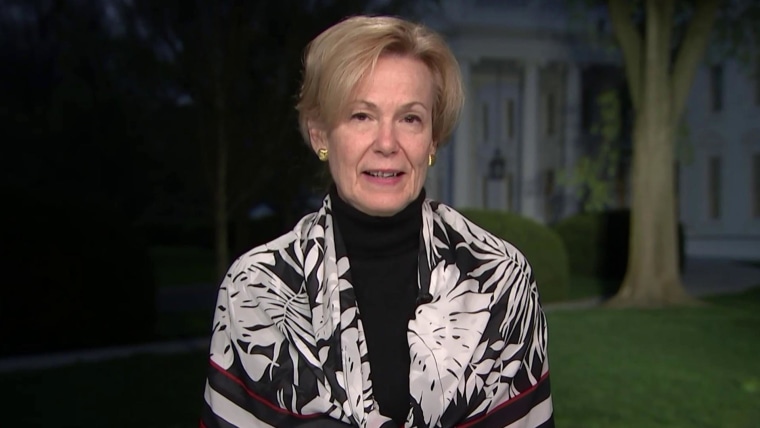
The White House coronavirus task force coordinator said Sunday that the administration is “asking every single governor and every single mayor to prepare like New York is preparing now.”

Dr. Deborah Birx told NBC’s “Meet the Press” that state and city leaders need to know where each hospital in their jurisdiction is located, where the surgical centers are, where “every piece of equipment is in the state” and how to move equipment around the state “based on need.”

“So it’s not just what you have inside your doors today. It’s how you can surge and move things around,” she said. “We know this epidemic moves in waves. Each city will have its own epidemic curve. And so we can move between states, we can move within states, to meet the needs of everyone.”

But Birx emphasized that states and metro areas need to react because of the quickly increasing number of cases and deaths across the country.

“No state, no metro area will be spared, and the sooner we react and the sooner the states and the metro areas react and ensure that they put in full mitigation, at the same time understanding exactly what their hospitals need, then we’ll be able to move forward together and protect the most Americans,” she said.

Dr. Deborah Birx says “no metro area will be spared” of the coronavirus outbreak.

Dr. Birx: “The sooner we react and the sooner the states and the metro areas react and ensure that they have put in full mitigation … then we’ll be able to move forward.”

When NBC’s Chuck Todd questioned how states would go about obtaining new medical equipment, she said the federal government is “working very hard” to locate and place ventilators. 

“But we need states at the same time to look where all of their ventilators are, including outpatient surgical center,” she said.

New York Gov. Andrew Cuomo (D) has taken direct actions to combat the spread of the coronavirus initiating a stay-at-home order and working with the federal government to obtain more ventilators and temporary hospitals. The state has been hit hard by the pandemic with more than 52,300 cases and more than 880 deaths.

The president considered implementing a quarantine for New York’s tri-state area but ended up issuing a travel advisory for the area Saturday.


Fauci says US could have ‘millions’ of coronavirus cases and over 100,000 deaths

https://thehill.com/homenews/administration/490048-fauci-says-us-could-have-millions-of-coronavirus-cases-and-over?rnd=1585493013

Fauci says coronavirus deaths in US could top 100,000 ...

Dr. Anthony Fauci, one of the faces of the Trump administration’s coronavirus task force, on Sunday warned that the novel coronavirus could infect millions of people in the United States and account for more than 100,000 deaths. 

Speaking on CNN’s “State of the Union,” Fauci said that, based on what he’s seeing, the U.S. could experience between 100,000 and 200,000 deaths from Covid-19.

“We’re going to have millions of cases,” Fauci, the head of the National Institute of Allergy and Infectious Diseases, said, noting that projections are subject to change, given that the disease’s outbreak is “such a moving target.”

The novel coronavirus, which first appeared in China in December, has infected more than 124,000 people in the U.S. and accounted for more than 2,000 deaths, according to a Johns Hopkins University database. The U.S. has reported the most confirmed cases of the virus worldwide.

Video of Dr. Fauci telling @jaketapper that “Looking at what we’re seeing now, I would say between 100,000 and 200,000 cases… excuse me, deaths. I mean, we’re going to have millions of cases.”

These next few weeks could be pretty rough.

The outbreak has upended everyday life, causing a mass closure of businesses and schools as federal and state officials enforce measures designed to slow the spread of the disease. Areas such as the New York metropolitan area have been hit particularly hard, producing concerns about a surge in patients overwhelming its health care system.

Fauci has continually called for social-distancing requirements to remain in place for an extended period of time. He said Sunday that lifting those restrictions would depend on the availability of testing kits that will be able to confirm a diagnosis within about 15 minutes.

“It’s going to be a matter of weeks. It’s not going to be tomorrow and it’s certainly not going to be next week,” he said.

Fauci added that he wanted to to see a substantial flattening of the curve in terms of cases before curbing social-distancing restrictions. 

“As I have said before, it’s true the virus itself determines that timetable. You can try and influence that timetable by mitigating against the virus, but, ultimately, it’s what the virus does,” he said.


Grocery workers are keeping Americans alive during the COVID-19 pandemic. Here’s what they need.

https://www.brookings.edu/blog/the-avenue/2020/03/25/grocery-workers-are-keeping-americans-alive-during-the-covid-19-pandemic-heres-what-they-need/?utm_campaign=Brookings%20Brief&utm_source=hs_email&utm_medium=email&utm_content=85335188

Grocery workers are keeping Americans alive during the COVID-19 ...

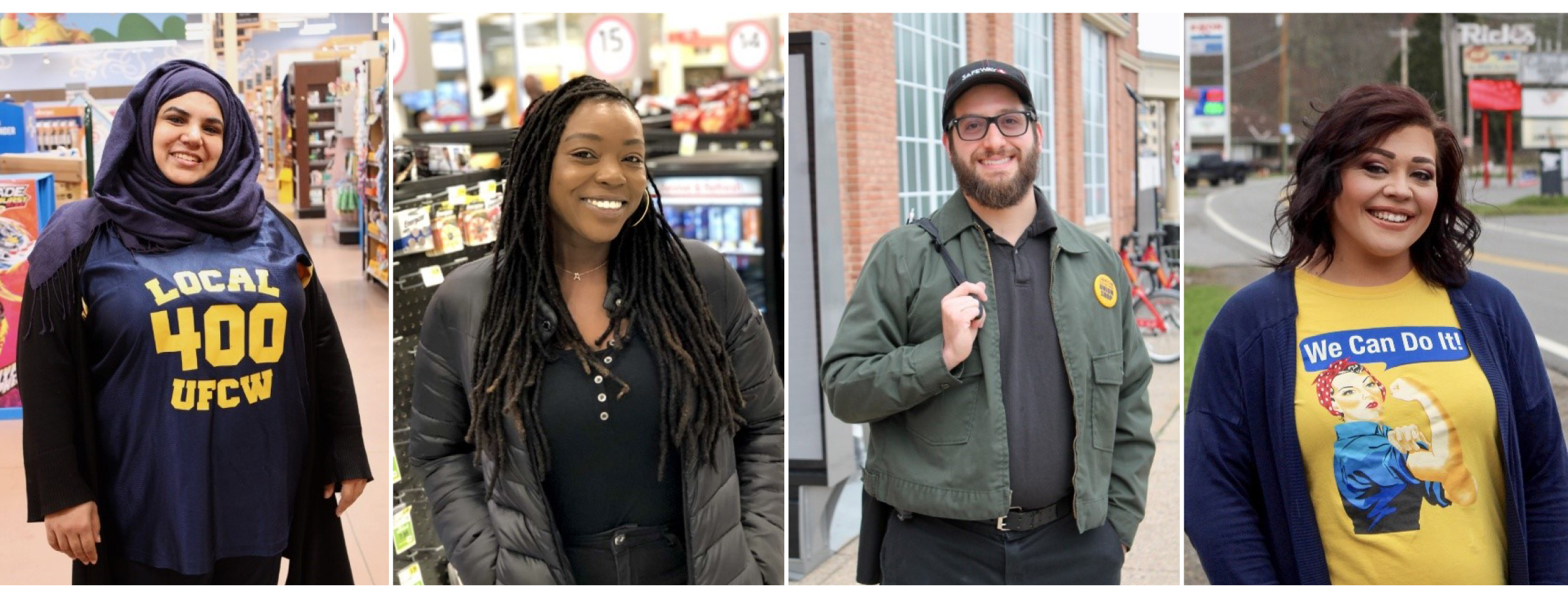
As worried Americans pack supermarket aisles in anticipation of quarantines and shelter-in-place orders, grocery workers like Courtney Meadows are working at a frantic pace to keep Americans fed and alive, and risking their own health in the process.

Meadows, a cashier at Kroger in Beckley, W.Va., said her store is the busiest she has seen it in 10 years on the job. “I have worked through snow scares, a blizzard, two derechos, holidays, anything that can impact a grocery store,” she told me. “This is the absolute worst I have seen it. It is a sea of people everywhere.”

Over the last week, I traveled to supermarkets across the Washington, D.C. region and interviewed workers from Virginia, Maryland, West Virginia and the District to hear—in their words—how COVID-19 is impacting them. These crowded stores I visited had few visible safeguards or protections for workers.

“We aren’t staying six feet away from the customers,” said Michelle Lee, a Safeway cashier in Alexandria, Va. “When we ring them up, they are like two feet away from us. We check out 200 customers a day. A doctor can wear a mask and protective gear. We don’t have all of that.”

Amber Stevens, a cashier at Shoppers in Prince George’s County, Md., expressed concern over social distancing as well. “I do still have a job to go to, but it isn’t helping me with social distancing because I am hands-on with customers,” she told me. “That is the scary part. Dealing with money, having to be so close to people.”

More than their own health, the grocery store employees I interviewed expressed the most concern about the safety of those around them: their loved ones at home, their elderly customers, their colleagues with underlying health conditions, and their neighbors in crowded apartment buildings. Several workers welled up with emotion as they described how hard it is to be unable to care for older relatives during the pandemic.

“All of that worry plus the stress of double the number of customers we normally have,” said Lisa Harris, a cashier at Kroger in Richmond, Va. “This isn’t just for one day. It is for weeks.”

As grocery workers put their lives on the line—often for low wages and few benefits—it is imperative that employers, policymakers, and even customers act with urgency to protect, support, and compensate them.

EMPLOYERS MUST KEEP GROCERY WORKERS HEALTHY

Employers need to implement immediate steps to reduce grocery workers’ exposure to COVID-19. First, employers should expand access to personal protective equipment (PPE) such as masks and gloves and end any restrictions on workers wearing them. While supplies of protective masks and gloves are extremely limited across the country, employers and policymakers should prioritize PPE for grocery workers as they become available. Employers should provide adequate cleaning supplies and hand sanitizer, regular opportunities for workers to wash their hands, and frequent equipment cleaning.

Second, stores should shorten hours and limit the number of customers at any given time. While several stores—including Trader Joe’sWalmart, and Safeway—have limited store hours and introduced “senior only” hours, most stores are not following the CDC’s guidance of limiting gatherings to 50 people. Even tighter restrictions may be needed to keep workers safe as the virus spreads; for instance, some stores in China are checking customers’ temperatures before they enter the store.

Third, grocery stores should implement additional measures to protect workers and enforce safe spacing of customers. Albertsons, which owns Safeway and 19 other grocery chains, was the first major company to announce they will install plexiglass “sneeze-guard” barriers at checkouts in its 2,200 stores over the next two weeks. Walmart and Kroger have made similar commitments, and other grocery stores should follow.

Even in the absence of specific CDC guidelines for grocery workers, employers should act boldly and creatively to modify stores to keep workers safe, continuously adapt to evolving best practices, and respond to safety priorities identified by unions like the United Food and Commercial Workers International Union (UFCW), which represents over 1.2 million workers.

INCREASE COMPENSATION AND OFFER HAZARD PAY

The coronavirus pandemic has put a harsh spotlight on the low wages that grocery workers earn for their life-saving work. At Kroger, the country’s second-largest grocery chain with 453,000 workers, the average hourly wage of cashiers is just $9.94 per hour, according to estimates on Indeed.com.

Lisa Harris, a Kroger cashier, described the financial hardships she and her low-wage colleagues face: “I have coworkers who stand all day serving people, and then have to go pay for their own groceries with food stamps. I am very lucky that my boyfriend works in pizza because that is our survival food. If we can’t afford to buy food, he brings home a pizza.”

Even in “normal” times, grocery workers—like other service and low-wage workers—deserve better wages. In these extreme times, adequately compensating them is even more imperative. As grocery sales soar and their stock prices rise, employers should provide additional compensation and hazard pay to their workers on the front line.

“I think that some pay increase would be wonderful,” Kroger cashier Courtney Meadows told me. “I don’t think they understand the toll that comes through in our lives. They don’t see it. They don’t see the panic on people’s faces.”

In response to the pandemic, the two largest grocery employers, Kroger and Walmart, have offered workers one-time bonuses of $300. Responding to pressure from the UFCW, Safeway and Shoppers are now offering an additional $2 per hour of hazard pay, while Whole Foods and Target are also raising pay $2 per hour.

These pay increases are an important start, but they don’t go far enough. The raises should be permanent, and enough to provide a family-sustaining wage to workers.

ENSURE ACCESS TO HEALTH INSURANCE AND EXTEND PAID SICK LEAVE

Now more than ever, paid sick leave and health insurance are critical for grocery workers. Well before the COVID-19 pandemic, hundreds of thousands of grocery workers didn’t receive paid sick leave from their employers. Responding to public outrage and pressure from employees and unions, most large employers now have updated their sick leave policy to respond to COVID-19. However, their policies don’t go far enough: They are temporary, focus narrowly on COVID-19, and are insufficient to meet the needs of workers.

Companies including Safeway, Kroger, and Walmart are now offering 14 days paid sick leave for workers with a confirmed COVID-19 diagnosis. But COVID-19 tests are in extremely short supply and many workers with suspected cases will be unable to get tested. Employers should modify paid leave policies to allow flexibility for ill workers to access the benefits even without a confirmed test, at least until testing is more widely available.

Policies should cover paid leave for grocery workers to care for their immediate family members or people they live with if they become ill. Employers should also compensate workers for any coronavirus-related medical bills that are not covered by their health insurance.

Employers should provide extra support to grocery workers who are especially high-risk, such as older workers and the immunocompromised. The most vulnerable workers may need to simply stay home during the pandemic and not work for weeks or months. Employers should do their part to ensure those workers have extended paid leave or other forms of adequate compensation and benefits, including health insurance.

CUSTOMERS CAN HELP KEEP GROCERY WORKERS SAFE

A major concern for the workers I interviewed was the actions of individual customers that could jeopardize their health. Many workers noted that customers continue to come to their store even when they are sick.

“Some customers will come through the line and cough or sneeze in their hand,” said Safeway cashier Michelle Lee. “If you are sick, you should stay home or cough in their elbow.”

Customers should do their part by keeping a safe distance from workers at checkout and throughout the store, practicing proper hygiene when coughing or sneezing, and staying home when ill.

RIGHT NOW, GROCERY WORKERS ARE EMERGENCY PERSONNEL

On March 15, Minnesota Governor Tim Walz made grocery store employees and food distribution personnel eligible for free child care by designating them as emergency workers. Four days later, Vermont’s Department of Public Safety added grocery workers to its list of essential personnel, giving them free child care at school-based centers set up by the state.

Other states should follow the lead of Minnesota and Vermont and designate grocery workers as emergency personnel, granting them the same protections and benefits as first responders and health workers.

If we had an opportunity to get free child care, people like me could go in,” Matt Milzman, a 29-year-old Safeway cashier in Washington, D.C. and father of two small children, told me. “They need all the people they can. I am low risk and healthy. I would much rather me work than someone who is older with a million health problems.”

Grocery workers are among the true heroes of the pandemic, providing basic necessities to keep Americans alive, but also human comfort for their customers during an anxious time.

“I choose to be happy and positive,” cashier Courtney Meadows told me. “If you can talk and make someone laugh, that might be the only positive thing in their life that day. That is what I choose to do.”

We owe them not only our gratitude, but the protection, support, and compensation they deserve.


TED How we must respond to the COVID-19 pandemic | Bill Gates

https://interestingengineering.com/video/bill-gates-explains-how-we-must-respond-to-the-covid-19?utm_source=Facebook&utm_medium=video&utm_campaign=organic&utm_content=Mar26&fbclid=IwAR2rdOpbqBMQpAk9iklTVoZ3FMtkuLKHisfa0kUKRalvFRksb5gfFDaoV_I

Image result for TED How we must respond to the COVID-19 pandemic | Bill Gates

The billionaire philanthropist predicted the pandemic several years ago. Now, he shares his views on the current situation.

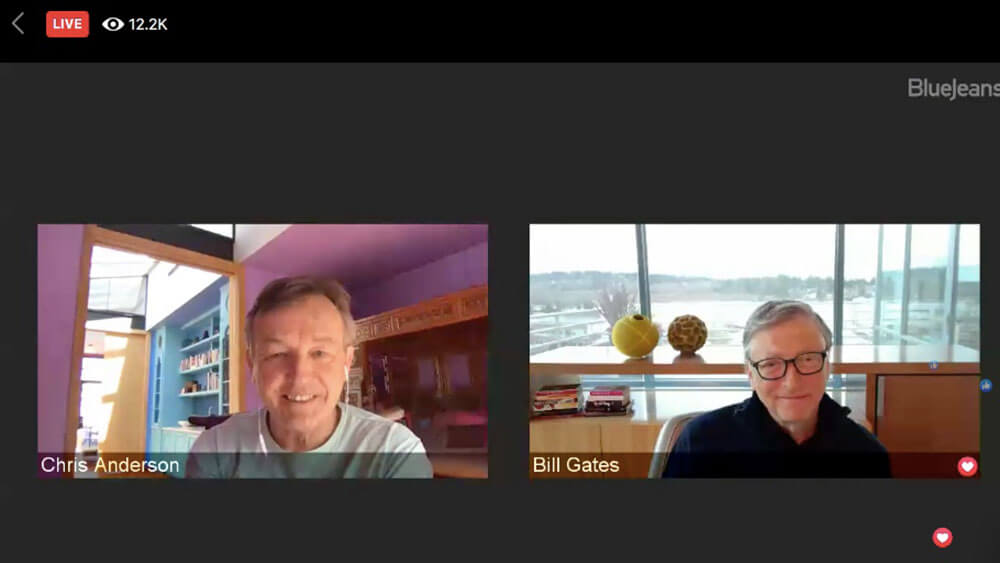
In this TED talks interview, philanthropist billionaire Bill Gates discusses his expert views on COVID-19. He shares why he predicted a few years ago that a global pandemic would hit the world.

Gates explains that the real danger in COVID- 19 is that it is infectious before symptoms have started. He calls these types of viruses worst-case scenarios.

“Ebola, you’re actually flat on your back before you’re very infectious so you’re not at church or on a bus or at a store. With most respiratory viruses like the flu at first, you only feel a little bit of a fever and a little bit sick. So there’s the possibility you’re going about your normal activities and infecting other people. Human to human transmissible respiratory viruses that in the early stage aren’t stopping you from doing things, that’s kind of a worst-case,” says the Microsoft co-founder.

He goes on to say that people move around more now, making for more worldwide victims. Gates also says that he understood the virus would be very difficult to contain back in January when he heard that it was human to human transmissible.

Finally, the entrepreneur shares what was happening behind the scenes during that period. The interview is a must-see not only for Bill Gates fans but for everyone who is concerned about COVID-19.