There is no shortage of challenges to confront in healthcare today, from workforce shortages and burnout to innovation and health equity (and so much more). We’re committed to giving industry leaders a platform for sharing best practices and exchanging ideas that can improve care, operations and patient outcomes.
Check out this podcast interview with Ketul J. Patel, CEO at Virginia Mason Franciscan Health and division president, Pacific Northwest at CommonSpirit Health, for his insights on where healthcare is headed in the future.
In this episode, we are joined by Ketul J. Patel, Division President, Pacific Northwest; Chief Executive Officer, CommonSpirit Health; Virginia Mason Franciscan Health, to discuss his background & what led him to executive healthcare leadership, challenges surrounding workforce shortages, the importance of having a strong workplace culture, and more.
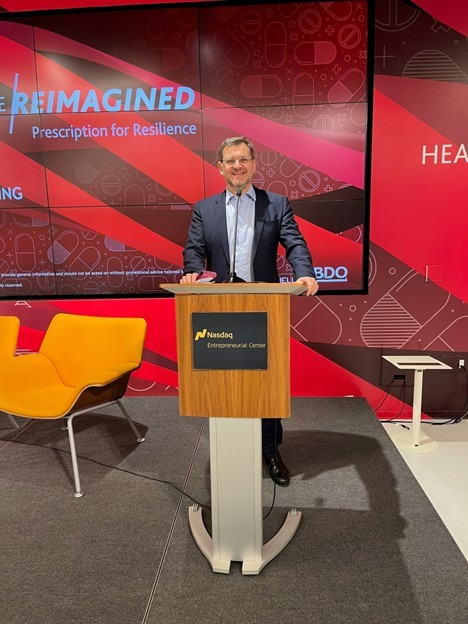
This January, BDO hosted healthcare and life sciences leaders on the sidelines of JP Morgan’s Healthcare Conference to glean insights from those at the forefront of these rapidly evolving industries.
In a series of intimate breakout discussions, these leaders discussed the challenges they’re seeing and what they anticipate the near future will hold. Here are four of their biggest takeaways that industry stakeholders need to know:
· Healthcare labor needs a makeover
One of the biggest issues we’re seeing in healthcare today is the overburdening of clinicians and other healthcare staff. This year, healthcare leaders need to prioritize enabling clinicians to practice at the top of their licenses. That means reducing their administrative burden so they can spend more time doing what they do best: working with patients and dispensing care.
· Healthcare valuations are moderating
In the past year, healthcare company valuations have been very high. We’re now seeing valuations moderate, which could mean a major shift in the deal landscape, with deal opportunities opening up as the price is right.
· Health equity is about choice
The reality is that each individual patient has unique needs that require tailored solutions. One important tool for improving health equity is technology that enables patients to choose what is right for them and their situation. That’s why capabilities like self-scheduling are so important, despite the fact that they are currently a missed opportunity for many providers.
· Life sciences leaders are looking at drug timelines differently
COVID-19 showed how quickly a drug can be safely developed when the right resources are in place. Moving forward, life sciences leaders are likely to pressure test drug timelines, which could lead to a shift in how the industry looks at drug development as a whole.
· While it’s impossible to know exactly what the future holds, we’re thankful that we were able to hear from industry leaders with on-the-ground knowledge of what’s happening now and what’s likely ahead. In the months and years ahead, we’ll continue to look to these leaders for their insights.







 HENRY KOTULA