Here’s our personal bellwether for how the Delta variant is impacting health systems:we’ve had three different, in-person leadership retreats cancel across the course of the past week, due to COVID concerns. Three very different parts of the country, on both coasts and in the heartland.
Case counts are up, hospitalizations are up, and clinical leaders are (rightly) becoming more skittish about large, in-person meetings. As many have noted, this latest wave of infections is unevenly distributed across the country, primarily affecting the unvaccinated but also putting vaccinated people at risk of transmitting the virus or becoming ill.
As frequent business travelers who thrive on meeting face-to-face with our members, we had just begun to get comfortable being back out “on the road”—but now that’s changing, too. The recent cancellations are a good reminder that we’re still in a fluid situation in this pandemic, and that being flexible and adaptable will continue to be critical for the foreseeable future. (Thank goodness we’re not in the conference business—that’s got to be a nightmare right now.)
Just as we always check the weather forecast for places we’re traveling to, we’ve started checking the number of cases per 100,000 and the test positivity rate as well—over 10 per 100,000, or over 5 percent, and we’ll think twice about visiting.
And our masks have gone back on. We’ll hope to see you out there soon, but in the meantime—stay safe and get vaccinated!
With the Delta variant now accounting for more than 83 percent of all new COVID cases in the US, daily new case counts more than quadrupling across the month of July, and hospitalizations—particularly in states with low vaccination rates—beginning to climb significantly, we appear to have entered a new and uncertain phase of the pandemic, now being dubbed a “pandemic of the unvaccinated”.
Welcome news, then, that this week the American Hospital Association (AHA) publicly encouraged its members to put in place vaccine mandates for their employees. While several large health systems have taken the lead in implementing vaccine mandates, including Trinity Health, the Livonia, MI-based Catholic system that operates hospitals across 22 states, Phoenix, AZ-based Banner Health, Houston Methodist in Texas, and the academic giant NewYork-Presbyterian, others have been more reticent to compel employees to get vaccinated, citing concerns over employee privacy and the potential for workforce backlash.
The New York Timesreports that a quarter of all hospital employees remain unvaccinated nationwide, with many facilities reporting that more than half of their healthcare workers have not gotten the COVID vaccine. In our discussions with health system executives, one consideration frequently cited is the desire for full Food and Drug Administration (FDA) approval of the new vaccines before mandates are put in place.
In a CNN town hall meeting this week, President Biden suggested that approval could come as soon as the end of August, although other reports point to likely approval much later, potentially not until January of next year. Facing a new variant of the virus that is much more transmissible and possibly more virulent than earlier strains, hospitals—and their patients—can’t afford to wait that long.
For safety’s sake, hospitals should quickly put in place vaccine mandates, with appropriate exceptions.
With every passing day, the United States appears more likely to be on the cusp of a dreaded fourth wave of COVID-19 infections, even as the percentage of fully vaccinated Americans inches toward 50%. In the past two weeks, the number of average new daily cases has more than doubled, from 13,200 on July 4 to more than 32,300 on July 18, a surge that harbors grim reminders of the fronts of the second and third waves in the summer and fall of 2020.
But on closer inspection, this surge looks significantly different than those we have seen in the past—and may very well be worse than it looks on the page.
The coronavirus pandemic has never, even in its worst heights last winter, struck the U.S. uniformly. Instead, it has wandered from eruptions in specific urban areas to suburban and rural counties and then back again, like a persistent hurricane. Now, as the gap between states’ completed vaccination rates widens—Alabama has vaccinated just 33.7% of residents, compared to nearly 70% in Vermont—the per capita rate of new cases has clustered in a handful of regions where a majority of adults remain unvaccinated even as reopening continues apace.
To draw on my amateur oceanography, the current crest resembles less a wave than a rip tide, with surges of current inundating several hotspots while the remainder of the country remains blissfully unaware (or unwilling to admit) that the pandemic is not remotely over. The upshot is that local data, rather than state- or nationwide-level figures, now paint the most accurate picture of the current state of the outbreak.
“State-wide cases don’t tell the entire story. We need a finer-toothed comb,” says Jennifer Nuzzo, the lead epidemiologist for the Johns Hopkins University Testing Insights Initiative.
As Nuzzo notes, the most recent documented outbreaks are more concentrated in rural areas than those of the worst spikes over the past 16 months (though the virus didn’t spare any corner of the country). What appears to be different now, even within more rural regions, is a blossoming of outbreaks that are at the moment highly clustered, particularly along the border between Arkansas and Missouri as well as northeast Florida and southeast Georgia.
But any such observation comes with the same caveat that we on the Numbers Beat have been striving to communicate since the beginning: The number of cases is contingent on the number of people being tested for the virus, a figure that can only underestimate the true picture, not exaggerate it.
Let’s recall: A year ago, COVID-19 skeptics, including then-Vice President Mike Pence, were attributing a spike in cases at the time to an increase in testing, a claim that was easily debunked. Now we face the opposite question: As the number of weekly tests has plummeted, taking a back seat to vaccination, and with the sense of urgency abating (for now), is the situation in fact worse than it appears?
“I don’t worry that we are missing the severe cases,” including when a patient is hospitalized, Nuzzo says. “It’s everybody else I worry about. We have turned our telescope to a different part of the sky.”
Murray Côté, an associate professor of health policy and management at Texas A&M University, agrees. “I still think we’re missing a chunk” of positive cases, he says. “It’s a confluence of things. We don’t have the testing facilities we used to have [earlier in the pandemic].” That chunk, both Côté and Nuzzo say, is likely made up of people who are experiencing mild or no symptoms, but can still be part of a transmission chain.
I last spoke with Côté in June 2020 when unwinding Pence’s claim that the summer surge was a product of more testing. Our conversation this time felt both reversed, as we were discussing a possible under-calculation of reality, as well as strangely familiar, because a year ago, we were seeing a new surge amid a widespread relaxation of safety measures—not unlike the freedom from safety measures like maskless dining we currently enjoy.
“We’re behaving exactly the same way as we did last year,” Côté says. To refresh your memory: Around this time in 2020, the U.S. had a brief moment where cases began to drop. Some Americans started to ease their social distancing and mask wearing, and it led to both a summer surge and, after another lull, the massive winter spike that turned out to be the worst stretch of the global outbreak to hit any country in the world. What’s different now is that this time we have highly effective vaccines—but, while inoculation can protect individuals, vaccination rates in many communities across the U.S. remain too low to prevent fresh outbreaks.
In the heady days of spring, 2021, many states began reducing the frequency of their reports on new cases to every few days or once a week. That was a foolish mistake when, even with a massive reduction in testing, the seven-day rolling average of new cases never dipped below 10,000 at the national level. Given that the best-case scenario—even before the emergence of the Delta variant—was a reduction of cases and deaths to endemic levels for years to come, states must pair their desperate attempts to vaccinate more individuals with a renewed focus on surveillance and contact tracing.
For now, the best way to prevent the current spikes from becoming a proper fourth wave is vaccination (which, even if cases continue to rise, can help prevent hospitalizations and deaths), increased surveillance, and a return to mitigation measures. Indeed, Los Angeles County on Sunday reinstituted mandatory mask-wearing in businesses and public areas, a major rollback after the U.S. Centers for Disease Control and Prevention said on May 13 that fully vaccinated individuals could shed their masks in many scenarios. Unless states can rapidly revive widespread and easily available testing, L.A. will be far from the last county to ask residents to mask up once again.
The delta variant of the coronavirus is sweeping through the United States, raising the average number of cases to 30,000-per-day, crowding hospitals in areas with large number of unvaccinated people and spurring questions about the nation’s recovery from the pandemic.
Stocks tanked on Monday, with the Dow Jones Industrial average dropping 725 points after being down more than 900 points at one time.
It was the worst one-day performance in the Dow since last October, and followed losses in markets around the world as investor fears about how the delta virus might slow both the health and economic recovery took hold.
Health officials have described the latest stage of the coronavirus as a pandemic of the unvaccinated while emphasizing that those who have had their shots are relatively safe.
Yet Los Angeles County on Saturday reinstated a mask mandate for indoor public settings, a sign that local communities may decide to reimpose restrictions as a safety measure.
An Olympic gymnast and an Olympic women’s basketball player both announced they had tested positive as they prepared for the Games, which is being held in a state of emergency in Tokyo where the rate of vaccinations is behind the United States.
Canada had also been well behind the U.S. in its vaccination rate but surpassed its southern neighbor on Monday, a sign of how much more slowly the vaccination rate now is in the United States. A big reason is that many people who are unvaccinated do not want to get the vaccine, something the Biden administration has increasingly blamed on social media and some conservative media outlets.
While the 30,000 cases per day on average is more than double the 13,000 average at the end of June, that rate is still well below highs from last fall and earlier this year.
Still, deaths are also ticking back up, at around 240 per day.
Because vaccinated people are still overwhelmingly protected, especially from severe outcomes, case and death numbers are likely to stay well below the worst of last winter’s surges, before vaccines were widely available.
But unvaccinated people are at increasing risk, especially given the rise of the highly transmissible delta variant, and the vaccination campaign is hitting a wall, leaving more than 30 percent of adults without any shots and exposed to the full dangers of the virus.
States with lower vaccination rates are seeing the worst outbreaks. Arkansas, Missouri, Florida and Louisiana are the four states with the highest per capita new cases per day, according to data from the Covid Act Now tracking site. The percentage of the population with at least one shot in those states is 44 percent, 47 percent, 56 percent, and 40 percent, respectively.
In contrast, Vermont and Massachusetts, where the vaccination rate is over 70 percent, are faring much better.
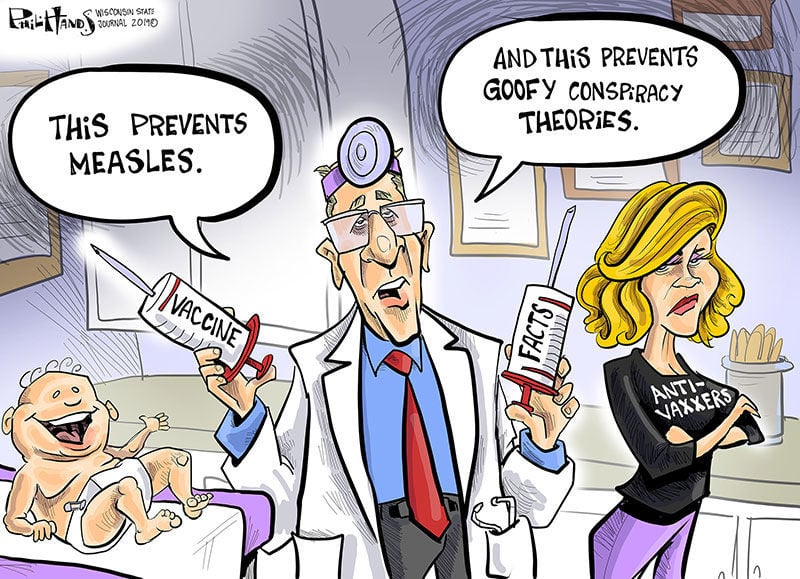
Vaccine resistance among some leading conservative commentators and lawmakers is raising fears that many of the remaining unvaccinated may never get the shots.
Sten Vermund, a professor at the Yale School of Public Health, said he is “not particularly worried” about COVID-19 for himself, because he is fully vaccinated.
“What worries me is my fellow Americans who for a variety of reasons choose not to get vaccinated; they continue to be in harm’s way,” Vermund said.
In the rare instances where vaccinated people do get COVID-19 cases, symptoms are likely to be much milder.
CDC Director Rochelle Walensky said Friday that 97 percent of people entering the hospital with COVID-19 are unvaccinated, part of why she said it “is becoming a pandemic of the unvaccinated.”
Conservative resistance to vaccination is stiffening. A Washington Post-ABC News poll released earlier this month found that 47 percent of Republicans said they were unlikely to get vaccinated, compared to just six percent of Democrats. Among Republicans, 38 percent said they definitely would not get the shots.
Former President Trump has previously encouraged people to get vaccinated, though he has not made a forceful push, for example by recording a public service announcement or getting his own shots in public.
On Sunday, though, Trump appeared to justify people not taking the vaccine, blaming President Biden.
“He’s way behind schedule, and people are refusing to take the Vaccine because they don’t trust his Administration, they don’t trust the Election results, and they certainly don’t trust the Fake News, which is refusing to tell the Truth,” Trump said in a statement.
Asked if Biden would request Trump film a public service announcement on vaccination, White House press secretary Jen Psaki said “we don’t believe that requires an embroidered invitation to be a part of.”
“Certainly any role of anyone who has a platform where they can provide information to the public that the vaccine is safe, it is effective, we don’t see this as a political issue,” Psaki said. “We’d certainly welcome that engagement.”
She also emphasized, though, that the administration is focusing on local doctors and community leaders to try to boost vaccination rates, not national officials.
The effort is hitting its limits, though. The pace of vaccinations has fallen to around 500,000 per day, down from over 3 million at the peak in April, according to Our World in Data.
“I’m not that hopeful that we’re going to get to people who have refused to be vaccinated,” said Preeti Malani, an infectious disease expert at the University of Michigan.
Experts increasingly say the best remaining hopes of reaching the remaining unvaccinated are school and employer mandates for their workers or students to get vaccinated.
France is experiencing a surge in vaccinations after President Emmanuel Macron announced this month that proof of vaccination, or a negative test, would be required for everyday activities like going to restaurants. The Biden administration has repeatedly ruled out a national vaccine passport in the U.S., though, and Republicans have rebelled against the idea.
Full approval of the vaccines from the Food and Drug Administration, as opposed to the current emergency authorization, could also help assuage some people’s fears, and some experts have called on the FDA to move faster on issuing a full approval.
The Biden administration has stepped up its calls for Facebook and other technology companies to do more to fight vaccine misinformation on their platforms.
Biden on Friday said social media companies are “killing people” with misinformation. On Monday, though, he dialed the criticism back down, instead pointing to 12 people responsible for much of the disinformation.
“Facebook isn’t killing people, these 12 people are out there giving misinformation,” Biden said.
“My hope is that Facebook, instead of taking it personally, that somehow I’m saying Facebook is killing people, that they would do something about the misinformation, the outrageous misinformation about the vaccine,” Biden added. “That’s what I meant.”
For its part, Facebook said over the weekend, before Biden’s walk-back, that the administration was “finger pointing” and the company was not the reason the president’s goal of getting 70 percent of adults at least one shot by July 4 was missed.
Los Angeles County’s move to return to an an indoor mask mandate, even for vaccinated people,
got mixed reviews from experts, but either way, it is unlikely to be replicated in places that are the hardest hit, given that places that are resistant to vaccines tend to also be resistant to masks.
“Vaccines are really the only way out,” Malani said. “We can’t live in masks forever.”
COVID-19 cases are up by nearly 70% over the past seven days due to huge spikes of cases in low vaccinated areas, Biden administration officials said Friday.
“This is becoming a pandemicof the unvaccinated,” said Rochelle Walensky, M.D., director of the Centers for Disease Control and Prevention, during a briefing Friday. “We are seeing outbreaks of cases in parts of the country that have low vaccination coverage because unvaccinated people are at risk. Communities that are fully vaccinated are generally faring well.”
The seven-day average of cases was 26,300 per day, an increase of nearly 70% from the last seven-day average, Walensky said.
Hospitalizations are also up to 2,790 per day, an increase of 36% from the previous seven-day period.
Deaths, a metric that has declined since prior surges earlier in the year, have also started to increase. The seven-day average increased by 26% to 211 per day, Walensky said.
“Our biggest concern is we are going to see preventable cases, hospitalizations and, sadly, deaths among the unvaccinated,” she said.
A major driver of the increases has been the highly transmissible Delta variant of COVID-19, but Walensky said that 97% of the patients hospitalized right now with the virus are unvaccinated.
The Biden administration is ramping up efforts to increase vaccinations in areas that have stubbornly low rates. The administration is sending more than 100 people to states to help enhance vaccine access and boost outreach efforts, said Jeff Zients, the White House coronavirus response coordinator, during the briefing.
States with the highest cases are starting to see their vaccination rates go up, Zients said.
“In the past week, the five states with the highest case rates had a higher rate of people getting newly vaccinated compared to the national average,” he added.
He added that so far the CDC and the Food and Drug Administration have not recommended a booster shot for the fully vaccinated.
Infectious disease expert Anthony Fauci, MD, said Friday that the federal government is looking into evidence accumulated on a daily basis on the need for a booster.
“At this particular time right now, we don’t recommend that there be boosters for people,” Fauci said.






 HENRY KOTULA