Lie of the Year: Coronavirus Downplay and Denial

https://www.politifact.com/article/2020/dec/16/lie-year-coronavirus-downplay-and-denial/?fbclid=IwAR3qlz1c1UvQt2s1z6uIbjw4bYHRWIVuasQ0CHeg4H4lFS0AtUjFJnJtQGw

2020 Lie of the Year: Coronavirus Disinformation - YouTube

A Florida taxi driver and his wife had seen enough conspiracy theories online to believe the virus was overblown, maybe even a hoax. So no masks for them. Then they got sick. She died. A college lecturer had trouble refilling her lupus drug after the president promoted it as a treatment for the new disease. A hospital nurse broke down when an ICU patient insisted his illness was nothing worse than the flu, oblivious to the silence in beds next door.   

Lies infected America in 2020. The very worst were not just damaging, but deadly. 

President Donald J. Trump fueled confusion and conspiracies from the earliest days of the coronavirus pandemic. He embraced theories that COVID-19 accounted for only a small fraction of the thousands upon thousands of deaths. He undermined public health guidance for wearing masks and cast Dr. Anthony Fauci as an unreliable flip-flopper

But the infodemic was not the work of a single person. 

Anonymous bad actors offered up junk science. Online skeptics made bogus accusations that hospitals padded their coronavirus case numbers to generate bonus payments. Influential TV and radio opinion hosts told millions of viewers that social distancing was a joke and that states had all of the personal protective equipment they needed (when they didn’t).

It was a symphony of counter narrative, and Trump was the conductor, if not the composer. The message: The threat to your health was overhyped to hurt the political fortunes of the president. 

Every year, PolitiFact editors review the year’s most inaccurate statements to elevate one as the Lie of the Year. The “award” goes to a statement, or a collection of claims, that prove to be of substantive consequence in undermining reality. 

It has become harder and harder to choose when cynical pundits and politicians don’t pay much of a price for saying things that aren’t true. For the past month, unproven claims of massive election fraud have tested democratic institutions and certainly qualify as historic and dangerously bald-faced. Fortunately, the constitutional foundations that undergird American democracy are holding. 

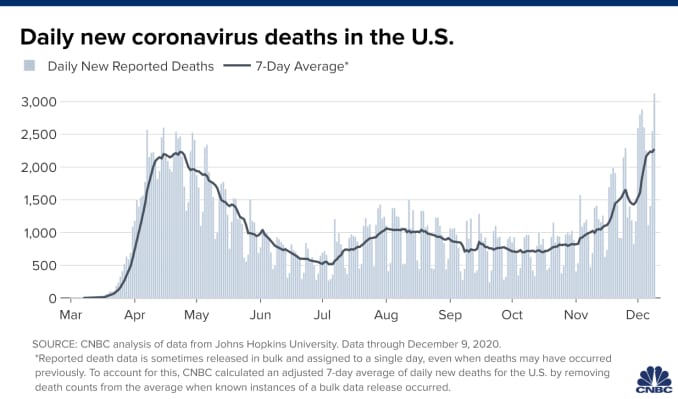
Meanwhile, the coronavirus has killed more than 300,000 in the United States, a crisis exacerbated by the reckless spread of falsehoods.

PolitiFact’s 2020 Lie of the Year: claims that deny, downplay or disinform about COVID-19. 

‘I always wanted to play it down’

On Feb. 7, Trump leveled with book author Bob Woodward about the dangers of the new virus that was spreading across the world, originating in central China. He told the legendary reporter that the virus was airborne, tricky and “more deadly than even your strenuous flus.”

Trump told the public something else. On Feb. 26, the president appeared with his coronavirus task force in the crowded White House briefing room. A reporter asked if he was telling healthy Americans not to change their behavior.

“Wash your hands, stay clean. You don’t have to necessarily grab every handrail unless you have to,” he said, the room chuckling. “I mean, view this the same as the flu.”

Three weeks later, March 19, he acknowledged to Woodward: “To be honest with you, I wanted to always play it down. I still like playing it down. Because I don’t want to create a panic.”

His acolytes in politics and the media were on the same page. Rush Limbaugh told his audience of about 15 million on Feb. 24 that coronavirus was being weaponized against Trump when it was just “the common cold, folks.” That’s wrong — even in the early weeks, it was clear the virus had a higher fatality rate than the common cold, with worse potential side effects, too.

As the virus was spreading, so was the message to downplay it. 

“There are lots of sources of misinformation, and there are lots of elected officials besides Trump that have not taken the virus seriously or promoted misinformation,” said Brendan Nyhan, a government professor at Dartmouth College. “It’s not solely a Trump story — and it’s important to not take everyone else’s role out of the narrative.” 

Hijacking the numbers 

In August, there was a growing movement on Twitter to question the disproportionately high U.S. COVID-19 death toll.  

The skeptics cited Centers for Disease Control and Prevention data to claim that only 6% of COVID-19 deaths could actually be attributed to the virus. On Aug. 24, BlazeTV host Steve Deace amplified it on Facebook.

“Here’s the percentage of people who died OF or FROM Covid with no underlying comorbidity,” he said to his 120,000 followers. “According to CDC, that is just 6% of the deaths WITH Covid so far.”

That misrepresented the reality of coronavirus deaths. The CDC had always said people with underlying health problems — comorbidities — were most vulnerable if they caught COVID-19. The report was noting that 6% died even without being at obvious risk. 

But for those skeptical of COVID-19, the narrative confirmed their beliefs. Facebook users copied and pasted language from influencers like Amiri King, who had 2.2 million Facebook followers before he was banned. The Gateway Pundit called it a “SHOCK REPORT.”

“I saw a statistic come out the other day, talking about only 6% of the people actually died from COVID, which is very interesting — that they died from other reasons,” Trump told Fox News host Laura Ingraham on Sept. 1.

Fauci, director of the National Institute of Allergy and Infectious Diseases, addressed the claim on “Good Morning America” the same day. 

“The point that the CDC was trying to make was that a certain percentage of them had nothing else but just COVID,” he said. “That does not mean that someone who has hypertension or diabetes who dies of COVID didn’t die of COVID-19 — they did.”

Trump retweeted the message from an account that sported the slogans and symbols of QAnon, a conspiracy movement that claims Democrats and Hollywood elites are members of an underground pedophilia ring. 

False information moved between social media, Trump and TV, creating its own feedback loop.

“It’s an echo effect of sorts, where Donald Trump is certainly looking for information that resonates with his audiences and that supports his political objectives. And his audiences are looking to be amplified, so they’re incentivized to get him their information,” said Kate Starbird, an associate professor and misinformation expert at the University of Washington.Weakening the armor: misleading on masks

At the start of the pandemic, the CDC told healthy people not to wear masks, saying they were needed for health care providers on the frontlines. But on April 3 the agency changed its guidelines, saying every American should wear non-medical cloth masks in public.

Trump announced the CDC’s guidance, then gutted it.

“So it’s voluntary. You don’t have to do it. They suggested for a period of time, but this is voluntary,” Trump said at a press briefing. “I don’t think I’m going to be doing it.”

Rather than an advance in best practices on coronavirus prevention, face masks turned into a dividing line between Trump’s political calculations and his decision-making as president. Americans didn’t see Trump wearing a mask until a July visit to Walter Reed National Military Medical Center.

Meanwhile, disinformers flooded the internet with wild claims: Masks reduced oxygen. Masks trapped fungus. Masks trapped coronavirus. Masks just didn’t work.
Covid-19 news from Dec. 10

In September, the CDC reported a correlation between people who went to bars and restaurants, where masks can’t consistently be worn, and positive COVID-19 test results. Bloggers and skeptical news outlets countered with a misleading report about masks.

On Oct. 13, the story landed on Fox News’ flagship show, “Tucker Carlson Tonight.” During the show, Carlson claimed “almost everyone — 85% — who got the coronavirus in July was wearing a mask.”

“So clearly (wearing a mask) doesn’t work the way they tell us it works,” Carlson said.

That’s wrong, and it misrepresented a small sample of people who tested positive. Public health officials and infectious disease experts have been consistent since April in saying that face masks are among the best ways to prevent the spread of COVID-19.

But two days later, Trump repeated the 85% stat during a rally and at a town hall with NBC’s Savannah Guthrie. 

“I tell people, wear masks,” he said at the town hall. “But just the other day, they came out with a statement that 85% of the people that wear masks catch it.”

The assault on hospitals 

On March 24, registered nurse Melissa Steiner worked her first shift in the new COVID-19 ICU of her southeast Michigan hospital. After her 13-hour day caring for two critically ill patients on ventilators, she posted a tearful video.

“Honestly, guys, it felt like I was working in a war zone,” Steiner said. “(I was) completely isolated from my team members, limited resources, limited supplies, limited responses from physicians because they’re just as overwhelmed.” 

“I’m already breaking, so for f—’s sake, people, please take this seriously. This is so bad.”

Steiner’s post was one of many emotional pleas offered by overwhelmed hospital workers last spring urging people to take the threat seriously. The denialists mounted a counter offensive.

On March 28, Todd Starnes, a conservative radio host and commentator, tweeted a video from outside Brooklyn Hospital Center. There were few people or cars in sight.

“This is the ‘war zone’ outside the hospital in my Brooklyn neighborhood,” Starnes said sarcastically. The video racked up more than 1.5 million views.

Starnes’ video was one of the first examples of #FilmYourHospital, a conspiratorial social media trend that pushed back on the idea that hospitals had been strained by a rapid influx of coronavirus patients. 
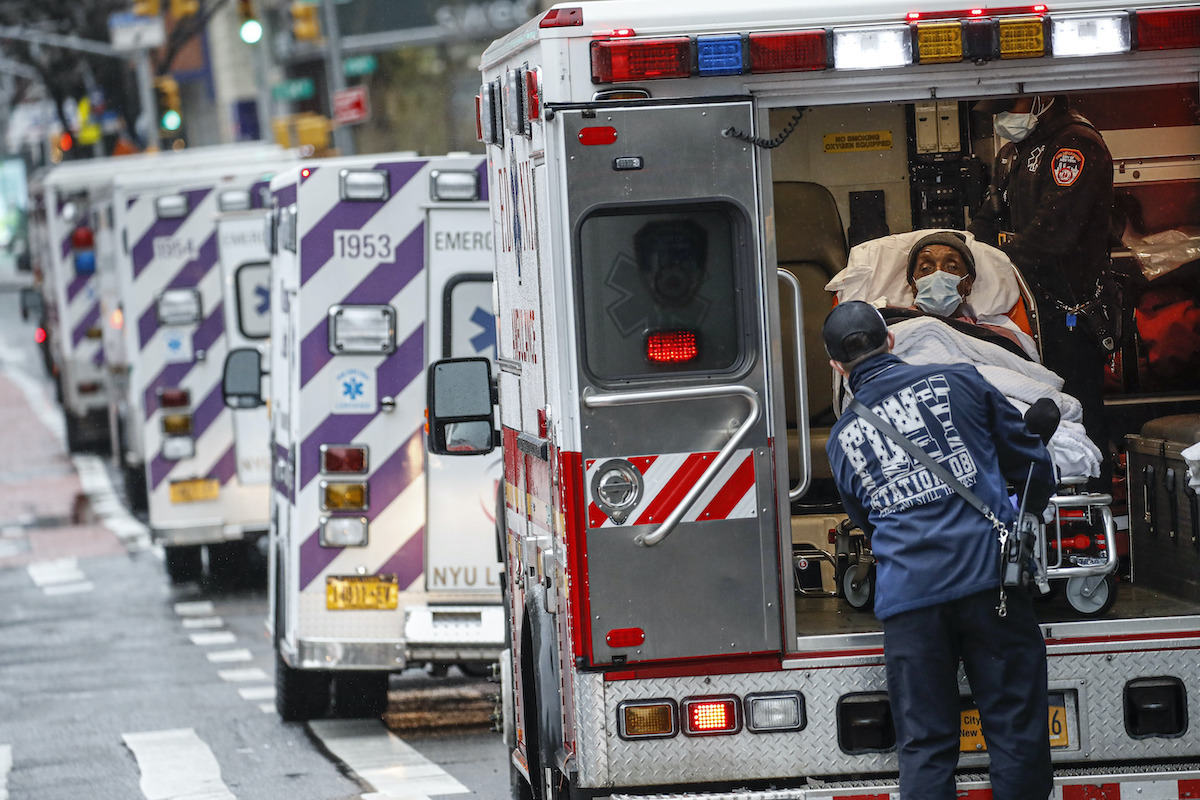
Several internet personalities asked people to go out and shoot their own videos. The result: a series of user-generated clips taken outside hospitals, where the response to the pandemic was not easily seen. Over the course of a week, #FilmYourHospital videos were uploaded to YouTube and posted tens of thousands of times on Twitter and Facebook.

Nearly two weeks and more than 10,000 deaths later, Fox News featured a guest who opened a new misinformation assault on hospitals.

Dr. Scott Jensen, a Minnesota physician and Republican state senator, told Ingraham that, because hospitals were receiving more money for COVID-19 patients on Medicare — a result of a coronavirus stimulus bill — they were overcounting COVID-19 cases. He had no proof of fraud, but the cynical story took off

Trump used the false report on the campaign trail to continue to minimize the death toll. 

“Our doctors get more money if somebody dies from COVID,” Trump told supporters at a rally in Waterford, Mich., Oct. 30. “You know that, right? I mean, our doctors are very smart people. So what they do is they say, ‘I’m sorry, but, you know, everybody dies of COVID.’”  

The real fake news: The Plandemic

The most viral disinformation of the pandemic was styled to look like it had the blessing of people Americans trust: scientists and doctors.

In a 26-minute video called “Plandemic: The Hidden Agenda Behind COVID-19,” a former scientist at the National Cancer Institute claimed that the virus was manipulated in a lab, hydroxychloroquine is effective against coronaviruses, and face masks make people sick. 

Judy Mikovits’ conspiracies received more than 8 million views in May thanks in part to the online outrage machine — anti-vaccine activists, anti-lockdown groups and QAnon supporters — that push disinformation into the mainstream. The video was circulated in a coordinated effort to promote Mikovits’ book release.

A couple of months later, a similar effort propelled another video of fact-averse doctors to millions of people in only a few hours. 

On July 27, Breitbart published a clip of a press conference hosted by a group called America’s Frontline Doctors in front of the U.S. Supreme Court. Looking authoritative in white lab coats, these doctors discouraged mask wearing and falsely said there was already a cure in hydroxychloroquine, a drug used to treat rheumatoid arthritis and lupus.

Trump, who had been talking up the drug since March and claimed to be taking it himself as a preventive measure in Mayretweeted clips of the event before Twitter removed them as misinformation about COVID-19. He defended the “very respected doctors” in a July 28 press conference

When Olga Lucia Torres, a lecturer at Columbia University, heard Trump touting the drug in March, she knew it didn’t bode well for her own prescription. Sure enough, the misinformation led to a run on hydroxychloroquine, creating a shortage for Americans like her who needed the drug for chronic conditions. 

A lupus patient, she went to her local pharmacy to request a 90-day supply of the medication. But she was told they were only granting partial refills. It took her three weeks to get her medication through the mail. 

“What about all the people who were silenced and just lost access to their staple medication because people ran to their doctors and begged to take it?” Torres said.No sickbed conversion

On Sept. 26, Trump hosted a Rose Garden ceremony to announce his nominee to replace the late Ruth Bader Ginsburg on the U.S. Supreme Court. More than 150 people attended the event introducing Amy Coney Barrett. Few wore masks, and the chairs weren’t spaced out.

In the weeks after, more than two dozen people close to Trump and the White House became infected with COVID-19. Early Oct. 2, Trump announced his positive test.

Those hoping the experience and Trump’s successful treatment at Walter Reed might inform his view of the coronavirus were disappointed. 

Trump snapped back into minimizing the threat during his first moments back at the White House. He yanked off his mask and recorded a video.

“Don’t let it dominate you. Don’t be afraid of it,” he said, describing experimental and out-of-reach therapies he received. “You’re going to beat it.” 

In Trump’s telling, his hospitalization was not the product of poor judgment about large gatherings like the Rose Garden event, but the consequence of leading with bravery. Plus, now, he claimed, he was immune from the virus.

On the morning after he returned from Walter Reed, Trump tweeted a seasonal flu death count of 100,000 lives and added that COVID-19 was “far less lethal” for most populations. More false claims at odds with data — the U.S. average for flu deaths over the past decade is 36,000, and experts said COVID-19 is more deadly for each age group over 30.

When Trump left the hospital, the U.S. death toll from COVID-19 was more than 200,000. Today it is more than 300,000. Meanwhile, this month the president has gone ahead with a series of indoor holiday parties. 

The vaccine war 

The vaccine disinformation campaign started in the spring but is still underway.

In April, blogs and social media users falsely claimed Democrats and powerful figures like Bill Gates wanted to use microchips to track which Americans had been vaccinated for the coronavirus. Now, false claims are taking aim at vaccines developed by Pfizer and BioNTech and other companies.

  • A blogger claimed Pfizer’s head of research said the coronavirus vaccine could cause female infertility. That’s false.
  • An alternative health website wrote that the vaccine could cause an array of life-threatening side effects, and that the FDA knew about it. The list included all possible — not confirmed— side effects.
  • Social media users speculated that the federal government would force Americans to receive the vaccine. Neither Trump nor President-elect Joe Biden has advocated for that, and the federal government doesn’t have the power to mandate vaccines, anyway.

As is often the case with disinformation, the strategy is to deliver it with a charade of certainty. 

“People are anxious and scared right now,” said Dr. Seema Yasmin, director of research and education programs at the Stanford Health Communication Initiative. “They’re looking for a whole picture.” 

Most polls have shown far from universal acceptance of vaccines, with only 50% to 70% of respondents willing to take the vaccine. Black and Hispanic Americans are even less likely to take it so far.

Meanwhile, the future course of the coronavirus in the U.S. depends on whether Americans take public health guidance to heart. The Institute for Health Metrics and Evaluation projected that, without mask mandates or a rapid vaccine rollout, the death toll could rise to more than 500,000 by April 2021.

“How can we come to terms with all that when people are living in separate informational realities?” Starbird said.

It will be darkest before dawn

https://mailchi.mp/e38b070b8787/the-weekly-gist-december-18-2020?e=d1e747d2d8

It's Always Darkest Before The Dawn – Peter Scott

But first, we have a difficult period to get through. This week again saw record-breaking numbers of cases, hospitalizations, and deaths from COVID-19, with Thursday alone bringing more than 238,000 new cases—and a staggering 3,293 fatalities.

Nearly 115,000 Americans are currently hospitalized with COVID, a rise of 16 percent from just two weeks ago, and in many places a precarious capacity situation has turned perilous. Conditions have worsened precipitously in California, with only Tennessee, Oklahoma, and Rhode Island registering more daily COVID cases per 100,000 population than the Golden State, although cases are still on the rise across 80 percent of states and territories.

 Intensive care availability in Southern California hit zero, with ICU volume there expected to double or triple by this time next month. The same stresses are playing out in dozens of markets across the country, leading to a staffing sustainability crisis that can’t be solved through paying overtime, cancelling vacations or looking to travel nurses to fill the gaps in a now nationwide crisis. With the Christmas and New Year’s holidays still ahead, experts predict COVID cases won’t peak until sometime in mid-January, with a peak in hospitalizations and deaths following several weeks after.

Several states and cities tightened restrictions on gatherings and issued new stay-at-home orders, in an effort to keep new cases at a level that allows hospitals to manage through the next several weeks and maintain care quality and access for COVID and non-COVID patients alike. The coming weeks will require every American to take greater precautions than at any time during the course of this pandemic.

The vaccine offensive gets underway

https://mailchi.mp/e38b070b8787/the-weekly-gist-december-18-2020?e=d1e747d2d8

FDA gives Moderna COVID-19 vaccine emergency approval | fox43.com

On Monday, at Long Island Jewish Medical Center in New York City, critical care nurse Sandra Lindsay rolled up her sleeve and became the first American to receive Pfizer and BioNTech’s newly approved COVID vaccine, opening a new front in the nation’s battle with the coronavirus pandemic.

By Friday, nearly 50,000 doses of the vaccine had been administered nationwide, with millions more expected before year’s end. Amid a complex rollout that has already raised questions  about the timely distribution of doses, the Food and Drug Administration (FDA) confirmed that it was safe to use every last drop of the Pfizer vaccine, including the excess amount used to fill the five-dose vials of the precious medicine—meaning many vials may have enough to immunize a sixth person.

Based on Thursday’s recommendation from a key panel of experts, the FDA is expected to approve a similar vaccine from Moderna as soon as Friday evening, with doses of that vaccine beginning to be administered by next week. The Moderna vaccine comes in smaller packages with less-demanding storage requirements, making it suitable for a wider distribution across smaller settings and remote areas.

Pharmacy chains CVS and Walgreens were set to begin administering shots to nursing home residents in Ohio, Connecticut, and Florida on Friday, as part of an agreement with the US government to vaccinate staff and residents in 75,000 long-term care facilities nationwide.

In an interview this week, Secretary of Health and Human Services (HHS) Alex Azar said that the vaccine could be widely available to the general public as soon as late February or early March. While it’s surely tempting to fixate on every setback, second guess every decision about prioritization and distribution, and fret over every isolated report of an adverse vaccine reaction, it will be important in the coming weeks to keep the big picture in mind: we are on the way to beating back the coronavirus. The end is nigh.

Demand for COVID Vaccines Expected to Get Heated — And Fast

Americans have made no secret of their skepticism of COVID-19 vaccines this year, with fears of political interference and a “warp speed” timeline blunting confidence in the shots. As recently as September, nearly half of U.S. adults said they didn’t intend to be inoculated.

But with two promising vaccines primed for release, likely within weeks, experts in ethics and immunization behavior say they expect attitudes to shift quickly from widespread hesitancy to urgent, even heated demand.

“People talk about the anti-vaccine people being able to kind of squelch uptake. I don’t see that happening,” Dr. Paul Offit, a vaccinologist with Children’s Hospital of Philadelphia, told viewers of a recent JAMA Network webinar. “This, to me, is more like the Beanie Baby phenomenon. The attractiveness of a limited edition.”

Reports that vaccines produced by drugmakers Pfizer and BioNTech and Moderna appear to be safe and effective, along with the deliberate emphasis on science-based guidance from the incoming Biden administration, are likely to reverse uncertainty in a big way, said Arthur Caplan, director of the division of medical ethics at New York University School of Medicine.

“I think that’s going to flip the trust issue,” he said.

The shift is already apparent. A new poll by the Pew Research Center found that by the end of November 60% of Americans said they would get a vaccine for the coronavirus. This month, even as a federal advisory group met to hash out guidelines for vaccine distribution, a long list of advocacy groups — from those representing home-based health workers and community health centers to patients with kidney disease — were lobbying state and federal officials in hopes their constituents would be prioritized for the first scarce doses.

“As we get closer to the vaccine being a reality, there’s a lot of jockeying, to be sure,” said Katie Smith Sloan, chief executive of LeadingAge, a nonprofit organization pushing for staff and patients at long-term care centers to be included in the highest-priority category.

Certainly, some consumers remain wary, said Rupali Limaye, a social and behavioral health scientist at the Johns Hopkins Bloomberg School of Public Health. Fears that drugmakers and regulators might cut corners to speed a vaccine linger, even as details of the trials become public and the review process is made more transparent. Some health care workers, who are at the front of the line for the shots, are not eager to go first.

“There will be people who will say, ‘I will wait a little bit more for safety data,” Limaye said.

But those doubts likely will recede once the vaccines are approved for use and begin to circulate broadly, said Offit, who sits on the FDA advisory panel set to review the requests for emergency authorization Pfizer and Moderna have submitted.

He predicted demand for the COVID vaccines could rival the clamor that occurred in 2004, when production problems caused a severe shortage of flu shots just as influenza season began. That led to long lines, rationed doses and ethical debates over distribution.

“That was a highly desired vaccine,” Offit said. “I think in many ways that might happen here.”

Initially, vaccine supplies will be tight, with federal officials planning to ship 6.4 million doses within 24 hours of FDA authorization and up to 40 million doses by the end of the year. The CDC panel recommended that the first shots go to the 21 million health care workers in the U.S. and 3 million nursing home staff and residents, before being rolled out to other groups based on a hierarchy of risk factors.

Even before any vaccine is available, some people are trying to boost their chances of access, said Dr. Allison Kempe, a professor of pediatrics at the University of Colorado School of Medicine and expert in vaccine dissemination. “People have called me and said, ‘How can I get the vaccine?’” she said. “I think that not everyone will be happy to wait, that’s for sure. I don’t think there will be rioting in the streets, but there may be pressure brought to bear.”

That likely will include emotional debates over how, when and to whom next doses should be distributed, said Caplan. Under the CDC recommendations, vulnerable groups next in line include 87 million workers whose jobs are deemed “essential” — a broad and ill-defined category — as well as 53 million adults age 65 and older.

“We’re going to have some fights about high-risk groups,” said Caplan of NYU.

The conversations will be complicated. Should prisoners, who have little control over their COVID exposure, get vaccine priority? How about professional sports teams, whose performance could bolster society’s overall morale? And what about residents of facilities providing care for people with intellectual and developmental disabilities, who are three times more likely to die from COVID-19 than the general population?

Control over vaccination allocation rests with the states, so that’s where the biggest conflicts will occur, Caplan said. “It’s a short fight, I hope, in the sense in which it gets done in a few months, but I think it will be pretty vocal.”

Once vaccine supplies become more plentiful, perhaps by May or June, another consideration is sure to boost demand: requirements for proof of COVID vaccination for work and travel.

“It’s inevitable that you’re going to see immunity passports or that you’re required to show a certificate on the train, airplane, bus or subway,” Caplan predicted. “Probably also to enter certain hospitals, probably to enter certain restaurants and government facilities.”

But with a grueling winter surge ahead, and new predictions that COVID-19 will fell as many as 450,000 Americans by February, the tragic reality of the disease will no doubt fuel ample demand for vaccination.

“People now know someone who has gotten COVID, who has been hospitalized or has unfortunately died,” Limaye said.

“We’re all seeing this now,” said Kempe. “Even deniers are beginning to see what this illness can do.”

Coronavirus vaccines’ surprising effectiveness

Coronavirus vaccines' surprising effectiveness - Axios

The leading coronavirus vaccines are shaping up to be on par with some of the most effective vaccines in medicine, Axios’ Marisa Fernandez reports.

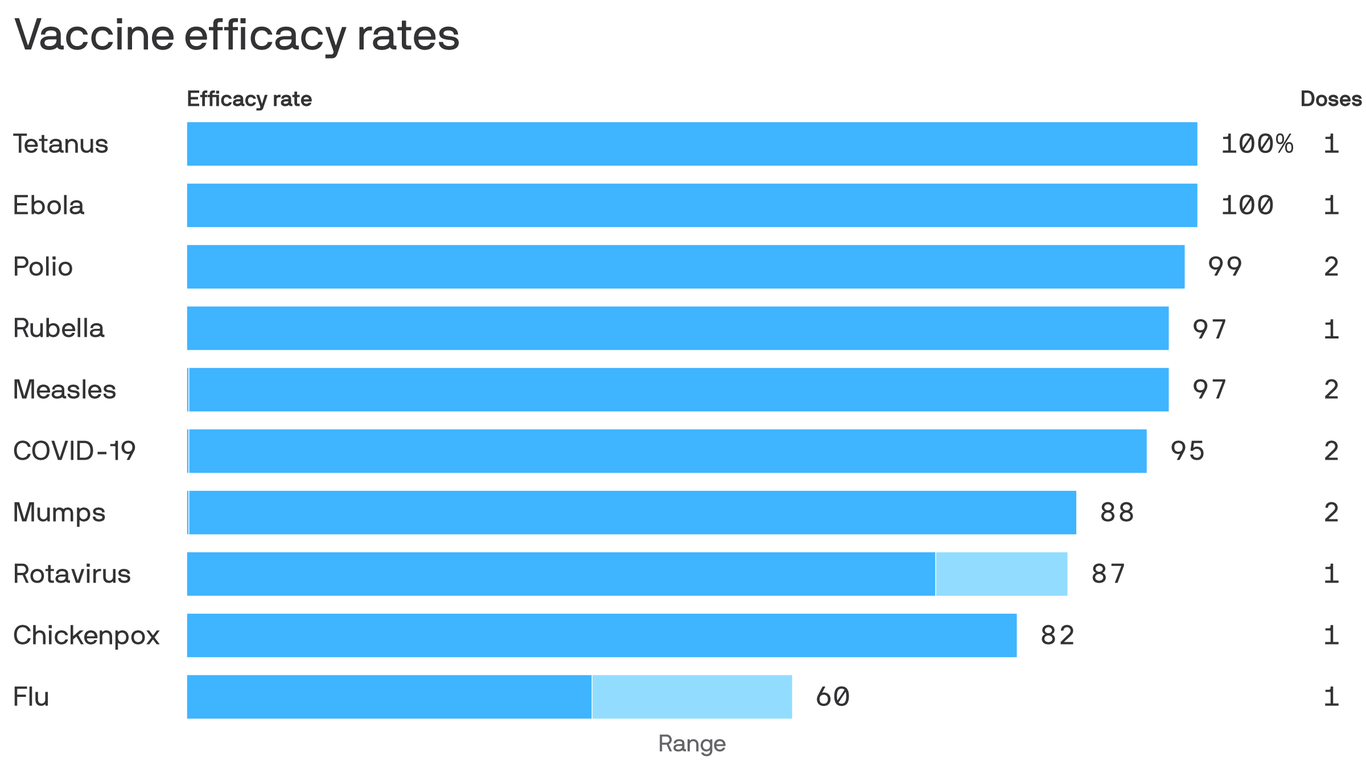
Why it matters: Vaccines with efficacy rates of about 95% — which both Pfizer and Moderna say they’ve achieved — will be more powerful weapons against the coronavirus than many experts had anticipated.

Flashback: The Food and Drug Administration initially set the bar for a COVID-19 vaccine at 50% efficacy, roughly in line with the seasonal flu vaccine.

  • Some scientists had hoped, in a best-case scenario, it might be as much as 70% effective.
  • “We don’t know yet what the efficacy might be. We don’t know if it will be 50% or 60%. I’d like it to be 75% or more,” the NIH’s Anthony Fauci said in August.

But coming in closer to 95% would put Pfizer and Moderna’s vaccines more in line with the highly effective inoculations against measles, mumps and rubella.

  • Like the MMR and polio vaccines, both prospective COVID-19 products would require two shots to reach that level of efficacy.
  • The third leading contender, being developed by AstraZeneca and Oxford University, would also require two shots. Johnson & Johnson is testing both a single-dose and a two-dose vaccine in simultaneous phase 3 trials.

Yes, but: There’s still a lot we don’t know about these vaccines, including how well they’re likely to work among various demographic groups, and how long the immunity they confer will last.

What You Need To Know About Pfizer’s Covid-19 Vaccine

Pfizer's Covid-19 Vaccine Is 90% Effective, But Has Storage & Shipping  Issues | Boomers Daily

On Monday, Pfizer announced preliminary results from the phase 3 trial of the vaccine that it has developed with German company BioNTech, suggesting that it may be up to 90% effective at preventing Covid-19 with no serious safety concerns. The vaccine, which represents a new way to make a vaccine, might be ready for an Emergency Use Authorization from the FDA by the end of the year. 

BioNTech’s vaccine is an mRNA (as in “messenger RNA,” which might ring a faint bell from high school biology class) vaccine, similar to one being developed by Boston-based Moderna as well as Translate Bio, which is partnered with pharmaceutical giant Sanofi. This type of vaccine has been in the works for other diseases, including the flu, but none have been approved for use by any regulatory body yet. Success with this platform has the potential to accelerate the development of vaccines for new diseases, a process which can typically take close to a decade. 

Here’s what you need to know.  

Pfizer’s vaccine is based on a new kind of technology

Traditional vaccines are made from dead or weakened versions of an infectious virus. This new type of vaccine is different. To develop it, the genes of the SARS-CoV-2 virus, which causes Covid-19, were first analyzed to locate the part that codes its “spike” protein, which is what enables the virus to infect people. The codes for that protein are then isolated and copied as mRNA fragments, which is what cells use as instructions for making proteins. Those fragments are packaged up into special molecules, then injected into the patient’s cells.

Within the cells, the mRNA comes into the body’s protein factories, called ribosomes. The ribosomes “read” the mRNA, and follow its instructions to make copies of the spike protein. Those copies of the spike protein can’t, by themselves, cause harm. But they’ll trigger the body to make antibodies against the virus. Those antibodies, in turn, will protect patients from a Covid-19 infection. At least, that’s the idea. 

The vaccine still needs to be approved by the Food and Drug Administration

Before the vaccine can be distributed, it has to first be approved by appropriate regulatory bodies. In the United States, that’s the FDA. Pfizer has said that it intends to seek an Emergency Use Authorization from the FDA to enable distribution and administration of the vaccine in late November, at which point the company will have an average of two months’ worth of safety data for each patient. That’s because most bad reactions to vaccines happen shortly after infection. Additionally, Pfizer will continue to monitor the patients in its study for two years after the vaccine administration. 

Distributing this vaccine is more complicated than for a typical vaccine

Although one advantage of mRNA vaccines is that they’re potentially faster to develop than traditional vaccines, their administration and distribution is scads more complicated. For example, the Pfizer vaccine is currently being tested on a two-dose schedule, 21 days apart, unlike the single dose of a typical vaccine for diseases like the flu. The 21-day separation has raised some concerns about the patient compliance needed for vaccines to work.

For long-term storage, the vaccine has to be kept at very cold temperatures—around –70° Celsius (–94° Fahrenheit), which requires a specialized freezer. (Flu vaccines, by contrast, can usually be stored in a refrigerator.) The company has developed a specialty thermal shipping container, which can be kept cold with dry ice and be used to store the vaccine doses for up to 15 days. If long-term storage isn’t required, Pfizer’s vaccine can be stored in a refrigerator, but only for up to five days. 

Pfizer footed the bill for its own part of vaccine development

Several companies, such as Moderna, have received federal funding and support for the development of their vaccines and treatments through the research and development process. Pfizer opted out of that, choosing instead to spend $1 billion of its own money to move the vaccine forward. “A billion dollars is not going to break us,” CEO Albert Bourla told Forbes earlier this year. 

That said, BioNTech did receive a $442 million grant from the German government to help develop the vaccine. And in July, the two companies signed an agreement to sell at least 100 million doses to the U.S. Department of Health and Human Services (HHS) for $1.95 billion. The country of Spain has initially secured 20 million doses of the vaccine as well. 

Biden’s 7 point plan for the pandemic

https://www.beckershospitalreview.com/hospital-management-administration/biden-s-plan-for-the-pandemic-7-things-to-know.html?utm_medium=email

Trump's And Biden's Coronavirus Plans: Vaccines, Testing : NPR

President-elect Joe Biden and Vice President-elect Kamala Harris have released a seven-point plan regarding the COVID-19 pandemic.

The Biden administration’s seven pandemic plans:

1. Ensure all Americans have access to regular, reliable and free testing by doubling the number of drive-thru testing sites, investing in next-generation testing, developing a pandemic testing board to produce and distribute tests, and establishing a U.S. Public Health Jobs Corps.

2. Provide all states, cities, tribes and territories with critical supplies. Efforts will include full use of the Defense Production Act, building American-sourced and manufactured capabilities. 

3. Provide clear, consistent and evidence-based guidance for how communities should navigate the pandemic. Planned resources will be tailored to the needs of schools, small businesses and families.

4. Plan for effective and equitable distribution of treatments and vaccines. The administration intends to invest in a $25 billion manufacturing and distribution plan to guarantee every American can receive the vaccine for free. The administration also said it will work to ensure that politics won’t play a role in determining the safety and efficacy of vaccines.   

5. Protect older Americans and other high-risk groups. Efforts will include establishing a COVID-19 racial and ethnic disparities task force and a nationwide pandemic dashboard that can be checked in real-time to gauge local transmission.

6. Rebuild and expand defenses to prevent and mitigate pandemic threats, including the restoration of the White House National Security Council Directorate for Global Health Security and Biodefense and the nation’s membership with the World Health Organization.

7. Implement nationwide mask mandates.

President-elect Biden announces coronavirus task force made up of physicians and health experts

Joe Biden Live Updates: President-Elect Talks Mask Wearing, Pandemic - The  New York Times

President-elect Joe Biden on Monday announced the members of his coronavirus task force, a group made up entirely of doctors and health experts, signaling his intent to seek a science-based approach to bring the raging pandemic under control.

Biden’s task force will have three co-chairs: Vivek H. Murthy, surgeon general during the Obama administration; David Kessler, Food and Drug Administration commissioner under Presidents George H.W. Bush and Bill Clinton; and Marcella Nunez-Smith, associate dean for health equity research at the Yale School of Medicine. Murthy and Kessler have briefed Biden for months on the pandemic.

Biden will inherit the worst crisis since the Great Depression, made more difficult by President Trump’s refusal to concede the election and commit to a peaceful transition of power. The Trump administration has not put forward national plans for testing, contact tracing and resolving shortages in personal protective equipment that hospitals and health-care facilities are experiencing again as the nation enters its third surge of the virus.

“Dealing with the coronavirus pandemic is one of the most important battles our administration will face, and I will be informed by science and by experts,” Biden said in a statement. “The advisory board will help shape my approach to managing the surge in reported infections; ensuring vaccines are safe, effective, and distributed efficiently, equitably, and free; and protecting at-risk populations.”

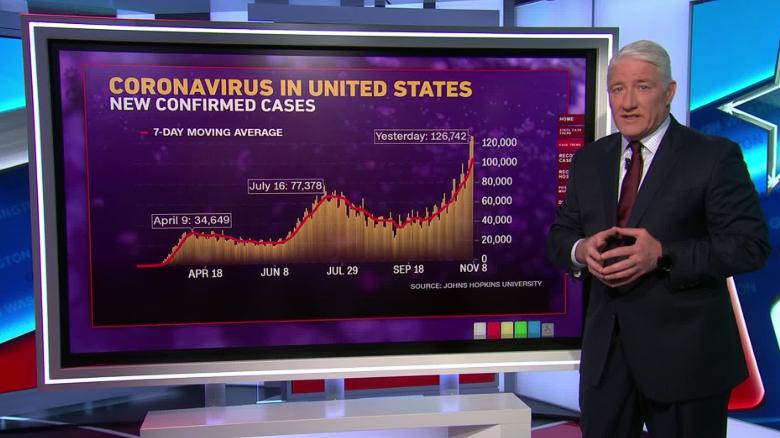
The United States is recording more than 100,000 new coronavirus cases a day and, on many days, more than 1,000 deaths, a toll expected to worsen during the crucial 10-week stretch of the transition. It remains unclear whether Trump or his top aides will oversee and lead a robust response to the pandemic during the transition, which could further exacerbate the crisis Biden and Vice President-elect Kamala D. Harris inherit.

The 13-member task force also includes former Trump administration officials, including Rick Bright, former head of the Biomedical Advanced Research and Development Authority, who, after being demoted, spoke out against the administration’s approach to the pandemic. Luciana Borio, director for medical and biodefense preparedness on Trump’s National Security Council until 2019, is also on the panel.

The group includes several other prominent doctors:

· Ezekiel Emanuel, chair of the Department of Medical Ethics and Health Policy at the University of Pennsylvania.

· Atul Gawande, a surgeon at Brigham and Women’s Hospital and a professor at Harvard Medical School who is a prolific author.

· Michael T. Osterholm, director of the Center for Infectious Disease Research and Policy at the University of Minnesota.

· Eric Goosby, global AIDS coordinator under President Barack Obama and professor of medicine at the University of California at San Francisco School of Medicine.

· Celine R. Gounder, clinical assistant professor of medicine and infectious diseases at New York University’s Grossman School of Medicine.

· Julie Morita, executive vice president of the Robert Wood Johnson Foundation, a philanthropy focused on health issues.

· Loyce Pace, president and executive director of the Global Health Council, a U.S.-based nonprofit organization dedicated to global health issues.

· Robert Rodriguez, professor of emergency medicine at the UCSF School of Medicine.

Rebecca Katz, director of the Center for Global Health Science and Security at Georgetown University Medical Center, and Beth Cameron, director for global health security and biodefense on the White House National Security Council during the Obama administration, are serving as advisers to the transition task force.

Task force members will work with state and local officials to craft public health and economic policies to address the virus and racial and ethnic disparities, while also working to reopen schools and businesses, the transition team said in a news release.

While the makeup of the task force garnered widespread praise, Peter Hotez, dean of the National School of Tropical Medicine at the Baylor College of Medicine, said the group needs more geographic diversity.

“They are all from the Acela corridor or the [San Francisco] Bay Area,” he said. “Who is going to be the field marshal or the supreme allied commander who goes into middle of the country and get this done? The coasts are doing okay but the red states are being hammered and the deaths are going to be extraordinary. There needs to be a frank reckoning between leaders of the two parties, to say we cannot let this happen.”

Public health experts said Biden should use the transition to provide leadership as the pandemic continues through a deadly stretch and begin communicating a strong national message.

“Clearly from the election outcomes, half the country doesn’t believe we’re in a crisis,” said Kavita Patel, a fellow at the Brookings Institution who worked on health policy in the Obama administration. Biden and Harris “have an incredible platform that can be used for communication. The country needs clear daily briefings that we thought we’d get from the White House coronavirus task force. They have an incredible platform, if not an official platform.”

Biden plans to call Republican and Democratic governors to ask for their help in developing a consistent message from federal and state leaders, according to three Biden advisers who spoke on the condition of anonymity because they were not authorized to speak publicly about these matters. He will urge governors to adopt statewide mask mandates and to provide clear public health guidance to their constituents, including about social distancing and limiting large gatherings.

The task force will have subgroups that focus on issues related to the response, including testing, vaccine distribution and personal protective equipment, according to two people familiar with the plans who spoke on the condition of anonymity to reveal plans that were not yet public.

In his victory speech Saturday, Biden addressed challenges in bringing the pandemic under control.

We cannot repair the economy, restore our vitality or relish life’s most precious moments — hugging a grandchild, birthdays, weddings, graduations, all the moments that matter most to us — until we get this virus under control,” Biden said. “That plan will be built on a bedrock of science. It will be constructed out of compassion, empathy and concern. I will spare no effort — or commitment — to turn this pandemic around.”

Yet the plans Biden laid out on the campaign trail are set to collide with political realities. That includes a deeply divided nation in which more than 71 million people voted for Trump and the possibility of having to navigate a Republican-controlled Senate disinclined to support a greater federal role in testing and contact tracing, among other responsibilities now left mostly to the states.

Biden’s most ambitious plans will require significant congressional funding. Senate Majority Leader Mitch McConnell (R-Ky.) has said he would like to pass new coronavirus relief measures during Congress’s lame-duck session, and Congress faces a Dec. 11 government funding deadline. Biden and his team are poised to begin engaging with congressional Democrats on their priorities.

Biden’s plans include dramatically expanding testing and building a U.S. public health jobs corps to have 100,000 Americans conduct contact tracing. They also include ramping up production of personal protective equipment and implementing a vaccine distribution plan.

Murthy, who served as the 19th U.S. surgeon general, is a physician whose nomination was stalled in the Senate for more than a year because of his view that gun violence is a public health issue. Three months into the Trump administration, he was replaced as “the nation’s doctor” with more than two years left on his four-year term.

In 2016, he wrote a landmark report on drug and alcohol addiction, which put that condition alongside smoking, AIDS and other public health crises that previous surgeons general addressed. The report called the addiction epidemic “a moral test for America.” Murthy’s office sent millions of letters to doctors asking for their help to combat the opioid crisis.

The son of immigrants from India, he earned medical and MBA degrees at Yale before joining the faculty at Harvard Medical School, where his research focused on vaccine development and the participation of women and minorities in clinical trials.

After leaving his post as surgeon general, he wrote a book on loneliness and social isolation, including their implications for health, that grew out of his conversations with people in clinical practice and as surgeon general.

Several public health officials celebrated Nunez-Smith’s leadership role on the task force. Her research focuses on promoting health and health-care equity in marginalized populations, according to her Yale biography. She has also studied discrimination that patients endure in the health-care system — expertise that many said was welcome in an epidemic that is disproportionately affecting people of color.

Kessler was FDA commissioner from 1990 to 1997, during the George H.W Bush and Clinton administrations. He is well-known for his attempts to regulate cigarettes — an effort that resulted in a loss in the Supreme Court, which ruled that the agency did not have the authority. That prompted Congress to pass a law, enacted in 2009, that explicitly gave the agency that power.

Kessler, a pediatrician and lawyer, worked at the FDA to accelerate AIDS treatments and on food and nutrition issues. He oversaw the FDA’s development of standardized nutrition labels and notably ordered the seizure of orange juice labeled “fresh” because it was made from concentrate. He has written several books on diet, mental illness and other topics, and has served as dean of the medical schools at Yale and UCSF.

Pfizer vaccine needs to be stored at ultra-cold temperatures that could significantly complicate distribution

Satire: No charges for Iowa man arrested after he dressed up as Mr Freeze  and shouted nonconsensual polar vortex puns in public | Boing Boing

A promising vaccine developed by drug giant Pfizer and German biotechnology firm BioNTech would need to be stored at ultracold temperatures that experts say could make it far more difficult to distribute than other potential vaccines.

Pfizer announced Monday that an interim analysis had shown the vaccine was more than 90 percent effective, news that was greeted with near universal celebration among experts.

But the Pfizer vaccine is relatively unusual as it has to be stored and transported at an ultracold temperature of around -94 Fahrenheit (-70 Celsius), significantly complicating the process of getting the vaccine to people.

Ultracold storage is “is not necessarily routinely available in most health centers even in the U.K., let alone globally,” Michael Head, a fellow in global health at the University of Southampton said in a statement.

Vaccines often require some kind of cold storage to remain effective; some candidates for a coronavirus vaccine need to be held at cooler temperatures like 26 Fahrenheit (2 Celsius). They need to be kept this temperature not only while in storage but also while being delivering on planes and trucks.

The Pfizer vaccine would be considerably colder, requiring more than just refrigeration but something capable of producing freezing temperatures even during potential lengthy periods of transport. It has been done before, though at a smaller scale: A vaccine for the Ebola virus was notable for requiring ultracold storage. Pfizer has been preparing for the challenge by creating special containers that can last 10 days at -94 Fahrenheit, according to the Wall Street Journal.

Groups like the World Health Organization and UNICEF have said that countries need to improve their “cold chain” logistical networks to make sure vaccines can be distributed safely. The Associated Press reported last month that nearly 3 billion people live in areas where temperature-controlled storage is insufficient for the task.

U.S. surpasses 10 million coronavirus cases, experts warn country is entering worst phase

US coronavirus: The country nears 10 million Covid-19 cases - CNN

The United States surpassed 10 million coronavirus cases on Monday, just 10 days after hitting 9 million. The average number of daily new infections has exceeded 100,000, and public health experts warn the country is entering the pandemic’s worst phase yet.

The United States hit the milestone as Pfizer announced its coronavirus vaccine candidate was more than 90 percent effective, compared with a placebo. Epidemiologists and health experts were optimistic about the results, but also cautioned that more information is needed on the vaccine’s long-term efficacy and safety.