Kati Kariko Helped Shield the World From the Coronavirus

Katalin Kariko at her home in Jenkintown, Pa., in February. Dr. Kariko’s early research into mRNA eventually led to development of the Moderna and Pfizer-BioNTech vaccines.Credit.

She grew up in Hungary, daughter of a butcher. She decided she wanted to be a scientist, although she had never met one. She moved to the United States in her 20s, but for decades never found a permanent position, instead clinging to the fringes of academia.

Now Katalin Kariko, 66, known to colleagues as Kati, has emerged as one of the heroes of Covid-19 vaccine development. Her work, with her close collaborator, Dr. Drew Weissman of the University of Pennsylvania, laid the foundation for the stunningly successful vaccines made by Pfizer-BioNTech and Moderna.

For her entire career, Dr. Kariko has focused on messenger RNA, or mRNA — the genetic script that carries DNA instructions to each cell’s protein-making machinery. She was convinced mRNA could be used to instruct cells to make their own medicines, including vaccines.

But for many years her career at the University of Pennsylvania was fragile. She migrated from lab to lab, relying on one senior scientist after another to take her in. She never made more than $60,000 a year.

By all accounts intense and single-minded, Dr. Kariko lives for “the bench” — the spot in the lab where she works. She cares little for fame. “The bench is there, the science is good,” she shrugged in a recent interview. “Who cares?”

Dr. Anthony Fauci, director of the National Institutes of Allergy and infectious Diseases, knows Dr. Kariko’s work. “She was, in a positive sense, kind of obsessed with the concept of messenger RNA,” he said.

Dr. Kariko’s struggles to stay afloat in academia have a familiar ring to scientists. She needed grants to pursue ideas that seemed wild and fanciful. She did not get them, even as more mundane research was rewarded.

“When your idea is against the conventional wisdom that makes sense to the star chamber, it is very hard to break out,” said Dr. David Langer, a neurosurgeon who has worked with Dr. Kariko.

Dr. Kariko’s ideas about mRNA were definitely unorthodox. Increasingly, they also seem to have been prescient.

“It’s going to be transforming,” Dr. Fauci said of mRNA research. “It is already transforming for Covid-19, but also for other vaccines. H.I.V. — people in the field are already excited. Influenza, malaria.”

For Dr. Kariko, most every day was a day in the lab. “You are not going to work — you are going to have fun,” her husband, Bela Francia, manager of an apartment complex, used to tell her as she dashed back to the office on evenings and weekends. He once calculated that her endless workdays meant she was earning about a dollar an hour.

For many scientists, a new discovery is followed by a plan to make money, to form a company and get a patent. But not for Dr. Kariko. “That’s the furthest thing from Kate’s mind,” Dr. Langer said.

She grew up in the small Hungarian town of Kisujszallas. She earned a Ph.D. at the University of Szeged and worked as a postdoctoral fellow at its Biological Research Center.

In 1985, when the university’s research program ran out of money, Dr. Kariko, her husband, and 2-year-old daughter, Susan, moved to Philadelphia for a job as a postdoctoral student at Temple University. Because the Hungarian government only allowed them to take $100 out of the country, she and her husband sewed £900 (roughly $1,246 today) into Susan’s teddy bear. (Susan grew up to be a two-time Olympic gold medal winner in rowing.)

When Dr. Kariko started, it was early days in the mRNA field. Even the most basic tasks were difficult, if not impossible. How do you make RNA molecules in a lab? How do you get mRNA into cells of the body?

In 1989, she landed a job with Dr. Elliot Barnathan, then a cardiologist at the University of Pennsylvania. It was a low-level position, research assistant professor, and never meant to lead to a permanent tenured position. She was supposed to be supported by grant money, but none came in.

She and Dr. Barnathan planned to insert mRNA into cells, inducing them to make new proteins. In one of the first experiments, they hoped to use the strategy to instruct cells to make a protein called the urokinase receptor. If the experiment worked, they would detect the new protein with a radioactive molecule that would be drawn to the receptor.

“Most people laughed at us,” Dr. Barnathan said.

One fateful day, the two scientists hovered over a dot-matrix printer in a narrow room at the end of a long hall. A gamma counter, needed to track the radioactive molecule, was attached to a printer. It began to spew data.

Their detector had found new proteins produced by cells that were never supposed to make them — suggesting that mRNA could be used to direct any cell to make any protein, at will.

“I felt like a god,” Dr. Kariko recalled.

She and Dr. Barnathan were on fire with ideas. Maybe they could use mRNA to improve blood vessels for heart bypass surgery. Perhaps they could even use the procedure to extend the life span of human cells.

Dr. Barnathan, though, soon left the university, accepting a position at a biotech firm, and Dr. Kariko was left without a lab or financial support. She could stay at Penn only if she found another lab to take her on. “They expected I would quit,” she said.

Universities only support low-level Ph.D.s for a limited amount of time, Dr. Langer said: “If they don’t get a grant, they will let them go.” Dr. Kariko “was not a great grant writer,” and at that point “mRNA was more of an idea,” he said.

But Dr. Langer knew Dr. Kariko from his days as a medical resident, when he had worked in Dr. Barnathan’s lab. Dr. Langer urged the head of the neurosurgery department to give Dr. Kariko’s research a chance. “He saved me,” she said.

Dr. Langer thinks it was Dr. Kariko who saved him — from the kind of thinking that dooms so many scientists.

Working with her, he realized that one key to real scientific understanding is to design experiments that always tell you something, even if it is something you don’t want to hear. The crucial data often come from the control, he learned — the part of the experiment that involves a dummy substance for comparison.

“There’s a tendency when scientists are looking at data to try to validate their own idea,” Dr. Langer said. “The best scientists try to prove themselves wrong. Kate’s genius was a willingness to accept failure and keep trying, and her ability to answer questions people were not smart enough to ask.”

Dr. Langer hoped to use mRNA to treat patients who developed blood clots following brain surgery, often resulting in strokes. His idea was to get cells in blood vessels to make nitric oxide, a substance that dilates blood vessels, but has a half-life of milliseconds. Doctors can’t just inject patients with it.

He and Dr. Kariko tried their mRNA on isolated blood vessels used to study strokes. It failed. They trudged through snow in Buffalo, N.Y., to try it in a laboratory with rabbits prone to strokes. Failure again.

And then Dr. Langer left the university, and the department chairman said he was leaving as well. Dr. Kariko again was without a lab and without funds for research.

A meeting at a photocopying machine changed that. Dr. Weissman happened by, and she struck up a conversation. “I said, ‘I am an RNA scientist — I can make anything with mRNA,’” Dr. Kariko recalled.

Dr. Weissman told her he wanted to make a vaccine against H.I.V. “I said, ‘Yeah, yeah, I can do it,’” Dr. Kariko said.

Despite her bravado, her research on mRNA had stalled. She could make mRNA molecules that instructed cells in petri dishes to make the protein of her choice. But the mRNA did not work in living mice.

“Nobody knew why,” Dr. Weissman said. “All we knew was that the mice got sick. Their fur got ruffled, they hunched up, they stopped eating, they stopped running.”

It turned out that the immune system recognizes invading microbes by detecting their mRNA and responding with inflammation. The scientists’ mRNA injections looked to the immune system like an invasion of pathogens.

But with that answer came another puzzle. Every cell in every person’s body makes mRNA, and the immune system turns a blind eye. “Why is the mRNA I made different?Dr. Kariko wondered.

A control in an experiment finally provided a clue. Dr. Kariko and Dr. Weissman noticed their mRNA caused an immune overreaction. But the control molecules, another form of RNA in the human body — so-called transfer RNA, or tRNA — did not.

A molecule called pseudouridine in tRNA allowed it to evade the immune response. As it turned out, naturally occurring human mRNA also contains the molecule.

Added to the mRNA made by Dr. Kariko and Dr. Weissman, the molecule did the same — and also made the mRNA much more powerful, directing the synthesis of 10 times as much protein in each cell.

The idea that adding pseudouridine to mRNA protected it from the body’s immune system was a basic scientific discovery with a wide range of thrilling applications. It meant that mRNA could be used to alter the functions of cells without prompting an immune system attack.

“We both started writing grants,” Dr. Weissman said. “We didn’t get most of them. People were not interested in mRNA. The people who reviewed the grants said mRNA will not be a good therapeutic, so don’t bother.’”

Leading scientific journals rejected their work. When the research finally was published, in Immunity, it got little attention.

Dr. Weissman and Dr. Kariko then showed they could induce an animal — a monkey — to make a protein they had selected. In this case, they injected monkeys with mRNA for erythropoietin, a protein that stimulates the body to make red blood cells. The animals’ red blood cell counts soared.

The scientists thought the same method could be used to prompt the body to make any protein drug, like insulin or other hormones or some of the new diabetes drugs. Crucially, mRNA also could be used to make vaccines unlike any seen before.

Instead of injecting a piece of a virus into the body, doctors could inject mRNA that would instruct cells to briefly make that part of the virus.

“We talked to pharmaceutical companies and venture capitalists. No one cared,” Dr. Weissman said. “We were screaming a lot, but no one would listen.”

Eventually, though, two biotech companies took notice of the work: Moderna, in the United States, and BioNTech, in Germany. Pfizer partnered with BioNTech, and the two now help fund Dr. Weissman’s lab.

Soon clinical trials of an mRNA flu vaccine were underway, and there were efforts to build new vaccines against cytomegalovirus and the Zika virus, among others. Then came the coronavirus.

Researchers had known for 20 years that the crucial feature of any coronavirus is the spike protein sitting on its surface, which allows the virus to inject itself into human cells. It was a fat target for an mRNA vaccine.

Chinese scientists posted the genetic sequence of the virus ravaging Wuhan in January 2020, and researchers everywhere went to work. BioNTech designed its mRNA vaccine in hours; Moderna designed its in two days.

The idea for both vaccines was to introduce mRNA into the body that would briefly instruct human cells to produce the coronavirus’s spike protein. The immune system would see the protein, recognize it as alien, and learn to attack the coronavirus if it ever appeared in the body.

The vaccines, though, needed a lipid bubble to encase the mRNA and carry it to the cells that it would enter. The vehicle came quickly, based on 25 years of work by multiple scientists, including Pieter Cullis of the University of British Columbia.

Scientists also needed to isolate the virus’s spike protein from the bounty of genetic data provided by Chinese researchers. Dr. Barney Graham, of the National Institutes of Health, and Jason McClellan, of the University of Texas at Austin, solved that problem in short order.

Testing the quickly designed vaccines required a monumental effort by companies and the National Institutes of Health. But Dr. Kariko had no doubts.

On Nov. 8, the first results of the Pfizer-BioNTech study came in, showing that the mRNA vaccine offered powerful immunity to the new virus. Dr. Kariko turned to her husband. “Oh, it works,” she said. “I thought so.”

To celebrate, she ate an entire box of Goobers chocolate-covered peanuts. By herself.

Dr. Weissman celebrated with his family, ordering takeout dinner from an Italian restaurant, “with wine,” he said. Deep down, he was awed.

“My dream was always that we develop something in the lab that helps people,” Dr. Weissman said. “I’ve satisfied my life’s dream.”

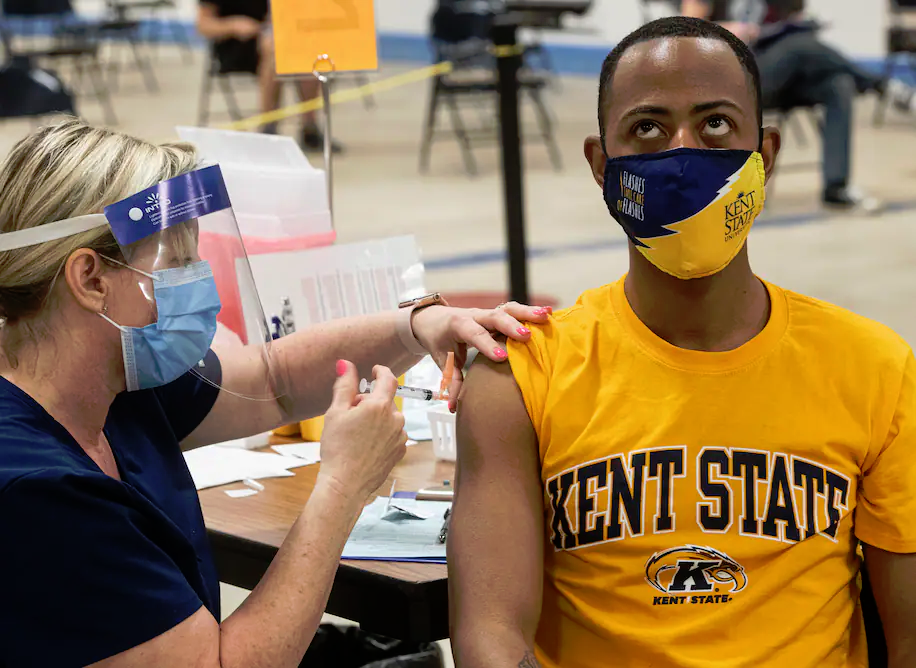
Dr. Kariko and Dr. Weissman were vaccinated on Dec. 18 at the University of Pennsylvania. Their inoculations turned into a press event, and as the cameras flashed, she began to feel uncharacteristically overwhelmed.

A senior administrator told the doctors and nurses rolling up their sleeves for shots that the scientists whose research made the vaccine possible were present, and they all clapped. Dr. Kariko wept.

Things could have gone so differently, for the scientists and for the world, Dr. Langer said. “There are probably many people like her who failed,” he said.
A quarter of the country won’t get the coronavirus vaccine

We’re a year into the coronavirus pandemic, so the math that undergirds its risks should by now be familiar. We all should know, for example, that the ability of the virus to spread depends on it being able to find a host, someone who is not protected against infection. If you have a group of 10 people, one of whom is infected and nine of whom are immune to the virus, it’s not going to be able to spread anywhere.

That calculus is well known, but there is still some uncertainty at play. To achieve herd immunity — the state where the population of immune people is dense enough to stamp out new infections — how many people need to be protected against the virus? And how good is natural immunity, resistance to infection built through exposure to the virus and contracting covid-19, the disease it causes?

The safe way to increase the number of immune people, thereby probably protecting everyone by limiting the ability of the virus to spread, is through vaccination. More vaccinated people means fewer new infections and fewer infections needed to get close to herd immunity. The closer we get to herd immunity, the safer people are who can’t get vaccinated, such as young children (at least for now).

The challenge the world faces is that the rollout of vaccines has been slow, relatively speaking. The coronavirus vaccines were developed at a lightning pace, but many parts of the world are still waiting for supplies sufficient to broadly immunize their populations. In the United States, the challenge is different: About a quarter of adult Americans say they aren’t planning on getting vaccinated against the virus, according to Economist-YouGov polling released last week.

That’s problematic in part because it means we’re less likely to get to herd immunity without millions more Americans becoming infected. Again, it’s not clear how effective natural immunity will be over the long term as new variants of the virus emerge. So we might continue to see tens of thousands of new infections each day, keeping the population at risk broadly by delaying herd immunity and continuing to add to the pandemic’s death toll in this country.

But we also see from the Economist-YouGov poll the same thing we saw in Gallup polling earlier this month: The people who are least interested in being vaccinated are also the people who are least likely to be concerned about the virus and to take other steps aimed at preventing it from spreading.

In the Economist-YouGov poll, nearly three-quarters of those who say they don’t plan on being vaccinated when they’re eligible also say they’re not too or not at all worried about the virus.

That makes some perverse sense: If you don’t see the virus as a risk, you won’t see the need to get vaccinated. Unfortunately, it also means you’re going to be less likely to do things like wear a mask in public.

Or you might be more likely to view as unnecessary precautions such as avoiding close-quarter contact with friends and family or traveling out of state.

About a quarter of adults hold the view that they won’t be vaccinated when eligible. That’s equivalent to about 64 million Americans.

Who are they? As prior polls have shown, they’re disproportionately political conservatives. At the outset of the pandemic, there was concern that vaccine skepticism would heavily be centered in non-White populations. At the moment, though, the rate of skepticism among those who say they voted for Donald Trump in 2020 and among Republicans is substantially higher than skepticism overall.

That shows up in another way in the Economist poll. Respondents were asked whose medical advice they trusted. Among those who say they don’t plan to get the vaccine, half say they trust Trump’s advice a lot or somewhat — far more than the advice of the Centers for Disease Control and Prevention or the country’s top infectious-disease expert Anthony S. Fauci.

If we look only at Republican skeptics, the difference is much larger: Half of Republican skeptics say they have a lot of trust in Trump’s medical advice.

The irony, of course, is that Trump sees the vaccine as his positive legacy on the pandemic. He’s eager to seize credit for vaccine development and has — sporadically — advocated for Americans to get the vaccine. (He got it himself while still president, without advertising that fact.) It’s his supporters, though, who are most hostile to the idea.

Trump bears most of the responsibility for that, too. Over the course of 2020, worried about reelection, he undercut containment efforts and downplayed the danger of the virus. He undermined experts such as Fauci largely out of concern that continuing to limit economic activity would erode his main argument for his reelection. Over and over, he insisted that the virus was going away without the vaccine, that it was not terribly dangerous and that America should just go about its business as usual — and his supporters heard that message.

They’re still listening to it, as the Economist poll shows. One result may be that the United States doesn’t reach herd immunity through vaccinations and, instead, some large chunk of those tens of millions of skeptics end up being exposed to the virus. Some of them will die. Some may risk repeat infections from new variants against which a vaccine offers better protection. Some of those unable to get vaccinated may also become sick from the virus because we haven’t achieved herd immunity, suffering long-term complications from covid-19.

Trump wants his legacy to be the rollout of the vaccine. His legacy will also probably include fostering skepticism about the vaccine that limits its utility in containing the pandemic.

Hospital Volunteers Wanted

May be an image of text that says 'WANTED Volunteers who don '+ believe in COVID19. Activities include transfer of Patients, transfer of the dead, general cleaning on the COVID ward and personal care of COVID patients. OS: It won '+ be a problem that you won + get PPE as you don't believe they are necessary. Signed: Health care Workers'

CMS proposes 2% pay bump for rehab, psychiatric facilities

The Biden administration has proposed giving rehabilitation facilities a 2.2% payment increase for the 2022 federal fiscal year that starts in October.

The payment rate outlined in a proposed rule released late Thursday is slightly below the 2.4% that CMS gave rehab facilities for the 2021 federal fiscal year. CMS proposed in a separate rule a 2.3% increase for payments to inpatient psychiatric facilities as well.

Both payment rules also give updates on outlier payments, which help facilities deal with the costs of treating extremely costly beneficiaries.

For rehab facilities, CMS proposes to maintain outlier payments to 3% of the total facility payments for fiscal 2022, which begins on Oct. 1.

CMS also aims to keep the outlier payments for psychiatric facilities at 2% for 2022.

A major change for both rules is a new addition aimed to track coverage of COVID-19 vaccinations among healthcare personnel.

CMS also wants to add vaccination coverage among healthcare personnel as a measure to the quality reporting program for psychiatric facilities. The program outlines quality metrics that facilities need to meet.

“This measure would be reported using the COVID-19 modules on the [Centers for Disease Control and Prevention’s] National Healthcare Safety Network web portal,” a fact sheet on the psychiatric payment rule said.

The agency also is proposing a similar measure for rehab facilities to report any vaccinations of healthcare personnel for COVID-19.

“This proposed measure is designed to assess whether [IRFs] are taking steps to limit the spread of COVID-19 among their [healthcare personnel], reduce the risk of transmission within their facilities and help sustain the ability of [rehabilitation facilities] to continue serving their communities through the public health emergency and beyond,” a fact sheet on the rehab rule said.

In the rehab facility rule, CMS also asked for comments on how to improve health equity for all patients.

CMS is seeking comments on whether to add more measures that address patient equity in standardized patient assessment data elements, which must be collected by facilities after post-acute care.

The agency also wants comments on ways to attain health equity for psychiatric facilities as well.

“CMS is committed to addressing the significant and persistent inequities in health outcomes in the United States through improving data collection to better measure and analyze disparities across programs and policies,” the agency said in a fact sheet.

Comments for both rules are due by June 7.

3 major health items included in Biden’s budget request

President Joe Biden proposed an ambitious budget for the next federal fiscal year that includes more money for fighting the opioid epidemic, bolstering public health and several other healthcare items.

The budget request to Congress, released Friday, acts as essentially a wish list of priorities for the administration for the next year.

It is doubtful how much would get approved by Congress but sends a message of what the administration prioritizes.

Here are three healthcare priorities outlined in the request:

  • The opioid epidemic: $10.7 billion was requested for fighting the opioid epidemic, $3.9 billion over the 2021 enacted level. The money will help support research, prevention and recovery services. The administration also is calling for targeted investments for “populations with unique needs, including Native Americans, older Americans and rural populations,” according to a release from the Office of Management and Budget on Friday.
     
  • Public health infrastructure: $8.7 billion was requested for the Centers for Disease Control and Prevention to boost public health capacity in states and territories. OMB calls the budget increase the largest in nearly two decades for the agency at the frontlines of combating COVID-19. The Biden administration hopes to use the new money to train new epidemiologists and public health experts and “build international capacity to detect, prepare for and respond to emerging global threats.” A letter sent Friday to congressional leaders from the White House said that CDC funding was 10% lower than the previous decade after adjusting for inflation.
     
  • Research funding boosts: $6.5 billion to launch a new agency called the Advanced Research Projects Agency for Health. The new agency would provide major increases in federal research and development spending on cancer and other diseases such as diabetes and Alzheimer’s. The goal of the investment is to “drive transformational innovation in health research and speed application and implementation of health breakthroughs,” OMB’s letter to Congress said. The funding is rolled into a $51 billion request for funding to the National Institutes of Health.

How basic research leads to future job growth

https://www.axios.com/basic-science-research-fuels-job-growth-fcf7723b-b701-4ed2-8b2b-699d28dd1fbd.html

Illustration of a hand in a medical glove holding a beaker full of liquid

A new report out later today concludes that basic scientific research plays an essential role in creating companies that later produce thousands of jobs and billions in economic value.

Why it mattersThe report uses the pandemic — and especially the rapid development of new mRNA vaccines — to show how basic research funding from the government lays the necessary groundwork for economically valuable companies down the road.

By the numbers: The Science Coalition — a nonprofit group that represents 50 of the nation’s top private and public research universities — identified 53 companies that have spun off from federally funded university research.

  • Those companies — which range from pharmaceutical startups to agriculture firms — have contributed more than $1.3 billion to U.S. GDP between 2015 and 2019, while supporting the creation of more than 100,000 jobs.

What they’re saying: “The COVID-19 pandemic has shown that the need for the federal government to continue investing in fundamental research is far from theoretical,” says John Latini, president of the Science Coalition. “Consistent, sustained, robust federal funding is how science evolves.”

DetailsLatini praised the Biden administration’s first budget proposal to Congress, released last week, which includes what would be a $9 billion funding boost for the National Institutes of Health (NIH) — the country’s single biggest science research funding agency.

  • The National Oceanic and Atmospheric Administration would see its budget rise to a record high of $6.9 billion, including $800 million reserved for climate research.

The catch: The Biden budget proposal is just that, and it will ultimately be up to Congress to decide how much to allocate to research agencies.

Context: Government research funding is vital because private money tends to go to applied research. But without basic research — the lifeblood of science — the U.S. risks missing out on potentially world-changing innovations in the future.

  • The long-term value of that funding can be seen in the story of Katalin Kariko, an obscure biomedical researcher who labored for years on mRNA with little reward — until the pandemic, when her work helped provide the foundation for mRNA COVID-19 vaccines.

The bottom line: Because its ultimate payoff might lay years in the future, it’s easy to see basic research funding as a waste — until the day comes when we need it.

A preview of a longer pandemic

Featured image

All the things that could prolong the COVID-19 pandemic — that could make this virus a part of our lives longer than anyone wants — are playing out right in front of our eyes.

Driving the news: The British variant is driving another surge in cases in Michigan, and Gov. Gretchen Whitmer has resisted reimposing any of the lockdown measures she embraced earlier in the pandemic.

  • Variants are beginning to infect more kids — “a brand new ball game,” as University of Minnesota epidemiologist Michael Osterholm recently put it.
  • New research confirms that our existing vaccines don’t work as well against the South African variant.
  • And some experts fear the pace of vaccinations in the U.S. is about to slow down.

Between the lines: The concern isn’t necessarily that the facts on the ground right now could end up being disastrous, but rather that we’re getting a preview of the longer, darker coronavirus future the U.S. may face without sufficient vaccinations.

  • If we don’t control the virus well enough, then even years into the future, we could be living through more new variants — some of which might be more deadly, some of which might be more resistant to vaccines, some of which might be more dangerous for certain specific populations.
  • That would translate into an ongoing risk of illness or potentially death for unvaccinated people and new races to reformulate vaccines as new variants keep emerging.
  • And it would lead to a world in which today’s vaccine-eager population would have to stay on top of those emerging risks, get booster shots when they’re available, and perhaps revive some of the pandemic’s social-distancing measures, in order to stay safe.

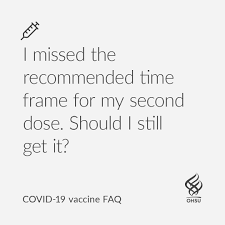
I Missed My Second COVID-19 Vaccine Appointment. What Happens Now?

Today, W.S. in Florida asks:

I got my first Pfizer vaccine in January. Is it too late to get the second injection now, more than two months later? What should I do?

The second dose of Pfizer-BioNTech’s vaccine should ideally be given three weeks after the first. (Moderna’s second dose is meant to be given four weeks after the first, while the Johnson & Johnson/Janssen shot is delivered in a single dose.) But, well, sometimes life gets in the way. So what happens if you don’t make it to that second appointment?

Schedule another one as soon as you can, says Dr. Adam Ratner, a pediatric infectious disease doctor at NYU Langone Health and a vaccine researcher.

While a three- or four-week gap between shots is ideal, the U.S. Centers for Disease Control and Prevention (CDC) says you can get your second shot within 42 days of the first one and still mount a full immune response. “Beyond that, we start to operate in an area where there’s simply less data,” Ratner says.

That doesn’t mean your second shot will be ineffective if it’s given more than six weeks after the first. It only means that studies have not specifically measured how much protection the two-dose vaccines offer when the shots are given more than 42 days apart. Still, the CDC says you don’t have to start over if you can’t get a second vaccine within 42 days. Countries including the U.K. are even purposely delaying second shots so they can get first doses out to more people, and some experts in the U.S. advocate for the same policy.

Ratner says if he were in your shoes, he wouldn’t worry too much. “I would say get the second dose now and consider yourself fully vaccinated,” he says. Just make sure you get a second dose of the same vaccine, since the CDC does not recommend mixing and matching with different shots.

It may be tempting to just stick with the one dose you’ve got—after all, one recent study showed that a single dose of the vaccine was about 80% effective at preventing COVID-19 infections, compared to 90% protection after two doses. But “it is somewhat of a tenuous 80%,” National Institute of Allergy and Infectious Diseases Director Dr. Anthony Fauci said at a recent press briefing. “When you leave it at one dose, the question is, ‘How long does it last?’”

To get the vaccine’s full benefits, and to make sure they last as long as possible, you’ll need a second shot.

CDC director walks tightrope on pandemic messaging

CDC director walks tightrope on pandemic messaging

Images: Tightrope walk across the Grand Canyon

Centers for Disease Control and Prevention (CDC) Director Rochelle Walensky finds herself in a delicate position as she seeks to balance the optimism of increasing vaccinations with the reality that the U.S. is still very much in the grip of a deadly pandemic.

Walensky started the CDC job with a reputation as a savvy communicator, tasked with salvaging the reputation of an agency that took a beating under the Trump administration.

“When I first started at CDC about two months ago, I made a promise to you: I would tell you the truth, even if it was not the news we wanted to hear,” Walensky told reporters recently.

Walensky’s expertise is in HIV research, like her predecessor Robert Redfield, and before being appointed to lead the CDC, she was head of infectious diseases at Massachusetts General Hospital.

While former colleagues say Walensky is the perfect fit for the CDC post, her skills are now being put to the test as she faces criticism for being both too negative and too hopeful.

“She is quite a compelling and clear communicator, but it’s a challenging set of messages to try and get out there,” said Chris Beyrer, a professor of epidemiology at Johns Hopkins Bloomberg School of Public Health.

Public health messaging during a global pandemic is complicated enough, but experts say this particular moment is especially difficult.

After weeks of decline and then stagnation, the rate of coronavirus infections has once again started to climb across much of the country. Cases are up about 12 percent nationally compared with the previous week, averaging around 62,000 cases per day, according to the CDC.

At the same time, nearly 100 million Americans have received at least one dose of a coronavirus vaccine. Many states are expanding vaccine eligibility, in some instances to all adults, and federal health officials say there will be enough supply for everyone to be vaccinated by the end of May.

Walensky tried to emphasize both aspects this week when she issued an emotional appeal to the public.

“We have so much to look forward to, so much promise and potential of where we are, and so much reason for hope. But right now I’m scared,” Walensky said, adding that she had a “sense of impending doom” if people continued to ignore public health precautions.

Yet almost in the next breath, she talked about a “tremendously encouraging” new study showing that vaccinated people were 90 percent protected from infection, meaning they pose an extremely low risk of spreading the virus.

While that may come across as mixed messaging, experts say it accurately reflects not only where things stand right now but also how the country has been reacting to the virus for the past year.

“Whiplash is a true reflection of how we’re all experiencing the epidemic and the response to it. So I’d rather she be honest about that and others be honest about that than give people something that they want … to make them feel better,” said Judith Auerbach, a professor in the University of California San Francisco School of Medicine.

Auerbach, who previously worked with Walensky on HIV research, praised the director’s openness, which she said had been missing from agency leadership during the Trump administration.

“She’s being really honest about her own emotions. That’s hard for a fed to do and get away with,” Auerbach said. “The science that says we all still need to be, in fact, quite scared because we’re in this race between the vaccines … versus the emergence of these variants, and she felt it at a visceral level, and she conveyed that in a way that I thought was quite telling.”

Glen Nowak, director of the Center for Health and Risk Communication at the University of Georgia and a former CDC media relations director, said Walensky’s candor helps establish credibility.

“She has embraced the fact that credibility comes from being transparent and honest and genuine about your fears and your concerns,” Nowak said.

The CDC declined to make Walensky available for an interview, but in a statement to The Hill, an agency spokesman said every communication reflects the latest science and epidemiology.

“At times, moments must balance hope that we will move out of the pandemic with the reality that we are not out of it yet,” the spokesman said.

“We acknowledge the challenge of conveying such hope and promise that vaccines offer with the reality that cases and deaths are rising. While we are sending the critical message that people cannot and should not let up on their prevention measures, we do remain very optimistic about what the future of a fully vaccinated public will offer,” the spokesman added.

On Friday, Walensky again came under criticism for her messaging. In updated guidance, the CDC said it is safe for people who have been fully vaccinated to travel.

But Walensky struck a cautionary tone by saying the CDC still recommends anyone, vaccinated or not, avoid nonessential travel because infection numbers are so high.

“We know that right now we have a surging number of cases,” Walensky said during a White House briefing. “I would advocate against general travel overall. Our guidance is silent on recommending or not recommending fully vaccinated people travel. Our guidance speaks to the safety of doing so.”

Nowak said part of what makes public health messaging so difficult is the fact that science doesn’t always deal in absolutes and that the public overall doesn’t do well with nuance.

“Often people don’t want to listen to the nuance; they want advice and guidance to be stable. They get frustrated with the changes or when it seems to be contradictory. They also get frustrated if it doesn’t match their everyday living experiences,” Nowak said.

With the travel guidance, Walensky attempted to spell out the balance she was trying to strike and asked the public for patience and understanding.

“I want to acknowledge today that providing guidance in the midst of a changing pandemic and its changing science is complex,” Walensky said.

“The science shows us that getting fully vaccinated allows you to do more things safely, and it’s important for us to provide that guidance, even in the context of rising cases. At the same time, we must balance the science with the fact that most Americans are not yet fully vaccinated, which is likely contributing to our rising cases,” she said.

Jen Kates, director for global health and HIV policy at the Kaiser Family Foundation, who has known Walensky for decades, said she thinks the CDC director is aware that she can’t escape criticism, especially when so many people have pandemic fatigue.

If the CDC is too strict and refuses to endorse relatively normal behavior, especially after people get vaccinated, it could risk others refusing to get the shot, Kates said.

But if the agency paints too rosy a picture, more people could act like the pandemic is over and risk further spread of the virus.

“It behooves public officials to always be cognizant that their words are being listened to and can be taken out of context or may be hard for people to grasp,” Kates said. “So I think Dr. Walensky is a great communicator, but that doesn’t mean that this is always easy to do and the balance is always straightforward.”

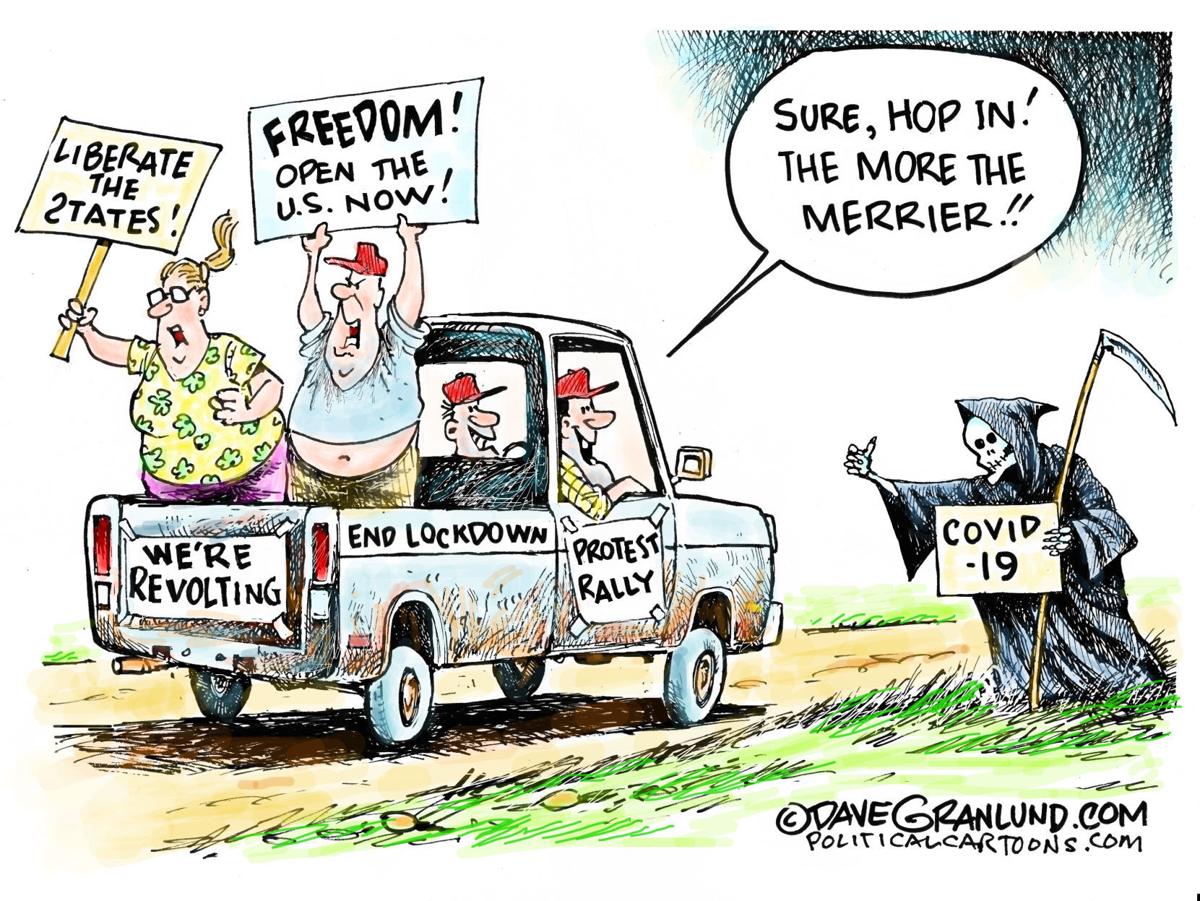
Cartoon – Open the U.S. Now

A. Christian van Gorder: George Washington meets a viral pandemic | Board  Of Contributors | wacotrib.com