Walgreens considering selling all of its VillageMD business

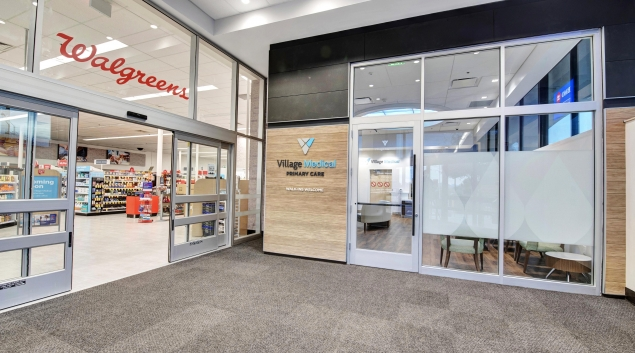
Walgreens Boots Alliance is considering selling all of its VillageMD primary care clinics, according to a filing with the Securities and Exchange Commission.

The company is evaluating options in light of ongoing investments into VillageMD and its substantial ongoing and expected future cash requirements,  Walgreens said in the August 7 filing.  

“These options could include a sale of all or part of the VillageMD businesses, possible restructuring options and other strategic opportunities,” Walgreens said.

WHY THIS MATTERS

Walgreens has been facing financial pressure due to a changing retail environment and increased regulatory and reimbursement challenges on the pharmacy end, according to its Q3 earnings report from June.

VillageMD, as well as some other pharmacy clinics, have faced the challenge of making the clinics a scalable solution.

On August 5, Walgreens Boots Alliance stock hit a 52-week low of $10.62, according to Seeking Alpha. Year to date, shares are down  about 59%.

In the recent SEC filing, Walgreens acknowledged the existence of defaults under the VillageMD Secured Loan. On January 3, 2023, Walgreens had provided VillageMD senior secured credit facilities in the aggregate amount of $2.25 billion. This consisted of a senior secured term loan in an aggregate principal amount of $1.75 billion and a senior secured credit facility in an aggregate original committed amount of $500 million.

Walgreens is actively engaged in discussions with VillageMD’s stakeholders and other third parties with respect to the future of its investment in VillageMD, it said.

On August 8, Walgreens announced the pricing of an underwritten public offering of senior unsecured notes consisting of $750M aggregate principal amount of 8.125% notes due 2029. The sale of the notes is expected to close on August 12.

WBA said it intends to use the net proceeds from the offering, together with cash on hand, for the repayment and/or retirement of its outstanding 3.800% notes due 2024, and to use any remaining amounts for general corporate purposes.

On August 1, WBA announced it had sold all of its remaining unencumbered shares of Cencora, a drug wholesale company, for $818 million, and, subject to the completion of the sale, a concurrent share repurchase by Cencora in the amount of $250 million.

Proceeds will be used primarily for debt paydown and general corporate purposes, as the company continues to build out a more capital-efficient health services strategy rooted in its retail pharmacy footprint, Walgreens said.

THE LARGER TREND

During the Q3 earnings call on June 27, CEO Tim Wentworth said the company intended to reduce its stake in VillageMD. This was part of a strategy announced earlier in the year to close unprofitable VillageMD clinics in order to cut $1 billion in costs.

Walgreens also announced at that time plans to shutter up to 25% of its retail stores that were unprofitable.
Walgreens’ VillageMD exits the Florida market

https://mailchi.mp/f9bf1e547241/gist-weekly-february-23-2024?e=d1e747d2d8

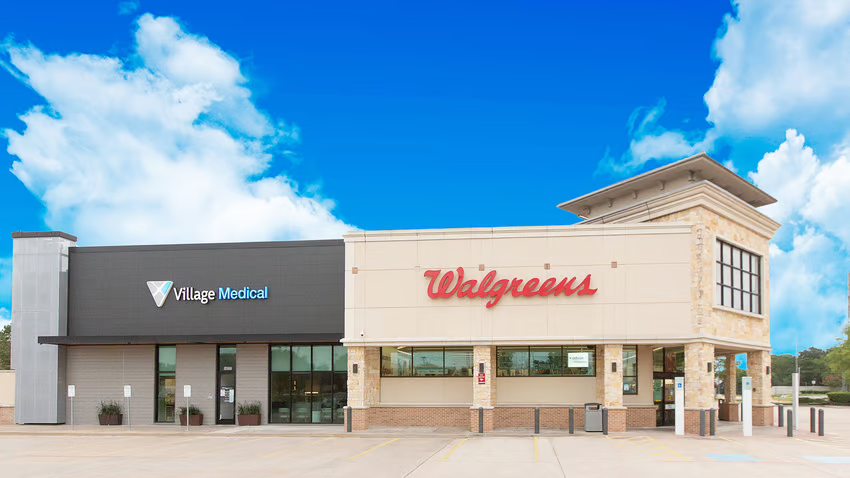
Walgreens announced this week that it will be shutting down all of its Florida-based VillageMD primary care clinics. Fourteen clinics in the Sunshine State have already closed, with the remaining 38 expected to follow by March 15.

This move comes in the wake of a $1B cost-cutting initiative announced by Walgreens executives last fall, which included plans to shutter at least 60 VillageMD clinics across five markets in 2024.

Last month VillageMD exited the Indiana market, where it was operating a dozen clinics.

Despite downsizing its primary-care footprint, Walgreens says it remains committed to its expansion into the healthcare delivery sector, having invested $5.2B in VillageMD in 2021 and purchased Summit Health-CityMD for $9B through VillageMD in 2023. 

The Gist: Having made significant investments in provider assets, Walgreens now faces the difficult task of creating an integrated and sustainable healthcare delivery model, which takes time. 

Unlike long-established healthcare providers who feel more loyal to serving their local communities, nontraditional healthcare providers like Walgreens can more easily pick and choose markets based on profitability.

While this move is disruptive to VillageMD patients in Florida and the other markets it’s exiting, Walgreens seems to be answering to its investors, who have been dissatisfied with its recent earnings.

4 of the biggest healthcare trends CVS Health says to watch in 2021

COVID-19 accelerated a number of trends already brewing in the healthcare industry, and that’s not likely to change this year, according to a new report from CVS Health.

The healthcare giant released its annual Health Trends Report on Tuesday, and the analysis projects several industry trends that are likely to define 2021 in healthcare, ranging from technology to behavioral health to affordability.

“We are facing a challenging time, but also one of great hope and promise,” CVS CEO Karen Lynch said in the report. “As the pandemic eventually passes, its lessons will serve to make our health system more agile and more responsive to the needs of consumers.”

Here’s a look at four of CVS’ predictions:

1. A looming mental health crisis

Behavioral health needs were a significant challenge in healthcare prior to COVID-19, but the number of people reporting declining mental health jumped under the pandemic.

Cara McNulty, president of Aetna Behavioral Health, said in a video attached to the report that it will be critical to “continue the conversation around mental health and well-being” as we emerge from the pandemic and to reduce stigma so people who need help seek it out.

“We’re normalizing that it’s important to take care of our mental well-being,” she said.

Data released in December by GoodRx found that prescription fills for depression and anxiety medications hit an all-time high in 2020. GoodRx researchers polled 1,000 people with behavioral health conditions on how they were navigating the pandemic, and 63% said their depression and/or anxiety symptoms worsened.

McNulty said symptoms to look for when assessing whether someone is struggling with declining mental health include whether they’re withdrawn or agitated or if there’s a notable difference in their self-care routine.

2. Pharmacists take center stage

CVS dubbed 2021 “the year of the pharmacist” in its report.

The company expects pharmacists to be a key player in a number of areas, especially in vaccine distribution as that process inches toward broader access. They also offer a key touchpoint to counsel patients about their care and direct them to appropriate services, CVS said.

CVS executives said in the report that they see a significant opportunity for pharmacists to have a positive impact on the social determinants of health. 

“We’ve found people are not only open and willing to share social needs with their pharmacists but in many cases, they listen to and act on the advice and recommendations of pharmacists,” Peter Simmons, vice president of transformation, pharmacy delivery and innovation at CVS Health, said in the report.

3. Finding ways to mitigate the cost of high-price therapies

Revolutionary drugs and therapies are coming to market with eye-popping price tags; it’s not uncommon to see new pharmaceuticals priced at $1 million or more. For pharmacy benefit managers, this poses a major cost challenge.

To address those prices, CVS expects value-based contracting to take off in a big way. And drugmakers are comfortable with the idea, according to the report. Novartis, for example, is offering insurers a five-year payment plan for its $2 million gene therapy Zolgensma, with refunds available if the drug doesn’t achieve desired results.

CVS said the potential for these therapies is clear, but many payers want to see some type of results before they fork over hundreds of thousands.

“Though the drug may promise to cure these patients for life, these are early days in their use,” said Joanne Armstrong, M.D., enterprise head of women’s health and genomics at CVS Health, in the report. “What we’re saying is, show us the clinical value proposition first.”

CVS said it’s also offering a stop-loss program for gene therapy to self-funded employers contracted with Aetna and/or Caremark to assist them in capping the expenses associated with these drugs.

4. Getting into the community to address diabetes

Diabetes risk is higher among vulnerable populations, such as Black patients, and addressing it will require local and community-based solutions, CVS executives said in the report. Groups at the highest risk for the disease are less likely to live in areas with easy access to a supermarket, for example, which boosts their risk of unhealthy eating, according to the report.

The two key hurdles to addressing this issue are access and affordability. The rise in retail clinics and ambulatory care centers can get at the access issue, as they can offer a way to better meet patients where they are.

At CVS’ MinuteClinics, patients can walk in and receive a number of services to assist them in managing diabetes, including screenings, consultations with providers and connections to diabetes educators who can assist with lifestyle changes.

Retail locations can also assist with medication costs, creating a one-stop-shop experience that’s easier for many diabetes patients to slot into their daily lives, CVS said.

“Diabetes is a case study in how a more connected experience can translate to simpler, affordable and more accessible care for underserved communities,” said Dan Finke, executive vice president of CVS Health and president of its healthcare benefits division.

The Retailization of Healthcare

https://www.modernhealthcare.com/care-delivery/report-retail-clinics-have-what-patients-healthcare-execs-want?utm_source=newsletter&utm_medium=email&utm_campaign=newsletter_axiosvitals&stream=top

Health clinics are coming soon to a retail storefront near you, Modern Healthcare reports, citing reports from several consulting firms.

By the numbers: The number of health care tenants in retail spaces has risen 47% over the past 3 years, and could double by 2022.

  • “It’s the Walmart or Kmart that went out of business,” Greg Hagood, senior managing director with SOLIC Capital, told Modern Healthcare. “You pull right up. The parking is easy. The patient is likely to come more often.”

Everybody involved seems to like this idea. And it’s not just pharmacies and walk-in clinics. Complex specialties like oncology are also looking to storefronts.

  • Empty retail space is an attractive option for clinical practices that have gotten frustrated with the high overhead costs on hospital campuses. And a storefront is a good branding opportunity.
  • Landlords like medical tenants, too — they generally have good credit and sign longer leases than traditional retailers would.

The big question: Will this trend help lower health care spending, by shifting care out of expensive hospital settings? Or will it increase them by driving more utilization, the way retail space was designed to do?