CMS is giving hospitals facing a surge of COVID-19 patients expanded flexibility to care for Medicare patients in their homes, the department announced Nov. 25.
The new Acute Hospital Care At Home program will require in-person screening protocols to assess both medical and non-medical factors, including working utilities, before care can begin at home. Medicare patients will be admitted into the program from emergency departments and inpatient hospital beds.
Once at-home care begins, a registered nurse will evaluate each patient every day either in person or remotely, and either registered nurses or mobile integrated health paramedics will have two in-person visits daily based on the patient’s nursing plan and hospital policies.
CMS approved the following six health systems with extensive experience providing acute hospital care at home to immediately participate in the program:
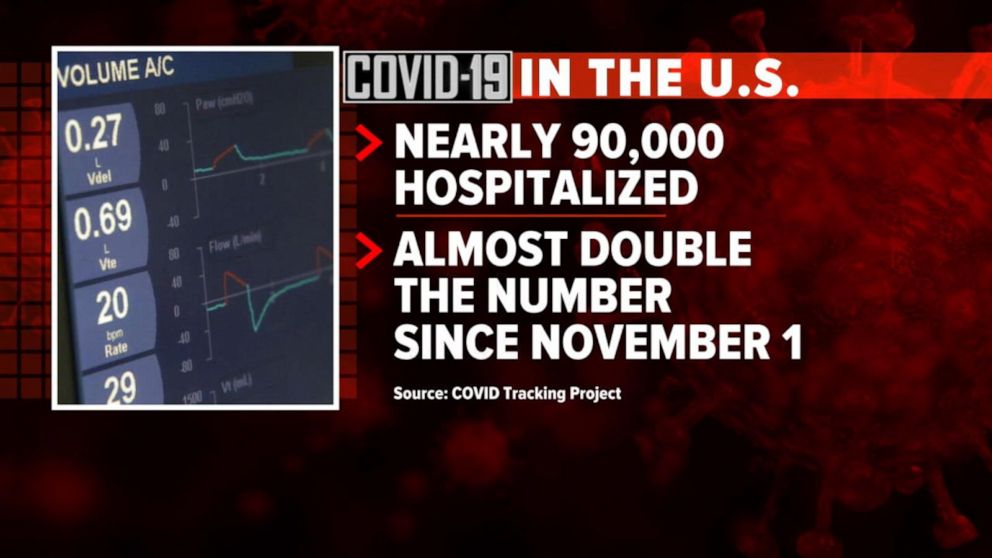
The United States recorded 90,481 people currently hospitalized with COVID-19 Nov. 26, marking the 17th consecutive day of record hospitalizations and the first time the daily count topped 90,000, according to The COVID Tracking Project.
The Project has noted that several data points will likely “wobble” over the next several days due to the Thanksgiving holiday, which may cause data points for COVID-19 testing, new cases and deaths to flatten or drop for several days before spiking. It is unlikely that Thanksgiving infections will be clearly visible in official case data until at least the second week of December.
However, the Project’s staff has noted that the new admissions metric in the public hospitalization dataset from HHS shows only moderate volatility and will likely be an additional source of useful data through the expected holiday dip and subsequent spike in test, case and death data.
“If you’re a reporter covering COVID-19, we recommend focusing on current hospitalizations and new admissions as the most reliable indicator of what is actually happening in your area and in the country as a whole,” reads the Nov. 24 blog from The COVID Tracking Project.
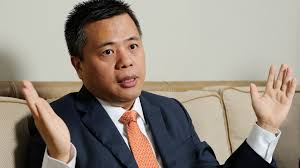
Chinese investor Tianqiao Chen and his group of companies have a 14.96 percent stake in Franklin, Tenn.-based Community Health Systems after recently selling nearly 4.6 million shares of the company, according to a Securities and Exchange Commission filing.
Mr. Chen and his Shanda Group company affiliates sold the shares Nov. 23 for between $8.66 and $9.08 per share, bringing in a total of $39.8 million. The move comes after he sold 5 million shares of CHS from Nov. 10-12 for $41.46 million.
Mr. Chen, a pioneer in China’s online gaming industry, began buying up shares of CHS in 2016. The last public comment the investor made about CHS was in 2018, when Shanda Group said it had a “good relationship” with CHS and supported the company’s strategy and management team.
The Supreme Court’s new conservative majority showed its muscle on Thanksgiving Eve, with Justice Amy Coney Barrett playing a key role in reversing the court’s past deference to local officials when weighing pandemic-related restrictions on religious organizations.
All three of President Trump’s nominees to the court were in the 5-to-4 majority that blocked New York Gov. Andrew M. Cuomo’s restrictions on houses of worship in temporary hot spots where the coronavirus is raging.
The court’s most conservative justices distanced themselves from Chief Justice John G. Roberts Jr. Justice Neil M. Gorsuch, Trump’s first nominee, went out of his way to say that lower courts should no longer follow Roberts’s guidance of deference, calling it “mistaken from the start.”
“Even if the Constitution has taken a holiday during this pandemic, it cannot become a sabbatical,” Gorsuch wrote. Rather than applying “nonbinding and expired” guidance from Roberts in an earlier case from California, Gorsuch said, “courts must resume applying the Free Exercise Clause.”
“Today, a majority of the court makes this plain.”
The halt of Cuomo’s orders, which had been allowed to remain in place by lower courts, was the first evidence that Roberts may no longer play the pivotal role he occupied over the past couple of years. He had been at the center of the court, with four consistently more conservative justices and four more liberal ones.
Barrett’s replacement of liberal Justice Ruth Bader Ginsburg means there are now five members of the court — a majority — more willing to move it quickly in a more conservative direction.
And pandemic-related restrictions on worship services have drawn the ire of the conservatives for months.
They were previously outvoted when Ginsburg was alive, as she and the other liberals joined with Roberts to leave in place restrictions in California and Nevada that imposed limits on in-person services at houses of worship.
In the cases involved in the court’s midnight order Wednesday, the Roman Catholic Diocese of Brooklyn and Jewish organizations led by Agudath Israel challenged Cuomo’s system of imposing drastic restrictions on certain neighborhoods when coronavirus cases spike.
Under Cuomo’s plan, in areas designated “red zones,” where the virus risk is highest, worship services are capped at 10 people. At the next level, “orange zones,” there is an attendance cap of 25. The size of the facility does not factor in to the capacity limit.
The diocese said in its petition that the plan subjects “houses of worship alone” to “onerous fixed-capacity caps while permitting a host of secular businesses to remain open in ‘red’ and ‘orange’ zones without any restrictions whatsoever.”
And the Jewish organizations noted that Cuomo, a Democrat, had specifically mentioned outbreaks in Orthodox Jewish neighborhoods when imposing the restrictions. “This court should not permit such remarkable scapegoating of a religious minority to stand,” the organizations said in court documents.
Cuomo attributed the court’s order to its more conservative majority. “I think that Supreme Court ruling on the religious gatherings is more illustrative of the Supreme Court than anything else,” Cuomo told reporters. “It’s irrelevant from a practical impact because the zone that they were talking about has already been moved. It expired last week. I think this was really just an opportunity for the court to express its philosophy and politics.”
Technically, the court’s order blocks Cuomo’s restrictions from being reimposed while legal challenges continue. But the court’s unsigned opinion would appear to make the ultimate outcome clear.
“Even in a pandemic, the Constitution cannot be put away and forgotten,” the opinion said. “The restrictions at issue here, by effectively barring many from attending religious services, strike at the very heart of the First Amendment’s guarantee of religious liberty.”
The opinion was endorsed by Barrett, Gorsuch and Justices Clarence Thomas, Samuel A. Alito Jr. and Brett M. Kavanaugh, Trump’s second appointment to the court. It was mild compared with recent comments from Alito and the Gorsuch opinion, which no other justices joined.
Alito, who did not write a separate opinion, recently told the conservative legal organization the Federalist Society that the pandemic “has resulted in previously unimaginable restrictions on individual liberty.”
“It pains me to say this, but in certain quarters, religious liberty is fast becoming a disfavored right,” Alito said.
But Justice Stephen G. Breyer, writing for fellow liberals Sonia Sotomayor and Elena Kagan, said it was a strange time for the court to be offering relief.
“The number of new confirmed cases per day is now higher than it has ever been,” Breyer wrote, pointing to the growing national death toll and the outsize number of fatalities New York has suffered, which tracking by The Washington Post puts at more than 34,000.
“The nature of the epidemic, the spikes, the uncertainties, and the need for quick action, taken together, mean that the State has countervailing arguments based upon health, safety, and administrative considerations that must be balanced against the applicants’ First Amendment challenges,” Breyer wrote.
Sotomayor was more pointed in a separate opinion joined by Kagan: “Justices of this court play a deadly game in second guessing the expert judgment of health officials about the environments in which a contagious virus, now infecting a million Americans each week, spreads most easily.”
Roberts noted in his opinion that the rules might be unduly restrictive but said Cuomo has already eased them, essentially giving the churches and synagogues the relief they had requested.
“The Governor might reinstate the restrictions. But he also might not,” the chief justice wrote. “And it is a significant matter to override determinations made by public health officials concerning what is necessary for public safety in the midst of a deadly pandemic.”
Gorsuch disagreed.
“It is time — past time — to make plain that, while the pandemic poses many grave challenges, there is no world in which the Constitution tolerates color-coded executive edicts that reopen liquor stores and bike shops but shutter churches, synagogues, and mosques,” he wrote.
Gorsuch’s solo opinion was at times scathing and sarcastic. He noted that Cuomo had designated, among others, hardware stores, acupuncturists, liquor stores and bicycle repair shops as essential businesses not subject to the most strict limits.
“So, at least according to the governor, it may be unsafe to go to church, but it is always fine to pick up another bottle of wine, shop for a new bike, or spend the afternoon exploring your distal points and meridians,” Gorsuch wrote. “Who knew public health would so perfectly align with secular convenience?”
Gorsuch criticized Roberts for relying on one of the court’s 1905 precedents for his position that the court should defer to local officials during health crises.
The chief justice seemed taken aback. He said his earlier opinion in the California case asserted only that the Constitution chiefly leaves such decisions to local officials.
That, he wrote, “should be uncontroversial, and the [Gorsuch] concurrence must reach beyond the words themselves to find the target it is looking for.”
He also defended the liberal justices from Gorsuch’s tough words, even though Roberts did not join their dissents.
“I do not regard my dissenting colleagues as ‘cutting the Constitution loose during a pandemic,’ yielding to ‘a particular judicial impulse to stay out of the way in times of crisis,’ or ‘shelter[ing] in place when the Constitution is under attack,’ ” Roberts wrote, quoting Gorsuch’s opinion.
“They simply view the matter differently after careful study and analysis reflecting their best efforts to fulfill their responsibility under the Constitution.”
Conservative religious organizations praised the court’s action.
“Governor Cuomo should have known that openly targeting Jews for a special covid crackdown was never going to be constitutional,” said Eric Rassbach, vice president and senior counsel at the Becket Fund, which represented Agudath Israel. Covid-19 is the disease caused by the coronavirus. “The Supreme Court was right to step in and allow Jews and Catholics to worship as they have for centuries.”
But Donna Lieberman, executive director of the New York Civil Liberties Union, said the court’s action was dangerous.
“New York’s temporary restrictions on indoor gatherings do not discriminate against houses of worship, and, in fact, treat them better than comparable non-religious gatherings,” Lieberman said in a statement. “The Supreme Court’s decision will unfortunately undermine New York’s efforts to curb the pandemic.”
On her day off not long ago, emergency room nurse Jane Sandoval sat with her husband and watched her favorite NFL team, the San Francisco 49ers. She’s off every other Sunday, and even during the coronavirus pandemic, this is something of a ritual. Jane and Carlos watch, cheer, yell — just one couple’s method of escape.
“It makes people feel normal,” she says.
For Sandoval, though, it has become more and more difficult to enjoy as the season — and the pandemic — wears on. Early in the season, the 49ers’ Kyle Shanahan was one of five coaches fined for violating the league’s requirement that all sideline personnel wear face coverings. Jane noticed, even as coronavirus cases surged again in California and across the United States, that Levi’s Stadium was considering admitting fans to watch games.
But the hardest thing to ignore, Sandoval says, is that when it comes to coronavirus testing, this is a nation of haves and have-nots.
Among the haves are professional and college athletes, in particular those who play football. From Nov. 8 to 14, the NFL administered 43,148 tests to 7,856 players, coaches and employees. Major college football programs supply dozens of tests each day, an attempt — futile as it has been — to maintain health and prevent schedule interruptions. Major League Soccer administered nearly 5,000 tests last week, and Major League Baseball conducted some 170,000 tests during its truncated season.
Sandoval, meanwhile, is a 58-year-old front-line worker who regularly treats patients either suspected or confirmed to have been infected by the coronavirus. In eight months, she has never been tested. She says her employer, California Pacific Medical Center, refuses to provide testing for its medical staff even after possible exposure.
Watching sports, then, no longer represents an escape from reality for Sandoval. Instead, she says, it’s a signal of what the nation prioritizes.
“There’s an endless supply in the sports world,” she says of coronavirus tests. “You’re throwing your arms up. I like sports as much as the next person. But the disparity between who gets tested and who doesn’t, it doesn’t make any sense.”
This month, registered nurses gathered in Los Angeles to protest the fact that UCLA’s athletic department conducted 1,248 tests in a single week while health-care workers at UCLA hospitals were denied testing. Last week National Nurses United, the country’s largest nursing union, released the results of a survey of more than 15,000 members. About two-thirds reported they had never been tested.
Since August, when NFL training camps opened, the nation’s most popular and powerful sports league — one that generates more than $15 billion in annual revenue — has conducted roughly 645,000 coronavirus tests.
“These athletes and teams have a stockpile of covid testing, enough to test them at will,” says Michelle Gutierrez Vo, another registered nurse and sports fan in California. “And it’s painful to watch. It seemed like nobody else mattered or their lives are more important than ours.”
Months into the pandemic, and with vaccines nearing distribution, testing in the United States remains something of a luxury. Testing sites are crowded, and some patients still report waiting days for results. Sandoval said nurses who suspect they’ve been exposed are expected to seek out a testing site on their own, at their expense, and take unpaid time while they wait for results — in effect choosing between their paycheck and their health and potentially that of others.
“The current [presidential] administration did not focus on tests and instead focused on the vaccine,” says Mara Aspinall, a professor of biomedical diagnostics at Arizona State University. “We should have focused with the same kind of ‘warp speed’ on testing. Would we still have needed a vaccine? Yes, but we would’ve saved more lives in that process and given more confidence to people to go to work.”
After a four-month shutdown amid the pandemic’s opening wave, professional sports returned in July. More than just a contest on television, it was, in a most unusual year, a symbol of comfort and routine. But as the sports calendar has advanced and dramatic adjustments have been made, it has become nearly impossible to ignore how different everything looks, sounds and feels.
Stadiums are empty, or mostly empty, while some sports have bubbles and others just pretend their spheres are impermeable. Coaches stand on the sideline with fogged-up face shields; rosters and schedules are constantly reshuffled. On Saturday, the college football game between Clemson and Florida State was called off three hours before kickoff. Dodger Stadium, home of the World Series champions, is a massive testing site, with lines of cars snaking across the parking lot.
Sports, in other words, aren’t a distraction from a polarized nation and its response to a global pandemic. They have become a constant reminder of them.And when some nurses turn to sports for an attempt at escape, instead it’s just one more image of who gets priority for tests and, often, who does not.
“There is a disconnect when you watch sports now. It’s not the same. Covid changed everything,” says Gutierrez Vo, who works for Kaiser Permanente in Fremont, Calif. “I try not to think about it.”
Sandoval tries the same, telling herself that watching a game is among the few things that make it feel like February again. Back then, the coronavirus was a distant threat and the 49ers were in the Super Bowl.
That night, Sandoval had a shift in the ER, and between patients, she would duck into the break room or huddle next to a colleague checking the score on the phone. The 49ers were playing the Kansas City Chiefs, and Sandoval would recall that her favorite team blowing a double-digit lead represented the mightiest stress that day.
Now during shifts, Sandoval sometimes argues with patients who insist the virus that has infected them is a media-driven hoax. She masks up and wears a face shield even if a patient hasn’t been confirmed with the coronavirus, though she can’t help second-guessing herself.
“Did I wash my hands? Did I touch my glasses? Was I extra careful?” she says.
If Sandoval suspects she has been exposed, she says, she doesn’t bother requesting a test. She says the hospital will say there aren’t enough. So instead she self-monitors and loads up on vitamin C and zinc, hoping the tickle in her throat disappears. If symptoms persist, which she says hasn’t happened yet, she plans to locate a testing site on her own. But that would mean taking unpaid time, paying for costs out of pocket and staying home — and forfeiting a paycheck — until results arrive.
National Nurses United says some of its members are being told to report to work anyway as they wait for results that can take three to five days. Sutter Health, the hospital system that oversees California Pacific Medical Center, said in a statement to The Washington Post that it offers tests to employees whose exposure is deemed high-risk and to any employee experiencing symptoms. Symptomatic employees are placed on paid leave while awaiting test results, according to the statement.
“As long as an essential healthcare worker is asymptomatic,” Sutter’s statement read, “they can continue to work and self-monitor while awaiting the test result.”
Sandoval said employees have been told the hospital’s employee health division will contact anyone who has been exposed. Though she believes she’s exposed during every shift, Sandoval says employee health has never contacted her to offer a test or conduct contact tracing.
“If you feel like you need to get tested, you do that on your own,” she says. Sandoval suspects the imbalance is economic. In September, Forbes reported NFL team revenue was up 7 percent despite the pandemic. Last week Sutter Health reported a $607 million loss through the first nine months of 2020.
Sandoval tries to avoid thinking about that, so she keeps heading back to work and hoping for the best. Though she says her passion for sports is less intense now, she nonetheless likes to talk sports when a patient wears a team logo. She asks about a star player or a recent game. She says she is looking forward to the 49ers’ next contest and the 2021 baseball season.
Sometimes, Sandoval says, patients ask about her job and the ways she avoids contracting the coronavirus. She must be tested most every day, Sandoval says the patients always say.
And she just rolls her eyes and chuckles. That, she says, only happens if you’re an athlete.
I am a critical care and emergency medicine physician, I have had COVID-19 infection twice, and I’m tired.
My first infection was early on in the pandemic. I had to place a Blakemore tube in a young man who was going to die from his massive bleeding from cirrhosis. I didn’t know then that the patient was positive for COVID, as he didn’t have any “typical” symptoms. I placed the tube and got him transferred to another facility, and am proud to say this patient lived.
However, 5 days later, I came down with COVID. It was awful. My joints hurt more than I had ever experienced before. It was like someone was trying to break them from the inside out. I had trouble breathing and could actually feel my throat and airways swollen. The fatigue and terrible headaches had me down for days. I have migraines normally, but this was something much different. My food didn’t smell or taste like it normally did. My daily decisions were weighing how important it was to get up to go to the bathroom as this took so much energy to do so. Simple tasks would often lead me to take a nap. Fortunately, I recovered, and because I was quarantined away from my family, my infant daughter and husband were spared.
I take all the precautions. I thought I was doing everything right. I wear a mask both in and out of work. Once I get home, I take off my “dirty scrubs” and head straight for the shower, even if my daughter is screaming to be picked up. My work shoes do not enter the house. I wear full PPE for any procedure I perform in the hospital. I have picked up extra shifts to help out, which is exhausting but necessary. I warned others about being cautious. For many months, this complex system seemed to be working. Then 7 months later, I was diagnosed with COVID-19 again.
This time, my husband likely brought it home to me. He lost his sense of taste and smell, and out of an abundance of caution, we both got tested, and we were both positive. Thank goodness my daughter had spent the previous few nights with her Nana. My mother and 14-month-old daughter were again spared infection and even got tested as a precaution. I once again had fatigue and headaches. This time I also had a “brain fog.” My brain that is usually able to work in a rapid-fire manner, was slow and sluggish. I knew I wasn’t processing things correctly, and I had trouble remembering words and names. It was an awful feeling. I once again was in quarantine; this time, instead of being alone, I was in the company of my husband. I am grateful that we both recovered. I have taken care of far too many, which were not as fortunate.
Some might say that being out of work and quarantining “isn’t too bad,” but I disagree. I lost over a month of my young daughter’s life; it is time I will never be able to get back. I indeed made the choice to stay away for her safety, but in reality, I didn’t have a choice, and the loss of time doesn’t hurt any less. Quarantining twice also meant that my physician colleagues had to pitch in and cover for me. This was a time that I was not available to help the medical team and care for so many other people’s mothers, fathers, grandparents, and children in a time when we are all stretched too thin. This virus took me away from my job, from my ability to help and care for others. It put added strain on an already strained medical system. The virus didn’t care that I’m a doctor.
I am a critical care and emergency medicine physician and I’m tired. I’m tired of COVID-19, but not for the same reasons as I hear other people say. It’s not the wearing masks, social distancing, lack of travel, and the fact that I routinely wear full PPE to work. No, it’s so much more. I am tired of hearing the denial and the statements that COVID is “made up.” I am emotionally exhausted from all the deaths, deaths of people who go from talking to me in one minute, and suffering a cardiopulmonary arrest or respiratory failure in the next. I’m tired of the deaths of those whose loved ones cannot be by their sides, and I know I’m not alone in the medical community with this thought. It’s heartbreaking to know that my masked face or that of a nurse is the last face a patient sees before they die. I wish families could be present and care for their loved ones, but the risk is too high. There are many times I have stayed in full PPE in a room while a patient died so that they wouldn’t die alone. I have held their hand. I have apologized that their family couldn’t be there. I have apologized that we couldn’t save them. I have cried behind that PPE too many times. Each death still affects me even months later. I am tired of these heartbreaking losses.
I am tired of being called uncaring or worse names. I understand it’s beyond imaginable that you cannot be at your dying loved one’s side for the entire time; I hate it too. These protocols and policies are in place to protect people from the virus, but I know it’s causing harm to my patients’ emotional well-being and their loved ones. I get it. I want to scream and yell and carry on with you about how unfair this all is. It is unfair.
I am tired of the lack of community in the world. Like it or not, we are all in this together. We need to take care of each other, protect each other. I get that there are a lot of people who recover from COVID-19; I am one of them, twice. However, I work daily with patients that require ICU care. They often stay for weeks to months. Patients suffer from more than just a cough or trouble breathing, or the fatigue and brain fog. I have seen strokes, heart attacks, renal failure ending up on dialysis, profound weakness from the constant cycle of paralyzing drugs, and placing patients on their stomachs to improve their oxygenation. I have treated patients that went from normal everyday walking and talking to needing full care with a breathing tube and feeding tube for months after they “recovered.”
I am tired, but each day I go to work, I continue to pour my heart, soul, and mind into my patients. Being a critical care and emergency medicine physician is a job I love. I want to help people, and I will continue to do so until my services are no longer needed or until I cannot. I promise you this; I will continue to fight for you. This tired physician asks, please fight for us too. Wear your masks. Take care of your neighbors. We are all in this together, and only together will we survive.





 HENRY KOTULA