250,000 lives lost: How the pandemic compares to other deadly events in U.S. history

At least 250,000 people in the United States have died of covid-19, the disease caused by the coronavirus, since February, and many public health officials warn the pandemic is just entering its deadliest phase. Yet, as the country confronts this horrifying death toll, there is little understanding of what a loss of this size represents.

Here is some historical perspective about losing a quarter of a million people, looking at major events in our past that have cost American lives.

More than 58,000 Americans were killed during the decade-plus of involvement in the Vietnam War. So the pandemic’s fatalities represent four Vietnam Wars since February.

During the Korean War, nearly 37,000 Americans were lost; covid-19 has claimed nearly seven times more.

During World War II, the country mourned 405,000 members of the “Greatest Generation.” The pandemic has taken nearly two-thirds as many people, a lot of them old enough to remember the fight against the Nazis and the Japanese.

And World War I? 116,000 U.S. dead in two years of fighting. The pandemic has more than doubled that number in a fraction of the time.

What about our deadliest conflict, the Civil War? Death toll estimates range from 600,000 to 850,000. Even at the high end of that range, the pandemic has permanently taken nearly 30 percent as many family members from Thanksgiving tables.

On Sept. 11, 2001, almost 3,000 people were killed in terrorist attacks in New York, Washington and Shanksville, Pa.

The deadliest day of the pandemic so far — Sept. 18 — surpassed that, at 3,660 deaths. Wednesday, as the virus surged across the country, the daily death toll had risen again to 1,894. Public health officials fear that by the end of this month, the United States could lose more people per day from the pandemic than the 2,403 Americans killed in the Japanese attack on Pearl Harbor on Dec. 7, 1941.

And how does this pandemic compare to others in U.S. history?

The Centers for Disease Control and Prevention keeps records on four of them. The 2009 H1N1 pandemic killed 12,469 Americans. The 1968 Influenza A pandemic killed about 100,000 people. And the 1957-1958 Influenza A pandemic took 116,000 U.S. lives.

The deadliest event in U.S. history was the 1918 flu pandemic, which is estimated to have killed 675,000 Americans.

One of the more conservative disease models currently projects the United States could reach 438,000 deaths, more than during World War II, by March 1, 2021.

The Covid Tracking Project

Data Sources - C3.ai

https://covidtracking.com/data/charts/us-all-key-metrics

https://covidtracking.com/data/charts/us-currently-hospitalized

https://covidtracking.com/data/charts/us-daily-deaths

https://covidtracking.com/data/charts/us-daily-positive

https://covidtracking.com/data/charts/cases-per-million-by-state

https://covidtracking.com/data/charts/hospitalized-per-million-by-state

Medical groups implore Congress to extend moratorium on sequester cuts as COVID-19 ramps up

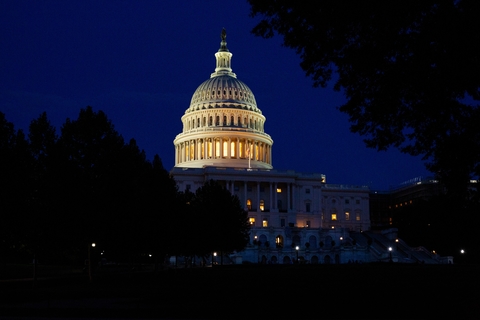
Congress building

A collection of provider and payer groups are imploring Congress to continue a moratorium on Medicare payment cuts instituted under the sequester.

The letter (PDF), sent Friday by more than 20 groups to congressional leaders, is concerned that the moratorium installed under the CARES Act expires on Jan. 1. The groups want the moratorium to extend through the COVID-19 public health emergency, which has been renewed by the federal government several times.

The groups said that the moratorium needs to be extended as healthcare facilities are under massive financial stress with new surges of COVID-19.

The surge has impacted the “financial health of medical professionals and facilities, including increased cost of labor to ensure adequate staffing, procurement of personal protective equipment, significant reductions in patient volume resulting from orders to cancel non-emergent procedures and the high cost of caring for COVID patients,” the letter said.

Some of the groups signing on to the letter include the American Medical Association, America’s Health Insurance Plans, Federation of American Hospitals and American College of Physicians.

The groups said that the moratorium on the sequester cuts installed as part of the CARES Act was an acknowledgment from Congress over the important role that Medicare reimbursement plays in “the financial well being of our healthcare system.”

The sequestration cut Medicare payments by 2% across the board to all Medicare providers back in 2013.

The letter comes as Congress is pondering another relief package for COVID-19 during the lame-duck period. Senate Majority Leader Mitch McConnell said after the presidential election that he was open to restarting talks on a new relief package and added that hospitals will need some additional relief.

But McConnell said earlier this week that the same issues that have held up a deal with House Speaker Nancy Pelosi are still there.

“I don’t think the current situation demands a multi-trillion dollar package,” McConnell told reporters. “I think it should be highly targeted.”

But Pelosi has endorsed a larger package. The House passed the HEROES Act, a $3 trillion relief bill, several months ago.

Appeals court sides with hospitals in latest challenge of DSH payment calculations

lady justice

A federal appeals court upheld a ruling that would allow hospitals to calculate their disproportionate share hospital (DSH) payments using Medicaid patients as well as patients eligible for treatment under experimental Medicaid “demonstration projects” approved by the Department of Health and Human Services (HHS).

The opinion, issued Friday, upheld the decision of a lower court that sided with 10 Florida hospitals seeking to include days of care funded by Florida’s Low Income Pool, an approved Medicaid demonstration project. Through the pool, the state and federal governments jointly reimbursed hospitals for care provided to uninsured and underinsured patients.

HHS argued against allowing the hospitals to include those patients in their Medicaid fraction on the ground that the patients were treated out of charity rather than as designated beneficiaries of a demonstration project.

“The district court found the Secretary’s arguments to the contrary unpersuasive. The Secretary argued the text of the regulation allows hospitals to include days of care provided under a demonstration project only if the project entitles specific patients to specific benefit packages,” the judges said (PDF). “As the court noted, however, this is not what the regulation says. Rather, a patient must have been ‘eligible for inpatient services,’ meaning the demonstration project enabled the patient to receive inpatient services, regardless whether the project gave the patient a right to these services or allowed the patient to enroll in an insurance plan that provided the services.”

DSH payments have traditionally been calculated using the costs incurred to treat Medicaid and uninsured patients. However, the Centers for Medicare & Medicaid’s 2017 rule says costs incurred treating other patients are applicable. For example, a dually eligible patient who’s admitted to the hospital will likely have their stay paid for by Medicare, the agency said, as Medicaid is treated as the “payer of last resort.” As such, those costs would be eligible to be subtracted from DSH payouts.

In backing the hospitals on the DSH dispute, the judges pointed to a similar case considered by the Fifth Circuit last year in which the agency sought to exclude from the Medicaid fraction days of care funded through an “uncompensated care pool” created by a demonstration project. That pool reimbursed hospitals in Mississippi for services provided to uninsured patients affected by Hurricane Katrina but did not entitle specific patients to specific services.

In that case, the Fifth Circuit held “plain regulatory text demands that such days be included—period.”

“We see no flaw in Judge Collyer’s analysis and therefore embrace the district court’s opinion as the law of this circuit,” the judges said.

Providence posts $214M loss during first 9 months of 2020 due to COVID-19 impact

Providence posts $214M loss during first 9 months of 2020 due to COVID-19  impact | FierceHealthcare

Providence health system reported a $214 loss for the first nine months of the year, as the system continues to recover patient volume that declined during the pandemic.

The 51-hospital not-for-profit system also gave an update on its patient volumes during a recent earnings release.

Providence posted operating revenues of $18.9 billion during the first nine months of 2020, but its operating expenses ballooned to $19.1 billion.

That was an increase of 4% compared to the same period in 2019.

“The increased expenses were largely driven by the higher cost of labor, supplies and pharmaceuticals needed to safely and effectively respond to COVID-19,” Providence said in a release.

But the system is also fighting a major decline in patient volumes.

Hospital systems across the country faced plummeting patient volumes in March and April as COVID-19 spread across the country and facilities were forced to cancel or postpone elective procedures.

But even as patients started to return to the hospital in the spring and summer, volumes continue to be below pre-pandemic levels.

“Year-to-date volumes as measured by case mix adjusted admissions were 10% lower than the same period last year,” Providence said.

But a bright spot for the system has been its pivot to virtual care.

“We’ve dramatically ramped up virtual care and are on track to log 1.4 million video visits by the end of the year,” said Providence President and CEO Rod Hochman, M.D.

The income loss also comes as Providence recognized $682 million in relief funding as part of a $175 billion fund passed by Congress as part of the CARES Act.

Providence also got help from a recovering stock market.

The system posted year-to-date, non-operating income of $263 million during the first nine months of the year, compared with $772 million during the same period in 2019.

“Non-operating income helps to recoup reimbursement shortfalls from Medicaid and Medicare coverage, allowing us to serve vulnerable populations while balancing our financial standing,” Providence said.