Everybody wants a piece of the stimulus

https://www.axios.com/newsletters/axios-vitals-a411a6cb-fd41-45d9-9dcb-da9136c68ea6.html?utm_source=newsletter&utm_medium=email&utm_campaign=newsletter_axiosvitals&stream=top

Image result for axios vitals Everybody wants a piece of the stimulus

Lobbyists are racing to grab a piece of the stimulus package lawmakers are still trying to hammer out on Capitol Hill, Bob writes.

Driving the news: Hospitals and physicians want at least $100 billion and significant Medicare payment hikes, partially because they’ve had to cancel lucrative elective procedures.

  • Hotels, airlines, restaurants, casinos, manufacturers and other service industries that have been battered by the coronavirus spread are angling to get hundreds of billions in loans and other funding.
  • A coalition of major employers is lobbying Congress for payroll tax credits and coverage subsidies for people who lose their jobs.

The intrigue: The chance for federal bailouts has motivated small players to make bigger investments, and some nontraditional parties are spending their first lobbying dollars.


The Huge Coronavirus Gamble

https://www.axios.com/newsletters/axios-vitals-a411a6cb-fd41-45d9-9dcb-da9136c68ea6.html?utm_source=newsletter&utm_medium=email&utm_campaign=newsletter_axiosvitals&stream=top

Image result for Trump's huge coronavirus gamble

President Trump is eager to ease off of stringent coronavirus mitigation steps “soon,” he said yesterday, but that would have a calamitous impact on Americans’ health — and it’s not clear how much it would help the economy, either.

Why it matters: For now, the only way to avoid large numbers of deaths is to keep people away from each other to stop the virus’ spread. And as long as the coronavirus is spreading, it’s likely to hurt the economy.

Driving the news: “This is a medical problem. We are not going to let it turn into a long-lasting financial problem,” Trump said in a press conference yesterday.

Between the lines: Missing from Trump’s rhetoric is any real acknowledgement that the situation is going to get worse in the near term.

“A policy of returning people to work too soon should be called the ‘let old people die already’ policy,“ a former Trump administration official told me.

  • If Trump decides to release the brakes in a week — and if states follow suit — the number of coronavirus cases would likely skyrocket far beyond anything the health care system can handle.

The big picture: The number of confirmed U.S. cases is still rising at an alarming rate — and that’s not counting the thousands who have it but are unable to get tested.

  • That number is expected to continue to rise.

Reality check: The choice between saving lives and saving the economy may not even be a real one.

  • If the virus’ continued spread causes people to still be concerned for their health, and they don’t start spending money again in droves, then service workers may be putting their health back on the line for weak demand and a lackluster rebound.


KHN’s ‘What The Health?’: The Affordable Care Act Turns 10

https://khn.org/news/khn-podcast-what-the-health-the-affordable-care-act-turns-10/
Image result for KHN’s ‘What The Health?’: The Affordable Care Act Turns 10

Can’t see the audio player? Click here to listen on SoundCloud.

The past decade for the health law has been filled with controversy and several near-death experiences. But the law also brought health coverage to millions of Americans and laid the groundwork for a shift to a health system that pays for quality rather than quantity.

Yet the future of the law remains in doubt. Many progressive Democrats would like to scrap it in favor of a “Medicare for All” system that would be fully financed by the federal government. Republicans would still like to repeal or substantially alter it. And the Supreme Court recently accepted another case that could invalidate the law in its entirety.

In this special episode of KHN’s “What the Health?” host Julie Rovner interviews Kathleen Sebelius, who was secretary of Health and Human Services during the development, passage and implementation of the health law.

Then Rovner, Joanne Kenen of Politico and Mary Agnes Carey of Kaiser Health News, who have all covered the law from the start, discuss the ACA’s past, present and future.

Among the takeaways from this week’s podcast:
  • Although the creation of the ACA is often attributed to the Obama administration and the Democratic Congress at the time, work on a health care plan actually began well before then with small-group meetings among stakeholders, congressional hearings across the country and efforts by Sen. Ted Kennedy to galvanize interest. Much of those interactions were bipartisan and included industry leaders too.
  • Despite the vehement Republican opposition to the ACA and its many critical junctures (the death of Kennedy and his replacement by Republican Scott Brown; two tight Supreme Court decisions; and the calamitous debut of the marketplace website, among other issues), the law has proved popular. When Republicans gained control of the White House and Congress, their efforts to repeal the law helped focus consumers’ interest on the law and safeguard it.
  • How will the November election affect the law? If President Donald Trump is reelected, he is unlikely to renew the effort to repeal the law, but that doesn’t mean the assault on the law is over. Efforts to change the ACA could continue through the courts and through administrative rulemaking.
  • If a Democrat is elected, modifications to the law are generally expected to be incremental and perhaps deal with changes such as expanding the number of people getting subsidies and fix some glitches in the law.


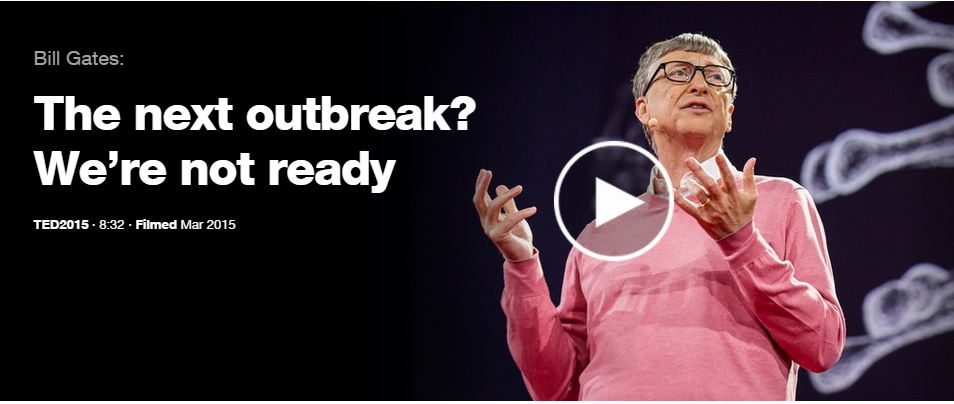
The next outbreak? We’re not ready – Bill Gates 2015

Image result for bill gates the next outbreak we're not ready


Cartoon – New Miracle Drug

Image may contain: text