Here come the prediabetics

https://mailchi.mp/1d8c22341262/the-weekly-gist-the-spotify-anxiety-edition?e=d1e747d2d8

Image result for Here come the prediabetics

Alarming statistics appeared this week in the journal JAMA Pediatrics, based on an analysis conducted by researchers at the Centers for Disease Control and Prevention (CDC) that showed that 20 percent of adolescents (ages 12-18) and 25 percent of young adults (ages 19-34) in the US are now prediabetic. These young people are at substantially increased risk for developing type 2 diabetes, as well as related cardiovascular diseases, as they grow older.

The numbers are a staggering picture of what confronts the American healthcare system as the millennial generation (whose median age is now 30) and the younger “Gen-Z” generation (born after 1997) move closer to their prime care consumption years. These age cohorts are likely to be much more medically complex, and will drive even higher healthcare costs, than previous generations—especially since both of the younger generations are larger than those that preceded them. But the statistics also raise important health policy questions.

To what extent should we “medicalize” prediabetes? In other words, should we begin to flag and treat prediabetes, which is more of a predisposition than an actual medical condition, with medications and interventions? Surely the reimbursement system will create a powerful temptation to do exactly that—at exorbitant cost. Or will we instead focus efforts on “reversing” prediabetes, with more robust attempts to encourage lifestyle changes (diet, exercise) and drive environmental changes (neighborhood walkability, availability and affordability of healthy foods)?

And there’s an information privacy issue looming as well—how will “prediabetics” be flagged, and could prediabetes be viewed as a “pre-existing condition” that might be used in coverage (and even employment) decisions should the regulatory environment change? As much as we focus today on the healthcare impact of the aging Baby Boom generation, we need to get out ahead of some of the issues we’re certain to face as our younger citizens grow older (and sicker).


Rethinking the model for managing chronic disease

https://mailchi.mp/1d8c22341262/the-weekly-gist-the-spotify-anxiety-edition?e=d1e747d2d8


As we’ve discussed before, the greatest challenge facing health system economics is demographics. Simply put, with 80M Boomers entering their Medicare years, hospitals beds will fill with elderly patients receiving treatment for exacerbations of congestive heart failure (CHF), diabetes, or other chronic conditions, of which the average Medicare beneficiary has four. It’s easy to envision the hospital becoming a giant nursing facility, with the vast majority of beds occupied by Medicare patients receiving nursing care and drugs, only to be sent home until their chronic disease flares again and the cycle repeats, four or five times a year.

Health systems must create a new model for managing Medicare patients with multiple chronic conditions, one that does not rely on care delivered in an inpatient setting. In the graphic below, we outline two approaches for managing a Medicare patient with advanced CHF. The top path illustrates today’s legacy model, where limited support for ongoing care management leaves the patient vulnerable to exacerbations, leading to numerous ED visits and admissions for diuresis, after which the patient returns home to a sub-optimal diet and lifestyle and is likely to return.

A better alternative is illustrated in the second path. Here our CHF patient has access to the ongoing support of a care team, which regularly monitors her status from home with the help of remote monitoring and can communicate with the patient to adjust therapy if early symptoms are detected. At Gist, we’re working with clinicians to understand just how to build this system of care and maximize its impact.

One example: a leading heart failure specialist told us that admissions for CHF could be reduced by one-third if patients with severe heart failure were monitored with a CardioMEMS implantable device, which can detect changes in pressure before the patient has symptoms, allowing for very early intervention. Developing these kind of care approaches to manage chronic disease outside the hospital will be the key to sustainable health system economics—and may have the greatest impact on lowering the total cost of care for the growing Medicare population.


Amazon launches new medical transcription service

https://mailchi.mp/1d8c22341262/the-weekly-gist-the-spotify-anxiety-edition?e=d1e747d2d8

Image result for Amazon launches new medical transcription service

In addition to capturing your personal conversations at home through its ubiquitous Echos, Amazon is now in the business of recording physician-patient conversations. This week the company announced Amazon Transcribe Medical, a machine learning service for quickly creating accurate speech-to-text transcriptions for providers in clinical settings. Cerner, a co-developer, has already signed on as a customer “to develop a digital voice scribe that can ‘listen’ in the background during a patient’s visit”, transcribe the conversation into text, and automatically document the note in its electronic health record (EHR) system.

Amazon’s move into this space is a natural extension of both its “Transcribe Service”, which automatically converts speech to text with natural formatting and punctuation, and its “Comprehend Medical” technology, which can read and mine unstructured medical text for specific information.

While cloud rivals Microsoft and Google are also making a play for speech-to-text tools that work with EHRs, Amazon is looking to differentiate on the basis of providing highly accurate automatic speech recognition specifically designed to go directly into medical records. The company claims the service can understand the nuances of medical language, including the myriad abbreviations used by clinicians.

Amazon is focusing on an area ripe for improvement in cost, time, and patient experience. At a cost of less than a quarter of a cent per minute (!), Transcribe Medical looks like a very cost competitive alternative to what most providers are paying for medical transcription today—especially those who rely heavily on scribes.

It remains to be seen if providers and patients will be comfortable having their often very personal conversations added to Amazon’s cloud, word for word. Providers who adopt this new service should be as transparent as possible with their patients about their partnership with Amazon, as well as how personal data is being stored and used.


What Makes A Non-Profit Hospital?

What Makes A Non-Profit Hospital?

Image result for What Makes A Non-Profit Hospital?

What are non-profit hospitals and what is the community benefit standard?

Recently, several news outlets including ProPublica, Kaiser Health News, and Wall Street Journal have published stories on non-profit hospitals’ medical debt collection practices and the effects on low income patients. These news stories prompted me to take a closer look at non-profit hospitals, their tax-exempt status, the community benefits they must fulfill to qualify for it, and the impact on care.

This is the first piece of two posts that consider the requirements that non-profit hospitals need to fulfill to qualify for their tax-exempt status and the impact of these standards on non-profit hospitals and the communities they seek to serve.

Has the definition of a non-profit hospital evolved over time?

Short answer: yes.

To date, non-profit hospitals have significantly benefited from their tax-exempt status, saving $24.6 billion in taxes in 2011. Originally, hospitals were granted tax-exempt status because of affiliations with religious institutions and for serving a charitable purpose. It wasn’t necessarily related to medical care. However, in 1956, the Internal Revenue Service (IRS) implemented the charity care standard requiring hospitals to offer uncompensated care to patients unable to pay in order to qualify as a charitable organization under Internal Revenue Code 501c3.

Many believed charity care would no longer be necessary after the implementation of Medicare and Medicaid in 1965. Policymakers assumed the two programs would ensure insurance coverage for most people, obviating the need for a charity care standard. This wasn’t the case, and over the next decade, two events led to the elimination of the charity care standard and the introduction of its successor, the community benefit standard, in 1969.

First, the House of Representatives released a report citing concerns about the execution of the charity care standard and its effectiveness. Second, a hospital that did not provide free or discounted health care mounted a legal challenge. The hospital asserted that, because it had an emergency room open to all community members, it was already providing a charitable service and should qualify for non-profit, or 501c3, status. The courts agreed with the hospital, stating that the provision of an open-access emergency room promoted the health of the community. This fulfilled a charitable purpose according to its legal definition. Ultimately, the IRS agreed with the court’s decision and deemed it necessary to change the charity care standard to accommodate this decision.

Consequently, the IRS issued Ruling 69-545, introducing the community benefit standard. From its implementation and onwards instead of being judged solely on the provision of free or discounted care, a hospital’s 501c3 status would be based on whether it “promoted the health of a broad class of individuals in the community,” including but not limited to just providing free or discounted care.

In 2010, additional requirements were included in the community benefit standard. Non-profit hospitals are now required to perform a community health needs assessment every three years and have both an accessible Financial Assistance Policy and Emergency Medical Care Policy (a charge limit for people who qualify for financial assistance and a billings) and a collections system that determines if individuals are eligible for financial assistance prior to engaging in extraordinary collection actions (applies to all emergency and medically necessary care).

What does non-profit status mean for hospitals?

Short answer: tax-exempt with charity donations required.

Most hospitals in the United States are recognized as charitable organizations, with 78 percent qualifying for 501c3 status. This means they are exempt from most taxes and benefit from tax-deductible charity donations and tax-exempt bond financing but they must meet general Internal Revenue Code requirements, including the community benefit standard aimed at improving the health of the surrounding community.

A variety of activities qualify as community benefits. Some examples are charity care, unreimbursed costs through means-tested programs (Medicaid, Medicare, CHIP, etc.), unreimbursed health professions education, unfunded research, and cash and in-kind contributions for community benefits. Hospitals must submit IRS Form 990 Schedule H annually to demonstrate their community benefit expenditures and maintain their 501c3 designations.

Are non-profit hospitals behaving like their for-profit counterparts?

Short answer: often times, yes.

Seven of the ten most profitable hospitals in the country are non-profits. Many of these exhibit for-profit characteristics such as being part of a larger hospital system, being located in urban areas, and not having a teaching program.

But these aren’t the only features of non-profit hospitals that resemble for-profits. A study conducted by the Kellogg School of Management found that non-profits regularly behaved like for-profits after financial shocks. In response to financial crises, non-profits cut back on unprofitable services to offset losses instead of increasing prices. This is not what we expect; the study authors argue that we should expect them to do the latter — forgoing financial gain by starting with lower prices with room to increase in times of financial stress. That they don’t suggests that non-profits are already maximizing profits, similar to for-profit hospitals.

While it is unusual for non-profit hospitals to experience large financial profits, it does happen. The question is whether these gains are then reinvested into the hospital’s charity care and community health and wellbeing initiatives.

How much of a non-profit hospital’s revenue goes back into care and its community?

Short answer: some.

Herring, et al. found that, on average, 7.6 percent of non-profit hospitals’ 2012 total expenses were community benefit expenditures, 3 percent were unreimbursed Medicaid costs, and about 2 percent were charity care. (These findings are consistent with past studies.)

In some cases, non-profit hospitals receive tax benefits that far outweigh their community benefit investments. For example, in fiscal year 2011-2012, the University of Pennsylvania Medical Center made approximately $1 billion in profits, spent less than $20 million on charity care, and received $200 million in tax benefits. Cases like these have increased public scrutiny on hospitals’ non-profit status and whether current 501c3 requirements go far enough to ensure that hospitals provide sufficient charity care and community benefits.

Non-profit hospitals maintain their tax exempt status through the fulfillment of the community benefits standard. In the next piece we will look at the impact of these standards on the hospitals and the communities they serve.


An ex-NFL player became a hospital CEO. Feds questioned his qualifications

https://www.beckershospitalreview.com/hospital-management-administration/an-ex-nfl-player-became-a-hospital-ceo-feds-questioned-his-qualifications.html

Image result for An ex-NFL player became a hospital CEO. Feds questioned his qualifications

The CEO of North Tampa Behavioral Health did not meet the requirements to lead the Wesley Chapel, Fla.-based psychiatric hospital, according to a report cited by the Tampa Bay Times.

Bryon Coleman Jr., the former CEO of North Tampa Behavioral, is no longer leading the hospital. Instead, he is in another position within Acadia Healthcare, the Franklin, Tenn.-based parent company of North Tampa Behavioral.

In October, lawmakers called on federal officials to look into North Tampa Behavioral after the Tampa Bay Times published an investigative report that found Mr. Coleman had no healthcare experience. The report also raised quality concerns, claiming North Tampa Behavioral boosted revenues by using a loophole in Florida’s mental health law to hold some patients longer than a 72-hour limit. The hospital rejected the claims.

In November, federal inspectors discovered serious problems at the psychiatric hospital, according to the Tampa Bay Times. Inspectors said medical staff hadn’t been held accountable for poor care. Inspectors also found “no evidence” that Mr. Coleman “met the education or experience requirements defined in the position description” for the CEO role. Officials threatened to end the facility’s federal funding if the issues aren’t addressed by Feb. 19.

Mr. Coleman became CEO of Tampa Behavioral Health in 2018. Prior to that, he quarterbacked for the Green Bay Packers practice squad, managed sales for a trucking company and oversaw employee benefits at an insurance firm, according to the Tampa Bay Times.

In a statement to the Tampa Bay Times, a spokesperson from Acadia denied that federal officials threatened to cut public funding from the hospital and said officials didn’t find Mr. Coleman lacked requirements for his job.

Read the full article here.


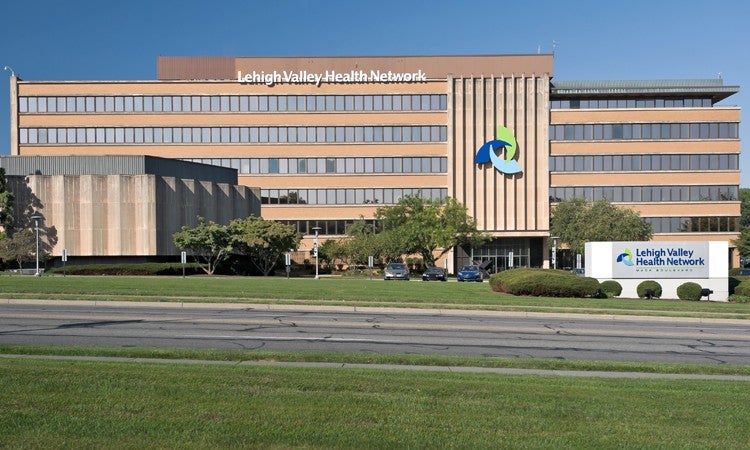
Lehigh Valley Health Network’s net income more than triples to $115M

https://www.beckershospitalreview.com/finance/lehigh-valley-health-network-s-net-income-more-than-triples-to-115m.html

Image result for lehigh valley health network headquarters

Allentown, Pa.-based Lehigh Valley Health Network saw its net income more than triple from $35.1 million in fiscal year 2018 to $115.3 million in fiscal year 2019, according to financial documents released Dec. 4. 

The health system saw its revenue increase year over year to $2.96 billion in the 12 months ended June 30. In the same period in 2018, the system reported revenue of $2.73 billion.

In fiscal year 2019, Lehigh Valley Health reported expenses of $2.86 billion, up from $2.68 billion in 2018.

Expense growth resulted from several factors, including an increase in salaries and wages and supply costs.

Lehigh Valley Health System attributed the net income increase to cutting back on contract workers and overtime and reducing costs on readmissions and contracts, according to The Morning Call. 


UPMC to close hospital in 2020

https://www.beckershospitalreview.com/finance/upmc-to-close-hospital-in-2020.html

Image result for upmc susquehanna sunbury

Pittsburgh-based UPMC will close its hospital in Sunbury, Pa., on March 31, 2020, according to The Daily Item.

The health system cited dwindling patient volume as one of the reasons it is closing UPMC Susquehanna Sunbury.

“This decision was made with careful consideration and analysis of the use of hospital services in the region,”  UPMC Susquehanna President Steven Johnson said, according to The Daily Item. “According to market data, patients are utilizing facilities other than UPMC Susquehanna Sunbury for their care. UPMC must prudently examine opportunities to integrate and consolidate functions balanced against the needs of the community.”

The hospital, previously named Sunbury Community Hospital, has been open for nearly 125 years. Jody Ocker, Sunbury city administrator, said she’s concerned local residents won’t have access to care after the hospital closes.

“I’m very concerned about our residents’ access to care,” she told TV station WNEP. “We have people that are getting around on their electric scooters and their bicycles. They don’t have access to reliable transportation.”

About 150 people will lose their jobs when UPMC Susquehanna Sunbury closes, according to WNEP. UPMC said it will try to relocate employees to other hospitals in the area.


Measles deaths ‘staggering and tragic’

https://www.bbc.com/news/health-50659893?fbclid=IwAR3gBbcdBh9DpvLZetL7k8uvV5VXxk5TBy1bNtDYeRKEcpGy2Xx58ydn39s
Measles

More than 140,000 people died from measles last year as the number of cases around the world surged once again, official estimates suggest.

Most of the lives cut short were children aged under five.

The situation has been described by health experts as staggering, an outrage, a tragedy and easily preventable with vaccines.

Huge progress has been made since the year 2000, but there is concern that incidence of measles is now edging up.

In 2018, the UK – along with Albania, the Czech Republic and Greece, lost their measles elimination status.

And 2019 could be even worse.

The US is reporting its highest number of cases for 25 years, while there are large outbreaks in the Democratic Republic of Congo, Madagascar and Ukraine.

The Pacific nation of Samoa has declared a state of emergency and unvaccinated families are hanging red flags outside their homes to help medical teams find them.

What is measles?

  • Measles is a highly infectious virus spread in droplets from coughs, sneezes or direct contact
  • It can hang in the air or remain on surfaces for hours
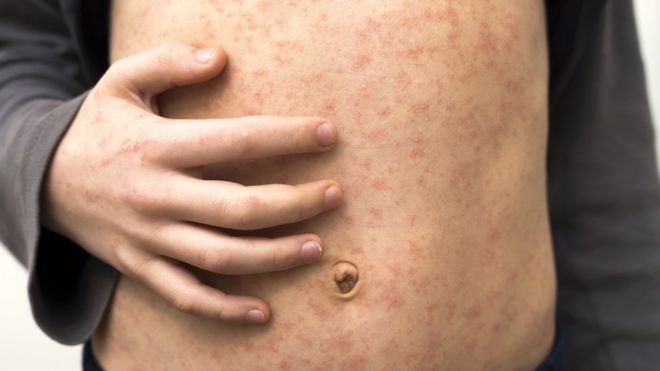
  • Measles often starts with fever, feeling unwell, sore eyes and a cough followed by a rising fever and rash
  • At its mildest, measles makes children feel very miserable, with recovery in seven-to-10 days – but complications, including ear infections, seizures, diarrhoea, pneumonia and brain inflammation, are common
  • The disease is more severe in the very young, in adults and in people with immunity problems

What are the numbers?

The global estimates are calculated by the World Health Organization (WHO) and the US Centers for Diseases Control and Prevention.

They show:

  • In 2000 – there were 28.2 million cases of measles and 535,600 deaths
  • In 2017 – there were 7.6 million cases of measles and 124,000 deaths
  • In 2018 – there were 9.8 million cases of measles and 142,000 deaths

Measles cases do not go down every year – there was an increase between 2012 and 2013, for example.

However, there is greater concern now that progress is being undone as the number of children vaccinated stalls around the world.

“The fact that any child dies from a vaccine-preventable disease like measles is frankly an outrage and a collective failure to protect the world’s most vulnerable children,” said Dr Tedros Ghebreysus, director-general of the WHO.

How are the numbers calculated?

Every single case of measles cannot be counted. In 2018, only 353,236 cases were officially recorded (out of the 7.8 million estimated).

So scientists perform complex maths for each country.

They take reported cases, the population size, deaths rates, the proportion of children vaccinated and more to eventually produce a global estimate.

Dr Minal Patel, who performed the number-crunching, told the BBC: “We’ve had a general trajectory downwards for deaths, which is great. Everyone involved in vaccination programmes should be very proud.

“But we’ve been stagnating in numbers of deaths for about the past seven years, and what’s really concerning is from last year we’ve gone up, and it looks like we’ve gone backwards.”

What is going on?

In short, not enough children are being vaccinated.

In order to stop measles spreading, 95% of children need to get the two doses of the vaccine.

But the figures have been stubbornly stuck for years at around 86% for the first jab, and 69% for the second.

Why enough children are not being vaccinated is more complicated – and the reasons are not the same in every country.

The biggest problem is access to vaccines, particular in poor countries.

The five worst-affected countries in 2018 were Democratic Republic of Congo, Liberia, Madagascar, Somalia and Ukraine.

The Ebola outbreak in Liberia (2014-16) and plague in Madagascar (2017) have taken a toll on their healthcare systems.

“Democratic Republic of Congo, Somalia and Ukraine, the other countries hardest-hit by measles, each face conflicts, with DRC additionally battling a serious Ebola outbreak and rampant distrust,” Prof Heidi Larson, from the London School of Hygiene & Tropical Medicine, explained.

The other issue is people who do have access to vaccines choosing not to immunise their children.

Will things be worse next year?

It looks likely.

The number of reported cases by mid-November this year was 413,000 compared with 353,000 for the whole of last year.

What do the experts say?

Henrietta Fore, Unicef’s executive director, said: “The unacceptable number of children killed last year by a wholly preventable disease is proof that measles anywhere is a threat to children everywhere.”

Dr Seth Berkley, chief executive of Gavi, the Vaccine Alliance, said: “It is a tragedy that the world is seeing a rapid increase in cases and deaths from a disease that is easily preventable with a vaccine.

“While hesitancy and complacency are challenges to overcome, the largest measles outbreaks have hit countries with weak routine immunisation and health systems.”

Prof Larson said: “These numbers are staggering. Measles, the most contagious of all vaccine-preventable diseases, is the tip of the iceberg of other vaccine-preventable disease threats and should be a wake-up call.”


‘An Arm and a Leg’: How much for stitches in the ER? Hard to gauge upfront

https://www.news-medical.net/news/20191205/e28098An-Arm-and-a-Lege28099-How-much-for-stitches-in-the-ER-Hard-to-gauge-upfront.aspx

Image result for ‘An Arm and a Leg’: How much for stitches in the ER? Hard to gauge upfront

Sarah Macsalka had heard the stories about how expensive an emergency room visit can be, even for a minor complaint.

http://aca.st/b26519

So when her 7-year-old son, Cameron, tripped and gashed his knee in the backyard, the ER was not where her family headed first. In fact, Macsalka did just about everything she could to avoid paying a big, fat bill to get Cameron’s knee stitched up.

Ultimately, she failed.

Her adventure raises a big question: In a system where consumers are encouraged to “shop” for the best deal in health care, why is it so hard to get simple information, like a price?

On this week’s episode of “An Arm and a Leg,” we get some answers.

Instead of taking her son to the local emergency room for stitches, Macsalka took him to an urgent care clinic, one that provides patients with prices ahead of the service. There, the staff said stitching up Cameron’s knee would cost $150.

But there was a problem. The clinic didn’t have the topical anesthetic the doctor would need to numb Cameron’s skin first.

“And Cameron is like screaming and crying,” Macsalka said. “He doesn’t take pain well.”

So, reluctantly, the family headed to the local emergency room.

Macsalka tried to be a smart shopper there, too. When a staff member came to take her insurance information, Macsalka grilled him about how much the visit would cost.

“He was like, ‘I don’t know. Just walking through the ER [door] costs $600,'” she said.

To Macsalka, that sounded like a “facility fee” — a cover charge of sorts, separate from any health care services. And it sounded pricey. But she was over a barrel.

“The kid is still screaming and crying,” she said. “His knee’s a mess.” She wasn’t about to drive him back to the urgent care place and start over again.

They got the stitches in the ER. And, as it happened, the anesthetic wasn’t very effective.

Macsalka said her son’s screams were ear-piercing. “Yeah, Cameron’s lungs did not give out,” she said. “Those are very healthy lungs.”

As it turned out, Macsalka’s attempts to figure out what the final price would be weren’t very effective either.  A few weeks after the ER visit, she got a bill for the doctor’s services and paid it: $214 after insurance.

Then there was another bill from the hospital. One line: $2,824.

Macsalka went back into smart-consumer mode. She called the hospital billing department and asked if there had been a mistake.

Macsalka said the person she spoke with on the phone told her that “just walking through the doors” of the emergency room cost $4,200. That amount matches a number on her insurance statement — an amount before the insurance company’s negotiated discount.

After that discount, the bill was $2,824 – and because Macsalka’s family had a high deductible, they were responsible for paying it all.

Macsalka said she tried another tactic and asked the billing representative: What if I didn’t have insurance? She said the billing rep told her: In that case, the hospital would accept 10% of its total bill to make sure it collected something. Without a negotiated rate from insurance, the total would have been about $6,000, so 10% would have been about $600.

It was more than Macsalka had hoped to pay. But less than $3,000.

“So I was like, ‘Fine, cool, I’ll take it.’ And she’s like, ‘Oh no. You can’t because it’s already gone through your insurance company. So that’s not an option for you.'”

Having insurance — with a high deductible — meant Macsalka was on the hook for the $2,800 charge.

She wishes someone could have told her the price upfront.

“I would’ve said thank you very much. And walked out and gone back to our lovely urgent care and been like, Cameron, bite on this stick,” she said.

For Episode 4, we also rounded up a hospital consultant and a journalist to better understand the perspectives of the hospital and insurance company.