Elevator Pitch for Fixing U.S. Healthcare

Fixing U.S. Healthcare – Annual Review & Summary

2019.12.10 Clipboard_flat_3D


Fixing U.S. Healthcare blog’s two-year anniversary is a good time to take stock of what has changed in our approach to fixing U.S. healthcare.  And a good time to review highlights of the last year.

Elevator Pitch for Fixing U.S. Healthcare

Let’s start with an “elevator pitch” summary:

The U.S. healthcare system has outgrown itself, now comprising almost 20% of the gross domestic product and still rising. It delivers ever more treatments that have diminishing “marginal benefit.” It does so at a cost far beyond the treatments’ true value to either individuals or to society, in all too many cases. And at prices double those in other developed countries. Now these costs are biting into the average family’s wallets. In 1994, the Oregon Health Plan took control of healthcare and managed its costs for 8 years by combining cost-benefit analysis with well-cultivated public engagement.  This would be a good starting place for fixing U.S. healthcare. But 25 years later, this approach alone would not be sufficient.  Powerful interests have now rigged the healthcare system for profits, not health. I conclude that only a grassroots movement to harness the full political, social, legal, economic and ethical weight of the federal government can encircle these entrenched interests and rein them in. There are several models for U.S. healthcare reform that could fall squarely within American tradition and pragmatism.


Changes in this Blog’s Approach

Let’s look at how this blog’s messages have evolved this year.

  • Original message: Relentless increases in U.S. healthcare spending puts a drag on economic growth and household spending.

Updated message:  Relentless increases in U.S. spending on healthcare do indeed reduce individual households’ disposable income, especially as households pay ever more of the share of healthcare costs. Healthcare costs also do eat into corporate profits, and blunt international competitiveness. However, healthcare spending is not necessarily a drag on the economy. Rather, it is now a major component of our national economy, accounting for 18.3% of total gross domestic product. This is because the U.S. has evolved into a post-industrial services-oriented economy. There is nothing inherently problematic about healthcare services in this kind of economy. The problem, however, is that excessive healthcare spending is diverting human and financial resources away from other priorities, such as education, research, infrastructure, housing. Furthermore, the marginal benefit of more healthcare spending is dwindling, while the unrealized value of deferred investment in these other priorities is growing – mounting opportunity costs.


  • Original message: Relentless increases in U.S. healthcare spending will seriously weaken the nation over time.

Updated message:  Economist Larry Summers dismisses the idea of an impending fiscal calamity. He explains that the “real” interest rate (nominal minus inflation) has been at historic low levels for the last two decades, resulting in no increase on the actual proportionate amount paid to service the debt.  Nevertheless, he cautions federal budgeters not to deepen the debt any further, but rather pay as we go for any new programs. Thus, the reasons to fix U.S. healthcare are not to avoid national disaster, but rather to improve worker productivity, rebalance fiscal priorities, and promote societal cohesion and business climate.


  • Original message: Excessive healthcare spending is principally driven by low-marginal-benefit services and inefficient, overly complex administration.

Updated message:  Excessive healthcare spending is indeed driven by administrative complexity (estimated at $265.6 billion annually) and to a lesser degree by low-marginal-benefit treatments (estimated at $75.7 billion to $101.2 billion) (2012-2019 data). Other elements of non-costworthy, wasted spending are:

  • Failures of Care Delivery: $102.4 billion to $165.7 billion
  • Failures of Care Coordination: $27.2 billion to $78.2 billion
  • Fraud and abuse: $58.5 billion to $83.9 billion

But the other big driver of over-spending is pricing failure in imperfect markets, amounting to $230.7 billion to $240.5 billion.


  • Original message: Excessive healthcare spending was caused by health professionals who, in good faith, overvalued healthcare services and lost their perspective on their value relative to other societal priorities.

Updated message:  Given the prominence of market and pricing failures, this blog concludes that healthcare business interests, and their professional and political allies, have knowingly and willfully coopted healthcare for the purpose of profits. These interests have superseded the health of the public, often undermine patient-centered care, and, at times, result in actual harm.


  • Original message: Healthcare can be fixed by a common-sense, practical approach informed by cost-benefit analysis.

Updated message:  Since the system is rigged by powerful, well-financed interests, it can be fixed only by the full faith and clout of the federal government responding to an informed grassroots movement. The most likely format for healthcare reform would be gradual but deliberate transition to a single-payer system. This would then be followed by systematic remedies to the 6 categories of unjustified “wasteful” spending, including technology assessment using cost-benefit analysis.


9 health systems with strong finances

https://www.beckershospitalreview.com/finance/9-health-systems-with-strong-finances-120919.html

Here are nine health systems with strong operational metrics and solid financial positions, according to recent reports from Fitch Ratings, Moody’s Investors Service and S&P Global Ratings.

Note: This is not an exhaustive list. Health system names were compiled from recent credit rating reports and are listed in alphabetical order.

1. Advocate Aurora Health, a 27-hospital system with dual headquarters in Downers Grove, Ill., and Milwaukee, has an “Aa3” rating and positive outlook with Moody’s. The health system has a favorable liquidity position, low leverage, and healthy margins, according to Moody’s. The credit rating agency expects the health system to continue to benefit from its position as a market leader within two large service areas.

2. Morristown, N.J.-based Atlantic Health System has an “Aa3” rating and stable outlook with Moody’s. The five-hospital system has healthy liquidity and solid operating margins, according to Moody’s. The credit rating agency expects strong patient volume, low reliance on governmental funding and other factors to continue to support Atlantic Health System’s financial metrics.

3. Fountain Valley, Calif.-based MemorialCare has an “AA-” rating and stable outlook with Fitch and S&P. The health system has a strong balance sheet and financial profile, according to Fitch. The credit rating agency expects MemorialCare’s cash flow to improve due to its market strategy, which focuses on revenue diversification.

4. Portland-based Oregon Health & Science University has an “Aa3” rating and stable outlook with Moody’s and an “AA-” rating and stable outlook with S&P. OHSU, which is the only academic medical center in Oregon, has favorable operating performance, strong philanthropy and its clinical offerings draw patients from across Oregon and neighboring states, according to Moody’s. The credit rating agency expects OHSU’s revenue to continue to grow.

5. Albuquerque, N.M.-based Presbyterian Healthcare Services has an “Aa3” rating and stable outlook with Moody’s. The health system has strong revenue growth, good market share for acute care services and a favorable balance sheet. The credit rating agency expects the health system’s insurance plan, which is already a dominant health plan in New Mexico, to continue to grow.

6. Appleton, Wis.-based ThedaCare has an “AA-” rating and stable outlook with Fitch. The health system has solid cash flow and a leading market position in a stable service area, according to Fitch. The credit rating agency expects ThedaCare’s operating performance to continue to improve.

7. Livonia, Mich.-based Trinity Health has an “AA-” rating and stable outlook with Fitch and S&P. The health system has a significant market presence in several states and a strong financial profile, according to Fitch. The credit rating agency expects the health system’s operating margins to continue to improve.

8. Chapel Hill-based University of North Carolina Hospitals has an “Aa3” rating and stable outlook with Moody’s. UNC Hospitals, part of UNC Health Care System, has an excellent market position and strong financial performance, according to Moody’s. The credit rating agency expects UNC Hospitals to continue to grow patient volumes and maintain strong financial performance.

9. Philadelphia-based University of Pennsylvania Health System has an “Aa3” rating and stable outlook with Moody’s. The health system has a strong market position, and substantial investments in facilities will allow the health system to capitalize on its prominent reputation and wide patient draw, according to Moody’s.


Memphis hospital CEOs discuss policies on debt collection after patient lawsuits draw scrutiny

https://www.commercialappeal.com/story/news/2019/12/05/medical-debt-memphis-hospital-patients-sued/2611018001/

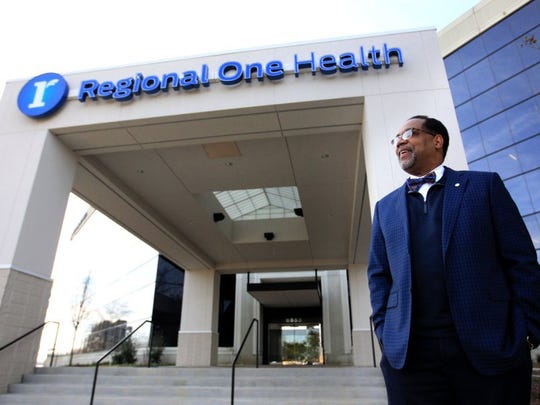
Dr. Reginald Coopwood, CEO of Regional One Health, on Feb. 5, 2016.

Representing more than half of the hospitals in Shelby County, the CEOs of four local health care organizations convened at the University of Memphis Tuesday for a panel on “successfully leading change” in the industry.

The gathering took place amid a growing conversation on medical debt — the cause of more than 58 percent of bankruptcies in the United States, according to the American Journal of Public Health. 

Communities across the countries have recently seen individuals and faith-based organizations launch fundraising initiatives to erase millions in medical expenses as part of a burgeoning movement to buy medical debt for the sole purpose of erasing it.

Memphis has also been at the fore of the conversation in recent months, with a pair of investigations by MLK50 and ProPublica revealing an aggressive system of suing patients involving wage garnishments, interest charges and court fees.

That reporting has since prompted a wave of debt reduction and forgiveness for thousands who were being sued by Methodist Le Bonheur Healthcare and Southeastern Emergency Physicians, a private equity-owned firm that staffs Baptist Memorial Health Care’s four local emergency rooms.

‘We have to be a profitable business’

At the Tuesday panel, organized by the professional association Mid-South Health Care Executives, the discussion touched on workplace harassment, the impending automation of health care jobs, and diversity.

The CEOs of Methodist Le Bonheur and Baptist Memorial also addressed medical debt as did their fellow panelists.

Dr. Reginald Coopwood, CEO of Regional One Health, the county hospital, said his organization was compelled to reassess its policies as a result of the recent scrutiny surrounding debt collection, though he defended the practice of suing patients in general.

“We send people through processes of collection,” Coopwood said of the public hospital.

“We have a great passion to deliver great care to whoever walks into our door. The flip side of that is … if everybody cannot pay their bills, we can’t buy $100 million record systems and we can’t buy technology that the community as a whole wants,” Coopwood said. “So we have policies to collect whatever is collectible from individuals.”

“That’s what a business needs to do,” he said.

According to General Sessions Court data, analyzed by MLK50 and ProPublica and shared with The Commercial Appeal, those hospitals and a physicians staffing firm, sued more than 2,500 patients in the first six months of the year, between January 1 and June 30:

  • Baptist Memorial Hospital, 486 lawsuits
  • Methodist Le Bonheur, 622 lawsuits
  • Regional One Health, 161 lawsuits
  • Southeastern Emergency Physicians, 1,292 lawsuits

“At the end of the day, we’re businesses, and in order to stay in business, we have to be able — in order to take care of those that are uninsured — we have to be a profitable business,” Coopwood said.

Sally Deitch, CEO of St. Francis Hospitals in Memphis, said the amount of charity care hospitals give back to communities is rarely seen, and, meanwhile, “most of these hospitals are living under their margins of actually being able to say ‘We are financially solid and stable and ready to make investments in new technology.'”

In a Memphis Business Journal review of nonprofit tax filings, Coopwood, Methodist Le Bonheur CEO Michael Ugwueke and Baptist Memorial Health Care CEO Jason Little are listed among the five highest paid nonprofit executives in the metro area, earning between $874,493 and $1,300,954 in 2018. Deitch was appointed to her position in October, after the Memphis Business Journal’s compensation review.

‘No one is perfect’

In the Methodist Le Bonheur system, MLK50 and ProPublica’s investigation found the nonprofit hospital’s practice of taking patients to court, through its in-house collection agency, had entrapped some of its own workers in a cycle of wage garnishments, interest and debt — while they were being paid less than a living wage.

Ugwueke, president of Methodist Le Bonheur’s hospitals in Shelby County, said his organization has gone “above and beyond the issues that were raised.”

The hospital, which is affiliated with the United Methodist Church, announced in July it would cease suing its employees and would raise the hospital network’s minimum wage to $15 an hour.

Methodist Le Bonheur also said it would institute a revamped financial assistance policy to ensure no one making less than 250 percent of federal poverty guidelines would be sued for debt collection in the future. For the approximately 6,500 patients who were in the process of being sued, the hospital also committed to forgiving or reducing their debts.

“As part of our process, we have made additional changes and accommodations,” Ugwueke said. “No one is perfect. I don’t think it’s anyone’s intention to do anything to harm patients.”

He added that he thinks other institutions have a role to play in serving the needs of low-income and poor communities.

“Memphis is a very challenging community. Health care organizations are not going to be the only ones solving the problems,” he said.

Deitch said no one seeking emergency care would ever be turned away from any hospital. Beyond that, she said she considered hospitals to be participants in helping their communities but not a deciding factor.

“When you start to think through the cost to the system and the burden to the system — at a certain point, it can’t all be the responsibility of a hospital,” she said.

Charity care

Little said he  thinks hospitals should address problems with affordability.

“We still need change in health care because it’s expensive. … Seventy-five percent of Americans are living paycheck to paycheck,” Little said, “and nobody sets money aside and plans to need a transplant. So that’s a challenge for all Americans and all Memphians.”

“And it’s a challenge that I’m really bullish on my colleagues up here continuing to address,” Little said, “because I think we’ve gotten really good at caring for our communities, particularly those in the greatest of need.”

For every dollar spent on expenses, Little said, Baptist Memorial spends 21 cents of it on charity care.

But that financial assistance hasn’t always been accessible to emergency-room patients, MLK50 and ProPublica reported in an investigation into Southeastern Emergency Physicians. The staffing firm contracts with doctors to treat emergency room patients in four of Baptist’s five hospitals in the region.

Southeastern filed nearly 1,300 lawsuits in the first half of 2019, according to MLK50 and ProPublica’s analysis of General Sessions Court data — more lawsuits than Regional One, Baptist Memorial and Methodist Le Bonheur combined.

But by the end of the year, in response to the MLK50 and ProPublica investigation, the firm’s parent company, TeamHealth, said it promote financial assistance program participation and would no longer pursue its active lawsuits — or sue any patients again.


Health care spending grows — again — in 2018

https://www.axios.com/newsletters/axios-vitals-7acf29e4-cb5c-437f-975e-7dd04f588cab.html?utm_source=newsletter&utm_medium=email&utm_campaign=newsletter_axiosvitals&stream=top

Image result for annual health care spending in us

Americans spent $3.65 trillion on health care in 2018 — 4.6% more than the year before. That growth also was higher than the 4.2% rate from 2017, according to revised figures from independent federal actuaries, Axios’ Bob Herman reports.

Between the lines: U.S. health care spending climbed again not because people went to the doctor or hospital more frequently, but because the industry charged higher prices. And private health insurers didn’t do a particularly good job negotiating lower rates.

The intrigue: The number of people with private health plans — which mostly consists of the coverage people get through their jobs — dipped in 2018, yet the amount spent per person soared 6.7%.

  • That is the highest per-enrollee spending growth rate among people with private health insurance since 2004, actuaries wrote.
  • Part of that increase was due to higher premiums that insurance companies passed on from the Affordable Care Act’s health insurance tax.
  • More importantly: Hospitals, doctors and drugmakers continued to wring out much higher rates from private insurers thanks to provider mergers and perverse negotiating incentives.

Medicare and Medicaid had much lower per-enrollee spending growth rates in 2018 than private insurance, but those figures were the highest they’ve been since 2015 — again due to higher costs for the private insurers that are increasingly running those government programs.