


The bill would require Kaiser Permanente to provide more data about the revenue and profits of individual hospitals.
Legislation requiring healthcare giant Kaiser Permanente to follow more of the same financial disclosure laws as other healthcare providers in California passed the Senate Monday and now heads to Gov. Gavin Newsom, who has 10 days to decide whether to sign it into law.
The bill, SB 343, would require Kaiser Permanente to provide more data about the revenue and profits of individual hospitals, whereas now it lumps those figures for all facilities into two broad categories: “Northern California” and “Southern California.” Of the roughly 400 hospitals operating in California, all but the 35 owned by Kaiser Permanente must comply with financial reporting requirements on a per-facility basis.
WHAT’S THE IMPACT
The new requirements for Kaiser Permanente would include breaking out expenses and revenue at each facility; breaking out revenue by type of payor at each facility (Medicare, Medi-Cal or private insurance); and breaking out rate increases by type of service (hospital, physician services, pharmacy, radiology and laboratory).
For Kaiser Permanente to comply with the legislation, it is estimated it would need to hire two workers to compile and distribute related data on a quarterly basis. The corporation has 250,000 employees and operating revenue of nearly $80 billion.
Kaiser Permanente, despite being a nonprofit healthcare system, has reported $11 billion in profits since Jan. 1, 2017 — including $5.2 billion just in the first half of 2019. It has made more in profits in the first six months of 2019 than it has ever recorded in an entire year and sits on reserves of more than $37 billion. Meanwhile, premiums for Kaiser patients have gone up year after year as part of a rate-setting process.
With Kaiser controlling more than 65% of insured Californians with large group healthcare coverage, SB 343 would allow employers and others to negotiate fair rates when purchasing health insurance for their workers.
The measure passed the California Assembly 58-13 on Aug. 22, and it is supported by a coalition of healthcare, consumer, business and worker advocates.
Kaiser Permanente did not immediately respond to a request for comment.
THE LARGER TREND
In June, Kaiser Permanente announced plans to construct a new headquarters — The Kaiser Permanente Thrive Center — in Oakland, bringing together staff currently spread out across multiple locations. The health system said the impetus behind the $900 million project is reducing annual operating costs and delivering more affordable care and coverage.
Officials say the new downtown Oakland building will reduce operational costs by more than $60 million annually, addressing facilities maintenance, inefficient utility expenses, and rising commercial real estate leases. Reinvesting these savings will help the health system advance its mission of providing quality, affordable care.
ON THE RECORD
“For too long, Kaiser Permanente has operated under a different set of rules when it comes to financial transparency, and this bill will finally bring the corporation more in line with other hospitals and insurance companies,” said Sen. Richard Pan, D-Sacramento, the author of SB 343. “Employers and individual Kaiser customers deserve to know if they are getting value when Kaiser increases their premiums and copays.”


The U.S. Department of Justice is probing Providence St. Joseph Health’s Swedish Health Services in a civil investigation, the not-for-profit integrated health system revealed in its recent quarterly earnings report.
The DOJ requested documents from Seattle-based Swedish related to certain arrangements, joint ventures and physician organizations, according to the report. Providence St. Joseph said that the investigation will not have a “material adverse effect” on its financials.
“Like all large institutions, Swedish is subject periodically to investigations and lawsuits,” Swedish said in a statement. “Per our policy, we are not able to discuss the specifics of any investigation. However, Swedish fully cooperates with all investigations.”
The DOJ said in a statement that it does not confirm, deny or comment on investigations.
In 2014, HHS’ Office of Inspector General audited Swedish Health’s Swedish Medical Center–First Hill, an acute-care hospital in Seattle. It found that about two-thirds of 257 inpatient and outpatient claims from 2010 to 2012 did not fully comply with Medicare billing requirements, resulting in net overpayments of nearly $937,500.
Also, Swedish Health was accused in 2017 of asking neurosurgeons to increase patient volume and perform unnecessary surgeries.
The recent investigation involving Swedish may relate to a delicate balance providers must strike with their affiliates.
Health systems have been carefully navigating around the Stark law, which aims to curb Medicare and Medicaid spending by prohibiting physicians and hospitals from making referrals based on their financial self-interest. But the 1989 statutes conflict with outcome-oriented care, providers argue as the law dissuades them from incentive-based arrangements.
The Stark law offers little, if any, room for error and carries significant financial penalties, experts said. Maintaining compliance and abiding audits can drain resources.
Through six months of Providence St. Joseph Health’s 2019 fiscal year, it reported an operating income of $250 million on operating revenue of $12.6 billion, up from $30 million of operating income on $12 billion of operating revenue over the same period prior. The health system reported $41 million in restructuring costs, as it aims to streamline operations and boost productivity.
For 2018, the organization drew just $3 million in operating income last year on $24.4 billion in total operating revenue. Excluding asset impairment, severance and consulting costs related to restructuring, the system said its 2018 operating income would have been $165 million. The restructuring costs are being spread across 2018 and 2019.
As it restructures, Providence St. Joseph has been expanding its non-acute portfolio, forming a for-profit population health management company, launching its second, $150 million venture fund and buying a revenue-cycle management company based on blockchain technology.
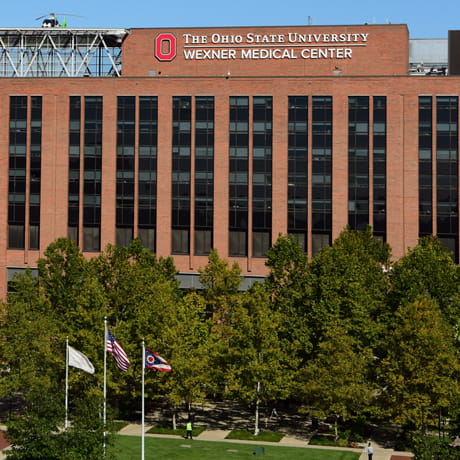
The Ohio State University Wexner Medical Center in Columbus reported strong revenue in the fiscal year ended June 30, according to Columbus Business First.
The nonprofit medical center recorded revenue of more than $4 billion in fiscal year 2019, up 9.4 percent from the year prior, the newspaper reported, citing its analysis of financial results. The growth was partially attributable to a 4 percent year-over-year increase in inpatient admissions.
After factoring in expenses, Ohio State Wexner’s operating income reached $402 million in the fiscal year ended June 30. That’s the highest total since fiscal year 2015, when the medical center posted operating income of $358 million.
The financial results come as Ohio State Wexner plans inpatient and outpatient expansion projects, according to Columbus Business First. An 840-bed hospital tower and a parking garage are on the drawing board.

When it comes to out-of-pocket medical costs, many people are unaware of their potential financial burden, according to a new study released by Discover Personal Loans, a provider of banking tools and resources across various financing options.
For the study, researchers examined the average cost of certain medical procedures and compared them to perceptions of costs from 969 surveyed U.S. residents.
Four takeaways from the study:
1. Researchers found that a three-day hospitalization, knee replacement surgery and an appendectomy had the greatest variation of average actual costs compared to average perceived costs.
2. For example, surveyed Americans perceived the average cost of a three-day hospitalization to be $11,013, while the actual average cost posted on Healthcare.gov is about $30,000. That’s a variation of 63 percent.
3. The variation between average actual cost and average perceived cost for a knee replacement surgery and an appendectomy were 34 percent and 32 percent, respectively.
4. Surveyed Americans anticipate spending $2,016 for an emergency room visit, up 5 percent from the average actual cost from the Health Care Cost Institute and cited by CNN, $1,917.
Read more about the study here.

Recent moves from President Donald Trump to raise tariffs on Chinese goods are leading the global economy closer to the brink of recession, according to a Morgan Stanley note cited by Newsweek.
In a recent research note, Morgan Stanley said if President Trump goes through with proposals to raise existing tariffs and China responds, the global economy would fall into recession in the next six to nine months. Specifically, Morgan Stanley’s U.S. public policy lead, Michael Zezas, said the tariffs would be what pushes the global economy into recession.
“Friday’s escalation of tariffs between the U.S. and China suggests they’ve not moved any closer on the key negotiation points that have separated them since May 5,” he said, according to Newsweek. “Neither side sees the benefit to cooperating as better than hanging tough. … We expect that tensions will continue to escalate at least until the costs of doing so are too big to ignore.”
The president said Aug. 23 that he plans to raise existing tariffs to 30 percent from 25 percent on $250 billion of Chinese goods starting Oct. 1. Additionally, he proposed tariffs on another $300 billion of Chinese imports to increase from 10 percent to 15 percent over the coming months. The president’s proposals come after China said it will impose tariffs on another $75 billion of U.S. imports, and that it would reinstate tariffs on auto products that were previously suspended.
Read more here.


