Insurers, hospitals, physicians united in stance on ACA lawsuit

https://www.healthcarefinancenews.com/news/insurers-hospitals-physicians-united-stance-aca-lawsuit?mkt_tok=eyJpIjoiWldGbU16WmxOak00TmprMiIsInQiOiIzeGkycUpwcmtPUk42Z2R0b1k4RHd0NUVoY0k3UmE5TktUSkhMUzVtNVVWOWtWY3BhWkdUbjcrZndNS0tZRnA1cWFSajhWdmlZcUc4VE5DbFB4VEZNNkJyYTkyXC9XK3hxZVMwVzhSaVF2ZjZIdUFjbzZwcnF6aGE0UmowZ2w1eHcifQ%3D%3D

Hospitals, physicians and insurer groups are united in wanting to preserve the Affordable Care Act and have defended it in briefs filed with the Fifth Circuit Court of Appeals.

The American Hospital Association, the American Medical Association and America’s Health Insurance Plans are among groups that are fighting a lower court ruling in Texas that struck down the law.

On the other side is the Department of Justice, which last month reversed an earlier opinion and sided with the Texas judge who ruled that without the individual mandate, the entire ACA has no constitutional standing.

WHY THIS MATTERS

The ACA has insured millions who otherwise may not have been insured, allowing them to get care when needed instead of going to the more expensive emergency room when they have a medical crisis.

Hospitals and physicians see less uncompensated care under the ACA.

Without the ACA, patients would no longer have protections for pre-existing conditions, children would no longer have coverage under their parents’ health insurance plan until age 26, insurers would no longer be held to the 85 percent medical loss ratio, 100 percent coverage for certain preventive services would cease and individual marketplace and subsidies based on income would be eliminated.

Also, federal funding for Medicaid expansion would end.

TREND

Republicans under President Trump have tried unsuccessfully to repeal and replace the law.

The lawsuit, brought by 19 Republican governors, puts the GOP in a political bind over supporting the repeal of a law that is popular with consumers and their constituents. President Donald Trump recently said Republicans would unveil an ACA replacement after the 2020 election.

Democrats are also facing a crisis within their party over healthcare as it becomes a priority issue in the presidential election. Some of the leading candidates, such as Senator Kamala Harris, support Medicare for all. The Medicare for All Act of 2019  has been introduced in the Democratic-led House of Representatives.

Veteran politician and attorney Earl Pomeroy said he believes the Texas versus United States appeal changes the political course for 2020. The entire MFA argument will move to the back burner because of the Texas lawsuit, he said.

“The fight is going to be trying to underscore the Congressional importance of the provisions of the ACA and enhancing them,” Pomeroy said. “I do not believe that supporting Medicare for all is an advantageous position for a Democratic candidate running in a district that is not a secure Democratic seat. I believe Kamala Harris will spend much of the campaign walking back her comments on health insurance.”

Pomeroy is a former member of the U.S. House of Representatives for North Dakota’s at-large district, a North Dakota Insurance Commissioner and senior counsel in the health policy group with Alston & Bird.

“The safe political ground is defending a law people have warmed up to,” he said. “All politics is local but all healthcare is personal. There is little risk tolerance in the middle class for bold experiments in healthcare.”

BACKGROUND

The lawsuit was brought by Texas and the 19 other Republican-led states, based on the end of the individual mandate. In February, U.S. District Court Judge Reed O’Connor agreed that the federal law cannot stand without the individual mandate because if there is no penalty for not signing up for coverage, then the rest of the law is unconstitutional.

Twenty-one Democratic attorneys general appealed and the House of Representatives has intervened to defend the ACA in the case.

Either outcome in the appeals court may see the case headed to the U.S. Supreme Court.

WHAT THE PROVIDERS AND INSURERS ARE TELLING THE COURT

In a court brief filed by the AHA, the Federation of American Hospitals, The Catholic Health Association of the United States, America’s Essential Hospitals, and the Association of American Medical Colleges urged the Fifth Circuit Court of Appeals to reject a district court decision they said would have a harmful impact on the American healthcare system.

“Those without insurance coverage forgo basic medical care, making their condition more difficult to treat when they do seek care. This not only hurts patients; it has severe consequences for the hospitals that provide them care. Hospitals will bear a greater uncompensated-care burden, which will force them to reallocate limited resources and compromise their ability to provide needed services,” they said.

In a separate friend-of-the-court brief, 24 state hospital associations also urged the Fifth Circuit to reverse, highlighting specific innovative programs and initiatives for more coordinated care.

The American Medical Association, the American College of Physicians, American Academy of Family Physicians, American Academy of Pediatrics and the American Psychiatric Association filed a brief. AMA President Dr. Barbara L. McAneny said, “The district court ruling that the individual mandate is unconstitutional and inseverable from the remainder of the ACA would wreak havoc on the entire healthcare system, destabilize health insurance coverage, and roll back federal health policy to 2009. The ACA has dramatically boosted insurance coverage, and key provisions of the law enjoy widespread public support.”

AHIP said the law impacts not only the individual and group markets, but also other programs such as Medicaid, Medicare and Part D coverage.

“Since its passage in 2010, the ACA has transformed the nation’s healthcare system,” AHIP said. “It has restructured the individual and group markets for purchasing private health care coverage, expanded Medicaid, and reformed Medicare. Health insurance providers (like AHIP’s members) have invested immense resources into adjusting their business models, developing new lines of business, and building products to implement and comply with those reforms.”




Americans’ healthcare paradox: ‘angst’ on costs, overconfidence on quality

https://www.healthcaredive.com/news/americans-healthcare-paradox-angst-on-costs-overconfidence-on-quality/551876/

Dive Brief:

  • More than three in four Americans expect healthcare costs to increase over the next few years and result in “significant and lasting damage” to the U.S. economy, according to a survey by nonprofit West Health and Gallup. And 69% were “not at all” confident policymakers will fix the situation.
  • Given the choice between a 10% increase in income or a complete five year freeze of healthcare costs, 61% of people said they’d choose the latter, in line with the almost half of Americans concerned that a major health event would lead to bankruptcy for their family. In the past year alone, 12% have borrowed money to pay for care and 10% had foregone treatment due to cost.
  • However, although just 39% of those surveyed were pleased with the U.S. healthcare system as a whole, 64% were satisfied in how it worked for their households. Roughly half believe the quality of U.S. healthcare is either the “best in the world” or “among the best.”

Dive Insight:

Frustrations faced by Americans in paying for healthcare are understandable given that the U.S. ranks first among the 36 OECD developed nations in healthcare cost per person.

But their belief in the supremacy of the U.S. healthcare system is misplaced at best.

The U.S. ranks 31st among the OECD group in terms of infant mortality, a key indicator of overall quality, and a depressing 28th in overall life expectancy.

While healthcare is more regulated in nearly every other developed country, mammoth bills pack a bigger punch because they can come out of nowhere in the U.S. Some 47% of Americans reported never knowing what a visit to the emergency room will cost before receiving care. Just 19% of respondents said they “always” knew their out-of-pocket costs before visiting the ER.

Outpatient surgery, visits to a physical therapist or chiropractor, and check-ups and physicals didn’t fare much better, with only 17%, 23% and 39% of respondents respectively saying they always knew their out-of-pocket costs at those sites of care.

Obfuscation of prices may lead to “risky and unhealthy behavior,” according to the West Health report. It found 41% of Americans surveyed reported forgoing a visit to the ER over the past year due to cost concerns.

And this fear over costs is affecting people at every rung of the socioeconomic ladder. West Health and Gallup found the concern wasn’t just unique to people struggling financially — it was consistent up to the top 10% of earners.

“Angst is a very appropriate word to use when you see the data,” Mike Ellrich, healthcare portfolio leader at Gallup said at the West Health Healthcare Costs Innovation Summit on Tuesday.

Political debate over fixing this problem has centered of late on drug prices, surprise medical billspre-existing conditions and lowering insurance premiums, which are rising faster than income. And CMS has prodded providers and payers to make out-of-pocket costs more transparent for patients.

But Americans largely don’t think politicians will be able to fix the problem, with more than two-thirds of Republicans and Democrats alike not at all confident that elected officials will be able to achieve bipartisan legislation to lower costs.

However, perceptions of quality diverged among party lines. West Health and Gallup found 67% of Republicans view the U.S. healthcare system as delivering the best or among the best care in the world. Just 38% of Democrats agreed.

“I’m all for patriotism, but this is a disconnect from reality,” Ellrich said. “This issue is not red or blue.”


Obamacare fight obscures America’s real health care crisis: Money

https://www.politico.com/story/2019/04/03/obamacare-health-care-crisis-1314382

Image result for obscure glass

The ceaseless battle over the 2010 law has made it difficult to address the high cost of American health care.

The Obamacare wars have ignored what really drives American anxiety about health care: Medical costs are decimating family budgets and turning the U.S. health system into a runaway $3.7 trillion behemoth.

Poll after poll shows that cost is the number one issue in health care for American voters, but to a large extent, both parties are still mired in partisan battles over other aspects of Obamacare – most notably how to protect people with pre-existing conditions and how to make insurance more affordable, particularly for people who buy coverage on their own.

That leaves American health care consumers with high premiums, big deductibles and skyrocketing out-of-pocket costs for drugs and other services. Neither party has a long-term solution — and the renewed fight over Obamacare that burst out over the past 10 days has made compromise even more elusive.

Democrats want to improve the 2010 health law, with more subsidies that shift costs to the taxpayer. Republicans are creating lower-cost alternatives to Obamacare, which means shifting costs to older and sicker people.

Neither approach gets at the underlying problem — reducing costs for both ordinary people and the health care burden on the overall U.S. economy.

Senate HELP Committee chair Lamar Alexander, the retiring Tennessee Republican with a reputation for deal-making, has reached out to think tanks and health care professionals in an attempt to refocus the debate, saying the interminable fights about the Affordable Care Act have “put the spotlight in the wrong place.”

“The hard truth is that we will never get the cost of health insurance down until we get the cost of health care down,” Alexander wrote, soliciting advice for a comprehensive effort on costs he wants to start by summer.

But given the partisanship around health care — and the fact there have been so many similar outreaches over the years for ideas, white papers and commissions — it’s hard to detect momentum. Truly figuring how to fix anything as vast, complex and politically charged as health care is difficult. Any serious effort will create winners and losers, some of whom are well-protected by powerful K Street lobbies.

And the health care spending conversation itself gets muddled. People’s actual health care bills aren’t always top of mind in Washington.

“Congress is looking at federal budgets. Experts are looking at national health spending and the GDP and value. And the American people look at their own out-of-pocket health care costs and the impact it has on family budgets,” said Drew Altman, the president and CEO of the Kaiser Family Foundation, which extensively tracks public attitudes on health.

But Congress tends to tinker around the edges — and feud over Obamacare.

“We’re doing nothing. Nothing. We’re heading toward the waterfall,” said former CBO director Doug Elmendorf, now the dean of the Harvard Kennedy School, who sees the political warfare over the ACA as a “lost decade,” given the high stakes for the nation’s economic health.

The solutions championed by the experts — a mix of pricing policies, addressing America’s changing demographics, delivering care more efficiently, creating the right incentives for people to use the right care and the smarter use of high-cost new technologies — are different than what the public would prescribe. The most recent POLITICO-Harvard T.H. Chan School of Public Health poll found the public basically wants lower prices, but not a lot of changes to how — or how much — they consume health care, other than spending more on prevention.

Lawmakers are looking at how to start chipping away at high drug prices, or fix “surprise” medical bills that hit insured people who end up with an out-of-network doctor even when they’re at an in-network hospital. Neither effort is insignificant, and both are bipartisan. While those steps would help lower Americans’ medical bills, health economists say they won’t do enough to reverse the overall spending trajectory.

Drug costs and surprise bills, which patients have to pay directly, “have been a way the public glimpses true health care costs,” said Melinda Buntin, chair of the Department of Health Policy at Vanderbilt University School of Medicine. “That information about how high these bills and these charges can be has raised awareness of health care costs — but it has people focused only on that part of the solution.”

And given that President Donald Trump has put Obamacare back in the headlines, the health law will keep sucking up an outsized share of Washington’s oxygen until and quite likely beyond the 2020 elections.

Just in the last week, the Justice Department urged the courts to throw out Obamacare entirely, two courts separately tossed key administration policies on Medicaid and small business health plans, and Trump himself declared he wants the GOP to be the “party of health care.” Facing renewed political pressure over the party’s missing Obamacare replacement plan, Trump last week promised Republicans would devise a grand plan to fix it. He backtracked days later and said it would be part of his second-term agenda.

Democrats say Trump’s ongoing assaults on the ACA makes it harder to address the big picture questions of cost, value and quality. “That’s unfortunately our state of play right now,” said Rep. Raul Ruiz (D-Calif.). “Basic health care needs are being attacked and threatened to be taken away, so we have to defend that.”

The ACA isn’t exactly popular; more than half the country now has a favorable view of it, but it’s still divisive. But for Republicans and Democrats alike, the new POLITICO-Harvard poll found the focus was squarely on health care prices — the cost of drugs, insurance, hospitals and doctors, in that order.

The Republicans’ big ideas have been to encourage less expensive health insurance plans, which are cheaper because they don’t include the comprehensive benefits under Obamacare. That may or may not be a good idea for the young and healthy, but it undoubtedly shifts the costs to the older and sicker. The GOP has also supported spending hundreds of millions less each year on Medicaid, which serves low-income people — but if the federal government pays less, state governments, hospitals and families will pay more.

Last week, courts blocked rules in two states that required many Medicaid enrollees to work in order to keep their health benefits, and also nixed Trump’s expansion of association health plans, which let trade groups and businesses offer coverage that doesn’t include all the benefits required under the ACA.

House Democrats last week introduced a package of bills that would boost subsidies in the Obamacare markets and extend that financial assistance to more middle-class people. The legislation would also help states stabilize their insurance markets — something that the Trump administration has also helped some states do through programs backstopping health insurers’ large costs.

These ideas may also bring down some people’s out-of-pocket costs, which indirectly lets taxpayers pick up the tab. These steps aren’t meaningless — more people would be covered and stronger Obamacare markets would stabilize premiums — but they aren’t an overall fix.

The progressive wing of the Democratic party backs “Medicare for All,” a brand new health care system that would cover everyone for free, including long-term care for elderly or disabled people. Backers say that the administrative simplicity, fairness, and elimination of the private for-profit insurance industry would pay for much of it.

The idea has moved rapidly from pipe dream to mainstream, but big questions remain even among some sympathetic Democrats about financing and some of the economic assumptions, including about how much of a role private insurance plays in Medicare today, and how much Medicare puts some of its costs onto other payers. Already a political stretch, the idea would face a lot more economic vetting, too.

The experts, as well as a smattering of politicians, define the health cost crisis more broadly: what the country spends. Health care inflation has moderated in recent years; backers of the Affordable Care Act say the law has contributed to that. But health spending is still growing faster than the overall economy. CMS actuaries said this winter that if current trends continue, national health expenditures would approach nearly $6 trillion by 2027 — and health care’s share of GDP would go from 17.9 percent in 2017 to 19.4 percent by 2027. There aren’t a lot of health economists who’d call that sustainable.

And ironically, the big fixes favored by the health policy experts — the ones that Alexander is collecting but most politicians are ignoring — might address many of the problems that keep aggravating U.S. politics. If there were rational prices that reflected the actual value of care provided for specific episodes of illness and treatment, instead of the fragmented system that largely pays for each service provided to patients, then no medical bill would be a surprise, noted Mark McClellan, who was both FDA and CMS chief under the President George W. Bush and now runs the Duke-Margolis Center for Health Policy.

“But taking those steps take time and will be challenging,” McClellan noted. “And they’ll be resisted by a lot of entrenched forces.”


So, about being the “party of health care”

https://www.axios.com/newsletters/axios-vitals-4b66c0e1-2525-4bb1-a974-f97c9e3e5392.html?utm_source=newsletter&utm_medium=email&utm_campaign=newsletter_axiosvitals&stream=top

Image result for kicking the can

GOP leaders are trying their best to put a lid on President Trump’s talk of a new and wonderful health care plan that would define the Republican Party for 2020.

“Not any longer,” Senate Majority Leader Mitch McConnell said yesterday when asked whether he and Trump differ on health care.

  • McConnell said he spoke to Trump Monday and “made it clear to him that we were not going to be doing that in the Senate.”
  • RNC Chair Ronna McDaniel and Trump campaign manager Brad Parscale also “tried to tell the president they could not understand what he was doing,” The New York Times reports.

Rhetorically, Trump has kicked the can past 2020, just after pushing his administration to dive back into — and escalate — the legal fight that hurt Republicans so badly in 2018.

  • “I wanted to delay it myself,” Trump said in the Oval Office yesterday, denying that McConnell forced his hand. “I want to put it after the election, because we don’t have the House.”

Reality check: It’s still the Justice Department’s position that the courts should strike down the Affordable Care Act. As long as this lawsuit is still active — and that will be a while — it’ll be accurate for Democrats to say on the campaign trail that Trump is trying to end protections for pre-existing conditions.

  • In the short term, Trump’s rhetorical punt to 2021 may dampen the intensity of questions about how Republicans would rebuild a new system for individual coverage — questions the party has struggled to answer for the past 9 years.
  • But in the end, the only good way out is for the Trump administration to lose this case.


The winning health care message will be about out of pocket costs

https://www.axios.com/winning-2020-health-care-out-of-pocket-costs-d5708e35-b308-4c91-a636-121e45f82032.html

Illustration of a wallet full of band-aids

As the 2020 campaign ramps up, Democrats may be able to rally their base by talking about universal coverage and making health care a right through Medicare-for-all. Republicans may be able to motivate their core voters by branding progressive Democratic ideas as socialism.

The catch: But it’s the candidates who can connect their plans and messages to voters’ worries about out of pocket costs who will reach beyond the activists in their base. And the candidates aren’t speaking to that much, at least so far.

By the numbers:

  • The anxiety over out of pocket costs is real. In a January 2017 Kaiser poll, 48 percent of voters worried about paying their health care bills.
  • People who are sick are especially concerned, with 66 percent worried and 49 percent very worried.
  • It isn’t just in their heads: a whopping half of people who are sick have a problem paying their medical bills over the course of a year. The health insurance system is not working for people who are sick.

Thanks in part to the Affordable Care Act, only 10 percent of the population remains uncovered. But that means many Americans are less focused on getting to universal coverage, even though candidate after candidate talks about it. They have insurance and are focused on their own, often crippling health care costs.

  • Most Americans are healthy and don’t use much care, but almost everyone, not just people with a major illness, worries about what might happen if they or a family member get cancer or heart disease or suffer a permanent injury.
  • That’s what fuels health care as an issue: the fear of facing costs people know they cannot afford. And that’s why protections for people with pre-existing conditions broke through as a prominent issue in the midterm election.
  • The debate and the Democratic message could shift back to the ACA again, after President Trump and the Justice Department’s surprise decision to push for throwing out the entire law in the courts. That move handed Democrats a political opportunity they will not ignore: a pre-existing conditions debate on steroids.

Recent trends have made problems with out of pocket costs worse:

Some of the administration’s policies are exacerbating the problem, such as their efforts to push cheaper short term insurance plans for the healthy, which drive up costs for the sick because they leave fewer healthy people in the regular insurance plans to help pay for sick people’s costs.

  • Several of the candidates’ plans address out of pocket costs, including the Bernie Sanders plan, which eliminates them. Their advocates just don’t talk about it much.

The bottom line: It’s hard to see the new debate about the health system breaking out of familiar boxes unless the messaging changes. And when the general election comes, both parties will have to convince voters that they will do something about out of pocket costs if they want to reach beyond core base voters. 


GOP tax law boosts health care profits

https://www.axios.com/newsletters/axios-vitals-1102fe1c-124e-4bbf-9647-ad0efd6392a3.html?utm_source=newsletter&utm_medium=email&utm_campaign=newsletter_axiosvitals&stream=top

Image result for 1 big thing: GOP tax law boosts health care profits

The GOP tax law is padding health care companies’ bottom lines, according to my colleague Bob Herman’s analysis of newly released financial information from the last quarter of 2018. Overall, the industry’s profits were up significantly from the same period a year earlier.

The big picture: The law made it easier to bring home money that was parked abroad. It also eliminated tax provisions that have specifically helped large companies like Blue Cross Blue Shield insurers. But the lower corporate tax rate is the main event.

  • Drug giant Pfizer received a $563 million tax benefit in the fourth quarter, and its corporate income tax rate in all of 2018 was just 6%.
  • Johnson & Johnson’s effective tax rate in the last quarter of 2018 was 2.6%.
  • Almost half of the $551 million tax break recorded by hospital chain HCA Healthcare in 2018 came in the fourth quarter.

Between the lines: The tax law aside, the companies that handle the most revenue — like health insurers collecting premiums or drug distributors shipping products — are not the most profitable.

  • The highest margins still usually belong to pharmaceutical companies and medical-devices.


DOJ supports striking entire ACA: 5 things to know

https://www.beckershospitalreview.com/legal-regulatory-issues/doj-supports-striking-entire-aca-5-things-to-know.html

Image result for severability

In a March 25 court filing, the Department of Justice said it supports a judge’s ruling that the entire Affordable Care Act should be invalidated, according to CNN.

Five things to know:

1. In December, a federal judge in Texas held that the ACA is unconstitutional. He sided with the Republican-led states that brought the lawsuit, Texas v. United States, calling for the entire ACA to be struck down because Congress eliminated the healthcare law’s individual insurance mandate penalty.

2. The case is now pending in the 5th Circuit Court of Appeals. In a filing with the appellate court on March 25, the Justice Department said it supports the federal judge’s ruling that invalidated the ACA.

3. “The Department of Justice has determined that the district court’s judgment should be affirmed,” lawyers for the Justice Department wrote to the 5th Circuit Court of Appeals, according to Politico. “[T]he United States is not urging that any portion of the district court’s judgment be reversed.”

4. The filing signals a major shift in the Justice Department’s position. When Jeff Sessions was attorney general, the administration argued only certain parts of the ACA, like protections for people with pre-existing conditions, should be struck down, but the rest of the law could stand, according to CNN.

5. A coalition of Democratic-led states is challenging the Texas ruling. Regardless of the outcome, the 5th Circuit’s ruling is likely to be appealed to the Supreme Court, according to Politico.

Access the full CNN article here.

Access the full Politico article here.


Trump admin now backs elimination of ACA in court

https://www.healthcaredive.com/news/trump-admin-now-backs-elimination-of-aca-in-court/551319/

UPDATED: AHA blasted the decision, calling it “unprecedented and unsupported” by law or facts and warned it would lead to repeal of Medicaid expansion and gut protections for those with pre-existing conditions.

Dive Brief:

  • The Trump administration has reversed its stance on the Affordable Care Act, arguing in a court filing Monday that the entire law should be eliminated instead of just removing provisions protecting people with preexisting conditions.
  • The move came hours after Democratic attorneys general defending the ACA filed their brief arguing that the landmark law is still constitutional even without an effective individual mandate penalty. Both filings are in the Fifth Circuit following an appeal of a Texas judge’s decision from December declaring the law unconstitutional after Congress set the mandate penalty to zero in tax overhaul legislation. That decision was stayed pending appeal.
  • Industry groups lambasted the administration’s about-face. America’s Health Insurance Plans CEO Matt Eyles said in a statement the decision was, like the Texas ruling, “misguided and wrong.” He added the payer lobby “will continue to engage on this issue as it continues through the appeals process so we can support and strengthen affordable coverage for every American.” Federation of American Hospitals CEO Chip Kahn said in a statement the decision is “unfortunate but not unexpected considering [the administration’s] long-held views on the health law.”

Dive Insight:

Elimination of the ACA would be a particular blow for some payers that have found increasing profitability in the individual market. Centene and Molina have found success with the exchanges and have expanded their footprints.

It would also put major hospital chains in a bad spot. Companies like HCA, Tenet and Community Health Systems have exposure that could subject them to reduced patient volumes and more bad debt, Leerink analyst Ana Gupte said when the Texas ruling first came down.

Public support for the ACA has gradually increased over the years, and the latest polling from the Kaiser Family Foundation shows about 53% of respondents giving a favorable view and 40% unfavorable. Individual components of the law are even more popular.

The ACA, which just days ago marked its ninth anniversary, brought forth massive change in American healthcare. A repeal of the law would do the same, stripping insurance coverage for as many as 17 million people.

The Trump administration’s new stance presents an intensely stark contrast with the growing field of Democratic presidential contenders, who have shifted the healthcare conversation to the left as the 2020 field shapes up. Candidates have proposed various forms of Medicare for all as well as scaled back versions that still greatly expand government coverage.

It moves the DOJ away from even some Republicans. During last year’s midterms a few GOP candidates said they approved of the ACA’s most popular element — protection for people with preexisting conditions (although voting records didn’t necessarily back them up).

Most Democrats in Congress aren’t fully backing any single-payer model at the moment, but their support for the ACA is strong. Democrats in the House of Representatives are expected to announce a legislative package Tuesday that would strengthen the ACA by eliminating short-term health plans that don’t comply with the law and increasing subsidies for exchange plans.

Since the GOP’s quite public failure to repeal the law two years ago, efforts to do so through Congress have sputtered to nearly a halt. Instead, the Trump administration started chipping away at the law’s provisions. It cut the open enrollment period for ACA plans, as well as the advertising budget for promoting sign-ups, and stopped cost-sharing reduction payments to insurers.

More recently, HHS has bolstered short-term and association health plans that offer cheap but skimpy coverage not in line with ACA requirements. Analysts fear proliferation of these plans could draw young and healthy people away from the exchanges, jeopardizing the stability of the risk pool.

A Democratic-led House panel launched an investigation into short-term plans and is requesting documents from Anthem and UnitedHealth Group, among other companies.

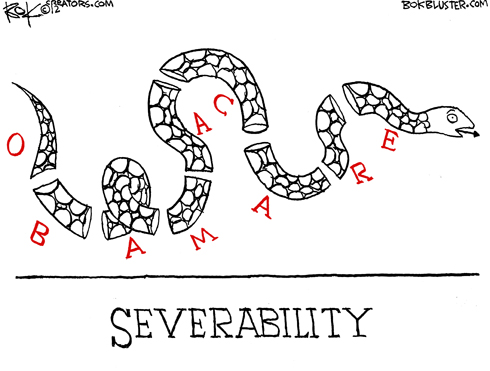
The legal issue at hand is known as severability — the question of whether a single provision of the law, in this case the individual mandate, becoming unenforceable invalidates the entire statute. The mandate was also the key question in the original U.S. Supreme Court ruling allowing the ACA to move forward.

The high court has since lurched to the right, which is notable if the appeal on the Texas ruling reaches that stage, although that would likely be far down the road.


Judge rules Trump AHP expansion unlawful ‘end-run’ around ACA

https://www.healthcaredive.com/news/judge-rules-trump-ahp-expansion-unlawful-end-run-around-aca/551601/

Image result for association health plans

Dive Brief:

  • A federal judge on Thursday struck down a Trump administration expansion of association health plans, which aren’t bound by the requirements of the Affordable Care Act. U.S. District Judge John Bates said the June rule from the Department of Labor that loosened restrictions on what groups could band together to offer AHPs “is clearly an end-run around the ACA.”
  • The ruling stems from a lawsuit 11 states and the District of Columbia filed to challenge the DOL rule. It comes the same week the Trump administration stepped up its attacks against the ACA, arguing in a court filing Monday the law should be eliminated in its entirety following a Texas judge’s decision the act is unconstitutional without the individual mandate penalty.
  • The judge had strong language condemning the administration’s attempt to allow for easier creation and use of AHPs, calling the regulatory change a “magic trick” that allowed for “absurd results” undermining the intent of Congress.

Dive Insight:

The ruling is a blow to the Trump administration’s efforts to circumvent the ACA, which ramped up significantly with the administration’s filing this week seeking complete repeal of the law. Another hit to those efforts came down Wednesday when a different federal judge struck down Medicaid work requirements in Arkansas and Kentucky.

The renewed fight comes as Democrats lining up for a 2020 presidential run are pushing for more progressive policies than have previously gained public traction. Some Democratic contenders are making Medicare for all and other single-payer models a central part of their platforms as healthcare shapes up to be a major issue for the next presidential election.

Experts have argued extended use of AHPs could siphon away young and healthy people looking for minimum coverage at a lower cost. If they choose AHPs they upset the balance on risk pools for more comprehensive coverage. Also, many consumers don’t understand the tradeoff and could be surprised by what isn’t covered when they are in need.

But even though the plans aren’t required to meet ACA standards, some that have formed have been adamant they provide adequate coverage, including the 10 essential ACA benefits. The plans are less obstructive to the regulatory environment than short-term health plans, which have also been granted more leeway under the Trump administration.

Land O’Lakes, for example, which said it was the first to offer an AHP under the more relaxed rules, said its plan covered essential benefits and pre-existing conditions, as well as “broad network coverage.”

The Society of Actuaries has said as many as 10% of people in ACA plans could leave for AHPs, which would also drive up premiums for plans in the individual market. Avalere predicted about 3.2 million people would shift and premiums would rise by 3.5%.

Supporters of AHPs decried the judge’s decision Thursday. Kev Coleman, founder of AssocationHealthPlans.com, said in a statement the ruling will hurt small businesses throughout the country.

“Thousands of employees and family members within the small business community have already enrolled in association health plans — which help lower health care costs — since they first became available last fall,” he said. “They have provided a means by which broad benefits may be accessed at more economical prices. While I do not believe today’s ruling will survive appeal, I believe Judge Bates’ decision is an unnecessary detour on small businesses’ path toward more affordable health coverage.”


How Medicare Advantage steers the Silver Tsunami into coordinated, value-based care

https://www.healthcarefinancenews.com/news/how-medicareadvantage-steers-silver-tsunami-coordinated-value-based-care

CMS and other health insurers are using the program to deliver innovative and unique value to customers, both in terms of cost and quality.

Today’s Medicare Advantage plans are flourishing and the Silver Tsunami is among the reasons.

“Over the last four years, Medicare Advantage enrollment increased by more than 30 percent, while the number of people eligible for Medicare grew by about 18 percent,” said Steve Warner, vice president of Medicare Advantage Product for UnitedHealthcare Medicare and Retirement.

Other reasons for the growth: Innovative models from big insurers and upstarts alike that improve care for health plan members and drive revenue for payers as they look beyond fee-for-service.

IT STARTS WITH THE CONSUMER

Consumers are finding unique value in MA, both in terms of the quality of care and in the financial value.

Medicare Advantage, in fact, makes it easier for consumers to navigate the healthcare system and choose providers, in a way that traditional Medicare does not, said those interviewed.

“Actually it’s pretty hard to navigate the healthcare system on your own,” said Tip Kim, chief market development officer at Stanford Health Care. “Most Medicare Advantage plans have some sort of care navigation.”

Warner of UnitedHealth’s Warner added that Medicare Advantage also offers value and simplicity.

“It provides the convenience of combining all your coverage into one plan so you have just one card to carry in your wallet and one company to work with,” Warner said. “Most plans also offer prescription drug coverage and additional benefits and services not available through original Medicare, including dental, vision and fitness.”

REBRANDING FOR THE NEW ERA

MA plans did not emerge out of thin air. By another name, Medicare Advantage is managed care, a term that was the bane of healthcare during the height of HMOs in the 1980s.

“Medicare Advantage has rebranded ‘managed care’ to ‘care coordination,'” said consultant Paul Keckley of The Keckley Report. “Humana and a lot of these folks have done a pretty good job. Coordinating care is a core competence. Managed care seems to be working in this population.”

MA came along at the right time for CMS’s push to value-based care.

“I would suggest on the providers’ side, embracing Medicare Advantage is an opportunity to get off the fee-for-service mill,” said Jeff Carroll, senior vice president of Health Plans for Lumeris, which recently paired with Stanford Health Care on the Medicare Advantage plan, Stanford Health Care Advantage.

“Provider-sponsored Medicare Advantage plans are a way to put teeth into an accountable care organization,” Keckley added. “Medicare Advantage success is a silver tsunami among major tsunamis. Obviously it’s a profitable plan for seniors and profitable for underwriters. The winners in the process will get this to scale.”

MA is an innovative model that is not a government-run system, but a privately-run system essentially funded by the government.

PAYERS IN THE MA GAME

UnitedHealthcare has the largest MA market share of any one insurer.  Twenty-five percent of Medicare Advantage enrollees are in a UnitedHealthcare MA plan, followed by 17 percent in Humana, 13 percent in a Blue Cross Blue Shield and 8 percent in Aetna, according to the Kaiser Family Foundation.

Numerous insurers, in fact, have gotten into the MA market, including Clover Health in San Francisco, a five-year-old startup which has Medicare Advantage as its only business.

Clover is a tech-oriented company that boasts machine learning models that can accurately predict and identify members at risk of hospitalization.

Because Clover focuses only on MA, it can do a better job at problem solving the needs of an older population, said Andrew Toy, president and CTO of Clover Health.

“The problems we face in Medicare Advantage are very different from a younger generation,” Toy said.

Forty percent of the older population is diabetic. Most seniors will be dealing with a chronic disease as they get older.

In other insurance, whether its individual or commercial, the lower cost of the healthier population offsets the cost of the sicker population. MA has no way to offset these costs. Plans can’t cherry-pick consumers or raise premiums for a percentage of the population.

What MA plans can do is design plans that fit the varying needs of the population. A plan can be designed for diabetics. For younger seniors or those not dealing with a chronic disease, a plan can be designed that includes a gym membership.

“All these plans are regulated,” Toy said. “We have the flexibility to move dollars around. We can offer a higher deductible plan, or a nutrition plan. The incentives for us in Medicare Advantage are different than the incentives in Medicare. CMS has explored giving us more leeway for benefits. Consumers have a choice while still having the guarantees of Medicare.”

Toy believes regular Medicare is more expensive because MA offers a more affordable plan based on what an individual needs.

“When you need it, we get more involved in that care,” Toy said, such as “weight control issues for diabetics.”

The drawbacks are narrower networks, though Toy said Clover offers an out-of-network cost sharing that is pretty much in line with being in-network.

UnitedHealthcare’s Medicare Advantage LPPO plans offer out-of-network access to any provider who accepts Medicare, Warner said.

UnitedHealthcare also offers a wide variety of low and even zero-dollar premium Medicare Advantage plans and annual out-of-pocket maximums, Warner said. By contrast, original Medicare generally covers about 80 percent of beneficiaries’ healthcare costs, leaving them to cover the remaining 20 percent out-of-pocket with no annual limit.

“From a consumer value proposition, it makes Medicare Advantage a better deal,” Kim said. “One is Part B, 20 percent of an unknown number. Knowing what the cost will be in a predictable manner is a preferable manner.”

Stanford Health Care launched a Medicare Advantage plan in 2013. Lumeris owned and operated its own plan, Essence Healthcare, for more than eight years. Stanford and Lumeris partnered on Stanford Health Care Advantage in northern California, using Lumeris technology to help manage value-based reimbursementand new approaches to care delivery through artificial intelligence-enabled diagnostic tools and other methods.

“We are not a traditional insurance company,” Kim said. “We’re thinking about benefits from a provider perspective. It’s a different outlook than an insurance company. By definition we’re local.”

MA MARKET STILL HAS ROOM TO GROW

While the Medicare Advantage market is competitive, it is also under-penetrated, Brian Thompson, CEO for UnitedHealthcare Medicare & Retirement, said during a 2018 earnings report.

Currently, about 33 percent of all Medicare beneficiaries are in an MA plan, he added, but UnitedHealth sees a path to over 50 percent market concentration in the next 5-10 years.

It’s a path not so subtly promoted by the Centers for Medicare and Medicaid Services.

As a way to encourage insurers to take risk and get in the market, around 2009, CMS gave MA insurers 114 percent of what it paid for fee-for-service Medicare. The agency began decreasing those payments so that by 2017, traditional Medicare and MA became about even.

MA insurers instead thrive on their ability to tailor benefits toward wellness, coordinate care and contain costs within the confines of capitated payments, the essence of value-based care.

They have received CMS support in recent rate notices that gives them the ability to offer supplemental benefits, such as being able to target care that addresses the social determinants of health. Starting in 2020, telehealth is being added to new flexibility for these plans.

WHAT THE FUTURE MAY HOLD FOR MA

Medicare Advantage plans have expanded and, in so doing, opened innovative new options for plans and their customers alike at the same time that the ranks of people eligible for Medicare continues to swell.

So where is it all going?

Medicare Advantage is changing the way healthcare is paid and delivered to the point that Keckley and Toy agreed the future may not lie in Medicare for All, but in Medicare Advantage for all.

“I think a reasonable place to end, is in some combination where the government is involved in price control, combined with the flexibility of Medicare Advantage,” Toy said. “That’s really powerful.”