The Trump administration is doubling down on efforts to revamp the federal discount drug program — a major flashpoint between Big Pharma and hospitals.
Why it matters:
The so-called 340B program has been mired in litigation, most recently over administration efforts to let drugmakers carry out price reductions through rebates instead of cutting prices at the front end.
After a court halted the attempt on procedural grounds, federal health officials this month laid the groundwork to reintroduce changes that providers say could cost them hundreds of millions of dollars.
Driving the news:
The Health Resources and Services Administration last week issued a notice soliciting feedback on whether and how to make hospitals and clinics in the program pay full price up front for the medications.
Drugmakers would then rebate the price difference later, after verifying that a facility qualifies for a discount.
The agency is asking hospitals for financial data to back up industry claims that such a change would threaten facilities’ cash flows and create administrative hassles as they contend with federal Medicaid cuts.
Context:
A federal court in Maine ruled late last year that the Department of Health and Human Services, which HRSA is part of, didn’t solicit enough stakeholder feedback before proposing its initial rebate model.
HHS “cannot fly the plane before they build it,” Judge Lance Walker wrote in response to a lawsuit from the American Hospital Association and other hospital groups.
HHS scrapped the pilot in January and dropped its appeal of the decision.
The new notice it sent this month “suggests a sense of urgency in advancing a new rebate model proposal,” lawyers at Quarles & Brady wrote in a blog post.
Still, HHS would need to formally propose and gather comment on any future model, and has committed to giving providers at least 90 days’ notice before starting the new system.
Where it stands:
The drug industry trade group PhRMA sees the rebate model as a way to add needed transparency to federal drug discounts, spokesperson Alex Schriver said in a statement to Axios.
“We’re heartened by the administration’s efforts to ensure that the program operates as it’s intended,” CEO Steve Ubl told reporters last week.
Pharmaceutical companies have been trying to move in the direction of rebates themselves over the past couple of years, arguing that many providers are gaming the system and getting 340B program discounts as well as Medicaid rebates for drugs.
Courts have blocked individual companies like Bristol Myers Squibb and Johnson & Johnson from switching to rebates from up-front discounts.
The other side:
Hospitals are planning to respond to the information request, but they’re holding out hope that HHS will drop the rebate idea altogether.
HHS should “recognize that imposing hundreds of millions of dollars in costs on hospitals serving rural and underserved communities is not a sound policy,” Aimee Kuhlman, AHA vice president of advocacy and grassroots, said in a statement.
AHA and other hospital groups last week sent a letter to the administration asking to extend the comment period and potentially laying the groundwork for another legal challenge if that isn’t granted.
Community health centers, meanwhile, are urging Congress to pass a bill that exempts them from rebate experiments.
The bottom line:
The administration isn’t giving up on the rebate idea. That will only add to the controversy over a program that covers more than $81 billion in annual drug purchases.
New referral requirement for HMO and HMO-POS plans alarms patients and doctors, who predict bureaucratic delays and reduced access to care.
Theresa Schwartz, a 66-year-old Milwaukee plumber, says she’s one of those people who never went to a doctor before she was 40. That has changed in the second half of her life as she has dealt with major health issues, including lung cancer and rheumatoid arthritis.
In recent years, her regular visits to the Milwaukee Rheumatology Center have been covered, without hassle, by her Medicare Advantage insurance provided through the nation’s largest health insurer, UnitedHealthcare. But Schwartz was surprised and became upset during her most recent visit there when she was told that — because of a new UnitedHealthcare policy — she will now need a referral from a primary care physician to be covered.
Schwartz said she’s never had a primary care physician.
“I’m just spinning the hamster wheel,” said Schwartz, who said in a phone interview that she is already confused and frustrated by the new policy and has little patience or interest in finding a UnitedHealthcare in-network physician. She even offered to pay cash for her visits, which the Milwaukee clinic said it cannot accept for Medicare patients.
Schwartz’s discontent over the new UnitedHealthcare policy — which launched at the beginning of the year, with reimbursements for visits without referrals to certain types of specialists set to stop after April 30 — is hardly unique. Health care advocates say the policy change affects a large pool of senior citizens in the insurer’s HMO and HMO-Point of Service (POS) Medicare Advantage plans. This is a healthy chunk of the estimated 8.5 million seniors who get their Medicare Advantage coverage through UnitedHealthcare — one of every four MA enrollees.
“I have patients in their 90s who are now facing this, if you can imagine,” said Nilsa Cruz, the tireless patient advocate for Milwaukee Rheumatology Center who frequently speaks out at the Wisconsin state capitol and elsewhere about health care issues. “And they don’t understand their insurance cards, anyway.”
Cruz predicted “a total disaster” when the UnitedHealthcare policy, which is currently in a sort of soft-launch mode, takes full effect in May, as both patients — many who’ve been seeing a specialist for 15 or 20 years without ever needing a referral — and their doctors struggle to adapt to an onerous new system.
The change, which is likely to have the effect of reducing specialist visits and thus saving UnitedHealthcare millions if not billions of dollars, isn’t taking place in a vacuum. Rather, it’s one more assault on seamless and efficient health care coverage. Patient inconvenience seems to be a cornerstone of this icon of Big Insurance’s plan for dealing with what its executives claimed last year were $6.5 billion in annual higher costs.
In recent months, UnitedHealthcare has dropped as many as 180,000 enrollees from its Medicare Advantage plans in targeted geographic areas and plans to drop more than a million by the end of this year. It has also “narrowed” its provider networks, relegating certain clinical practices, such as rheumatology clinics, which provide costly infusion therapies, to out-of-network status.
Some analysts had predicted a kinder, gentler UnitedHealth after a tragedy that made national headlines — the murder in New York of UnitedHealthcare CEO Brian Thompson in December 2024 — focused new attention on the company’s aggressive use of prior authorization to deny coverage for medically necessary care. Instead, the giant insurer has doubled down on ways to drive the highest-cost patients and providers from its system, making it necessary for millions of seniors to scramble to find either new MA insurers or new doctors. Many undoubtedly will go untreated.
The unwelcome requirement for many of UnitedHealth’s Medicare Advantage patients to get primary-doctor referral for treatments they’ve often been getting for years from a specialist looks to be one more way the company is nickel-and-diming a path back to higher profits on the backs of patients with chronic health issues.
Needless to say, UnitedHealthcare, whose financial performance has disappointed investors for more than a year, doesn’t portray the change that way. In announcing the move late last year the company hailed it as a way to improve communication between its affiliated providers and prevent unnecessary tests or procedures, or visits to a specialist that aren’t really necessary.
“The goal of this referral process is to help increase primary care provider (PCP) engagement with patients and help foster collaborative partnerships between PCPs and specialists,” is the upbeat jargon UnitedHealthcare used to explain the change on its provider portal.
Since Jan. 1, the change has been in what UnitedHealthcare considers “a trial period,” which means that while it wants patients to begin getting primary-care referrals before seeing certain types of specialists, visits without a referral are still covered for now. That will no longer be the case after April 30.
The policy does exempt more than a dozen specialists or types of visits — most notably oncology, as well as mental health treatment, physical therapy, and some other common medical treatments. It also won’t affect MA enrollees in California, Texas, and Nevada where referrals were already required.
Madelaine Feldman, M.D., the New Orleans-based immediate past president of the Coalition of State Rheumatology Organizations, said she imagines dire scenarios in which a patient with a sudden flare-up cannot get speedy treatment because of the inability to get a speedy referral, or visits that aren’t covered because the referral is mishandled.
“So the fact that UnitedHealthcare has decided that rheumatologists are not capable of deciding when a patient needs to be seen is ludicrous, capricious, and most importantly, dangerous,” Feldman said. She added that situations that are harmful for patient care “will be seen more and more as a result of policies enacted to improve UnitedHealthcare’s bottom line.”
But for people enrolled in the company’s HMO and HMO-POS Medicare Advantage plans, the new policy seems less a way of improving communication than an additional and unwanted barrier to receiving care.
“Today I found out about it, and I don’t think it’s fair,” said Pamela Matias, a 63-year-old infusion-therapy patient at the Milwaukee Rheumatology Center who filmed a video after learning of the change. “I’ve been getting this medication for 20 years and never needed a referral.”
Unlike Schwartz, Matias does see a primary care doctor, but she still worries that the extra hassles of getting a referral — and making sure it goes through properly — have longtime rheumatoid arthritis patient alarmed. “Without my medication, I would not be able to walk,” she said. “I’ll be in 100% pain all day long.”
Cruz, the center’s patient advocate, said that during this trial period, it’s not just patients who are disoriented. An early problem she’s seen with the program is that doctors’ offices are often faxing or attempting to call in patient referrals when UnitedHealthcare is only recognizing those that are made electronically through its online portal. What’s more, she said doctors need to specify how many visits are covered during a six-month window.
Cruz said even one of the largest health care practices in Wisconsin was improperly faxing the referrals. “I think they were faxing up until the other day — you know, a month and a half, almost, into this thing,” she said. “So that tells you something. Andrimary care physicians were not all fully informed.” Even if they are trained, primary-care doctors don’t always know how many specialist visits a patient will need until they are reevaluated by the specialist and begin their treatments.
If doctors don’t understand the new UnitedHealthcare policy, she worries, then how will elderly Medicare patients — including some with major disabilities — be able to follow the rules? Furthermore, if a patient’s current primary-care doctor retires or relocates, it often takes months in today’s frenzied health care environment to get an appointment with a new one, which could delay critical care.
As a rabble-rousing patient advocate, Cruz seems somewhat ahead of the curve in anticipating a crisis. Many specialists are just beginning to absorb the changes and won’t feel a real impact until May, when UnitedHealthcare stops paying specialists for their patients who didn’t obtain referrals.
But Cruz said she is already lobbying the Coalition of State Rheumatology Organizations, where she is a highly active member, to take a stand against UnitedHealthcare’s new policy, noting that it targets only the lowest-cost Medicare Advantage HMO plans and not the higher-end PPO policies, let alone its commercial insurance customers. To her mind, that is discrimination. “They’re doing the HMO — the sickest patients,” she said. “The sickest.”
This and other moves from UnitedHealthcare and its competitors have the effect of pushing the sickest and most expensive patients off their rolls, either by dropping customers outright or making it harder for them to access the medical care they so desperately need. Forcing sick people to make extra doctor visits to get treatment undoubtedly will cause many to delay or even forgo care — which, sadly, seems to be what UnitedHealthcare is going for as it tries to get back into Wall Street’s good graces.
The U.S. bombing of Iran’s nuclear capability is unsettling: whether MAGA or not, hawk or dove, young or old, conservative or liberal, rich or poor—it matters.
Stability at home and abroad is utopian to some but desired by all. Pandemics, mass violence, natural disasters and even election results contribute to instability and lend to insecurity. Operation Midnight Hammer might contribute to the nation’s anxiety—time will tell.
The immediate aftermath of the bunker-bombings in Iran will involve two orchestrated campaigns by government officials:
The Campaign to Contain Middle East Tension: military, diplomatic and economic levers will be put to the test to limit escalation of the bombing and limit its consequence to the region.
The Campaign to Win Public Support: issues of consequence like military intervention ultimately depend on public opinion that support laws, funding and subsequent actions taken in response. History teaches and political leaders understand that ‘winning the hearts and minds’ of the public is necessary to success. Predictably, justification for Operation Midnight Hammer will be messaged loudly by supporters and challenged by critics.
For the moment, the news cycle will shift to foreign policy and away from tariffs, inflation, household prices and the “Big Beautiful Budget Bill” which the Senate Republicans hope to bring to the floor this week. News media will speculate about the after-effects of the Israeli-Iran bombing and what role the U.S. plays in an increasingly complicated geopolitical landscape marked by marked by armed conflicts Gaza, Ukraine, Myanmar, Yemen and 26 and other countries.
The attention these get in traditional media and social media channels will exacerbate public anxiety that’s already high: 19% U.S. adults and 40% of the country’s adolescents suffer from anxiety disorder: “a persistent, excessive fear or worry that interferes with daily life and functioning”. But, per the National Institute of Mental Health, fewer than a third suffering from severe anxiety receive professional treatment.
In the public health community, much is known about anxiety: it’s more prevalent among women than men, in minority populations, lower income populations and in the Southeast. It’s significant across all age groups, and at an alarming level among young working-class adults facing unique issues like affordability and job insecurity. And it is stigmatized in certain communities (i.e. certain fundamentalist religious sects, certain ethnic communities) lending to silent suffering and unattended consequences.
My take:
Operation Midnight Hammer came at a time of widespread public anxiety about the economy, tariffs, inflation, costs of living and political division. I will let pundits debate the advisability and timing of the bunker-bombing but I know one thing for sure: mental health issues—including anxiety, mood and substance abuse disorders– deserve more support from policymakers and more attention by the healthcare community.
The former requires local, state and federal lawmakers to revisit and enforce mental health parity laws already on the books but rarely enforced.
The latter requires the healthcare community to elevate behavioral health to a national priority alongside obesity, heart disease, cancer and aging to secure the public’s health and avoid unintended consequences of neglect.
Regrettably, the issue is not new. Employers, school systems, religious organizations and local public health agencies have been mental health default safety values to date; extreme have been temporarily shuffled to in hospital emergency rooms most ill-equipped to manage them. But systematic, community-wide, evidence-based help for those in need of mental health remains beyond their reach.
The Trump administration’s healthcare leaders under HHS’ Kennedy and CMS’ Oz espouse the U.S. healthcare system should prioritize chronic disease and preventive health. They believe its proficiency in specialty care is, in part, the result of lucrative incentives that reward providers and their financial backers handsomely in these areas.
In the President’s February 13 Executive Order establishing the Make America Healthy Again Commission, its goal was laid out:
“To fully address the growing health crisis in America, we must re-direct our national focus, in the public and private sectors, toward understanding and drastically lowering chronic disease rates and ending childhood chronic disease. This includes fresh thinking on nutrition, physical activity, healthy lifestyles, over-reliance on medication and treatments, the effects of new technological habits, environmental impacts, and food and drug quality and safety… We must ensure our healthcare system promotes health rather than just managing disease.”
Nothing could be more timely and necessary to the Commission’s work than addressing mass anxiety and mental health as a national priority. And nothing is more urgently needed in communities than mainstreaming anxiety and mental health into the systems of health that accept full risk for whole person health.
PS: Before Operation Midnight Hammer over the weekend, I had prepared today’s report focused on two government reports about the long-term solvency of the Medicaid and Medicare programs. Given the gravity of events in Israel and Iran and other hot spots, and after discussions with my family and friends this weekend, it became clear public anxiety is high.
I am concerned about the future and worry about the health system’s response. It’s composed of good people doing worthwhile work who are worried about the future. I recently spoke to a group on the theme (link below): ‘the future for healthcare is not a repeat of its past.’ That lends to anxiety unless accompanied by a vision for a better future. That’s what all hope for those in Iran, Gaza, Israel and beyond, and for all who serve in our industry.
Rep. Pramila Jayapal (D-Wash.) is seeking buy-in from more fellow Democrats for a sweeping Medicare-for-all bill she is poised to release near the end of the month.
It’s a proposal that has become a rallying cry for progressives and 2020 presidential candidates, but it is also exposing deep rifts in the Democratic Party over exactly how to achieve universal health coverage in the United States.
The Medicare for All Act of 2019, which Jayapal had planned to roll out this week but delayed because she was seeking more co-sponsors, would create a government-run single-payer health system even more generous than the current Medicare program. Her office hasn’t publicly released the details of the upcoming measure, but Democratic members told me it would cover long-term care and mental health services, two areas where Medicare coverage is sparse.
The bill also proposes to add dental, vision, prescription drugs, women’s reproductive health services, maternity and newborn care coverage to plans that would be available to people of all ages and would require no out-of-pocket costs for any services, according to a letter Jayapal sent to colleagues on Tuesday asking them to consider co-sponsoring the effort.
“Medicare for All is the solution our country needs,” the letter said. “Patients, nurses, doctors, working families, people with disabilities and others have been telling us this for years, and it’s time that Congress listens.”
The 150-page bill had 93 co-sponsors as of Tuesday, although Jayapal spokesman Vedant Patel said more Democrats have signed on since then. That’s still fewer than the 124 Democrats who co-sponsored a much less detailed Medicare-for-all proposal from then-Rep. John Conyers (D-Mich.) last year. A strategist who has been working with Democrats on health-care ideas told me there have been some frustrations that more members haven’t yet signed on to Jayapal’s bill, despite the fact that there are 40 more Democrats in the House this year.
But Jayapal said she’s confident she’ll have 100 co-sponsors by the time of the bill’s planned Feb. 26 release, explaining she’s not surprised members would take more time to consider it given its length.
“It’s a 150-page bill … it’s not an eight-page resolution,” Jayapal told me yesterday. “Now we’re actually putting detail into it, and so we feel confident we will continue to add cosponsors even after introduction.”
Patel also noted it’s still early in the year, saying he “disagrees” with the notion that it’s taking a long time to bring Democrats on board.
“It’s the second week of February and we are at more than 95 co-sponsors,” he said. “Coalition building is a process, but we are on track to introduce this historic legislation with resounding support at the end of the month.”
Yet differences are emerging among Capitol Hill Democrats over how to expand coverage, part of a larger debate roiling the party as 2020 candidates, many of them senators, and a new class of freshmen House Democrats move the party left not only on health care but also on the environment.
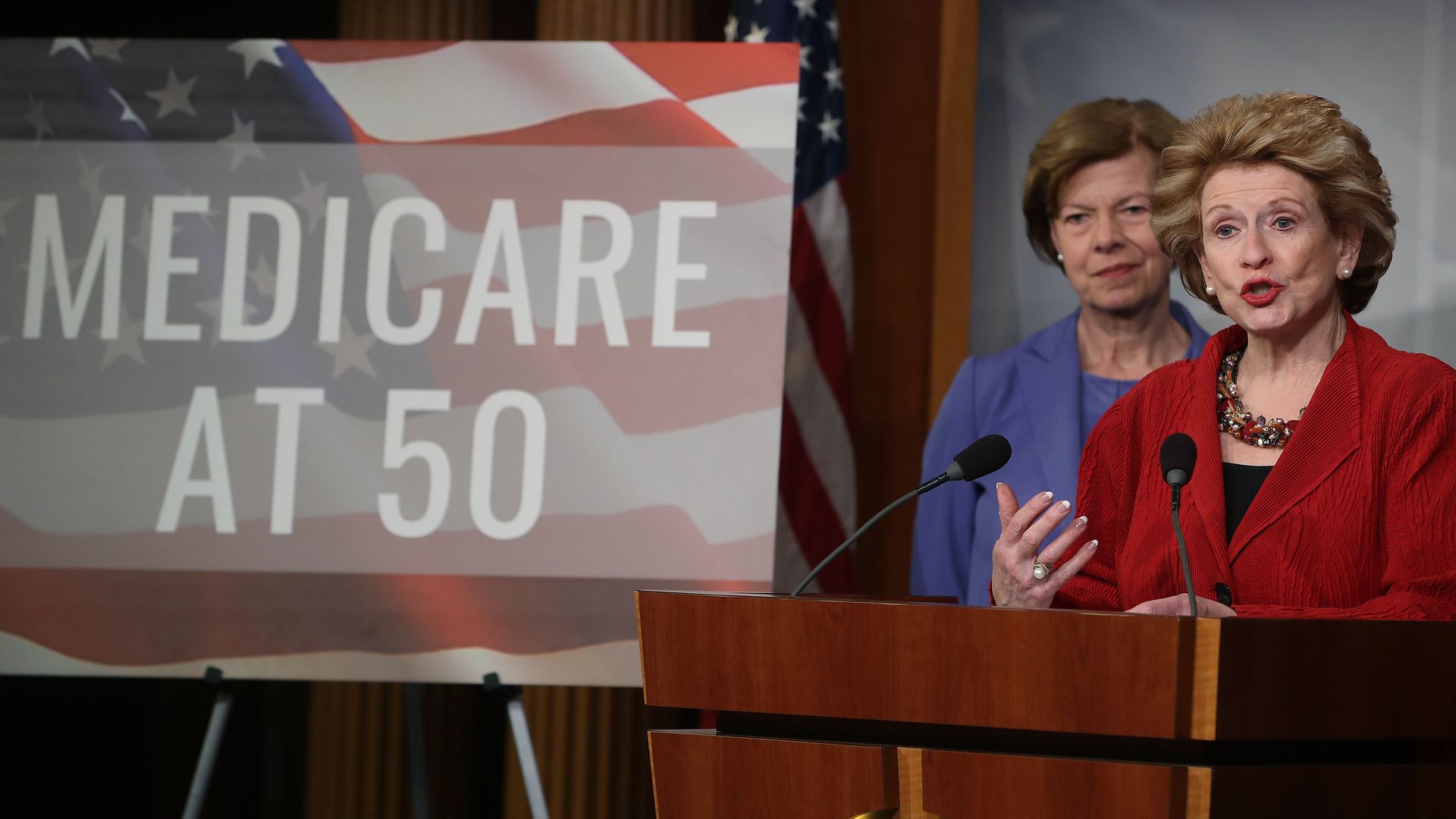
The cracks were especially apparent yesterday, as a separate group of lawmakers gathered to re-introduce their own proposal to allow people to buy in to Medicare starting at age 50. That measure, offered by Sen. Debbie Stabenow (D-Mich.) and Rep. Brian Higgins (D-N.Y.), would take a more incremental approach to expanding health coverage — one that could play better with voters who would stand to lose private coverage under a single-payer program.
Their bill, dubbed the “Medicare at 50 Act,” would allow people to buy Medicare plans instead of purchasing private coverage on the Obamacare marketplaces if they are uninsured or prefer it to coverage offered in their workplace.
And today, Sen. Brian Schatz (D-Hawaii) and Rep. Ben Ray Luján (D-N.M.) are reintroducing their State Public Option Act, which allows people to buy a Medicaid plan regardless of their income. That measure has broad backing from not just lawmakers (20 senators co-sponsored it last year) but also well-known health policy wonks including former Centers for Medicare and Medicaid Services Administrator Andy Slavitt.
Higgins is one of several Democrats on the House Budget Committee who have proposed a total of three separate and contrasting bills to expand Medicare to more people. The others are Reps. Rosa DeLauro (D-Conn.) and Jan Schakowsky (D-Ill.), who have a bill to expand Medicare to all ages while still preserving employer-sponsored coverage, and Jayapal.
Once Jayapal rolls out her legislation, the Congressional Budget Office is expected to release an analysis of how much it would cost by the end of March or the beginning of April, Budget Committee Chairman John Yarmuth (D-Ky.) told me. At that point, the committee will hold a hearing with the CBO to go over the cost and its potential impact on the federal budget.
That’s where Jayapal could run into roadblocks.Given the extensive benefits she’s proposing, her bill would probably come at a steep cost to taxpayers — and paying for things is almost always Congress’s trickiest task. Of course, supporters of the legislation stress its benefits would fill in much-needed gaps in coverage under the current Medicare program.
“The biggest change I give her so much credit for is it has long-term care,” said Rep. Ro Khanna (D-Calif.), who is a co-sponsor of Jayapal’s Medicare-for-all bill. “This is huge.”
And then there’s also the question of how voters might react if told they would lose their current coverage. Sen. Kamala Harris (D-Calif.), who has gone the furthest of all the 2020 candidates in pushing for an overhaul of the U.S. health-care system, attracted widespread attention recently when she suggested she’d be fine with entirely eliminating private coverage in favor of government-run plans.
“We’re very aware that there is anxiety about — however imperfect — a system you know and doctors you know, and that is going to be all part of the hearing process, public input into: How do we build a system in this country that really cares about all Americans?” said Rep. Katherine Clark (D-Mass.), another co-sponsor of the Jayapal bill.
Hawaii reclaimed its title as the healthiest state in United Health Foundation’s 29th annual America’s Health Rankings report, which placed Louisiana as the least healthy state in the nation.
The report is the longest-running annual assessment of the nation’s health on a state-by-state basis from United Health Foundation, an arm of UnitedHealth Group.
Here are seven takeaways from the latest 188-page report, which calculates state health by analyzing five categories: health outcomes, health behaviors, community and environment, policy and clinical care. (Specific information on ranking methodology can be found here.)
1. The five healthiest states in the U.S. are Hawaii (No. 1), Massachusetts, Connecticut, Vermont and Utah, in ascending order. These same states ranked among the top five in 2017.
2. The five states with the most room for improvement are Arkansas (No. 46), Oklahoma, Alabama, Mississippi and Louisiana, in ascending order. Last year, Mississippi ranked as the least healthy state.
3. Maine experienced the greatest improvement in the past year, moving up seven spots from No. 23 to No. 16. Maine saw the most improvement in the categories of health behaviors and community and environment measures, with specific progress in smoking and the rate of children in poverty.
4. California and North Dakota each climbed five spots to the No. 12 and No. 13 ranks, respectively.
5. Oklahoma saw the greatest decline in rank, falling four places from No. 43 to No. 47. The downturn was largely driven by changes in health behaviors in the past year, including an 11 percent uptick in obesity rates and a 14 percent uptick in physical inactivity.
6. The report highlights some major setbacks for health of Americans. More are dying prematurely than in prior years, and suicide, drug deaths, occupational fatalities and cardiovascular deaths all increased. Obesity increased nationally and in all 50 states since 2017. The report also finds self-reported frequent mental distress and frequent physical distress increased in the past two years.
7. At the same time, several improvements are worth noting. The number of mental health providers per 100,000 population increased 8 percent since 2017, and the percentage of children in poverty decreased 6 percent in the same time frame. Stark differences by state still exist, however.
Here are the overall health rankings for each state in 2018. The full report contains breakdowns of the determinants for each state’s rank.
The feud between the National Rifle Association and the medical community still rages on, with the latest round coming from physicians who released an editorial saying they disagree with the NRA, published in the journal Annals of Internal Medicine on Monday.
In a tweet this month, the NRA told “anti-gun” doctors to “stay in their lane” after a series of research papers about firearm injuries and deaths was published in the Annals of Internal Medicine, including new recommendations to reduce gun violence.
Four years after going out on a limb to get Medicaid expansion enacted in Ohio, outgoing Republican Gov. John Kasich is worried about the future of the program. So he is now defending it — through a study and through the stories of people who have benefited from the coverage expansion.
One of those people is Brenda Jean Searcy, a 55-year-old law student who lives with her 93-year-old father in the Columbus suburb of Westerville. She says she had always been healthy but was felled by Lyme disease and then Graves’ disease; the diagnosis of the latter came after she had signed up for Medicaid through the expansion.
“I am very grateful to have Medicaid. It has made my life much better and made me much healthier,” Searcy says at a press conference.
Searcy is one of the 653,000 Ohioans who gained coverage through the Medicaid expansion, four years after Kasich defied his fellow Republican legislators in pushing Medicaid expansion through.
He claimed it would bring $13 billion in federal funding to help low-income people in Ohio get health care — especially those struggling with mental illness and addiction. Kasich is nearing the end of his second term and will leave office in January. He wants the Medicaid expansion to continue, and his Medicaid department commissioned an independent study on the effects of the expansion to support it.
Ohio Medicaid Director Barbara Sears says the analysis shows Medicaid expansion has cut in half the number of uninsured Ohioans. Ninety-six percent of people in the program with opioid addiction got treatment, and 37 percent of smokers were able to quit. One-third reported improved health, including better access to medical care for high blood pressure and diabetes. ER visits went down 17 percent, and there was a 10 percent increase in the number of people seeing primary care doctors. And most recipients said Medicaid expansion made it easier to find work, earn more money and care for their families.
The state’s budget office, part of the executive branch, estimates Medicaid expansion will cost nearly $5.2 billion in 2021, the first year Ohio will pay its full share of the costs as determined by the Affordable Care Act.
Ohio budget director Tim Keen says the state’s projected share would amount to $354.1 million. However, with drug rebates, assessments on managed care plans, a 1 percent tax on premiums and other offsets, the state’s share drops to $163.1 million. “Medicaid expansion is a significantly better deal for the states and for Ohio than the traditional program, and that’s important as one considers our ability to fund this program,” Keen says.
But Republican lawmakers have long had concerns about the program’s cost.
And so does the Republican candidate to replace Kasich, Attorney General Mike DeWine. After stating for months that he feels the Medicaid expansion is financially unsustainable, DeWine says he’ll keep it but makes changes, such as implementing work requirements and wellness programs. DeWine hasn’t made clear how much those changes would save the program – for instance, 96 percent of Medicaid expansion recipients in Ohio would be exempt from work requirements.
Kasich says he has talked to DeWine’s team about supporting the program. “I worry a little bit about somebody kind of nickeling and diming it away somehow — a little bit here, a little bit there — but I think they’ll be for it,”
Suicide rates rose in all but one state between 1999 and 2016, with increases seen across age, gender, race and ethnicity, according to a report released Thursday by the Centers for Disease Control and Prevention. In more than half of all deaths in 27 states, the people had no known mental health condition when they ended their lives.
In North Dakota, the rate jumped more than 57 percent. In the most recent period studied (2014 to 2016), the rate was highest in Montana, at 29.2 per 100,000 residents, compared with the national average of 13.4 per 100,000.
Only Nevada recorded a decline — of 1 percent — for the overall period, although its rate remained higher than the national average.
Increasingly, suicide is being viewed not only as a mental health problem but a public health one. Nearly 45,000 suicides occurred in the United States in 2016 — more than twice the number of homicides — making it the 10th-leading cause of death. Among people ages 15 to 34, suicide is the second-leading cause of death.
The most common method used across all groups was firearms.
“The data are disturbing,” said Anne Schuchat, the CDC’s principal deputy director. “The widespread nature of the increase, in every state but one, really suggests that this is a national problem hitting most communities.”
It is hitting many places especially hard. In half of the states, suicide among people age 10 and older increased more than 30 percent.Percent change in annual suicide rate* by state, from 1999-2001 to 2014-2016 (Centers for Disease Control and Prevention)
“At what point is it a crisis?” asked Nadine Kaslow, a past president of the American Psychological Association. “Suicide is a public health crisis when you look at the numbers, and they keep going up. It’s up everywhere. And we know that the rates are actually higher than what’s reported. But homicides still get more attention.”
One factor in the rising rate, say mental health professionals as well as economists, sociologists and epidemiologists, is the Great Recession that hit 10 years ago. A 2017 study in the journal Social Science and Medicine showed evidence that a rise in the foreclosure rate during that concussive downturn was associated with an overall, though marginal, increase in suicide rates. The increase was higher for white males than any other race or gender group, however.
“Research for many years and across social and health science fields has demonstrated a strong relationship between economic downturns and an increase in deaths due to suicide,” Sarah Burgard an associate professor of sociology at the University of Michigan, explained in an email on Thursday.
The dramatic rise in opioid addiction also can’t be overlooked, experts say, though untangling accidental from intentional deaths by overdose can be difficult. The CDC has calculated that suicides from opioid overdoses nearly doubled between 1999 and 2014, and data from a 2014 national survey showed that individuals addicted to prescription opioids had a 40 percent to 60 percent higher risk of suicidal ideation. Habitual users of opioids were twice as likely to attempt suicide as people who did not use them.
High suicide numbers in the United States are not a new phenomenon. In 1999, then-Surgeon General David Satcher issued a report on the state of mental health in the country and called suicide “a significant public health problem.” The latest data at that time showed about 30,000 suicides a year.
Kaslow is particularly concerned about what has emerged with suicide among women. The report’s findings came just two days after 55-year-old fashion designer Kate Spade took her own life in New York — action her husband attributed to the severe depression she had been battling.
“Historically, men had higher death rates than women,” Kaslow noted. “That’s equalizing not because men are [committing suicide] less but women are doing it more. That is very, very troublesome.”
National Institute of Mental Health director Joshua A. Gordon explains some of the latest research surrounding suicide rates in the U.S.(Monica Akhtar/The Washington Post)
Among the stark numbers in the CDC report was the one signaling a high number of suicides among people with no diagnosed mental health condition. In the 27 states that use the National Violent Death Reporting System, 54 percent of suicides fell into this category.
“When you do a psychological autopsy and go and look carefully at medical records and talk to family members of the victims,” he said, “90 percent will have evidence of a mental health condition.” That indicates a large portion weren’t diagnosed, “which suggests to me that they’re not getting the help they need,” he said.
Cultural attitudes may play a part. Those without a known mental health condition, according to the report, were more likely to be male and belong to a racial or ethnic minority.
“The data supports what we know about that notion,” Gordon said. “Men and Hispanics especially are less likely to seek help.”
The problems most frequently associated with suicide, according to the study, are strained relationships; life stressors, often involving work or finances; substance use problems; physical health conditions; and recent or impending crises. The most important takeaway, mental health professionals say, is that suicide is an issue not only for the mentally ill but for anyone struggling with serious lifestyle problems.
“I think this gets back to what do we need to be teaching people — how to manage breakups, job stresses,” said Christine Moutier, medical director of the American Foundation for Suicide Prevention. “What are we doing as a nation to help people to manage these things? Because anybody can experience those stresses. Anybody.”People without known mental health conditions were more likely to be male and to die by firearm. (CDC)
The rates of suicide for all states and the District of Columbia were calculated using data from the National Vital Statistics System. Information about contributing circumstances for those who died by suicide was obtained via the National Violent Death Reporting System, which is relatively new and in place in only 27 states.
“If you think of [suicide] as other leading causes of death, like AIDS and cancer, with the public health approach, mortality rates decline,” Moutier said. “We know that same approach can work with suicide.”
Sen. Susan Collins, R-Maine (center), is joined on Wednesday by Sen. Lindsey Graham (from left), R-S.C., Sen. Lisa Murkowski, R-Alaska, and Rep. Greg Walden, R-Ore. Collins was pushing for provisions in the budget bill aimed at lowering premiums for people purchasing health insurance in the Affordable Care Act’s marketplaces. That didn’t happen.
The big budget deal reached this week in the House doesn’t include a long-sought-after provision to stabilize the Affordable Care Act marketplaces. But the $1.3 billion plan, set to fund the government through September, has lots of new money for medical research, addiction treatment and mental health care.
Here’s the rundown of what’s included in the 2,232-page spending bill, now in the hands of a Senate vote, based on summaries released by the House and Senate appropriations committees.
$78 billion in overall funding for the Department of Health and Human Services, a $10 billion increase
$3.6 billion to fight the opioid addiction crisis
This more than doubles the money allocated in fiscal 2017 and boosts funding for treatment and prevention, as well as helping to find alternatives for people suffering from pain.
$3.2 billion for mental health care
This is a 17 percent boost from last year and goes to treatment, prevention and research.
This is a $3 billion increase over fiscal 2017 and boosts spending on research into Alzheimer’s disease and a universal flu vaccine, among other things.
This is an increase of $1.1 billion over last year.
The bill also allows more CDC research to look at causes and prevention of gun violence.
Lawmakers could not agree on language designed to stabilize the Affordable Care Act insurance markets and lower insurance premiums that Sens. Lamar Alexander, R-Tenn., and Susan Collins, R-Maine, have been fighting for since last fall. That bill would have reinstated the cost-sharing reduction payments, by which the government reimburses insurance companies that give the lowest-income customers a break on their copayments and deductibles.
Last year President Trump announced that the government would stop making the payments, a decision that drove the unsubsidized premiums on insurance policies higher.
Alexander says his proposal would restore those payments and cut premiums as much as 40 percent.
“Nothing is more important to Americans than health care, and nothing is more frightening than the prospect of not being able to afford health insurance, which is the case for a growing number of Americans,” he said at a news conference Wednesday.
But Democrats refused to support the provision because it also included language that would have barred any insurance policy sold on the ACA marketplaces from covering abortion.
Veterans Day had its start as Armistice Day, marking the end of World War I hostilities. The holiday serves as an occasion to both honor those who have served in our armed forces and to ask whether we, as a nation, are doing right by them.
In recent years, that question has been directed most urgently at Veterans Affairs hospitals. Some critics are even calling for the dismantling of the whole huge system of hospitals and outpatient clinics.
President Obama signed a US$16 billion dollar bill to reduce wait times in 2014 to do things like hire more medical staff and open more facilities. And while progress has been made, much remains to be done. The system needs to improve access and timeliness of care, reduce often challenging bureaucratic hurdles and pay more attention to what front-line clinicians need to perform their duties well. There is no question that the VA health care system has to change, and it already has begun this process.
Over the past 25 years, I have been a medical student, chief resident, research fellow and practicing physician at four different VA hospitals. My research has led me to spend time in more than a dozen additional VA medical centers.
I know how VA hospitals work, and often have a hard time recognizing them as portrayed in today’s political and media environment. My experience is that the VA hospitals I know provide high-quality, compassionate care.
Treating nine million veterans a year
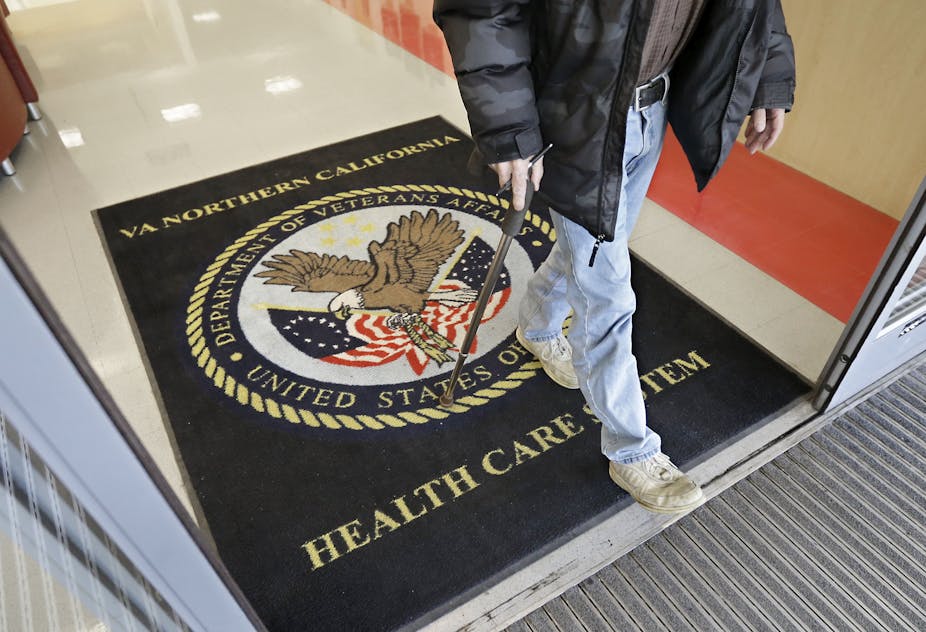
I don’t think most people have any sense of the size and scope of the VA system. Its 168 medical centers and more than one thousand outpatient clinics and other facilities serve almost nine million veterans a year, making it the largest integrated health care system in the country.
The reason dates to the end of World War II. The VA faced a physician shortage, as almost 16 million Americans returned from war, many needing health care.
At the same time, many doctors returned from World War II and needed to complete their residency training. The VA and the nation’s medical schools thus became partners. In fact, the VA is the largest provider of health care training in the country, which increases the likelihood that trainees will consider working for the VA once they finish.
Specialized care for veterans
The VA network specializes in the treatment of such war-related problems as post-traumatic stress disorder and suicide prevention. It has, for example, pioneered the integration of primary care with mental health.
Many veterans live in rural parts of the U.S., are of advanced age and have chronic medical conditions that make travel challenging. So the VA is a national leader in telemedicine, with notable success in mental health care.
The VA’s research programs have made major breakthroughs in areas such as cardiac care, prosthetics and infection prevention.
A case in point: Several years ago a veteran, in the middle of a cross-country trip, was driving through Michigan when he began feeling sick. Within minutes of his arrival at our VA hospital, we were able to access his records from a VA medical center over a thousand miles away, learn that he had a history of Addison disease, a rare condition, and provide prompt treatment.
I am therefore not surprised that the studies that have compared VA with non-VA care have found that the VA is, overall, as good as or better than the private sector. In fact, a recently published systematic review of 69 studies performed by RAND investigators concluded: “…the available data indicate overall comparable health care quality in VA facilities compared to non-VA facilities with regard to safety and effectiveness.”
The VA offers veterans more than health care
The most remarkable aspect of VA hospitals, though, is the patient population, the men and women who have sacrificed for their country. They have a common bond. A patient explained it this way:
“The VA is different because everyone has done something similar, whether you were in World War II or Korea or Nam, like me. You’re not thrown into a pot with other people, which would happen at another kind of hospital.”
The people who work at VA hospitals have a special attitude toward their patients. It takes the form of respect and gratitude, of empathy, of a level of caring that is nothing short of love. You can see it in the extra services provided for patients who are often alone in the world, or too far from home to be visited.
Take a familiar scene: a medical student taking a patient for a walk or wheelchair ride on the hospital grounds. It is common for nurses to say “our veteran” when discussing a patient’s care with me.
Volunteers and chaplains rotate through VA hospitals on a regular basis, to a degree unknown in most community hospitals. The social work department is also more active. The patients are not always so patient, but these visitors persevere. “They’re a good bunch of people,” one veteran said of the staff. “I know because I’m irritable most of the time and they all get along with me.”
Physicians everywhere are under heavy pressure these days, in part because of the increase in the number of complex patients they care for. Yet I have spent hours observing doctors in VA hospitals around the country as they sit with patients, inquiring about their families and their military service, treating the veterans with respect and without haste.
Earlier this year, I cared for a veteran in his 50’s, a house painter, whom we diagnosed with cancer that had metastasized widely. We offered him chemotherapy, which could have given him an extra few months, but he chose hospice. He told me he wanted to go home to be with his wife and play the guitar. One of the songs he wanted to sing was “Knocking on Heaven’s Door.”
I was deeply moved. I liked and admired the man, and I was disturbed that we had been unable to save him. My medical student had the same feelings. Before the patient left, the student told me, “He shook my hand, looked me in the eyes, and said, ‘Thanks for being a warrior for me.’”
That’s the special kind of patient who shows up at a VA hospital. Every single one of them should have the special kind of care they deserve. And we must ensure that the care is superb on this and every day.






 HENRY KOTULA