Governors Weigh Health Care Plans as They Await Court Ruling

https://www.usnews.com/news/business/articles/2019-07-25/governors-weigh-health-care-plans-as-they-await-court-ruling

The Associated Press

As they gather at a conference in Utah, governors from around the country are starting to think about what they would do if an appeals court upholds a lower court ruling overturning President Obama’s signature health care law.

More than 20 million Americans would be at risk of losing their health insurance if the 5th U.S. Circuit Court of Appeals agrees with a Texas-based federal judge who declared the Affordable Care Act unconstitutional last December because Congress had eliminated an unpopular tax it imposed on people who did not buy insurance.

The final word on striking down law will almost certainly come from the Supreme Court, which has twice upheld the 2010 legislation.

Nevada Gov. Steve Sisolak, a Democrat, signed a bill earlier this year prohibiting health insurers from denying coverage to patients due to pre-existing conditions, a pre-emptive move in case the Affordable Care Act were struck down.

He said this week in Salt Lake City at the summer meeting of the National Governors Association that he would ask his recently created patient protection commission to come up with recommendations for how to ensure patients don’t lose coverage if the law is overturned, which would impact about 200,000 people enrolled in Medicaid expansion in Nevada.

“To rip that away from them would be devastating to a lot of families,” Sisolak said.

Nevada is among a coalition of 20 Democratic-leaning states led by California that appealed the lower court ruling and is urging the appeals court to keep the law intact.

At a news conference Thursday, Democrats touted the protections they’ve passed to prevent people from losing health coverage.

New Mexico Gov. Michelle Lujan Grisham signed laws this year that enshrine provisions of the Affordable Care Act into state law, including guarantees to insurance coverage for patients with pre-existing conditions and access to contraception without cost-sharing. She said half of the state’s residents use Medicaid, prompting New Mexico officials to research creating a state-based health care system.

California Gov. Gavin Newsom said his state is already deep in contingency planning because five million people could lose health insurance if the law is struck down and the state doesn’t have enough money to make up for the loss of federal funds. He said the decision this year to tax people who don’t have health insurance, a revival of the so-called individual mandate stripped from Obama’s model, was the first step. That tax will help pay for an expansion of the state’s Medicaid program, the joint state and federal health insurance program for the poor and disabled.

Newsom said the state is looking at Massachusetts‘ state-run health care program and investigating if a single-payer model would work as possible options if the law is spiked.

“The magnitude is jaw-dropping,” Newsom said. “You can’t sit back passively and react to it.”

Arkansas Gov. Asa Hutchinson, a Republican, said states need Congress to be ready to quickly pass a new health care plan if the court overturns Obama’s law, since doing so would cut off federal funding for Medicaid expansion.

A court decision in March blocked Arkansas from enforcing work requirements for its Medicaid expansion program, which has generated seemingly annual debate in that state’s Legislature about whether to continue the program.

“Congress can’t just leave that out there hanging,” Hutchinson said.

The 2018 lawsuit that triggered the latest legal battle over the Affordable Care Act was filed by a coalition of 18 Republican-leaning states including Arkansas, Arizona and Utah.

Arizona Gov. Doug Ducey, a Republican, said he wants to see how the court rules before he makes any decisions about how his state would deal with the loss of Medicaid funds but that Arizona has backup funds available.

“They’re going to rule how they’re going to rule and we’ll deal with the outcome,” Ducey said. “The best plans are to have dollars available.”

It is unknown when the three-judge panel will rule.

The government said in March that 11.4 million people signed up for health care via provisions of the Affordable Care Act during open enrollment season, a dip of about 300,000 from last year.

Utah Gov. Gary Herbert, a Republican, said if the law is overturned, it would provide a perfect opportunity for Congress to try to craft a better program with support from both political parties.

He said his state, which rolled out its partial Medicaid expansion in April, probably will not start working on a contingency plan for people who would lose coverage until the appeals court rules.

“It’s been talked about for so long, people are saying ‘Why worry about it until it happens?'” Herbert said. “I think there’s a little bit more of a lackadaisical thought process going on.”

President Donald Trump, who never produced a health insurance plan to replace Obama’s health care plan, is now promising one after the elections.

Newsom warned Americans not to rely on that.

“God knows they have no capacity to deal with that,” Newsom said. “The consequences would be profound and pronounced.”


Trump’s next move on drug prices

https://www.axios.com/newsletters/axios-vitals-2f43e920-50d7-4650-b95c-112de9060f9f.html?utm_source=newsletter&utm_medium=email&utm_campaign=newsletter_axiosvitals&stream=top

Sens. Ron Wyden and Chuck Grassley

The White House is preparing another big executive order on drug prices, Reuters scooped last night.

  • Citing industry sources who had discussed the plan with the administration, Reuters reports that it would likely seek to lower prices in Medicare Part D, which covers drugs you pick up at the pharmacy counter.
  • The administration’s most sweeping proposal to date — to piggyback off of the lower prices in European countries — was limited to Part B, which covers drugs administered by a doctor.
  • It’s not clear whether the new Part D proposal would also rely on international pricing, per Reuters. Part D is much bigger than Part B.

Between the lines: It’s probably no coincidence that this threat is being floated just as the White House is trying to build support for the Senate Finance Committee’s drug-pricing bill, despite Republican objections.

  • In fact, Sen. Chuck Grassley made that point explicitly, The Hill reports.
  • “Who knows what he’s going to do at the last minute,” he said, referring to Trump. “If he would join forces with Pelosi, look at what that would do to everything that we Republicans stand for.”
  • “It seems to me that the Grassley-Wyden approach is a very moderate approach [compared] to what could come out,” he added.

Where it stands in the Senate.

Finance approved the Grassley-Wyden bill yesterday, but the proceedings left no doubt that there are still stark divisions within the GOP over drug pricing, and more resistance than we’re used to seeing on policies Trump supports.

The intrigue: Nine of the committee’s 15 Republicans voted against the bill. All of the Democrats supported it, leading to a final vote of 19-9.

  • The bill’s proposal to cap price increases within Part D is clearly the biggest sticking point for Republicans. An amendment to strike that provision, offered by Sen. Pat Toomey, failed on a 14-14 vote.

What’s next: Pharma’s best bet is probably to stop the Senate from passing anything.

  • That would prevent an eventual conference between the House and Senate, in which Pelosi and Trump could make good on Grassley’s predictions and strike up an alliance (if she wanted to help Trump claim a win on drug prices, which is far from a sure thing).
  • But that’s a tall order, so expect pharma and its allies to keep trying to water down the Senate package while waging that bigger-picture fight.

The bottom line: “This bill is not anywhere near action on the floor,” Sen. John Cornyn said yesterday, per The Hill.


Tenet plans to spin off revenue-cycle subsidiary Conifer

https://www.modernhealthcare.com/finance/tenet-plans-spin-revenue-cycle-subsidiary-conifer?utm_source=modern-healthcare-daily-dose-wednesday&utm_medium=email&utm_campaign=20190724&utm_content=article1-readmore

After nearly two years of fielding underwhelming offers for its revenue-cycle subsidiary, Tenet Healthcare Corp. has settled on a decidedly different maneuver: It will spin it off as a separate, publicly-traded company.

Leaders with Dallas-based Tenet have spent the past 18 months finalizing a deal on Conifer Health Solutions. While CEO Ron Rittenmeyer conceded on an investor call Wednesday that an outright sale would have been the company’s first choice, there are several benefits to a tax-free spin off.

Shareholders win in that they’ll get shares in the new company in addition to their Tenet stock, but Rittenmeyer couldn’t say say yet how many they will receive.

“From a shareholder standpoint, I believe it’s a no-brainer,” he said.

The stock market responded positively to Wednesday’s news. Tenet’s shares were up about 14.5% at market close.

Rittenmeyer said the deal, which isn’t scheduled to close for another two years, is also the best path forward for Tenet in that it will have a “reasonable” impact on the company’s debt. Tenet’s long-term debt stood at $14.8 billion as of March 31. He characterized the deal as a “debt-for-debt exchange” that will be tax free. Tenet also would have had to pay taxes on a sale.

The aim of Tenet’s asset sales, including—hypothetically—Conifer, have been to lower the company’s debt. But analysts questioned how much spinning off Conifer will truly achieve that purpose, and some said they believe it could actually increase the company’s debt ratio.

Rittenmeyer said in an interview Tenet has long maintained it will bring down debt through a combination of performance and asset sales, which are ongoing.

“The spin-off will be a debt-to-debt exchange that will put debt on the new company and pay off debt at Tenet,” he said. “So our debt will come down by that process.”

Tenet won’t disclose how much of its debt will shift to Conifer until 6 months before the deal closes, Rittenmeyer told investors on Wednesday morning’s call. He wouldn’t say whether Conifer will have more, less or similar leverage to Tenet. One thing’s for sure, he said Tenet does not plan to overleverage the new company.

“There’s no way we plan to load up Conifer and cause that to have a capital structure problem on the way out,” Rittenmeyer said. “We want it to be successful, so it’s a balancing act.”

Others aren’t convinced that will be the case. Brian Tanquilut, a healthcare equity analyst with Jefferies, thinks the deal will actually increase Tenet’s debt ratio because Conifer’s departure from Tenet will pull more from its earnings than it will from its debt, he said.

“There will be more debt sitting on Tenet’s books than what you’re moving off earnings proportionally to the Conifer spin,” he said.

John Ransom, a managing director in healthcare equity research with Raymond James & Associates, agreed that the deal could nudge Tenet’s debt ratio higher depending on how it plays out, although Conifer will likely pay a dividend to Tenet.

It makes sense that Tenet doesn’t want to load up the new company with debt, Ransom said.

“I think they want to try to dress this up as more of a growth company,” he said.

The deal won’t close until the end of the second quarter of 2021. To get there, Tenet will have to meet regulatory approvals from the Internal Revenue Service and Securities and Exchange Commission, Rittenmeyer said.

Tenet also announced Wednesday the departure of Conifer’s CEO, Stephen Mooney. He will be replaced on an interim basis by Tenet’s Chief Operating Officer, Kyle Burtnett, while the company searches for a permanent replacement. Rittenmeyer said that wasn’t connected to the Conifer announcement, but that Mooney simply wanted to pursue other endeavors.

“It’s very positive; no negative,” Rittenmeyer said. “We’re not pushing him out the door.”

In February, Tenet was in exclusive talks over what would have been a very different Conifer deal. Rittenmeyer revealed Wednesday Tenet had considered a merger with another company that would have ultimately been spun out. He said Tenet decided against that because it wasn’t clear that plan would have yielded enough of a financial return.

Tenet received nine preliminary bids to purchase Conifer, including three that were high enough to consider, Rittenmeyer said. Tenet spoke with 74 potential buyers overall, including 16 strategic buyers and 58 financial buyers. However, the company encountered a number of setbacks when it came to those deals.

Some of the would-be buyers were offering company stock in addition to cash, but Tenet wanted an all-cash sale, Rittenmeyer said. Additionally, he said the bids were not high enough to reflect the performance improvements Tenet has added to Conifer.

A number of the bids included stipulations Tenet could not agree to, such as not being accountable for collecting 100% of Tenet’s cash, “which is critically important to us,” Rittenmeyer said. In the end, none of the proposals would have assured Tenet would have effective recourse if cash collection fell short, Rittenmeyer said.

Some would-be buyers expected Tenet to guarantee that if it sold a hospital, the buyer would continue to use Conifer or, if it didn’t, Tenet would pay Conifer’s new owner for the sold asset’s revenue-cycle management, Rittenmeyer said.

This deal was complicated by the fact that Tenet continues to divest hospitals to pay down its debt, Tanquilut said. Since Tenet is Conifer’s largest customer, buyers would be taking on a shrinking company, he said.

“How do you value an asset that we know at least for its largest client will see shrinking revenue?” Tanquilut said.

On Wednesday’s call, Rittenmeyer said early in the process, shareholders said they believed buyers would pay high multiples for Conifer, possibly in the mid- to high-teens.

Ransom said Tenet likely received an unreasonably high valuation from an investment bank, which may have contributed to the extended time it spent seeking a buyer.

“Whoever told them they were going to get a high-teens valuation, that’s insane,” Ransom said. “They probably shouldn’t have bought that.”


The Most Important Leadership Competencies, According to Leaders Around the World

https://hbr.org/2016/03/the-most-important-leadership-competencies-according-to-leaders-around-the-world?utm_source=facebook&utm_medium=social&utm_campaign=hbr&fbclid=IwAR3P_HH0Xd1-7iiT-xo0OydmS9uu6OOONRkj0ox_CH2phzt1wwr9p3suryE

Image result for The Most Important Leadership Competencies, According to Leaders Around the World

What makes an effective leader? This question is a focus of my research as an organizational scientist, executive coach, and leadership development consultant. Looking for answers, I recently completed the first round of a study of 195 leaders in 15 countries over 30 global organizations. Participants were asked to choose the 15 most important leadership competencies from a list of 74. I’ve grouped the top ones into five major themes that suggest a set of priorities for leaders and leadership development programs. While some may not surprise you, they’re all difficult to master, in part because improving them requires acting against our nature.

Demonstrates strong ethics and provides a sense of safety.

This theme combines two of the three most highly rated attributes: “high ethical and moral standards” (67% selected it as one of the most important) and “communicating clear expectations” (56%).

Taken together, these attributes are all about creating a safe and trusting environment. A leader with high ethical standards conveys a commitment to fairness, instilling confidence that both they and their employees will honor the rules of the game. Similarly, when leaders clearly communicate their expectations, they avoid blindsiding people and ensure that everyone is on the same page. In a safe environment employees can relax, invoking the brain’s higher capacity for social engagement, innovation, creativity, and ambition.

Neuroscience corroborates this point. When the amygdala registers a threat to our safety, arteries harden and thicken to handle an increased blood flow to our limbs in preparation for a fight-or-flight response. In this state, we lose access to the social engagement system of the limbic brain and the executive function of the prefrontal cortex, inhibiting creativity and the drive for excellence. From a neuroscience perspective, making sure that people feel safe on a deep level should be job #1 for leaders.

But how? This competency is all about behaving in a way that is consistent with your values. If you find yourself making decisions that feel at odds with your principles or justifying actions in spite of a nagging sense of discomfort, you probably need to reconnect with your core values. I facilitate a simple exercise with my clients called “Deep Fast Forwarding” to help with this. Envision your funeral and what people say about you in a eulogy. Is it what you want to hear? This exercise will give you a clearer sense of what’s important to you, which will then help guide daily decision making.

To increase feelings of safety, work on communicating with the specific intent of making people feel safe. One way to accomplish this is to acknowledge and neutralize feared results or consequences from the outset. I call this “clearing the air.” For example, you might approach a conversation about a project gone wrong by saying, “I’m not trying to blame you. I just want to understand what happened.”

Empowers others to self-organize.

Providing clear direction while allowing employees to organize their own time and work was identified as the next most important leadership competency.

No leader can do everything themselves. Therefore, it’s critical to distribute power throughout the organization and to rely on decision making from those who are closest to the action.

Research has repeatedly shown that empowered teams are more productive and proactive, provide better customer service, and show higher levels of job satisfaction and commitment to their team and organization. And yet many leaders struggle to let people self-organize. They resist because they believe that power is a zero-sum game, they are reluctant to allow others to make mistakes, and they fear facing negative consequences from subordinates’ decisions.

To overcome the fear of relinquishing power, start by increasing awareness of physical tension that arises when you feel your position is being challenged. As discussed above, perceived threats activate a fight, flight, or freeze response in the amygdala. The good news is that we can train our bodies to experience relaxation instead of defensiveness when stress runs high. Try to separate the current situation from the past, share the outcome you fear most with others instead of trying to hold on to control, and remember that giving power up is a great way to increase influence — which builds power over time.

Fosters a sense of connection and belonging.

Leaders who “communicate often and openly” (competency #6) and “create a feeling of succeeding and failing together as a pack” (#8) build a strong foundation for connection.

We are a social species — we want to connect and feel a sense of belonging. From an evolutionary perspective, attachment is important because it improves our chances of survival in a world full of predators. Research suggests that a sense of connection could also impact productivity and emotional well-being. For example, scientists have found that emotions are contagious in the workplace: Employees feel emotionally depleted just by watching unpleasant interactions between coworkers.

From a neuroscience perspective, creating connection is a leader’s second most important job. Once we feel safe (a sensation that is registered in the reptilian brain), we also have to feel cared for (which activates the limbic brain) in order to unleash the full potential of our higher functioning prefrontal cortex.

There are some simple ways to promote belonging among employees: Smile at people, call them by name, and remember their interests and family members’ names. Pay focused attention when speaking to them, and clearly set the tone of the members of your team having each other’s backs. Using a song, motto, symbol, chant, or ritual that uniquely identifies your team can also strengthen this sense of connection.

Shows openness to new ideas and fosters organizational learning.

What do “flexibility to change opinions” (competency #4), “being open to new ideas and approaches” (#7), and “provides safety for trial and error” (#10) have in common? If a leader has these strengths, they encourage learning; if they don’t, they risk stifling it.

Admitting we’re wrong isn’t easy. Once again, the negative effects of stress on brain function are partly to blame — in this case they impede learning. Researchers have found that reduced blood flow to our brains under threat reduces peripheral vision, ostensibly so we can deal with the immediate danger. For instance, they have observed a significant reduction in athletes’ peripheral vision before competition. While tunnel vision helps athletes focus, it closes the rest of us off to new ideas and approaches. Our opinions are more inflexible even when we’re presented with contradicting evidence, which makes learning almost impossible.

To encourage learning among employees, leaders must first ensure that they are open to learning (and changing course) themselves. Try to approach problem-solving discussions without a specific agenda or outcome. Withhold judgment until everyone has spoken, and let people know that all ideas will be considered. A greater diversity of ideas will emerge.

Failure is required for learning, but our relentless pursuit of results can also discourage employees from taking chances. To resolve this conflict, leaders must create a culture that supports risk-taking. One way of doing this is to use controlled experiments — think A/B testing — that allow for small failures and require rapid feedback and correction. This provides a platform for building collective intelligence so that employees learn from each other’s mistakes, too.

Nurtures growth.

“Being committed to my ongoing training” (competency #5) and “helping me grow into a next-generation leader” (#9) make up the final category.

All living organisms have an innate need to leave copies of their genes. They maximize their offspring’s chances of success by nurturing and teaching them. In turn, those on the receiving end feel a sense of gratitude and loyalty. Think of the people to whom you’re most grateful — parents, teachers, friends, mentors. Chances are, they’ve cared for you or taught you something important.

When leaders show a commitment to our growth, the same primal emotions are tapped. Employees are motivated to reciprocate, expressing their gratitude or loyalty by going the extra mile. While managing through fear generates stress, which impairs higher brain function, the quality of work is vastly different when we are compelled by appreciation. If you want to inspire the best from your team, advocate for them, support their training and promotion, and go to bat to sponsor their important projects.

These five areas present significant challenges to leaders due to the natural responses that are hardwired into us. But with deep self-reflection and a shift in perspective (perhaps aided by a coach), there are also enormous opportunities for improving everyone’s performance by focusing on our own.


Healthcare Executives See a Mixed Outlook

https://www.jpmorgan.com/commercial-banking/insights/healthcare-mixed-outlook

Image result for Healthcare Executives See a Mixed Outlook

In a recent survey of healthcare leaders, most were confident about their own organizations going into the new year. But respondents expressed concern about a range of evolving industry-wide challenges, including costs, technology and talent.

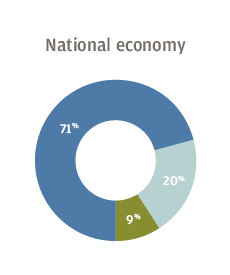
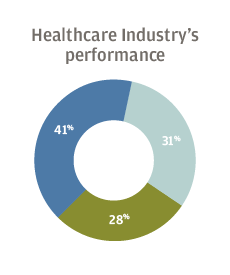
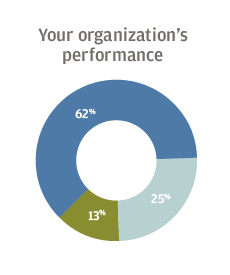
A majority of US healthcare executives surveyed by J.P. Morgan said they were optimistic about the financial performance of their own organizations going into 2019, as well as the national and local economies. But most were less positive about the outlook for the industry as a whole, with 28 percent expressing pessimism and another 31 percent merely neutral.

National economy 71% optimistic, 20% neutral, 9% pessimistic
Healthcare Industry's performance 41% optimistic, 31% neutral, 28% pessimistic
Your organization's performance 62% optimistic, 13% neutral, 25% pessimistic
Legend - Optimistic, Blue
Legend: Neutral Gray
Legend: Pessimistic, Green

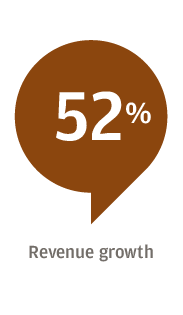
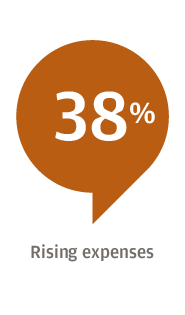
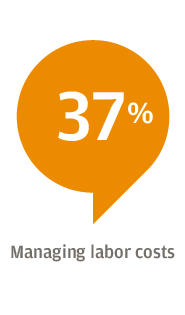
Respondents to the survey, conducted Oct. 16 to Nov. 2 of 2018, said their biggest concerns were revenue growth, rising expenses and labor costs. The executives said their organizations plan to invest the most in information technology and physician recruitment.

Healthcare Changes Shape Perceptions

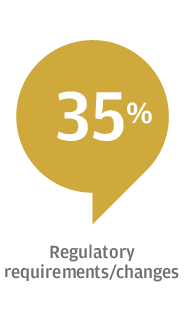
The pessimism about the industry likely stems, in part, from regulatory uncertainty and an ongoing shift from a fee-for-service model toward a value-based payment system, said Will Williams, Senior Healthcare Industry Executive within J.P. Morgan’s Commercial Banking Healthcare group. “Healthcare is going through the most transition of any industry in the country right now,” he said. Amid this upheaval, healthcare organizations face a combination of challenges, including lower reimbursement rates for Medicaid and Medicare patients, increased competition, and higher costs for labor, pharmaceuticals and technology investments.

The optimism that executives feel about their own hospital or healthcare group may come from a sense that an individual organization can adapt to industry changes, said Jenny Edwards, Commercial Banker in the healthcare practice at J.P. Morgan. “You can control certain factors, and make adjustments to compensate for the headwinds.”

Biggest Challenges for the New Year

Growth Strategies

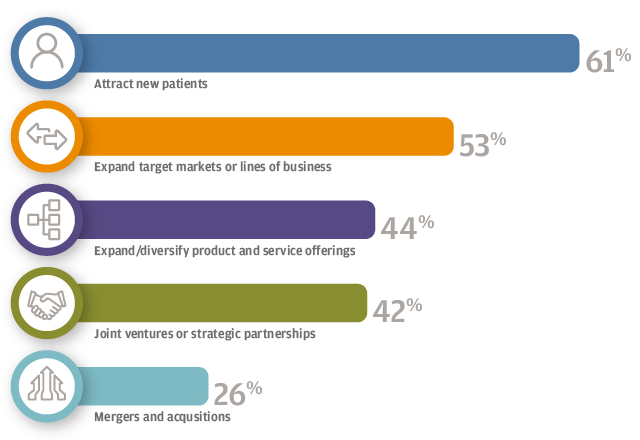
For 61 percent of respondents, the focus is on attracting new patients, followed by expanding target markets or lines of business (53 percent), and expanding or diversifying product and service offerings (44 percent). Hospitals, for example, have worked to add more patients to their broader healthcare system by opening clinics for urgent care or physical therapy, Edwards said.

As patient habits change, hospital systems have needed to become more consumer-focused, Edwards said. Patients are more likely to shop around for their care, expect transparent pricing and review healthcare workers on social media sites. This “retail-ization” trend in healthcare is accelerating, Edwards said. “You can shop for healthcare like you would a new pair of jeans.”

Skilled Talent Wanted

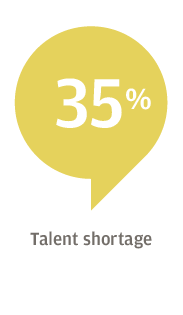
The talent shortage is top of mind for many healthcare executives, with 92 percent of survey respondents saying they were at least somewhat concerned with finding candidates with the right skill set. For 35 percent of respondents, the talent shortage is one of their top three challenges.

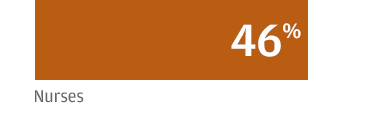
For those respondents who expressed concern, the most difficulty arises in filling positions for physicians (52 percent) and nurses (46 percent). To address the challenge, 76 percent said they expect to increase compensation of their staff over the next 12 months. According to 37 percent of respondents, the talent pool’s high compensation expectations factor into the shortage.

Most Challenging Positions to Fill

52%
46%
38%
29%
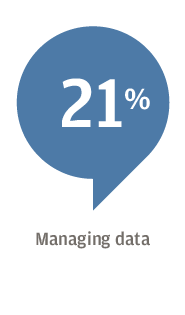
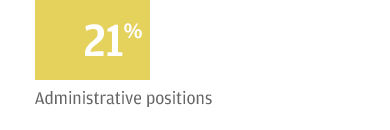
21%
21%

The talent shortage is an issue across the industry, Williams said, and burnout among doctors and nurses presents an ongoing problem. One contributing cause could be evolving changes in daily practice, with considerably more time today spent on electronic medical record entries and less on patient care. Williams said, “Doctors are getting frustrated. The problem is trying to replace those doctors as they quit practicing.”

Healthcare executives are particularly concerned about shortages of primary care professionals. “Rural communities already have these shortages,” said Brendan Corrigan, Vice Chair of the J.P. Morgan Healthcare Council.

Labor costs tend to be higher in healthcare than in other sectors, Williams said, as a hospital must have coverage for all of its major roles 24 hours a day. When asked where they struggle with workforce management, the survey respondents cite staff turnover and its associated cost (47 percent), the ability to flex staff based on patient volumes (41 percent), and the cost of overtime and premium labor (36 percent). These workforce issues not only represent specific challenges; they all contribute to labor costs, which, as noted above, rank in the top three challenges for 2019.

Investments for a Changing Industry

A majority (51 percent) of organizations plan to invest in IT over the next 12 months. Other areas for investment included physician recruitment (44 percent) and new or replacement facilities (36 percent).

Since healthcare organizations manage a large amount of private patient health information, data security remains a large part of IT expenditures. “It’s a huge focus—they’re spending a lot of time and money on preventing a breach,” Edwards said. She goes on to note that the transition to patient EMR systems brings another big IT expense—more than $1 billion for the largest healthcare systems.

Overall, the survey showed healthcare executives grappling with rising costs and structural changes that affect the entire industry. “Healthcare is trying to figure out how to fix themselves,” Williams said.


Healthcare’s Leading Financial Challenges and Opportunities in 2019

https://www.jpmorgan.com/commercial-banking/insights/healthcare-financial-challenges-2019

Image result for Healthcare’s Leading Financial Challenges and Opportunities in 2019

Faced with slim margins and rising costs, the healthcare industry is looking to blockchain, data analytics and innovation to help drive savings and unlock new revenue.

The healthcare industry is facing an urgent need to reduce costs and increase revenue. Research from the Healthcare Advisory Council reveals the not-for-profit health system will need between $40 million and $44 million annually in cost avoidance over the next eight years to maintain a sustainable margin. The challenge is significant, but emerging technologies and innovative strategies are creating opportunities for greater efficiency, better patient care and decreased costs, according to executives and other leaders in healthcare.

Making a Margin on Medicare

Health systems with the best margin sustainability pursue effective cost-avoidance practices, including:

  • Embedding cost discipline throughout the organization
  • Escalating spending decisions
  • Reducing unnecessary hires
  • Matching patient acuity to the level of care
  • Reducing drug formulary costs

But even with these practices, cost avoidance is challenging—particularly when it comes to Medicare-reliant seniors, who often require frequent medical treatments and hospital admissions. Turning to advanced electronic medical records (EMRs) that are designed around a health system’s risk and workflow can improve treatment decisions and continuity of care, leading to decreased admissions, better cost effectiveness and a greater profit margin.

Simultaneously, some health systems are looking to a pre-paid, value-based medicine model, as opposed to the more common fee-for-service model. Value-based medicine moves the payment upstream, incentivizing providers to focus on maintaining patient health rather than on providing medical interventions. Decreasing the amount of care needed to keep patients healthy has a direct impact on the size of an organization’s margins.

Blockchain: The Potential to Change Healthcare

One of the most common inefficiencies in healthcare is how physicians are credentialed. The months-long process for clinician credentialing commands significant time and costs. Emerging blockchain technology may be one solution to this persistent point of inefficiency.

With blockchain, rather than sending a clinician credentialing application to several organizations for verification, the physician and all credentialing locations—as members of a dedicated blockchain network—can have access to the physician’s highly encrypted log. Any changes to the physician’s log can be transmitted to the network and validated by private keys known only to each party and with algorithms agreed upon by the network. In this, trust transfers from a third-party clearinghouse to the network as a whole.

In the blockchain world, the physician could provide access codes to the hospital to review their verified credentials. This could save as much as 80 percent of the current cost and time invested in physician credentialing. Using the same technology and process, blockchain may also be a valuable tool for finding efficiencies when working with patient records.

Venture Capital: Strategic Investing 2.0

Healthcare system-based venture capital funds are growing rapidly. In 2017, more than 150 distinct corporate venture groups operated within the healthcare arena, according to Health Enterprise Partners, and these groups participated in 38 percent of all healthcare IT financing.

There are four common objectives for starting such a fund:

  • Generate new income sources not subject to healthcare reimbursement pressure
  • Identify promising companies that executives might not otherwise encounter
  • Create a vehicle to enhance brand integrity and expand market reach
  • Foster a culture of innovation

Once healthcare investors establish their fund objectives (or mix of objectives), they define their investment approach. This includes establishing a decision-making chain with operational leaders and board members that can allow decisions to be made quickly and in an established pattern. It also includes building infrastructure and could mean adopting a rigorous information environment system, like a healthcare customer relationship management (CRM) system, as well as developing stringent custody and accounting procedures for securities.

Funds should gather resources to support the interactions between the investment fund and the companies in which they invest. At the outset, they should decide the relationship they will have with their investment targets and whether return on investment is a primary or secondary goal. As a part of choosing investment targets, it is important that funds address an important problem of the parent organization and in a way that the organization supports.

Time Is Money: Accelerating the Pace of Care

For health systems, every patient hour costs $250 in direct operating costs, more than half of which owe to labor. By this, improving efficiency and decreasing the time needed for tasks can save money and support a healthy margin. A mix of advanced analytical data and targeted interpersonal relations can help reduce the time required for common hospital and health system tasks. Predictive analytic modeling software can help yield clearer insight into operations, revealing ways to break down barriers between departments and more effectively manage census levels. This optimizes census distribution inside a complex medical center.

Another rich source of potential healthcare savings lies in the staff hiring process. Successful staff hiring for all income levels is one of the great challenges for health systems, but data analytics can help make the hiring process more efficient. With models built on the characteristics of successful hires, predictive analytics can point to applicants with the best potential for success, improving confidence in hiring decisions. Importantly, while analytics and automation can play a big part in finding the best applicants, once a candidate becomes an employee, important decisions like promotions or relocations require direct personal contact.

Data and Dollars Innovation

As health systems explore avenues for increased efficiency, lower costs and better margins, J.P. Morgan has developed digital innovations to support healthcare investment, strategy and operation. Two of the most applicable include:

  • Enhanced Healthcare Lockbox: J.P. Morgan has supercharged its lockbox technology with machine learning. The auto-posting rate has increased by nearly one-fifth, allowing hospitals and health systems to redeploy assets to other revenue-generating sectors like denial management. The high-tech upgrade has also saved three to four days in clients’ working capital.
  • Corporate Quick Pay: The need for hospitals and health systems to collect an increasing amount of money directly from patients has resulted in an explosion in low-dollar patient refunds. This creates a problem for the accounts payable departments of healthcare institutions, which were not designed to issue thousands of small checks to patients. J.P. Morgan’s Corporate Quick Pay solution allows health systems to send payments directly to a patient’s bank account using email or text message.

These innovations in artificial intelligence and machine learning drive efficiency across a range of areas. Consider the benefits one client enjoyed by virtue of J.P. Morgan’s digital tools:

  • 70,000 paper-based claims converted to electronic
  • 99.3 percent lift rate for all paper received in lockbox
  • 18 percent increase in auto-posting after implementation
  • Three to four days’ improvement to working capital

Going forward, emerging technologies and strategies are indispensable for healthcare systems striving to grow margins in a time when health costs and needs are increasing. Ultimately, hospitals and health systems that find pathways to greater profitability will be best positioned to achieve their primary goal: delivering better care that leads to better patient outcomes.