What you need to know about the COVID-19 vaccine

https://www.gatesnotes.com/Health/What-you-need-to-know-about-the-COVID-19-vaccine?WT.mc_id=20200430164943_COVID-19-vaccine_BG-FB&WT.tsrc=BGFB&linkId=87665504&fbclid=IwAR0SsBGe1GTcy-fOIXz86kImkScsdCGlRVgmDcPOgXMcaU7kdO39SyNpRSs

What you need to know about the COVID-19 vaccine | Bill Gates

Humankind has never had a more urgent task than creating broad immunity for coronavirus.

One of the questions I get asked the most these days is when the world will be able to go back to the way things were in December before the coronavirus pandemic. My answer is always the same: when we have an almost perfect drug to treat COVID-19, or when almost every person on the planet has been vaccinated against coronavirus.

The former is unlikely to happen anytime soon. We’d need a miracle treatment that was at least 95 percent effective to stop the outbreak. Most of the drug candidates right now are nowhere near that powerful. They could save a lot of lives, but they aren’t enough to get us back to normal.

Which leaves us with a vaccine.

Humankind has never had a more urgent task than creating broad immunity for coronavirus. Realistically, if we’re going to return to normal, we need to develop a safe, effective vaccine. We need to make billions of doses, we need to get them out to every part of the world, and we need all of this happen as quickly as possible.

That sounds daunting, because it is. Our foundation is the biggest funder of vaccines in the world, and this effort dwarfs anything we’ve ever worked on before. It’s going to require a global cooperative effort like the world has never seen. But I know it’ll get done. There’s simply no alternative.

Here’s what you need to know about the race to create a COVID-19 vaccine.

The world is creating this vaccine on a historically fast timeline.

Dr. Anthony Fauci has said he thinks it’ll take around eighteen months to develop a coronavirus vaccine. I agree with him, though it could be as little as 9 months or as long as two years.

Although eighteen months might sound like a long time, this would be the fastest scientists have created a new vaccine. Development usually takes around five years. Once you pick a disease to target, you have to create the vaccine and test it on animals. Then you begin testing for safety and efficacy in humans.

Safety and efficacy are the two most important goals for every vaccineSafety is exactly what it sounds like: is the vaccine safe to give to people? Some minor side effects (like a mild fever or injection site pain) can be acceptable, but you don’t want to inoculate people with something that makes them sick.

Efficacy measures how well the vaccine protects you from getting sick. Although you’d ideally want a vaccine to have 100 percent efficacy, many don’t. For example, this year’s flu vaccine is around 45 percent effective.

To test for safety and efficacy, every vaccine goes through three phases of trials:

  • Phase one is the safety trial. A small group of healthy volunteers gets the vaccine candidate. You try out different dosages to create the strongest immune response at the lowest effective dose without serious side effects.
  • Once you’ve settled on a formula, you move onto phase two, which tells you how well the vaccine works in the people who are intended to get it. This time, hundreds of people get the vaccine. This cohort should include people of different ages and health statuses.
  • Then, in phase three, you give it to thousands of people. This is usually the longest phase, because it occurs in what’s called “natural disease conditions.” You introduce it to a large group of people who are likely already at the risk of infection by the target pathogen, and then wait and see if the vaccine reduces how many people get sick.

After the vaccine passes all three trial phases, you start building the factories to manufacture it, and it gets submitted to the WHO and various government agencies for approval.

This process works well for most vaccines, but the normal development timeline isn’t good enough right now. Every day we can cut from this process will make a huge difference to the world in terms of saving lives and reducing trillions of dollars in economic damage.

So, to speed up the process, vaccine developers are compressing the timeline. This graphic shows how:

In the traditional process, the steps are sequential to address key questions and unknowns. This can help mitigate financial risk, since creating a new vaccine is expensive. Many candidates fail, which is why companies wait to invest in the next step until they know the previous step was successful.

For COVID-19, financing development is not an issue. Governments and other organizations (including our foundation and an amazing alliance called the Coalition for Epidemic Preparedness Innovations) have made it clear they will support whatever it takes to find a vaccine. So, scientists are able to save time by doing several of the development steps at once. For example, the private sector, governments, and our foundation are going to start identifying facilities to manufacture different potential vaccines. If some of those facilities end up going unused, that’s okay. It’s a small price to pay for getting ahead on production.

Fortunately, compressing the trial timeline isn’t the only way to take a process that usually takes five years and get it done in 18 months. Another way we’re going to do that is by testing lots of different approaches at the same time.

There are dozens of candidates in the pipeline.

As of April 9, there are 115 different COVID-19 vaccine candidates in the development pipeline. I think that eight to ten of those look particularly promising. (Our foundation is going to keep an eye on all the others to see if we missed any that have some positive characteristics, though.)

The most promising candidates take a variety of approaches to protecting the body against COVID-19. To understand what exactly that means, it’s helpful to remember how the human immune system works.

When a disease pathogen gets into your system, your immune system responds by producing antibodies. These antibodies attach themselves to substances called antigens on the surface of the microbe, which sends a signal to your body to attack. Your immune system keeps a record of every microbe it has ever defeated, so that it can quickly recognize and destroy invaders before they make you ill.

Vaccines circumvent this whole process by teaching your body how to defeat a pathogen without ever getting sick. The two most common types—and the ones you’re probably most familiar with—are inactivated and live vaccines. Inactivated vaccines contain pathogens that have been killed. Live vaccines, on the other hand, are made of living pathogens that have been weakened (or “attenuated”). They’re highly effective but more prone to side effects than their inactivated counterparts.

Inactivated and live vaccines are what we consider “traditional” approaches. There are a number of COVID-19 vaccine candidates of both types, and for good reason: they’re well-established. We know how to test and manufacture them.

The downside is that they’re time-consuming to make. There’s a ton of material in each dose of a vaccine. Most of that material is biological, which means you have to grow it. That takes time, unfortunately.

That’s why I’m particularly excited by two new approaches that some of the candidates are taking: RNA and DNA vaccines. If one of these new approaches pans out, we’ll likely be able to get vaccines out to the whole world much faster. (For the sake of simplicity, I’m only going to explain RNA vaccines. DNA vaccines are similar, just with a different type of genetic material and method of administration.)

Our foundation—both through our own funding and through CEPI—has been supporting the development of an RNA vaccine platform for nearly a decade. We were planning to use it to make vaccines for diseases that affect the poor like malaria, but now it’s looking like one of the most promising options for COVID. The first candidate to start human trials was an RNA vaccine created by a company called Moderna.

Here’s how an RNA vaccine works: rather than injecting a pathogen’s antigen into your body, you instead give the body the genetic code needed to produce that antigen itself. When the antigens appear on the outside of your cells, your immune system attacks them—and learns how to defeat future intruders in the process. You essentially turn your body into its own vaccine manufacturing unit.

Because RNA vaccines let your body do most of the work, they don’t require much material. That makes them much faster to manufacture. There’s a catch, though: we don’t know for sure yet if RNA is a viable platform for vaccines. Since COVID would be the first RNA vaccine out of the gate, we have to prove both that the platform itself works and that it creates immunity. It’s a bit like building your computer system and your first piece of software at the same time.

Even if an RNA vaccine continues to show promise, we still must continue pursuing the other options. We don’t know yet what the COVID-19 vaccine will look like. Until we do, we have to go full steam ahead on as many approaches as possible.

It might not be a perfect vaccine yet—and that’s okay.

The smallpox vaccine is the only vaccine that’s wiped an entire disease off the face of the earth, but it’s also pretty brutal to receive. It left a scar on the arm of anyone who got it. One out of every three people had side effects bad enough to keep them home from school or work. A small—but not insignificant—number developed more serious reactions.

The smallpox vaccine was far from perfect, but it got the job done. The COVID-19 vaccine might be similar.

If we were designing the perfect vaccine, we’d want it to be completely safe and 100 percent effective. It should be a single dose that gives you lifelong protection, and it should be easy to store and transport. I hope the COVID-19 vaccine has all of those qualities, but given the timeline we’re on, it may not.

The two priorities, as I mentioned earlier, are safety and efficacy. Since we might not have time to do multi-year studies, we will have to conduct robust phase 1 safety trials and make sure we have good real-world evidence that the vaccine is completely safe to use.

We have a bit more wiggle room with efficacy. I suspect a vaccine that is at least 70 percent effective will be enough to stop the outbreak. A 60 percent effective vaccine is useable, but we might still see some localized outbreaks. Anything under 60 percent is unlikely to create enough herd immunity to stop the virus.

The big challenge will be making sure the vaccine works well in older people. The older you are, the less effective vaccines are. Your immune system—like the rest of your body—ages and is slower to recognize and attack invaders. That’s a big issue for a COVID-19 vaccine, since older people are the most vulnerable. We need to make sure they’re protected.

The shingles vaccine—which is also targeted to older people—combats this by amping up the strength of the vaccine. It’s possible we do something similar for COVID, although it might come with more side effects. Health authorities could also ask people over a certain age to get an additional dose.

Beyond safety and efficacy, there are a couple other factors to consider:

  • How many doses will it be? A vaccine you only get once is easier and quicker to deliver. But we may need a multi-dose vaccine to get enough efficacy.
  • How long does it last? Ideally, the vaccine will give you long-lasting protection. But we might end up with one that only stops you from getting sick for a couple months (like the seasonal flu vaccine, which protects you for about six months). If that happens, the short-term vaccine might be used while we work on a more durable one.
  • How do you store it? Many common vaccines are kept at 4 degrees C. That’s around the temperature of your average refrigerator, so storage and transportation is easy. But RNA vaccines need to be stored at much colder temperature—as low as -80 degrees C—which will make reaching certain parts of the world more difficult.

My hope is that the vaccine we have 18 months from now is as close to “perfect” as possible. Even if it isn’t, we will continue working to improve it. After that happens, I suspect the COVID-19 vaccine will become part of the routine newborn immunization schedule.

Once we have a vaccine, though, we still have huge problems to solve. That’s because…

We need to manufacture and distribute at least 7 billion doses of the vaccine.

In order to stop the pandemic, we need to make the vaccine available to almost every person on the planet. We’ve never delivered something to every corner of the world before. And, as I mentioned earlier, vaccines are particularly difficult to make and store.

There’s a lot we can’t figure out about manufacturing and distributing the vaccine until we know what exactly we’re working with. For example, will we be able to use existing vaccine factories to make the COVID-19 vaccine?

What we can do now is build different kinds of vaccine factories to prepare. Each vaccine type requires a different kind of factory. We need to be ready with facilities that can make each type, so that we can start manufacturing the final vaccine (or vaccines) as soon as we can. This will cost billions of dollars. Governments need to quickly find a mechanism for making the funding for this available. Our foundation is currently working with CEPI, the WHO, and governments to figure out the financing.

Part of those discussions center on who will get the vaccine when. The reality is that not everyone will be able to get the vaccine at the same time. It’ll take months—or even years—to create 7 billion doses (or possibly 14 billion, if it’s a multi-dose vaccine), and we should start distributing them as soon as the first batch is ready to go.

Most people agree that health workers should get the vaccine first. But who gets it next? Older people? Teachers? Workers in essential jobs?

I think that low-income countries should be some of the first to receive it, because people will be at a much higher risk of dying in those places. COVID-19 will spread much quicker in poor countries because measures like physical distancing are harder to enact. More people have poor underlying health that makes them more vulnerable to complications, and weak health systems will make it harder for them to receive the care they need. Getting the vaccine out in low-income countries could save millions of lives. The good news is we already have an organization with expertise about how to do this in Gavi, the Vaccine Alliance.

With most vaccines, manufacturers sign a deal with the country where their factories are located, so that country gets first crack at the vaccines. It’s unclear if that’s what will happen here. I hope we find a way to get it out on an equitable basis to the whole world. The WHO and national health authorities will need to develop a distribution plan once we have a better understanding of what we’re working with.

Eventually, though, we’re going to scale this thing up so that the vaccine is available to everyone. And then, we’ll be able to get back to normal—and to hopefully make decisions that prevent us from being in this situation ever again.

It might be a bit hard to see right now, but there is a light at the end of the tunnel. We’re doing the right things to get a vaccine as quickly as possible. In the meantime, I urge you to continue following the guidelines set by your local authorities. Our ability to get through this outbreak will depend on everyone doing their part to keep each other safe.


Contact tracing is the next big hurdle in the push to re-open cities

https://www.axios.com/contact-tracing-is-the-next-big-hurdle-in-the-push-to-re-open-cities-358eff5e-aaa6-448f-9273-c29e281de410.html

Contact tracing is the next big hurdle in the push to re-open ...

As some states take steps to partially re-open their economies, public health officials and local governments are trying to aggressively ramp up contact tracing to track the spread of COVID-19 in their communities.

Why it matters: If we are indeed in the midst of a war against an invisible enemy, a contact-tracing offensive — launched by both an army of human tracers and an arsenal of technological tools — will be a big part of the key to winning.

  • Identifying who has come in contact with people infected with the disease is critical to isolating the coronavirus while also allowing some semblance of daily life to resume.

Between the lines: State and city budgets are being hammered by the economic fallout of COVID-19, making it harder to find the resources to hire and train people to contact trace or acquire needed technologies.

  • Some governments are recruiting volunteers, retirees and students to do the work. But the sheer number of people needed — at least 100,000 across the U.S., per Johns Hopkins — and the open-ended duration of the work makes that a very daunting task.
  • “We haven’t seen a big push coming from the federal government in either traditional contact tracing or these technology-based approaches,” said Josh Michaud, associate director for Global Health Policy at the Kaiser Family Foundation. “That leaves most of the legwork and decision-making to the states and local authorities.”

State and county public health officials are ramping up tracing efforts now that testing availability is improving — since tracing only works with widespread testing.

  • Massachusetts Gov. Charlie Baker allotted $44 million to an ambitious contact tracing program, which is training 1,000 tracers to staff a virtual call center to track people who came in close contact with those who’ve tested positive for the virus, starting from 48 hours before the symptoms emerged, per the Boston Globe.
  • Texas’ Harris County — the nation’s third-most populous county with 4.7 million people, including the city of Houston — this week approved the hire of 300 contact tracers.

For every case, we have an average of about 20 people to contact. … So if you have 100 cases, you’ve got 2,000 contacts you’ve got to handle for that day because you know the next day you’ll have maybe another 100–150 cases.”

— Umair Shah, executive director of Harris County Public Health

What’s happening: Other countries are relying on tech to varying degrees to augment contact tracing.

  • In March, Singapore launched TraceTogether, an app that uses Bluetooth signals to help users learn whether they’ve been in contact with someone who tests positive. More than 1 million people have downloaded it, and Singapore has made it available to other countries.
  • Australia said more than a million people downloaded its Bluetooth contact tracing app, based on Singapore’s version, within hours of the government making it available.
  • South Korea used phone GPS records, credit card transactions and closed-circuit television to augment patient interviews for its contact tracing effort.
  • Iceland claims a 93% success rate of voluntary contact tracing through a smartphone app.

In the U.S., the most likely scenario for widespread, tech-enabled contact tracing lies with work done by Google and Apple.

  • The two companies are sharing an early version of what they’re calling COVID-19 exposure notification technology with certain developers working with public health authorities. Apple and Google want to release the first phase of the project, which will enable users to opt-in to Bluetooth-based contact tracing, by mid-May.
  • MIT researchers, who launched a project to perform private automated contact tracing, are using their expertise with radar to help figure out how Bluetooth can show the distance between users.
  • Marc Zissman, associate head of the Cyber Security and Information Sciences Division at MIT’s Lincoln Laboratory, said Google and Apple’s effort appears to be incorporating the privacy principles researchers have called for, including sending randomized data that is not personally identifiable.
  • “Our best guess is that when Google and Apple release this, this is going to be what it is,” Zissman said. “There was Betamax and VHS. Everybody was using Betamax. And then every company but Sony went with VHS, and that was it. And then Betamax just stopped being used. That’s kind of like what’s going to happen here I think in the United States.”

The success of the effort will depend on widespread adoption of the technology so people will be notified when they come in contact with someone who tests positive.

What to watch: Zissman said MIT researchers will reverse engineer the Google/Apple programs to ensure they are following the privacy protocols, and also expect pilot testing in limited settings like hospitals or universities before states begin implementing.

  • It may also take a public service campaign featuring trusted voices to encourage Americans to opt in.
  • “There’s a lot of doubts, one, that people’s privacy concerns can be addressed sufficiently and, two, that enough people would download the app to make it helpful and actually provide the service it’s supposed to provide,” Michaud said.


Employers split from health care industry

https://www.axios.com/newsletters/axios-vitals-d589549c-1967-44b1-af0b-528fb345c48b.html?utm_source=newsletter&utm_medium=email&utm_campaign=newsletter_axiosvitals&stream=top

Employers split from health care industry over coronavirus demands ...

Several large employer groups this week refused to sign on to funding requests they consider a “handout” for hospitals and insurers, according to three people close to the process.

The big picture: Coronavirus spending bills are sharpening tensions between the employers that fund a significant portion of the country’s health care system and the hospitals, doctors and insurers that operate it, Bob reports.

Driving the news: The industry’s most recent request — written primarily by the large hospital and health insurance lobbying groups — focused on a few items for the next coronavirus legislation:

  • Providing subsidies to maintain employer-sponsored insurance, which already receives a large tax break, as well as providing subsidies for COBRA for people who have lost their jobs.
  • Increasing subsidies for Affordable Care Act plans and creating a special ACA enrollment window.
  • Opposing the use of the industry’s bailout funds to pay for uninsured COVID-19 patients at Medicare rates.

Between the lines: Employers know they get charged a lot more for health care services compared with public insurers, but many weren’t keen about urging Congress to “set up a government program to pay commercial reimbursements,” said an executive at a trade group that represents large corporations.

The other side: Several health care groups that signed the letter dismissed the idea of any disagreement with employers.


Why Gilead’s coronavirus drug is not a “silver bullet”

https://www.axios.com/newsletters/axios-vitals-d589549c-1967-44b1-af0b-528fb345c48b.html?utm_source=newsletter&utm_medium=email&utm_campaign=newsletter_axiosvitals&stream=top

Why Gilead's coronavirus drug is not a "silver bullet" - Axios

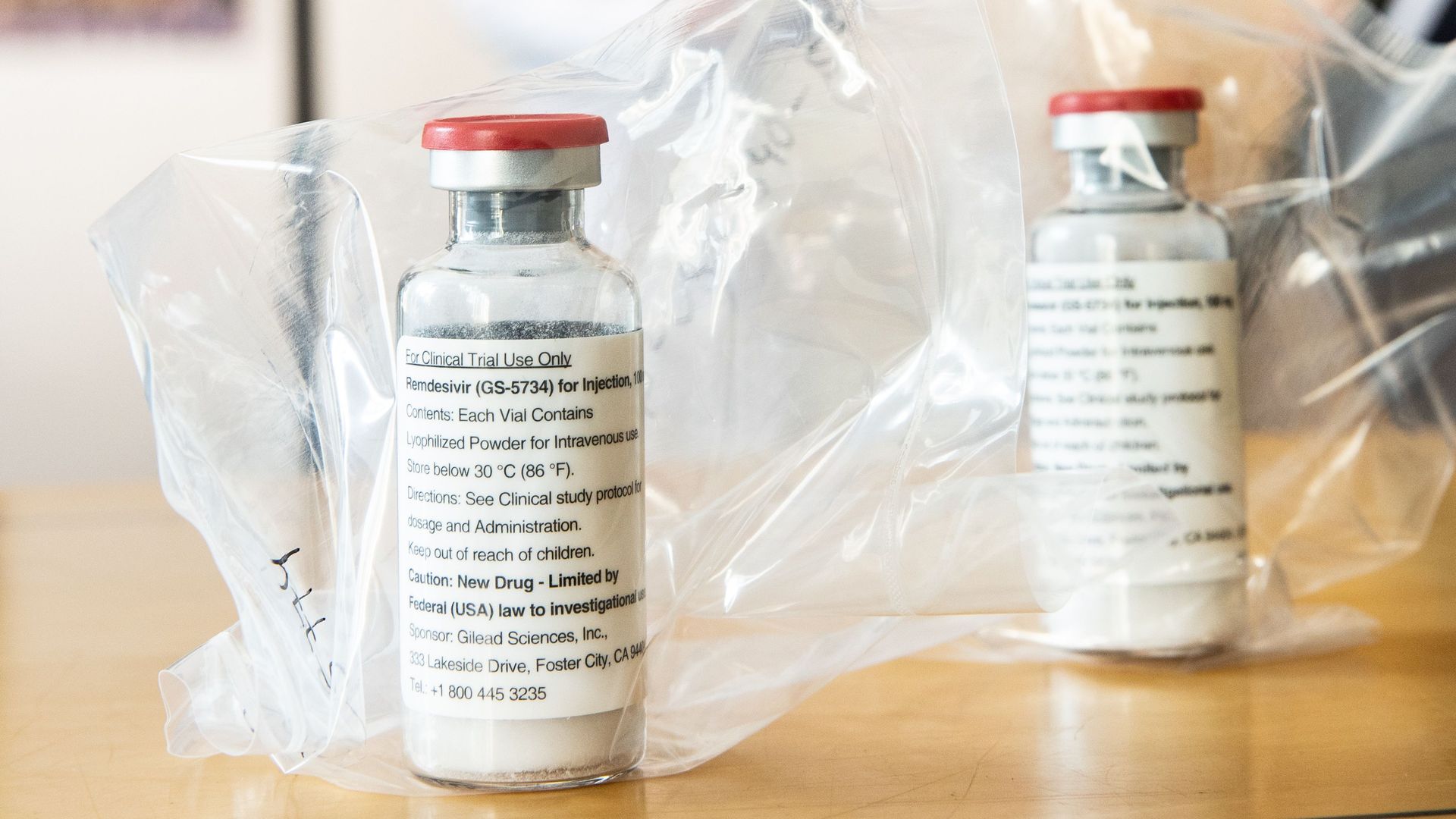
If you feel like you’re suffering whiplash from the new, conflicting study data on Gilead Sciences’ experimental coronavirus drug, remdesivir, you’re not alone.

The big picture: Remdesivir could provide some help and lay the groundwork for more research, but this drug on its own does not appear to be any kind of “cure” for the novel coronavirus, Axios’ Bob Herman reports.

What’s happening: Remdesivir helped coronavirus patients get out of the hospital modestly quicker, based on early reads of an important and rigorously designed trial run by the National Institutes of Health,

  • That could be encouraging for those who get sick.

Yes, but: Analysts and experts were cautious about drawing too many conclusions without the full data from NIH — especially considering the primary outcome was changed mid-trial, and a separate randomized trial concluded remdesivir does little, if anything, to combat the virus.

  • “Remdesivir is a real drug for COVID … but again, not a silver bullet,” Umer Raffat, a pharmaceutical analyst at Evercore ISI, wrote to investors on Wednesday.
  • And because the drug has limited efficacy and likely works best before the infection gets too serious, “its availability is not going to move the needle on social distancing relaxation,” tweeted Peter Bach, a physician and drug researcher at Memorial Sloan Kettering.

The bottom line: This near-constant back-and-forth over remdesivir reinforces how strong the science and data need to be for any treatment, or for the world’s best hope: a vaccine.


Crisis begins to hit professional and public-sector jobs once considered safe

https://www.washingtonpost.com/business/2020/04/30/jobless-claims-industry/?utm_campaign=wp_post_most&utm_medium=email&utm_source=newsletter&wpisrc=nl_most

How COVID-19 Is Crashing On The Class Of 2020: Job Offers Already ...

As the novel coronavirus pandemic brought business to a halt, the pain rippled outward, blowing up sector after sector. According to a detailed analysis of unemployment claims, no industry was left untouched.

After that first chaotic week of lockdowns mid-March, as officials scrambled to slow the spread of the deadliest pandemic in more than a century, restaurants and theaters saw job losses slow while losses in other sectors, such as construction and supply-chain work, accelerated. Now, it appears the economic upheaval is hitting professional and public-sector jobs that some once regarded as safe.

The Labor Department doesn’t release jobless claims by industry. So, building on the work of economist Ben Zipperer and his colleagues at the Economic Policy Institute, we analyzed industry-specific new unemployment-benefit claims from 14 states that publish them. (For a full list, see the charts below.)

For that, we need to focus in on the weekly changes in jobless claims to distinguish between industries where claims are falling and those where claims are steady or increasing. The data can also help us estimate how the labor market will change in coming months.

Week 1, March 15 to 21: Full-contact industries

(Highest week-to-week change included: accommodation and food services; arts entertainment and recreation; hairdressers, auto mechanics and laundry workers)

The first week of closures slammed headfirst into industries that require the most face-to-face customer contact — America’s hospitality sector. More than 7 percent of all restaurant, hotel and bar workers filed for unemployment in this first week alone.

For public officials looking to enforce social distancing, bars, hotels and movie theaters were obvious targets: They’re discretionary spending and require significant human interaction. Another category, which the government calls “other services” but is primarily made up of hairdressers, auto mechanics and laundry workers, also suffered swift and significant losses.

The number of newly unemployed filers in all these high-contact industries fell off in subsequent weeks, but they remain the biggest casualties of the crisis. And unemployment claims probably understate the pain of lower-earning Americans. Low-wage workers often don’t qualify for benefits because they haven’t spent enough time on the job, or aren’t being paid enough, Zipperer said.

A survey released Tuesday by Zipperer and his colleague Elise Gould implies unemployment numbers may be significantly worse than government statistics show. For every 10 people who successfully applied for unemployment benefits during the crisis, they show, another three or four couldn’t get through the overloaded system, and two more didn’t even apply because the system is too difficult.

Week 2, March 22 to 28: The producers

(Highest week-to-week change included: manufacturing; construction; retail)

By the second week, the shutdown moved from businesses where the primary danger is interacting with customers to those, like construction and manufacturing, that require in-person interaction with large crews of colleagues.

On March 26, for example, Spokane, Wash.-area custom-cabinet maker Huntwood Industries, laid off around 500 employees, according to Thomas Clouse of the Spokesman-Review. As a manufacturer whose sales depend on the construction industry, it was hit doubly hard by the shutdowns.

“It is a scary time,” Amy Ohms, 37, told Clouse. “It’s kind of unfair. I think construction is essential. There is a lot of uncertainty.”

Manufacturers were among the first publicly traded companies to note travel and supply-chain risks related to the coronavirus outbreak in China in financial filings, according to a separate analysis by Oxford researchers Fabian Stephany and Fabian Braesemann and collaborators in Berlin. By March, manufacturers were noting domestic production issues.

Their analysis also shows that, in the middle of March, concern about the coronavirus and its disease, covid-19, from retail corporations eclipsed that of manufacturers. Indeed, retail struggled mightily in the second week of the crisis. More workers were told to stay home, and folks realized foot traffic was often incompatible with social distancing.

The retail sector wasn’t hit as quickly or as forcefully as food services or entertainment, presumably because the sector includes grocery stores and others who employ workers who were deemed essential.

Week 3, March 29 to April 4: The supply chain

(Highest week-to-week change included: wholesale trade; retail trade; administrative and waste management)

In the third week, the pain worked its way up the supply chain, as wholesale trade — a sector that includes some sales representatives, truck drivers and freight laborers — got slammed.

In theory, the lockdowns created near-perfect trucking conditions: traffic vanished, diesel keeps getting cheaper and the roads are safer than they have been in decades. Only one problem: There’s not much to haul right now.

Don Hayden, president of Louisville trucking firm M&M Cartage, feared he would have to lay off about 70 percent of his 400 employees — drivers, mechanics and office staff — in early April. Orders from his customers in heavy manufacturing evaporated.

But, just in time, he got a Payroll Protection Program loan through his local bank. He was shocked at how rapidly his loan was approved and the money arrived, and he said the Treasury Department had done an outstanding job.

“We’re good through May and into June,” he said. “We have a good workforce. We’re proud of them. We sure would like to retain them.”

At this point in the crisis, the focus shifted from huge, industry-eviscerating swings in jobless numbers to gradual weekly trends that help us guess where the jobless claims will settle in the weeks and months to come.

As industries fall like dominoes, policymakers need to realize the damage isn’t contained to a few specific sectors, said University of Tennessee economist Marianne Wanamaker, a former member of Trump’s Council of Economic Advisers.

She said there may be a temptation to extend benefits for difficult-to-reopen industries such as food service and hospitality, but “it doesn’t comport with the data because the damage is so widespread. It’s not fair to say, ‘Hotel and restaurant workers, you get these really generous packages and everybody else has to go back to work.’ ”

Week 4, April 5 to 11: White-collar workers

(Highest week-to-week change included: management; finance and insurance; public administration)

White-collar industries have been shedding jobs since mid-March, albeit at a much lower rate than lower-income sectors. But as losses in low-income sectors subsided, white-collar jobless claims stayed flat or even intensified. By week four, categories that contain managers, bookkeepers, insurance agents and bank tellers saw some of the worst weekly trends of any sector.

On April 9, the online review site Yelp laid off 1,000 workers and furloughed 1,100 more (about a third of its workforce) as traffic on the site plunged while businesses were locked down.

“The physical distancing measures and shelter-in-place orders, while critical to flatten the curve, have dealt a devastating blow to the local businesses that are core to our mission,” CEO Jeremy Stoppelman wrote at the time.

Jane Oates, president of the employment-focused nonprofit organization WorkingNation, used to oversee the Labor Department wing that coordinates unemployment claims and training. “The big difference between coronavirus and the Great Recession is that this has completely stopped the economy across so many sectors,” she said.

During the Great Recession, she and her team had the luxury of flooding support into areas that were being hit hardest in a particular week or month. They went from state to state and industry to industry, putting out fires as they arose.

The Labor Department can’t address individual problems like that during the coronavirus recession, she said, because everybody’s getting shellacked simultaneously.

Week 5, April 12 to 18: The public sector

(Highest week-to-week change included: oil, gas and mining; utilities; public administration)

In the week ending April 18, the most recent for which we have data, we can no longer avoid one of the most ominous trends in the entire analysis: a rise in public-sector layoffs. Utilities, public administration and education services — all of which have close implicit or explicit ties to state and local government, were among the worst-faring sectors on a weekly basis.

To stem the tide of what could be millions of job losses and furloughs, the National League of Cities is pushing for a $250 billion bailout of cities throughout the country, colleague Tony Romm reports.

In Broomfield, Colo., a Denver-area suburb of about 70,000 residents, 235 city and county employees were furloughed on April 22, according to Jennifer Rios in the Broomfield Enterprise.

“The impact of the COVID-19 coronavirus is more significant than any of us could have ever expected for our well-being, as well as our municipal financial stability,” Rios reports that officials wrote in a letter to furloughed employees.“

State and local governments are typically required to balance their budgets. Now that they’re staring down the barrel of a huge tax-revenue shortfall, “these revenue losses are going to cause government budgets to fall and they’re going to lay people off,” Zipperer said.

“You’re seeing the beginnings of a big contraction in the public sector,” he said. “That’s going to be the next huge thing.”

The public sector used to be the bulwark that kept the economy going while the private sector pulled back during a recession, Zipperer said. “Over the last couple of recessions, the public sector hasn’t played that traditional role,” Zipperer said. “As a result, we’ve seen steeper recessions and slower recoveries.”


How the Trump administration accidentally insured over 200,000 through Obamacare

https://theconversation.com/how-the-trump-administration-accidentally-insured-over-200-000-through-obamacare-132312?utm_medium=email&utm_campaign=Latest%20from%20The%20Conversation%20for%20April%2030%202020%20-%201608715418&utm_content=Latest%20from%20The%20Conversation%20for%20April%2030%202020%20-%201608715418+Version+A+CID_88784a86a2c2fddb8969eaf6f2cd84b8&utm_source=campaign_monitor_us&utm_term=How%20the%20Trump%20administration%20accidentally%20insured%20over%20200000%20through%20Obamacare

Silver-Loading Means 28% Uninsured Can Get $0 Premium Bronze Plan

With an eye on replacing the Affordable Care Act, the Trump administration took one particularly critical action in October 2017. It discontinued cost-sharing reduction subsidy payments to health insurers participating in the ACA marketplaces.

But the response to those cuts was likely not what President Trump expected. State insurance commissioners and insurers used them to make marketplace health plans more affordable.

Premium decreases were large – so large that 4.2 million potential enrollees had the option to purchase a marketplace plan for free in 2019.

These changes made us wonder: Did President Trump’s effort to sabotage the Affordable Care Act backfire? I’m a health economist at the University of Pittsburgh. Along with my colleague David Anderson, a policy expert on the Affordable Care Act, we tried to answer that question shortly after the payment cuts. We discovered that more than 200,000 people, using the Healthcare.gov platform in 2019, gained insurance in 37 states due to the Trump administration’s actions. This finding may even be more important now as massive unemployment from the coronavirus pandemic leads to huge losses of employer-based insurance coverage – and ultimately more people enrolling in the marketplaces.

Subsidies and silver loading

People who sign up for a plan in the Health Insurance Marketplaces may qualify for two types of subsidies. The first type is the advanced premium tax credit, which reduces the premium paid by the enrollee; lower-income enrollees receive larger premium tax credits. The second type is the cost-sharing reduction subsidy, which decrease deductibles and co-pays.

Premium tax credits may be applied to any marketplace plan, though they’re based on silver plan premiums, which cover 70% of an average enrollee’s health care expenses. Cost-sharing reduction subsidies can only be applied to silver plans; that means qualifying enrollees in less generous bronze plans and more generous gold plans don’t benefit from reduced deductibles and co-pays provided by these subsidies.

When Trump ended those payments, marketplace insurers were suddenly in a bind. They are legally required to provide cost-sharing reduction subsidies to enrollees whether or not the federal government was paying. The expectation: marketplace insurers, forced to make up the lost revenue, would either increase premiums or exit the marketplaces altogether. And Obamacare would implode.

But that’s not what happened. Why did the plans become more affordable? Insurers increased only the premiums of their silver plans. That approach – known as silver loading – did two things. First, the cost of silver plan premiums rose drastically. Second, premium tax credits increased along with premiums. So those enrollees receiving premium tax credits saw no increase in the premiums of their silver plans.

At the same time, non-silver plans became cheaper. Many bronze plans, already costing less, became so cheap they were free after applying premium tax credit subsidies. Lower-income enrollees benefited the most.

The silver lining in silver loading

In 2019, 4.2 million enrollees could enter the marketplace for free through a zero-dollar bronze plan, largely due to silver loading. Without those zero-premium plans, our analysis showed more than 200,000 lower-income marketplace enrollees would have gone uninsured.

Another 60,000 would have gained insurance had California and New Jersey eliminated regulations that prohibited zero premium plans — and if Indiana, Mississippi and West Virginia had adopted silver loading. Many more likely got coverage in states not included in our study.

All this is clearly not what the Trump administration had in mind when it cut subsidy payments. Other changes to the marketplaces probably masked some coverage gains that occurred. Notably, cuts in the public outreach for Healthcare.gov, along with the elimination of the individual mandate, decreased enrollment. But the popularity of zero premium plans resulting from silver loading likely stopped much of the damage – and Trump’s attempt to destabilize the marketplaces.

Increasing health coverage post-2020

Now states can take advantage of the attractiveness of zero premium plans to increase health coverage through the marketplaces. One way: States requiring marketplace insurers to provide extra benefits – again, like California and New Jersey – can pick up the small tab for those extras. For example, California enrollees pay for abortion coverage through a one-dollar monthly premium surcharge. This is not covered by premium tax credits. By shifting premiums from even one dollar to zero dollars, our estimates indicate enrollment would increase by approximately 13% among those with lower incomes.

Another way: States without silver loading should adopt it. This is not a partisan issue. Conservative states – or at least, GOP-controlled states like Alabama, Wyoming and Florida – have silver-loaded. State governments pay nothing, revenue for insurers is increased, and most critically, lower-income Americans are provided with affordable health insurance. Put simply, there’s no downside for states.

The Trump administration is prevented from restricting silver loading through 2021. However, a forthcoming Supreme Court case, Texas v. Azar, may yet repeal the entire ACA. If the court’s conservative majority rules in favor of the GOP plaintiffs, they will put affordable health insurance out of reach for the 11.4 million Americans that purchased health insurance in the marketplaces. They will also eliminate Medicaid coverage for an additional 16.9 million Americans.

If the case succeeds, the uninsured rate could easily surpass levels not seen since the height of the Great Recession. And for millions of Americans, access to health insurance – desperately needed, particularly during the COVID-19 pandemic – will be eliminated.


Jobless claims: Another 3.84 million Americans file for unemployment benefits

https://finance.yahoo.com/news/coronavirus-covid-weekly-initial-jobless-claims-april-25-184820691.html

(David Foster/Yahoo Finance)

On the heels of worse-than-anticipated first-quarter GDP data, investors got additional economic data Thursday to reflect the ongoing damage being done to the U.S. economy as a result of the COVID-19 pandemic.

The U.S. Labor Department released its weekly jobless claims figures Thursday morning, and another 3.839 million Americans filed for unemployment benefits during the week ending April 25. Economists were predicting 3.5 million claims for the week, and the prior week’s figure was revised higher to 4.44 million from 4.43 million. In just the previous six weeks, more than 30 million Americans have filed unemployment insurance claims.

Continuing claims, which lags initial jobless claims data by one week, totaled 17.99 million for the week ending April 18. The prior week’s record 15.98 million continuing claims was revised lower to 15.82 million.

“This is the fourth consecutive slowing in the pace of new jobless claims, but it is still horrible and underlines the severe economic consequences of the Covid-19 containment measures,” ING economist James Knightley wrote in a note Thursday.

“The re-opening of some states, including Georgia, Tennessee, South Carolina and Florida, appear to have gone fairly slowly. Consumers remain reluctant to go shopping or visit a restaurant due to lingering COVID-19 fears, while the social distancing restrictions placed on the number of customers allowed in restaurants do not make it economically justifiable for some to open. Evidence so far suggests very little chance of a V-shaped recovery, meaning that unemployment is unlikely to come down anywhere near as quickly as it has been going up,” Knightley added.

Certain states got hit harder than others last week as massive backlogs continued to pile up, and states that implemented shelter-in-place orders later than others saw an increase in claims. For the week ending April 25, Florida saw the highest number of initial jobless claims at an estimated 432,000 on an unadjusted basis, from 507,000 in the prior week. California reported 328,000, down from 528,000 in the previous week. Georgia had an estimated 265,000 and Texas reported 254,000. 

While consensus economists anticipate weekly jobless claims will be in the millions in the near term, a continued steady decline is largely expected going forward.

“We expect initial jobless claims to continue to decline on a weekly basis. Many workers affected by closures of nonessential businesses have likely already filed for benefits at this point,” Nomura economist Lewis Alexander wrote in a note April 27. “In addition, the strong demand for Paycheck Protection Program (PPP) loans, part of the CARES Act passed on 27 March, suggests some room for labor market stabilization.”

However, Barclays warned that some recent data indicated that the decline in weekly claims could actually be slower than previously estimated.

“NYC 311 calls in the week ending April 24 were running about 30% higher than a week earlier and support our change in forecast,” Barclays economist Blerina Uruci wrote in a note Wednesday. “In particular, we find it concerning that after declining steadily in recent weeks, the number of calls related to unemployment rose again during the week ending April 24.”

The firm increased its estimate for weekly jobless claims to 4 million from the previously estimated 3.25 million for the week ending April 25. Bank of America also boosted its estimate for claims to 4.1 million from the previously forecast 3.5 million claims.

“Scanning through the local news, we were able to locate information about ten states + DC. We found that claims declined only 2.5% week-to-week NSA [not seasonally adjusted],” Bank of America said in a note Wednesday.

COVID-19 cases recently topped 3.2 million worldwide, according to Johns Hopkins University data. There were more than 1 million cases in the U.S. and 60,000 deaths, as of Thursday morning.