


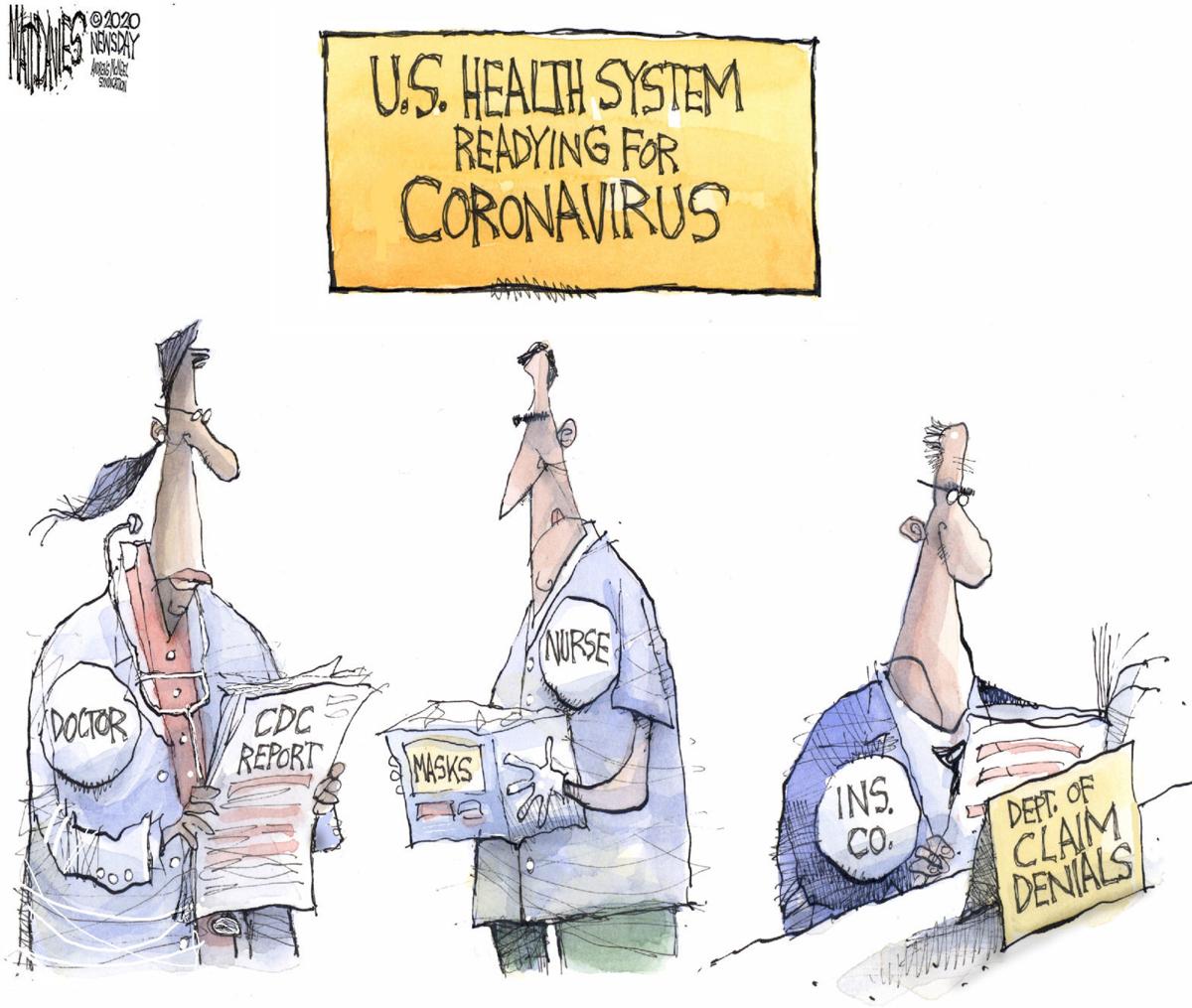
Cartoon – Importance of Key Performance Indicators

https://www.axios.com/coronavirus-west-virginia-first-case-ac32ce6d-5523-4310-a219-7d1d1dcb6b44.html

https://www.axios.com/coronavirus-west-virginia-first-case-ac32ce6d-5523-4310-a219-7d1d1dcb6b44.html

The U.S. passed Italy for recorded coronavirus deaths on Saturday, per Johns Hopkins data. 18,860 Americans have died.
Where it stands: Government projections show lifting social distancing restrictions after just 30 days will lead to a dramatic infection spike this summer and death tolls would rival doing nothing, the New York Times reports.
The big picture: The coronavirus has killed more than 1,000 people every day in the U.S. since April 1, and infected over 501,000 others. New York’s death toll sits at 8,627 as of Saturday after 783 people died in 24 hours — a slight uptick from the day prior.
What’s happening: New York hospitalizations appears to have plateaued as the state flattens the coronavirus curve, Gov. Andrew Cuomo (D) said on Saturday. Intubations are also down, a good sign for fatalities in the state.
Between the lines: Data on fatalities generally lag a couple of weeks behind what’s fueling the outbreak, which is mainly the number of new cases and hospitalizations, NIAID Director Dr. Anthony Fauci told Fox News on Wednesday.
Go deeper: In photos: Life in the era of coronavirus across the U.S.
Early missteps allowed the new coronavirus to spread throughout the U.S for weeks before state and local officials implemented strict lockdowns designed to keep the pandemic from spinning further out of control.
Why it matters: The U.S. missed the boat on the kind of swift, early response that would have been most effective, and has been scrambling to catch up ever since. This timeline, compiled from official sources as well as media reports, shows how that all-important time was lost.
Dec. 31, 2019: China reports the novel coronavirus to the World Health Organization.
Jan. 6: The Centers for Disease Control and Prevention issued a travel notice for Wuhan, China.
Jan. 15: The first U.S. case is confirmed, in a man who traveled from Wuhan.
Jan. 17: The World Health Organization publishes a protocol for manufacturing coronavirus tests.
Jan. 30: The WHO declares global health emergency.
Jan. 31: The Trump Administration suspended entry into the U.S. for most foreign nationals who had traveled to China in the past 14 days.
Feb. 5: The CDC begins shipping its diagnostic tests to state and local health agencies.
Feb. 8: Labs report problems with the CDC’s tests.
Feb. 24: President Trump tweets: “The Coronavirus is very much under control in the USA. We are in contact with everyone and all relevant countries. CDC & World Health have been working hard and very smart. Stock Market starting to look very good to me!”
Feb. 29: Washington state reports the first COVID-19 death in the U.S.
March 5: LabCorp and Quest Diagnostics launch coronavirus test for commercial use.
March 9: Trump tweets: “So last year 37,000 Americans died from the common Flu. It averages between 27,000 and 70,000 per year. Nothing is shut down, life & the economy go on. At this moment there are 546 confirmed cases of CoronaVirus, with 22 deaths. Think about that!”
March 13: Trump declares a national emergency, freeing up $50 billion in federal funds for states and territories.
March 15: 33 states and the District of Columbia closed public schools, according to Education Week. This included the New York City school system, the largest in the country.
March 16: Trump advises Americans to self-isolate for 15 days.
March 19: Trump signed into law an emergency coronavirus relief package for paid sick leave and free testing.
March 23: 9 states had stay-at-home orders.
March 26: The U.S. now leads world in coronavirus cases.
March 29: Trump extends social distancing measures to April 30.
March 30: Nine more states issue stay-at-home orders, bringing the total to 30.
March 31: Trump warns of the potential for 100,000 to 240,000 deaths.
April 6: Twelve more states issue stay-at-home orders, bringing the total to 42.

The United States’ covid-19 death tally is now the highest in the world, eclipsing Italy’s toll on Saturday, despite experts calling the U.S. figure “an underestimation.”
The U.S. toll is now 19,424, with nearly half a million confirmed cases, surpassing Italy’s total of 18,849. Italy has 147,577 infected with the virus.
Despite the country’s large elderly population, experts had previously forecast that Italy’s staggering toll wasn’t an outlier so much as a preview of what other countries could expect. The steady climb of cases has slowed, and the Mediterranean country is now preparing to reopen.
Friday marked the highest single-day total yet with at least 2,056 people reported dead from complications related to covid-19 in the 50 states and the District of Columbia, according to a Washington Post tally. The virus claimed about 1,900 lives in the United States each of the past three days.
The country’s first death from the virus was reported on Feb. 29 in Washington state. Less than a month later, 1,000 people coronavirus-related deaths had been recorded across the nation.
Experts and government leaders predict the apex is still looming and may come mid-April.
Experts fear the toll is worse than the numbers provided by Johns Hopkins University, given a lack of transparency in China and elsewhere, and the difficulty of confirming cause of death, especially outside hospitals.
In addition, a lack of widespread testing has likely contributed to an undercount of U.S. deaths. The Centers for Disease Control and Prevention counts only deaths in which the virus is confirmed in a laboratory test. It’s not known how accurate testing is.
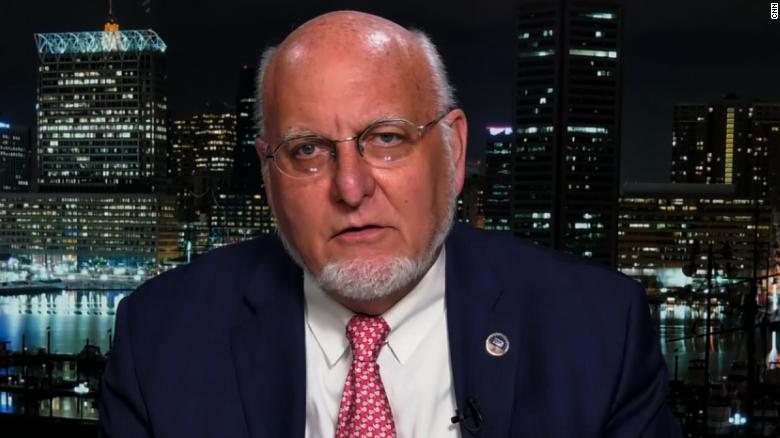
Vice President Mike Pence’s office reversed course on Thursday afternoon, after declining for days to allow the nation’s top health officials to appear on CNN and discuss the coronavirus pandemic, in what was an attempt to pressure the network into carrying the White House’s lengthy daily briefings in full.


 HENRY KOTULA