

Cartoon – Leadership is More Than


BLINKING RED: This is a critical week in the coronavirus pandemic. Economists are nervously watching as much of the nation experiences a worsening fall wave, with U.S. case counts near 200,000 a day and record hospitalizations in many parts of the country, my colleagues Paulina Firozi, Lena H. Sun and Hannah Knowles report.
Whether a crest arrives soon could largely be determined by the Thanksgiving holiday, as the Centers for Disease Control and Prevention and health experts warn against traveling and many of the once commonplace rituals of family gatherings.
https://www.axios.com/season-covid-uncertainty-7558f740-88f8-4934-8686-2e799811a36d.html

The frightening, post-election COVID surge is making everything feel strange, different and unsettled all over again.
Why it matters: With Thanksgiving canceled, doctors quitting their practices and grocers limiting purchase quantities (again), Americans have the ambient sense that our safety net is unraveling. Not only are things not returning to normal, they may not return to normal for a long time.
The people and institutions we look toward for guidance and leadership — like elected officials and medical authorities — seem as flummoxed by the pandemic as we are. They issue new rules day by day (closing schools, restricting shopping, issuing curfews), yet look helpless and flailing as infections rise.
Strangely, CEOs and corporate America have been serving as a rare anchor in this unmoored reality, attempting to provide some moral suasion and fueling the engine behind the stock market’s rally.
Economically, the nation is heading into uncharted territory, with COVID-related uncertainty obliterating all forecast attempts.
Politically, the standoff between President Trump and the rightfully elected new administration has left a vacuum.
Socially, we feel isolated and trapped in our pandemic ruts, not even permitted to savor the promise of holidays we’ve been looking forward to.
Culturally and intellectually, the arts, concerts, films and literary output that we rely on to enhance our lives are dampened or depressed by pandemic strictures.
Emotionally, we worry about ourselves, our loved ones and all of our futures. How will the pandemic stunt my child’s education, my career trajectory, my experience of the world? And what if I get sick and there’s no hospital bed available?
What’s next: “Next Thanksgiving will be different,” Anthony Fauci of the National Institute of Allergy and Infectious Diseases told CNN’s Chris Cuomo on Thursday.
More than 1 million people flew through U.S. airports on Friday, according to TSA data, the second highest number since the coronavirus pandemic began hit the U.S. in mid-March.
Why it matters: As coronavirus cases and hospitalizations continued to soar this week, the CDC issued new guidance on Thursday advising Americans not to travel for Thanksgiving, warning doing so may increase the chance of getting and spreading COVID-19.
By the numbers: The 1,019,836 people TSA screened at U.S. airports on Friday is still less than half the number (2,550,459) that passed through screenings on the same weekday a year ago.
Go deeper: Americans line up for coronavirus testing ahead of Thanksgiving
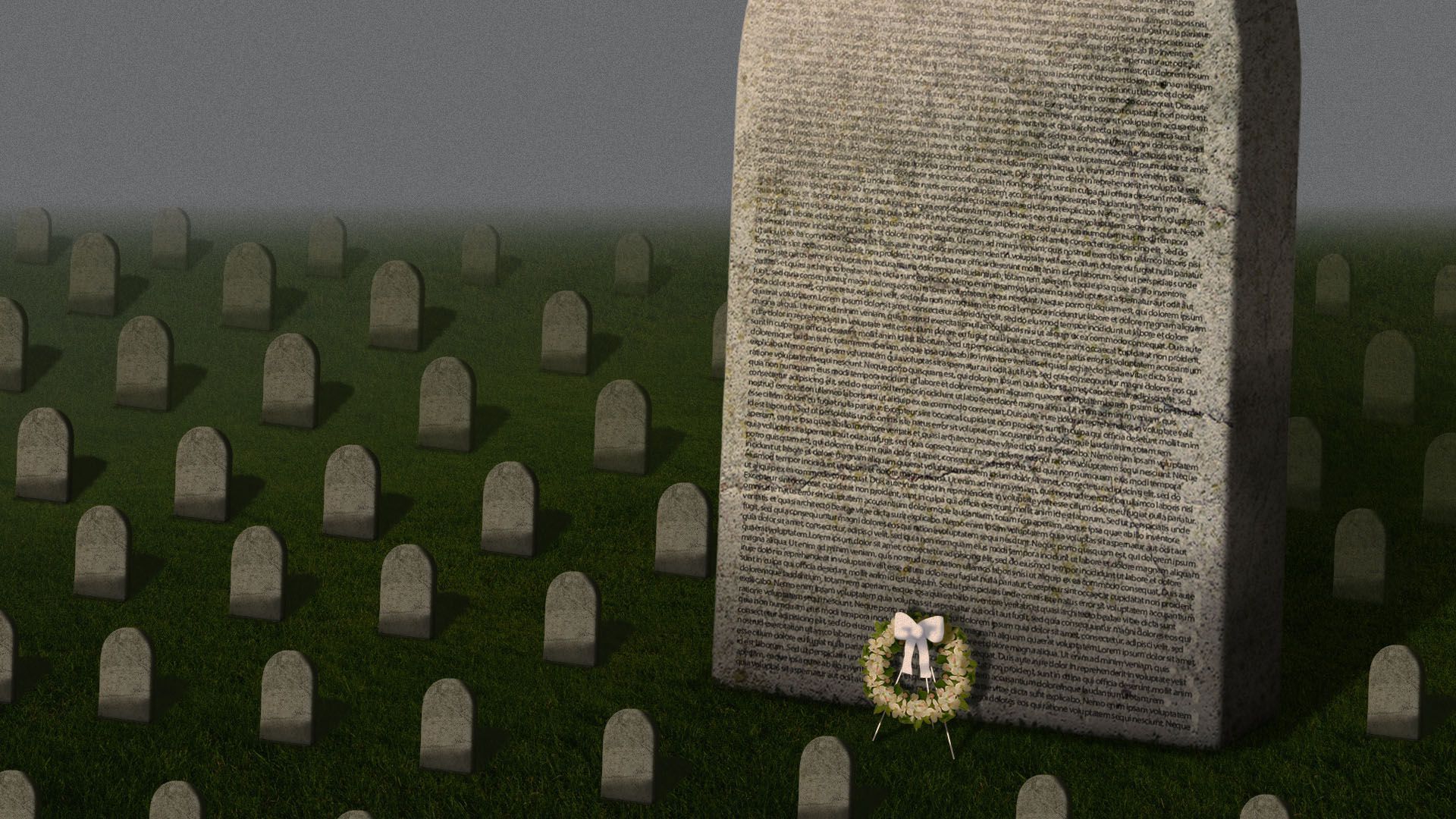
The U.S. passed 250,000 confirmed deaths from COVID-19 this week, a figure that is truly vast — too vast, perhaps, for us to comprehend.
Why it matters: The psychic numbing that sets in around mass death saps us of our empathy for victims and discourages us from making the sacrifices needed to control the pandemic, whileit hampers our ability to prepare for other rare but potentially catastrophic risks down the road.
By the numbers: The sheer scale of the U.S. death toll from COVID-19 can be felt in the lengths media organizations have gone to try to put the numbers in perspective. 250,000 deaths is:
Even if we try our best to grasp mass death, we inevitably come up against cognitive biases, says Paul Slovic, a psychologist at the University of Oregon who studies human judgment and decision-making.
This is, of course, not rational — by any reasonable, moral calculation, we should find 250,000 deaths commensurately more horrifying than a smaller number. But in practice we don’t, almost as if we had a set capacity for empathy and concern that tops out well below the scale of a pandemic.
How it works: In a study following the 1994 Rwandan genocide, in which 800,000 people were killed in a matter of months, Slovic and his colleagues asked a group of volunteers to imagine they were in charge of a refugee camp.
What to watch: These same cognitive biases make it difficult for us to fully appreciate chronic threats like climate change, or to prepare for rare but catastrophic risks in the future — like a pandemic.
The bottom line: As the death toll rises, it will take willful effort not to become numb to what’s happening. But it is an effort that must be made.

America’s coronavirus outbreak has surpassed Europe’s.
Why it matters: It wasn’t long ago that public health experts were pointing to Europe as a warning sign for the U.S. But the U.S. now has a higher per capita caseload than the EU ever has during its recent surge.
By the numbers: As of Saturday, 15 states had higher per capita caseloads, averaged over seven days, than the European country with the highest caseload — Luxembourg.
The big picture: Europe’s steady rise in coronavirus cases over the last couple of months prompted many countries to bring back lockdowns or other strict behavioral restrictions.
Yes, but: Cases in the hardest-hit states are starting to trend down, a sign that people are modifying their behavior on their own.
What we’re watching: There’s no sign that the number of U.S. cases nationally is going to stop rising anytime soon, especially in the absence of strong federal or state restrictions.
Go deeper: See all U.S. states’ and EU countries’ per capita caseloads.
 HENRY KOTULA