California will be first state to train doctors in how their counsel can prevent gun deaths

https://www.sacbee.com/news/politics-government/capitol-alert/article236257503.html

Image result for California will be first state to train doctors in how their counsel can prevent gun deaths

The state of California will pay $3.85 million to researchers at the University of California, Davis, to develop the nation’s first program to train health care professionals to help their patients reduce firearm-related injury and death, university officials announced Tuesday.

Gov. Gavin Newsom approved the funding on Friday when he signed Assembly Bill 521 . Money will go toward educating a variety of California providers, including practicing physicians, mental health care professionals, physician assistants, nurse practitioners, nurses, health professions students and other specialists.

Dr. Amy Barnhorst, a UC Davis Health psychiatrist, will oversee the training. She has spent a good deal of her career studying gun violence, suicide and public mental health.

“Medical and mental health providers are uniquely positioned to respond to and prevent firearm-related harm,” Barnhorst said. “Many have asked for more information on when and how to discuss firearms with patients and what to do when patients have access to guns and are at high risk for harming themselves or others.”

Barnhorst and other UC Davis researchers look into how to prevent violence, what causes it, and the consequences of it at the Violence Prevention Research Program. This research program is home to the UC Firearm Violence Research Center.

Around the nation, physicians have called for meaningful policy changes to address the public health risk of gun violence in the wake of mass shootings like those at the Gilroy Garlic Festival in July and the Borderline Bar and Grill in Thousand Oaks last November. California reported 3,184 gun-related deaths in 2017, including 1,610 suicides and 1,435 homicides, according to data from the U.S. Centers for Disease Control and Prevention.

Researchers from UCD’s Violence Prevention Research Program, Stanford University and other institutions teamed up to publish guidelines in the Annals of Internal Medicine on how the nation’s physicians could begin to have conversations with patients at risk of harm.

Dr. Garen Wintemute, the program’s director, said the new law allows Barnhorst and other team members to build upon this work.

Physicians can, for instance, counsel patients on safe storage practices or how to initiate gun violence restraining orders or how to intervene on behalf of individuals with mental health issues. To emphasize the importance of these conversations, researchers cited data in the Annals of Internal Medicine that show that as many as 30 percent of firearms owners keep at least one gun loaded but not locked up.

“California health professionals are committed to making firearm violence prevention part of their practices, and we are very excited by the opportunity to equip them with the knowledge and skills they need,” Wintemute said.

In addition to training physicians, Wintemute said, UC Davis will continue its rigorous search for specific gaps in knowledge and structural barriers that prevent society from being able to reduce the threat of gun violence.

Assemblyman Marc Berman, D-Palo Alto, co-authored AB 521 with Assembly members Cecilia Aguiar-Curry, D-Winters; David Chiu, D-San Francisco; Jesse Gabriel, D-San Fernando Valley; Todd Gloria, D-San Diego; Marc Levine, D-Marin County; and Mark Stone, D-Monterey Bay; as well as state Sens. Anthony Portantino, D-La Canada Flintridge, and Scott Wiener, D-San Francisco.


5 WAYS HEALTHCARE ORGANIZATIONS CAN ADDRESS SOCIAL DETERMINANTS OF HEALTH

https://www.healthleadersmedia.com/clinical-care/5-ways-healthcare-organizations-can-address-social-determinants-health

The National Academies of Sciences, Engineering, and Medicine has published a detailed report on implementing efforts to address the social needs of patients.


KEY TAKEAWAYS

Social needs play a pivotal role in patient outcomes.

Before setting strategies to address social determinants of health, healthcare organizations should assess their level of existing social needs activities.

Partnerships are a crucial component of addressing the social needs of patients.

Healthcare providers can address social determinants of health through five approaches—awareness, adjustment, assistance, alignment, and advocacy, according to a report from the National Academies of Sciences, Engineering, and Medicine.

Social determinants of health (SDOH) such as housing, food security, and transportation can have a pivotal impact on the physical and mental health of patients. By making direct investments in initiatives designed to address SDOHs and working with community partners, healthcare organizations can help their patients in profound ways beyond the traditional provision of medical services.

“The consistent and compelling evidence concerning how social determinants shape health has led to a growing recognition throughout the healthcare sector that improvements in overall health metrics are likely to depend—at least in part—on attention being paid to these social determinants,” the National Academies report says.

The report outlines the “5As” strategies that healthcare organizations can implement to address SDOHs in the communities they serve. The strategies were developed by the National Academies’ Committee on Integrating Social Needs Care into the Delivery of Healthcare to Improve the Nation’s Health, Board on Health Care Services, Health and Medicine Division.

1. AWARENESS

The committee says awareness should focus on identifying the social risks and assets of specific patients and populations of patients.

“On the clinical side, patients visiting healthcare organizations are increasingly being asked to answer social risk screening questions in the context of their care and care planning. In some places, screening is incentivized by payers. As part of the MassHealth Medicaid program, for instance, Massachusetts accountable care organizations now include social screening as a measure of care quality,” the report says.

2. ADJUSTMENT

Instead of addressing social needs directly, healthcare organizations can pursue a strategy that focuses on adjusting clinical care to address social determinants of health.

“Many examples of adjustment strategies were identified in the literature, including the delivery of language- and literacy-concordant services; smaller doctor-patient panel sizes for cases with socially complex needs (e.g., teams caring for homeless patients in the U.S. Department of Veterans Affairs health system have panel sizes smaller than the size of other VA care teams); offering open-access scheduling or evening and weekend clinic access; and providing telehealth services, especially in rural areas,” the report says.

3. ASSISTANCE

Healthcare organizations can pursue strategies to connect patients with social needs to government and community resources.

“The literature contains descriptions of a variety of assistance activities that have been undertaken by health systems and communities. These assistance activities vary in intensity, from lighter touch (one-time provision of resources, information, or referrals) to longer and more intensive interventions that attempt to assess and address patient-prioritized social needs more comprehensively,” the report says.

Intensive interventions include relationship building, comprehensive biopsychosocial needs assessments, care planning, motivational interviewing, and long-term community-based supports.

4. ALIGNMENT

Healthcare providers can pursue an alignment strategy that assesses the social care assets in the community, organizes those assets to promote teamwork across organizations, and invests in assets to impact health outcomes.

“The committee defined alignment activities to include those undertaken by healthcare systems to understand existing social care assets in the community, organize them in such a way as to encourage synergy among the various activities, and invest in and deploy them to prevent emerging social needs and improve health outcomes,” the report says.

5. ADVOCACY

Healthcare providers can form alliances with social care organizations to advocate for policies that promote the creation and distribution of assets or resources to address social determinants of health. For example, healthcare organizations can call for policy changes to overhaul transportation services in a community.

“In both the alignment and advocacy categories, healthcare organizations leverage their political, social, and economic capital within a community or local environment to encourage and enable healthcare and social care organizations to partner and pool resources, such as services and information, to achieve greater net benefit from the healthcare and social care services available in the community,” the report says.

IMPLEMENTING THE FIVE STRATEGIES

Assessing the level of existing social needs activities should be a starting point for healthcare organizations that want to address social determinants of health, the chairperson of the National Academies committee told HealthLeaders.

One of the first steps healthcare organizations can take is identifying activities they may already have underway that fit the 5As, then expand or enhance those activities through greater commitment from leadership, investment of resources into supporting infrastructure, and strengthening of engagement with patients and community stakeholders, said Kirsten Bibbins-Domingo, PhD, MD, MAS, professor and chair, Department of Epidemiology and Biostatistics, UCSF School of Medicine, University of California, San Francisco.

“Healthcare organizations may not have activities in all of the 5As and should use this framework to develop strategies that will work within their local context. In all cases, it is critical to be aware that addressing health-related social needs of their patients is essential to achieving goals of high quality and high-value care,” she said.

“Partnerships are crucial,” Bibbins-Domingo said.

“Activities in the clinical setting should be designed and implemented in a way that engages patients, community partners, frontline staff, social care workers, and clinicians in planning and evaluation, as well as in incorporating the preferences of patients and communities. Establishing linkages and communication pathways between healthcare and social service providers is critical, including personal care aides, home care aides, and others who provide care and support for seriously ill and disabled patients.”


New Legislation to Control Drug Prices: How Do House and Senate Bills Compare?

https://www.commonwealthfund.org/blog/2019/new-legislation-control-drug-prices-how-do-house-and-senate-bills-compare

drug pricing and legislation

House Speaker Nancy Pelosi’s (D–Calif.) long-anticipated drug pricing plan — the Lower Drug Costs Now Act of 2019 (H.R. 3) — has shaken up the drug pricing debate. It gives Medicare the ability to negotiate drug prices, further fueling the partisan divide between Democrats and Republicans, but also includes policies similar to those championed by Senate Finance Committee Chair Chuck Grassley (R–Iowa), such as caps on price increases in Medicare Parts B and D, as well as changes to the Part D benefit design. The way the bill approaches drug price negotiation is similar to the Trump administration’s supposedly soon-to-be-released international price index (IPI) proposal, which has been under review at the Office of Management and Budget since June.

The following tables compare H.R. 3 based on the legislative text advanced by key committees of jurisdiction and key provisions of related proposals: the Prescription Drug Pricing Reduction Act of 2019 (S. 2543), advanced by the Senate Finance Committee in July; and the Advanced Notice of Proposed Rulemaking (ANPRM): Medicare Program, IPI Model for Medicare Part B Drugs, issued by the Centers for Medicare and Medicaid Services last October.

Despite the poor prospects of H.R. 3 as currently drafted gaining traction in the Republican-controlled Senate, House Democratic leaders are moving full-steam ahead. The House Energy and CommerceEducation and Labor, and Ways and Means committees recently advanced similarly amended versions of H.R. 3 that will need to be reconciled before a floor vote that will likely occur after the recess in early November. The advanced bills raise the minimum number of drugs subject to negotiation from 25 to 35; retain drugs on the negotiation list until two generic or biosimilar products are available; and require price negotiation of drugs with launch prices in excess of the median household income, among other policy changes.

Even with these new revisions, House progressives are pushing for policies that would go further. The Ways and Means committee rejected a series of amendments offered by Health Subcommittee Chair Rep. Lloyd Doggett (D–Texas) that included extending government-negotiated prices to uninsured individuals and increasing the minimum number of drugs subject to negotiation to 50 after five years and to 100 after 10 years. In contrast, moderate Democrats are calling for a vote on stand-alone drug pricing legislation that can pass muster in the Senate — a talking point reiterated by Republicans throughout the markups. Despite cracks in Democratic support, House leadership is expected to continue backing Medicare negotiation, especially with the initial analysis from the Congressional Budget Office (CBO) — projecting $345 billion in savings over 2023–29 — further bolstering their position.

In the face of the ongoing impeachment inquiry, President Trump remains open to drug pricing talks with the Speaker, emphasizing his desire to pass drug pricing legislation. Notably, he endorsed government negotiations on drug pricing prior to taking office. Viewing the president’s interest in H.R. 3 as a viable threat, Chairman Grassley pushed his Republican colleagues to support what Grassley calls the “less aggressive, but strongly pharma-opposed drug pricing bill passed by the Senate Finance Committee.” Taxpayer savings of $100 billion, preliminarily projected by CBO, makes S. 2543 an attractive offset for other health care policy priorities. However, the chairman has already signaled the possibility of delaying floor action on drug pricing until early next year, giving him more time to win Republican support but perhaps also lowering the odds of ultimately passing significant legislation in an election year.

Both parties are intent on getting something done on drug pricing ahead of the 2020 elections. Amid escalating partisan tensions, the competing yet overlapping proposals from House Democrats and the Senate Finance Committee may create a scenario in which bipartisan, bicameral compromise may still be possible.


Premiums for ACA Health Plans Drop in 2020

https://www.realclearhealth.com/2019/10/23/premiums_for_aca_health_plans_drop_in_2020_279468.html?utm_source=morning-scan&utm_medium=email&utm_campaign=mailchimp-newsletter&utm_source=RC+Health+Morning+Scan&utm_campaign=dfd654c92e-MAILCHIMP_RSS_EMAIL_CAMPAIGN&utm_medium=email&utm_term=0_b4baf6b587-dfd654c92e-84752421&mc_cid=dfd654c92e&mc_eid=cb200f8a98

Image result for Premiums for ACA Health Plans Drop in 2020

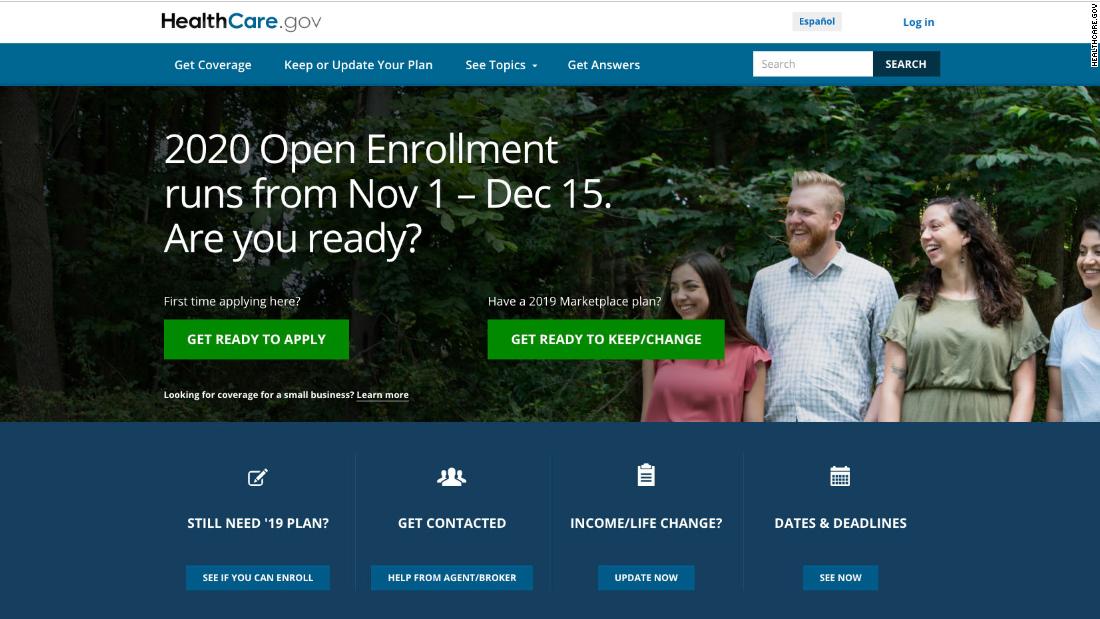
Premiums for the most popular health plans sold under the Affordable Care Act will drop for the second consecutive year, the Trump administration said Tuesday, as the law enters its 10th year and shows further signs of stabilizing.


FTC to probe impacts of state antitrust protections for local hospital mergers

https://www.fiercehealthcare.com/hospitals-health-systems/ftc-to-probe-impacts-state-antitrust-protections-for-local-hospital?mkt_tok=eyJpIjoiT0RZNE4yTm1PV1psTmpNeSIsInQiOiJ5R3gxMEwrdUhPWUdZVlBTZ3NWWkdMV08xOCtObDdFaGdHaE1hN0o4Z2p5WnBaN3hjd2lDVm5ybnBhWUtUNFdlTW1LcndtaTN1WUtNVzg1NmUrQjJmWEhqTWpJR3BkUmVuZmVNS2FzdmRWdENuMEtNT0tJMXozUW93N0lVQmZ5WSJ9&mrkid=959610

The Federal Trade Commission (FTC) issued orders to five health insurance companies and two health systems seeking data to study the effects of state-level regulatory approvals known as certificates of public advantage (COPAs) that protect local hospital mergers from antitrust scrutiny.

Federal officials said they want to study the impact of COPAs and hospital consolidation on prices, quality, access, the innovation of healthcare services and employee wages.

The FTC issued orders to Aetna, Anthem, BlueCross BlueShield of Tennessee, Cigna and United Healthcare for patient-level commerical claims data. 

Orders were also issued to Ballad Health in Tennessee and Virginia as well as Cabell Huntington Hospital in West Virginia for aggregated patient billing and discharge data, along with health system employee wage data and other information relevant for analyzing the health systems’ prices, quality, access and innovation. Both health systems were approved for COPAs last year.

Ballad Health was formed in 2018 through the merger of Mountain States Health Alliance and Wellmont Health System. Under a COPA in Tennessee and a similar agreement in Virginia, officials said they agreed to serve oversight and enforceable commitments that include investing $308 million over 10 years to improve population health, expanding access to care and supporting health research and medical education.

Cabell Huntington Hospital was allowed to acquire nearby St. Mary’s Medical Center under a similar cooperative agreement with the state that was initially challenged by federal regulators.

Tennessee regulators describe COPAs as written approvals governing mergers among two or more hospitals that provide “state action immunity to the hospitals from state and federal antitrust laws by replacing competition with state regulation and active supervision. The goal of the COPA process is to protect the interests of the public in the region affected and the state.”

However, the feds say while COPAs “purport to immunize mergers and collaborations from antitrust scrutiny under the state action doctrine,” the approvals are in need of further study. As Kaiser Health News reported, the federal antitrust exemption dates back to a Supreme Court ruling in the 1940s and has been rarely used to allow hospital mergers. There has been little research (PDF) on the impacts of COPAs.

In June, the FTC held a public workshop examining research on the price effects of three COPAs approved in the 1990s—including Benefis Health System in Montana, Palmetto Health in South Carolina and Mission Health in North Carolina—to inform the current study design. Officials said they intend to collect information over the next several years to conduct retrospective analyses of the Ballad Health and Cabell COPAs.

Once the study is complete, the FTC intends to report publicly the study’s findings and will use them to help in future advocacy and enforcement by the agency and to better inform stakeholders about COPAs. 


A group of Republicans has unveiled its healthcare plan. Here is what’s new and what isn’t

https://www.fiercehealthcare.com/payer/a-group-republicans-have-a-new-healthcare-plan-here-what-new-and-what-isn-t?mkt_tok=eyJpIjoiT0RZNE4yTm1PV1psTmpNeSIsInQiOiJ5R3gxMEwrdUhPWUdZVlBTZ3NWWkdMV08xOCtObDdFaGdHaE1hN0o4Z2p5WnBaN3hjd2lDVm5ybnBhWUtUNFdlTW1LcndtaTN1WUtNVzg1NmUrQjJmWEhqTWpJR3BkUmVuZmVNS2FzdmRWdENuMEtNT0tJMXozUW93N0lVQmZ5WSJ9&mrkid=959610

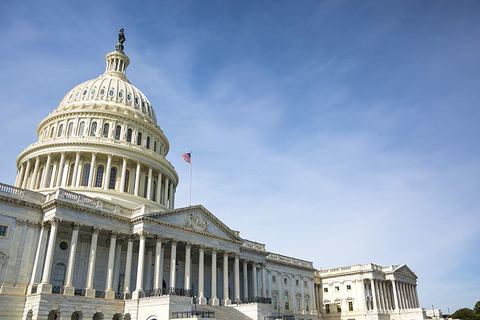
Capitol building in Washington

The Republican Study Committee (RSC), a group of 145 House GOP lawmakers, rolled out a new healthcare plan to counter Democrats’ call for “Medicare for All.”

However, the plan itself closely resembles the Affordable Care Act (ACA) repeal bill called the American Health Care Act (AHCA) that the House passed in 2017 and contributed greatly to the loss of the GOP House majority in 2018.

For the plan to become law, Republicans would have to retake the House in 2020, and President Donald Trump would need to be reelected. However, if those victories happen, the plan could be a blueprint for how a GOP-controlled Congress would move forward on healthcare, as the committee counts among its members both GOP leadership and rank and file.

Here are three takeaways from the plan:

Shifting to high-risk pools

The plan would retain the ACA’s requirement that individual market plans cover pre-existing conditions. However, it takes out provisions that ensure patients with pre-existing conditions get affordable coverage such as requirements that prevent plans from charging sicker people higher premiums than healthy customers.

The plan does introduce high-risk pools that would be used by people with high healthcare costs, a commonly deployed tactic by states for the individual market before the ACA. The high-risk pools would be funded by repackaging the funding used for the ACA’s subsidies and the Medicaid expansion.

However, the plan doesn’t identify the full amount that should be devoted to high-risk pools, which segregate high-cost customers on the individual market.

The plan cites a 2017 report from consulting firm Milliman that estimated a federally supported high-risk pool could require $3.3 billion to $16.7 billion a year. The AHCA also called for high-risk pools but only gave $2.5 billion a year to help states fund them.

While the “$17 billion annual price tag may not seem ideal, it sets up a sustainable path for the individual market,” the RSC report said.

The desire for more funding for high-risk pools is likely a nod to Democratic attacks during the 2018 midterms that the AHCA threatened pre-existing condition protections. The nonpartisan Congressional Budget Office said the AHCA, which let states waive pre-existing condition protections, would lead to people in those states not getting affordable coverage for their pre-existing conditions.

While the AHCA had funding for high-risk pools, experts across the healthcare spectrum said that it wasn’t enough. It would remain to be seen how much more funding would be needed.

Doubling down again on health savings accounts

Bolstering health savings accounts has been a very popular reform idea among Republicans, and that enthusiasm is clear in the RSC plan.

The plan proposes to increase how much an employee can contribute to a health savings account. Currently, an individual can contribute $3,500 and a family can contribute $7,000.

A 2018 bill that passed out of the House but didn’t make it through Congress increased the contribution cap to $6,650 for an individual and $13,300 for a family.

Now, the RSC plan wants to increase the figures again, this time to $9,000 per individual and $18,000 for families, in line with a proposal from libertarian think tank Cato Institute.

“The RSC plan would also expand health savings accounts so that they could be used for a number of health services and products that currently must be paid for with after-tax dollars,” the plan said.

Replace Medicaid expansion with a block grant

This is another common reform in ACA repeal plans. The bill would phase out the enhanced federal matching rate for the Medicaid expansion to pre-expansion levels.

In addition, the bill would replace the existing open-ended federal match with a fixed amount in a block grant.

But the plan has a new twist in a new “flex-grant” that would give more funding to states that adopt a work requirement. However, half of the funding for any flex-grant must go toward supporting the purchase of private plans for low-income individuals.

So far, 12 states have gotten approval from the Trump administration to install work requirements for their Medicaid expansion population. But of those 12 states, three have had their work requirement programs struck down by legal challenges.

Some states are also considering installing their own block grants. Tennessee has released a draft proposal for a block grant but has yet to get federal approval.