Ohio State Wexner Medical Center clears $4B revenue mark

https://www.beckershospitalreview.com/finance/ohio-state-wexner-medical-center-clears-4b-revenue-mark.html?origin=cfoe&utm_source=cfoe

Image result for Ohio State Wexner Medical Center

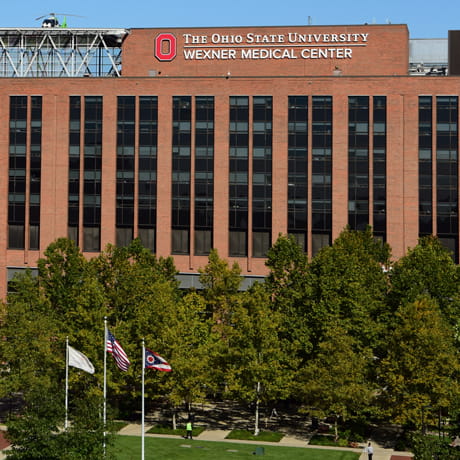
The Ohio State University Wexner Medical Center in Columbus reported strong revenue in the fiscal year ended June 30, according to Columbus Business First.

The nonprofit medical center recorded revenue of more than $4 billion in fiscal year 2019, up 9.4 percent from the year prior, the newspaper reported, citing its analysis of financial results. The growth was partially attributable to a 4 percent year-over-year increase in inpatient admissions.

After factoring in expenses, Ohio State Wexner’s operating income reached $402 million in the fiscal year ended June 30. That’s the highest total since fiscal year 2015, when the medical center posted operating income of $358 million.

The financial results come as Ohio State Wexner plans inpatient and outpatient expansion projects, according to Columbus Business First. An 840-bed hospital tower and a parking garage are on the drawing board.
 

Many Americans clueless about out-of-pocket medical costs, study finds

https://www.beckershospitalreview.com/finance/many-americans-clueless-about-out-of-pocket-medical-costs-study-finds.html?origin=cfoe&utm_source=cfoe

Image result for cartoon clueless on out-of-pocket medical costs

When it comes to out-of-pocket medical costs, many people are unaware of their potential financial burden, according to a new study released by Discover Personal Loans, a provider of banking tools and resources across various financing options.

For the study, researchers examined the average cost of certain medical procedures and compared them to perceptions of costs from 969 surveyed U.S. residents.

Four takeaways from the study:

1. Researchers found that a three-day hospitalization, knee replacement surgery and an appendectomy had the greatest variation of average actual costs compared to average perceived costs.

2. For example, surveyed Americans perceived the average cost of a three-day hospitalization to be $11,013, while the actual average cost posted on Healthcare.gov is about $30,000. That’s a variation of 63 percent.

3. The variation between average actual cost and average perceived cost for a knee replacement surgery and an appendectomy were 34 percent and 32 percent, respectively.

4. Surveyed Americans anticipate spending $2,016 for an emergency room visit, up 5 percent from the average actual cost from the Health Care Cost Institute and cited by CNN, $1,917.

Read more about the study here.


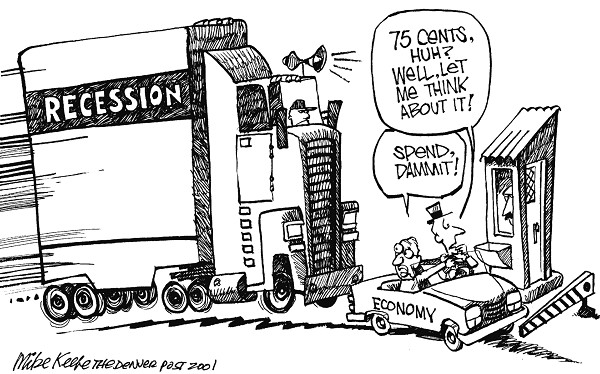
Recession could come in 6 to 9 months, Morgan Stanley says

https://www.beckershospitalreview.com/strategy/recession-could-come-in-6-to-9-months-morgan-stanely-says.html?origin=cfoe&utm_source=cfoe

Image result for cartoon recession

Recent moves from President Donald Trump to raise tariffs on Chinese goods are leading the global economy closer to the brink of recession, according to a Morgan Stanley note cited by Newsweek.

In a recent research note, Morgan Stanley said if President Trump goes through with proposals to raise existing tariffs and China responds, the global economy would fall into recession in the next six to nine months. Specifically, Morgan Stanley’s U.S. public policy lead, Michael Zezas, said the tariffs would be what pushes the global economy into recession.

“Friday’s escalation of tariffs between the U.S. and China suggests they’ve not moved any closer on the key negotiation points that have separated them since May 5,” he said, according to Newsweek. “Neither side sees the benefit to cooperating as better than hanging tough. … We expect that tensions will continue to escalate at least until the costs of doing so are too big to ignore.”

The president said Aug. 23 that he plans to raise existing tariffs to 30 percent from 25 percent on $250 billion of Chinese goods starting Oct. 1. Additionally, he proposed tariffs on another $300 billion of Chinese imports to increase from 10 percent to 15 percent over the coming months. The president’s proposals come after China said it will impose tariffs on another $75 billion of U.S. imports, and that it would reinstate tariffs on auto products that were previously suspended.

Read more here.


The plight of America’s rural health care

https://www.axios.com/the-plight-of-americas-rural-health-care-a34b6c66-7674-4f78-abdc-33f8e711a601.html

Illustration of a tractor plowing a field in the shape of a heart monitor that is petering out

Rural America is stuck in a cycle of increasingly vulnerable patients with declining access to health care.

Why it matters: Rural patients often can’t afford care, are being hounded by hospitals and collection agencies over their unpaid bills, and are facing the reality of life in communities where the last hospital has closed.

Rural Americans tend to be older, sicker and lower-income than urban Americans. They suffer from higher rates of obesity, mental health issues, diabetes, cancer and opioid addiction, as my colleagues Stef Kight and Juliet Bartz reported.

  • They’re also more likely to be uninsured or covered by Medicare or Medicaid, which pay doctors and hospitals less than private insurance does.
  • A small and shrinking population, mostly covered by insurance plans that don’t pay very much, many of whom need a lot of care, puts more financial pressure on providers, especially hospitals. Physician shortages are common.

What they’re saying: “Rural hospitals have long been right there on the edge on average, and we’re seeing more and more of them flip over to red,” said Mark Holmes, a professor at UNC-Chapel Hill and director of the Cecil G. Sheps Center for Health Services Research.

And hospital closures often exacerbate the problems communities were already facing.

  • Hospitals are often the largest or second-largest employer in a rural community.
  • 113 rural hospitals have closed since 2010, according to the Sheps Center.
  • These are disproportionately located in the South — the region with the nation’s worst health outcomes, and where most states haven’t expanded Medicaid — leaving hospitals with more uninsured patients.
  • A 2018 study in Health Affairs found that Medicaid expansion is “associated with improved hospital financial performance and substantially lower likelihoods of closure, especially in rural markets.”

The bottom line: “What we have here is not one root cause; there’s multiple things going on here,” Holmes said. “All these sort of modest kind of trends are adding up to something that’s quite considerable.”

Go deeper:

  • Bloomberg Businessweek reported on eastern Montana’s sole psychiatrist, despite being the state with the nation’s highest suicide rate.
  • The Washington Post detailed a hospital in Missouri’s practice of suing its patients for payment — money that the hospital needed but patients generally don’t have.
  • Kaiser Health News and NPR have profiled the fallout in a rural community in Kansas after its sole remaining hospital closed, which included a 2-week lapse in nearby emergency care.


Rates for Affordable Care Act plans aren’t going up much

https://www.axios.com/affordable-care-act-plans-premiums-arent-going-up-much-1bfabbbe-5b97-400b-8c19-023bd7e4e545.html

Image result for Rates for Affordable Care Act plans aren't going up much

Premiums for Affordable Care Act coverage are going down in some places, and barely rising in others.

The big picture: Health insurers raised ACA rates dramatically over the past few years, largely due to political chaos. But their plans have still proven to be extremely profitable. Now many companies are lowering premiums as they expect to send money back to their customers.

Driving the news: Blue Cross Blue Shield of North Carolina is reducing the average premium for ACA plans by 5.5% in 2020.

  • Nationally, average ACA premiums are basically flat for next year and are going down in a handful of states, according to an analysis by ACA tracker Charles Gaba.

Between the lines: Insurers jacked up ACA premiums after the Trump administration cut off cost-sharing subsidies and nullified the individual mandate, and as Republicans threatened to eradicate the entire law, among other things. Now, they’re correcting for that overpricing.

  • BCBS of North Carolina CEO Patrick Conway said in an interview premiums are falling because the plan cut some providers from its already narrow network and changed the way it pays some hospitals. But he also said the company has “more expertise in the market than when we started.”
  • BCBS of North Carolina’s ACA plans have been extremely lucrative — in fact, too lucrative. The ACA requires insurers to spend at least 80% of their premiums on medical care, or rebate the difference back to their customers.
  • In the first quarter of this year, BCBS of North Carolina spent just 67 cents of every premium dollar on care for most of its ACA plans, according to financial documents.
  • Many other insurers are in the same boat.

The bottom line: ACA plans for many middle-class people remain prohibitively expensive — often around $600 a month for individuals who get no subsidies. But for those who get financial help, “this is a stable, functional, mature market,” said David Anderson, a health policy researcher at Duke University.