High-priced specialty drugs: Exposing the flaws in the system

https://theconversation.com/high-priced-specialty-drugs-exposing-the-flaws-in-the-system-129598

Image result for High-priced specialty drugs: Exposing the flaws in the system

My husband, Andy, has Parkinson’s disease. A year ago, his neurologist recommended a new pill that he was to take at bedtime. We quickly learned that the medication would cost US$1,300 for a one-month supply of 30 pills. In addition, Andy could obtain the drug from only one specialty pharmacy and would have to use mail order.

This was our introduction to specialty drugs.

These medications are becoming increasingly common, though many Americans are unfamiliar with the term. In 2018, the Food and Drug Administration approved 59 new medications, of which 39 are considered specialty drugs.

Specialty drugs are generally high-cost drugs requiring special handling such as refrigeration or injection, though Andy’s did not. They treat complex conditions such as cancer and multiple sclerosis.

Specialty drugs are often available only through specialty pharmacies. In addition to filling prescriptions, these outlets provide educational and support services to patients. For example, they provide refill reminders and help patients learn how to inject their drugs.

In a forthcoming articleprofessor Isaac Buck and I argue that specialty drugs raise significant legal and ethical questions. These merit attention from the public and policymakers.

Specialty drug concerns

First, the term “specialty drug” is somewhat elusive and has no clear definition. In addition, government authorities and medical experts are not the ones who decide whether a medication is designated a specialty drug. Rather, the decision is entirely up to pharmacy benefit managers, or PBMs.

PBMs administer health plans’ drug benefit programs and thereby serve insurers. PBMs have been criticized for driving up health care costs. Drugs that are specialty drugs under one insurance policy are sometimes classified differently in other policies. Furthermore, some specialty drugs are simple pills that do not involve complicated instructions, and thus, it is unclear why they are categorized as specialty drugs.

The second problem is the very high cost of specialty drugs. The average price tag of the more than 300 medications that are considered specialty drugs is approximately $79,000 per year. Almost half of the dollars that Americans pay for medications are spent on specialty drugs. In fact, Medicare spent $32.8 billion on specialty drugs in 2015.

Because of these exorbitant costs, some insurers have created what they call a “specialty tier” in their health plans. In this tier, patients’ cost-sharing responsibilities are higher than they are for medications in other tiers. If your drug is placed in a specialty tier, your coinsurance payment, or the percentage of cost that you pay, may be 25% to 33% of the drug’s price.

This leads to a situation in which you may have the least generous insurance coverage for your most expensive drugs. Under some plans you might pay $10 per month for generic drugs but hundreds of dollars per month for specialty drugs. This can translate into many thousands of dollars in annual out-of-pocket costs, even for consumers with good health insurance. There are no federal regulations in the U.S. that limit drug prices or insurers’ tiering practices.

Conflict of interest and patient choice

A third problem is conflict of interest. PBMs own or co-own the top four specialty pharmacies in the U.S., which are responsible for two-thirds of nationwide specialty drug prescription revenues.

PBMs frequently require patients to purchase their medications from the specific specialty pharmacy that they own. Thus, PBMs have much to gain from designating medications as specialty drugs. Doing so may lead to significant revenues in the form of purchases at PBM-owned specialty pharmacies.

A related problem is the limiting of patient choice. Many specialty pharmacies fill prescriptions only through mail order. Consequently, patients may be restricted to using just one pharmacy and be forced to rely on the mail for delivery.

Some patients enjoy the convenience of home delivery. Others, however, prefer the traditional approach of visiting a drugstore in person. They may worry that the mail will be late, their package will be stolen, or they will be out of town when the drugs arrive. Yet, such patients do not have the option of a brick and mortar pharmacy.

Possible corrective measures

Both political parties have stated that health care costs are a priority for them. However, they have shown a limited appetite for tackling this herculean problem.

The House recently passed a bill that would enable the federal government to negotiate prices with drug manufacturers. Such negotiations could well lower specialty drug prices. The Senate, however, is unlikely to approve the bill, and Congress is unlikely to pass sweeping legislation in a divisive election year.

There has been more success at the federal level in promoting consumer choice. Medicare rules establish that Medicare plans may not force participants to use mail-order pharmacies.

In the meantime, individual states offer useful solutions. For example, some have provided patients with relief in the form of capping out-of-pocket costs. California limits consumers’ expenditures to $250 or $500 for a 30-day supply, depending on the drug type.

At least 15 states also have pharmacy choice statutes. Several ban PBM mandates that prevent patients from freely selecting their preferred qualified pharmacy. Many ban mail-order only requirements.

Some states have recognized that PBMs should not be entirely free to designate medications as specialty drugs. Because such designations can significantly disadvantage patients and may increase patients’ costs, such states have statutory definitions for the term “specialty drug.”

They generally mandate that the drug require special administration, delivery, storage or oversight. Such requirements may justify purchase from a specialty pharmacy. However, drugs without complicated instructions should not be deemed specialty drugs.

One more option that some insurers have already adopted is allowing patients to obtain just a few pills or doses for an initial trial period. Sometimes individuals quickly learn that they cannot tolerate a medication or that it is ineffective. Such “partial fill” programs can spare patients the exorbitant cost of a full 30-day specialty drug supply.

Specialty drugs contribute significantly to the American health care cost crisis. Additional state, or better yet, federal laws should be enacted to constrain PBMs’ authority over specialty drugs. We need further regulation concerning drug classification, pricing, conflicts of interest and patient choice.


Five Healthcare Industry Changes to Watch in 2020

https://www.managedhealthcareexecutive.com/news/five-healthcare-industry-changes-watch-2020

Innovation

Industry experts expect significant changes to shake up the healthcare landscape in the next few years, which will affect both health insurers and providers. Many are the result of a shift toward value-based care, a move toward decreased care in hospital settings, technological advances, and other forces.

Here’s a look at what can payers and providers can expect to occur, why each change is occurring, and how payers and providers can prepare for each change:

1. A shift in healthcare delivery from hospital to ambulatory settings

Healthcare delivery will continue to move from inpatient to outpatient facilities. “More surgeries and diagnostic procedures that historically have required an inpatient hospital stay can now be performed more safely and efficiently in an outpatient setting,” says Stephen A. Timoni, JD, an attorney and partner at the law firm Lindabury, McCormick, Estabrook & Cooper, in Westfield, New Jersey, who represents healthcare providers in areas of reimbursement and managed care contracting. A growing volume of outpatient care will be provided in ambulatory surgery centers, primary care clinics, retail clinics, urgent care centers, nurse managed health centers, imaging facilities, emergency departments, retail clinics, and patients’ homes.

This change is occurring as the result of clinical innovations, patient preferences, financial incentives, electronic health records, telemedicine, and an increased focus on improving quality of care and clinical outcomes. “The upward trend in value-based payment models is also influencing this shift, with the goal of reducing the cost of care and improving the overall patient experience,” Timoni says.

Payers and providers can prepare for this shift by analyzing and forecasting the cost and reimbursement implications of providing care in outpatient settings compared to inpatient settings. They should continue to analyze changing patient demographics, consumer preferences, and satisfaction trends, Timoni says. Collecting and analyzing data regarding quality and clinical outcomes as the result of changes in delivery of care from inpatient to outpatient is also key. Healthcare providers should develop effective strategies to grow capacity and infrastructure for outpatient services and invest in innovative mobile technologies, diagnostic tools, and telemedicine systems.

2. Consolidation will continue industry wide

More healthcare entities will continue to merge together. “Even though the number of available partners for transactions is shrinking, new deals pop up all the time because smaller entities are being targeted or entities that had been holding out are now changing their position,” says Matthew Fisher, JD, partner and chair of the Health Law Group at Mirick O’Connell, a law firm in Westborough, Massachusetts. Increased consolidation will result in higher healthcare prices as larger sized institutions use their size to their advantage. Another impact will be narrowing the field of contracting options, which will result in greater dominance by fewer entities in a market.

This change is occurring because industry stakeholder believes that consolidation is the way to survive in a healthcare landscape still being shaped by the ACA. “The belief is that value-based care models require single unified entities as opposed to more contractual-based ventures to succeed,” Fisher says. Another factor is that momentum for consolidations across the industry has continued to build and no player wants to be left behind.

Along these lines, Timoni says that consolidation has been motivated by the evolving and challenging commercial and government reimbursement models which include lower fee-for-service payment rates, value-based payment components, and incentives to move care from inpatient to outpatient settings. “Basic economic theory suggests that consolidation of hospitals and physicians enables these combined providers to charge higher prices to private payers as the result of a lack of competition,” Timoni says. “Likewise, combined insurers are able to charge higher premiums to their subscribers.”

Payers and providers can prepare for this change by evaluating their operations and determining whether consolidation with another entity is advantageous. “This requires assessing an entity’s operations and the risks of consolidation,” Fisher says.

Timoni advises payers and providers to monitor the consolidation landscape and develop effective merger and acquisition strategies. These strategies should focus on optimizing economies of scale to reduce costs and finding the best partners to achieve improved quality of care and effectively manage population health.

3. Protecting data privacy

Ongoing attention will be given to protecting the privacy of healthcare data. New laws, at both the federal and state levels, will be considered that could introduce new regulatory requirements, Fisher says.

While a federal law in an election year may be doubtful, individual states are proceeding. The California Consumer Protection Act (CCPA), intended to enhance privacy rights and consumer protection, will become effective in 2020, for example. Even though the CCPA doesn’t cover all healthcare data, healthcare organizations will still collect additional information that could be subject to CCPA, which means more compliance obligations, Fisher says. Other states are considering how to jump on the privacy legislation bandwagon, which means that regulatory requirements will increase. “Even in the absence of legislation, payers and providers can expect individuals to assert concerns and use public pressure to drive increased attention to privacy issues,” Fisher says.

Meanwhile, debates around what is meant by privacy continue to evolve, Fisher continues. A backlash against the non-transparent sharing of healthcare data and arguable profiteering is creating anger among patients and other groups. Simultaneously, data breaches continue to be reported on a daily basis. Add in that healthcare is a prime target, and all of the factors point to healthcare needing to do more to protect data.

Payers and providers can embrace increased data privacy by focusing on existing compliance efforts, which will require taking time to better understanding HIPAA. “Ignoring or only making superficial efforts to respect data privacy is insufficient,” Fisher says. “Merely doing what is legally permissible may not be good enough.”

4. Consumerization of healthcare

As patients assume more financial responsibility for their healthcare costs due to higher premiums, co-pays, co-insurance, and deductibles, they have become more concerned with the value of the care they receive as well as cost. Patients will likely demand improved access to clearer benefits, billing, and network information to improve transparency, says Brooks Dexter, MBA, Los Angeles-based managing director and head of the healthcare M&A advisory practice at Duff & Phelps, a global consultancy firm.

“Healthcare providers must follow suit to meet value expectations and deliver more consumer-friendly services or may risk losing market share to innovative new healthcare arrangements, such as direct primary care, which offer convenient and quality care with simplified medical billing,” Dexter says. Some ways to do this are to offer better patient portals, expanded hours, improved access, and clear procedure pricing. Despite the trend, payers and providers will most likely continue to resist CMS’ efforts to force greater cost transparency by requiring hospitals to post payer-specific negotiated charges for common services that can be shopped.

Furthermore, Peter Manoogian, principal at ZS, a consulting firm focused on healthcare in Boston, says that the voices of older adults will become comparatively louder as this rapidly growing segment becomes more tech-savvy. The Trump Administration supports increased use of Medicare Advantage and expanding consumer choices. Plan options will reach a record high this year and create an unprecedented amount of choices for this population. The average number of plans a beneficiary has access to this year will be 28, up by a whopping 50% from 2017. What’s more, new entrants that boast a customer-driven approach such as Oscar Health are entering the fray in major markets such as New York and Houston.

Health plans need to be laser focused on improving their understanding and engagement of their customers—who are evolving themselves. “To stay ahead of the change, health plans need access to the right data coupled with leading-edge analytics and technology to continuously mine insights on what members are seeking in their healthcare experience, how patients and providers interact throughout their healthcare journey, and how to meet the needs of future healthcare customers,” Manoogian says.

Health plans will need to take more of a retail focus than what they’re accustomed to, Manoogian says. The bar for providing a great experience and retaining members will also increase.

5. More technological innovations will emerge

Technological innovation will continue to dramatically and rapidly change the manner in which healthcare is delivered, resulting in more personalized care, improved clinical outcomes and patient experience, and overall quality of life. “Information systems, mobile technology, high-tech digital devices, and electronic medical records will allow payers and providers to accurately measure clinical outcomes and effectively manage the continuum of medical care and their population’s overall health,” Timoni says.

One specific way that care will change is that providers will start seeing telehealth play a more critical role in care delivery as the brick-and-mortar, in-person care model becomes less common. “Telehealth will grow past a nice-to-have tool into a standard of care, particularly for low-risk and predictable appointments,” says Cindy Gaines, MSN, RN, clinical leader, Population Health Management, Philips, a company focused on transforming care through collaborative health management in Alpharetta, Georgia. This transformation will enable providers to better tailor their care to patients’ unique needs, while increasing patient autonomy and engagement.

Technological innovations are occurring due to booming private sector interest and investment in medical technology innovation. “Patients are demanding real-time health information, personalized medicine, higher quality of care, and convenient treatment options,” Timoni says. “Payers are demanding more detailed and expansive outcomes data to scientifically manage the reimbursement system to lower costs and improve their subscribers’ health. The medical and information technology fields are attracting more high-skilled workers, who will continue to drive innovation to new levels as long as investor interest is sustained.”

Regarding the increased use of telehealth, Gaines says that many appointments that occur in a hospital today can take place outside of the hospital. And, as the healthcare industry increasingly moves toward value-based care, providers need to extend their line-of-sight outside of a hospital’s four walls. For example, a low-risk follow-up appointment after an operation is usually mostly dialogue and has a predictable outcome—it could be conducted electronically. “By filling up hospitals with visits that could occur virtually, it makes it harder for patients who need face-to-face healthcare access to get it,” she says.

A lack of insurance coverage is a major impediment to telehealth adoption for most health systems. Therefore, providers should pair guaranteed reimbursement opportunities with change management workflows to advance these efforts, Gaines says. They would also be smart to leverage their patients’ everyday devices to manage their care, whether it’s on their smart phone, a fitness watch, or voice assistant.

To embrace technological innovation, payers and providers must continue to be educated and aware of the expanding medical technology landscape and develop technology investment and deployment strategies. “Consider investing and participating in technology venture capital funds and partnering with private sector technology manufacturers and research institutions,” Timoni says.


Miami man with ‘junk plan’ owes thousands after hospital visit for coronavirus symptoms

https://www.beckershospitalreview.com/finance/miami-man-with-junk-plan-owes-thousands-after-hospital-visit-for-coronavirus-symptoms.html?utm_medium=email

Image result for skinny health plans

A man in Miami went to Jackson Memorial Hospital last month to receive a test for coronavirus after developing flu-like symptoms. He didn’t have the virus, but he was hit with a $3,270 medical bill, according to the Miami Herald.   

Osmel Martinez Azcue said he normally would have used over-the-counter medicine to fight his flu-like symptoms. However, since he had recently visited China, he followed the advice of public health experts and went to the hospital to get tested for coronavirus, known as COVID-19. 

Mr. Azcue said hospital staff told him a CT scan would be necessary to screen for coronavirus. He asked to receive a flu test first. The flu test came back positive.

A few weeks after leaving Jackson Memorial Hospital, Mr. Azcue received a $3,270 medical bill. Though he was insured, Mr. Azcue had a so-called “junk plan,” which offered limited benefits and didn’t cover pre-existing conditions.

Based on his insurance plan, Mr. Azcue is responsible for $1,400 of the bill, hospital officials told the Miami Herald. However, to get the claim covered, Mr. Azcue said his insurance company requested three years of medical records to show that his flu didn’t relate to pre-existing conditions.

The sale of “junk plans,” like the one Mr. Azcue pays $180 per month for, expanded after President Donald Trump’s administration rolled back ACA regulations in 2018.

Access the full Miami Herald article here.


House Democrats ask Trump to ensure affordability of future coronavirus vaccine

https://thehill.com/policy/healthcare/483888-house-democrats-ask-trump-to-ensure-affordability-of-future-coronavirus?utm_source=&utm_medium=email&utm_campaign=27749

House Democrats ask Trump to ensure affordability of future coronavirus vaccine

Dozens of House Democrats wrote to President Trump Thursday to ask that he ensure any future coronavirus vaccines and treatments be “accessible, available and affordable.” 

The Department of Health and Human Services (HHS) will help fund efforts by Janssen — a drug company owned by Johnson & Johnson — to create a coronavirus vaccine and treatment. HHS is also partnering with French drugmaker Sanofi to produce a potential coronavirus vaccine.

Rep. Jan Schakowsky (D-Ill.) led 45 House Democrats in warning that HHS should not give an exclusive license to any private manufacturer or risk making the vaccines or treatments unaffordable.

“Providing exclusive monopoly rights could result in an expensive medicine that is inaccessible, wasting public resources and putting public health at risk in the United States and around the globe,” the lawmakers wrote. 

“If HHS or any other federal agency moves forward with such a proposal, we urge you to instead issue a limited license and implement requirements that a vaccine or treatment be made available at an affordable price.”

The efforts are in the early stages, and it could take years for a vaccine to be available to the public. 

“Americans deserve to know that they will benefit from the fruits of their public investments,” the lawmakers wrote.

“That goal cannot be met if pharmaceutical corporations are given authority to set prices and determine distribution, putting profit-making interests ahead of public health priorities.”

But the concern from House Democrats comes as lawmakers increase their scrutiny of drugmakers over rising prescription costs.

“You have repeatedly called for action to lower drug prices and know that unjustifiably high drug prices are one of the most pressing public health concerns we face today,” the lawmakers wrote to Trump.

“We should not grant any manufacturer a blank check to monopolize a coronavirus vaccine or treatment developed with public, taxpayer support.”


Cartoon – Modern Health Insurance Coverage

Image result for cartoon inadequate health insurance coverage


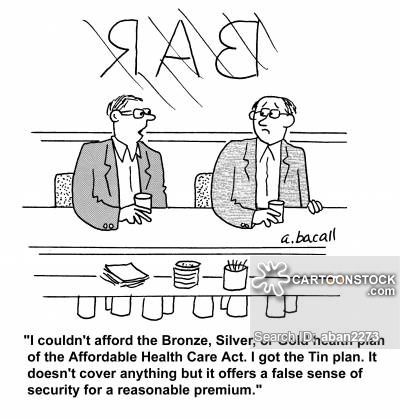
Cartoon – The Tin Plan

Image result for cartoon inadequate health insurance coverage

Cartoon – Acme Health Insurance

Image result for cartoon inadequate health insurance coverage

Trump Medicaid proposal sparks bipartisan warnings

Trump Medicaid proposal sparks bipartisan warnings

Image result for Medicaid cuts

Republicans and Democrats alike are warning that a recent proposal from the Trump administration could lead to billions of dollars in cuts to Medicaid, forcing states to eliminate benefits, reduce enrollment or cut payments to health providers.

In a rare sign of unity, hospitals, insurers, patient advocates and members of both political parties are on the same page in their opposition to the Trump administration’s plan, and most have urged the administration to withdraw a proposal they say would “cripple” Medicaid, the federal-state partnership that provides health care for the poor.

The proposal hasn’t received as much attention as the administration’s other efforts to reform Medicaid, such as implementing work requirements, but it could have the most damaging effect because of how far-reaching it is, experts argue.

“This is high stakes,” said Matt Salo, executive director of the National Association of Medicaid Directors, whose board urged the administration to completely withdraw the proposal.

Trump allies have also voiced their concerns.

“The Medicaid fiscal accountability rule is a concern to my governor, and the stakeholders are worried the rule as proposed could lead to hospital closures, problems with access to care and threaten the safety net,” Sen. John Cornyn (R-Texas) told Department of Health and Human Services Secretary Alex Azar last week during a hearing on the agency’s fiscal 2021 budget request.

Sen. Mark Warner (D-Va.) warned during the same hearing that the proposal could “dramatically affect Medicaid eligibility” and “wreak havoc on budgets in red states and blue states all across the country.”

The proposal would overhaul the complex payment arrangements states use to raise money for their Medicaid programs — funding that is then matched by the federal government.

The administration argues some states use questionable methods of raising funds so they can leverage more money from Washington. One approach used by states consists of taxing providers who stand to benefit from more Medicaid funds flowing into the state.

But governors and state Medicaid directors argue those long-standing arrangements are both legal and necessary as states look for ways to keep up with escalating health care costs.

The proposal would allow the Centers for Medicare and Medicaid Services (CMS) to limit the extra payments from states to providers serving high numbers of uninsured patients or Medicaid patients. Opponents say such changes could result in providers deciding not to accept Medicaid patients.

Dozens of states wrote public comments to CMS Administrator Seema Verma, urging her to withdraw the proposal, including conservative states that are typically supportive of her work.

“If the rule is finalized as proposed, it will immediately disrupt the Medicaid program in Alabama and we believe across the country,” wrote Stephanie McGee Azar, commissioner of the Alabama Medicaid Agency, who is not related to Alex Azar. She added that it would have “unintended consequences that will affect access to care in Alabama to our most vulnerable populations.”

Florida Gov. Ron DeSantis’s (R) administration warned the effect of the proposal would be “immediate and crippling.”

Meanwhile, a letter signed by state Medicaid officials in Michigan, Missouri, New York, Oregon, Pennsylvania, South Carolina, Tennessee, Illinois, Louisiana, Colorado, Pennsylvania and Washington argued the proposal would likely “force states to cut Medicaid eligibility, benefits and/or provider payments, which would have the effect of decreasing low-income individuals’ access to important health care services.”

The public comment period closed Jan. 31. CMS now needs to go through the 4,000 comments before deciding whether to finalize the rule.

Verma and her supporters argue the proposal is not intended to cut Medicaid but instead aims to improve transparency and accountability in the $600 billion a year program.

“It’s not surprising providers and the states are objecting when they are getting federal money for free,” argued Brian Blase, who previously served on President Trump’s National Economic Council, where he worked on health care issues. “They don’t want transparency and they don’t want their financing gimmicks checked.”

Blase predicted the rule, if implemented as proposed, would reduce Medicaid spending by a “very small amount.”

Verma also pushed back on opponents, criticizing a study commissioned by the American Hospital Association that estimated the rule could reduce Medicaid funding by as much as $49 billion annually.

“This proposed rule is not intended to reduce Medicaid payments, and alarmist estimates that this rule, if finalized, will suddenly remove billions of dollars from the program and threaten beneficiary access are overblown and without credibility,” she wrote in a blog post last week.

Some experts disagree with her, pointing to other actions the administration has taken on Medicaid, including work requirements.

“I think one should view this rule not in isolation, but in combination with the broader agenda of this administration on Medicaid,” said Edwin Park, a research professor at Georgetown University McCourt School of Public Policy. “Their ultimate agenda is about cutting the Medicaid program, changing the Medicaid program as it currently stands.”

State officials have complained that they were not asked for their input before the proposal was released, nor did CMS conduct a regulatory analysis of potential effects.

A nonpartisan agency that advises Congress on Medicaid policy wrote to Alex Azar advising he not implement the rule because CMS has not fully assessed the possible effects.

“The Commission is concerned that the proposed changes could reduce payments to providers in ways that could jeopardize access to care for Medicaid enrollees,” the advisory group wrote.

For example, Maine’s Department of Health and Human Services has planned to make $86 million in supplemental payments to hospitals in fiscal 2020, which began July 1.

The rule “would require significant changes to MaineCare and could force the State to cut back on eligibility or services,” Jeanne Lambrew wrote in the department’s public comment.

The administration hasn’t given any signals that it plans to back down from the proposal, despite considerable pushback from stakeholders, states and bipartisan members of Congress.

“We will work with states to help them recreate their practices in ways that are in conformity with the statute and try to be fair and equitable in all our dealings with states,” Alex Azar told lawmakers last week on Capitol Hill.