Elizabeth Warren’s $20.5 Trillion Plan to Fund Medicare for All

https://www.thefiscaltimes.com/2019/11/01/Elizabeth-Warren-s-205-Trillion-Plan-Fund-Medicare-All

Image result for Medicare for All

Elizabeth Warren on Friday detailed how she intends to pay for Medicare for All without raising costs for middle-class households. The senator from Massachusetts said her plan will cover everyone in the country without raising overall spending, “while putting $11 trillion back in the pockets of the American people by eliminating premiums and virtually eliminating out-of-pocket costs.”

Warren’s plan relies in large part on redirecting existing spending toward a universal, federal health care system, while adding new revenues from taxes on the wealthy, the financial sector and large corporations. “We can generate almost half of what we need to cover Medicare for All just by asking employers to pay slightly less than what they are projected to pay today, and through existing taxes,” Warren said.

Some key details from the Warren plan:

Much lower cost estimate: Warren starts with the Urban Institute’s estimate that the federal government would need $34 trillion more over 10 years to pay for Medicare for All, but she slices that number dramatically — down to $20.5 trillion — by using existing federal and state spending on programs including Medicaid to fund a portion of her proposal, along with larger assumed savings produced by a streamlined system paying lower rates to hospitals, doctors and other health care providers.

Total health care spending stays about the same: Warren projects about $52 trillion in national health care spending over 10 years, close to estimates for the existing system, despite covering more people and offering more generous benefits, including long-term care, audio, vision and dental benefits. Applying Medicare payment levels across the health care system is projected to produce substantial savings that would be used to finance the expanded size and scope of the plan.

Heavy reliance on employer funding: The employer contribution to Medicare for All is pegged at $8.8 trillion, with employers required to contribute to the federal government 98% of what they would pay in employee premiums. Businesses with fewer than 50 employees would be exempt.

Public spending continues: State and local governments would be still on the hook for the $6 trillion they currently spend on Medicaid, the Children’s Health Insurance Program and public employee premiums.

New taxes on the wealthy: Warren proposes a new 3% tax on household wealth over $1 billion — and that’s on top of her proposed wealth tax, which calls for a separate 3% tax on wealth over $1 billion (and a 2% tax on wealth between $50 million and $1 billion). Combined with an annual capital gains tax on the top 1% of households, her proposal projects that the new health-care-focused wealth taxes would produce $3 trillion.

Taxes on business and finance: Warren says she can raise $3.8 trillion through “targeted” taxes on big business and financial transactions, including a financial transaction tax of .01% on the sale of stocks, bonds and derivatives.

Reduced tax evasion: Cracking down on tax evasion is projected to bring in $2.3 trillion. “The federal government has a nearly 15% ‘tax gap’ between what it collects in taxes what is actually owed because of systematic under-enforcement of our tax laws, tax evasion, and fraud,” Warren said. “By investing in stronger enforcement and adopting best practices on tax reporting, withholding, and filing, experts predict that we can close the tax gap by a third.”

Revenue increase from higher take-home pay: Employees would no longer pay premiums for health insurance, providing a pay hike and higher tax revenues, estimated to total $1.4 trillion.

Abolishing the Overseas Contingency Operations fund: Warren is calling for reduced military spending, with a focus on what some call the “slush fund” that covers the cost of overseas military operations. Eliminating this off-budget spending is projected to save $800 billion.

Immigration reform: Expanded legal immigration would bring in $400 billion in revenue as more incomes are subject to taxes, Warren says.

A record tax cut? Once the new revenues and cost savings are added up, Warren says her plan will deliver what amounts to an historic tax cut. “No middle class tax increases. $11 trillion in household expenses back in the pockets of American families. That’s substantially larger than the largest tax cut in American history.”

Warren won plaudits from some analysts and policy wonks for releasing a plan, but the details she laid out are also being picked apart by critics and rivals, with some experts already expressing doubts about her assumptions and numbers. Here’s some of the reaction:

Congratulations from a conservative: “Kudos to Senator Warren for actually releasing a plan,” said Scott Greenberg, formerly an analyst with the right-leaning Tax Foundation. “There are a lot of things in here that will draw attacks from the left and from the right, and it might have been politically easier not to release it at all. But Warren has stuck by her commitment to explain her proposals.”

Criticism from a key rival: “The mathematical gymnastics in this plan are all geared towards hiding a simple truth from voters: it’s impossible to pay for Medicare for All without middle class tax increases,”  said Kate Bedingfield, deputy campaign manager for Joe Biden. Bedingfield argued that employees would end up paying the tax on employers.

Dire warnings from the White House: “It is the middle class who would have to pay the extra $100 billion or more to finance this kind of socialist government takeover of health care,” said Larry Kudlow, President Trump’s top economic adviser. “It would have a catastrophic effect on the economy and all these numbers that we’re seeing, all these numbers, on incomes per household, on wage increases, on jobs, all these numbers would literally evaporate and by the by, so would the stock market.”

Tax vs. premium: Warren’s plan will likely kick off a debate about the difference between taxes and health care premiums, and whether that difference matters, says William Gale of the Brookings Institution. “Does [the Warren plan] raise ‘taxes’ on the middle class?,” Gale asked Friday. “Short answer — it does not raise ‘burdens’ on the middle class.”

Cost reduction is crucial: “The key to Warren’s plan for financing Medicare for all is aggressively constraining prices paid to hospitals, physicians, and drug companies. We’d still have the most expensive health system in the world, but it would be less expensive than it is now,” said Larry Levitt of the Kaiser Family Foundation. “Warren’s plan to aggressively constrain health care prices under Medicare for all would be quite disruptive. On the other hand, every other developed country has managed to figure it out, so we know it’s possible.”

And the battle is ultimately political: “In laying out the specifics of her Medicare for all plan, Warren’s challenge is more about politics than arithmetic,” Levitt continued. “She is taking on the wealthy, corporations, and pretty much every part of the health care and insurance industries. Those are some powerful enemies.”

So don’t expect major legislation soon: “Experts will argue for months whether [Warren is] being too optimistic — whether her cost estimates are too low and her revenue estimates too high, whether we can really do this without middle-class tax hikes,” said economist Paul Krugman. “You might say that time will tell, but it probably won’t: Even if Warren becomes president, and Dems take the Senate too, it’s very unlikely that Medicare for all will happen any time soon.”


The Huge Waste in the U.S. Health System

A study finds evidence for how to reduce some of it, but also a large blind spot on how to remove the rest.

Even a divided America can agree on this goal: a health system that is cheaper but doesn’t sacrifice quality. In other words, just get rid of the waste.

A new study, published Monday in JAMA, finds that roughly 20 percent to 25 percent of American health care spending is wasteful. It’s a startling number but not a new finding. What is surprising is how little we know about how to prevent it.

William Shrank, a physician who is chief medical officer of the health insurer Humana and the lead author of the study, said, “One contribution of our study is that we show that we have good evidence on how to eliminate some kinds of waste, but not all of it.”

Following the best available evidence, as reviewed in the study, would eliminate only one-quarter of the waste — reducing health spending by about 5 percent.

Teresa Rogstad of Humana and Natasha Parekh, a physician with the University of Pittsburgh, were co-authors of the study, which combed through 54 studies and reports published since 2012 that estimated the waste or savings from changes in practice and policy.

Because American health spending is so high — almost 18 percent of the economy and over $10,000 per person per year — even small percentages in savings translate into huge dollars.

The estimated waste is at least $760 billion per year. That’s comparable to government spending on Medicare and exceeds national military spending, as well as total primary and secondary education spending.

If we followed the evidence available, we would save about $200 billion per year, about what is spent on the medical care for veterans, the Department of Education and the Department of Energy, combined. That amount could provide health insurance for at least 20 million Americans, or three-quarters of the currently uninsured population.

The largest source of waste, according to the study, is administrative costs, totaling $266 billion a year. This includes time and resources devoted to billing and reporting to insurers and public programs. Despite this high cost, the authors found no studies that evaluate approaches to reducing it.

“That doesn’t mean we have no ideas about how to reduce administrative costs,” said Don Berwick, a physician and senior fellow at the Institute for Healthcare Improvement and author of an editorial on the JAMA study.

Moving to a single-payer system, he suggested, would largely eliminate the vast administrative complexity required by attending to the payment and reporting requirements of various private payers and public programs. But doing so would run up against powerful stakeholders whose incomes derive from the status quo. “What stands in the way of reducing waste — especially administrative waste and out-of-control prices — is much more a lack of political will than a lack of ideas about how to do it.”

While the lead author works for Humana, he also has experience in government and academia, and this is being seen as a major attempt to refine previous studies of health care waste. Reflecting the study’s importance, JAMA published several accompanying editorials. A co-author of one editorial, Ashish Jha of the Harvard Global Health Institute and the Harvard T.H. Chan School of Public Health, said: “It’s perfectly possible to reduce administrative waste in a system with private insurance. In fact, Switzerland, the Netherlands and other countries with private payers have much lower administrative costs than we do. We should focus our energies on administrative simplification, not whether it’s in a single-payer system or not.”

After administrative costs, prices are the next largest area that the JAMA study identified as waste. The authors’ estimate for this is $231 billion to $241 billion per year, on prices that are higher than what would be expected in more competitive health care markets or if we imposed price controls common in many other countries. The study points to high brand drug prices as the major contributor. Although not explicitly raised in the study, consolidated hospital markets also contribute to higher prices.

variety of approaches could push prices downward, but something might be lost in doing so. “High drug prices do motivate investment and innovation,” said Rachel Sachs, an associate professor of law at Washington University in St. Louis.

That doesn’t mean all innovation is good or worth the price. “It means we should be aware of how we reduce prices, taking into consideration which kinds of products and which populations it might affect,” she said.

Likewise, studies show that when hospitals are paid less, quality can degrade, even leading to higher mortality rates.

Other categories of waste examined by the JAMA study encompass inefficient, low-value and uncoordinated care. Together, these total at least $205 billion.

With more than half of medical treatments lacking solid evidence of effectiveness, it’s not surprising that these areas add up to a large total. They include things like hospital-acquired infections; use of high-cost services when lower-cost ones would suffice; low rates of preventive care; avoidable complications and avoidable hospital admissions and readmissions; and services that provide little to no benefit.

In addition to wasting money, these problems can have direct adverse health effects; lead to unwarranted patient anxiety and stress; and lower patient satisfaction and trust in the health system.

Here the study’s findings are relatively more optimistic. It found evidence on approaches that could eliminate up to half of waste in these categories. The current movement toward value-based payment, promoted by the Affordable Care Act, is intended to address these issues while removing their associated waste. The idea is to pay hospitals and doctors in ways that incentivize efficiency and good outcomes, rather than paying for every service regardless of need or results.

Putting this theory into practice has proved difficult. “Value-based payment hasn’t been as effective as people had hoped,” said Karen Joynt Maddox, a physician and co-director of the Center for Health Economics and Policy at Washington University in St. Louis and a co-author of another editorial of the JAMA study.

So far, only a few value-based payment approaches seem to produce savings, and not a lot. Some of the more promising approaches are those that give hospitals and doctors a single payment “as opposed to paying for individual services,” said Zirui Song, a physician and a health economist with Harvard Medical School.

“Savings tend to come from physicians referring patients to lower-priced facilities or cutting back on potentially lower-value care in areas such as procedures, tests or post-acute service,” he said.

There is evidence of savings from some bundled payment programs. These provide a fixed overall budget for care related to a procedure over a specific period, like 90 days of hip replacement care. Accountable care organizations also seem to drive out a little waste. These give health groups the chance to earn bonuses for accepting financial risk and if they reach some targets on quality of care.

The final area of waste illuminated by the JAMA study is fraud and abuse, accounting for $59 billion to $84 billion a year. As much as politicians love to say they’ll tackle this, it’s a relatively small fraction of overall health care waste, around 10 percent. More could be spent on reducing it, but there’s an obvious drawback if it costs more than a dollar to save a dollar in fraud.

Because health care waste comes from many sources, no single policy will address it. Most important, we have evidence on how to reduce only a small fraction of the waste — we need to do a better job of amassing evidence about what works.


Assessing Responses to Increased Provider Consolidation in Six Markets: Final Report

https://georgetown.app.box.com/s/65qfhbzz7fabx9oypsteg6d1aghz4fsj

INTRODUCTION

Few communities in the United States have been exempt from the recent wave of consolidation among health care providers, whether it is hospital-to-hospital mergers and acquisitions (horizontal consolidation) or hospital acquisitions of physician groups and other ambulatory service providers (vertical consolidation). Increased provider concentration has been demonstrated to lead to higher provider reimbursement rates and thus higher premiums for people with private insurance, although outcomes vary, market to market.

To examine the strategies that private insurance companies and employer-purchasers use to constrain health care cost growth and how they are affected by increased provider consolidation, we conducted six market level, qualitative case studies, focusing on mid-sized health care markets in which there had been recent consolidation activity

These are: Detroit, Michigan; Syracuse, New York; Northern Virginia; Indianapolis, Indiana; Asheville, North Carolina; and Colorado Springs, Colorado.

BACKGROUND

Hospital and hospital-physician consolidation has accelerated in recent years, creating dominant local and regional health care systems. In nine out of ten metropolitan areas, the provider market is considered highly concentrated. Although merging hospitals and health systems claim they can achieve greater efficiencies and better care coordination through their consolidation, the economic literature almost universally finds that hospitals that merge charge prices above those of surrounding hospitals. Indeed, hospital mergers have been found to increase the average price of hospital services by 6 to 40 percent.  Another study found that hospital acquisition of physician practices increased outpatient prices by 14 percent. At the same time, increased market concentration is strongly associated with lower quality care. There is also evidence that the prices of independent, non-acquired hospitals also increase in the wake of a rival’s acquisition.

Increases in provider prices have been a key factor driving the growth of commercial health insurance costs over the past decade. Annual family premiums have now surpassed $20,000, and the average annual deductible has increased 100 percent over the last 10 years. While policymakers have focused attention on rising health insurance premiums and out-of-pocket costs (for employers and employees alike), provider consolidation—and its role as a major health care cost driver—has received less attention in the media and among policymakers.

APPROACH

In a series of six market-level, qualitative case studies, we assessed the impact of recent provider consolidations, the resulting provider concentration, the ability of market participants (and, where relevant, regulators) to respond to those consolidations, and strategies for constraining cost growth while maintaining high-quality care. Our case studies focus on the employer-sponsored group insurance market, though we recognize that providers and insurers are often operating across multiple sources of insurance, including Medicare Advantage, Medicaid managed care, and the Affordable Care Act (ACA) marketplaces.  We do not attempt to quantify the effect of provider consolidation in these markets, such as through provider rate or premium changes.

For each case study, we conducted an environmental scan of local media and published literature about market conditions and structured interviews with insurer, provider, and employer representatives, as well as other experts on the health care market. We also interviewed 10 national experts on provider consolidation and payer-provider network negotiations. Over the six case studies, we conducted 77 interviews with local respondents. Each case study, as well as an interim cross-cutting report, can be found at https://chir georgetown edu/provider-consolidation-case-studies/ .

We focused on mid-sized markets that had experienced recent horizontal or vertical consolidation. We identified these through an environmental scan of local media and research literature and a review of trends in market concentration indices, primarily via the Herfindahl-Hirschman Index (HHI). The six study markets were chosen to reflect geographic diversity as well as a range of market dynamics (see Table).

In markets such as Asheville, for instance, hospital mergers and acquisitions over the last decade have left the Mission Health System virtually without competition.

Observers describe other markets, such as Colorado Springs and Detroit, as relatively competitive even with recent provider consolidation. Across all six markets, hospitals purchased or entered into clinical affiliations with physician group practices. In some markets, such as Northern Virginia and Colorado Springs, hospital systems faced competition for physician practices from outside private equity firms and practice management companies.

In four out of our six markets, the Blue Cross Blue Shield affiliate was the dominant insurer in the commercial group market, with well over half the market share. Their dominance extended to all types of employers, including for third-party administrator contracts with self-funded employer plans. In two of our markets, the local health care system or systems were the largest private employers. In the other four, the health systems were among the top three or four employers. The states in our case studies were evenly split in having Certificate of Need laws, the lack of which some stakeholders suggested contributed to significant health system construction and concomitant increases in utilization and, less intuitively, prices (explained further, below).

FINDINGS

1. Hospitals are in various phases of empire-building

Across the six markets, the hospitals’ motivations for consolidation are similar, with stakeholders reporting a pursuit of greater market share and a desire to increase their negotiating leverage with payers to demand higher reimbursement. These observations run counter to the justifications often cited by hospital systems that consolidation is needed to create efficiencies and improve care coordination. Following consolidation, the hospitals and hospital systems in our studied markets have engaged in various phases of empire building.

While approaches varied, providers had similar goals in expanding their empire: to increase their geographic footprint, acquire points of referral (such as free-standing emergency departments and physician practices), or build new facilities in areas with a higher proportion of commercially insured residents. In all study markets except Indianapolis, a larger multi-state health system acquired or merged with a local independent provider to gain new entry or additional market share in a particular region Hospital system expansion was also not limited only to study markets: many hospital systems were expanding their footprint across the state.

In addition to consolidation, hospitals have pursued other strategies to gain greater leverage in negotiations with payers. For example, the Syracuse hospital systems have developed clinical niches, so that they are perceived by local residents as the best facility for certain services, such as orthopedics or cancer care In Indianapolis, each of the four health systems carved out “mini-monopolies” within geographic boundaries that have historically been respected by the other systems. For many years, systems largely did not compete directly, although this de facto arrangement has broken down recently.

2. Providers are exercising their increased market clout

Consolidation appears to be having the providers’ desired effect in our study markets: hospital systems reportedly use their market clout to seek higher reimbursement from payers. For example, a payer representative in Colorado noted that when an independent hospital is acquired by one of the major health systems: “the next thing I know, I see a 100 percent increase [in prices] ”. Similarly, payers in Detroit noted a “toughened stance” from a local hospital system following a recent consolidation.  They, along with payers in other markets, also noted that when independent local hospitals are acquired by large national systems, negotiations shift from the local provider to the central corporate office, where there are fewer long-standing relationships, less understanding of local needs, and often a demand to take all or none of the hospitals in the system.

Even non-dominant hospitals appear to benefit from the consolidation of their rivals. For example, a small hospital in Northern Virginia was able leverage its position as an alternative to the dominant Inova Health System, effectively telling insurers: “If you think it’s healthy to have independent health systems in this market, then give us [higher prices] ”. In other cases, hospitals appear to use their market power to build more market power. For example, Asheville’s Mission hospital reportedly used its dominance to pressure physician groups to join their accountable care organization (ACO).

At the same time, our case studies provide examples of constraints on market power. The local nature of health care delivery sometimes demands that providers “play nice” in the sandbox. In Syracuse, executives of the providers and payers have longstanding personal and professional relationships. “Everyone knows each other and we all go to the same meetings,” said one observer, who believed the tight-knit nature of the community contributed to less-than-hardball tactics in the negotiating room. In Northern Virginia, some thought Inova, based just outside of D C , had been relatively restrained in its demands for increased reimbursement in part to avoid raising red flags with federal regulators.

3. Payers have tools to constrain cost growth, but lack the incentive and ability to deploy them effectively

As third-party administrators for self-insured employer-sponsored group health plans, insurers are typically paid a percentage of the overall cost of the plan. As a result, these insurers have a perverse incentive to keep costs high and growing, limiting their motivation to pursue aggressive strategies to reduce provider prices, a phenomenon one respondent called “middleman economics.” This incentive for payers is compounded by the fact that some of the more obvious strategies to contain costs (cutting or threatening to cut a high-cost hospital from their plan networks, for example) are likely to result in negative publicity and resistance from employers and their employees. The result is a strong incentive for commercial insurers to agree to providers’ demands for price increases each year, which employers and their employees will feel more gradually over time than a provider termination. The result is that employers and employees become the proverbial “frogs in the pot of water.”

Payers identify several cost containment strategies, but all come with downsides. Payers in our study markets do negotiate to limit price increases and are pursuing some cost containment strategies, but none identified a “magic bullet” approach that would moderate price growth while minimizing negative feedback from employers and employees.

Network design

One obvious strategy for insurers in response to a provider’s demand for a price increase would be to decline to contract with that provider and terminate them from their network. However, most payers and purchasers described this as a non-viable “nuclear option.” In addition to concerns about bad publicity, unhappy employer customers, and lost competitive advantage over other payers, quite often the provider at issue is essential to an adequate network, either because it is the sole provider within a reasonable geographic distance or because of its dominance in a particular clinical specialty.

Payers in several markets also noted that, more often than not, employers “don’t have their back” during provider negotiations, taking away their ability to credibly threaten to drop the provider from the network. Many large employers were loath to limit their employees’ choice of providers. Without the ability to credibly cite demand for lower prices from employers, insurers have less leverage in their negotiations with providers.

There are exceptions to this rule, but they were quite rare in the study markets. The only exception we observed was when Blue Cross Blue Shield of North Carolina (BCBSNC) terminated Mission Health System, Asheville’s only hospital system, from its network for two months in 2018. When BCBSNC, the dominant insurer in North Carolina, did so, it reportedly faced little public backlash. Rather, the public largely took BCBSNC’s side in the dispute Mission was forced to rejoin the network without the hoped-for price increases.

Designing “narrow” network product is another option for payers. By offering to drive more patient volume to a limited set of providers, payers can, in theory, extract greater price concessions. But payers across our study markets have found little interest among employer customers in narrow network products. As with the “nuclear option,” employers were typically not willing to restrict their employees’ choice, with several noting that the savings rarely outweigh the perceived limits on employees’ choices.  At the same time, several payers are successfully marketing narrow network products in the individual market, where consumers may be more price sensitive and appear more willing to accept a constraint on their choice of providers in exchange for a lower premium.

Provider tiering and centers of excellence

A few payers in our markets offer plans that tier providers based on cost and quality, so that enrollees who choose lower cost providers will pay lower cost-sharing. However, the strategy is limited to markets in which there is sufficient competition so that lower-cost options are available. Payers and purchasers also noted that they often lacked the necessary data to effectively tier providers, and that patients lacked access to real-time pricing tools to enable them to make cost-effective choices.

In Asheville, a tiering strategy is difficult because the Mission Health System is so dominant. However, at least one large, self-funded employer in Asheville has designated out-of-state “centers of excellence” hospital systems that can offer lower prices and high quality for certain elective procedures. Even after reimbursing enrollees’ travel costs, this employer said, it is still more cost effective than receiving the care at Mission. However, there is a small set of elective procedures that can be performed at these facilities, and the bulk of enrollees’ care must be delivered locally.

Risk-sharing arrangements

Payers in Detroit and Northern Virginia suggested they were pinning at least some cost-containment hopes on risk-sharing arrangements with providers. In this they are following the Medicare program, and several hospital systems in our study markets participate in Medicare risk-sharing programs. However, most payers acknowledged that risk-sharing arrangements they have implemented to date have had only a limited impact. Current arrangements have largely involved only upside risk for providers, with the aim of having the provider take on more downside financial risk at a future date. Payers reported deploying risk-sharing arrangements with physician group practices more than hospitals, likely because they have greater leverage with physicians in most of the studied markets. For example, while hospital executives in Northern Virginia told us they had been presented with possible risk-sharing payment models, they declined to participate due to their lack of “economic incentive.”

Provider-payer partnerships

In some cases, payers have taken a “if you can’t beat ‘em, join ‘em” tactic, by entering into partnerships or joint ventures with health systems. For example, in 2012 Aetna entered into a joint venture with Inova in Northern Virginia to create Innovation Health. More recently, the self-insured General Motors plan entered into an exclusive partnership with the Henry Ford Health System in Detroit. While it is too early to say what the impact of the GM-Henry Ford partnership will have, observers in Northern Virginia largely dismissed Innovation Health’s impact on the market, noting that Aetna had obtained no discernible competitive advantage from the venture.

4. Employers’ tools to help control costs are limited

Unable (or unwilling) to push back on high and rising provider prices, employers have historically looked elsewhere to contain costs. Across our six markets, the most widespread strategy among employers to constrain their health plan costs has been to shift them to employees, largely through higher deductibles Increasing deductibles and other enrollee cost-sharing has been an attractive strategy because it can be ratcheted up slowly over time, limiting employee pushback. At the same time, several employer respondents in our study markets observed that this cost-shifting strategy may have been tapped out, noting that many of their employees can no longer afford the deductibles. One also observed that, because of high provider prices, employees often exceed their deductible after just one imaging service or ER visit, limiting its utility as a cost-containment tactic.

Employers reported investing in employee wellness programs. However, they were unable to document whether these programs generated savings. This is not surprising given that the weight of the evidence to date suggests minimal, if any, return on investment. Employers also touted on-site primary care as a promising strategy in Indianapolis, in part because they offer a subscription-based (capitated) model for the delivery of primary care services. However, not all employers have the requisite size or centralized location to offer this service.

Another strategy, direct contracting, is similarly limited to employers with sufficient size and human resources capacity to bypass payers and negotiate with providers. But this trend may be catching on among some Large employers in both Detroit and Indianapolis are actively considering direct contracting, and as noted above, General Motors directly contracted with the Henry Ford system in 2018. In 2019, the Peak Health Alliance, a coalition of employers and citizens of Summit County, Colorado, successfully negotiated price discounts from local providers, lowering 2020 premiums an estimated 11 percent. It remains to be seen whether such efforts are replicable outside of Summit County and if employers will, over the long term, be able to strike better bargains than private payers.

Employers also differ dramatically in their level of engagement and willingness to push insurers to deliver lower prices. One significant impediment is the lack of access to claims data, which would enable them to identify and address cost drivers.  Indeed, in Indiana, a coalition of large, self-funded employers was forced to take Anthem to court in order to obtain access to their claims data, even though they bear the financial risk of their plans. For many other employers, the expertise and knowledge needed to negotiate effectively with sophisticated provider systems are well outside their core competency; they have delegated that responsibility to their third-party administrators and will continue to do so.

5. Public policy strategies have had limited effectiveness

Across our six markets, anti-trust and other public policy strategies have been deployed to constrain the ill-effects of market concentration, but they have had limited effectiveness.

Anti-trust enforcement

Stakeholders in Northern Virginia suggested that the Federal Trade Commission’s (FTC’s) intervention in Inova’s attempted acquisition of a smaller independent hospital in Prince William County has had a dampening effect on what had been a region-wide buying spree. However, respondents suggested perhaps the FTC intervention was too little, too late, noting that it would be hard for the “super concentrated” region to become any more concentrated. Nationwide, a lack of resources, a narrow focus on horizontal consolidation within local markets, and some negative court decisions have limited the FTC’s ability to be more than a speed bump to the consolidation boom of the past 10 years.

State attorneys general (AGs) have also played a role in our markets. When the for-profit hospital chain HCA acquired Mission Health System in Asheville, the state AG demanded a 10-year commitment that HCA will not close rural hospitals or require major cuts to services. Similarly, in the wake of Optum’s acquisition of the DaVita Medical Group, which owned many of the largest primary care practices in Colorado Springs, that state’s AG imposed time-limited restrictions on Optum and its owner UnitedHealthCare to mitigate anti-trust concerns in the Colorado Springs market. Specifically, UnitedHealthCare had to lift its exclusive Medicare Advantage contract with one of the two major hospital systems for at least 3.5 years and honor DaVita’s prior agreement with Humana (the main Medicare Advantage competitor in Colorado Springs) through at least 2020.

The “Certificate of Public Advantage” or COPA, has been another tool used by states to limit anti-competitive behavior, post-merger. A COPA allows a state, rather than the FTC, to oversee antitrust issues after a consolidation among providers. In North Carolina, the state legislature granted a COPA to Mission after it merged with the competing hospital system in Asheville in 1998. However, COPAs can be subject to “regulatory capture,” where regulators become overly influenced by the industry they are meant to police At least in North Carolina, the COPA appeared to do little to limit Mission’s acquisition of other nearby hospitals or physician groups. In 2015, Mission lobbyists convinced the legislature to repeal the COPA, paving the way for its purchase by the for-profit HCA system.

Certificate of Need laws

Stakeholders offered competing views on the value of state certificate of need (CON) laws. These laws generally require the state’s review and approval of new hospital facilities. Some observers argued that lifting these laws would encourage competing hospitals to enter the market, potentially putting pressure on the dominant hospital system to lower prices However, while Indianapolis experienced a hospital building boom after it repealed its CON law, payers and purchasers alike report that the increase in capacity not only led to a spike in utilization, it also, somewhat counterintuitively, drove hospitals to hike their unit prices. With more competition, hospitals had fewer patients but the same (or higher) overhead costs, leading them to demand higher prices from commercial insurers.

Rate setting and purchasing alliances

Market and public policy failure to adequately counter rising costs has prompted policymakers in some states to consider using the power of the government to set provider payment rates or to encourage the formation of multi-purchaser alliances to demand price concessions from providers. For example, a bill promoted by the Colorado insurance department would have linked some hospital reimbursement to the amount reimbursed by Medicare, while the administrator of North Carolina’s state employee health plan has proposed setting rates via reference to the Medicare program. Although Maryland was not part of our market case study, stakeholders in Northern Virginia attributed that state’s lower hospital prices to its all-payer rate setting program.

As noted above, Colorado leaders have also encouraged the formation of locally based purchasing alliances—built on the Peak Health Alliance model—that could combine the purchasing power of multiple employers to directly negotiate with hospitals.  Although a payer would be sought to administer the plan, their role in contracting with providers would be greatly diminished.  The concept of employer purchasing pools is not new: past efforts, such as California’s PacAdvantage program, ultimately floundered But it is too soon to tell if these nascent efforts to harness government—or employers’—purchasing power will generate significant cost savings or the type of political support needed to initiate and sustain them.

LOOKING AHEAD

As the literature and our case studies show, consolidation leads to higher provider prices and ultimately higher premiums for consumers. Any policy discussion about improving health care affordability will need to confront the limits of the market to constrain provider monopolies and their resulting increased negotiation leverage.

Misaligned incentives among commercial payers and the “must have” status of many hospital systems mean that market-based tools to hold health care costs down have been largely ineffective or difficult to replicate. And, with 90 percent of markets in the country already highly consolidated, the prospect of greater anti-trust enforcement is “too little, too late.”

In addition to the public policies discussed above, states have implemented or are considering requiring providers to work within cost growth targets and leveraging the power of state agencies to demand price concessions from providers. For example, Delaware and Massachusetts have set targets for annual increases in health care spending, while Montana’s state employee plan recently began setting a Medicare-based “reference price” for covered hospitalizations. In California, state agencies are consolidating their pharmacy purchasing authorities to negotiate lower drug prices, pursuant to a 2019 executive order by Governor Newsom. Also, in litigation that has been closely watched because it could embolden more post-consolidation anti-trust lawsuits nationwide, the California AG and a coalition of roughly 1,500 self-funded employers reached a settlement agreement with one of that state’s largest health systems, Sutter Health, over allegations that Sutter used its market power to drive up prices.

Policymakers can also do more to activate or assist employers in demanding lower prices. The first step is to help inform employers about the true drivers of health care costs by banning clauses in payer-provider contracts that prohibit the sharing of data on reimbursement rates. Employers, particularly those that self-fund their plans, should not have to sue their third-party administrator (as they did in Indiana) to gain access to their own data. Being able to clearly see the data on hospital prices has sparked a number of Indiana employers to demand change. However, if incremental steps such as data sharing don’t ultimately reduce provider prices, it could increase the support for more dramatic steps, such as rate-setting, in response to provider consolidation. “The status quo isn’t an option anymore,” one large employer told us. Indeed, the status quo is no longer an option for most employers, and certainly not for their employees, who are bearing an ever greater burden of the cost of care.


More choices and stable premiums for ‘Obamacare’ next year

https://apnews.com/2843740a7cb84d8f8e0df0307abe5dde

Image result for More choices and stable premiums for ‘Obamacare’ next year

Consumers will have more health insurance choices next year under the much-debated Obama health care law and premiums will dip slightly for many, the Trump administration announced Tuesday.

President Donald Trump was elected on a promise to repeal “Obamacare.” But despite his repeated efforts the program has stabilized three years into his administration. That may be short-lived.

The administration is asking a federal appeals court in New Orleans to overturn the entire Affordable Care Act as unconstitutional, an overhang of uncertainty clouding its future.

For now, the Department of Health and Human Services is touting a second consecutive year of positive-sounding numbers. An additional 20 insurers will participate for 2020, expanding consumer choice in many states, officials said. Nearly 70 percent of customers will have three or more insurers from which to pick a plan.

About 10 million people are covered through the health law’s insurance markets, which offer taxpayer-subsidized private plans for people who aren’t covered on the job. Former President Barack Obama’s namesake law will be 10 years old next year.

Premiums for a hypothetical 27-year-old choosing a standard plan will decline 4% on average in 2020 for states served by the federal HealthCare.gov website, the Trump administration said. About a dozen states run their own sign-up websites, but most rely on HealthCare.gov.

A low-cost midrange plan for that hypothetical 27-year-old will charge monthly premiums of $374 next year, officials said. The law’s income-based subsidies can drop that to around $50.

However, people who don’t qualify for income-based assistance must pay full price, and that’s before any deductibles and copays. Unsubsidized customers may just decide to go uninsured, particularly if they’re healthy.

A previous Republican Congress repealed the law’s unpopular penalty to get more people signed up — fines for going without coverage.

Six states will see premiums decline by 10% or more, officials said. They are Delaware, Montana, Nebraska, North Dakota, Oklahoma and Utah.

Three states — Indiana, Louisiana and New Jersey — will see premiums increase 10% or more.

Even as it pursues “Obamacare’s” demise in the courts, the Trump administration is trying to take credit for the program’s current stability.

“Until Congress gets around to replacing it, the president will do what he can to fix the problems created by this system for millions of Americans,” HHS Secretary Alex Azar said. “The president who was supposedly trying to sabotage this law has been better at running it than the guy who wrote it.”

Independent experts say it’s more complicated than that.

They credit the Trump administration for working with a dozen states to approve waivers that can bring down premiums by setting up a backstop system to pay bills from the costliest patients.

However, experts say the original design of the law’s subsidies is probably the major stabilizing force. People eligible for financial assistance are insulated from price spikes because they pay only a fixed percentage of their income. Because their own costs didn’t change much, customers with subsidies kept coming back to the market through years of double-digit increases in list-price premiums.

“As long as the subsidies are in place the changes that are happening … are not going to push this market off a cliff,” Standard & Poor’s director and lead analyst Deep Banerjee said.

Experts say yet another factor is that insurers that have stuck with the program have learned over time how to operate profitably.

Although the program is stable, enrollment has been slowly eroding since Trump took office, from 12.2 million in 2017 to 11.4 million this year. The slippage has come mainly in the HealthCare.gov states, where the federal government runs sign-up season. Slashing the ad budget was one of the Trump administration’s early actions.

The nonpartisan Government Accountability Office has recommended that the administration follow standard federal practices by setting sign-up goals and actively managing the program to meet enrollment targets. Seema Verma, head of the Centers for Medicare and Medicaid Services said the administration doesn’t believe such targets are needed and instead her agency has focused on keeping the HealthCare.gov website running smoothly and improving the enrollment experience for customers.

Verma also disclosed that the administration has made some “minor” changes in how it reports data about the program. While those tweaks appear to be in the weeds, they’re likely to get close attention from Democrats who accuse Trump of “sabotage” of the health law.

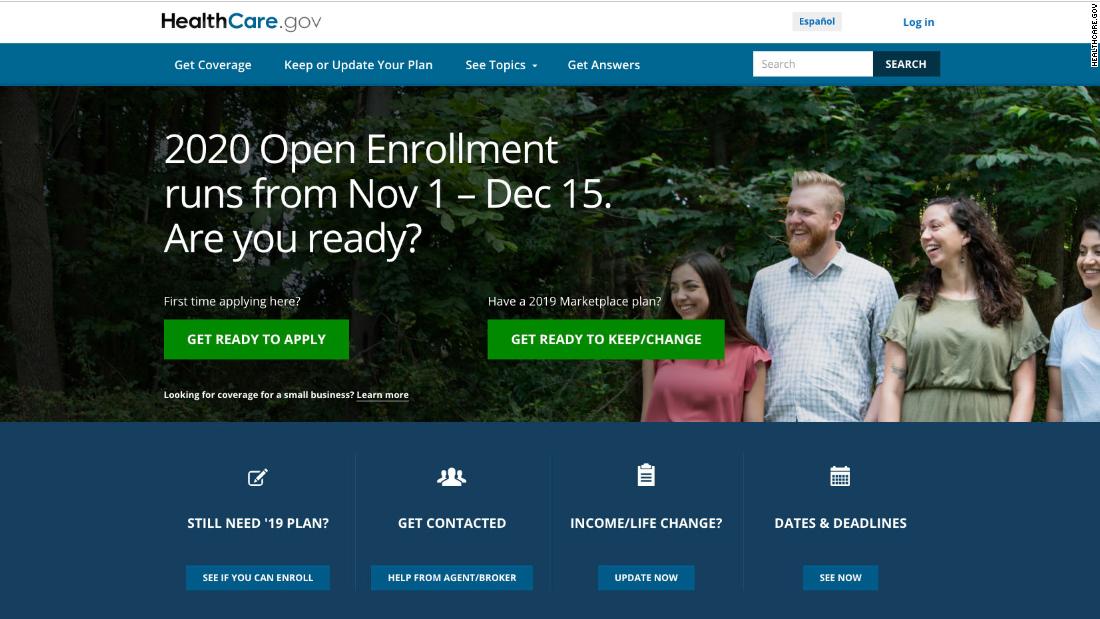
Sign-up season starts Nov. 1 in most states and runs through Dec. 15. States that run their own open enrollment may have different dates. Coverage starts Jan. 1.

The appeals court in New Orleans could issue its ruling during this time, but Azar said he’s not concerned even if the judges say the whole program should be tossed.

“Our messaging would be to keep calm and carry on,” he said, noting that the case is expected to go to the Supreme Court. “There will be no immediate disruption to anyone.”


New Legislation to Control Drug Prices: How Do House and Senate Bills Compare?

https://www.commonwealthfund.org/blog/2019/new-legislation-control-drug-prices-how-do-house-and-senate-bills-compare

drug pricing and legislation

House Speaker Nancy Pelosi’s (D–Calif.) long-anticipated drug pricing plan — the Lower Drug Costs Now Act of 2019 (H.R. 3) — has shaken up the drug pricing debate. It gives Medicare the ability to negotiate drug prices, further fueling the partisan divide between Democrats and Republicans, but also includes policies similar to those championed by Senate Finance Committee Chair Chuck Grassley (R–Iowa), such as caps on price increases in Medicare Parts B and D, as well as changes to the Part D benefit design. The way the bill approaches drug price negotiation is similar to the Trump administration’s supposedly soon-to-be-released international price index (IPI) proposal, which has been under review at the Office of Management and Budget since June.

The following tables compare H.R. 3 based on the legislative text advanced by key committees of jurisdiction and key provisions of related proposals: the Prescription Drug Pricing Reduction Act of 2019 (S. 2543), advanced by the Senate Finance Committee in July; and the Advanced Notice of Proposed Rulemaking (ANPRM): Medicare Program, IPI Model for Medicare Part B Drugs, issued by the Centers for Medicare and Medicaid Services last October.

Despite the poor prospects of H.R. 3 as currently drafted gaining traction in the Republican-controlled Senate, House Democratic leaders are moving full-steam ahead. The House Energy and CommerceEducation and Labor, and Ways and Means committees recently advanced similarly amended versions of H.R. 3 that will need to be reconciled before a floor vote that will likely occur after the recess in early November. The advanced bills raise the minimum number of drugs subject to negotiation from 25 to 35; retain drugs on the negotiation list until two generic or biosimilar products are available; and require price negotiation of drugs with launch prices in excess of the median household income, among other policy changes.

Even with these new revisions, House progressives are pushing for policies that would go further. The Ways and Means committee rejected a series of amendments offered by Health Subcommittee Chair Rep. Lloyd Doggett (D–Texas) that included extending government-negotiated prices to uninsured individuals and increasing the minimum number of drugs subject to negotiation to 50 after five years and to 100 after 10 years. In contrast, moderate Democrats are calling for a vote on stand-alone drug pricing legislation that can pass muster in the Senate — a talking point reiterated by Republicans throughout the markups. Despite cracks in Democratic support, House leadership is expected to continue backing Medicare negotiation, especially with the initial analysis from the Congressional Budget Office (CBO) — projecting $345 billion in savings over 2023–29 — further bolstering their position.

In the face of the ongoing impeachment inquiry, President Trump remains open to drug pricing talks with the Speaker, emphasizing his desire to pass drug pricing legislation. Notably, he endorsed government negotiations on drug pricing prior to taking office. Viewing the president’s interest in H.R. 3 as a viable threat, Chairman Grassley pushed his Republican colleagues to support what Grassley calls the “less aggressive, but strongly pharma-opposed drug pricing bill passed by the Senate Finance Committee.” Taxpayer savings of $100 billion, preliminarily projected by CBO, makes S. 2543 an attractive offset for other health care policy priorities. However, the chairman has already signaled the possibility of delaying floor action on drug pricing until early next year, giving him more time to win Republican support but perhaps also lowering the odds of ultimately passing significant legislation in an election year.

Both parties are intent on getting something done on drug pricing ahead of the 2020 elections. Amid escalating partisan tensions, the competing yet overlapping proposals from House Democrats and the Senate Finance Committee may create a scenario in which bipartisan, bicameral compromise may still be possible.


Premiums for ACA Health Plans Drop in 2020

https://www.realclearhealth.com/2019/10/23/premiums_for_aca_health_plans_drop_in_2020_279468.html?utm_source=morning-scan&utm_medium=email&utm_campaign=mailchimp-newsletter&utm_source=RC+Health+Morning+Scan&utm_campaign=dfd654c92e-MAILCHIMP_RSS_EMAIL_CAMPAIGN&utm_medium=email&utm_term=0_b4baf6b587-dfd654c92e-84752421&mc_cid=dfd654c92e&mc_eid=cb200f8a98

Image result for Premiums for ACA Health Plans Drop in 2020

Premiums for the most popular health plans sold under the Affordable Care Act will drop for the second consecutive year, the Trump administration said Tuesday, as the law enters its 10th year and shows further signs of stabilizing.


FTC to probe impacts of state antitrust protections for local hospital mergers

https://www.fiercehealthcare.com/hospitals-health-systems/ftc-to-probe-impacts-state-antitrust-protections-for-local-hospital?mkt_tok=eyJpIjoiT0RZNE4yTm1PV1psTmpNeSIsInQiOiJ5R3gxMEwrdUhPWUdZVlBTZ3NWWkdMV08xOCtObDdFaGdHaE1hN0o4Z2p5WnBaN3hjd2lDVm5ybnBhWUtUNFdlTW1LcndtaTN1WUtNVzg1NmUrQjJmWEhqTWpJR3BkUmVuZmVNS2FzdmRWdENuMEtNT0tJMXozUW93N0lVQmZ5WSJ9&mrkid=959610

The Federal Trade Commission (FTC) issued orders to five health insurance companies and two health systems seeking data to study the effects of state-level regulatory approvals known as certificates of public advantage (COPAs) that protect local hospital mergers from antitrust scrutiny.

Federal officials said they want to study the impact of COPAs and hospital consolidation on prices, quality, access, the innovation of healthcare services and employee wages.

The FTC issued orders to Aetna, Anthem, BlueCross BlueShield of Tennessee, Cigna and United Healthcare for patient-level commerical claims data. 

Orders were also issued to Ballad Health in Tennessee and Virginia as well as Cabell Huntington Hospital in West Virginia for aggregated patient billing and discharge data, along with health system employee wage data and other information relevant for analyzing the health systems’ prices, quality, access and innovation. Both health systems were approved for COPAs last year.

Ballad Health was formed in 2018 through the merger of Mountain States Health Alliance and Wellmont Health System. Under a COPA in Tennessee and a similar agreement in Virginia, officials said they agreed to serve oversight and enforceable commitments that include investing $308 million over 10 years to improve population health, expanding access to care and supporting health research and medical education.

Cabell Huntington Hospital was allowed to acquire nearby St. Mary’s Medical Center under a similar cooperative agreement with the state that was initially challenged by federal regulators.

Tennessee regulators describe COPAs as written approvals governing mergers among two or more hospitals that provide “state action immunity to the hospitals from state and federal antitrust laws by replacing competition with state regulation and active supervision. The goal of the COPA process is to protect the interests of the public in the region affected and the state.”

However, the feds say while COPAs “purport to immunize mergers and collaborations from antitrust scrutiny under the state action doctrine,” the approvals are in need of further study. As Kaiser Health News reported, the federal antitrust exemption dates back to a Supreme Court ruling in the 1940s and has been rarely used to allow hospital mergers. There has been little research (PDF) on the impacts of COPAs.

In June, the FTC held a public workshop examining research on the price effects of three COPAs approved in the 1990s—including Benefis Health System in Montana, Palmetto Health in South Carolina and Mission Health in North Carolina—to inform the current study design. Officials said they intend to collect information over the next several years to conduct retrospective analyses of the Ballad Health and Cabell COPAs.

Once the study is complete, the FTC intends to report publicly the study’s findings and will use them to help in future advocacy and enforcement by the agency and to better inform stakeholders about COPAs. 


A group of Republicans has unveiled its healthcare plan. Here is what’s new and what isn’t

https://www.fiercehealthcare.com/payer/a-group-republicans-have-a-new-healthcare-plan-here-what-new-and-what-isn-t?mkt_tok=eyJpIjoiT0RZNE4yTm1PV1psTmpNeSIsInQiOiJ5R3gxMEwrdUhPWUdZVlBTZ3NWWkdMV08xOCtObDdFaGdHaE1hN0o4Z2p5WnBaN3hjd2lDVm5ybnBhWUtUNFdlTW1LcndtaTN1WUtNVzg1NmUrQjJmWEhqTWpJR3BkUmVuZmVNS2FzdmRWdENuMEtNT0tJMXozUW93N0lVQmZ5WSJ9&mrkid=959610

Capitol building in Washington

The Republican Study Committee (RSC), a group of 145 House GOP lawmakers, rolled out a new healthcare plan to counter Democrats’ call for “Medicare for All.”

However, the plan itself closely resembles the Affordable Care Act (ACA) repeal bill called the American Health Care Act (AHCA) that the House passed in 2017 and contributed greatly to the loss of the GOP House majority in 2018.

For the plan to become law, Republicans would have to retake the House in 2020, and President Donald Trump would need to be reelected. However, if those victories happen, the plan could be a blueprint for how a GOP-controlled Congress would move forward on healthcare, as the committee counts among its members both GOP leadership and rank and file.

Here are three takeaways from the plan:

Shifting to high-risk pools

The plan would retain the ACA’s requirement that individual market plans cover pre-existing conditions. However, it takes out provisions that ensure patients with pre-existing conditions get affordable coverage such as requirements that prevent plans from charging sicker people higher premiums than healthy customers.

The plan does introduce high-risk pools that would be used by people with high healthcare costs, a commonly deployed tactic by states for the individual market before the ACA. The high-risk pools would be funded by repackaging the funding used for the ACA’s subsidies and the Medicaid expansion.

However, the plan doesn’t identify the full amount that should be devoted to high-risk pools, which segregate high-cost customers on the individual market.

The plan cites a 2017 report from consulting firm Milliman that estimated a federally supported high-risk pool could require $3.3 billion to $16.7 billion a year. The AHCA also called for high-risk pools but only gave $2.5 billion a year to help states fund them.

While the “$17 billion annual price tag may not seem ideal, it sets up a sustainable path for the individual market,” the RSC report said.

The desire for more funding for high-risk pools is likely a nod to Democratic attacks during the 2018 midterms that the AHCA threatened pre-existing condition protections. The nonpartisan Congressional Budget Office said the AHCA, which let states waive pre-existing condition protections, would lead to people in those states not getting affordable coverage for their pre-existing conditions.

While the AHCA had funding for high-risk pools, experts across the healthcare spectrum said that it wasn’t enough. It would remain to be seen how much more funding would be needed.

Doubling down again on health savings accounts

Bolstering health savings accounts has been a very popular reform idea among Republicans, and that enthusiasm is clear in the RSC plan.

The plan proposes to increase how much an employee can contribute to a health savings account. Currently, an individual can contribute $3,500 and a family can contribute $7,000.

A 2018 bill that passed out of the House but didn’t make it through Congress increased the contribution cap to $6,650 for an individual and $13,300 for a family.

Now, the RSC plan wants to increase the figures again, this time to $9,000 per individual and $18,000 for families, in line with a proposal from libertarian think tank Cato Institute.

“The RSC plan would also expand health savings accounts so that they could be used for a number of health services and products that currently must be paid for with after-tax dollars,” the plan said.

Replace Medicaid expansion with a block grant

This is another common reform in ACA repeal plans. The bill would phase out the enhanced federal matching rate for the Medicaid expansion to pre-expansion levels.

In addition, the bill would replace the existing open-ended federal match with a fixed amount in a block grant.

But the plan has a new twist in a new “flex-grant” that would give more funding to states that adopt a work requirement. However, half of the funding for any flex-grant must go toward supporting the purchase of private plans for low-income individuals.

So far, 12 states have gotten approval from the Trump administration to install work requirements for their Medicaid expansion population. But of those 12 states, three have had their work requirement programs struck down by legal challenges.

Some states are also considering installing their own block grants. Tennessee has released a draft proposal for a block grant but has yet to get federal approval.


If there’s a turning point on health costs, it’ll come from employers

https://www.axios.com/health-care-employers-cost-expensive–778f9435-7dd5-4562-8df6-5d252f1c6ff4.html

Illustration of a pill bottle casting a shadow of a businessman

Employers are the linchpin of the U.S. health care system. But they don’t always act like it.

The big picture: Employers play a minor role in the political debate over health care costs, but they have a lot on the line — and a lot more political muscle than they’re choosing to flex. An increasingly bipartisan cadre of policy experts is trying to tell them that staying on the sidelines is both counterproductive and unsustainable.

Collectively, private-sector employers are one of the biggest and most politically powerful stakeholder groups in the health care debate. They cover more people than any other source, and account for about 20% of all health care spending — almost $700 billion in 2017.

  • You would think that employers have a ton to gain by engaging in these discussions” around cost, said Dan Mendelson, the founder of the consulting firm Avalere Health. But they have consistently “failed to realize those expectations.”

The catch: Even though businesses are the core of the health care system, health care typically isn’t the core of what they do. They have similar structural interests, but they’re not necessarily organized around those interests.

  • For years, businesses have responded to rising health care costs primarily by shifting more of those costs onto their workers, through higher deductibles and other cost-sharing. The average deductible is now 212% higher than it was in 2008.
  • If employers ever reach the conclusion that they’ve taken this kind of cost-shifting as far as it can go, they could be powerful voices in the political debate over more aggressive cost-control measures — and they do want to control costs. But for now, they’re still on the sidelines.
  • “The frustration is definitely rising, but I would be hesitant to predict a breaking point,” Mendelson said. “It would be great if they were more engaged, but at the same time it’s rational that they are trying to reduce their exposure.”

There are exceptions. Walmart, for example, has undertaken an especially aggressive effort to overhaul its health benefits, even ditching traditional insurers and bargaining directly with health systems that have reputations for high-quality care.

  • Then there’s Haven, the joint effort from Amazon, Berkshire Hathaway and JPMorgan Chase. But it’s still not clear whether that project will try to affect systemwide change, or simply a better deal for its many employees, more similar to Walmart’s direct-purchasing goals. Those tools are only available to the largest companies.

Most employers still rely on their insurers to negotiate the best prices, preferring to stay out the weeds themselves. But insurers are becoming increasingly vocal about the difficulty of negotiating big discounts on hospital care, as hospitals consolidate, and for new prescription drugs that don’t have any competition.

  • Government-led efforts to directly control those costs run into fierce industry opposition. But if anything could help them break through politically, the most likely inflection point would likely be some kind of “enough is enough” moment from employers.
  • “I think you’re going to see more and more pressure, and even openness to public policy interventions that take advantage of negotiations” — for example, tying some private payment rates to Medicare’s, Democratic health care strategist Chris Jennings said.

It’s not just Democrats.

  • John Bardis, a former Trump administration health care official, said in a speech this week that employers need to take more aggressive stances toward cost containment.
  • Avik Roy, a conservative policy analyst who advised Mitt Romney’s presidential campaign on health care, has also endorsed more direct intervention. In the most concentrated, least competitive markets, the government should cap how much hospitals can charge private insurers, using Medicare rates as a baseline, he says.

The bottom line: If there’s ever going to be a turning point that would make cost containment more politically attainable, employers would probably need to be the ones who drive it.


Employers aren’t changing their health benefits

https://www.axios.com/employers-health-care-coverage-insurance-2020-election-e0ce92cf-c106-44fe-bb35-1c3c6e452712.html

Image result for Employers aren't changing their health benefits

Companies rarely switch the health plans they offer to their workers, and seem to be especially cautious in the 2020 election year.

The big picture: Medical and drug costs are crushing employers and workers alike. But altering benefits — which could require employees to change their doctors — could provoke even more anger.

By the numbers: Roughly half of employers offering health benefits did not shop around for new plans or insurance companies for 2019, according to the Kaiser Family Foundation’s latest employer benefit survey.

  • Of the half that did shop, just 18% changed to a new insurance carrier.
  • That means fewer than 10% of all employers switched carriers.
  • Large corporations, like GM, are much less likely to tinker with coverage than smaller firms.

“Disruption is the enemy,” Mike Turpin, an employer health care consultant at the brokerage USI Insurance Services, said on a call with Wall Street investors last week.

  • Turpin said he has seen even less switching for 2020 because employers don’t want to make waves over health care in an election year — “which buys another year” for the large, incumbent health insurance companies.

Between the lines: More companies have moved workers into less comprehensive plans since the Affordable Care Act was passed, but those changes often have been met with either immediate condemnation (like Harvard in 2015) or delayed outrage as workers shoulder more costs.

  • “It is telling that brokers perform an analysis for employers that’s called ‘disruption analysis’ — the goal of which is not to be disruptive, but to minimize disruption,” said Katherine Hempstead, a health policy adviser at the Robert Wood Johnson Foundation.

Yes, but: Millions of people still switch health plans every year when they buy it on their own, change jobs, get laid off or retire.