UnitedHealth CEO Sold $5.6 Million in Shares the Same Day as Ransomware Attack

Other senior executives also cashed out as the company faced a $1.6 billion threat that wreaked havoc throughout the health care system.

On February 21, the same day that a ransomware attack began to wreak havoc throughout UnitedHealth Group and the U.S. health care system, five of UnitedHealth’s C-suite executives, including CEO Andrew Witty and the company’s chief legal officer, sold $17.7 million worth of their stock in the company. Witty alone accounted for $5.6 million of those sales.

The company’s stock has not recovered since the ransomware attack and has underperformed the S&P 500 index of major stocks by 8% during that time. In the two weeks following the ransomware attack, the company’s stock slid by 10.4%, wiping out more than $46 billion in market cap and greatly reducing the value of shares held by non-insiders. The slide continued for several weeks. On the day Witty and the other executives sold their shares, the stock price closed at $521.97. By April 12, it had fallen to $439.20.

The ransomware attack is estimated to have cost the insurance giant as much as $1.6 billion in total. Witty would later confirm, during his appearance before the Senate Finance Committee on May 1, that the company paid $22 million in ransom to the hackers

“He (Witty) sold the shares on the same day that he learned of the ransomware attack,” said Richard Painter, a professor at the University of Minnesota School of Law who is also the vice chair of Citizens for Responsibility and Ethics in Washington. “That’s not good. For the SEC to prove a civil case of insider trading they just have to prove that it’s more probable than not that executives acted on inside information. CEOs have got to be a heck of a lot more careful.

You’re the CEO of a company, you should not be buying or selling the stock right in the middle of a material event like a ransomware attack. You’re asking for trouble. You’re going to end up with an SEC investigation. If that goes badly you could end up with a DOJ investigation.” 

How much UnitedHealth’s C-suite executives sold in company stock on February 21, 2024:

Brian Thompson, the CEO of UHG’s insurance arm, sold $1.5 million on the same day. John Rex, then the CFO and now the CFO and president, sold $4.4 million, as did Dirk McMahon, now the former president. Chief Legal Officer Rupert Bondy, who would likely have to have signed off on the sales, sold $750,000. 

HEALTH CARE un-covered is the first media outlet to report these disclosures. 

The ransomware attack was caused at least in part by negligence on UnitedHealth’s part, Witty admitted at the Finance Committee hearing. He acknowledged that the company had failed to use multi-factor authentication — requiring more than just a password to access information — to secure its data. The cyberattack exposed the personal health information of as much as a third of Americans’ health information. 

“This incident and the harm that it caused was, like so many other security breaches, completely preventable and the direct result of corporate negligence,”

Sen. Ron Wyden (D-Ore.) wrote to federal regulators on May 30. “UHG has publicly confirmed that the hackers gained their initial foothold by logging into a remote access server that was not protected with multi-factor authentication (MFA). MFA is an industry-standard cyber defense that protects against hackers who have guessed or stolen a valid username and password for a system.”

UnitedHealth exploited the crisis created by its own negligence to further entrench its position as the largest employer of doctors in the country, acquiring medical practices that were unable to pay their bills due at least in part to the chaos created by the ransomware attack. The American Medical Association is considering legal action against the company for the attack, with a proposal for its House of Delegates conference beginning June 8 stating that “Optum is the largest employer of physicians and has acquired practices when the ransomware disruption made those practices unable to survive without acquisition… Even the practices that survive will have ongoing damages including but not limited to denials related to giving therapy when it was impossible to obtain prior authorization, from using lines of credit and having to pay interest, from having billing departments and others work overtime to submit claims, to losing key employees from inability to make payroll.”

Other well-timed insider stock transactions

In April, Bloomberg reported that in the lead up to the disclosure of an FTC investigation into UnitedHealth’s monopolistic practices, other UnitedHealth insiders, including Chairman Stephen Hemsley, had sold $102 million worth of their shares.

News of that investigation and the stock sales led Sen. Elizabeth Warren (D-Mass.) and other lawmakers to call for an SEC investigation into the trading.

The disclosures revealed here, however, are potentially more incriminating: the executives sold the stock the same day the company became aware of the devastating ransomware attack. When Witty was supposed to be all hands on deck strategizing how to protect health care providers and millions of patients, he spent at least part of his day taking action to preserve his net worth.

EDITOR’S NOTE: 

This is not the first time UnitedHealth executives have engaged in questionable or illegal stock transactions. In 2007, former CEO William McGuire agreed to a record $468 million settlement with the SEC after it was learned that for more than a decade he had engaged in a scheme to inflate the value of his holdings in the company and, consequently, his net worth.

An SEC investigation that year found that over a 12-year period, “McGuire repeatedly caused the company to grant undisclosed, in-the-money stock options to himself and other UnitedHealth officers and employees without recording in the company’s books and disclosing to shareholders material amounts of compensation expenses as required by applicable accounting rules.” In other words, he was back-dating his stock options.

As the SEC explained: 

[F]rom at least 1994 through 2005, McGuire looked back over a window of time and picked grant dates for UnitedHealth options that coincided with dates of historically low quarterly closing prices for the company’s common stock, resulting in grants of in-the-money options.

According to the complaint, McGuire signed and approved backdated documents falsely indicating that the options had actually been granted on these earlier dates when UnitedHealth’s stock price was at or near these low points.

These inaccurate documents caused the company to understate compensation expenses for stock options, and were routinely provided to the company’s external auditors in connection with their audits and reviews of UnitedHealth’s financial statements.

The aftermath of a C-suite slimdown

Saint Peter’s Healthcare System in New Brunswick, N.J., was six years ahead of the C-suite streamlining curve.

The health system slimmed down its leadership structure in 2017, President and CEO Les Hirsch told Becker’s. A top-heavy executive team grew unsustainable as the system struggled financially, operating at a loss. Saint Peter’s board decided to combine the president and CEO positions — which were previously split in two. Then, as president and CEO, Mr. Hirsch cut five vice presidents’ positions, including the consolidation of the chief information officer and chief medical information officer roles. More than  20 middle-manager positions were also cut or consolidated.

The streamlining of senior leadership positions alone at the time eliminated over $4 million in salaries and benefits, according to Mr. Hirsch. With the old leadership structure, Saint Peter’s spent about 2.4% of its revenue on senior leaders’ compensation. Last year, that percentage sank to 1.34%.

But finances shouldn’t be the only consideration for a health system planning to whittle down its structure.

“The good news is, we’re lean,” Mr. Hirsch said. “The bad news is, we’re lean.”

Since consolidating the president and CEO roles — and not having a chief operating officer — succession planning is more complicated, per Mr. Hirsch.

“There’s no designated No. 2,” he said. “Our senior leadership team structure is very flat.”

A condensed C-suite also means more work for some members of the leadership team — which is taken in stride, Mr. Hirsch said. There’s no specific “planning” department, so executives put their heads together on strategy, growth and development initiatives.  There is no government relations officer, but Mr. Hirsch, as CEO, takes primary responsibility for this function and is very active in advocacy. 

Anyone who works on a lean team like this also “has to be a generalist,” Mr. Hirsch said. He stays up to date on the literature and sends relevant articles to other executives.

“Considering our size as one of the few remaining single-hospital health systems in New Jersey, we don’t have the luxury of having somebody specifically responsible for artificial intelligence or other niche responsibilities as these are functions that are absorbed within people’s roles,” Mr. Hirsch said. “And we all develop the knowledge needed so that we can understand how new ideas or resources may apply to us. When you’re smaller and don’t have the scale of these mega-organizations, you have to do more yourself. You roll up your sleeves.”

Despite these challenges, a little can go a long way; three departmental administrators now split the job once shared by seven people at Saint Peter’s. There’s been no hit to efficiency; “they’re more effective in their roles as departmental administrators than anybody that I’ve ever seen,” Mr. Hirsch said.

The changes to streamline management were also well-received by the workforce. Often layoffs affect front-line workers more than management or senior leadership — which may have contributed to the lack of outcry, per Mr. Hirsch. But he primarily attributes the positive reception to intentional transparency.

“Most importantly, I’m a very active communicator. So, I communicated about it. It wasn’t that there was some intrigue and mystery in the organization that people were hearing by rumor,” Mr. Hirsch said.

Rumors — like fear — are two things that equate to being like a cancer in an organization,” he continued. “I always want to do everything I possibly can to set the facts straight and communicate with people. If it’s not confidential and I can communicate it, I will. In fact, I’ll err more on the side of communicating than keeping information close to the vest.”

Regardless of who is affected by layoffs, executives should always handle them with sensitivity, Mr. Hirsch emphasized; the right choice for an organization is not always the easy choice for its people.

“It’s always painful when you’re making these kinds of changes because they affect people, and you always have to go about those changes in a very thoughtful, considerate, and compassionate way,” Mr. Hirsch said. “You’re eliminating roles and impacting people’s lives, their careers and their family. So, I always keep that top of mind.”

Healthcare 2024: The 10 Themes that will Dominate Discussion

The U.S. health system has experienced three major shifts since the pandemic that set the stage for its future:

  • From trust to distrust: Every poll has chronicled the decline in trust and confidence in government: Congress, the Presidency, the FDA and CDC and even the Supreme Court are at all-time lows. Thus, lawmaking about healthcare is met with unusual hostility.
  • From big to bigger: The market has consistently rewarded large cap operators, giving advantage to national and global operators in health insurance, information technology and retail health. In response, horizontal consolidation via mergers and acquisitions has enabled hospitals, medical practices, law firms and consultancies to get bigger, attracting increased attention from regulators. Access to private capital and investor confidence is a major differentiator for major players in each sector.
  • From regulatory tailwinds to headwinds: in the last 3 years, regulators have forced insurers, hospitals and drug companies to disclose prices and change business practices deemed harmful to fair competition and consumer choice. Incumbent-unfriendly scrutiny has increased at both the state and federal levels including notable bipartisan support for industry-opposed legislation. It will continue as healthcare favor appears to have run its course.

Some consider these adverse; others opportunistic; all consider them profound. All concede the long-term destination of the U.S. health system is unknown. Against this backdrop, 2024 is about safe bets.

These 10 themes will be on the agenda for every organization operating in the $4.5 trillion U.S. healthcare market:

  1. Not for profit health: “Not-for-profit” designation is significant in healthcare and increasingly a magnet for unwelcome attention. Not-for-profit hospitals, especially large, diversified multi-hospital systems, will face increased requirements to justify their tax exemptions. Special attention will be directed at non-operating income activities involving partnerships with private equity and incentives used in compensating leaders. Justification for profits will take center stage in 2024 with growing antipathy toward organizations deemed to put profit above all else.
  2. Insurer coverage and business practices: State and federal regulators will impose regulatory constraints on insurer business practices that lend to consumer and small-business affordability issues.
  3. Workforce wellbeing: The pandemic hangover, sustained impact of inflation on consumer prices, increased visibility of executive compensation and heightened public support for the rank-and-file workers and means wellbeing issues must be significant in 2024.
  4. Board effectiveness: The composition, preparedness, compensation and independent judgement of Boards will attract media scrutiny; not-for-profit boards will get special attention in light of 2023 revelations in higher education.
  5. Employer-sponsored health benefits: The cost-effectiveness of employee health benefits coverage will prompt some industries and large, self-insured companies to pursue alternative strategies for attracting and maintaining a productive workforce. Direct contracting, on-site and virtual care will be key elements.
  6. Physician independence: With 20% of physicians in private equity-backed groups, and 50% in hospital employed settings, ‘corporatization’ will encounter stiff resistance from physicians increasingly motivated to activism believing their voices are unheard.
  7. Data driven healthcare: The health industry’s drive toward interoperability and transparency will will force policy changes around data (codes) and platform ownership, intellectual property boundaries, liability et al. Experience-based healthcare will be forcibly constrained by data-driven changes to processes and insights.
  8. Consolidation: The DOJ and FTC will expand their activism against vertical and horizontal consolidation that result in higher costs for consumers. Retrospective analyses of prior deals to square promises and actual results will be necessary.
  9. Public health: State and federal funding for public health programs that integrate with community-based health providers will be prioritized. The inadequacy of public health funding versus the relative adequacy of healthcare’s more lucrative services will be the centerpiece for health reforms.
  10. ACO 2.0: In Campaign 2024, abortion and the Affordable Care Act will be vote-getters for candidates favoring/opposing current policies. Calls to “Fix and Repair” the Affordable Care Act will take center stage as voters’ seek affordability and access remedies.

Every Board and C suite in U.S. healthcare will face these issues in 2024.

Executive Intelligence and Its Relationship to Management Competence

These days I have been reading From Strength to Strength: Finding Success, Happiness, and Deep Purpose in the Second Half of Life by Arthur C. Brooks. Brooks is the former President of the American Enterprise Institute and is currently a professor at both the Harvard Kennedy School and the Harvard Business School. 

From Strength to Strength is a book about intelligence and aging and the relationship of those aspects to personal happiness. The book is part sociology, part psychology, and part self-help. But if you read carefully, the book also offers important lessons in contemporary management.

The central theme of From Strength to Strength is how our intelligence changes over time and how individuals must change to make the best use of this changing intelligence. To make this point, Brooks cites Raymond Cattell, a British-American psychologist, who in 1971 suggested that there are two types of intelligence: “fluid intelligence” and “crystallized intelligence.”

Cattell and Brooks define fluid intelligence as the ability to “reason, think flexibly, and solve novel problems.” This is the kind of smarts and intelligence that is associated with young Nobel Prize winners and the tech titans of Silicon Valley. Crystallized intelligence is different. Brooks defines crystallized intelligence as the ability to use a stock of knowledge accumulated and learned in the past. Fluid intelligence is a characteristic of the young while crystallized intelligence is more closely associated with our aging process.

At its best, fluid intelligence is “raw smarts” or what I might term “mental athleticism.” Crystallized intelligence at its best is what we recognize as “wisdom.”

Extrapolating from Brooks’ observations and analysis, one can conclude that complex organizations, both not-for-profit and for-profit, require both kinds of executive intelligence. Fluid intelligence generates new ideas, top-shelf innovation, and executive solutions to the most difficult business problems. But crystallized intelligence provides organizations with “the wisdom and experience of people who have seen a lot.”

To further paraphrase Brooks, crystallized intelligence can teach the organization how not to make flagrant, self-defeating, and avoidable errors.

Reading Brooks and thinking about Cattell’s research led me to two observations. First, in our general corporate environment, including hospitals, we very much de-emphasize the value of crystallized intelligence. Just at the moment when many “older” executives are at the highest point of institutional wisdom, our modern corporate structure tends to react in two ways:

  • In general, we no longer give these so-called older executives jobs of responsibility and/or importance. These jobs are reserved for younger executives whose critical qualification is powerful levels of fluid intelligence.
  • Also, many corporate organizations demand what I would characterize as “early retirement.” This is especially true in many prominent American companies when long-tenured executives are required to retire in their late fifties or early sixties. If you place these retirements in the context of crystallized intelligence, then such retirements inevitably lead to a significant loss of human capital to our overall national economy. This includes the loss of long-term accumulated smarts, and most importantly, a loss of organizational wisdom.

Turning this discussion more specifically to hospital management leads to my second observation. Since Covid, the number of hospital CEO resignations has significantly increased when compared to previous years. Additionally, not only has CEO turnover increased but a number of important, influential, and highly capable CEOs—who previously might have been expected to work into their mid-sixties or, perhaps, even into their early seventies—have also decided to leave hospital leadership.

If we come back then to the central observations of Brooks and Cattell, we can see that hospital leadership and management, which is already challenged by so many external and difficult factors, is now losing critically required crystallized intelligence and wisdom.

Having said all this, it is still patently obvious that your organization requires the fluid intelligence of the next generation and the generation after that. That kind of intelligence is necessary and essential to solve today’s and tomorrow’s hardest healthcare problems. And, of course, to innovate and then to innovate some more.

But at the same time, your hospital or health system must also preserve a prominent place for older executives who possess the crystallized intelligence that assures your hospital will prioritize caring, thoughtfulness, and an essential level of managerial balance—all things that come along with executive wisdom.

From Strength to Strength signals a new way of looking at your executive team. This includes understanding that executives of differing tenures bring very different types of intelligence to the organization. And, it requires finding the proper balance between fluid and crystallized intelligence to give your hospital the very best opportunity to re-find its way to a much-needed new vision of hospital success.

The sudden strategic importance of the CNO

https://mailchi.mp/f12ce6f07b28/the-weekly-gist-november-10-2023?e=d1e747d2d8

One welcome side effect of the current economic challenges health systems face has been the return to prominence of the chief nursing officer (CNO) as a pivotal driver of system strategy. 

So many of a hospital’s important operating and margin pressures intersect with the CNO’s domain: staffing shortages, nurse recruiting and retention, workplace violence, rising union activity, care model redesign, adoption of new care technologies (including AI), the shift of the clinical workforce into non-hospital settings, and on and on. 

Never has the role of the CNO been more important to ensuring systems’ continued ability to deliver high-quality, cost-effective care in a sustainable way. 

Even more heartening, we’ve been part of a number of system board retreats and strategy discussions over the past several months at which the CNO has been an important voice in the room.

We’d argue that, given how important these issues will be over the coming years, it may be time to give CNOs a permanent role in health system governance, just as boards often include physician members.

One additional agenda item that will be critical for systems to address, given the demographics of nursing executives: 

what’s being done to cultivate the next generation of strong nursing leadership to fill the CNO role? A topic worth keeping an eye on.

Health systems bulk up C-suites ahead of transformation

https://www.beckershospitalreview.com/hospital-management-administration/health-systems-bulk-up-c-suites-ahead-of-transformation.html

Faced with tighter margins and continued rising costs, many health system C-suites are restructuring. At least 17 health systems have reorganized executive teams and some eliminated C-suite roles.

 The chief operating officer role in particular has been on the chopping block for health systems but not everyone is slimming down.

Some are bulking up amid organizational transformation with an eye on the future.

In June, Sutter Health in Sacramento, Calif., named Todd Smith, MD, its inaugural senior vice president and chief physician executive, responsible for supporting the health system through clinical transformation. Dr. Smith will focus on service line standards, reducing variation and strengthening the system’s relationship with medical group and community physicians.

Sutter isn’t the only system adding clinical leaders to the C-suite. Mass General Brigham in Somerville, Mass., named Erica Shenoy, MD, PhD, its first chief of infection control in June. Her expanded role is accountable for leading the integration of infection control at the system and developing and implementing infection control standards, policies and measurements. She was also appointed to the National Infection Control Advisory Committee to guide HHS earlier this year.

Meritus Health in Hagerstown, Md., added physician leadership to its executive team. Adrian Park, MD, became the system’s first chief surgical officer with responsibility for building a surgical program with advanced technology and minimally invasive procedures to the system. He is known for surgical innovation in laparoscopic techniques, and holds more than 20 patents.

MaineHealth in Portland recently added Chris Thompson, MD, to the C-suite as the system’s first chief medical transformation officer. He is responsible for chief medical officer duties as well as innovating in care delivery.

Richmond, Va.-based VCU Health and OU Health in Oklahoma City named their first chief nursing executives as well earlier this year.

Health systems are also adding strategic experts with expertise in patient experience, transformation and data analytics.

Atlanta-based Emory Healthcare created a new role for Amaka Eneanya, MD, to serve as chief transformation officer, accountable for enhancing patient and clinician experiences. She took on the role in July and is tasked with developing systemwide strategies to boost patient experience, improve access to care, increase community engagement and enrich clinician experience. Dr. Eneanya works with the system’s diversity, equity and inclusion office to prioritize strategies for health equity, diversity and inclusion in care delivery as well.

“Amaka is a forward-thinking leader who is well versed in transformational strategy and operational structure and will help us move Emory Healthcare to the next level,” said Joon S. Lee, MD, CEO of Emory Healthcare. “We look forward to working with her in our continued pursuit to transform and strengthen patient access and the patient experience.”

Last year, Centura Health in Centennial, Colo., also added a chief transformation officer, Scott Lichtenberger, MD, as a new position to balance short-term improvements and long-term value. He is responsible for ensuring the system delivers results quickly.

Finally, Cleveland Clinic has elevated another IT leader into the C-suite in recent weeks. Albert Marinez was named the system’s first chief analytics officer, set to begin his new role Aug. 28. He previously served as chief analytics officer of Intermountain Health in Salt Lake City, and will be responsible for overseeing data strategies for better patient care and lower costs at Cleveland Clinic. He will also have accountability for boosting the system’s growth alongside chief digital officer Rohit Chandra, PhD.

Comments on Current Management Issues in the Healthcare C-Suite: Management of Labor in Trying Financial Circumstances

Peter Drucker, the hall of fame management guru, once famously said that the hardest business organization to run in America was a hospital. If that comment was true so many years ago, imagine what Drucker would have to say about the difficulty of hospital management right now.

Hospital financial performance suffered significantly in 2022 and recovery during 2023 has been quite slow. This trend suggests the question,

“What steps are hospital C-suites taking to recover pre-Covid financial stability?”

Erik Swanson manages all analyses for our monthly Kaufman Hall Flash Report and he and I speculated that an industry-wide hospital recovery could not be achieved without reductions in force across the hospital ecosystem. Some research on our part determined that no official organization tracks hospital layoffs over time but we wondered if we could use our Flash Report data, which is provided to us by Syntellis Performance Solutions, to reach an informed conclusion.

What we were able to do was prepare three types of charts, as follows:

The first chart measures net employee percentage change by month. This chart shows whether overall hospital employment is increasing or decreasing over time and by how much.

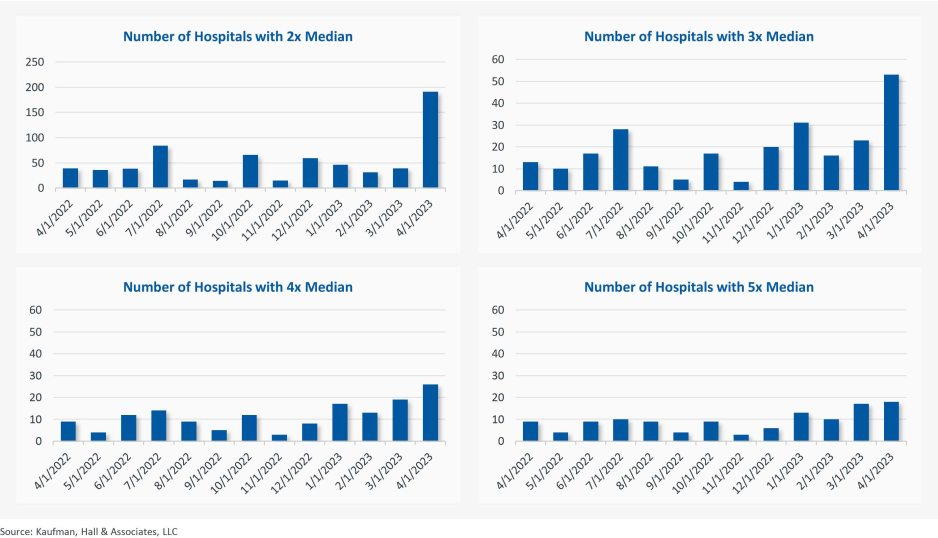
The second chart attempts to establish the median turnover for hospitals over an annual period and then measure the deviation from that turnover rate. A greater deviation from what might be termed “normal turnover” suggests that an increasing number of hospitals are using reductions in force to more quickly reduce the cost of doing business.

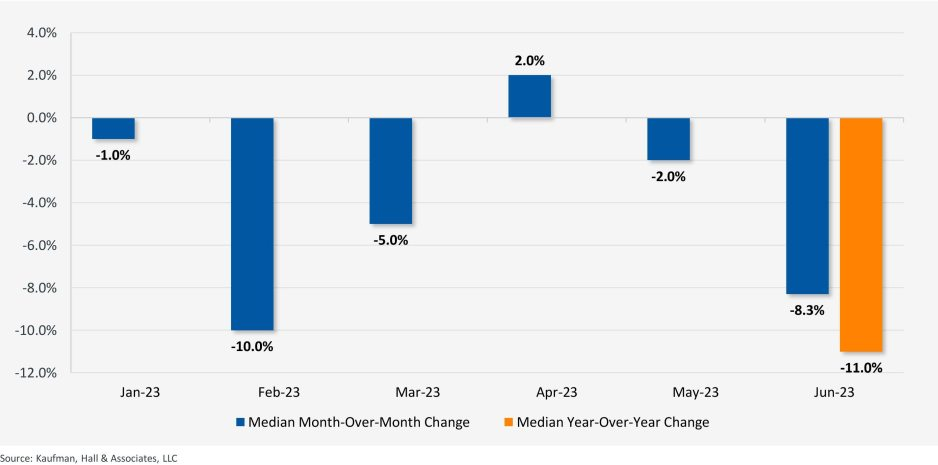
The third chart shows average FTEs per occupied bed on a comparative basis looking at month-to-month and year-to-year statistics.

The first chart, Net Employee Percentage Change by Month, begins at January 1, 2018, and continues to March 1, 2023 (Figure 1). Overall additions to hospital employment remained generally positive through January 1, 2020. Overall hospital employment then went generally negative from March 2020 (the onset of Covid restrictions) to March 2022. The reductions in hospital employees during this period were likely the result of the “great resignation” during the worst of the Covid pandemic. But then, from July 2022 to March 2023, overall hospital employees demonstrated by the Flash Report dropped dramatically with an overall 2% decrease at the March 2023 date. This statistic suggests more than simply increased hospital turnover, but rather a formal layoff process initiated across many hospital organizations, along with aggressive management of contract labor.

Figure 1: Net Employee Percentage Change by Month

The second chart demonstrates the deviation from expected turnover at levels of 2x, 3x, 4x, and 5x by number of hospitals (Figure 2). No matter which measure you examine, the deviation of employees from expected turnover spiked significantly in April 2023 and even more so in May 2023. This again suggests the aggressive management of labor costs that likely could not occur without the intentional reduction of actual positions and/or the cost of these positions. 

Figure 2: Number of Hospitals with Deviations from Expected Turnover at 2x, 3x, 4x, and 5x the Median

The last chart provides a remarkable set of observations (Figure 3). FTEs per adjusted occupied bed (AOB) declined by 8.3% between June 2023 and July 2023. The year-over-year variation for July 2023 was a decline of 11.01%. Our data further reveals that the FTE per AOB statistic has declined in five of the past six months on a month-over-month basis.

Figure 3: Median Change in FTEs per Adjusted Occupied Bed by Month

The conclusion here is that the return of the hospital industry to pre-Covid financial results has been no walk in the park. 2022 was, of course, a dismal financial year for the hospital industry. And while 2023 has shown improvement, the usual management steps to recovery have been only moderately effective. The data and analysis above demonstrate that C-suites across America are moving to stronger measures to assure the financial survivability and competitiveness of their organizations.

There is no revenue solve here, or at least not in the current environment: costs must come down and they must come down materially. From the sense and the trend of the data it would seem that hospital executive teams get the joke.

17 health systems zeroing in on exec teams, administration in 2023

At least 17 health systems announced changes to executive ranks and administration teams in 2023. 

The changes come as hospitals continue to grapple with financial challenges, leading some organizations to cut jobs and implement other operational adjustments. 

The following changes were announced within the last two months and are summarized below, with links to more comprehensive coverage of the changes. 

1. Middletown, N.Y.-based Garnet Health laid off 49 employees, including 25 leaders, to offset recent operating losses. The reductions represent 1.13 percent of the organization’s total workforce and $13 million in salaries and benefits. 

2. Greensburg, Pa.-based Independence Health System laid off 53 employees and has cut 226 positions — including resignations, retirements and elimination of vacant positions — since January, The Butler Eagle reported June 28. The 226 reductions began at the executive level, with 13 manager positions terminated in March. 

3. Coral Gables-based Baptist Health South Florida is offering its executives at the director level and above a “one-time opportunity” to apply for voluntary separation, according to a June 29 Miami Herald report. Decisions on buyout applications will be made during the summer.

4. MultiCare Health System, a 12-hospital organization based in Tacoma, Wash., will lay off 229 employees, or about 1 percent of its 23,000 staff members, including about two dozen leaders, as part of cost-cutting efforts, the health system said June 29. The layoffs primarily affect support departments, such as marketing, IT and finance.

5. Seattle Children’s is eliminating 135 leader roles, citing financial challenges. The management restructuring and reduction affects 1.5 percent of employees across the organization.

6. Bonnie Panlasigui was tapped as the first president of Summa Health System Hospitals.This new role was first announced in October as the Akron, Ohio-based system made 10 changes to its executive team: reshuffling three leaders’ roles, adding three positions and eliminating four. 

7. Allentown, Pa.-based Lehigh Valley Health Network named two new regional and hospital presidents. Bob Begliomini, PharmD, was appointed president of Lehigh Valley Hospital-Cedar Crest campus in Allentown, according to a news release shared with Becker’s. He will also lead the health system’s Lehigh region, which includes four hospital campuses. Jim Miller, CRNA, was selected to replace Mr. Begliomini as president of the Muhlenberg hospital. He was also named  president of the health system’s Northampton region, which includes three hospitals, Muhlenberg being one of them. 

8. McLaren St. Luke’s Hospital in Maumee, Ohio, will lay off 743 workers, including 239 registered nurses, when it permanently closes this spring. Other affected roles include physical therapists, radiology technicians, respiratory therapists, pharmacists and pharmacy support staff, and nursing assistants. The hospital’s COO is also affected, and a spokesperson for McLaren Health Care told Becker’s other senior leadership roles are also affected.

9. Habersham Medical Center in Demorest, Ga., laid off four executives. The layoffs were part of cost-cutting measures before the hospital joined Gainesville-based Northeast Georgia Health System.

10. Grand Forks, N.D.-based Altru Health announced it would trim its executive team as its new hospital project moves forward. The health system is trimming its executive team from nine to six and incentivizing 34 other employees to take early retirement.

11. Scripps Health eliminated 70 administrative roles, according to WARN documents filed by the San Diego-based health system in March. The layoffs took effect May 8 and affect corporate positions in San Diego and La Jolla, Calif.

12. Columbia-based University of Missouri Health Care announced it would eliminate five hospital leadership positions across the organization. According to MU Health Care, the move is a result of restructuring “to better support patients and the future healthcare needs of Missourians.”

13. Winston-Salem, N.C.-based Novant Health laid off about 50 workers, including C-level executives, the health system confirmed to Becker’s March 29. The layoffs affected Jesse Cureton, the health system’s executive vice president and chief consumer officer since 2013; Angela Yochem, its executive vice president and chief transformation and digital officer since 2020; and Paula Dean Kranz, vice president of innovation enablement and executive director of the Novant Health Innovation Labs. 

14. Philadelphia-based Penn Medicine announced that it would eliminate administrative positions. The change is part of a reorganization plan to save the health system $40 million annually, the Philadelphia Business Journal reported March 13. Kevin Mahoney, CEO of the University of Pennsylvania Health System, told Penn Medicine’s 49,000 employees changes include the elimination of a “small number of administrative positions which no longer align with our key objectives,” according to the publication. 

15. Sovah Health, part of Brentwood, Tenn.-based Lifepoint Health, eliminated the COO positions at its Danville and Martinsville, Va., campuses. The responsibilities of both COO roles are now spread across members of the existing administrative team. 

16. Valley Health, a six-hospital health system based in Winchester, Va., eliminated 31 administrative positions. The job cuts are part of the consolidation of the organization’s leadership team and administrative roles. They were announced internally on Feb. 28. 

17. Roseville, Calif.-based Adventist Health announced it would transition from seven networks of care to five systemwide to reduce costs and strengthen operations. Under the reorganization, the health system will have separate networks for Northern California, Central California, Southern California, Oregon and Hawaii. The reorganization will result in job cuts, including reducing administration by more than $100 million.

The Five Most Important Questions Hospitals must Answer in Planning for the Future

As hospital leaders convene in Seattle this weekend for the American Hospital Association Leadership Summit, their future is uncertain.

Last week’s court decision in favor of hospitals shortchanged by the 340B drug program and 1st half 2023 improvement in operating margins notwithstanding, the deck is stacked against hospitals—some more than others. And they’re not alone: nursing homes and physician practices face the same storm clouds:

  • Decreased reimbursement from government payers (Medicare and Medicaid) coupled with heightened tension with national health insurers seeking bigger discounts and direct control of hospital patient care.
  • Persistent medical-inflation driving costs for facilities, supplies, wages, technologies, prescription drugs and professional services (legal, accounting, marketing, et al) higher than reimbursement increases by payers.
  • Increased competition across the delivery spectrum from strategic aggregators, private equity and health insurers diversifying into outpatient, physician services et al.
  • Increased discontent and burnout among doctors, nurses and care teams who feel unappreciated, underpaid and overworked.
  • Escalating media criticism of not-for-profit hospitals/health system profitability, debt collection policies, lack of price transparency, consolidation, executive compensation, charity care, community benefits and more.
  • Declining trust in the system across the board.

Most hospitals soldier on: they’re aware of these and responding as best they can. But most are necessarily focused only on the near-term: bed needs, workforce recruitment and staffing, procurement costs for drugs and supplies and so on.  Some operate in markets less problematic than others, but the trends hold true directionally in every one of America’s 290 HRR markets.

Planning for the long-term is paralyzed by the tyranny of the urgent:

survival and sustainability in 2023 and making guarded bets about 2024 dominate today’s plans. That’s reality.  Though the healthcare pie is forecast to get bigger, it’s being carved up by upstarts pursuing profitable niches and mega-players with deep pockets and a take-no-prisoners approach to their growth strategies. The result is an industry nearing meltdown.

Each traditional sector thinks it’s moral virtue more honorable than others. Each blames the other for avoidable waste and inaction in weeding out its bad actors. Each is pays lip service to “value-based care” and “system transformation” while doubling-down on making sure changes are incremental and painless for the near-term. And each believes the long-term destination of the system will be different than the past but no two agree on what that is.

Hospitals control 31% of the spend directly and as much as 43% with their employed physicians included. So, they’re a logical focus of attention from outsiders. Whether not for profit, public or investor owned, all are thought to be expensive and non-transparent and increasingly many are seen as ‘Big Business’ with excessive profits. Complaints about heavy-handed insurer reimbursement and price-gauging by drug companies fall on death ears in most communities. That’s why most are focused on near-term survival and few have the luxury or tools to plan for the future.

As a start, answers to the questions below in the 3-5 (mid-term) and 8–10-year (long-term) time frames is imperative for every hospital leadership team and Board:

  • Is the status quo sustainable? With annual spending projected to increase at 5.4%/year through 2031– well above population and economic growth rates overall– will employers remain content to pay 224% of Medicare rates to produce profits for hospitals, doctors, drug and device makers and insurers? Will they continue to pass these costs through to their customers and employees while protecting their tax exemptions or will alternative strategies prompt activism? Might employers drive system transformation by addressing affordability, effectiveness, consumer self-care and systemness et al. with impunity toward discomfort created for insiders? Or, might voters reject the status quo in subsequent state/federal elections in favor of alternatives with promised improvement? And who will the winners and losers be?
  • Are social determinants a core strategy or distraction? 70% of costs in the health system are directly attributable to social needs unmet—food insecurity. loneliness et al. But in most communities, programs addressing SDOH and public health programs that serve less-privileged populations are step-children to better funded hospitals and retail services targeted to populations that can afford them. Is the destination incremental bridges built between local providers and public health programs to satisfy vocal special interest groups OR comprehensive integration of SDOH in every domain of operation? Private investors are wading into SDOH if they’re attached to a risk-based insurance programs like Medicare Advantage and others, but sparingly in other settings. Does the future necessitate re-definition of “community benefits” or new regulations prompting providers, drug companies and payers to fair-share performance. Is the future modest improvement in the “Health or Human Services” status quo OR is system of “Health and Social Services” that’s fully integrated? And might interoperability and connectivity in the entire population become “true north” for tech giants and EHR juggernauts seeking to evade anti-trust constraint and demonstrate their commitment to the greater good? There’s no debate that SDOH is central to community health and wellbeing but in most communities, it’s more talk than walk. Yesterday, SDOH was about risk factors; today, it’s about low-income populations who lack insurance; tomorrow, it’s everyone.
  • How should the health system of the future be funded? The current system of funding is a mess: In 2021, the federal government and households accounted for the largest shares of national health spending (34 % and 27%, respectively), followed by private businesses (17%), state and local governments (15%), and other private revenues (7%). It will spend $4.66 trillion, employ 19 million and impact every citizen (and non-citizen) directly.  But 4 of 10 households have unpaid medical bills. Big employers in certain industries provide rich benefits while half of small businesses provide none. Medicare depends on employer payroll taxes for the lion’s share of its Part A (Hospital) funding exposing the “trust fund” to a shortfall in 2028 and insolvency fears…and so on. Increased public funding via taxes is problematic and debt is more costly as interest rates go up and the municipal bond market tightens. Voters and private employers don’t seem inclined to pay higher taxes for healthcare–:is it worth $13,998 per capita today? $20,426 in 2031? Will high-cost inpatient care and specialty drugs become regulated public utilities in which access and pricing is tightly controlled and directly funded by government? Will private investors and strategic aggregators be required to take invest in community benefits to offset the disproportionate costs borne by hospitals, public health clinics and others? Is there a better formula for funding U.S. healthcare? Other systems of the world spend more on social services and preventive health and less on specialty care. They spend a third less and get comparable if not better outcomes though each is stretched to deal with medical inflation. And in most, government funding is higher, private funding lower and privileged populations have access to private services they pay for directly.  Where do we start, and who demands the question be answered?
  • How will innovations in therapeutics and information technology change how individuals engage with the system? Artificial intelligence will directly impact 60% of the traditional health delivery workforce, negating jobs for many/most. Non-allopathic therapies, technology-enabled self-care, precision medicines, non-invasive and minimally invasive surgical techniques are changing change how care is delivered, by whom and where. Thus, lag indicators based on visits, procedures, admissions and volume are increasingly useless. How will demand be defined in the future? Who will own the data and how will it be accessed? And how will the rights of patients (consumers) be protected in courts and in communities? In the future, information-driven healthcare will be much more than encounter data from medical records and claims-based analyses from payers. It will be sourced globally, housed centrally and accessed by innovators and consumers to know more about their health now and next. Within 10 years, generative AI coupled with therapeutic innovation will fundamentally change roles, payments and performance measurement in every domain of healthcare. Proficiency in leveraging the two will anchor system reputations and facilitate significant market share shifts to high value, high outcome, lower cost alternatives…whether local or not.
  • How will regulators and court decisions enact fair competition, consumer choices and antitrust protections? The current political environment is united around reforms that encourage price transparency and affordability. FTC and DOJ leaders are aligned on healthcare oversight with a decided bent toward heightened enforcement and tighter scrutiny of proposed deals (both vertical and horizontal integration). But their leaders’ terms are subject to political appointments and elections: that’s an unknown. And while recent rulings of the conservative leaning Supreme Court are problematic to many in healthcare, their rulings are perhaps more predictable than policies, rules and regulations directly impacted by election results.

For hospital leaders gathering in Seattle this week, and in local board meetings nationwide, necessary attention is being given the near-term issues all face. But longer-term issues lurk: the future does not appear a modernized version of the past for anyone in U.S. healthcare, especially hospitals. And among hospitals, fundamental precepts—like tax exemptions for “not-for-profit” hospitals, community benefits and charity care in exchange for tax exemption, EMTALA et al. regulations that require access without pre-condition are among many that will re-surface as the long-term view of the health system is re-considered.

To that end, the questions above deserve urgent discussion in every hospital board room and C suite. Trade-offs aren’t clear, potential future state hospital scenarios are not discreet and winners and losers unknown. But a fact-driven process recognizing a widening array of players with deep pockets and fresh approaches is necessary.

The Hospital Makeover—Part 2

America’s hospitals have a $104 billion problem.

That’s the amount you arrive at if you multiply the number of physicians employed by hospitals and health systems (approximately 341,200 as of January 2022, according to data from the Physicians Advocacy Institute and Avalere) by the median $306,362 subsidy—or loss—reported in our Q1 2023 Physician Flash Report.

Subsidizing physician employment has been around for a long time and such subsidies were historically justified as a loss leader for improved clinical services, the potential for increased market share, and the strengthening of traditionally profitable services.

But I am pretty sure the industry did not have $104 billion in losses in mind when the physician employment model first became a key strategic element in the hospital operating model. However, the upward reset in expenses brought on by the pandemic and post-pandemic inflation has made many downstream hospital services that historically operated at a profit now operate at breakeven or even at a loss. The loss leader physician employment model obviously no longer works when it mostly leads to more losses.

This model is clearly broken and in demand of a near-term fix. Perhaps the critical question then is how to begin? How to reconsider physician employment within the hospital operating plan?

Out of the box, rethink the physician productivity model. Our most recent Physician Flash Report data shows that for surgical specialties, there was a median $77 net patient revenue per provider wRVU. For the same specialties, there was a median $80 provider paid compensation per provider wRVU. In other words, before any other expenses are factored in, these specialties are losing $3 per wRVU on paid compensation alone. Getting providers to produce more wRVUs only makes the loss bigger.

It’s the classic business school 101 problem.

If a factory is losing $5 on every widget it produces, the answer is not to produce more widgets. Rather, expenses need to come down, whether that is through a readjustment of compensation, new compensation models that reward efficiency, or the more effective use of advanced practice providers.

Second, a number of hospital CEOs have suggested to me that the current employed physician model is quite past its prime. That model was built for a system of care that included generally higher revenues, more inpatient care, and a greater proportion of surgical vs. medical admissions. But overall, these trends were changing and then were accelerated by the Covid pandemic. Inpatient revenue has been flat to down. More clinical work continues to shift to the outpatient setting and, at least for the time being, medical admissions have been more prominent than before the pandemic.

Taking all this into account suggests that in many places the employed physician organizational and operating model is entirely out of balance. One would offer the calculated guess that there are too many coaches on the team and not enough players on the field. This administrative overhead was seemingly justified in a different loss leader environment but now it is a major contributor to that $104 billion industry-wide loss previously calculated.

Finally, perhaps the very idea of physician employment needs to be rethought.

My colleagues Matthew Bates and John Anderson have commented that the “owner” model is more appealing to physicians who remain independent then the “renter” model. The current employment model offers physicians stability of practice and income but appears to come at the cost of both a loss of enthusiasm and lost entrepreneurship. The massive losses currently experienced strongly suggest that new models are essential to reclaim physician interest and establish physician incentives that result in lower practice expenses, higher practice revenues, and steadily reduced overall subsidies.

Please see this blog as an extension of my last blog, “America’s Hospitals Need a Makeover.” It should be obvious that by analogy we are not talking about a coat of paint here or even new appliances in the kitchen.

The financial performance of America’s hospitals has exposed real structural flaws in the healthcare house. A makeover of this magnitude is going to require a few prerequisites:

  1. Don’t start designing the renovation unless you know specifically where profitability has changed within your service lines and by explicitly how much. Right now is the time to know how big the problem is, where those problems are located, and what is the total magnitude of the fix.
  2. The Board must be brought into the discussion of the nature of the physician employment problem and the depth of its proposed solutions. Physicians are not just “any employees.” They are often the engine that runs the hospital and must be afforded a level of communication that is equal to the size of the financial problem. All of this will demand the Board’s knowledge and participation as solutions to the physician employment dilemma are proposed, considered, and eventually acted upon.

The basic rule of home renovation applies here as well: the longer the fix to this problem is delayed the harder and more expensive the project becomes. The losses set out here certainly suggest that physician employment is a significant contributing factor to hospitals’ current financial problems overall. It would be an understatement to say that the time to get after all of this is right now.