Why Walgreens’ US Health President Is ‘Bullish’ on the Role of Retail in Healthcare

During a fireside chat at AHIP 2024, Mary Langowski, executive vice president and president of U.S. healthcare at Walgreens Boots Alliance, said she sees a bright future for retail in healthcare.

Retailers are facing several headwinds in healthcare in 2024. Walmart and Dollar General both recently ended healthcare endeavors, and CVS Health is reportedly looking for a private equity partner for Oak Street Health (which it acquired in 2023). VillageMD, which is backed by Walgreens, is shuttering numerous clinics.

Still, Mary Langowski, executive vice president and president of U.S. healthcare at Walgreens Boots Alliance, sees a strong future for retailers in healthcare.

“I happen to be very bullish on the role of retail in healthcare and frankly, having a very central role in healthcare,” she said. “And part of that is because over 80% of people want health and wellness offerings in a pharmacy and in a retail setting. Consumers want the ease, they want the convenience of it. And those are important things to keep in mind, that demand is there.”

Langowski, who joined Walgreens in March, made these comments during a Tuesday fireside chat at the AHIP 2024 conference held in Las Vegas. She added that what the industry is seeing is not an “evolution” of whether retailers will exist in healthcare, but a shift around what the “right model is going to be.” 

“We really think that if you take our core assets, … we can be a really good partner to not just one provider entity but many, many provider entities and payers across the United States,” Langowski said. “We’re everywhere. We’re in the community, we’re digitally inclined. I think a strategy for us is less capital-intensive, capital-light and very scaled models.”

She also told the health plans in the audience that she wants to collaborate more. She said she sees retail as a “really critical entry point” in the healthcare system.

“We have people using their pharmacists two times more than any doctor and Medicare patients see us eight times more than their physician,” Langowski declared. “We’re not doing enough together to take advantage of those moments where we can engage people and we can create interventions way earlier in their healthcare disease state.”

Langowski noted that insurers are under a lot of pressure, including rising costs, regulatory issues and challenges contracting with providers. However, Walgreens’ assets are “highly complementary” to insurers’ assets, she said. 

“We aren’t going to do what you do. You don’t do what we do, but we work really well together,” she said. “And what it will take is being clever about the commercial and economic model and I believe there are multiple ways to create win-win scenarios where everybody does well. Most importantly, patients get healthier and they have a much better and much more seamless experience with the system.”
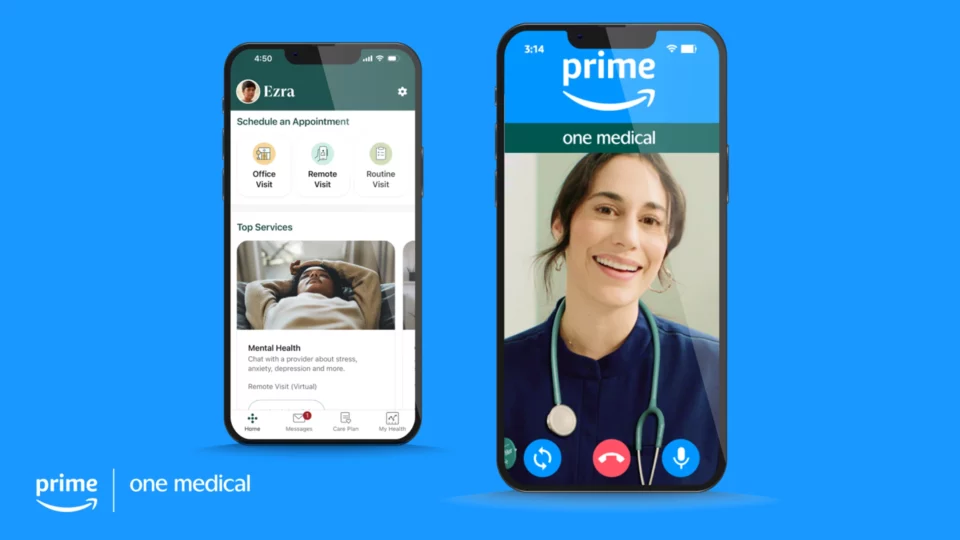

Amazon announces One Medical membership discount for Prime members

https://mailchi.mp/f12ce6f07b28/the-weekly-gist-november-10-2023?e=d1e747d2d8

On Wednesday, e-commerce giant Amazon announced that its 167M US-based Prime members can now access One Medical primary care services for $9 per month, or $99 per year, which amounts to a 50 percent annual discount on One Medical membership. (Additional Prime family members can join for $6/month or $66/year.) 

One Medical, which Amazon purchased for $3.9B last year, provides its 800K members with 24/7 virtual care as well as app-based provider communication and access to expedited in-person care, though clinic visits are either billed through insurance or incur additional charges. Amazon also recently started offering virtual care services through its Amazon Clinic platform, at cash prices ranging from $30 to $95 per visit. 

The Gist: After teasing this type of bundle with a Prime Day sale earlier this year, Amazon has made the long-expected move to integrate One Medical into its suite of Prime add-ons, using a similar pricing model as its $5-per-month RxPass for generic prescription medications.

At such a low price, Amazon risks flooding One Medical’s patient population with demand it may struggle to meet. But if Amazon can scale One Medical, while maintaining its quality and convenience, it may be able to make the provider organization profitable. 

Known for its willingness to take risks and absorb financial losses, Amazon is continuing to build a healthcare ecosystem focused on hybrid primary care and pharmacy services that delivers a strong consumer value proposition based on convenience and low cost. 

Inside the current urgent care ‘boom’

Urgent care centers have become increasingly popular among patients in recent years. And while the facilities may be a more convenient care option than others, experts have voiced concerns about potential downsides, Nathaniel Meyersohn writes for CNN.

What is driving the urgent care ‘boom’?

Urgent care centers have been in the United States since the 1970s, but they were widely regarded as “docs in a box,” with slow growth in their early years. Then, during the COVID-19 pandemic, demand for tests and treatments drove an increase in patients at urgent care sites around the country. According to the Urgent Care Association (UCA), patient volume at urgent care centers has increased by 60% since 2019.

As patient volumes and demand increased, growth for new urgent care centers surged. Currently, there are a record 11,150 urgent care centers in the United States, with around 7% growth annually, UCA said. Notably, this figure excludes clinics inside retail stores and freestanding EDs.

According to estimates from IBISWorld, the urgent care market will reach roughly $48 billion in revenue in 2023, a 21% increase from 2019.

Urgent care has grown rapidly because of convenience, gaps in primary care, high costs of emergency room visits, and increased investment by health systems and private-equity groups,” Meyersohn writes.

Urgent care center growth also “highlights the crisis in the US primary care system,” Meyersohn writes, noting that the Association of American Medical Colleges said it expects a shortage of up to 55,000 primary care physicians in the next decade.

In addition, it can be difficult to book an immediate visit with a primary care provider. Urgent care sites have longer hours during the week and are open on weekends, making it easier to get an appointment. According to UCA, roughly 80% of the U.S. population is within a 10-minute drive of an urgent care center.

“There’s a need to keep up with society’s demand for quick turnaround, on-demand services that can’t be supported by underfunded primary care,” said Susan Kressly, a retired pediatrician and fellow at the American Academy of Pediatrics.

Meanwhile, health insurers and hospitals have also prioritized keeping people out of the ED. In the early 2000s, they started opening their own urgent care sites and implementing strategies to deter ED visits.

The passage of the Affordable Care Act also triggered an increase in urgent care providers, with millions of newly insured Americans accessing healthcare.

In addition, data from PitchBook suggests that private-equity and venture capital funds invested billions into deals for urgent care centers.

“If they can make it a more convenient option, there’s a lot of revenue here,” said Ateev Mehrotra, a professor of healthcare policy and medicine at Harvard Medical School who has researched urgent care clinics. “It’s not where the big bucks are in health care, but there’s a substantial number of patients.”

The increase in urgent care sites may present challenges

Many doctors, healthcare advocates, and researchers have voiced concerns at the increase in urgent care sites, noting that there are potential downsides.

“Frequent visits to urgent care sites may weaken established relationships with primary care doctors,” Meyersohn writes. “They can also lead to more fragmented care and increase overall health care spending, research shows.”

In addition, some experts have questioned the quality of care at urgent care centers, particularly how well they serve low-income communities.

In a 2018 study by Pew Charitable Trusts and CDC, researchers found that urgent care centers overprescribe antibiotics, especially those used to treat common colds, the flu, and bronchitis.

“It’s a reasonable solution for people with minor conditions that can’t wait for primary care providers,” said Vivian Ho, a health economist at Rice University. “When you need constant management of a chronic illness, you should not go there.”

Some doctors and researchers also expressed concern that patients are visiting urgent care centers instead of a primary care provider altogether.

“What you don’t want to see is people seeking a lot [of] care outside their pediatrician and decreasing their visits to their primary care provider,” said Rebecca Burns, the urgent care medical director at the Lurie Children’s Hospital of Chicago.

There are also concerns about the oversaturation of urgent care centers in higher-income areas that have more consumers with private health care and limited access in medically underserved areas,” Meyersohn writes.

A 2016 study from the University of California at San Francisco found that urgent care centers typically do not serve rural areas, areas that have a high concentration of low-income patients, or areas that have a low concentration of privately-insured patients.

According to the researchers, this “uneven distribution may potentially exacerbate health disparities.” 

Will Telemedicine Be the Blockbuster or Netflix of Healthcare?

https://www.medpagetoday.com/practicemanagement/telehealth/87662?xid=fb_o&trw=no&fbclid=IwAR1IRS5lgPjbTxkXuMS0fnFmvdkywSyf20YaJ-RElRIGCzU3_GY_W6rTwXw

Netflix Vs Blockbuster – The New DVD Viewing Experience

New approaches need to recognize patients’ wants and needs

One component of Blockbuster’s financial model was the late fees it charged to customers who did not return a video tape to the store in time. These fees accounted for up to 16% of its revenue. In 1997, Reed Hastings was one of the customers affected by these fees. After one late rental, he was charged a hefty $40 late fee. His frustration inspired him to help create a company that would have no late charges. This new company also had the audacious idea to send DVDs straight to the customer’s home for a flat monthly fee. The company that Reed Hastings co-founded was Netflix.

Over time, Netflix changed and adapted with new technology and shifting consumer preferences. It moved on from mailing DVDs to using a streaming platform. It developed an algorithm to help make personalized video recommendations to Netflix users. It started producing its own video content. Over time, the company planted itself firmly within many homes and routines. Conversely, Blockbuster adapted to new platforms too slowly and too late. After its peak in 2004, Blockbuster started losing market share and relevance. Today, there is only one Blockbuster store left, a curious tourist attraction in Bend, Oregon.

Markets and industries change all the time. Distinguishing these important changes from temporary fads is essential. History has many examples of companies and organizations that did not sense important changes, did not change their approach, and as a result, ended up obsolete and irrelevant. A similar shift is happening today in healthcare, but there is more at stake than a late fee. Like Netflix, the healthcare industry needs to shift and adapt to consumer preferences.

The COVID-19 pandemic has had an immediate impact on the health of our country and has also indelibly changed how patients interact with the healthcare system. Hospitals and providers around the country have had to quickly develop new strategies to connect with patients – to comply with social distancing guidelines, in an effort to slow down the spread of the virus. Consistent communication and accessibility is vital, especially given the disturbing trends in decreased preventive care visits and delayed emergency care. One solution is telehealth.

During this pandemic, we have seen that remote patient monitoring is valuable for patients with a wide variety of needs: certainly, those quarantined with coronavirus, but for healthy patients too – children in need of regularly scheduled well-child visits and adults who need routine care. Many patients have experienced telehealth for the first time and many have positive impressions, with nearly three quarters of patients who had a recent telehealth visit describing it as good or very good, according to a recent survey.

Even after the COVID-19 pandemic settles, these “temporary” approaches will permanently change patient attitudes towards technology and force healthcare providers to reexamine their approach to care. Telehealth will remain a convenient option and, in some cases, a necessary way to receive care. Embedding telehealth into standard practice of care enables providers to expand the access to people who otherwise might forgo care, and to people who may face barriers getting to a clinic, for example patients with inflexible job schedules or limited transportation.

Patients and providers are not the only people recognizing the benefits; government officials are too. While reimbursement rules were temporarily expanded to include telehealth, some states, such as Colorado and Idaho, are making COVID-19 telehealth expansions permanent.

There are many parallels to borrow from the Blockbuster example. As healthcare providers, we cannot be complacent and stick with old business models because they are what we are used to. We cannot wait for people to come to us. We cannot ignore these changing times and consumers’ changing preferences. In fact, if we adapt and provide care in ways that patients prefer, we could improve health outcomes.

The healthcare institutions that will grow and be successful during this time are those who are more like Netflix. Instead of waiting for patients to decide to seek healthcare when it may be too late (e.g., just like a Blockbuster “late fee”), we will actively reach out and remind our patients about the importance of timely healthcare services. Instead of ignoring changes in patient preferences and new technology, we will adapt quickly to new platforms for healthcare visits. Instead of waiting for patients to feel comfortable to return to a healthcare facility, we will show patients what our healthcare system is doing to ensure patient safety and protection from COVID-19. Most importantly, instead of being complacent, we will accept and develop new ways of providing care.

There was once a time that we thought that getting in a car, driving to a strip mall, and walking through aisles with thousands of video tapes was the only option to watch a movie at home. Now, many of us can get thousands of titles on our televisions, computers, and phones through several movie streaming platforms. The COVID-19 pandemic has forced healthcare systems to quickly adapt to new constraints; however, it may really be an opportunity to develop new models of care, to engage with our patients, and to make healthcare more accessible. As healthcare providers, we need to make the choice to be more like Netflix, and less like Blockbuster.


Walmart to expand health centers to Arkansas this month

https://www.beckershospitalreview.com/strategy/walmart-to-expand-health-centers-to-arkansas-this-month.html?utm_medium=email

Walmart Opening More Healthcare 'Super Centers'

Walmart will open two more standalone health clinics this month, including a site in Arkansas, the company said June 17.

The health clinics, called Walmart Health, will offer primary care, imaging, lab, dental and behavioral health services. 

The health clinics opening this month will be in Loganville, Ga., and Springdale, Ark. The Loganville Walmart Health opened June 17. The first Arkansas location will open June 24.

The company already has clinics in the Georgia cities of Dallas and Calhoun.

Walmart said it believes that expanding the standalone clinics will help bring affordable, quality healthcare to more Americans, because 90 percent of them live within 10 miles of a Walmart store. 

“Patients have responded favorably to our low, transparent pricing for key healthcare services, regardless of insurance status,” Walmart’s senior vice president of health and wellness, Sean Slovenski wrote in a blog post. “They’re also appreciative of the convenience of our facilities that offer primary and urgent care, labs, X-ray and diagnostics, counseling, dental, optical and hearing services, all in one central facility.”


The Amazonification of Healthcare

The Amazonification of Healthcare

The Amazonification of Healthcare