Changing American Demographics Make Hospital Operations Harder

https://www.kaufmanhall.com/insights/thoughts-ken-kaufman/changing-american-demographics-make-hospital-operations-harder

Regular readers know I’ve long been curious about the forces driving one essential question in healthcare today:

Why is it so hard to run a hospital now? One area worth exploring is the interplay between the healthcare system and our nation’s changing demographics.

Baby Boomers have been displaced as the largest generation of adults in America. Millennials now hold that position, and Gen Z will likely outnumber Baby Boomers in the workplace sometime this year. Our nation is rapidly diversifying, as more than two-fifths of Americans identify as people of color.

It’s not just a matter of who we are as a nation that’s changing; how we live is evolving, too. The number of 40-year-olds who’ve never been married reached record highs in 2022, according to the Pew Research Center, dovetailing with a steadily growing trend since 1970 toward single living.

The U.S. Census published a report earlier this year showing that nearly 29% of American households include only one person. Further, the U.S. fertility rate is at an all-time low — and, according to a Pew survey, may not recover, given that 47% of those under 50 said they were unlikely to have children. That’s an increase of 10 percentage points since 2018.

The effects of this are starting to shape our broader culture. Solo living has been cited as a contributing factor to the housing crisis, and we’re starting to hear more about how people are grappling with the practical implications of retiring while living alone. This column in The New York Times is just one example. 

As for the potential health effects of living alone, in 2023, U.S. Surgeon General Vivek Murthy raised an alarm with a report documenting the negative effects of social isolation on individual and public health. Murthy outlined a host of risks, including cardiovascular disease, hypertension, diabetes and increased susceptibility to infectious disease. Mental health is a major concern. A 2024 study published in National Health Statistics Reports found that people who live alone were more likely to be depressed, particularly if they lacked social or emotional support. 

All of this adds up to an increasing burden on the U.S. healthcare system.

As providers who care for the socially isolated already know, it’s impossible to operate as usual if a patient lacks family support. Hospitals and the traditional American family structure are fundamentally intertwined. When family support is not available for a medical emergency, then the entire hospital episode becomes more fragile. Patient discharge procedures assume someone is available at home to help with care, assist in transporting patients for follow-up visits, and engage with the business office around billing and insurance.

Without this family safety net, the potential for readmission rises, harming patient outcomes, increasing costs and putting quality ratings at risk. The rise in younger people living alone also raises further financial implications, given that about 45% of Americans access health insurance through employer-sponsored programs. If someone living alone becomes too sick to work, patients may be less able to pay for care when they need it most.

This is just another in a long list of challenging hospital operational dilemmas. How best to respond to such profound change in the American demographic landscape? The right strategy may be to re-think consumer segmentation.

Consumer segmentation has become very popular at the clinical product level, but perhaps the next level of service segmentation is not among disease types but based on demographic characteristics. 

As an increasing portion of the American population has less family support to navigate a hospital stay or chronic illness, it will become more important to identify these patients and determine which new and enhanced services need to be provided to them by the hospital. Social work programs will need to be more robust, and health systems should invest in community partnerships to help bridge the resource gap. But the wide-ranging nature of patients’ practical needs will likely require healthcare leaders to think creatively. 

Consider the scope:

  • Care coordinators: Particularly for patients with complex conditions, it may be beneficial to designate a care coordinator to oversee healthcare planning.
  • Home health care: Without family members to help with day-to-day care, more nurses and aides will be needed to provide healthcare at home as well as help with day-to-day living. For patients with less demanding healthcare needs, adult day care may be useful.
  • Medication management: Patients need to understand how to take their medications, watch for potential side effects and interactions, and develop a system to make sure they take them on time. Further, they may need help navigating the pharmacy, either in getting prescriptions filled or with financial assistance programs.
  • Meal delivery: Nutrition is vital to a patient’s recovery, and ensuring patients have access to healthy options can help to reduce the likelihood of readmission.
  • Personal emergency response systems: Patients may need devices to call for help during an emergency as well as medical bracelets or other methods for communicating important information to first responders.
  • Housekeeping assistance: Hospitals may need to help connect patients with resources to maintain clean, safe homes. 
  • Volunteer companions: While volunteer companions usually help elderly patients with social interaction and basic needs, it may be necessary to develop programs that target a wider range of ages.
  • Transportation services: Patients need help getting to and from follow-up visits.
  • Telehealth: Remote care will become increasingly important. Clinical services should consider whether care plans could be adjusted to reduce the number of in-person visits.

Beyond targeting resources, consumer segmentation also offers an opportunity to communicate with patients in a more effective and personalized way. This sort of engagement fosters trust and increases loyalty that’s particularly important, given the intimate nature of healthcare.

It’s long been true that the stronger the family system, the better off hospitals are. But as the concept of the American family shifts, and in this case, unwinds, healthcare leaders need to be attuned to new demands—and nimble enough to meet them. This requires making the most of the information you have today to plan for tomorrow.


Thought of the Day – On Fundamental Values

The Do’s and Don’ts of Navigating the Health System when you Need It: My First-Hand Experience

I fell down a flight of stairs at 4 a.m. last Wednesday.

It was totally my fault.

Since then, I have used hospital emergency departments in 2 states, a freestanding imaging center and a large orthopedic clinic and I’m just getting started. Six days in, I’m lucky to be alive but I still don’t know the extent of my injuries, my chances of playing golf again nor what I will end up spending on this ordeal. But nonetheless, it could have been worse. I’m alive.

Surprises in all aspects of life are never anticipated fully and always disruptive. This one, for me, is no exception. I am frustrated by my accident and uncomfortable with sudden dependence on others to help navigate my recovery.

But this is also a teachable moment., As I am navigating through this ordeal, I find myself reflecting on the system—how it works or doesn’t—based on what I am experiencing as a patient.

Here’s my top three observations thus far:

The patient experience is defined by the support team:

The heroes in every setting I’ve used are the clerks, technicians, nurses and support staff who’ve made the experiences tolerable and/or reassuring. Patients like me are scared. Emotional support is key: some of that is defined by standard operating procedures and checklists but, in other settings, it’s cultural. Genuineness, empathy and personal attention is easy to gauge when pain is a factor. By the time physicians are on the scene, reassurance or fear is already in play. Care teams include not just those who provide hands-on care, but the administrative clerks and processes that either heighten patient anxiety or lessen fear. The health and well-being of the entire workforce—not just those who deliver hands-on care—matters. And it’s easy to see distinctions between organizations that embrace that notion and those that don’t.

Navigation is no-man’s land:

The provider organizations I’ve used thus far have 3 different owners and 3 different EHR systems. Each offers written counsel about ‘patient responsibility’ and each provides a list of do’s and don’ts for each phase of the process. Sharing test results across the 3 provider organizations is near impossible and coordination of care management is problematic unless all parties agree and protocols facilitating sharing in place.  Perhaps because it was a holiday weekend, perhaps because staffing levels were less than usual, or perhaps because the organizations are fierce competitors, navigating the system has been unusually difficult. Navigating the system in an emergency is essential to optimal outcomes: processes to facilitate patient navigation are not in place.

What’s clear is hospitals, clinics and imaging facilities on different EHR systems don’t exchange data willingly or proactively. And, at every step, getting approvals from insurers a major step in the processes of care.

Price transparency is a non-issue in emergency care: 

The services I am receiving include some that are “shoppable” and many that aren’t. I have no idea what I will end up spending, my out-of-pocket obligations nor what’s to come. I know among the mandatory forms I signed in advance of treatment in all 3 sites were consent forms for treatment and my obligation for payment. But in an emergency, it’s moot: there’s no way to know what my costs will be or my out-of-pocket responsibility. So, the hospital and insurer price transparency rules (2021, 2022) might elevate awareness of price distinctions across settings of care but their potential to bend the cost curve is still suspect.

Patients, like me, have to fend for ourselves. I am a number. Last Wednesday, waiting 85 minutes to be seen was frightening and frustrating though comparatively fast. Duplicative testing, insurer approvals, work-shift transitions, bedside manners, team morale, and sterile care settings seem the norm more than exception.

So, for me, the practical takeaways thus far are these:

  • Don’t have an accident on a holiday weekend.
  • Don’t expect front desk and check-out personnel to engage or answer questions. They’re busy.
  • Don’t expect to start or leave without paying something or agreeing you will.
  • Don’t expect waiting areas and exam rooms to be warm or inviting.
  • Do have great neighbors and family members who can help. For me, Joe, Jordan, Erin and Rhonda have been there.

The health system is complicated and relationships between its major players are tense. Not surprisingly and for many legitimate reasons, my experience, thus far, is the norm. We can do better.

Paul

P.S. As I have reflected on the event last week, I found myself recalling the numerous times I called on “my doctors” to help my navigation of the system. They include Charles Hawes (deceased), Ben Womack, Ben Heavrin, David Maron, David Schoenfeld and Blake Garside. And, in the same context, the huge respect I have for clinicians I’ve known through Vanderbilt and Ohio State like Steve Gabbe and Andy Spickard who personify the best the medical profession has to offer. Thanks gentlemen. What you do matters beyond diagnoses and treatments.  Who you are speaks volumes about the heart and soul of this industry now struggling to re-discover its purpose.

Don’t Let Your Hospital Be Boeing

If you haven’t noticed (but I am sure you have) American business can be very unsettling from time to time, and occasionally the bigger the business, the more unsettling it gets. Exhibit A right now for this observation is, of course, the Boeing Company.

For years Boeing was an iconic, high reliability company; a worldwide leader in the growth of airplane transportation. As Bill Saporito wrote in the January 23 New York Times, Boeings’ airplanes were industry-changing, including the 707 jet in 1957, the 747 introduced in 1970, and perhaps the most successful commercial plane in aviation history, the 737.

But when things go bad, they can, indeed, go very bad. The newly designed 737 MAX crashed twice, once in 2018 and again in 2019, with a loss of life of 346 people. Now this year, a door plug fell off the Alaska Airlines Boeing 737 Max 9 at 16,000 feet and subsequent investigation revealed the possibility of missing bolts. All 737 MAX 9s were grounded while a special investigation was convened. Manufacturing airplanes is a special enterprise; lives are at stake. Airlines and the flying public take these Boeing problems very seriously.

What went wrong at Boeing?

Everybody has an opinion. One popular interpretation goes all the way back to Boeing’s merger in 1997 with McDonell Douglas. Recent articles suggest that prior to 1997 Boeing had a very dominant “engineering” culture. After the McDonell Douglas merger, the Boeing culture took a more “business” turn. That is the speculation anyway.

What strikes me here is the similarity between Boeing and the American hospital industry. Boeing “manufactures” planes and hospitals “manufacture” healthcare.

Neither industry can make mistakes; manufacturing errors in both cases change lives and cause real personal and societal pain. For both Boeing and hospitals, high reliability and error-free execution is the only acceptable business model.

Why is this analogy to Boeing apt and important?

Because American healthcare is likely the most intricate enterprise humanity has ever engineered. Therapeutic interventions are increasingly effective but demand pinpoint diagnoses and precision treatment. All of this is happening within profound technological complexity. The opportunity for regrettable manufacturing error—in fact the likelihood of such error—is so significant that no American hospital can possibly take for granted that high reliability processes and culture are properly in place and remain in place.

So what can hospitals do to keep from being Boeing?

In all candor, this question is over my paygrade, so for an experienced and nuanced answer, I turned to Allan Frankel, MD. Dr. Frankel is an anesthesiologist and former hospital executive who founded Safe and Reliable Healthcare after evaluating one too many disasters in healthcare delivery. He is currently an Executive Principal at Vizient Inc. Dr. Frankel offered the following high reliability tutorial:

  1. High reliability manufacturing is directly dependent on the culture of the organization in question. Everyday excellence which leads to high reliability is dependent on the collective mindset and social norms of your workforce. Any high reliability workforce must trust its leadership and believe that the workforce values and leadership values are aligned. Further, a high reliability culture gives the workforce a sense of purpose and the opportunity to be their best professional selves on the job.
  2. In the workplace, bi-directional communication is essential. Leaders and managers must round, see the actual work firsthand, learn what it is like to perform the work, and talk to individuals about the challenges of doing the work. Under best practices senior leaders should round 10% to 20% of their time. Line managers should round 80% to 90% of their time.
  3. Workers, on the other hand, must have a sense of voice and agency. Voice means that workers are able to speak up about their concerns and ideas. Agency means that when workers do speak up, they see their ideas and concerns influence their work environment for the better.
  4. Voice and agency require that workers feel safe in the high reliability process and that when identifying defects in the manufacturing process, they will be treated fairly. And importantly, that having the courage to speak up is an organizational attribute that is perceived as worthy. Such worthiness is described by discrete concepts including “psychological safety,” just culture,” and “respect.” Each of these concepts is definable and requires focused and ongoing training.
  5. Concepts 3 and 4 require close attention and care and feeding. Functionally, this happens by robust leader rounding, robust managerial huddles, and timely feedback regarding manufacturing concerns and weaknesses. These activities need to be structural and must be built into a system of operations—such systems are often referred to as “standard work.” These changes plus the right frame of mind functionally drive improvement and change. Dr. Frankel noted “it’s not complicated, but as the Boeing example illustrates, the high reliability philosophy must be perpetually nourished.”
  6. Once all the above is in place, there needs to be an effector arm. Process improvement skills are required to take ideas and concerns and test and implement them. Quality personnel must check on the changes as they are being made and audit operations. Dr. Frankel adds that this part of the high reliability journey is very often under-resourced in healthcare organizations, with the result that the overall process feels less effective so the activities stop occurring.
  7. Training and skills are paramount. Skills come from training and reading. You should be thinking here about the “10,000 hours concept.” Worthy attitudes must be defined by your organization and then uniformly expected of all staff. Finally, behaviors can be structured, expectations set, and measures and metrics identified.

As you can see from the suggested activities, the foundations of high reliability are not rocket science. They require the right frame of mind, attention to detail, and clear accountability of all involved. No hospital should let that metaphorical 737 MAX 9 door plug fall off at 16,000 feet. It was, without question, a terrifying manufacturing moment.

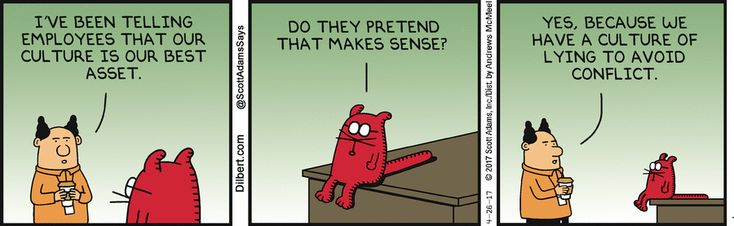
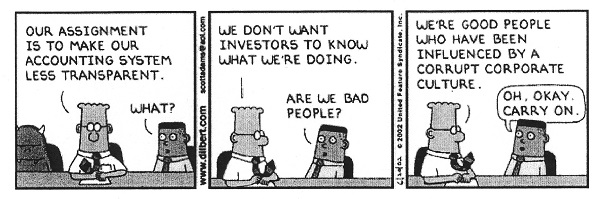
“Culture Eats Strategy for Breakfast” But Probably Not Right Now

https://www.kaufmanhall.com/insights/thoughts-ken-kaufman/current-management-issues-healthcare-c-suite?mkt_tok=NjU0LUNOWS0yMjQAAAGN5bowgtV1D72jA8pbxTCk4NjIzNuu9fxXT5eRT0vb8A3oKGzQB_5C2mtXCgYRufhJVxSpI0VqOQ6lwqJvDhs6pzxAVL1Xsoxc5EfcQUJr7Bhu

2022 and 2023 have been particularly difficult operating years for hospital providers. The financial challenges stand out but as we concluded in the August 7, 2023, blog, strategic planning and vision issues may be more compelling over the long term.

We previously identified two strategic issues that need to be reckoned with:

  1. Strategic Relevance. Has everything changed organizationally post-Covid or does it just feel that way? If your strategy still seems dynamic and relevant, how do you capitalize on that? If your strategy feels entirely lost, how do you recapture organizational excitement and enthusiasm?
  2. Vision. How important is organizational vision right now? You know the old saying, “a camel is a horse designed by a committee.” And many vision statements wind up looking more like that camel than like that desired horse. But be that as it may: Covid has been so disruptive to the organizational momentum of hospitals that finding a relevant and executable vision should be top of mind right now.

Given circumstances, one obvious conclusion is that any strategic exercise undertaken in the current moment needs to be well accomplished. Executive teams, clinicians, and Boards are simply too distracted or too tired to spend time on planning processes that are not well thought out and highly directed. This immediate observation next demands a discussion that outlines post-Covid strategic principles, definitions, and the creation of a vision that relates immediately to actionable strategy. It would be an understatement to note that for hospitals there is no “strategic time” to waste.

Start the post-Covid planning process with four very clear strategic definitions:

  1. Vision: A time-bounded view of the future destination of your business.
  2. Strategic Workstreams: The ways you devise to achieve the strategic vision.
  3. Goals: Goals are the lag outcomes that you seek to achieve for your customers.
  4. Metrics: Metrics measure the progress toward the goals.

Working from these definitions then allows you to move toward an organizationally appropriate vision and an actionable strategy that efficiently supports that vision as follows:

  1. The vision should drive growth. Many hospital organizations have stopped growing organically. No growth is harmful financially, clinically, intellectually, and creatively.
  2. The vision should differentiate the business from that of competitors. Everybody and everything competes with hospitals these days: other hospitals, pharmacy companies, insurers, private equity. It has no end.
  3. The vision should endeavor to solve a basic customer problem or problems. The problem list is pretty apparent. The list of helpful solutions has been harder to come by.
  4. The vision should be either incremental or transformational. In all candor, most hospitals’ post-Covid vision is going to be incremental. It takes considerable financial and capital capacity to move toward a transformational vision. That kind of capacity is available at only a small minority of hospitals nationwide.
  5. Recognize that a transformational vision will require active management of culture and stakeholders. If you pivot to a transformational vision, you are likely to upset certain stakeholders and your existing culture may need to also adjust to the transformation.
  6. Be prepared to modify or improve upon the vision, workstreams, and/or goals as you get ongoing feedback during the planning and execution process. Under any circumstances you need to be open to learning all along the way. For this to happen, your organization needs to be a listening organization and a learning organization. Not all hospitals and health systems are.

Does all this sound hard? It should sound hard because it is hard. Leading the hospital back to financial stability while finding a relevant post-Covid vison that proves to be competitive and, at the same time, energizes your team to find renewed purpose in your hospital’s work; that is unforgivably hard.

As Piet Hein, the Danish mathematician, profoundly said, “Problems worthy of attack prove their worth by fighting back.” And fighting back is the hospital job of the moment.

Note: “Culture eats strategy for breakfast” is a quote attributed to management consultant and writer Peter Drucker.

Thought of the Day: First Sign of Civilization in a Culture

Anthropologist Margaret Mead was asked by a student what she considered to be the first sign of civilization in a culture.

Mead said that the first sign of civilization in an ancient culture was a femur (thighbone) that had been broken and then healed. Mead explained that in the animal kingdom, if you break your leg, you die. You cannot run from danger, get to the river for a drink or hunt for food. You are meat for prowling beasts. No animal survives a broken leg long enough for the bone to heal. Broken femur that has healed is evidence that someone has taken time to stay with the one who fell, has bound up the wound, has carried the person to safety and has tended the person through recovery. Helping someone else through difficulty is where civilization starts.

We are at our best when we serve others.

Be civilized. ~Ira Byock

(Book: The Best Care Possible: A Physician’s Quest to Transform Care Through the End of Life https://amzn.to/44PZHgn

One of Mead’s most popular books: Continuities in Cultural Evolution: https://amzn.to/3qbfpne)

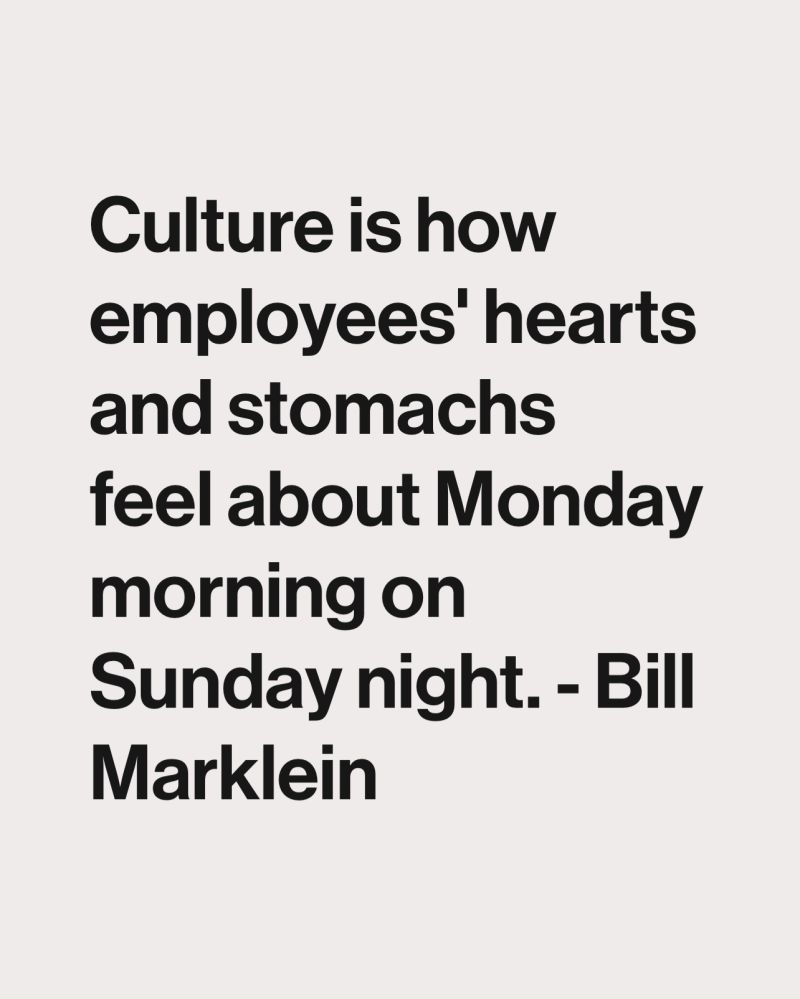
Quote of the Day: On Culture

Ketul J. Patel, Division President, Pacific Northwest; Chief Executive Officer, CommonSpirit Health; Virginia Mason Franciscan Health

There is no shortage of challenges to confront in healthcare today, from workforce shortages and burnout to innovation and health equity (and so much more). We’re committed to giving industry leaders a platform for sharing best practices and exchanging ideas that can improve care, operations and patient outcomes.


Check out this podcast interview with Ketul J. Patel, CEO at Virginia Mason Franciscan Health and division president, Pacific Northwest at CommonSpirit Health, for his insights on where healthcare is headed in the future.

In this episode, we are joined by Ketul J. Patel, Division President, Pacific Northwest; Chief Executive Officer, CommonSpirit Health; Virginia Mason Franciscan Health, to discuss his background & what led him to executive healthcare leadership, challenges surrounding workforce shortages, the importance of having a strong workplace culture, and more.