The American Hospital Association, other trade groups and individual hospitals filed petitions Feb. 10 asking the U.S. Supreme Court to reverse appeals court decisions in two cases involving outpatient payment cuts to hospitals.
One lawsuit hospitals are asking the Supreme Court to hear challenges HHS’ payment reductions in 2019 for certain outpatient off-campus provider-based departments.
Under the 2019 Medicare Outpatient Prospective Payment System final rule, CMS made payments for clinic visits site-neutral by reducing the payment rate for evaluation and management services provided at off-campus provider-based departments by 60 percent.
In an attempt to overturn the rule, the AHA, the Association of American Medical Colleges and dozens of hospitals across the nation sued HHS. They argued CMS exceeded its authority when it finalized the payment cut in the OPPS rule. They further claimed the site-neutral payment policy violates the Medicare statute’s mandate of budget neutrality.
HHS argued that under the Bipartisan Budget Act of 2015 it has authority to develop a method for controlling unnecessary increases in outpatient department services. Since “method” is not defined in the statute, the government argued its approach satisfies generic definitions of the term. U.S. District Judge Rosemary M. Collyer rejected that argument and set aside the regulation implementing the rate reduction in September 2019.
HHS filed an appeal in the case, and the appellate court reversed the lower court’s decision July 17.
The second lawsuit hospitals are asking the Supreme Court to hear challenges HHS’ nearly 30 percent cut to 2018 and 2019 outpatient drug payments for certain hospitals participating in the 340B Drug Pricing Program.
A district court sided with hospitals and found the payment reductions were unlawful. Two members of a three-judge panel of the U.S. Court of Appeals overturned that ruling in July.
The hospitals argue in both petitions that the Supreme Court should review the cases because of the “excessive deference” the appeals court gave to HHS’ interpretation of the respective governing statutes.
The owner of two pharmacies and a management company in Florida pleaded guilty Jan. 25 to his role in a $931 million healthcare fraud scheme. He is the seventh defendant to plead guilty in the scheme, according to the U.S. Justice Department.
Larry Smith pleaded guilty to conspiracy to commit healthcare fraud, and his sentencing is set for Oct. 25. In his written plea agreement, Mr. Smith admitted to conspiring with others to defraud pharmacy benefit managers into paying for fraudulent prescriptions. As part of the plea agreement, Mr. Smith agreed to pay restitution of $24.9 million and forfeit approximately $3.1 million.
An indictment charged Mr. Smith and others with a nationwide conspiracy to defraud pharmacy benefit managers by submitting $931.4 million in bills for fraudulent prescriptions purchased from a telemarketing company. After improperly soliciting patient information, the marketing companies received approvals through telemedicine prescribers then sold the prescriptions to pharmacies in exchange for kickbacks, said Derrick Jackson, special agent in charge at HHS’ Office of Inspector General in Atlanta.
In September 2018, HealthRight, a telemedicine company, and its CEO Scott Roix pleaded guilty to conspiracy to commit healthcare fraud for their roles in the scheme. They agreed to pay $5 million in restitution. Mr. Roix’s sentencing is scheduled for Oct. 25.
Mihir Taneja, Arun Kapoor, Maikel Bolos and Sterling-Knight Pharmaceuticals also pleaded guilty in December 2020, according to the Justice Department.
By the time President-elect Joe Biden takes the oath of office on Wednesday, more than 400,000 Americans will have died of covid-19 — a dismal milestone in the deadly pandemic.
Yet the crucial task he faces— rapidly distributing coronavirus vaccines to the American public — is one that most experts one year ago didn’t think would even be an option by this point. Few expected multiple vaccines to be approved within a year — a record for vaccine development, by any measure. And although the rollout has been criticized, Israel and Great Britain are the only major nations the United States lags in vaccinations per capita and its daily rate of immunizations has more than doubled in the past two weeks.
“You have my word: We will manage the hell out of this operation,” Biden said in a speech on Friday, announcing his own vaccination plan.
Regardless of whether one views the vaccine effort up to this point as a failure or success, this much is true: Biden and his new administration will face an enormous task, not only in getting the vaccines distributed but also in ramping up testing, convincing Americans to follow public health recommendations and responding to the economic fallout from the pandemic.
Here are six key promises Biden is making about his pandemic response:
1. Administer 100 million doses of coronavirus vaccine during the first 100 days of his administration.
Biden previously cited this as a goal. He reiterated it Friday while rolling out a broader plan for coronavirus vaccinations
The plan would require a rate of 1 million immunizations per day — and the United States isn’t too far away from that goal right now. Nearly 800,000 Americans are getting shots every day on average. That’s a considerable improvement from two weeks ago, when the daily rate was closer to 350,000.
The 100-shot goal is “absolutely a doable thing,” Anthony S. Fauci, direct of the National Institute for Allergy and Infectious Disease, told NBC’s Chuck Todd yesterday.
“The feasibility of his goal is absolutely clear; there’s no doubt about it,” Fauci said. “That can be done.”
But top Biden advisers are also cautioning ramping up immunizations will be gradual and will require lots of coordination.
“The first days of that 100 days may be substantially slower than it will be towards the end,” Michael Osterholm, a member of Biden’s covid-19 task force, told Stat News.“It’s not going to occur quickly … you’re going to see the ramp-up occurring only when the resources really begin to flow.”
2. Set up mass vaccination clinics.
By the end of his first month in office, Biden has promised to open 100 federally managed clinics to administer shots. According to his vaccination plan, these sites would be set up by the Federal Emergency Management Agency. The federal government would reimburse states for sending National Guard members to help run them.
Biden says he also wants to deploy mobile units to rural and underserved areas, along with boosting the role already being played by pharmacies in distributing shots.
This approach would diverge significantly from how things are being done now, with the Trump administration leaving it up to hospitals, doctors, pharmacies and state public health departments to administer the shots. Some cities and states have set up large vaccination sites, but many haven’t.
“Overall, the president-elect’s plan lays out a more muscular federal role than the Trump administration’s approach, which has relied heavily on each state to administer vaccines once the federal government ships them out,” Anne Gearan, Amy Goldstein and Laurie McGinley report.
“Many of the elements — such as seeking to expand the number of vaccination sites and setting up mobile vaccination clinics — were foreshadowed in a radio interview Biden gave last week and in an economic and health ‘relief plan’ he issued Thursday, which contains a $20 billion request of Congress to pay for a stepped-up campaign of mass vaccination,” our colleagues add.
3. Allow federally qualified health centers to directly access vaccines.
These community health centers — which receive higher government reimbursements but are required to accept all patients regardless of their ability to pay — are a core part of the nation’s safety net for low-income Americans.
Biden’s plan proposes a new program “to ensure [federally qualified health centers] can directly access vaccine supply where needed,” although here, too, it’s unclear exactly how that might work.
Under the Trump administration’s plan, these centers have been asked to enroll with state health departments as vaccine providers. States were then supposed to communicate to the federal government how many doses were needed and where they should go.
How well this is actually working is “all over the map,” said Amy Simmons Farber of the National Association of Community Health Centers. She said supplies vary from county to county and many health centers have received their supplies with little notice, making it challenging to prioritize and plan.
Farber declined to comment on the Biden plan, saying she doesn’t have a lot of details about it. But she’s “very encouraged by the recognition of the important role health centers have played in fighting the pandemic and the need to adequately resource them.”
4. Use the Defense Production Act to ensure plenty of vaccine supplies.
Several times over the course of the pandemic, President Trump has invoked the Defense Production Act, which allows the president to require companies to prioritize contracts deemed essential for national security.
Ventilator tubes are attached to a covid-19 patient at Providence Holy Cross Medical Center in Los Angeles.
He has used the DPA to speed the production of coronavirus tests and ventilators, and to keep meatpacking plants open. But he hasn’t invoked the authority to compel faster production of the supplies needed for packaging and administering the vaccine.
Biden says he will invoke DPA to ensure a steady stream of these supplies, which include glass vials, stoppers, syringes, needles and the capacity for companies to rapidly fill vaccine vials and finish packaging them.
5. Sign executive actions to combat the virus.
Biden has promised a raft of executive actions in his first ten days as president, laid out over the weekend in a memo from incoming White House Chief of Staff Ron Klain. They’ll include a number of pandemic-related orders.
On Inauguration Day, Biden intends to issue a mask mandate on federal property and for interstate travel, while encouraging all Americans to wear masks for what he’s calling a “100 Day Masking Challenge.”
The following day, Thursday, he’ll sign executive orders aimed at helping schools and businesses reopen safely, expanding testing, protecting workers and establishing clearer public health standards. And on Friday, Biden will direct his Cabinet secretaries to take immediate action to deliver economic relief to families.
“President-elect Biden will take action — not just to reverse the gravest damages of the Trump administration — but also to start moving our country forward,” Klain wrote.
6. Launch a vaccine education campaign.
The memo says Biden will run a “federally-run, locally-focused public education campaign.”
“The campaign will work to elevate trusted local voices and outline the historic efforts to deliver a safe and effective vaccine as part of a national strategy for beating covid-19,” it says.
But the transition team hasn’t detailed how the education campaign might differ from one launched by the Trump administration last month.
The Department of Health and Human Services said it plans to spend $250 million on efforts to promote vaccine awareness. It kicked off the effort with a $150,000 buy on YouTube for ads that feature Fauci and Food and Drug Administration Commissioner Stephen Hahn.
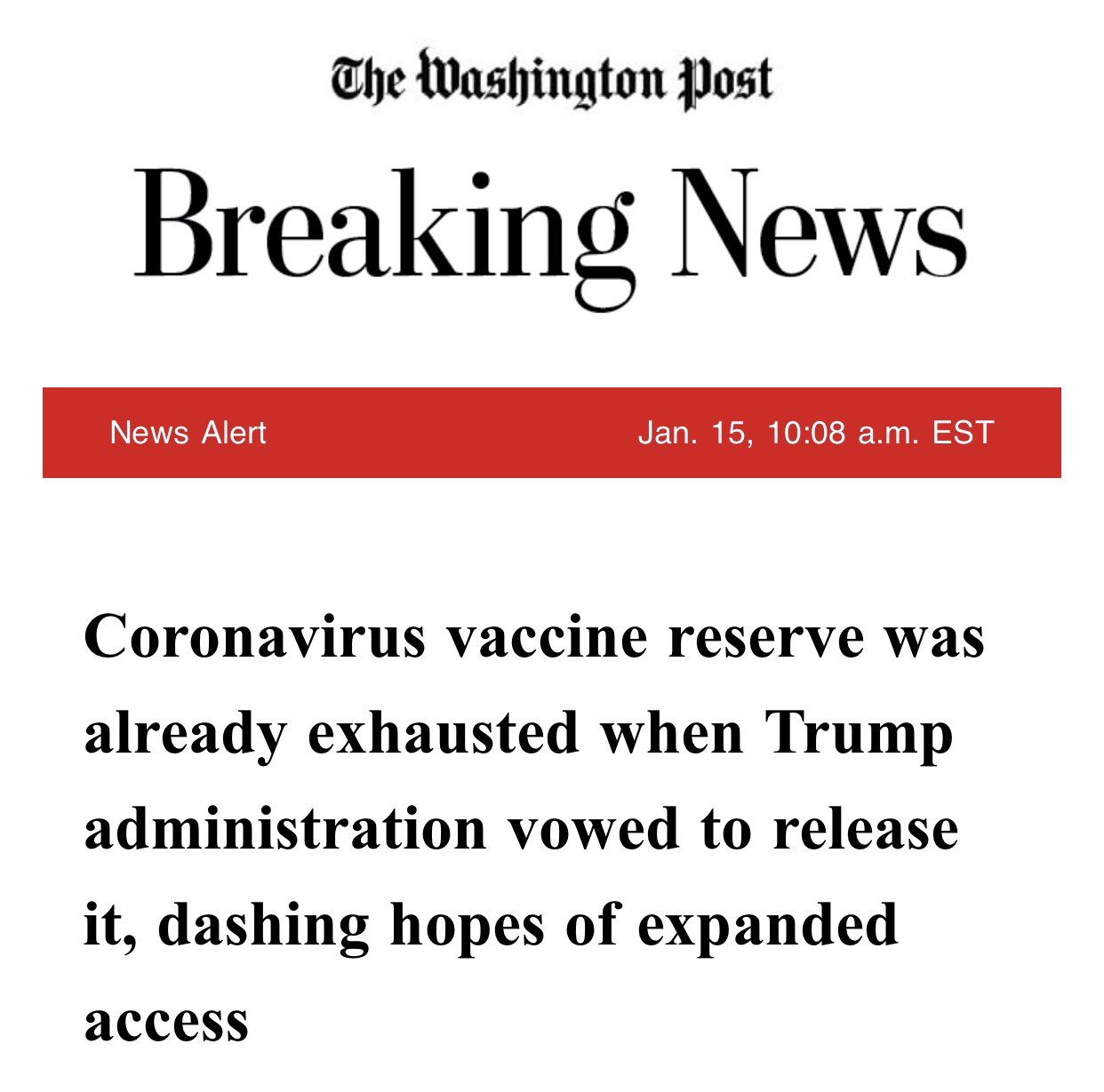
States were anticipating a windfall after federal officials said they would stop holding back second doses. But the approach had already changed, and no stockpile exists.
When Health and Human Services Secretary Alex Azar announced this week that the federal government would begin releasing coronavirus vaccine doses that had been held in reserve for second shots, no such reserve existed, according to state and federal officials briefed on distribution plans. The Trump administration had already begun shipping out what was available, starting at the end of December, taking second doses for the two-dose regimen directly off the manufacturing line.
Now, health officials across the country who had anticipated their extremely limited vaccine supply as much as doubling beginning next week are confronting the reality that their allocations will remain largely flat, dashing hopes of dramatically expanding access for millions of elderly people and those with high-risk medical conditions. Health officials in some cities and states were informed in recent days about the reality of the situation, while others were still in the dark Friday.
Because both of the vaccines authorized for emergency use in the United States are two-dose regimens, the Trump administration’s initial policy was to hold back second doses to protect against manufacturing disruptions. But that approach shifted in recent weeks, according to the officials, who spoke on the condition of anonymity because they were not authorized to discuss the matter.
Operation Warp Speed, which is overseeing vaccine distribution, stopped stockpiling second doses of the Pfizer-BioNTech vaccine at the end of last year, those officials were told. Shipping of the last reserve doses of Moderna’s supply, meanwhile, began over the weekend.
The shift, in both cases, had to do with increased confidence in the supply chain, so Operation Warp Speed leaders felt they could reliably anticipate the availability of doses for booster shots — required three weeks later in the case of the Pfizer-BioNTech product and four weeks later under Moderna’s protocol.
But it also meant there was no stockpile of second doses waiting to be shipped, as Trump administration officials suggested this week. Azar, at a briefing Tuesday, said, “Because we now have a consistent pace of production, we can now ship all of the doses that had been held in physical reserve.” He explained the decision as part of the “next phase” of the nation’s vaccination campaign.
Those in line for their second shots are still expected to get them on schedule because second doses are prioritized over first shots and states are still receiving regular vaccine shipments. But state and local officials say they are angry and bewildered by the shifting directions and changing explanations about supply. Their anxiety was deepened by projections that a highly contagious virus variant would spread rapidly throughout the United States and as daily covid-19 deaths averaged 3,320 this week.
The health director in Oregon, Patrick M. Allen, was so disturbed that he wrote Azar on Thursday demanding an explanation. In his letter, he recounted how Gustave F. Perna, the chief operating officer of Operation Warp Speed, had “informed us there is no reserve of doses, and we are already receiving the full allocation of vaccines.”
“If true, this is extremely disturbing, and puts our plans to expand eligibility at grave risk,” Allen wrote. “Those plans were made on the basis of reliance on your statement about ‘releasing the entire supply’ you have in reserve. If this information is accurate, we will be unable to begin vaccinating our vulnerable seniors on Jan. 23, as planned.”
HHS spokesman Michael Pratt confirmed in an email that the final reserve of second doses had recently been released to states but did not address Azar’s comments, saying only, “Operation Warp Speed has been monitoring manufacturing closely, and always intended to transition from holding second doses in reserve as manufacturing stabilizes and we gained confidence in the ability for a consistent flow of vaccines.”
But the explanations by the federal government were conflicting. The 13 million doses made available for states to order this week — for delivery next week — represented “millions more” than in previous weeks, Pratt said. He also said states have not requested the full amount they have been allocated.
Guidance circulated Friday among HHS officials acknowledged, however, that “the notion that there is a large bolus of second doses that will be released to jurisdictions is not accurate.” And state and municipal health officials said their allocations for next week had increased only marginally, if at all.
Chicago Public Health Commissioner Allison Arwady said her city’s share had gone from about 32,000 doses to 34,000 doses. “I have stopped paying a whole lot of attention to what is being said verbally at the federal level right now,” she said.
Nirav Shah, the director of Maine’s Center for Disease Control and Prevention, said he learned only Friday, by calling his state’s designated contact at Warp Speed, that the reserve no longer existed.
Maine still plans to broaden vaccination next week to those 70 and older. “Who is in line will not change,” Shah said. “The velocity of that line will change because this bolus of doses that we intuited was coming based on Azar’s comments is not coming.”
In an email that reached some state officials Friday morning, Christopher Sharpsten, an Operation Warp Speed director, called it a “false rumor” that “the federal government was holding back vaccine doses in warehouses to guarantee a second/booster dose.”
In fact, that information had come fromAzar, who said Tuesday that the “next phase” of the country’s vaccination campaign involved “releasing the entire supply we have for order by states, rather than holding second doses in physical reserve.”
Azar’s comments Tuesday followed a Jan. 8 announcement by President-elect Joe Biden’s transition team that his administration would move to release all available doses rather than holding half in reserve for booster shots. Biden’s advisers said the move would be a way to accelerate distribution of the vaccine, which is in short supply across the country.
Azar initially said the Biden plan was shortsighted and potentially unethical in putting people at risk of missing their booster shots. When he embraced the change four days later, however, he did not say that the original policy had already been phased out or that the stockpile had been exhausted. Trump administration officials and Biden’s team alike have sought to reassure the public that increasing the pace of immunizations would not endanger booster shots.
Azar also signaled to states that they would soon see expanded supply, urging them to begin vaccinating adults 65 and older and those under 64 with high-risk medical conditions. Officials in some states embraced that directive, while others said that suddenly putting hundreds of thousands of additional people at the front of the line would overwhelm their capacity.
In subsequent conversations with state and local authorities, federal officials sought to temper those instructions, said people who participated in the conversations. Perna, for instance, spoke directly to officials in at least two of the jurisdictions receiving vaccine supply, explaining that allocations would not increase and that they did not have to broaden eligibility as they had previously been told, according to a health official who was not authorized to discuss the matter.
The revised instructions led some state and local officials to hold off on changes. One state health official noted that the updated eligibility guidance announced Tuesday did not appear on the website of the CDC, even though it was stated as federal policy by Azar and by Robert R. Redfield, the CDC director, in their remarks. Under the original recommendations, adults 65 and older and front-line essential workers were to comprise the second priority group, known as Phase 1b, after medical workers and residents and staffers of long-term-care facilities.
There was additional confusion from another change Azar announced this week — making allocation of doses dependent on how quickly states administer them. He originally said that would not take effect for two weeks.
But Connecticut Gov. Ned Lamont (D) on Thursday tweeted that federal officials had notified him that the state would receive an additional 50,000 doses next week “as a reward for being among the fastest states” to get shots into arms. West Virginia, meanwhile, which is moving at the fastest clip, according to CDC data, did not get any additional doses, said Holli Nelson, a spokeswoman for the state’s National Guard.
In a sign that the incentive structure may not be long-lived, a senior Biden transition official, speaking on the condition of anonymity to address ongoing deliberations, said this week that the team did not look kindly on a system that “punishes states.”
Biden has said he wants to see 100 million shots administered within his first 100 days — an aim that will depend on quickly accelerating the pace of immunization. Together, Pfizer and Moderna have agreed to sell 200 million doses to the United States by the end of March, which is enough to fully vaccinate 100 million people.
Drug companies AstraZeneca, Eli Lilly and Sanofi filed separate lawsuits seeking to preserve their ability to restrict offering 340B-discounted drugs to contract pharmacies.
The lawsuits, filed Tuesday in different federal courts, seek to get rid of an advisory opinion filed by the Department of Health and Human Services’ (HHS’) general counsel that says drug companies must offer 340B drugs to contract pharmacies, which are third-party entities that dispense drugs on behalf of hospitals participating in the program.
The drug companies argue that the advisory opinion contracts the statute for the 340B program, which requires manufacturers to offer discounted products to safety net hospitals and other providers in exchange for participation in Medicare and Medicaid.
“The statute, on its face, does not require manufacturers to recognize any contract pharmacies, much less unlimited contract pharmacies,” the legal filing from AstraZeneca said.
AstraZeneca wants a federal court to declare the advisory opinion didn’t follow proper procedure and exceeded HHS’ statutory authority. The manufacturer also wants a court to declare that companies are not required to offer 340B discounts to contract pharmacies.
The lawsuits come less than a week after the American Hospital Association (AHA) and five other groups and three individual systems sent letters to the drug companies that have halted or restricted sales to contract pharmacies. They wanted the drugmakers to reinstate sending the discounted products to their pharmacies and reimburse facilities for any damages.
AHA and several groups sued HHS to get the agency to clamp down on the drug manufacturers’ moves.
AstraZeneca, Eli Lilly, Novartis, Novo Nordisk, Sanofi and United Therapeutics have taken a range of actions to clamp down on sales to contract pharmacies, which a majority of 340B-covered entities use.
The companies have argued that the discounts do not filter down to patients, but hospital and advocacy groups charge that the discounts are vital, especially as safety net providers operate on thin margins.
“Make no mistake: the boom in contract pharmacies has been fueled by the prospect of outsized profit margins on 340B discounted drugs,”AstraZeneca argued in its court filing.
With many deals delayed by the pandemic, 2020 turned out to be slower than anticipated for hospital mergers and acquisitions. But we’d expect the pace of mergers to quicken this year as health systems emerge from the winter COVID surge. The calculus centers on both strategy and security.
Having weathered the pandemic better than expected, many larger systems approach the market as opportunists, looking expand their reach and capabilities. And systems of all sizes are seeking scale to enable better access to capital and greater risk mitigation—now viewed as essential should they once again face a pandemic-sized shock.
As systems contemplate new combinations, they would be wise to learn from the high-profile combinations that fell apart last year. In our experience, many mergers are felled by the “social” issues: board seat allocation, leadership structures, or cultural mismatches. These types of challenges appeared to be behind the stalling of Advocate Aurora Health’s merger with Beaumont Health (which faced pushback from doctors and community stakeholders) and the demise of the combination of Intermountain Healthcare and Sanford Health (called off amid leadership turnover).
Any successful merger must not only present the financial rationale for partnership, but also make a clear case as to how a combined system will bring new capabilities that will improve care, access and experience for local consumers.
Expect scrutiny on deals to rise in the Biden administration with the likely confirmation of Department of Health and Human Services (HHS) Secretary nominee Xavier Becerra, who took a strict antitrust posture in reviewing hospital mergers and contracting during his tenure as California’s attorney general.
Five hospitals recently sued HHS over its calculation of Medicare Part A disproportionate share hospital payments for patients who were enrolled in Medicare Advantage plans under Part C of the Medicare Act.
The federal lawsuit was filed Dec. 21 by Duke Raleigh (N.C.) Hospital, Durham (N.C.) Regional Hospital, Geisinger Medical Center in Danville, Pa., Geisinger Wyoming Valley Medical Center in Wilkes-Barre, Pa., and The Washington (Pa.) Hospital.
The hospitals’ lawsuit takes issue with a Medicare policy change, adopted in 2004, that included a new methodology for allocating Medicare Part C days in the disproportionate share hospital formula. The appeals court has ruled against HHS in three actions challenging its attempts to apply its Part C days policy to deny DSH payments to hospitals. However, the hospitals argue that HHS is disregarding those decisions and a decision by the U.S. Supreme Court.
“The agency has continued to apply the Part C days policy adopted in the now-vacated 2004 rule in violation of these decisions, including in the payment determinations at issue for the plaintiff hospitals in this case, in a recently issued proposed rule seeking to re-adopt the same 2004 policy retroactively, and in a ruling that would leave undisturbed the payment determinations from which hospitals have appealed and, as construed by the agency’s administrative Board, not permit further administrative or judicial review of those determinations,” the complaint filed Dec. 21 states.
The hospitals argue that HHS’ attempts to apply the policy should be rejected. The hospitals are asking the court to declare the final payment determinations reflecting the policy change invalid.
President-elect Joe Biden has chosen California Attorney General Xavier Becerra to be the secretary of the Department of Health and Human Services, the Biden transition team announced this morning and the New York Times first reported last night.
Why it matters:If confirmed, Becerra would be the first Latino to lead the department. He’s also been at the forefront of health care legal battles, most prominently over the future of the Affordable Care Act.
Becerra has led the effort by a group of 20 states and the District of Columbia in defending the ACA against a GOP lawsuit aiming to strike down the law. The case was argued in front of the Supreme Court last month.
Biden plans to announce several other top health care advisors, people familiar with the rollout told NYT.
Between the lines:Whoever leads HHS will immediately be in charge of addressing what will likely still be an out-of-control pandemic, including the government’s efforts to distribute coronavirus vaccines.
The virus has disproportionately affected people of color, and Becerra’s selection follows increasing pressure on Biden from the Latino community and the Congressional Hispanic Caucus to diversity his cabinet, per NYT.
On the other hand, Becerra has little experience managing a large bureaucracy or in public health, per Politico.
The big picture: If a global pandemic and the future of the ACA weren’t enough, the HHS secretary could end up in charge of executing most of Biden’s health agenda, particularly if the Senate remains in Republican hands.
Becerra’s legal background could prove useful in enacting a lawsuit-proof regulatory agenda.
Bonus: Biden has selected Rochelle Walensky, chief of infectious diseases at Massachusetts General Hospital and a professor at Harvard Medical School, to lead the Centers for Disease Control and Prevention, Politico reported last night.
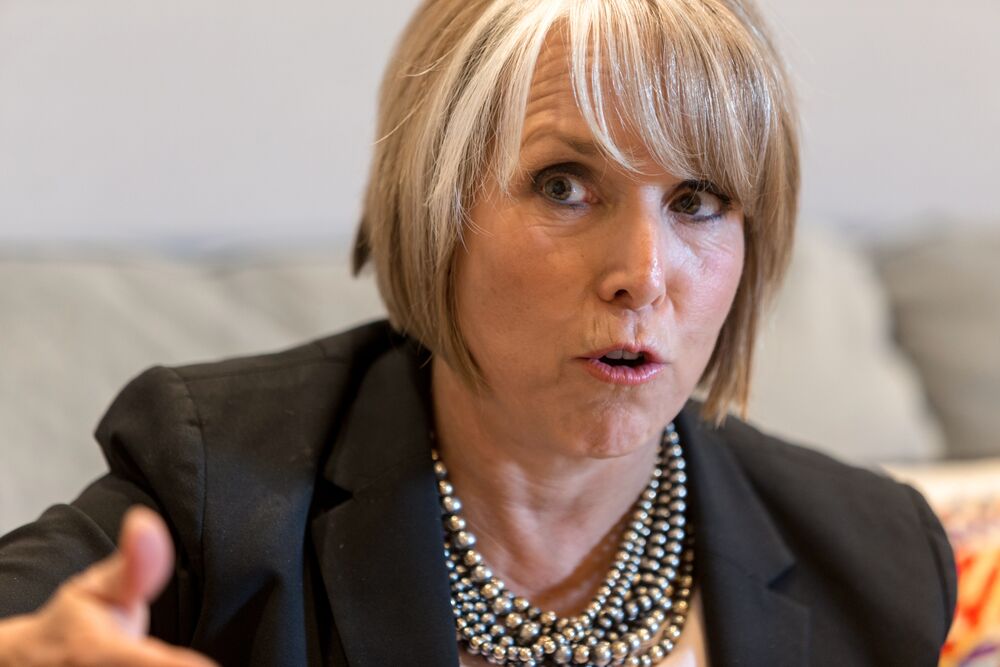
President-elect Joe Biden’s front-runner for secretary of Health and Human Services is New Mexico Governor Michelle Lujan Grisham, and he may announce several of his administration’s health leaders as soon as next week, according to people familiar with the matter.
The position of HHS secretary is down to two possibilities, the people said, between Lujan Grisham and former Surgeon General Vivek Murthy, a co-chair of the coronavirus advisory board Biden appointed shortly after he was elected.
Biden’s health team will assume office with the U.S. still suffering from the pandemic, as virus cases and hospitalizations soared over the past month. His health secretary is expected to have input on filling other top health posts, such as FDA commissioner and the administrator of the Centers for Medicare and Medicaid Services, the people said, so those appointments may not be announced until later.
The Health and Human Services secretary will have the tough task of rebuilding Obamacare, which Biden has promised to expand. That will be a difficult undertaking with a Republican-led Senate.
Murthy or Jeff Zients, who led the Obama administration effort to repair healthcare.gov, the faulty Obamacare website, may be named to a leadership role on the pandemic, according to the people familiar with the matter — a “Covid-19 czar.”
Mandy Cohen, the North Carolina state health secretary, is a favorite for CMS, the people said. Biden’s choices to lead the Food and Drug Administration appear narrowed down to David Kessler, a former commissioner of the agency who is another co-chair of his coronavirus advisory board, and Joshua Sharfstein, a former FDA official who is a vice dean at Johns Hopkins University’s Bloomberg School of Public Health.
Biden announced his economic team on Tuesday, a group led by Treasury Secretary-designate Janet Yellen whose top priority will be restoring jobs eliminated by the pandemic. An announcement on some of his health team could come as soon as Monday, the people said.
The people familiar with the matter asked not to be identified because talks are still ongoing and no final decision has been made. It’s not clear how many people will be announced at once, or which positions would later be filled by the health secretary once the Biden administration is in place.
Biden’s transition team did not immediately respond to a request for comment.
The U.S. recorded 158,000 new coronavirus infections on Monday and a record 205,000 cases three days earlier. Biden will take office as distribution of coronavirus vaccines ramps up, and he has warned that any delay in the transition to his administration could slow or complicate that endeavor.
Lujan Grisham is seen as having an easier path to confirmation than Murthy, who has spoken out against gun violence as a public health threat and may draw strong opposition from Senate Republicans as a result, the people familiar with the matter said.
If he isn’t nominated to lead HHS, Murthy is under consideration as Covid-19 czar or another role, including a second stint as surgeon general, the people said. Murthy talks to Biden almost every day as co-chair of his advisory board and is seen as having influential supporters.
Murthy and Zients have also represented Biden’s transition team on calls with current HHS officials, two of the people said.
Biden’s team is still discussing what the White House coronavirus task force and Operation Warp Speed — the Trump administration’s effort to fast-track vaccines — will look like under the new administration.
If Biden announces his health team next week, he may be just days ahead of the first emergency FDA approval of a coronavirus vaccine. President Donald Trump is planning a vaccine summit next week at the White House, while an FDA advisory panel is scheduled to meet on Dec. 10 to discuss the shots.
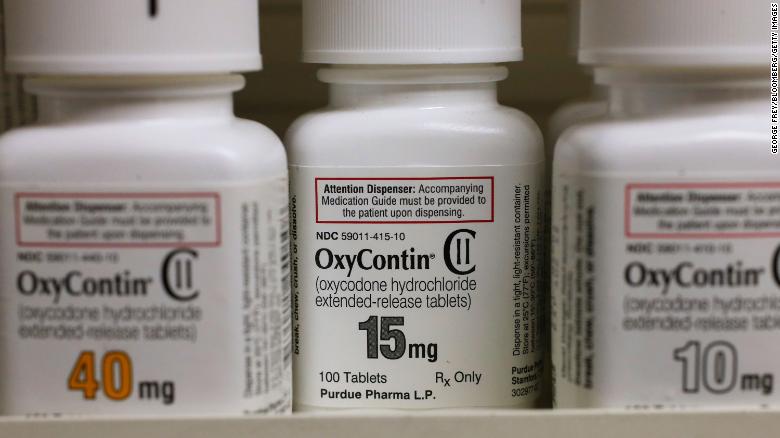
Purdue Pharma, the maker of OxyContin, pleaded guilty Tuesday to three federal criminal charges related to the company’s role in creating the nation’s opioid crisis. Purdue Pharma board chairman Steve Miller pleaded guilty on behalf of the company during a virtual federal court hearing in front of US District Judge Madeline Cox Arleo.
The counts include one of dual-object conspiracy to defraud the United States and to violate the Food, Drug, and Cosmetic Act, and two counts of conspiracy to violate the Federal Anti-Kickback Statute.
The plea deal announced in October includes the largest penalties ever levied against a pharmaceutical manufacturer, including a criminal fine of $3.544 billion and an additional $2 billion in criminal forfeiture, according to a Department of Justice press release.
The company, which declared bankruptcy last year, will be dissolved as a part of the plea agreement, and its assets will be used to create a new “public benefit company” controlled by a trust or similar entity designed for the benefit of the American public.
The Justice Department has said Purdue Pharma will function entirely in the public interest rather than to maximize profits. Its future earnings will go to paying the fines and penalties, which in turn will be used to combat the opioid crisis.
In pleading guilty to the criminal charges, the company is taking responsibility for past misconduct, Purdue Pharma said in a statement to CNN Tuesday.”Having our plea accepted in federal court, and taking responsibility for past misconduct, is an essential step to preserve billions of dollars of value for creditors and advance our goal of providing financial resources and lifesaving medicines to address the opioid crisis,” the statement said. “We continue to work tirelessly to build additional support for a proposed bankruptcy settlement, which would direct the overwhelming majority of the settlement funds to state, local and tribal governments for the purpose of abating the opioid crisis.”
According to the US Centers for Disease Control and Prevention, about 70,000 Americans died of drug overdoses in 2018, just one year of the opioid crisis, and about 70% of those deaths were caused by prescription or illicit opioids like OxyContin. In that year, an estimated 10.3 million Americans 12 and older misused opioids, including 9.9 million prescription pain reliever abusers and 808,000 heroin users, according to the US Department of Health and Human Services Substance Abuse and Mental Health Services Administration.
The Sackler family, and other current and former employees and owners of the company, still face the possibility that federal criminal charges will be filed against them. The court did not set a date for a sentencing hearing.












 HENRY KOTULA