What ‘Racism Is a Public Health Issue’ Means

https://www.smithsonianmag.com/science-nature/what-racism-public-health-issue-means-180975326/?utm_source=smithsoniandaily&utm_medium=email&utm_campaign=20200720-daily-responsive&spMailingID=43001584&spUserID=MTA5MDI1MDg0MjgxOQS2&spJobID=1801530184&spReportId=MTgwMTUzMDE4NAS2&fbclid=IwAR027OjpNcyZKM6Jd5aTYhgVaTzaO5lBqI4hCl1xsrKgQRL1bFYH538YIMA

What 'Racism Is a Public Health Issue' Means | Science ...

Epidemiologist Sharrelle Barber discusses the racial inequalities that exist for COVID-19 and many other health conditions.

Throughout the COVID-19 pandemic, whether cases are flaring up, slowing to a simmer, or back on the rise in areas across the United States, the data makes one fact apparent: The viral disease has disproportionally sickened and killed marginalized communities. A New York Times analysis of data from almost 1,000 counties that reported racial breakdowns of COVID-19 cases and fatalities revealed that, compared to white Americans, African Americans and Hispanics were three times more likely to experience and two times more likely to die from the illness. The Navajo Nation has, per capita, more confirmed cases and deaths than any of the 50 states.

Many factors, like access to healthcare and testing, household size, or essential worker status, likely contribute to the pandemic’s outsized toll on communities of color, but experts see a common root: the far-reaching effects of systemic racism.

That racism would have such an insidious effect on health isn’t a revelation to social epidemiologists. For decades, public health experts have discussed “weathering,” or the toll that repeated stressors experienced by people of color take on their health. Studies have demonstrated the link between such chronic stress and high blood pressure, the increased maternal mortality rate among black and indigenous women, and the elevated prevalence of diabetes in black, Latino and especially Native American populations. The pandemic has laid bare these inequities. At the same time, outcry over systemic racism and police brutality against African Americans has roiled the nation, and the phrase, “Racism is a public health issue” has become an internet refrain.

What exactly is the nebulous concept of “public health”? According to Sharrelle Barber, a Drexel University assistant professor of epidemiology, the concept goes beyond the healthcare setting to take a more holistic look at health in different populations. “The charge of public health,” Barber told Smithsonian, “is really to prevent disease, prevent death, and you prevent those things by having a proper diagnosis of why certain groups might have higher rates of mortality, higher rates of morbidity, et cetera.”

Below is a lightly edited transcript of Smithsonian’s conversation with Barber, who studies how anti-black racism impacts health, about the many ways in which racism is a public health crisis:

When people say, “Racism is a public health problem,” what, in broad strokes, do they mean?

We’ve been observing racial inequities in health for decades in this country. W.E.B. DuBois, who was a sociologist, in The Philadelphia Negro showed mortality rates by race and where people lived in the city of Philadelphia at the turn of the 20th century and found striking inequalities based on race. Fast forward to 1985, 35 years ago, and we have the [Department of Health and Human Services-sponsored] Heckler Report, one of the most comprehensive studies the country had undertaken, which again found striking inequalities across a wide range of health outcomes: infant mortality, cancer, stroke, et cetera.

There are various explanations for why these racial inequalities exist, and a lot of those have erroneously focused on either biology or genetics or behavioral aspects, but it’s important to examine the root causes of those inequities, which is structural racism…Racism is a public health problem, meaning racism is at the root of the inequities in health that we see, particularly for blacks in this country. So whether it’s housing, criminal justice, education, wealth, economic opportunities, healthcare, all of these interlocking systems of racism really are the main fundamental drivers of the racial inequities that we see among black Americans.

What are some specific factors or policies that have set the foundations for these health inequities?

Any conversation about racial inequities has to start with a conversation about slavery. We have to go back 400-plus years and really recognize the ways in which the enslavement of African people and people of African descent is the initial insult that set up the system of racism within this country. One of the major drivers that I actually study is the link between racial residential segregation, particularly in our large urban areas, and health inequities. Racial residential segregation is rooted in racist policies that date back at least to the 1930s. Practices such as redlining, which devalued black communities and led to the disinvestment in black communities, were then propped up by practices and policies at the local, the state and federal level, for example, things like restrictive covenants, where blacks were not allowed to move into certain communities; racial terror, where blacks were literally intimidated and run out of white communities when they tried to or attempted to move into better communities; and so many other policies. Even when you get the 1968 Fair Housing Act, the system finds a way to reinvent itself to still perpetuate and maintain racism.

Within segregated communities, you have so many adverse exposures, like poor quality housing or lack of access to affordable, healthy foods, lack of access to quality healthcare, and the list goes on. The chronic stressors within these communities are compounded in segregated communities, which then can lead to a wide array of health outcomes that are detrimental. So for example, in the city of Philadelphia, there’s been work that has shown upwards of a 15-year life expectancy difference between racially and economically segregated communities, black communities and wealthier white communities.

I imagine that sometimes you might get pushback from people who ask about whether you can separate the effects of socioeconomic status and race in these differences in health outcomes.

Yeah, that’s a false dichotomy in some ways. Racism does lead to, in many aspects, lower income, education, wealth. So they’re inextricably linked. However, racism as a system goes beyond socioeconomic status. If we look at what we see in terms of racial inequities in maternal mortality for black women, they are three times times more likely to die compared to white women. This disparity or this inequity is actually seen for black women who have a college degree or more. The disparity is wide, even when you control for socioeconomic status.

Let’s talk about the COVID-19 pandemic. How does racism shape the current health crisis?

The COVID-19 pandemic has literally just exposed what me and so many of my colleagues have known for decades, but it just puts it in such sharp focus. When you see the disproportionate impact COVID-19 is having, particularly for blacks, but also we’re seeing emerging data on Indigenous folks, it is just laying bare the ways racism is operating in this moment to produce those inequities.

Essential workers who had to continue to work during periods of stay at home orders across the country were disproportionately black and Latino. These are also often low wage workers. They weren’t given personal protective equipment, paid sick leave, hazard pay, and really had to choose between being exposed and protecting themselves and having an income during this period. So that’s one way racism operates.

Then we know that those individuals aren’t isolated, that they return to homes that often are crowded because of the lack of affordable housing. Again, another system of racism that compounds the effect. Then you think about places like Flint, Michigan, or places that don’t have access to clean water. When we were telling people, “Wash your hands, social distance,” all of those things, there were people who literally could not adhere to those basic public health prevention measures and still can’t.
So many things were working in tandem together to then increase the risk, and what was frustrating for myself and colleagues was this kind of “blame the victim” narrative that emerged at the very onset, when we saw the racial disparities emerge and folks were saying, “Blacks aren’t washing their hands,” or, “Blacks need to eat better so they have better outcomes in terms of comorbidities and underlying chronic conditions,” when again, all of that’s structured by racism. To go back to your original question, that’s why racism is a public health issue and fundamental, because in the middle of a pandemic, the worst public health crisis in a century, we’re seeing racism operate and racism produce the inequities in this pandemic, and those inequities are striking…

If we had a structural racism lens going into this pandemic, perhaps we would have done things differently. For example, get testing to communities that we know are going to be more susceptible to the virus. We would have done that early on as opposed to waiting, or we would have said, “Well, folks need to have personal protective equipment and paid sick leave and hazard pay.” We would have made that a priority…

The framing [of systemic racism as a public health concern] also dictates the solutions you come up with in order to actually prevent death and suffering. But if your orientation is, “Oh, it’s a personal responsibility” or “It’s behavioral,” then you create messages to black communities to say, “Wash your hands; wear a mask,” and all of these other things that, again, do not address the fundamental structural drivers of the inequities. That’s why it’s a public health issue, because if public health is designed to prevent disease, prevent suffering, then you have to address racism to have the biggest impact.

Can you talk about how police brutality fits into the public health picture?

We have to deal with the literal deaths that happen at the hands of the police, because of a system that is rooted in slavery, but I also think we have to pay attention to the collective trauma that it causes to black communities. In the midst of a pandemic that’s already traumatic to watch the deaths due to COVID-19, [communities] then have to bear witness to literal lynchings and murders and that trauma. There’s really good scholarship on the kind of spillover effects of police brutality that impact the lives of whole communities because of the trauma of having to witness this kind of violence that then does not get met with any kind of justice.

It reinforces this idea that one, our lives are disposable, that black lives really don’t matter, because the whole system upholds this kind of violence and this kind of oppression, particularly for black folks. I’ve done studies on allostatic load [the wear and tear on the body as a result of chronic stress] and what it does, the dysregulation that happens. So just think about living in a society that’s a constant source of stress, chronic stress, and how that wreaks havoc on blacks and other marginalized racial groups as well.


Coronavirus’s painful side effect is deep budget cuts for state and local government services

https://theconversation.com/coronaviruss-painful-side-effect-is-deep-budget-cuts-for-state-and-local-government-services-141105

Coronavirus's painful side effect is deep budget cuts for state ...

Nationwide, state and local government leaders are warning of major budget cuts as a result of the pandemic. One state – New York – even referred to the magnitude of its cuts as having “no precedent in modern times.”

Declining revenue combined with unexpected expenditures and requirements to balance budgets means state and local governments need to cut spending and possibly raise taxes or dip into reserve funds to cover the hundreds of billions of dollars lost by state and local government over the next two to three years because of the pandemic.

Without more federal aid or access to other sources of money (like reserve funds or borrowing), government officials have made it clear: Budget cuts will be happening in the coming years.

And while specifics are not yet available in all cases, those cuts have already included reducing the number of state and local jobs – from firefighters to garbage collectors to librarians – and slashing spending for education, social services and roads and bridges.

In some states, agencies have been directed to cut their budget as much as 15% or 20% – a tough challenge as most states prepared budgets for a new fiscal year that began July 1.

As a scholar of public administration who researches how governments spend money, here are the ways state and local governments have reduced spending to close the budget gap.

Cutting jobs

State and local governments laid off or furloughed 1.5 million workers in April and May.

They are also reducing spending on employees. According to surveys, government workers are feeling personal financial strain as many state and local governments have cut merit raises and regular salary increases, frozen hiring, reduced salaries and cut seasonal employees.

Washington state, for example, cut both merit raises and instituted furloughs.

survey from the National League of Cities shows 32% of cities will have to furlough or lay off employees and 41% have hiring freezes in place or planned as a result of the pandemic.

Employment reductions have met some resistance. In Nevada, for example, a state worker union filed a complaint against the governor to the state’s labor relations board for violating a collective bargaining statute by not negotiating on furloughs and salary freezes.

Most of the employee cuts have been made in education. Teachers, classroom aids, administrators, staff, maintenance crews, bus drivers and other school employees have seen salary cuts and layoffs.

The job loss has hurt public employees beyond education, too: librarians, garbage collectors, counselors, social workers, police officers, firefighters, doctors, nurses, health aides, park rangers, maintenance crews, administrative assistants and others have been affected.

Residents also face the consequences of these cuts: They can’t get ahold of staff in the city’s water and sewer departments to talk about their bill; they can’t use the internet at the library to look for jobs; their children can’t get needed services in school.

Most of these cuts have been labeled temporary, but with the extensions to stay-at-home orders and a mostly closed economy, it will be some time before these employees are back to work.

Suspending road, bridges, building and water system projects

As another way to reduce costs quickly, a National League of Cities survey shows 65% of the municipalities surveyed are stopping temporarily, or completely, capital expenditure and infrastructure projects like roads, bridges, buildings, water systems or parking garages.

In New York City, there is a US$2.3 billion proposed cut to the capital budget, a fund that supports large, multiyear investments from sidewalk and road maintenance, school buildings, senior centers, fire trucks, sewers, playgrounds, to park upkeep. There are potentially serious consequences for residents. For example, New York housing advocates are concerned that these cuts will hurt plans for 21,000 affordable homes.

Suspending these big money projects will save the government money in the short term. But it will potentially harm the struggling economy, since both public and private sectors benefit from better roads, bridges, schools and water systems and the jobs these projects create.

Delaying maintenance also has consequences for the deteriorating infrastructure in the U.S. The costs of unaddressed repairs could increase future costs. It can cost more to replace a crumbling building than it does to fix one in better repair.

Cities and towns hit

In many states, the new budgets severely cut their aid to local governments, which will lead to large local cuts in education – both K-12 and higher education – as well as social programs, transportation, health care and other areas.

New York state’s budget proposes that part of its fiscal year 2021 budget shortfall will be balanced by $8.2 billion in reductions in aid to localities. This is the state where the cuts were referred to in the budget as “not seen in modern times.” This money is normally spent on many important services that residents need everyday –mass transit, adult and elderly care, mental health support, substance abuse programs, school programs like special education, children’s health insurance and more. Lacking any of these support services can be devastating to a person, especially in this difficult time.

Fewer workers, less money

As teachers and administrators figure out how to teach both online and in person, they and their schools will need more money – not less – to meet students’ needs.

Libraries, which provide services to many communities, from free computer use to after-school programs for children, will have to cut back. They may have fewer workers, be open for fewer hours and not offer as many programs to the public.

Parks may not be maintained, broken playground equipment may stay that way, and workers may not repave paths and mow lawns. Completely separate from activists’ calls to shift police funding to other priorities, police departments’ budgets may be slashed just for lack of cash to pay the officers. Similar cuts to firefighters and ambulance workers may mean poorly equipped responders take longer to arrive on a scene and have less training to deal with the emergency.

To keep with developing public safety standards, more maintenance staff and materials will be needed to clean and sanitize schools, courtrooms, auditoriums, correctional facilitiesmetro stations, buses and other public spaces. Strained budgets and employees will make it harder to complete these new essential tasks throughout the day.

To avoid deeper cuts, state and local government officials are trying a host of strategies including borrowing money, using rainy day funds, increasing revenue by raising tax rates or creating new taxes or fees, ending tax exemptions and using federal aid as legally allowed.

Colorado was able to hold its budget to only a 3% reduction, relying largely on one-time emergency reserve funds. Delaware managed to maintain its budget and avoided layoffs largely through using money set aside in a reserve account.

Nobody knows how long the pandemic, or its economic effects, will last.

In the worst-case scenario, budget officials are prepared to make steeper cuts in the coming months if more assistance does not come from the federal government or the economy does not recover quickly enough to restore the flow of money that governments need to operate.


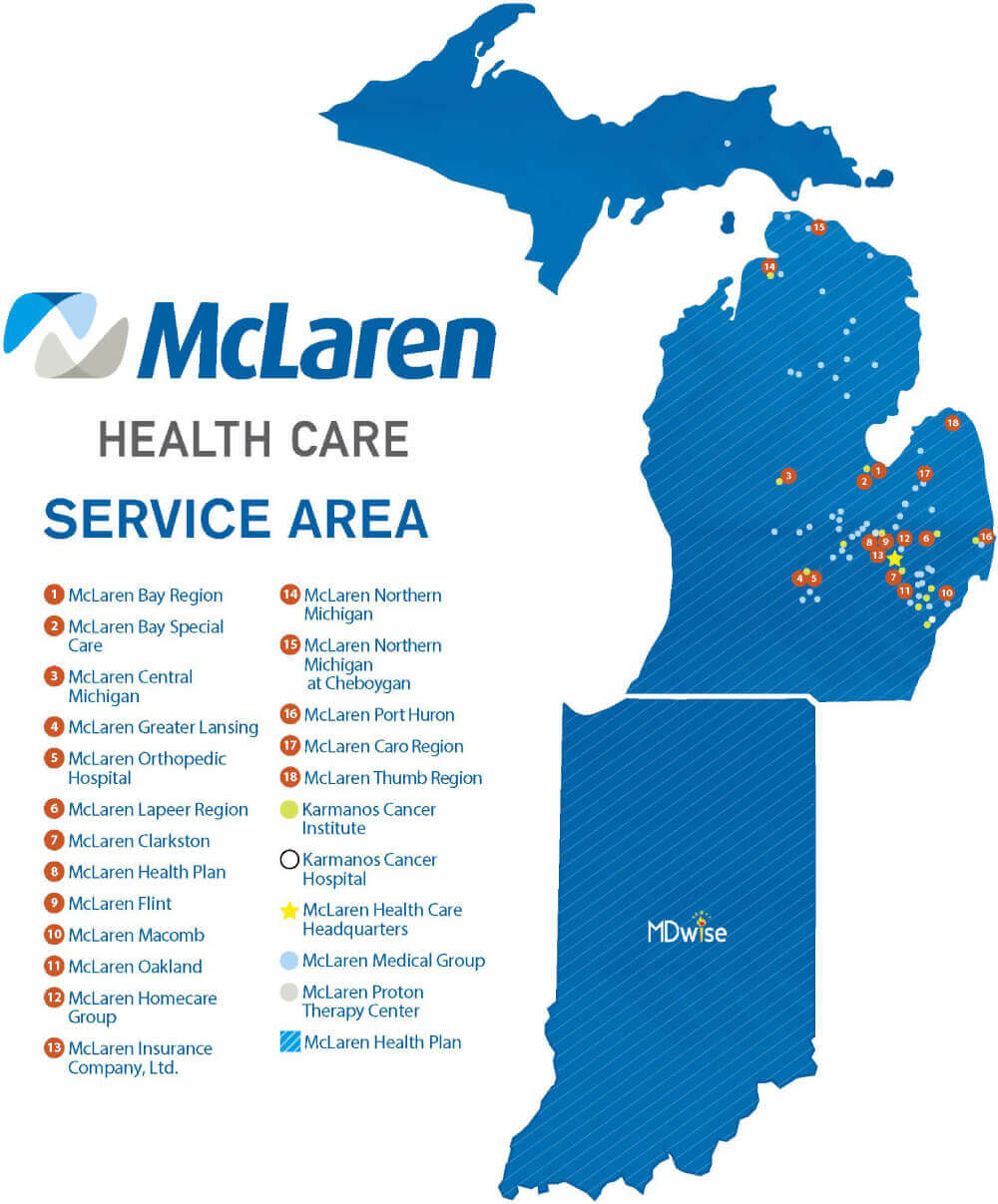
McLaren Health Care’s too secretive about finances, PPE, Michigan nurse union says

https://www.beckershospitalreview.com/workforce/mclaren-health-care-s-too-secretive-about-finances-ppe-michigan-nurse-union-says.html?utm_medium=email

About McLaren Health Care

Ten nurse unions in Michigan are accusing McLaren Health Care of not being transparent about its finances and personal protective equipment supply during the COVID-19 pandemic, but the health system said it has shared some of that information.

Many of the nurse unions have filed unfair labor practice charges with the National Labor Relations Board, alleging that by not sharing information with front-line healthcare workers the Grand Blanc, Mich.-based health system is violating federal labor law, a media release from the Michigan Nurses Association states.

According to the association, each of its 10 unions received a letter from the health system May 15, in which the system refused to divulge how much funding it received in federal COVID-19 grants. The health system also has refused to provide details about its protective gear inventory, the unions allege.

“The fact that they won’t share basic financial information with those of us working on the front lines makes you wonder if they have something to hide,” said Christie Serniak, a nurse at McLaren Central Michigan hospital in Mount Pleasant and president of the Michigan Nurses Association affiliate.

But the health system maintains it has been transparent and has worked with labor unions and bargaining units across the system since the beginning of the coronavirus pandemic.

“We’ve openly shared information about our operations, the challenges of restrictions on elective procedures, our plans for managing influxes of patients and our supplies of personal protective equipment,” Shela Khan Monroe, vice president of labor and employment relations at McLaren Health Care told Becker’s Hospital Review.

Ms. Khan Monroe said that the information has been shared through weekly meetings, departmental meetings and several union negotiation sessions over the last two months.

The unions also say that the health system has not offered its workers hazard pay or COVID-19 paid leave that is on par with other systems. They say that only workers who test positive for COVID-19 can take additional paid time off.

In a written statement, McLaren disputed the union’s claims about employee leave, saying that employees “dealing with child care and other COVID-related family matters” can take time off to care for loved ones.

McLaren did not specify if this time off is paid. Becker’s has reached out for clarification and will update the article once more information is available.

“We have negotiations pending with several of the unions involved in the coalition, and while we are deeply disappointed in these recent tactics, we will continue to work towards productive outcomes for all concerned,” said Ms. Khan Monroe.

Recently, a coalition of unions urged McLaren Health Care executives to reduce their own salaries before laying off employees.


Cartoon – Just Two on the Front Lines Who Checkout Hundreds of People a Day

Slavery 21st Century

Romney calls for hazard pay for workers on the front line of the pandemic

https://www.washingtonpost.com/politics/romney-calls-for-hazard-pay-for-workers-on-the-front-line-of-the-pandemic/2020/05/01/837e7f60-8bc9-11ea-9759-6d20ba0f2c0e_story.html?fbclid=IwAR0F49gAgZIUilmAmMk4vfElLbG4EVAiFz94E6W41DkniFVs9MIn7XJITcI&utm_campaign=wp_main&utm_medium=social&utm_source=facebook

Why Workers Are Asking for Hazard Pay

Sen. Mitt Romney is proposing a plan to better compensate health-care workers, grocery store employees and other essential personnel working through the coronavirus pandemic as the issue of hazard pay becomes a growing flash point in the next round of emergency relief negotiations.

Romney (R-Utah), the GOP’s 2012 presidential nominee, wants to boost the pay of qualifying essential workers by up to $12 per hour for the next three months, a bonus that could be as much as $1,920 a month.

“This is a proposal which I think is fiscally responsible but also recognizes the additional risk that people are taking,” Romney said in a phone interview with The Washington Post on Friday.

He noted that an essential worker who earns less than $22 per hour may ultimately be paid less than someone earning unemployment benefits that were bolstered by Congress in recent virus rescue packages.

“That’s not fair, number one,” Romney said. “And number two, it would create an anomaly, of course, for people to be taking additional risk of their health and have someone else not working making more than they are.”

The idea of hazard pay — additional compensation for those on the front lines of the pandemic — has broad conceptual support in Washington, yet neither lawmakers nor the Trump administration addressed the issue in the economic and health relief bill, totaling nearly $3 trillion, passed thus far.

President Trump has spoken in general terms about providing additional pay to critical medical personnel, and the White House has indicated that the administration is working with Congress on doing so. Senate Democrats have released a plan, dubbed the “Heroes Fund,” that provides up to $25,000 per person for a broad category of essential personnel including not just health-care employees but also food workers and delivery drivers.

Romney’s proposal covers a similarly broad swath of workers. The Labor Department and Congress would determine what industries would be deemed “essential,” but they would include at a minimum hospitals, food distributors and manufacturers. Employers would have to prove that workers would be in conditions that increased their exposure to the coronavirus to qualify for the bonus.

Three-quarters of that additional money would be paid for by the federal government in the form of a refundable payroll tax credit, and the rest would be picked up by their employer. That pay boost would last from May 1 through July 31 under Romney’s plan.

Someone earning $50,000 or less per year would receive an additional $12 per hour, with the hourly increase gradually phased out as salaries increase. The maximum qualifying salary would be $90,000.

Romney, a former Massachusetts governor with a lengthy business background, has spoken to other GOP senators and said that while opinions may differ, the concept of hazard pay could be gaining traction among Republicans.

“It strikes me that we’re open to considering a wide array of opportunities to help people that are serving the public,” Romney said. “And a number of individuals have expressed an openness to considering different ideas.”