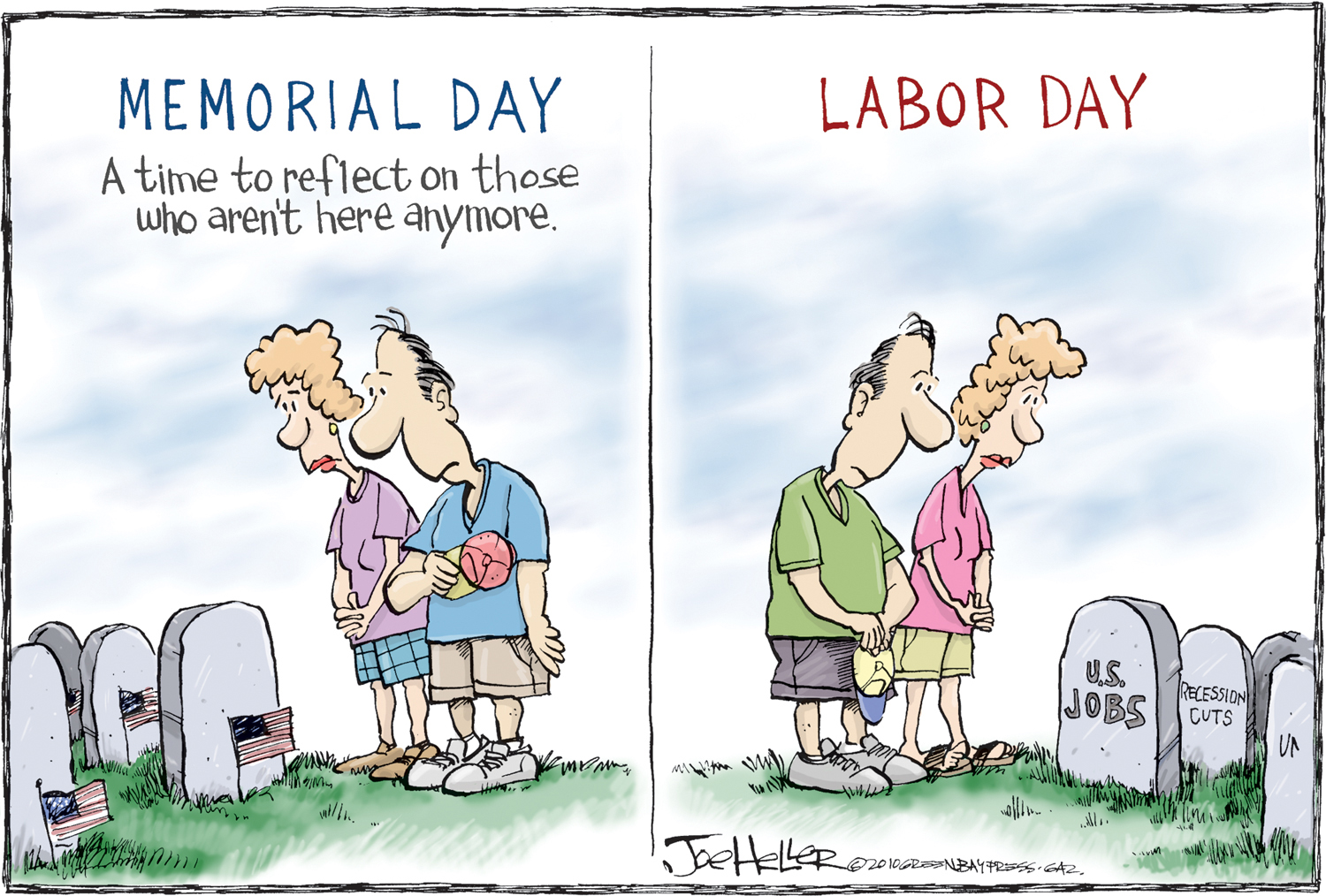
Cartoon – Memorial vs Labor Day

Labor Day

HCA asks union to abandon wage increases this year

https://www.beckershospitalreview.com/hr/hca-asks-union-to-abandon-wage-increases-this-year.html?utm_medium=email

HCA revenue beats the hospital chain's expectations in 2019

A union representing more than 150,000 registered nurses in hundreds of U.S. hospitals is disputing with Nashville, Tenn.-based HCA Healthcare regarding pay and benefits.

National Nurses United said HCA is demanding that the union choose between an undetermined number of layoffs and no 401(k) match for this year or no layoffs and no nurse pay increases for the rest of the year, according to ABC affiliate Kiii TV.

HCA Healthcare, which to date has avoided layoffs due to the pandemic, told Becker’s Hospital Review it is asking the union to give up their demand for wage increases this year, just as nonunion employees have. HCA executive leadership, corporate and division colleagues and hospital executives have also taken pay cuts.  

The union said it takes issue with having to make this choice given HCA’s profits in the last decade, the additional funding the for-profit hospital operator received from the federal government’s Coronavirus Aid, Relief and Economic Security Act, and additional Medicare loans.

“It is outrageous for HCA to use the cover of the pandemic to swell its massive profits at the expense of its dedicated caregivers and the patients who will also be harmed by cuts in nursing staff,” Malinda Markowitz, RN, California Nurses Association/National Nurses United president, said in a news release.

HCA pointed to the pandemic pay program it implemented and recently extended through at least the end of June that allows employees who are called off or affected by a facility closure and cannot be redeployed to receive 70 percent of their base pay.

“It is surprising and frankly disappointing that unions would demand pay raises for their members and may reject the continuation of a generous pay program that is providing continued paychecks for more the 100,000 colleagues,” HCA said in a statement. “The goal of HCA Healthcare’s pandemic pay program is to keep our caregivers employed and receiving paychecks at a time when hospitals throughout the country are experiencing significant declines in patient volume and there is not enough work for them.”

HCA said more than 16,000 union members have participated in the pandemic pay program, even though it is not part of their contract. 


Essentia Health lays off 900 employees

https://www.beckershospitalreview.com/finance/essentia-health-lays-off-900-employees.html?utm_medium=email

Essentia Health to lay off 900 employees, including 178 workers in ...

Essentia Health is laying off 900 employees, about 6 percent of its workforce, to help offset severe financial damage caused by the COVID-19 pandemic.

The Duluth, Minn.-based health system is facing $100M in losses due to declines in patient volumes since the beginning of March. Essentia has taken several steps to help offset those losses, including placing 850 employees on administrative leave, reducing physician and executive compensation, eliminating certain leadership roles and limiting capital spending. The health system said it is now forced to permanently reduce its workforce.

“Despite our best efforts, the many cost-reduction measures we’ve taken over the last several weeks are not sufficient to preserve our mission and the health of the organization,” Essentia Health CEO David C. Herman, MD, said in a news release. “This has prompted our leadership team to carefully consider the most difficult decision we’ve faced since I joined Essentia five years ago and move forward with permanent layoffs.”

Essentia said it will continue to provide health insurance for noncontract employees affected by layoffs for the next three months. The health system said the 850 employees on administrative leave will be called back as needed. 


Cartoon – I survived the Coronavirus

Politicalcartoons.com - Editorial Cartoon 237636

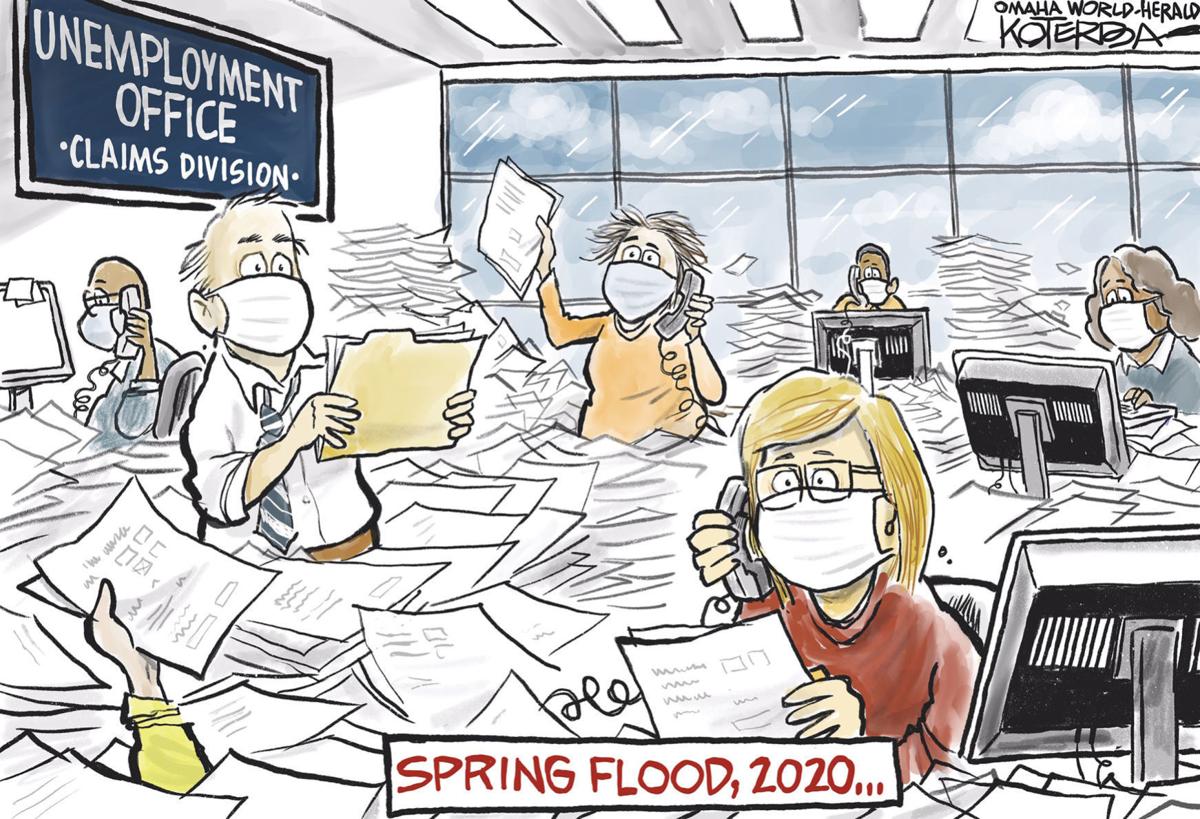
Cartoon – 2020 Spring Flood

Syndicated cartoons gallery: Unemployment cartoons from around the ...

Cartoon – Working Paycheck to Paycheck

The Benefits And Compensation Comics And Cartoons | The Cartoonist ...


Cartoon – Out of Work

unemployment-labor-day-2015.jpg (600×398) (With images) | Today ...

Cartoon – Post Graduate Unemployment

Unemployment cartoon 2 - NexGenT Blog

Many Jobs May Vanish Forever as Layoffs Mount

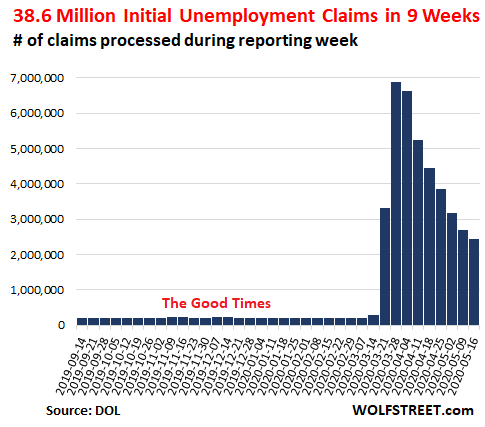
Week 9 of the Collapse of the U.S. Labor Market: Still Getting ...

With over 38 million U.S. unemployment claims in nine weeks, one economist says the situation is “grimmer than we thought.”

Even as restrictions on businesses began lifting across the United States, another 2.4 million workers filed for jobless benefits last week, the government reported Thursday, bringing the total to 38.6 million in nine weeks.

And while the Labor Department has found that a large majority of laid-off workers expect their joblessness to be temporary, there is growing concern among economists that many jobs will never come back.

“I hate to say it, but this is going to take longer and look grimmer than we thought,” Nicholas Bloom, an economist at Stanford University, said of the path to recovery.

Mr. Bloom, a co-author of an analysis of the coronavirus epidemic’s effects on the labor market, estimates that 42 percent of recent layoffs will result in permanent job loss.

“Firms intend to hire these people back,” Mr. Bloom said, referring to a recent survey of businesses done by the Federal Reserve Bank of Atlanta. “But we know from the past that these aspirations often don’t turn out to be true.”

In this case, the economy that comes back is likely to look quite different from the one that closed. If social distancing rules become the new normal, causing thinner crowds in restaurants, theaters and stores, at sports arenas, and on airplanes, then fewer workers will be required.

Large companies already expect more of their workers to continue to work remotely and say they plan to reduce their real estate footprint, which will, in turn, reduce the foot traffic that feeds nearby restaurants, shops, nail salons and other businesses.

Concerns about working in close quarters and too much social interaction could also accelerate the trend toward automation, some economists say.

New jobs, mostly at low wages — as delivery drivers, warehouse workers and cleaners — are being created. But many more jobs will vanish.

“I think we’re in for a very long haul,” Mr. Bloom said.

In the meantime, the Labor Department’s latest data on unemployment claims, for new filings last week, reflects the shutdown’s continuing damage to the labor force.

“The hemorrhaging has continued,” Torsten Slok, chief economist for Deutsche Bank Securities, said of the mounting job losses. He expects the official jobless rate for May to approach 20 percent, up from the 14.7 percent reported by the Labor Department for April.

A household survey from the Census Bureau released Wednesday suggested that the pain was widespread: 47 percent of adults said they or a member of their household had lost employment income since mid-March. Nearly 40 percent expected the loss to continue over the next four weeks.

In testimony before the Senate on Tuesday, the Federal Reserve chair, Jerome H. Powell, emphasized how devastating prolonged joblessness can be for individual households and for the economy.

“There is clear evidence that when you have a situation where people are unemployed for long periods of time, that can permanently weigh on their careers and their ability to go back to work,” he said.

Emergency relief and expanded unemployment benefits that Congress approved in late March have helped tide households over. Roughly three-quarters of people who are eligible for a $1,200 stimulus payment from the federal government have received it, according to the Treasury Department.

Workers who have successfully applied for unemployment benefits are getting the extra $600 weekly supplement from the federal government, and most states have finally begun to carry out the Pandemic Unemployment Assistance program, which extends benefits to freelancers, self-employed workers and others who don’t routinely qualify. The total number of new pandemic insurance claims reported, though, was inflated by nearly a million because of a data entry mistake from Massachusetts, according to the state’s Executive Office of Labor and Workforce Development.

Mistakes, lags in reporting and processing, and weeding out duplicate claims and reports have clouded the unemployment picture in some places.

What is clear, though, is that many states are still struggling to keep up with the overwhelming demand, drawing desperate complaints from jobless workers who have been waiting two months or more to receive their first benefit check. Indiana, Wyoming, Hawaii and Missouri are among the states with large backlogs of incompletely processed claims. Another is Kentucky, where nearly one in three workers are unemployed.

The $600 supplement has become a point of contention, drawing criticism from Republican politicians who object to the notion that some workers — particularly low-wage ones — are getting more money in unemployment benefits than they would on the job. But many have also lost their employer-provided health insurance and other benefits.

Sami Adamson, a freelance scenic artist for theater, events and television shows, received the letter with her login credentials to collect benefits from New Jersey only Monday, more than two months after she first applied.

She said her partner, who is in the same line of work, had filed for jobless benefits in New York and quickly received his payments.

By the time she heard from New Jersey, a design studio had called her for a temporary assignment. She plans to eventually reclaim the lost weeks of benefits, but for now she is helping to make face shields in a large warehouse where assembly-line workers are spaced apart, handling plastic, foam and elastic.

“I don’t think I’ll need aid for the next two or three weeks,” Ms. Adamson said, “but I’m not sure too far ahead of that.”

Nearly half of the states have yet to provide the additional 13 weeks of unemployment insurance that the federal government has promised to those who exhausted their state benefits. Workers in Florida — which provides just 12 weeks of benefits, the fewest anywhere — are particularly feeling this pinch. And while several states, including those that pay the average of 26 weeks, have offered additional weeks of coverage during the pandemic, Florida has not.

Small-business owners who were hoping the Paycheck Protection Program would enable them to keep their workers on the payroll contend the program is not operating as intended.

Roy Surdej, who owns Peaches Boutique in Chicago, applied for a loan after he was forced to close and the pandemic eliminated the season’s wave of proms, quinceañeras and graduation celebrations were canceled.

Under the program, the loan turns into a grant if he rehires the 100-person staff he had built up in February in anticipation of selling thousands of ruffled, sequined and strappy dresses during the spring rush. But he said that would be impossible, given the income he had lost and the restrictions that continue to pre-empt social gatherings.

“No way can I qualify for full forgiveness,” said Mr. Surdej, who said revenue had dried up. “It’s devastating for us,” he added, saying he had no clue when he would be able to reopen and begin rehiring. “If the government can’t adjust the dates to allow us to use it properly so we can survive, then I won’t use it.”

At the same time, the Congressional Budget Office warned that businesses able to use the Paycheck Protection Program might end up laying off workers when the program expires at the end of June.

Several states have warned workers that they risk losing their benefits if they refuse an offer to work. Federal rules enacted during the pandemic say that workers are not compelled to return to unsafe working conditions, but just what constitutes such conditions is not necessarily clear.

On Tuesday, Democratic senators sent a letter to Labor Secretary Eugene Scalia to “clarify the circumstances” so that workers are not “forced to choose between going back to work in unsafe conditions, or continuing to social distance and losing their only source of income.”

Workers with child care responsibilities can stay on unemployment if public schools are closed, but once the term ends, a lack of day care or summer programs is not considered a legitimate reason. Nor are self-imposed quarantines.

Officials can lift stay-at-home and business restrictions, but then what happens? “There are lingering concerns about health, family situations, kids not in school, relatives who are sick and needing care,” said Carl Tannenbaum, chief economist at Northern Trust. “There’s going to be a very slow and gradual process of reopening and restoring employment beyond just a declaration from the statehouse or the county seat.”


Perspective: The Pandemic Has Created a Food Insecurity Crisis. The Federal Response Has Been Swift, but Is it Enough?

https://altarum.org/news/pandemic-has-created-food-insecurity-crisis-federal-response-has-been-swift-it-enough?utm_source=Altarum+Updates&utm_campaign=05b6c1511b-EMAIL_CAMPAIGN_2020_05_20_07_13&utm_medium=email&utm_term=0_4220252dfe-05b6c1511b-347615961

The Pandemic Has Created a Food Insecurity Crisis. The Federal ...

Our ability to access nutritious food is a critical factor to our health and well-being, which is why it has been alarming to see images in recent weeks of cars lining up by the thousands at food banks across the country. Indeed, a university survey taken since the onset of the crises found nearly 4 in 10 Americans reported having moderate to high levels of food insecurity, compared to 11 percent of households who were food insecure in 2018, according to the USDA Economic Research Service.

In response, the federal government has given states administrative relief and funding through various Covid-19 response packages. USDA also has authorized temporary waivers that grant states greater flexibility to address the increased demands and to align with shelter-in-place and social-distancing orders.

USDA also created two new programs: the Pandemic EBT (P-EBT) and the Coronavirus Food Assistance Program (CFAP). P-EBT allows states to issue eligible households an EBT card, a type of debit card used to purchase food, with the value of the free school breakfast and lunch reimbursement rates for the number of weekdays that schools are closed due to Covid-19 (estimated to be around $5.70 per day).

As of the first week of May, 18 states have been approved to provide benefits through P-EBT and 20 additional states have submitted plans for approval. CFAP aims not only to assist families in accessing food but also ranchers and farmers who have an excess supply. Through CFAP, the USDA will procure an estimated $100 million per month of fresh fruits and vegetables and $300 million per month in dairy and meat products for food banks and other nonprofits providing food to Americans in need.

Are these measures enough? Let’s examine the changes, particularly the USDA waivers for the federal food assistance programs.

The Supplemental Nutrition Assistance Program (SNAP), formerly known as food stamps, provides financial support to supplement the food budget of needy families. USDA waivers that increased flexibility in the administration of SNAP include:

  • waived the requirements for in-person interviews during the SNAP enrollment process,
  • provided emergency supplementary benefits up to the maximum benefit a household can receive for up to two months,
  • removed the requirement for SNAP recipients to re-certify midway through their participation,
  • provided flexibility for jobless workers to remain eligible, and
  • expanded the SNAP online grocery purchase pilot from the original eight states adding an additional 12 states and the District of Columbia.

These efforts are a step in the right direction to ease family burdens, but the supplemental benefits and program flexibilities are time-limited by the federal public health emergency declaration for Covid-19. Also, the 40 percent of SNAP households who already receive the maximum benefit are excluded from the supplemental benefits. Especially as we are experience the sharpest increase in food costs in decades, we need to provide additional support to the lowest income SNAP recipients. To assist families during the longer economic recovery, advocates and policy experts are calling for the following expansions to ensure these benefits cover a larger share of the people who need them:

  • boost the benefit for households by 15 percent (an additional $25 per person per month),
  • increase the minimum benefit per month from $16 to $30, and
  • suspend implementation of all administrative rules that restrict access for millions of Americans.

The Supplemental Nutrition Program for Women Infants and Children (WIC), a public health nutrition program that provides nutrition education, breastfeeding support and nutritious foods to low-income pregnant women and mothers of small children, has been providing services remotely. USDA waivers that increased flexibility in the administration of WIC include:

  • waived requirements for the physical presence for certification,
  • waiver for deferment of measurements and blood tests,
  • ability to issue benefits remotely, and
  • food package substitutions.

That’s a good start and more can be done. The Center on Budget and Policy Priorities recommends temporarily extending WIC certification periods for infants to two years as well as extending WIC eligibility from age five to age six. The National WIC Association is also advocating for an increase in the Cash Value Benefit to enhance fruit and vegetable purchases by WIC families.

The National School Lunch Program (NSLP) and Breakfast Programs, Summer Food Service Program, and the Child and Adult Care Food Program (CACFP), which serve low-income school children, quickly revamped and developed innovative ways to distribute meals to families, often expanding their regular productions. USDA waivers that increased flexibility to help better serve families during the pandemic include:

  • ability to serve non-congregate meals,
  • allowing for pick-up and delivery of meals,
  • allowing modification in the meals components requirements,
  • waiving time elements and meal spacing requirements,
  • allowing virtual desk enrollment of new CACFP providers, and
  • waive requirement that afterschool meals and snacks be accompanied by educational activities.

CACFP provides meals to preschool-aged children in Child Care Centers and licensed child care family homes.  During the pandemic, most centers have been closed, while a majority of family homes remained open and provided services for essential workers.

According to Paula James, director of child health and nutrition at CocoKids in northern California, about 68 percent of the Contra Costa county’s family homes participating in CACFP remained open in April, and these waivers were helpful. Moving forward, she believes CACFP should continue the allowance of virtual enrollment and expand the use of that technology to regular monitoring site visits, specifically in rural areas or locations where safety could be a concern.  While the pandemic has provided the opportunity to test technological advances that could streamline program operations in the future, it also revealed some systemic weaknesses, including that CACFP has no centralized database system, which is needed at the state level and requires federal guidance. Lack of technology throughout the program was a hinderance to providing additional services to families during COVID-19.  “Continued use of technology into the future will be very important,” said James.

What more can be done? The federal government should extend COVID-19 related waivers for all nutrition programs until September 30, the date provided by congressional authority. While the public health restrictions may be lifting across the states, the economic fallout will likely be felt by families for many months to come.

In addition, states should leverage communication, technology, all federal supports, and evaluation to ensure they are successfully reaching as many in need as possible. This includes:

  • conducting a public information campaign to alert newly unemployed families in need about available food assistance programs and how to apply and access benefits;
  • utilizing technology solutions to provide remote program services and enrollment including mobile uploading of required documents;
  • taking advantage and apply for all available waiver options from the federal government; and
  • evaluating the revised work systems and if appropriate, take actions to allow for permanent program changes.

This week House Democrats passed the Health and Economic Recovery Omnibus Emergency Solutions (HEROES) Act, the fifth Covid-related legislative package, which includes a boost in funding for SNAP, WIC, and Child Nutrition Programs. The bill also provides support to local food banks and emergency food providers. Any bill that goes to the president should include these food access supports.

It is critical to strengthen federal food assistance programs and the social safety net while working to address the root causes of poverty to reduce health and social disparities. To learn how Altarum can assist your state in program assessment, planning, evaluation, training and analytic support for quality services, contact Tara Fowler, PhD, director of the Center for Healthy Women and Children, at tara.fowler@altarum.org.