History tells us trying to stop diseases like COVID-19 at the border is a failed strategy

https://theconversation.com/history-tells-us-trying-to-stop-diseases-like-covid-19-at-the-border-is-a-failed-strategy-145016?utm_medium=email&utm_campaign=Latest%20from%20The%20Conversation%20for%20August%2028%202020%20-%201715916573&utm_content=Latest%20from%20The%20Conversation%20for%20August%2028%202020%20-%201715916573+Version+A+CID_8719e3ecf842bc9762e48ce42f2ba6ad&utm_source=campaign_monitor_us&utm_term=History%20tells%20us%20trying%20to%20stop%20diseases%20like%20COVID-19%20at%20the%20border%20is%20a%20failed%20strategy

History tells us trying to stop diseases like COVID-19 at the border is a failed  strategy

To explain why the coronavirus pandemic is much worse in the U.S. than anywhere else in the world, commentators have blamed the federal government’s mismanaged response and the lack of leadership from the Trump White House.

Others have pointed to our culture of individualism, the decentralized nature of our public health, and our polarized politics.

All valid explanations, but there’s another reason, much older, for the failed response: our approach to fighting infectious disease, inherited from the 19th century, has become overly focused on keeping disease out of the country through border controls.

As a professor of medical sociology, I’ve studied the response to infectious disease and public health policy. In my new book, “Diseased States,” I examine how the early experience of outbreaks in Britain and the United States shaped their current disease control systems. I believe that America’s preoccupation with border controls has hurt our nation’s ability to manage the devastation produced by a domestically occurring outbreak of disease.

Germ theory and the military

Though outbreaks of yellow fever, smallpox, and cholera occurred throughout the 19th century, the federal government didn’t take the fight against infectious disease seriously until the yellow fever outbreak of 1878. During that same year, President Rutherford B. Hayes signed the National Quarantine Act, the first federal disease control legislation.

By the early 20th century, a distinctly American approach to disease control had evolved: “New Public Health.” It was markedly different from the older European concept of public health, which emphasized sanitation and social conditions. Instead, U.S. health officials were fascinated by the newly popular “germ theory,” which theorized that microorganisms, too small to be seen by the naked eye, caused disease. The U.S. became focused on isolating the infectious. The typhoid carrier Mary Mallon, known as “Typhoid Mary,” was isolated on New York’s Brother Island for 23 years of her life.

Originally, the military managed disease control. After the yellow fever outbreak, the U.S. Marine Hospital Service (MHS) was charged with operating maritime quarantine stations countrywide. In 1912, the MHS became the U.S. Public Health Service; to this day, that includes the Public Health Service Commissioned Corps led by the surgeon general. Even the Centers for Disease Control and Prevention started as a military organization during World War II, as the Malaria Control in War Areas program. Connecting the military to disease control promoted the notion that an attack of infectious disease was like an invasion of a foreign enemy.

Germ theory and military management put the U.S. system of disease control down a path in which it prioritized border controls and quarantine throughout the 20th century. During the 1918 influenza pandemicNew York City held all incoming ships at quarantine stations and forcibly removed sick passengers into isolation to a local hospital. Other states followed suit. In Minnesota, the city of Minneapolis isolated all flu patients in a special ward of the city hospital and then denied them visitors. During the 1980s, the Immigration and Naturalization Service denied HIV-positive persons from entering the country and tested over three million potential immigrants for HIV.

Defending the nation from the external threat of disease generally meant stopping the potentially infectious from ever entering the country and isolating those who were able to gain entry.

Our mistakes

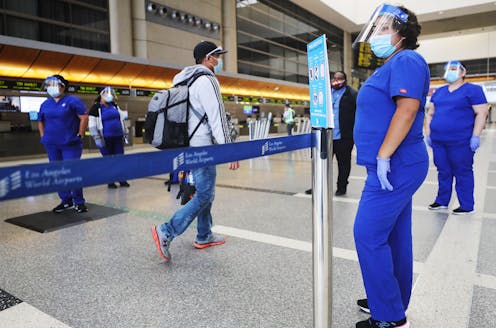
This continues to be our predominant strategy in the 21st century. One of President Trump’s first coronavirus actions was to enforce a travel ban on China and then to limit travel from Europe.

His actions were nothing new. In 2014, during the Ebola outbreakCaliforniaNew York and New Jersey created laws to forcibly quarantine health care workers returning from west Africa. New Jersey put this into practice when it isolated U.S. nurse Kaci Hickox after she returned from Sierra Leone, where she was treating Ebola patients.

In 2007, responding to pandemic influenza, the Department of Homeland Security and the CDC developed a “do not board” list to stop potentially infected people from traveling to the U.S.

When such actions stop outbreaks from occurring, they are obviously sound public policy. But when a global outbreak is so large that it’s impossible to keep out, then border controls and quarantine are no longer useful.

This is what has happened with the coronavirus. With today’s globalization, international travel, and an increasing number of pandemics, attempting to keep infectious disease from ever entering the country looks more and more like a futile effort.

Moreover, the U.S. preoccupation with border controls means we did not invest as much as we should have in limiting the internal spread of COVID-19. Unlike countries that mounted an effective response, the U.S. has lagged behind in testingcontact tracing, and the development of a robust health care system able to handle a surge of infected patients. The longstanding focus on stopping an outbreak from ever occurring left us more vulnerable when it inevitably did.

For decades, the U.S. has been underfunding public health. When “swine flu” struck the country in 2009, the CDC said 159 million doses of flu shots were needed to cover “high risk” groups, particularly health care workers and pregnant women. We only produced 32 million doses. And in a pronouncement that now looks prescient, a Robert Wood Johnson Foundation report said if the swine flu outbreak had been any worse, U.S. health departments would have been overwhelmed. By the time Ebola appeared in 2014, the situation was no better. Once again, multiple government reports slammed our response to the outbreak.

Many causes exist for the U.S.‘s failed response to this crisis. But part of the problem lies with our past battles with disease. By emphasizing border controls and quarantine, the U.S. has disregarded more practical strategies of disease control. We can’t change the past, but by learning from it, we can develop more effective ways of dealing with future outbreaks.


Six months ago, Trump said that coronavirus cases would soon go to zero. They … didn’t.

https://www.washingtonpost.com/politics/2020/08/26/six-months-ago-trump-said-that-coronavirus-cases-would-soon-go-zero-they-didnt/?utm_campaign=wp_main&utm_medium=social&utm_source=facebook&fbclid=IwAR2-yqYYel73YR3zJXfqtn25DXNEA8Yi1qc0L0RQ3PNP-NqUJ299PFNdeWc


But with new constraints on testing, Trump may get his wish eventually.

It was exactly six months ago Wednesday when the spread of the coronavirus in the United States had become too significant for President Trump to wave away. He and several members of the team planning the administration’s response held a news briefing designed to inform the public about the virus and, more important, to allay concerns.

This was the briefing in which Trump made one of his most wildly incorrect assertions about what the country could expect.

“The level that we’ve had in our country is very low,” Trump said, referring to new confirmed infections, “and those people are getting better, or we think that in almost all cases they’re better, or getting. We have a total of 15. We took in some from Japan — you heard about that — because they’re American citizens, and they’re in quarantine.”

That part was generally true. At the time, there had been only a smattering of confirmed cases, with the addition of passengers from the cruise ship Diamond Princess pushing the confirmed total to more than 50.

“So, again,” he added later, “when you have 15 people, and the 15 within a couple of days is going to be down to close to zero, that’s a pretty good job we’ve done.”

It was a brash prediction and seemingly an off-the-cuff one. Trump’s point was less about what was going to happen than arguing that his administration had done a good job. But by linking those two things, he made it simple for observers to use his assertion that the number of cases would fade as a baseline for measuring everything that followed.

Over time, more cases from the period before Feb. 26 would be discovered, including two early deaths in California from covid-19, the disease caused by the virus. There were actually almost 200 cases that would eventually be confirmed by the time Trump was saying the country would go from 15 to zero.

The experts standing behind Trump would have known that Trump’s claims were inaccurate. As the briefing was underway, The Washington Post reported a confirmed case of “community spread” — a documented infection that couldn’t be traced to international travel. In other words, it was uncontained: The virus was moving from person to person without impediment or detection.

Although about 200 cases in that period eventually would be confirmed, even that number was far lower than the reality. Researchers can use documented cases to estimate the number of cases that weren’t being detected and that also weren’t later confirmed through testing. For example, an estimate produced by data scientist Youyang Gu puts the likely number of new infections on Feb. 26 somewhere in the range of 13,000 to 25,000.

On that day alone.

Within a month, the country would go from Trump’s 15 cases to nearly 88,000 cases. By April 26, the total was nearly a million. By May 26, 1.7 million. The most recent total is north of 5.7 million.

That steady increase is in part a function of Trump repeating the same mistake over and over, portraying the pandemic as ending or functionally ended. As cases faded a bit in May and June, he pushed for a return to normal economic activity, triggering a new surge in confirmed cases. That second increase has been fading for about a month, happily, but the country is still adding 33 percent more confirmed new cases each day than it did at the peak in April.

That’s confirmed cases, a metric that relies on testing. Gu’s estimates of the actual spread of the virus put the country about 40 percent below the peak in daily new cases, which was reached in early July.

Trump, of course, blames testing for revealing the scale of the pandemic in the first place. He has a point, in a way: Had the United States never managed to solve its problems with testing, something that took weeks, there wouldn’t have been millions of confirmed cases. There would still have been millions of cases or, perhaps, tens of millions of cases. We just wouldn’t have known how many there were.

It has been about two months since Trump held a political rally in Tulsa, contributing to a new surge of cases in the city. There, he made a tongue-in-cheek reference to asking his team to slow down on testing, because it was pushing the number of confirmed cases higher. As they say, though, each joke contains a grain of truth, and it was clear that Trump, in fact, would be happy to see the number of tests drop so that the number of confirmed cases did as well.

Data compiled by the COVID Tracking Project show that he has gotten his wish, to a degree. Over the past month, the number of tests being completed each day in the United States has dropped by nearly one-fifth.

Part of this is a function of interference from natural disasters, with storms in Florida and fires in California limiting testing capacity. Part of it, too, is probably a function of the drop in the number of cases coming back positive. Fewer new cases means fewer people feeling sick and seeking tests to confirm an infection. The drop in the percent of tests coming back positive reinforces that trend.

But, increasingly, part of it will stem from the administration de-emphasizing testing. New guidance published by the Centers for Disease Control and Prevention suggested that those who had been in contact with an infected person no longer needed to be tested, particularly when asymptomatic.

This, too, has been something Trump has talked about a lot, complaining that people without symptoms were being tested and confirmed as positive — and added to the total number of infections.

“Many of those cases are young people that would heal in a day,” Trump said in an interview on July 19. “They have the sniffles and we put it down as a test.”

The reason it’s important to track asymptomatic cases, of course, is that those people can still infect others. To defeat the pandemic, we need to contain it, and the new CDC approach runs the significant risk of leaving large holes in that containment effort. But, with the presidential election only about 70 days away, it will mean fewer confirmed cases.

The irony of Trump’s complaints about the virus from the outset is that the United States’ confirmed infection totals already have been minimized because of limited testing. The reason Trump was able to claim that there were only 15 cases six months ago was that the administration had spent the month since the first confirmed case in the country unable to put together a robust testing regimen that would allow the virus to be constrained. South Korea, where such a regimen was quickly implemented, actually did see its virus numbers drop to near zero.

In other words, Trump’s prediction was not only wrong, it was wrong in large part because Trump’s team hadn’t done what would have been needed to make it come true. Trump portrays himself as an unwitting victim of the pandemic, but his comment six months ago Wednesday is a good reminder that he can put a lot of the blame for his position on himself.


Five Frequencies That Are Driving Your Culture (for better or worse)

https://www.leadershipnow.com/leadingblog/2020/08/five_frequencies_that_are_driv.html

IS YOUR CULTURE holding you back? Are the signals you are broadcasting as a leader, creating the culture you want—you need?

Culture experts Jeff Grimshaw, Tanya Mann, Lynne Viscio, and Jennifer Landis say in Five Frequencies that to make a good culture great, leaders must deliberately transmit strong and steady signals. Leaders create culture for better or worse, through the signals they are consciously or unconsciously broadcasting over five frequencies. To change a culture, you need to broadcast a strong, steady signal on each of these frequencies:


Their Decisions and Actions

Example is everything—especially when it is inconvenient and costs you something. If it is truly a “value,” what are you willing to pay for it? Think in the long-term. “Go long-term greedy.” “This can mean avoiding ethical shortcuts, hiring people smarter than you, delegating more, and helping prepare high performers for success beyond your team.”


What They Reward and Recognize

Reward the behaviors you want to see more of. “You are responsible for the dysfunctional behaviors that so bother you.” Everyone brings their emotions to work. “Understand and leverage the emotional algorithms that motivate your people.” Understand that it is all relative, scarcity and timing matter, and everyone appreciates being appreciated.


What They Tolerate (Or Don’t)

“Leaders are ultimately defined by what they tolerate.” Be sure the boundaries are clearly defined as well as the consequences. And don’t make excuses because you don’t want to feel bad or you can’t hold a particular star performer accountable, or because it’s really no big deal. It’s all-important, and consistency is vital.

What you tolerate or don’t tolerate is a balance. “When you decide to become more tolerant of some things (like where people work), you must become, if anything, less tolerant of other things (like the work not getting done). As Harvard professor Gary P. Pisano puts it:”


A tolerance for failure requires an intolerance for incompetence. A willingness to experiment requires rigorous discipline. Psychological safety requires comfort with brutal candor. Collaboration must be balanced with individual accountability.


How They Show Up Informally

When you show up, you “bring the weather.” People notice a leader’s tone, mood, and focus. They are weather in any organization. What do kind of weather do you bring?

When considering how you show up, the authors advise you to relinquish your raft. They introduce the concept with a story:


A traveler on an important journey comes to a raging river. It seems there’s no way to cross. And that’s terrible news because this is an important journey. Fortunately, she spots a rickety old raft on the bank, off in the brush. With trepidation, she pushes the raft into the water, hops on, and amazingly, uses it to reach the other side. She’s able to continue her important journey. She thinks: I may encounter other raging rivers down the path, so I must keep this raft. So she carries the raft on her back as she continues her journey. It’s a heavy raft, and it slows her down. When fellow travelers point this out, she’s incredulous: “You don’t understand,” she says. “If it wasn’t for this raft, I wouldn’t be where I am today!” And she’s right. That’s literally true. The problem is: If she doesn’t put down the raft, she may not get to where she needs to go on her important journey.


It’s your baggage. It’s your reactive tendencies that may have worked for you in the past that are no longer getting you where you need to be. Reactive tendencies like going with the flow, control, the need to be the hero, or being overly protective of your ego, eventually bring you diminishing returns.


Their Formal Communications

Formal communications don’t work on their own, but they serve to reinforce the other four frequencies. Approach your communications as a story to make it memorable. And say it over and over. “Go past the puke point because that’s often the turning point where employees are just starting to truly get it.”

Have a backstory. Know where you came from. “Look for stories of people demonstrating the behavior you want to see more of, especially when it’s not easy for them to do so.” Fill the communication vacuums. “Don’t push your people to the black market.”


Know, Feel, Do

To establish a reliable culture, you need to measure where you are and where you need to go. The authors call it Know, Feel, Do: what employees know, what they feel, and what they do.

The authors advise us to work backward and forwards. Looking forward, they ask, “What is the culture that makes this outcome possible and probable? What will employees consistently KNOW? FEEL? DO?” Looking at each of the five signals, what will you need to broadcast to your employees in each of the five signal areas?

It is also necessary to look backward and see where your current culture came from. What did each of the signals contribute to your current culture? It will help you to know what to change in order to close the gap from where to are to where you want to be.


Making coronavirus testing easy, accurate and fast is critical to ending the pandemic – the US response is falling far short

https://theconversation.com/making-coronavirus-testing-easy-accurate-and-fast-is-critical-to-ending-the-pandemic-the-us-response-is-falling-far-short-142366

Making coronavirus testing easy, accurate and fast is critical to ...

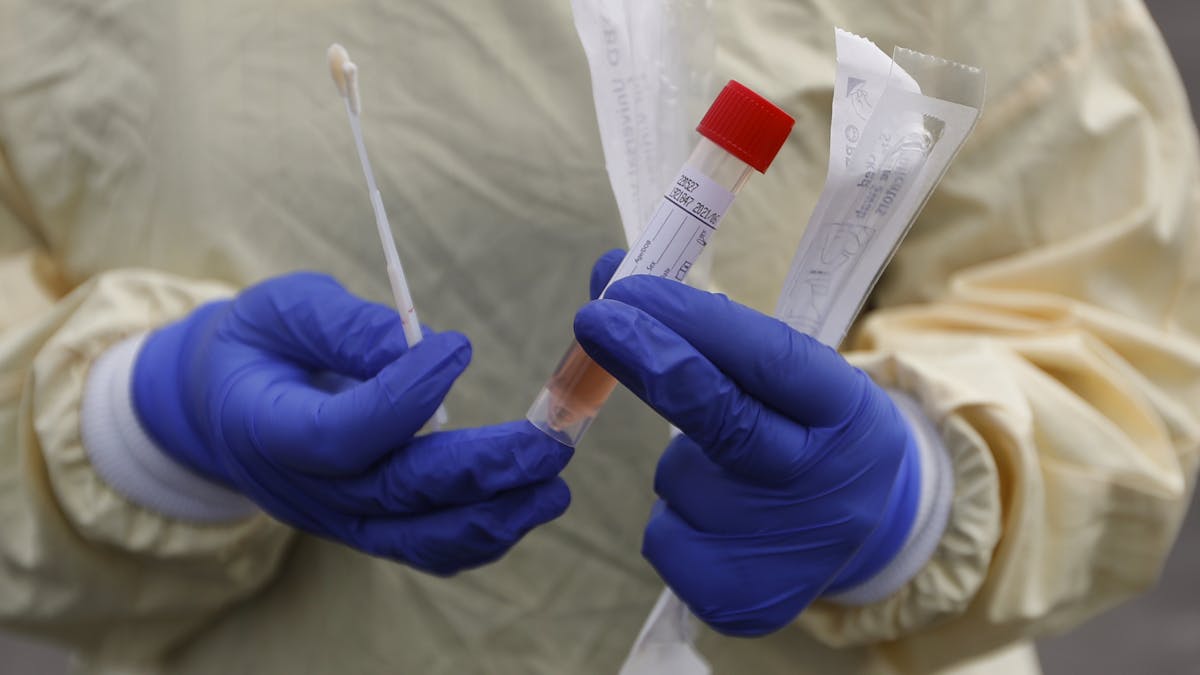
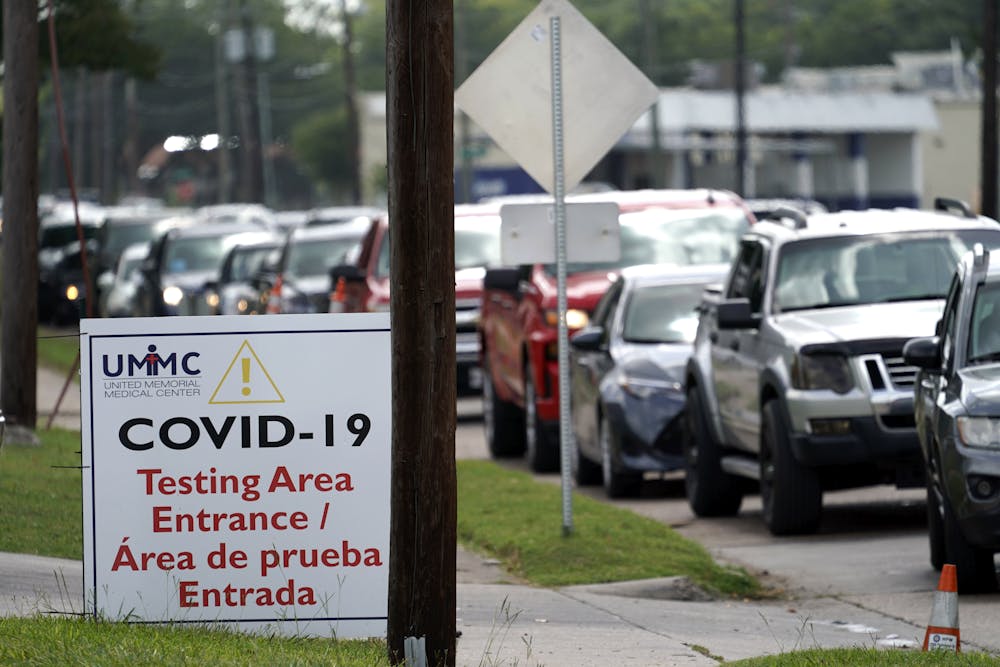
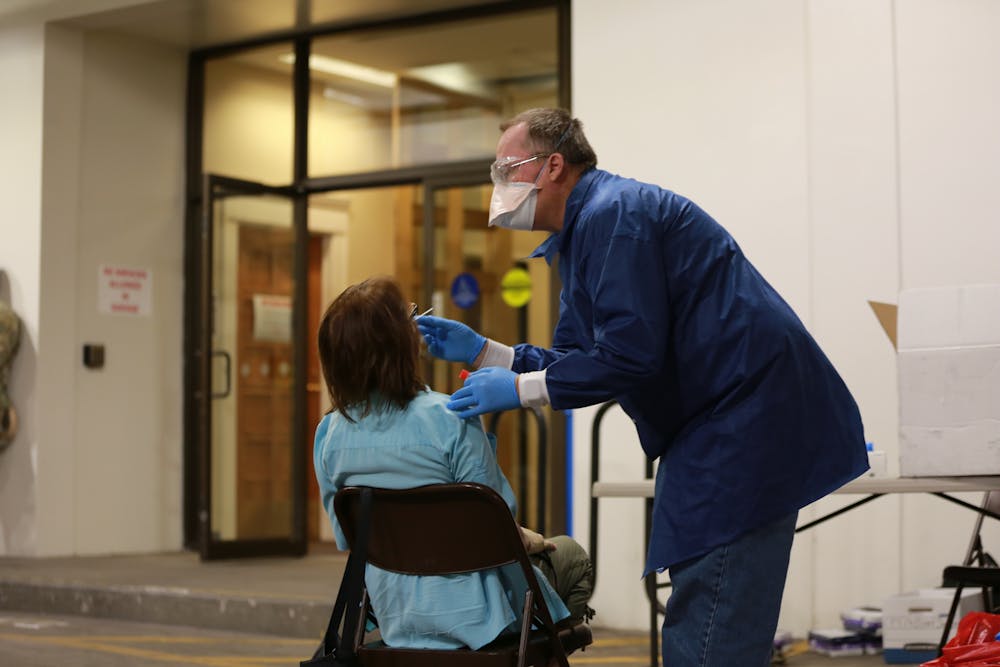
For many people in the U.S., getting tested for COVID-19 is a struggle. In Arizona, testing sites have seen lines of hundreds of cars stretching over a mile. In Texas and Florida, some people were waiting for five hours for free testing.

The inconvenience of these long waits alone discourages many people from getting tested. With the surge in cases, many public testing sites have been reaching maximum capacity within hours of opening, leaving many people unable to get tested for days. Those that do get tested often face a week-long wait to get their test results.

Every person who isn’t tested could be spreading COVID-19 unknowingly. These overstretched testing programs are a weak link in the U.S. pandemic response.

study public health policy to combat infectious disease epidemics. The key to overcoming this pandemic is to slow transmission of the virus by preventing contagious people from infecting others. A widespread quarantine would accomplish this, but is economically and socially burdensome. Testing offers a way to identify contagious people so they can be isolated to prevent the spread of the disease. This is especially important for COVID-19 because an estimated 40% or more of all people infected with SARS-CoV-2 have few or no symptoms so testing is the only way to identify them.

Some states are doing much better than others. But as a whole, the U.S. is falling far short of the amount of testing needed to control the pandemic. What are the challenges the U.S. is facing? And what is the way forward?

Testing should be free, easy, fast and accurate

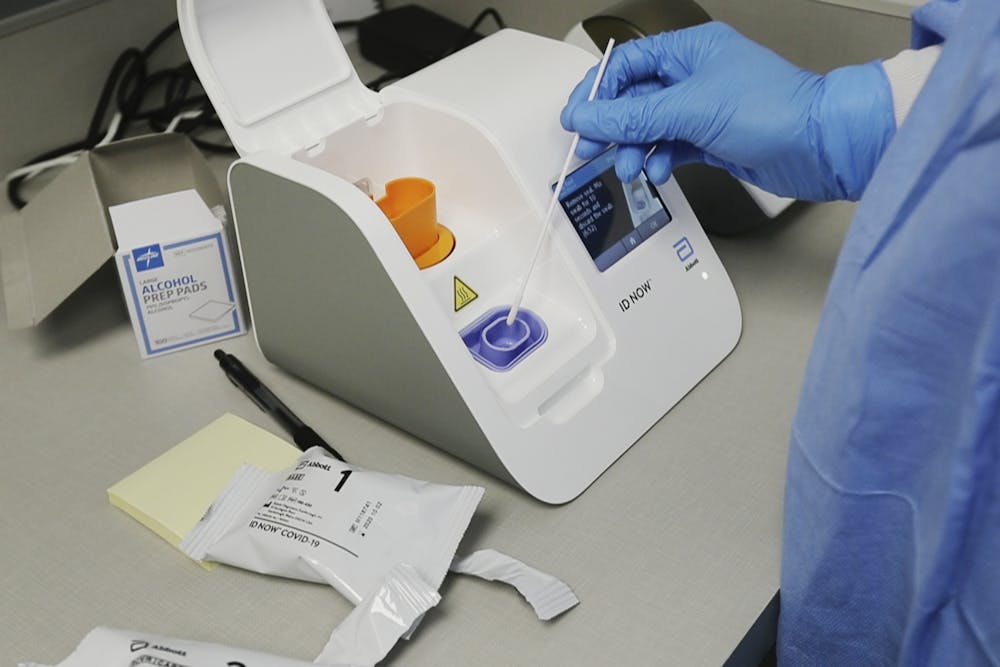
The ultimate goal of testing is for everyone, regardless of symptoms, to know at all times whether they are infected with the coronavirus. To achieve this level of testing, tests should be free, very easy to perform and provide accurate results quickly.

Ideally, free COVID-19 tests would be delivered to everyone directly. The tests would be simple to perform – like a saliva test – and would give a perfectly accurate result within minutes. Everyone could test themselves weekly or anytime they were going to be in close contact with other people.

In this ideal scenario, most, if not all, contagious people would be detected before they could spread the virus to others. And because of the rapid results, there would be no burden of quarantining between doing the test and getting the result.

Researchers are working on better-quality tests, but access is a problem of infrastructure, not science. Right now, nowhere in the U.S. comes close to meeting surging demand for testing.

One of the worst cases: Texas

The difficulty of getting a COVID-19 test varies by state, but currently, people in Texas face some of the biggest obstacles, which results in far fewer tests being done than is needed to control the pandemic.

First, Houston – which is experiencing a surge in cases – and many testing sites across the state recommend or offer testing only to people who have symptoms, were exposed to a COVID-19 case or are a member of a high-risk group.

Even people recommended for testing still face challenges. It is possible to request an appointment for a free COVID-19 test, but testing facilities can handle only so many patients a day and testing slots fill up quickly. Even if someone gets an appointment, they may face an hours-long wait at the testing site.

Finally, public health experts recommend that people who may have been exposed to COVID-19 should quarantine at home for 14 days or until they receive a negative test result. In Texas, patients are supposed to get results through an online portal in three to five days, but many labs have been taking seven to nine days to return results. These long delays mean people face a much higher burden of quarantining while waiting for results.

All of these challenges make it clear that Texas is simply not testing enough people to keep the spread of COVID-19 in check.

To gauge the success of COVID-19 testing programs, epidemiologists use a measure called test positivity. This is simply the percentage of tests that come back positive. The lower the test positivity, the better, because that means very few cases are going undetected. A high test-positivity rate is usually a sign that only the sickest people are getting tested and many cases are being missed.

The World Health Organization guidelines say that if more than 1 out of 20 COVID-19 tests comes back positive – a test positivity of more than 5% – this is an indication that a lot of cases are not diagnosed and the epidemic is not under control. 

Texas currently has a test-positivity of around 16%, which means that a lot of infected people are not getting tested and may be unknowingly spreading the disease.

One of the best cases: New Mexico

In stark contrast to Texas is New Mexico, which has one of the strongest testing programs in the U.S.

First, public health officials there encourage everyone to get tested for COVID-19 regardless of symptoms or exposure. The state has also prohibited health providers from charging patients for tests. People seeking a test have the option to walk in or to make an appointment ahead of time, whichever is more convenient.

All of this relatively good access to testing has resulted in one of the highest per capita testing rates in the country, at over 20,000 tests per 100,000 people, and test-positivity rate of around 4%. New Mexico’s testing program is diagnosing a relatively high proportion of cases despite the state experiencing a recent surge.

New Mexico still has room for improvement. Long lines, wait times and limited capacity are becoming more common as cases surge, but the foundation of a strong testing program has helped the state cope with the increase in cases.


The big-picture problems

The pre-pandemic infectious disease testing capabilities in the U.S. are clearly unable to meet the current demand. A nationwide response is needed, and there are three things that Congress, the federal government and local governments can do to help ensure COVID-19 tests will be easy to get, fast and accurate.

First, Congress can provide funding to stimulate the testing supply chain, scale up existing testing programs and promote innovation in test development.

Second, governments can improve the management and coordination of testing programs to more efficiently use existing resources.

And third, innovative testing methods that reduce the need for lab capacity – like paper-strip tests and pooled testing – need be approved and implemented more quickly.

Every little improvement in testing capabilities means more COVID-19 cases can be caught before the virus is transmitted. And slowing the spread of the virus is the key to overcoming the pandemic.


Cartoon – Our National Coronavirus Strategy

Cartoon – What do you get when you combine cognitive bias with ...

Cartoon – We’re way beyond Rational Thinking

Management Cartoon # 7684: We're way beyond rational thinking. You ...

Public’s disconnect from COVID-19 reality worries experts

Public’s disconnect from COVID-19 reality worries experts

Public's disconnect from COVID-19 reality worries experts | TheHill

The United States is being ravaged by a deadly pandemic that is growing exponentially, overwhelming health care systems and costing thousands of lives, to say nothing of an economic recession that threatens to plague the nation for years to come.

But the American public seems to be over the pandemic, eager to get kids back in schools, ready to hit the bar scene and hungry for Major League Baseball to play its abbreviated season.


The startling divergence between the brutal reality of the SARS-CoV-2 virus and the fantasy land of a forthcoming return to normalcy has public health experts depressed and anxious about what is to come. The worst is not behind us, they say, by any stretch of the imagination.


“It’s an absolute disconnect between our perceived reality and our actual reality,” said Craig Spencer, a New York City emergency room doctor who directs global health in emergency medicine at New York Presbyterian/Columbia University Medical Center. “To look at the COVID case count and the surge in cases and to think that we can have these discussions as we have uncontrolled spread, to think we can have some national strategy for reopening schools when we don’t even have one for reopening the country, it’s just crazy.”

The number of dead from the virus in the United States alone, almost 136,000, is roughly equal to the populations of Charleston, S.C., or Gainesville, Fla. If everyone in America who had been infected lived in the same city, that city would be the third-largest in the country, behind only New York and Los Angeles. More people in the United States have tested positive for the coronavirus than live in the state of Utah. By the weekend, there are likely to be more confirmed coronavirus cases than there are residents of Connecticut.

There are signs that the outbreak is getting worse, not better. The 10 days with the highest number of new coronavirus infections in the United States have come in the past 11 days.

Case counts, hospitalizations and even deaths are on the rise across the nation, not only in Southern states that were slow to embrace lockdowns in March and April.

California, the first state to completely lock down, has reported more than 54,000 new cases over both of the last two weeks. Nevada, about one-thirteenth the size of California, reported 5,200 new cases last week. States where early lockdowns helped limit the initial peak like Pennsylvania, Illinois and Ohio are all seeing case counts grow and hospital beds fill up.

Only two states — Maine and New Jersey — have seen their case counts decline for two consecutive weeks.


“We are nearing the point where pretty much most of the gains we had achieved have been lost,” said Christine Petersen, an epidemiologist at the University of Iowa. “All of us are hoping we magically get our acts together and we can look like Europe in two months. But all the data shows we are not doing that right now.”

It is in that dismal context that schools are preparing some sort of return to learning, whether in person or remote. President Trump and Education Secretary Betsy DeVos have threatened schools that do not fully reopen.

But even though the coronavirus appears to have less severe consequences among children, sending them back to schools en masse does not carry zero risk. Children have died from the virus, and the more who are exposed mean more opportunities for the virus to kill again, even before considering the millions of teachers who may be vulnerable or the parents and grandparents asymptomatic children might be exposed to.

Already, school districts in Los Angeles and San Diego have delayed reopening plans as case counts rise.

“We do know that kids can get sick and they can even die. It’s definitely a much lower number,” Petersen said. “Even if they aren’t as infectious, if there are millions of them gathering in schools not having great hygiene, it’s a multiplier effect.”


The painful lockdowns that were supposed to reduce viral transmissions bought time to bolster testing and hospital capacity, to speed production of the equipment needed to test patients and protect front-line health care workers.

But that hasn’t happened; laboratories in the United States have tested as many as 823,000 people in a day, a record number but far shy of the millions a day necessary to wrestle the virus under control. Arizona and Los Angeles have canceled testing appointments for lack of supplies. Hospitals are reporting new shortages of protective gear and N95 masks.

The Trump administration used the Defense Production Act to order meat processing plants to stay open; it has only awarded contracts sufficient to produce 300 million N95 masks by the end of the year, far short of what health experts believe will be necessary to protect health care workers.


“A failure of national leadership has led us to a place where we are back where we were before, no national testing strategy, no national strategy for supply,” said Kelli Drenner, who teaches public health at the University of Houston. “States are still on their own to scramble for reagents and swabs and PPE and all of that, still competing against each other and against nations for those resources.”

There are troubling signs that the promise of a vaccine may not be the cure-all for which many had hoped. Early studies suggest that the immune system only retains coronavirus antibodies for a few months, or perhaps a year, raising the prospect that people could become reinfected even after they recover. A growing, if still fringe, movement of anti-vaccination activists may refuse a vaccine altogether, putting others at risk.

“A vaccine is not going to solve this. People die of vaccine-preventable diseases every day. All the failures with testing and diagnostics and all the inequities and access to care with those are going to be the same things that are going to be magnified with a vaccine,” said Nita Bharti, a biologist at Penn State’s Center for Infectious Disease Dynamics.


More than a dozen states hit hardest by the latest wave of disease have paused or reversed their reopening processes. But only 24 states and the District of Columbia have ordered residents to wear masks in public, and compliance varies widely by both geography and political affiliation.

“This is the critical time. If we are going to try to reverse this, we have to get back to the mental space and the resolute action we had in March. I’m not sure we have the energy and the wherewithal to do it,” Petersen said.


Without a dramatic recommitment to conquering the virus, health officials warn, the new normal in which the country exists will be one of serious and widespread illness, and a steady drumbeat of death.

“None of this was inevitable. None of this should be acceptable. There are ways we can do better,” Spencer said. “This will continue to be our reality for as long as we don’t take it seriously.”

But after months of repeating the same warnings — wear a mask, stay socially distant, stay home if possible, avoid places where people congregate in tight quarters — some health experts worry their message has been lost amid a sea of doubt, skepticism and mixed signals.

“It’s like a learned helplessness when we’re not helpless,” Drenner said. “There are some pretty effective strategies, but we don’t seem to have the political will to do it.”


Fauci has been an example of conscience and courage.

https://www.washingtonpost.com/opinions/fauci-has-been-an-example-of-conscience-and-courage-trump-has-been-nothing-but-weak/2020/07/13/7c9a7578-c52b-11ea-8ffe-372be8d82298_story.html?fbclid=IwAR0n0o67FMhhUjxqU11cfrd4daMkW0ZWZtIg–I1P3ioLPA7ka7Ew0XT_EA&utm_campaign=wp_main&utm_medium=social&utm_source=facebook

Opinion | Fauci has been an example of conscience and courage ...

When historians try to identify the most shameful documents from the Trump administration, a few are likely to stand out. For unconstitutional bigotry, it is hard to beat the initial executive order banning travel to the United States from Muslim countries. For cruelty and smallness, there is the “zero tolerance” directive to federal prosecutors that led to family separations at the border. For naked corruption, there is the transcript of the quid-pro-quo conversation between President Trump and the president of Ukraine.

But for rash, foolish irresponsibility, I’d nominate the opposition research paper recently circulated by the White House in an attempt to discredit the National Institute of Allergy and Infectious Diseases’ Anthony S. Fauci. As reported by The Post, the document recounted a number of instances — on community transmission, asymptomatic transmission and mask wearing in particular — where Fauci’s views have shifted over time. As far as I know, this official record is unique: A White House attack on the government’s leading infectious-disease specialist during a raging pandemic. It indicates an administration so far gone in rage, bitterness and paranoia that it can no longer be trusted to preserve American lives.

From a purely political standpoint, it is understandable that the administration would want to divert attention from its covid-19 record. Trump’s policy of reopening at any cost is exacting a mounting cost. Five months into the greatest health crisis of modern U.S. history, there are still serious problems with supply chains for protective equipment. There are still long wait times for testing results in many places. The contact tracing process in many communities remains (as one health expert described it to me) “a joke.” More than 132,000 Americans have died.

Rather than addressing these failures, Trump has chosen to sabotage a public official who admits their existence. Rather than confronting these problems, Trump wants to ensure his whole administration lies about them in unison. The president has surveyed America’s massive spike in new infections and thinks the most urgent matter is . . . message discipline.

It is true that a number of Fauci’s views on the novel coronavirus have evolved (though some of the administration’s charges against him are distorted). But attacking a scientist for making such shifts is to willfully misunderstand the role of science in the fight against disease. We do not trust public health officials during an emerging pandemic because they have fully formed scientific views from the beginning. We trust them because 1) they are making judgments based on the best available information and 2) they have no other motive than the health of the public. If, say, health officials were initially mistaken about the possibility of asymptomatic transmission, it is not failure when they change their views according to better data. It is the nature of the scientific method and the definition of their duty.

In the inch-deep world of politics, amending your view based on new information is a flip-flop. In epidemiology, it is known as, well, epidemiology.

Meanwhile, the president is failing according to both requirements of public trust. Trump is not making judgments based on the best available information. And he clearly has political goals that compete with (and often override) his commitment to public health. The president is hoping against hope that the public will forget about the virus until November, or at least about the federal role in fighting it. To apply a veneer of normalcy, he is holding public events that endanger his staff and his audience and is planning a Republican convention that will double as a petri dish.

It now seems likely that the most decisive moment of the American pandemic took place in mid-April when new cases began to stabilize around 25,000 a day. Even four or six more weeks of firm presidential leadership — urging the tough, sacrificial application of stay-at-home orders — might have reduced the burden of disease to more sustainable levels, as happened in Western Europe. And this would have relieved stress on systems of testing, tracing and treatment.

But Trump’s nerve failed him. Instead of holding firm, he began siding with populist demands for immediate opening, pressuring governors to take precipitous steps and encouraging skepticism about basic public health information and measures. This may well have been the defining moment of the Trump presidency. And he was weak, weak, weak.

It is typical for Trump to shift blame. But in this case, the president has selected his fall guy poorly. Fauci has been an example of conscience and courage in an administration that values neither. When Trump encourages a contrast to his own selfishness and cravenness, he only damages himself.