


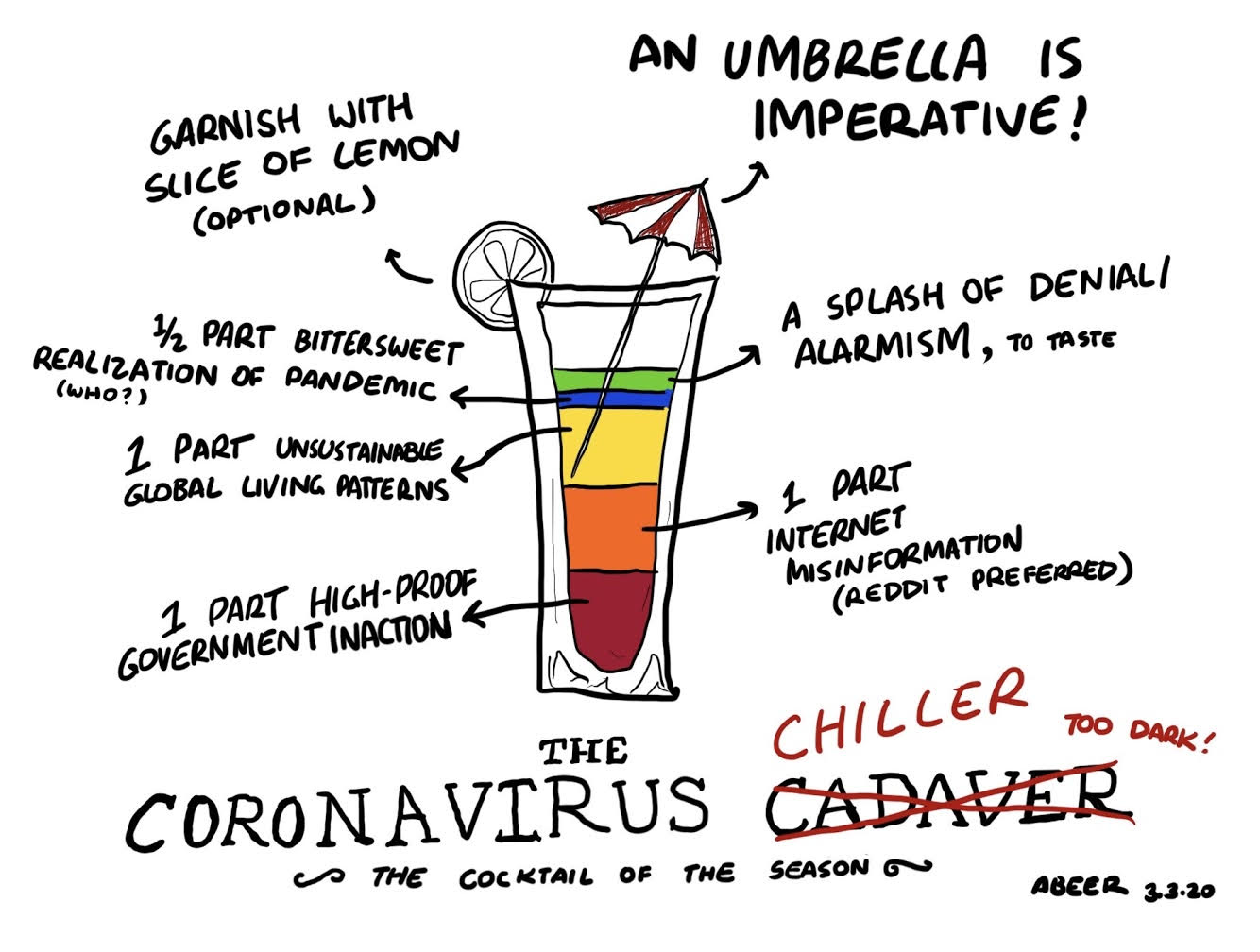
Cartoon – Things you can’t get vaccinated for
https://www.axios.com/axios-surveymonkey-poll-2021-hopes-7de84661-c2dd-43df-9509-3dda4a35a9f5.html
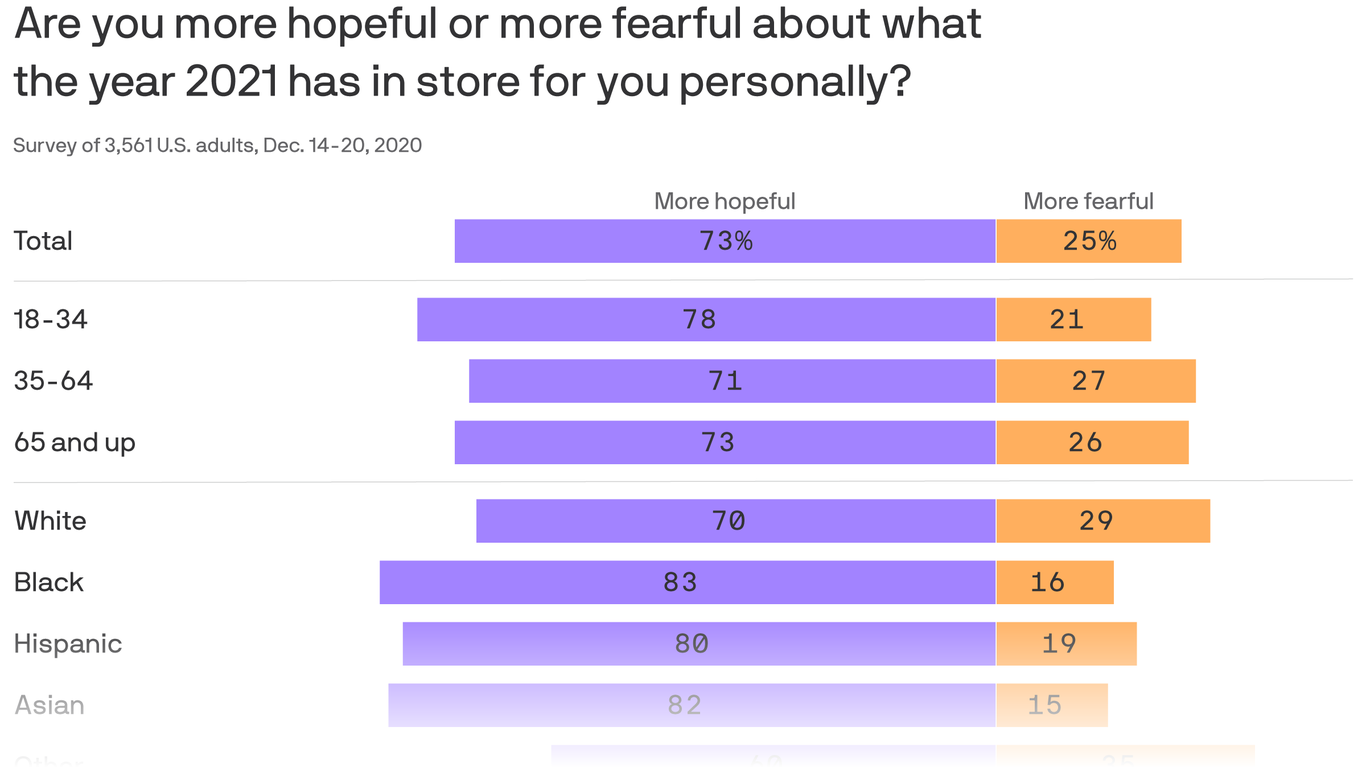
More than six out of 10 Americans are hopeful about what 2021 has in store for the world, according to a new Axios/SurveyMonkey poll.
The big picture: After a year dominated by the pandemic and a seemingly endless presidential election, Americans are overwhelmingly hopeful that things will get better with the pandemic — and more narrowly hopeful about Joe Biden’s presidency.
By the numbers: 63% of poll respondents said they’re more hopeful than fearful about what 2021 holds in store for the world, while 36% said they’re more fearful.
Between the lines: Americans were even more optimistic about the year ahead for them personally — mostly driven by the hopes of young adults, people of color and Democrats.
The coronavirus was the one issue that united most people in optimism. Overall, 76% were more hopeful than fearful about the pandemic next year — a view that held across most age groups, racial and ethnic groups, and parties.
The Biden presidency was more divisive. Overall, 56% were more hopeful about his presidency, while 42% were more fearful.
And while Republicans are ready for President Trump to take on a big leadership role in the Republican Party after his presidency ends, that’s not true of everyone else.



Sure, none of that is certain, but Monday morning’s news that at least 14 members of the Miami Marlins and their staff have tested positive for the novel coronavirus in recent days was a Category 5 covid-19 hurricane alert. You couldn’t have a worse MLB start or a grimmer predictor for other games.
With lots of inherent social distancing, baseball was supposed to be the easiest major American team sport to resume, just as leagues in Japan and South Korea have functioned smoothly for months. But MLB couldn’t go even a week without the serious prospect that its 60-game season should be canceled.
“Hey, I’m going to be honest with you: I’m scared. I really am,” said Washington Nationals Manager Dave Martinez, 55, who has a heart condition.
Why is MLB creating a situation where Dusty Baker, 71, the survivor of multiple life-threatening conditions in the past 15 years, manages Houston every day while Texas is a national coronavirus hot spot?
Martinez added that before long his team may see more players “opt out,” as Ryan Zimmerman and Joe Ross already have. Once the defections start, the cascade won’t stop until the sport must call a halt.
“Now we REALLY get to see if MLB is going to put players health first,” tweeted Los Angeles Dodgers left-hander David Price, who passed on $11.8 million by opting out of this partial season. “Remember when [Commissioner Rob] Manfred said players health was PARAMOUNT?! Part of the reason I’m at home right now is because players health wasn’t being put first. I can see that hasn’t changed.”
Underneath all the discussions and elaborate plans to reopen various sports — MLB, the NBA and NHL now, and the NFL and college football by the end of next month — has been one naive assumption: If the virus hit a team, it would infect one or two players. Maybe three. But the sense was things still would be manageable. You could still field a team.
When did this become the highest of all human goals?
The danger and the damage would not be “too bad.” In this, we see Americans’ national tendency toward willful pandemic ignorance being played out on a small, crystal-clear stage so everyone can get the message.
For months, we have watched healthy people, mostly young, swarm into bars or hit the beaches with an apparent sense that community spread was a fiction or not something that applied to them. Maybe, the fantasy went, one person in the wrong bar would get the virus.
Now we learn differently. Now we see the truth.
Over a dozen Marlins and counting.
The immediate consequences of the Marlins’ outbreak were the postponements of their home opener against the Baltimore Orioles and the Philadelphia Phillies’ home game against the New York Yankees, who would have been occupying the clubhouse those Marlins just showered and dressed in Sunday.
The wider effect: Back to normal, or even semi-normal, in sports was shattered just days after being reintroduced.
What does this mean?
Some events have ambiguous consequences. We won’t know their impact for some time. But in rare cases, one event may have enormous impact, just as the positive virus test for the NBA’s Rudy Gobert in mid-March resulted in the shutdown of every major sport within 48 hours.
This is such a moment — but perhaps bigger.
Why are we here? The answer is simple yet inexplicably unacknowledged in wide swaths of this country: The pandemic is not under control until you stop it, suppress it, dominate it and crush the curve.
Though many other countries have done it, America has not come within a million miles of that outcome.
As I pointed out in a column last week, when a league says, Given what we are seeing with covid-19 hitting our teams, maybe we should cancel the season, the correct response is “get rid of the word ‘maybe.’ ”
The entire American experience of this pandemic has been: Don’t embolden the virus by acknowledging its threat. Try to outrun it, hide from it, say it’s not so bad and will go away.
That just breeds a disaster, and now that disaster has hit MLB just days into its season. The Cincinnati Reds also have multiple positive tests. The Atlanta Braves have been without two catchers who have symptoms, though no positive tests. Nationals star Juan Soto is inactive after a positive test.
Do we need a longer list?
You can’t be much healthier, as a group, than a pro baseball team. You can’t be much better protected or tested more often than an MLB team. The Marlins are close to the safest possible case. And now, less than a week into their season, at least half of the team has the coronavirus!
That is what is meant by “community spread.” That is what is meant by an “outbreak” in an epidemic. All of us have worried that one or two players — or people in the MLB community — would have bad outcomes from the virus if a 60-game season was played. Time to blow up that assumption. If half of the Marlins team can test positive within a few days, then the scale of danger to health — the number of people who may get sick and the severity of the damage they may suffer, including prime-of-life pro athletes — just shot through the ceiling.
Our assumptions, while well-intentioned, have been blown to pieces. And in short order, so will the season of one, or perhaps several, of our sports.
The Marlins are just the latest — but one of the most vivid — illustrations of what America is facing. And how little we are willing to take seriously the true measure of our fearsome enemy.
America has to be ready for mail voting to avert an election crisis

Valid concerns have been raised about mail voting. In New York, the local election boards have taken weeks to count primary ballots received in the mail as a result of the coronavirus, leaving several races for Congress still unresolved. The problems have been blamed on the late decision to send out the absentee ballot applications, outdated ballot counting machines, and the sheer number of mail ballots. The New York case raises a serious alarm with the 2020 election approaching and many states considering more reliance on mail voting in the midst of the pandemic.
Adding to this sense of urgency, President Trump has declared, without evidence, that mail voting is an open invitation to fraud and will be used unfairly against him this fall. He has tweeted that mail voting would make this the “most rigged” election in history. Setting aside the fact that states have relied on absentee and mail voting to hold secure elections for many years, the stumbles in New York and the irresponsible fear mongering by Trump raise the potential of a very real crisis come this fall.
Consider the national disruption surrounding the 2000 election, which was decided for George Bush after a recount in Florida, a month of legal battles, and a controversial split Supreme Court decision. After you add the factor of a second wave of coronavirus cases in the fall and a sitting president shouting “rigged!” to the rafters, and you can understand why some analysts worry that the period following the 2020 election may be one of the most disruptive contests in our modern history.
A crisis foretold, however, can be a crisis averted. Instead of wringing our hands over the recent problems with mail voting in New York, we have to learn from them and from the multiple states that have implemented mail voting systems without problems or fraud. Then states can make common sense preparations to ensure the process goes as quickly and smoothly as possible to prevent a potential election crisis in November.
The fact that election boards were overwhelmed by an influx of absentee ballots in New York must be the rallying cry for dedicating more resources to efficiently implement mail voting systems. Reducing funds available for mail voting initiatives, as some Trump supporters have advocated, in this era when many people have to rely on these ballots or literally risk death, will only serve to suppress voting, which may be the point.
Consider the case of Ohio for a glimpse of what a proactive mail voting initiative looks like. At the urging of Governor Mike DeWine, Republican and Democratic lawmakers unanimously approved their all mail voting primary that was successfully concluded in April. Governors and state legislatures across the country have to learn from Ohio, and additional federal funds have to be made available to assist the efforts.
All those claims that mail ballots are subject to rampant tampering is not evidence that they are, and it suggests the need to educate voters on the issue. Members of the Armed Forces have relied on absentee voting with mail ballots since the Civil War. Trump himself has voted absentee by mail. Meanwhile, three states allow ounties to conduct elections completely by mail if they choose, five other states conduct elections almost entirely by mail, and more than two dozen other states permit their residents to cast absentee ballots by mail without having to provide a reason.
Over 250 million votes have been cast using mailed ballots since 2000, according to the Vote at Home Institute, and yet exhaustive analysis has identified only a tiny fraction of cases of fraud. None of those states that hold their elections almost entirely by mail has seen voter fraud scandals. The bipartisan group Vote Safe, chaired by former Governor Tom Ridge of Pennsylvania and former Governor Jennifer Granholm of Michigan, notes that several studies have consistently proven that mail ballots are secure and do not advantage one political party over the other. The team rightly emphasizes that the goal of ensuring the safety of voters as they exercise their rights during a raging pandemic is not a partisan issue.
Whether we improve our voting systems or defund them, the use of mail ballots will inevitably be much greater in the 2020 election than in years past. We can prepare for this eventuality and find innovative ways to deal with the challenges that arise, or we can shift our gaze from another crisis foretold and suffer the major consequences come November.
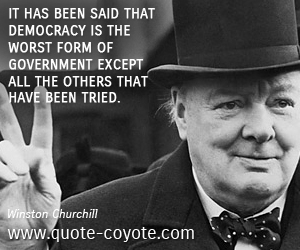
Winston Churchill noted that democracy is the worst form of government, except for all other forms that have been tried. In the midst of a pandemic across the country that has already claimed the lives of tens of thousands of Americans, exercising our right to vote by mail instead of in person may also seem like the worst solution, except for all other options.



 HENRY KOTULA