



https://www.washingtontimes.com/news/2020/feb/11/aarp-united-healthcare-and-cvs-keep-prescription-d/
ANALYSIS/OPINION:
Most folks think of the AARP as a membership organization that gives older Americans discounts on magazine subscriptions and cellphone plans. In fact, those business lines are secondary to AARP’s real source of income, a lucrative partnership with United Healthcare.
AARP partners with United Healthcare to offer health insurance plans to its membership. On its face, there’s nothing inappropriate about this type of affinity branding; the problem is that United Healthcare (and, frankly, other insurance companies) have made some decisions at the expense of seniors and the Medicare program, which should run counter to what a seniors-focused advocacy organization endorses. Recent actions by United Healthcare to limit seniors’ access to less expensive versions of Medicare drugs calls into question whether the AARP is looking out for older Americans or its own bottom line.
During the past three years, President Trump has maintained a laser focus on drug prices, causing pharmaceutical companies to respond in a variety of ways, including reducing or, in some instances, halting altogether annual price increases, pledging responsible pricing for new medications and reducing the price of medicines in certain instances.
For example, last year Eli Lilly launched a half-price version of its insulin drug, Humalog, to address affordability barriers for diabetic patients. Gilead created a subsidiary company in order to offer its two revolutionary hepatitis C products, Harvoni and Epclusa, as “authorized generics” at prices more than 70 percent lower than the identical brand version. In 2018, two companies competing in the cardiovascular space, Sanofi and Amgen, each introduced less costly versions of their cholesterol medications for patients who are unresponsive to statins — at 60 percent below the original price. These are all big wins for Mr. Trump’s jawboning campaign.
But the system is not working: These less expensive versions of innovative drugs are not available to many seniors because of how insurance companies and their negotiators (known as “pharmacy benefit managers” or PBMs) design drug coverage via formularies, particularly in Medicare. A perfect case study is cardiovascular disease, the No. 1 cause of death in the United States: For the past 14 months, in many instances, United Healthcare formulary design kept patients on the more expensive versions of the Sanofi and Amgen cholesterol medicines which came coupled with a high out-of-pocket co-insurance for the patient. Further, CVS (which is merging with insurance company Aetna) admitted to creating barriers for patients by requiring doctors to provide a “documented clinical reason” for prescribing the identical, cheaper version of the same medicine. Today in Medicare, CVS continues to block affordable access to the lower cost versions by not covering these medicines anywhere on their national formulary, effectively dissuading a patient at high risk for a heart attack or stroke from purchasing the medicine prescribed by his/her cardiologist.
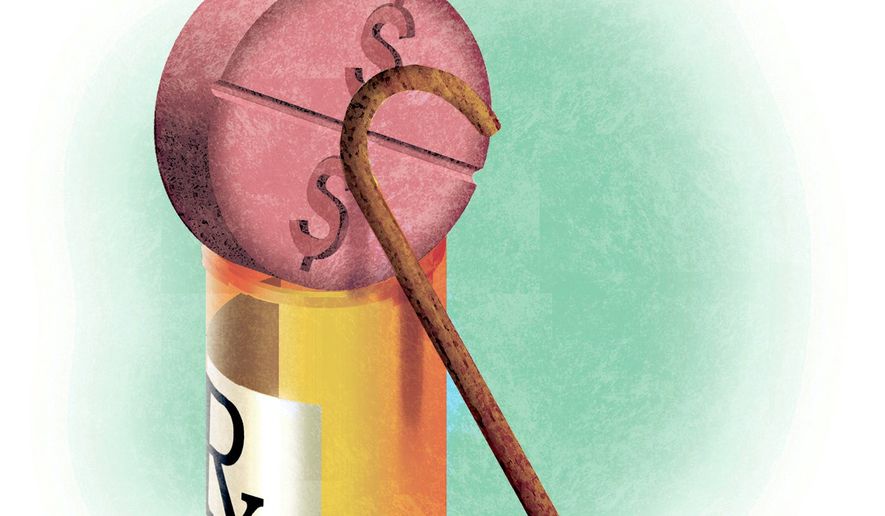
Why would insurance companies and PBMs want to keep paying for the more expensive version of an identical drug? The answer lies in the backward way drugs are priced in America. Drug manufacturers set the “list price” of a drug the same way a car dealership lists the price of cars or colleges list the price of tuition. What’s actually paid by an insurer in the final transaction is usually steeply discounted from the starting price by the drug company “rebating” a portion — 40 percent on average, oftentimes more — to the PBM/insurance company (which then pocket it). That negotiation should result in reduced out-of-pocket drug costs for seniors. The problem is that this model results in perverse incentives.
Medicines have high “list prices” because the drug company knows that it will need to provide significant discounts/rebates in order to be listed on a health plan’s formulary. Positive formulary placement = patient access to a medicine. Insurance companies and PBMs like the higher list prices because they profit from both the steep, negotiated rebates and the higher co-insurance the patient pays to the plan. In Medicare, once a patient barrels through the initial drug coverage phase, the federal government picks up 80 percent of a senior’s drug costs, reducing the insurer’s liability. In the end, it’s patients who suffer at the pharmacy counter and in the long run.
https://mailchi.mp/192abb940510/the-weekly-gist-february-7-2020?e=d1e747d2d8
Humana, the nation’s second largest Medicare Advantage (MA) insurer, is partnering with a private equity (PE) firm to expand its senior-focused subsidiary medical group, Partners in Primary Care.
The arrangement will be structured as a joint venture between Humana and Welsh, Carson, Anderson & Stowe, with a combined initial $600M investment that will give the PE firm majority ownership of the medical group. The new venture is likely to double the number of centers that Humana’s Partners in Primary Care operates—currently 47 throughout Texas, Kansas, Missouri, Florida and the Carolinas.
While Humana has been looking to grow its MA membership, patients need not be Humana members to access care at the centers. Humana has established other partnerships in the physician practice space, including last fall’s announcement that it is teaming up with Iora Health to add 11 additional Iora-branded primary care practices to its MA networks in Arizona, Georgia, and Texas.
Humana has previously partnered with private equity to acquire postacute providers Kindred Healthcare and Curo Health Services. These latest moves suggest the company is shifting its focus to the front end of the delivery system, looking to control costs of care for seniors by quickly building a primary care physician network focused on reducing high-cost referrals to hospitals and specialists.
Patients Caught In Crossfire Between Giant Hospital Chain, Large Insurer

After Zoe Friedland became pregnant with her first child, she was picky about choosing a doctor to guide her through delivery.
“With so many unpredictable things that can happen with a pregnancy, I wanted someone I could trust,” Friedland said. That person also had to be in the health insurance network of Cigna, the insurer that covers Friedland through her husband’s employer.
Friedland found an OB-GYN she liked, who told her that she delivered only at Sequoia Hospital in Redwood City, California, a part of San Francisco-based Dignity Health. Friedland and her husband, Bert Kaufman, live in Menlo Park, about 5 miles from the hospital, so that was not a problem for them — until Dec. 12.
That’s the day Friedland and Kaufman received a letter from Cigna informing them their care at Sequoia might not be covered after Jan. 1. The insurance company had not signed a contract for 2020 with the hospital operator, which meant Sequoia and many other Dignity medical facilities around the state would no longer be in Cigna’s network in the new year.
Suddenly, it looked as if having their first baby at Sequoia could cost Friedland and Kaufman tens of thousands of dollars.
“I was honestly shocked that this could even happen because it hadn’t entered my mind as a possibility,” Friedland said.
She and her husband are among an estimated 16,600 people caught in a financial dispute between two gigantic health care companies. Cigna is one of the largest health insurance companies in the nation, and Dignity Health has 31 hospitals in California, as well as seven in Arizona and three in Nevada. The contract fight affects Dignity’s California and Nevada hospitals, but not the ones in Arizona.
“The problem is price,” Cigna said in a statement just before the old contract expired on Dec. 31. “Dignity thinks that Cigna customers should pay substantially more than what is normal in the region, and we think that’s just wrong.”
Tammy Wilcox, a senior vice president at Dignity, said, “At a time when many nonprofit community hospitals are struggling, Cigna is making billions of dollars in profits each year. Yet Cigna is demanding that it pay local hospitals even less.”
In 2018, the most recent full year for which earnings data is available, Cigna generated operating income of $3.6 billion on revenue of approximately $48 billion. Dignity Health reported operating income of $529 million on revenue of $14.2 billion in its 2018 fiscal year.
It’s possible Cigna and Dignity can still reach an agreement. Both sides said they will keep trying, though no talks are scheduled.
Disagreements between insurers and health systems that leave patients stranded are a perennial problem in U.S. health care. Glenn Melnick, a professor of health economics at the University of Southern California, said such disputes, which are disruptive to consumers, are often settled.
Melnick believes Dignity is using an “all or nothing” strategy in contract negotiations, meaning either all its facilities are in the insurer’s network or none are.
“This allows them to increase their market power to get higher prices, which is not necessarily good for consumers,” Melnick said.
Dignity replied in an emailed statement: “We do not require payers to contract with all or none of Dignity Health’s providers. We do try to make sure patients have access to the full range of Dignity Health services and facilities in each of our communities.”
Dignity faces a number of legal and financial challenges while it works to implement a February 2019 merger with Englewood, Colorado-based Catholic Health Initiatives that created one of the nation’s largest Catholic hospital systems — known as CommonSpirit Health.
California Attorney General Xavier Becerra approved the deal with conditions, including that Dignity’s California hospitals spend $10 million in the first three years on services for people experiencing homelessness and offer free care to more low-income patients.
The requirement to treat more poor patients at no charge followed a period, from 2011 to 2016, in which Dignity’s charity care declined about 35% while its net income was $3.2 billion.
Last October, CommonSpirit announced an operating loss of $582 million on revenue of nearly $29 billion for the 2019 fiscal year, its first annual financial statement after the merger took effect. Much of the loss was due to merger-related costs and special charges.
The same month, Dignity completed a five-year “corporate integrity agreement” with the U.S. Office of the Inspector General following an investigation into how it billed the government for hospital inpatient stays. Dignity said it “fully complied” with the agreement.
Dignity is also defending itself in a class-action lawsuit alleging that it bills uninsured patients at grossly inflated rates even though it claims to provide “affordable” care at “the lowest possible cost.”
More recently, an appeals court judge ruled Dignity could not charge higher prices — often a lot higher than state-set rates — for treating enrollees of L.A. Care’s Medi-Cal health plan at its Northridge Hospital Medical Center.
Dignity disagreed with the court’s ruling in that case, saying that although the Northridge facility did not have a contract with L.A. Care, many of the health plan’s enrollees who initially sought emergency treatment there stayed in the hospital for additional care after they had been stabilized. The hospital “seeks appropriate reimbursement for providing this care,” Dignity said.
If Dignity does not reach an agreement with Cigna, its hospitals, outpatient surgery centers and medical groups in most of California will soon be out-of-network for many Cigna enrollees. In-network coverage for Open Access (OAP) and Preferred Provider (PPO) ended Feb. 1, and for HMO patients it is set to end April 1.
Peter Welch, president and general manager for Cigna in Northern California and the Pacific Northwest, said Cigna can provide “adequate access” to other hospitals and doctors.
Certain Cigna enrollees can apply to continue visiting Dignity facilities and doctors under California’s Continuity of Care law, enacted in 2014. Eligible enrollees include patients with chronic conditions, those already scheduled for pre-authorized services, people in need of emergency care and pregnant women in their third trimester.
Friedland and Kaufman applied, hoping she would be able to continue seeing her Dignity-affiliated OB-GYN at in-network rates.
On Jan. 22, less than a month from Friedland’s Feb. 15 due date, they received written confirmation that their request had been approved. They wouldn’t have to shop for a new doctor or face stiff medical bills after all.
Early Tuesday evening, Friedland gave birth to a baby girl, Eliza, who entered the world 11 days earlier than expected, weighing in at 7 pounds, 3 ounces.
“While the ordeal was stressful, and the communication fraught, we were happy to receive confirmation of continuity of care and that it ended in the best possible way — with the birth of our healthy baby daughter with the provider where we established care,” Kaufman said. “For the sake of those caught in the middle and now having to start relationships with new health care providers, we hope the two sides can come to an agreement.”

The Trump administration yesterday announced more changes designed to make Medicare Advantage more appealing and to lower prescription drug costs for seniors.
Why it matters: Although the proposal mainly tinkers around the edges, it could have a meaningful impact on some seniors’ pocketbooks while furthering the administration’s commitment to Medicare Advantage, a cash cow for insurers.
Details: The proposal aims to create more transparency within Medicare’s prescription drug benefit, and to enhance price competition.
It also would allow all seniors with end-stage renal disease to enroll in Medicare Advantage, beginning in 2021.

UnitedHealth Group blew the doors off the opening of earnings season this week, reporting a better-than-expected fourth quarter, Bob writes.
By the numbers: United reported a $13.8 billion profit on $242 billion of revenue in the full-year 2019.
Follow along: Our earnings tracker is updated. Tell Bob (bob@axios.com) what you’re seeing and thinking about.

Private health insurance is a conduit for exploding health care spending, and there’s no end in sight.
The big picture: Most politicians defend this status quo, even though prices are soaring. And as the industry’s top executives and lobbyists gathered this week in San Francisco, some nodded to concerns over affordability — but then went on to tell investors how they plan to keep the money flowing.

It was always misleading. Now Democrats are repeating it.
There’s a dangerous talking point being repeated in the Democratic primary for president that could affect the survival of millions of people, and the finances of even more. This is partly my fault.
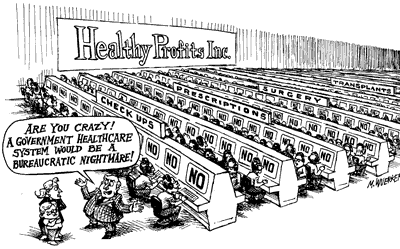
When the candidates discuss health care, you’re bound to hear some of them talk about consumer “choice.” If the nation adopts systemic health reform, this idea goes, it would restrict the ability of Americans to choose their plans or doctors, or have a say in their care.
It’s a good little talking point, in that it makes the idea of changing the current system sound scary and limiting. The problem? It’s a P.R. concoction. And right now, somewhere in their plush corporate offices, some health care industry executives are probably beside themselves with glee, drinking a toast to their public relations triumph.
I should know: I was one of them.
To my everlasting regret, I played a hand in devising this deceptive talking point about choice when I worked in various communications roles for a leading health insurer between 1993 and 2008, ultimately serving as vice president for corporate communications. Now I want to come clean by explaining its origin story, and why it’s both factually inaccurate and a political ploy.
Those of us in the insurance industry constantly hustled to prevent significant reforms because changes threatened to eat into our companies’ enormous profits. We were told by our opinion research firms and messaging consultants that when we promoted the purported benefits of the status quo that we should talk about the concept of “choice”: It polled well in focus groups of average Americans (and was encouraged by the work of Frank Luntz, the P.R. guru who literally wrote the book on how the Republican Party should communicate with Americans). As instructed, I used the word “choice” frequently when drafting talking points.
But those of us who held senior positions for the big insurers knew that one of the huge vulnerabilities of the system is its lack of choice. In the current system, Americans cannot, in fact, pick their own doctors, specialists or hospitals — at least, not without incurring huge “out of network” bills.
Not only does the current health care system deny you choice within the details of your plans, it also fails to provide many options for the plan itself. Most working Americans must select from a limited list made by their company’s chosen insurance provider (usually a high-deductible plan or a higher-deductible plan). What’s more, once that choice is made, there are many restrictions around keeping it. You can lose coverage if your company changes its plan, or if you change jobs, or if you turn 26 and leave your parents’ plan, among other scenarios.
This presented a real problem for us in the industry. Well aware that we were losing the “choice” argument, my industry colleagues spent millions on lobbying, advertising and spin doctors — all intended to muddy the issue so Americans might believe that reform would somehow provide “less choice.” Recently, the industry launched a campaign called “My Care, My Choice” aimed in part at convincing Americans that they have choice now — and that government reform would restrict their freedom. That group has been spending large sums on advertising in Iowa during this presidential race.
This isn’t the first time the industry has made “choice” a big talking point as it fights health reform. Soon after the Affordable Care Act was passed a decade ago, insurers formed the Choice and Competition Coalition and pushed states not to create insurance exchanges with better plans.
What’s different now is that it’s the Democrats parroting the misleading “choice” talking point — and even using it as a weapon against one another. Back in my days working in insurance P.R., this would have stunned me. It’s why I believe my former colleagues are celebrating today.
The truth, of course, is that Americans now have little “choice” when it comes to managing their health care. Most can’t choose their own plan or how long they retain it, or even use it to select the doctor or hospital they prefer. But some reforms being discussed this election, such as “Medicare for all,” would provide these basic freedoms to users. In other words, the proposed reforms offer more choice than the status quo, not less.
My advice to voters is that if politicians tell you they oppose reforming the health care system because they want to preserve your “choice” as a consumer, they don’t know what they’re talking about or they’re willfully ignoring the truth. Either way, the insurance industry is delighted.
I would know.
 HENRY KOTULA