Time to Say Goodbye to Some Insurers’ Waivers for Covid Treatment Fees

Just as other industries are rolling back some consumer-friendly changes made early in the pandemic — think empty middle seats on airplanes — so, too, are health insurers.

Many voluntarily waived  all deductibles, copayments and other costs for insured patients who fell ill with covid-19 and needed hospital care, doctor visits, medications or other treatment.

Setting aside those fees was a good move from a public relations standpoint. The industry got credit for helping customers during tough times. And it had political and financial benefits for insurers, too.

But nothing lasts forever.

Starting at the end of last year — and continuing into the spring — a growing number of insurers are quietly ending those fee waivers for covid treatment on some or all policies.

When it comes to treatment, more and more consumers will find that the normal course of deductibles, copayments and coinsurance will apply,” said Sabrina Corlette, research professor and co-director of the Center on Health Insurance Reforms at Georgetown University.

Even so, “the good news is that vaccinations and most covid tests should still be free,” added Corlette.

That’s because federal law requires insurers to waive costs for covid testing and vaccination.

Guidance issued early in President Joe Biden’s term reinforced that Trump administration rule about waiving cost sharing for testing and said it applies even in situations in which an asymptomatic person wants a test before, say, visiting a relative.

But treatment is different.

Insurers voluntarily waived those costs, so they can decide when to reinstate them.

Indeed, the initial step not to charge treatment fees may have preempted any effort by the federal government to mandate it, said Cynthia Cox, a vice president at KFF and director for its program on the Affordable Care Act.

In a study released in November, researchers found about 88% of people covered by insurance plans — those bought by individuals and some group plans offered by employers — had policies that waived such payments at some point during the pandemic, said Cox, a co-author. But many of those waivers were expected to expire by the end of the year or early this year.

Some did.

Anthem, for example, stopped them at the end of January. UnitedHealth, another of the nation’s largest insurers, began rolling back waivers in the fall, finishing up by the end of March. Deductible-free inpatient treatment for covid through Aetna expired Feb. 28.

A few insurers continue to forgo patient cost sharing in some types of policies. Humana, for example, has left the cost-sharing waiver in place for Medicare Advantage members, but dropped it Jan. 1 for those in job-based group plans.

Not all are making the changes.

For example, Premera Blue Cross in Washington and Sharp Health Plan in California have extended treatment cost waivers through June. Kaiser Permanente said it is keeping its program in place for members diagnosed with covid and has not set an end date. Meanwhile, UPMC in Pittsburgh planned to continue to waive all copayments and deductibles for in-network treatment through April 20.

What It All Means

Waivers may result in little savings for people with mild cases of covid that are treated at home. But the savings for patients who fall seriously ill and wind up in the hospital could be substantial.

Emergency room visits and hospitalization are expensive, and many insured patients must pay a portion of those costs through annual deductibles before full coverage kicks in.

Deductibles have been on the rise for years. Single-coverage deductibles for people who work for large employers average $1,418, while those for employees of small firms average $2,295, according to a survey of employers by KFF. (KHN is an editorially independent program of KFF.)

Annual deductibles for Affordable Care Act plans are generally higher, depending on the plan type.

Both kinds of coverage also include copayments, which are flat-dollar amounts, and often coinsurance, which is a percentage of the cost of office visits, hospital stays and prescription drugs.

Ending the waivers for treatment “is a big deal if you get sick,” said Robert Laszewski, an insurance industry consultant in Maryland. “And then you find out you have to pay $5,000 out-of-pocket that your cousin didn’t two months ago.”

Costs and Benefits

Still, those patient fees represent only a slice of the overall cost of caring for a hospitalized patient with covid.

While it helped patients’ cash flow, insurers saw other kinds of benefits.

For one thing, insurers recognized early on that patients — facing stay-at-home orders and other restrictions — were avoiding medical care in droves, driving down what insurers had to fork out for care.

I think they were realizing they would be reporting extraordinarily good profits because they could see utilization dropping like a rock,” said Laszewski. “Doctors, hospitals, restaurants and everyone else were in big trouble. So, it was good politics to waive copays and deductibles.”

Besides generating goodwill, insurers may benefit in another way.

Under the ACA, insurers are required to spend at least 80% of their premium revenue on direct health care, rather than on marketing and administration. (Large group plans must spend 85%.)

By waiving those fees, insurers’ own spending went up a bit, potentially helping offset some share of what are expected to be hefty rebates this summer. That’s because insurers whose spending on direct medical care falls short of the ACA’s threshold must issue rebates by Aug. 1 to the individuals or employers who purchased the plans.

A record $2.5 billion was rebated for policies in effect in 2019, with the average rebate per person coming in at about $219.

Knowing their spending was falling during the pandemic helped fuel decisions to waive patient copayments for treatment, since insurers knew “they would have to give this money back in one form or another because of the rebates,” Cox said.

It’s a mixed bag for consumers.

“If they completely offset the rebates through waiving cost sharing, then it strictly benefits only those with covid who needed significant treatment,” noted Cox. “But, if they issue rebates, there’s more broad distribution.”

Even with that, insurers can expect to send a lot back in rebates this fall.

In a report out this week, KFF estimated that insurers may owe $2.1 billion in rebates for last year’s policies, the second-highest amount issued under the ACA. Under the law, rebate amounts are based on three years of financial data and profits. Final numbers aren’t expected until later in the year.

The rebates “are likely driven in part by suppressed health care utilization during the COVID-19 pandemic,” the report says.

Still, economist Joe Antos at the American Enterprise Institute says waiving the copays and deductibles may boost goodwill in the public eye more than rebates. “It’s a community benefit they could get some credit for,” said Antos, whereas many policyholders who get a small rebate check may just cash it and “it doesn’t have an impact on how they think about anything.”
Expanding health coverage is good. But we also need to fix stingy plans.

https://www.washingtonpost.com/outlook/expanding-health-coverage-is-good-but-we-also-need-to-fix-stingy-plans/2021/03/05/5f92b206-7c7d-11eb-a976-c028a4215c78_story.html?

Underinsurance remains a significant barrier to health care, new survey  finds

President Biden promised on the campaign trail to expand the Affordable Care Act to cover more of the roughly 29 million nonelderly Americans (about 11 percent of that population) who remain uninsured. He also said he’d strengthen the law by, for instance, providing an accessible and affordable public option and increasing tax credits to make it easier for people who buy insurance on their own to afford monthly premiums. Once in office, Biden immediately moved to reopen the period when people could enroll in the ACA marketplaces.

Unfortunately, the administration is paying little heed to a problem that is in many ways just as insidious as lack of insurance: underinsurance. That’s when people get too little from the insurance plans that they do have.

After passage of the ACA, the number of Americans lacking any insurance fell by 20 million, dropping to 26.7 million in 2016 — a historic low as a percentage of population. The figure began to creep up again during the Trump administration, reaching 28.9 million in 2019. That’s the problem that the current administration wants to address, and it certainly needs attention.

But according to research by the Commonwealth Fund, a foundation focused on health care, 21.3 percent of Americans have insurance so skimpy that they count as underinsured: Their out-of-pocket health-care expenses, excluding premiums, amount to at least 5 to 10 percent of household income. The limits in coverage mean their plans might provide little financial protection in a health-care crisis.

High-deductible plans offered by employers are one part of the problem. Among people covered by the companies they work for, enrollment in high-deductible health plans rose  from 4 percent in 2006 to 30 percent in 2019, according to a report from the Kaiser Family Foundation. The average annual deductibles in such plans are $2,583 for an individual and $5,335 for families.

In theory, high-deductible plans, which make people spend lots of their own money before insurance kicks in, turn people into careful consumers. But research finds that people covered by such plans skip care, both unnecessary (elective cosmetic surgery, for instance) and necessary (cancer screenings and treatment, and prescriptions). Black Americans in these plans disproportionately avoid treatment, widening racial health inequities.

Health savings accounts are designed to blunt the harmful effects of high-deductible plans: Contributions by employers, and pretax contributions by individuals, help to cover costs until the deductible is reached. But not all high-deductible health plans offer such accounts, and many people in lower-wage jobs don’t have them. In the rare cases that they do, they often don’t have extra money to deposit in them.   

In a November 2020 article in the journal Health Affairs, scholars affiliated with Brown University and Boston University found that enrollment in high-deductible plans had increased across all racial, ethnic and income groups from 2007 to 2018; they also found that low-income, Black and Hispanic enrollees were significantly less likely than other groups to have a health savings account — and the disparities had grown over time.    

The short-term health-care plans — a.k.a. “junk” plans — that the Trump administration expanded also contribute to the problem of underinsurance. They often have low premiums but do not cover preexisting conditions or basic services like emergency health care.

Fortunately, proposals like Biden’s that make health care more accessible also tend to address the problem of underinsurance, at least in part. For example, to make individual-market insurance more affordable, Biden proposes expanding the tax credits established under the ACA. His plan calls for removing the cap on financial assistance, now set at 400 percent of the federal poverty level, in the insurance marketplaces and lowering the statutory limit on premiums to 8.5 percent of income (from nearly 10 percent).

The president also proposes to peg the size of the tax credits that subsidize premiums to the best plans on the marketplaces, the “gold” plans, rather than “silver” plans. This would increase the size of these credits, thereby making it easier for Americans to afford more-generous plans with lower deductibles.

The most ambitious Biden proposal is a public option, which would create a Medicare-like offering on marketplaces, available to anyone. Pairing this with allowing any American to opt out of their employer plan if they found a better deal on HealthCare.gov or their state marketplace — which they can’t now — would help some people escape high-deductible plans. The public option would also eliminate premiums and involve minimal to no cost-sharing for low-income enrollees — especially helpful for uninsured (and underinsured) people in states yet to expand Medicaid.

Given political realities, however, this policy may not see the light of day. So it would be best to target underinsurance directly. Most people with high-deductible plans get them through an employer. Yet unlike in the marketplace plans, the degree of cost sharing in these employer plans is the same for low-income as well as high-income employees. To deal with that problem, the government could offer incentives for employers to expand the scope of health services they cover — even in high-deductible plans. Already, many such plans exempt from the deductible some primary-care visits and generic-drug prescriptions. The list could grow to include follow-up visits and certain specialist care.

Instead of encouraging health savings accounts, the government could offer greater pretax incentives that encourage employers to absorb some of the costs that they have shifted onto their lower-income employees; that would help to prevent the insurance equity gap from widening further. The government could compensate employers that cover co-pays or other costs for their low-income employees. It could also subsidize employers that move away from high-deductible plans, at least for lower-income people. 

Health insurance is complicated: ­More-affordable premiums are good only if they don’t bring stingy coverage. Greater investment in well-trained (and racially diverse) “navigators” — the people who help Americans enroll in plans on the federal marketplace, for example — would make it less likely that consumers would choose high-deductible plans without grasping their downsides. But it’s also important that people have options beyond risky high-deductible coverage.

The ACA expanded coverage dramatically — but the government needs to make sure that coverage amounts to more than an unused insurance card.

One-third of small businesses say health insurance is a top concern during COVID-19: survey

Dive Brief:

  • Small businesses are struggling to cover the high costs of healthcare for their employees after a year of COVID-19, according to a new poll sponsored by the Small Business Majority and patient advocacy group Families USA.
  • More than one in three small businesses owners said it’s a challenge getting coverage for themselves and their workers. That pain is particularly acute among Black, Asian American and Latino businesses, which have fewer resources than their White counterparts, SBMfound.
  • As a result, small businesses want policymakers to expand coverage access and lower medical costs, beyond the temporary fixes included in the sweeping $1.9 trillion American Rescue Plan passed by Congress earlier this month.

Dive Insight:

Providing health insurance can be pricey for small employers, a challenge that’s been exacerbated by the pandemic and its subsequent economic downturn.

Accessing health insurance has been a major barrier over the course of COVID-19, the national survey of 500 businesses with 100 employees or fewer in November found. The poll, conducted by Lake Research Partners for SBM and Families USA, found many such businesses have had to slash benefits during the pandemic. Among small business owners that have reduced insurance benefits, 36% have trimmed their employer contribution for medical premiums and 56% switched to a plan with a lower premium.

Additionally, one in five small business owners say they plan to change or lower coverage in the next few months, while only about a quarter have been able to maintain coverage for temporarily furloughed employees.

The situation is bleaker for minority-owned small businesses. Overall, 34% say accessing health insurance has been a top barrier during COVID-19, but that figure rises to 50%, 44% and 43% for Black, Asian American and Latino business respondents, SBM, which represents some 80,000 small businesses nationwide, said.

That’s in line with past SBM polling finding non-white entrepreneurs are more likely to face temporary or permanent closure in the next few months than their white counterparts, and are also more likely to struggle with rent, mortgage or debt repayments.

Though employers expect a more stabilized business environment starting in the second quarter, many are still reeling from difficult economic circumstances last year. COVID-19 capsized normal efforts to calculate medical cost trends for 2021, complicating financial planning for the year ahead — especially for fragile small businesses.

Washington did allocate a significant amount of financial aid for small businesses last year, and the ARP includes numerous provisions including increased subsidies for health insurance premiums for two years, and extended COBRA coverage for laid off employees through September.

But respondents to this latest polling urged for more long-term support.

The most popular policy proposal was bringing down the cost of prescription drugs, with 90% of businesses saying they supported the measure and 54% saying they were in strong support. Protecting coverage for people with pre-existing conditions was also popular, with 87% of small business owners in total support and 51% strongly supporting.

Three-fourths of small business owners strongly support a public health insurance option, while 73% support expanding Medicaid eligibility in all states and 66% support letting people buy into Medicare starting at age 55.

Both a public option and lower age of eligibity for Medicare are key tenets of President Joseph Biden’s healthcare plan — though getting both through Congress is unlikely. And long-time business groups like the Chamber of Commerce and the National Federation for Independent Business hold major sway on such issues and tend to be more recalcitrant on progressive policy changes.

Still, calls have been mounting for employers, which insure more than half of the U.S., to do more to move the needle on medical costs, as price increases outpace overall inflation.

A survey of large to mid-size employers from the National Alliance of Healthcare Purchaser Coalitions published Wednesday found at least three-fourths of employers support drug price regulation, surprise billing regulation, hospital price transparency and hospital rate regulation.

Perils of High Deductible Health Insurance

May be an image of text that says '"Europeans live longer because of olive oil, red wine and nuts" (Also they can go to the doctor any time they want and not go bankrupt) Price Dan V'

The Rising Crisis of Underinsurance: How the Biden Administration May Shape Inequities in Patient Affordability

Image result for Health Underinsurance

The Affordable Care Act (ACA) made historic strides in expanding access to health insurance coverage by covering an additional 20 million Americans. President Joe Biden ran on a platform of building upon the ACA and filling in its gaps. With Democratic majority in the Senate, aspects of his health care plan could move from idea into reality.

The administration’s main focus is on uninsurance, which President Biden proposes to tackle in three main ways: providing an accessible and affordable public option, increasing tax credits to help lower monthly premiums, and indexing marketplace tax credits to gold rather than silver plans.

However, underinsurance remains a problem. Besides the nearly 29 million remaining uninsured Americans, over 40% of working age adults are underinsured, meaning their out-of-pocket cost-sharing, excluding premiums, are 5-10% of household income or more, depending on income level.

High cost-sharing obligations—especially high deductibles—means insurance might provide little financial protection against medical costs beneath the deductible. Bills for several thousand dollars could financially devastate a family, with the insurer owing nothing at all. Recent trends in health insurance enrollment suggest that uninsurance should not be the only issue to address.

A high demand for low premiums

Enrollment in high deductible health plans (HDHP) has been on a meteoric rise over the past 15 years, from approximately 4% of people with employer-sponsored insurance in 2006 to nearly 30% in 2019, leading to growing concern about underinsurance. “Qualified” HDHPs, which come with additional tax benefits, generally have lower monthly premiums, but high minimum deductibles. As of 2020, the Internal Revenue Service defines HDHPs as plans with minimum deductibles of at least $1,400 for an individual ($2,800 for families), although average annual deductibles are $2,583 for an individual ($5,335 for families).

HDHPs are associated with delays in both unnecessary and necessary care, including cancer screenings and treatment, or skipped prescription fills. There is evidence that Black patients disproportionately experience these effects, which may further widen racial health inequities.

common prescription has been to expand access to Health Savings Accounts (HSAs), with employer and individual contributions offsetting higher upfront cost-sharing. Employers often contribute on behalf of their employees to HSAs, but for individuals in lower wage jobs without such benefits or without extra income to contribute themselves, the account itself may sit empty, rendering it useless.

recent article in Health Affairs found that HDHP enrollment increased from 2007 to 2018 across all racial, ethnic, and income groups, but also revealed that low-income, Black, and Hispanic enrollees were significantly less likely to have an HSA, with disparities growing over time. For instance, by 2018, they found that among HDHP enrollees under 200% of the federal poverty level (FPL), only 21% had an HSA, while 52% of those over 400% FPL had an HSA. In short, the people who could most likely benefit from an HSA were also least likely to have one.

If trends in HDHP enrollment and HSA access continue, it could result in even more Americans who are covered on paper, yet potentially unable to afford care.

Addressing uninsurance could also begin to address underinsurance

President Biden’s health care proposal primarily addresses uninsurance by making it more affordable and accessible. This can also tangentially tackle underinsurance.

To make individual market insurance more affordable, Biden proposes expanding the tax credits established under the ACA. His plan calls for removing the 400% FPL cap on financial assistance in the marketplaces and lowering the limit on health insurance premiums to 8.5% of income. Americans would now be able to opt out of their employer plan if there is a better deal on HealthCare.gov or their state Marketplace. Previously, most individuals who had an offer of employer coverage were ineligible for premium subsidies—important for individuals whose only option might have been an employer-sponsored HDHP.

Biden also proposes to index the tax credits that subsidize premiums to gold plans, rather than silver plans as currently done. This would increase the size of these tax credits, making it easier for Americans to afford more generous plans with lower deductibles and out-of-pocket costs, substantially reducing underinsurance.

The most ambitious of Biden’s proposed health policies is a public option, which would create a Medicare-esque offering on marketplaces, available to anyone. As conceived in Biden’s proposal, such a plan would eliminate premiums and having minimal-to-no cost-sharing for low-income enrollees; especially meaningful for under- and uninsured people in states yet to expand Medicaid.

Moving forward: A need to directly address underinsurance

More extensive efforts are necessary to meaningfully address underinsurance and related inequities. For instance, the majority of persons with HDHPs receive coverage through an employer, where the employer shares in paying premiums, yet cost-sharing does not adjust with income as it can in the marketplace. Possible solutions range from employer incentives to expanding the scope of deductible-exempt services, which could also address some of the underlying disparities that affect access to and use of health care.

The burden of high cost-sharing often falls on those who cannot afford it, while benefiting employers, healthy employees, or those who can afford large deductibles. Instead of encouraging HSAs, offering greater pre-tax incentives that encourage employers to reabsorb some of the costs that they have shifted on their lower-income employees could prevent the income inequity gap from widening further.

Under the ACA, most health insurance plans are required to cover certain preventative services without patient cost-sharing. Many health plans also exempt other types of services from the deductible – from generic drugs to certain types of specialist visits – although these exemptions vary widely across plans. Expanding deductible-exempt services to include follow-up care or other high-value services could improve access to important services or even medication adherence without high patient cost burden. Better educating employees about what services are exempt would make sure that patients aren’t forgoing care that should be fully covered.

Health insurance is complicated. Choosing a plan is only the start. More affordable choices are helpful only if these choices are fully understood, e.g., the tradeoff between an HDHP’s lower monthly premium and the large upfront out-of-pocket cost when using care. Investing in well-trained, diverse navigators to help people understand how their options work with their budget and health care needs can make a big difference, given that low health insurance literacy is related to higher avoidance of care.

The ACA helped expand coverage, but now it’s time to make sure the coverage provided is more than an unused insurance card. The Biden administration has the opportunity and responsibility to make progress not only on reducing the uninsured rate, but also in reducing disparities in access and patient affordability.

How Transparent is Price Transparency?

With nearly 30% of workers now having a high deductible health plan
and a typical family being responsible for on average the first $8,000 of
costs,
consumers are increasingly weighing care versus cost.
Historically, with a small copay, you would conveniently take care of an
ailment without shopping around, but with the average person now bearing the brunt of the initial
costs, wouldn’t you want to know how much a service costs and what other providers are
charging before you “buy” the service?


CMS believes “consumers should be able to know, long before they open a medical bill, roughly
how much a hospital will charge for items and services it provides.
” Cue the hospital price
transparency rule that just went into effect January 1, 2021. Hospitals are now required to post
their standard charges, including the rates they negotiate with insurers, and the discounted price a
hospital is willing to accept directly from a patient if paid in cash. As a consumer, the intent is to
make it “easier to shop and compare prices across hospitals and estimate the cost of care before
going to the hospital.”


There are a few different angles to analyze here:


Are hospitals following the rules?

Each hospital must post online a comprehensive machine readable file with all items and services, including gross charges, actual negotiated prices with insurers, and the cash price for patients who are uninsured. Additionally, hospitals must post the
costs for 300 common “shoppable” services in a “consumer-friendly format
.” Some hospitals and
health systems have done a good job at posting these prices in a digestible format, like the
Cleveland Clinic or Sutter Health, but others have posted complicated spreadsheets, relied on
online cost estimator tools, or simply not posted them at all. An analysis from consulting firm
ADVI of the top 20 largest hospitals in the U.S. found that not all of them appeared to completely
comply with this mandate. In some instances, data was not able to be downloaded in a useable
format, others did not post the DRG or service codes, and the variability in the terms/categories
used simply created difficulty in comparing pricing information across hospitals. CMS has stated
that a failure to comply with the rules could result in a fine of up to $300 per day. As with most
new rules, there are growing pains, and hospitals will likely get better at this over time, assuming
the data is being used for its original intent.


Is this helpful to consumers?

Consumers will able to see the variation in prices for the exact
same service or procedure between hospitals and get an estimate of what they will be charged
before getting the care. But how likely is the average person to go to their hospital’s website, look
at a price, and change their decision about where to get care?
In addition, awareness of these
price transparency tools is still low among consumers. Frankly, it is competitors and insurers that
have been first in line to review the data.
Looking through a number of hospital websites, and even certain state agency sites that have done a good job at summarizing the costs, like Florida Health Price Finder, the price transparency tools are helpful, but appear to be much more suited for relatively standardized services that can be scheduled in advance, like a knee replacement. It’s highly unlikely you will be telling your ambulance driver what hospital to go to based on cost while in cardiac arrest…Plus, it’s all still confusing – even physicians have shared their bewilderment, when trying to decipher and compare pricing. Conceptually, price transparency should be beneficial to consumers, but it will take time; and it will need to involve not just the hospitals posting rates, but the outpatient care facilities as well. Knowing what you will pay before you decide to go to a physician’s office or a clinic or an urgent care or an ED will hopefully help drive consumers to make more educated decisions in the future.


Will this ultimately drive down costs?

I sure hope so. Revealing actual negotiated prices between hospitals and insurers should
push the more expensive hospitals in the area to reduce prices, especially if consumers start using the other hospitals, instead.
However, it could also have an inverse effect, with lower cost hospitals insisting on a payment increase from insurers; thereby driving up costs. In the end, as has historically been the case, the market power of certain providers will likely dictate the direction of costs in a given region. That is, until both price AND quality become fully transparent and the consumer is armed with the tools to shop for the best care at the lowest cost – consumerism here we come.

More evidence that cost-sharing doesn’t work

Image result for axios More evidence that cost-sharing doesn't work

A growing body of research keeps undermining a key tenet of health economics, Axios’ Sam Baker writes — the belief that requiring patients to pay more out of their own pockets will make them smarter consumers, forcing the health care system to deliver value.

Driving the news: Even a seemingly modest increase in out-of-pocket costs will cause many patients to stop taking drugs they need, according to a new working paper from Harvard economist Amitabh Chandra.

  • Raising Medicare recipients’ out-of-pocket costs by just $10 per prescription led to a 23% drop in overall drug consumption, and to a 33% increase in mortality. 
  • And seniors weren’t simply ditching “low-value” drugs. People at high risk for heart attacks or strokes cut back on statins and blood-pressure medications even more than lower-risk patients.

Between the lines: This research focuses on Medicare’s drug benefit, but higher cost-sharing is all the rage throughout the system, and there’s little evidence that it has generated “smarter shoppers.”

  • Patients with high-deductible plans — increasingly common in the employer market — don’t shop around for the best deal, which is all but impossible to do in many cases even if you wanted to try.

Go deeper: The “skin in the game” theory of health care hasn’t panned out

Cartoon – 2020 Choices

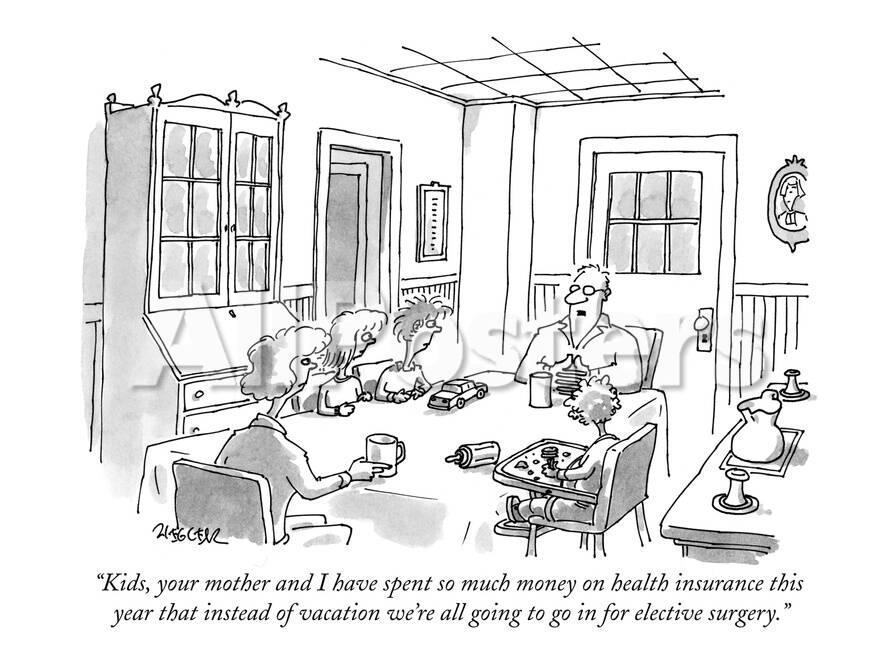
Kids, your mother and I have spent so much money on health insurance this…"  - New Yorker Cartoon' Premium Giclee Print - Jack Ziegler | AllPosters.com

Cartoon – High Deductible Health Insurance Today

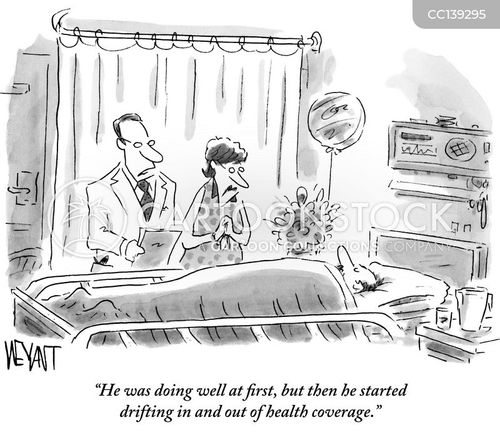
Medicare Cartoons and Comics - funny pictures from CartoonStock