‘Between 25% and 50%’ of people who get the coronavirus may show no symptoms but still be contagious, Anthony Fauci said. Here’s the latest research on asymptomatic carriers.

https://www.yahoo.com/news/1-4-people-coronavirus-may-234600518.html

Coronavirus carriers can transmit it without symptoms: What to ...

  • The coronavirus has infected more than 1.2 million people worldwide in just a few months. Scientists are racing to discover how it spreads so quickly.
  • According to Anthony Fauci, “between 25% and 50%” of people may be asymptomatic carriers — people who are contagious but not physically sick.
  • These carriers are thought to play a significant role in the virus’ spread and are the reason US residents have been asked to start covering their faces in public.

At least one-third of the world is under some type of lockdown because of the coronavirus pandemic, as governments urge social distancing to stymie the virus’ spread.

That’s because the COVID-19 virus is insidious.

“There’s significant transmission by people not showing symptoms,” Stephen Morse, an epidemiologist at Columbia University, told Business Insider.

According to Anthony Fauci, the director of the National Institute of Allergy and Infectious Disease, “somewhere between 25% and 50%” of people infected with the new coronavirus may never show symptoms or fall ill — but can still transmit the illness to others.

During a White House briefing on Sunday, Fauci cautioned that this was just an estimate, and said there is disagreement even among his colleagues as to how many people are asymptomatic. He added that antibody tests — which can confirm whether a person has already had COVID-19 — are needed to answer that question “in a scientifically sound way.”

Robert Redfield, director of the Centers for Disease Control and Prevention, gave NPR a similar estimate on Tuesday, saying that as many as 25% of people infected with the new coronavirus may never show symptoms.

These asymptomatic carriers, Redfield added, are most likely contributing to the rapid spread of the coronavirus worldwide — the number of confirmed cases passed 1 million last week — and making it challenging for experts to assess the true extent of the pandemic.

“We don’t know all the unidentified cases out there,” Morse said. “It’s mostly sicker people in hospitals who are being tabulated.”

The prevalence of asymptomatic transmission doesn’t bode well for global containment efforts, as Bill Gates recently wrote in an article published in the New England Journal of Medicine.

“That means COVID-19 will be much harder to contain than the Middle East respiratory syndrome or severe acute respiratory syndrome (SARS), which were spread much less efficiently and only by symptomatic people,” Gates said.

What we know about asymptomatic and presymptomatic transmission

The first confirmation that the novel coronavirus could be transmitted by asymptomatic people came in February, when a case study described a 20-year-old woman from Wuhan, China, who passed the coronavirus to five family members but never got physically sick herself.

World Health Organization report about the coronavirus outbreak in China, also published in February, found few instances in which a person who tested positive never showed any symptoms. Instead, most people who were asymptomatic on the date of their diagnosis (a relatively small group) went on to develop symptoms later.

“The proportion of truly asymptomatic infections is unclear but appears to be relatively rare,” the report authors wrote.

In the WHO study, 75% of people in China who were first classified as asymptomatic later developed symptoms, ProPublica reported. That means, technically, “presymptomatic transmission” is what’s probably common.

Other research has reaffirmed these findings. A CDC study of coronavirus patients in a nursing home in King County, Washington, found that of 23 people who tested positive, only 10 showed symptoms on the day of their diagnosis. Ten people in the other group developed symptoms a week later.

“These findings have important implications for infection control,” the authors wrote, adding that many public-health approaches “rely on presence of signs and symptoms to identify and isolate residents or patients who might have COVID-19.”

The CDC also evaluated coronavirus patients on the Diamond Princess cruise ship, which was quarantined in Japan in February. Of the 3,711 people on board, 712 tested positive, but almost half of them had no symptoms at the time.

Other examples of asymptomatic and presymptomatic transmission abound

Redfield told NPR “it appears that we’re shedding significant virus” about 48 hours before symptoms appear.

“This helps explain how rapidly this virus continues to spread across the country, because we have asymptomatic transmitters and we have individuals who are transmitting 48 hours before they become symptomatic,” he added.

A handful of recent studies and reports suggest that presymptomatic and asymptomatic transmission is not unusual.

  • A small study among Japanese ex-pats evacuated from Wuhan in February found that 31% of people who tested positive showed no symptoms.
  • Research that examined coronavirus cases in Singapore found that of 157 cases acquired locally, 10 involved presymptomatic transmission. The scientists concluded that most presymptomatic transmission exposure occurred one to three days before a person developed symptoms.
  • Research from China in February found that 13% of the 468 confirmed cases studied involved presymptomatic transmission.
  • The Los Angeles Times recently reported that a three-quarters of a group of singers who attended a 60-person choir practice got the COVID-19 virus, even though none showed symptoms at the practice.
  • Last month, 14 NBA players, coaches, and staff tested positive for the coronavirus. Half of them didn’t have symptoms when they received their diagnosis, according to The Wall Street Journal.
  • A biotech company in Iceland that has tested more than 9,000 people found that about half of those who tested positive said they were asymptomatic, the researchers told CNN.

Presymptomatic people are shedding the highest amount of the virus

An especially troubling aspect of presymptomatic transmission is that people seem to shed more coronavirus in the earlier stages of their infection. But the average symptom onset takes five days.

Research that examined 23 coronavirus patients in two Hong Kong hospitals found that people’s viral load — how many viral particles they were carrying and shedding into their environment — peaked during the first week of symptom onset and then gradually declined. A SARS patient, by contrast, sheds the most virus seven days to 10 days after getting visibly sick.

A study from Guangzhou found similar results: Among 94 patients, people were most contagious right when symptoms started to show, or just before.

Children could be asymptomatic carriers

A notable group of asymptomatic carriers could be children. Thus far, children are among those least sickened by the novel coronavirus — but some could be getting very mild infections and then spreading the virus.

Research published March 25 in the journal The Lancet looked at 36 children who tested positive for the coronavirus from January 17 to March 1 in three Chinese hospitals. Half of those children had “mild disease with no presenting symptoms,” the authors wrote.

Another study, published today, looked at more than 2,500 coronavirus cases among children younger than 18 in the US between February 12 and April 2, 2020. The authors found that 73% of patients in this age group had a fever, cough, or shortness of breath, compared to 93% of adults between the ages of 18 and 64.

The researchers concluded that “children do not always have fever or cough as reported signs and symptoms” of COVID-19.

Yet another recent study, which has yet to be peer-reviewed, found that 56% of 700 children infected with COVID-19 in China had mild, if any, symptoms.

John Williams, an expert in pediatric infectious disease at the University of Pittsburgh Medical Center, told ABC that “asymptomatic infection is common in children, occurring in 10-30%” of cases.

Wearing masks could help reduce presymptomatic transmission

On Friday, the CDC recommended that people in the US wear cloth masks when they go out in public, even if they feel healthy.

The policy is different from the agency’s recommendations during the early days of the coronavirus outbreak, when CDC experts said they did not “recommend the use of face masks for the general public” and the US surgeon general urged Americans to stop buying masks.

The prevalence of presymptomatic transmission is a primary reason for the change.

“We have always recommended that symptomatic people wear a mask because if you’re coughing, if you have a fever, if you’re symptomatic, you could transmit disease to other people,” Surgeon General Jerome Adams said at the White House Friday. He added, “we now know from recent studies that a significant portion of individuals with coronavirus lack symptoms. This means that the virus can spread between people interacting in close proximity, for example, coughing, speaking, or sneezing, even if those people were not exhibiting symptoms.”

Face protection for the most part doesn’t benefit the wearer; instead, masks primarily protect others from the wearer’s germs.


Political hackery at its worst: Supreme Court gives Wisconsin a green light to disenfranchise voters during the pandemic

https://www.yahoo.com/news/political-hackery-worst-supreme-court-021006989.html

Opinion: Hackery at its worst: Supreme Court conservatives just ...

The Los Angeles Times warned in an editorial last month that the COVID-19 pandemic threatened not only the health of individuals but the democratic process. The Supreme Court exacerbated that infection Monday when the justices blocked a lower court’s decision to extend the period in which Wisconsin voters could mail in absentee ballots.

Tuesday is election day in that state, and the Democratic presidential primary is only one of many contests on the ballot. As the COVID-19 crisis deepened, it became obvious that some voters would face a choice between exercising the franchise and protecting their health by staying home. But first the Wisconsin Supreme Court and then the U.S. Supreme Court failed to rise to the occasion.

On Monday the state Supreme Court rebuffed an attempt by Wisconsin’s Democratic governor to suspend in-person voting on Tuesday and expand voting by mail. Then late Monday the U.S. Supreme Court, with Democratic and Republican appointees on opposite sides, stayed an order by a lower federal court requiring Wisconsin to count mail-in ballots if they arrived by April 13 even if they were mailed after election day.

In an unsigned opinion, the court’s conservative justices providing a textbook example of exalting form over substance. The majority complained that the extended deadline for absentee ballots “fundamentally alters the nature of the election.” It cited the precedent of a 2006 decision in which the court overturned an injunction preventing Arizona’s use of a photo ID requirement — a ruling from a calmer time. Precedent loses its force in unprecedented circumstances.

This ruling is outrageously oblivious to the emergency posed by the pandemic. In the 2006 case the court emphasized that a state “indisputably has a compelling interest in preserving the integrity of its election process.” But given the pandemic and the disruptions it creates for the election process, the lower court’s order promoted exactly that objective.

As Justice Ruth Bader Ginsburg noted in a dissent signed by three other Democratic appointees, the court’s order means that absentee voters must postmark their ballots by Tuesday, even if they didn’t receive their ballots by that date because of a backlog. The result, she warned, could be “massive disenfranchisement.”

As disturbing as the result of the court’s ruling is the fact that it pitted conservative justices appointed by Republican presidents against liberal justices appointed by Democratic presidents, seeming to validate the perception that the justices are “politicians in robes.” So much for Chief Justice John G. Roberts Jr.’s campaign to portray the court as being aloof from partisan politics.


Dr. Fauci says America getting back to normal and where it was before the coronavirus crisis ‘might not ever happen’ without a vaccine

https://www.yahoo.com/news/dr-fauci-says-america-getting-000524738.html

Fauci: US going back to pre-coronavirus state 'might not ever ...

  • Dr. Anthony Fauci said that the United States might never get entirely back to where it was before the novel coronavirus outbreak, especially without a vaccine.
  • “If you want to get back to pre-coronavirus, that might not ever happen in the sense that the threat is there,” Fauci said, expressing optimism that new therapies and a vaccine will help the US recover.
  • Fauci said that with “the therapies that will be coming online, and the fact that I feel confident that over a period of time we will get a good vaccine, that we will never have to get back to where we are right now.” 

In a Monday press briefing of the White House Coronavirus task force, Dr. Anthony Fauci said that the United States might never get entirely back to where it was before the novel coronavirus outbreak, especially without a vaccine and effective treatments.

As of Monday, there are currently over 364,000 confirmed cases of COVID-19, the disease caused by the novel coronavirus, in the United States, with over 9,600 deaths, according to data collected by Johns Hopkins University.

Both economic activity and life as normal have come to a grinding halt across the country. Forty-four states have issued some form of a stay-at-home order temporarily closing down non-essential businesses and telling citizens to practice social distancing and stay at home as much as possible to mitigate the spread.

And while some states have shown encouraging signs that widespread social distancing is working to slow the progression of the disease, US officials warn that social distancing and other mitigation measures remain crucial to help flatten the curve of the rate of cases.

Fauci, the Director of the National Institute for Allergy and Infectious Diseases and the nation’s top infectious disease expert,

At the briefing, ABC News Correspondent Jon Karl said, “you said you wanted to get back to normal as soon as possible,” asking, “Will we truly get back to normal in this country before there’s an actual vaccine that’s available to everybody, and how do you start lifting the restrictions without a vaccine?”

“If ‘back to normal’ means acting like there never was a coronavirus problem, I don’t think that’s going to happen until we do have a situation where you can completely protect the population,” Dr. Fauci said. “But when we say getting back to normal, we mean something very different from what we’re going through right now. Because right now, we’re in a very intense mitigation.”

“When we get back to normal, we will go back to the point where we can function as a society. But you’re absolutely right. If you want to get back to pre-coronavirus, that might not ever happen in the sense that the threat is there,” Fauci continued. “But I believe that with the therapies that will be coming online, and the fact that I feel confident that over a period of time we will get a good vaccine, that we will never have to get back to where we are right now.”

Fauci emphasized that “you never even think about claiming victory prematurely.” However, he said that New York reporting a leveling off in hospitalizations and an increase in daily hospital discharges proves that mitigatory measures like social distancing are working, with Fauci encouraging states to “keep it up.”

There are currently several clinical trials underway testing both therapies to treat COVID-19 patients and possible vaccines that could protect against contracting the disease.

On Monday, Inovio Pharmaceuticals began clinical trials located in both Philadelphia and Kansas City in an experimental coronavirus vaccine effort backed by the Gates Foundation. And other trials are testing the effectiveness of drugs, including the anti-arthritis drug Actemra and the malaria drug hydroxychloroquine as therapies for COVID-19.

But in March 11 testimony before the House Oversight Committee, Fauci said that while researchers are working incredibly fast to develop a vaccine across multiple trials in different stages, he estimated that a “deployable vaccine” would not be available for at least another year to a year in a half.  

“Getting it into [a phase one clinical trial] in a matter of months is the quickest that anyone has ever done literally in the history of vaccinology. But the process of developing a vaccine is one that is not that quick. It will bring us three or four months down the pike, and then you go into an important phase called phase two to determine if it works,” he continued. “That will take at least another eight months or so.”


Wisconsin Votes Tomorrow. In Person.

Wisconsin Votes Tomorrow. In Individual. - Hindi2News

The state’s Supreme Court ruled against the governor’s last-minute effort to delay the election.

The Summer Olympics are delayed. March Madness was canceled. Even the pope celebrated Palm Sunday Mass before a nearly empty St. Peter’s Basilica.

But in Wisconsin, there could still be an election tomorrow.

Yes, you read that correctly: A state that has been under a stay-at-home order for nearly two weeks is about to hold an in-person election amid the coronavirus pandemic.

Just over an hour ago — and with just hours to go before the polls are scheduled to open — the Wisconsin Supreme Court ruled against a last-minute effort by Gov. Tony Evers to postpone the election until June 9, siding with a Republican-controlled State Legislature that has resisted making nearly any changes to voting during the worldwide crisis.

The last-minute fighting over whether it is safe for people to vote tomorrow injects even more chaos into an election already rife with legal challenges and public safety concerns.

It’s a situation that could foreshadow the kind of politically toxic battles over voting that the country may face this fall, if the virus lingers into the November election. (Wisconsin has more than 2,000 reported coronavirus cases and at least 80 deaths.)

Mr. Evers, a Democrat, had previously said that he lacked the legal authority to move the election, but today he argued that a postponement was necessary to protect voters and slow the spread of the virus.

Within minutes of his order, Republican legislative leaders called his move unconstitutional, instructing clerks to move forward with the election and challenging the order in the State Supreme Court, which has a conservative majority.

Already, 15 other states and one territory had either pushed back their presidential primaries or switched to voting by mail with extended deadlines.

Dysfunctional politics kept Wisconsin from doing the same. On Saturday, state lawmakers rejected Mr. Evers’s proposals for holding an all-mail election and extending voting to May, gaveling out a special legislative session within seconds. That prompted Mr. Evers and his team to reassess what authority he might have to postpone the election with an executive order.

Even with voters’ very lives at stake, Wisconsin’s politicians were unable to come to an agreement — a fight that mirrors the dynamics of battles over voting access already underway at the national level.

As Democrats push for billions of dollars in federal funds to bolster voting by mail and other absentee options, Republicans say those kinds of options would increase the risk of electoral fraud. Some, including President Trump, also argue it would harm the electoral prospects of Republican candidates.

“The things they had in there were crazy,” Mr. Trump said of the Democratic proposal. “They had things — levels of voting that, if you ever agreed to it, you’d never have a Republican elected in this country again.”

While Wisconsin Republicans have not made that argument explicitly, they do have a competitive State Supreme Court election on the ballot on Tuesday (along with the presidential primary and thousands of local offices).

Wisconsin, one of the most gerrymandered states in the country, has a long history of electoral shenanigans. Two years ago, the Republicans in charge tried to move Tuesday’s State Supreme Court election to a different date to help their candidate.

Even if in-person voting does happen tomorrow, the legitimacy of the election will most likely be thrown into question. Turnout is expected to be dismal, given the warnings about contracting the virus and confusion over the actual elections.

Already, more than 100 municipalities have said they lack enough staff members to run even one polling place. Milwaukee typically has about 180 sites; this election the city will have five open. The head of the state elections commission has raised the possibility that some voters may have to head to a different town because no one will be staffing the polls in their hometowns.

The poll workers who remain are overwhelmingly older. Some have serious health conditions. Many have been waiting to receive protective equipment.

In Wisconsin, it seems, maintaining democracy means risking your health — to both toxic politics and a deadly virus.


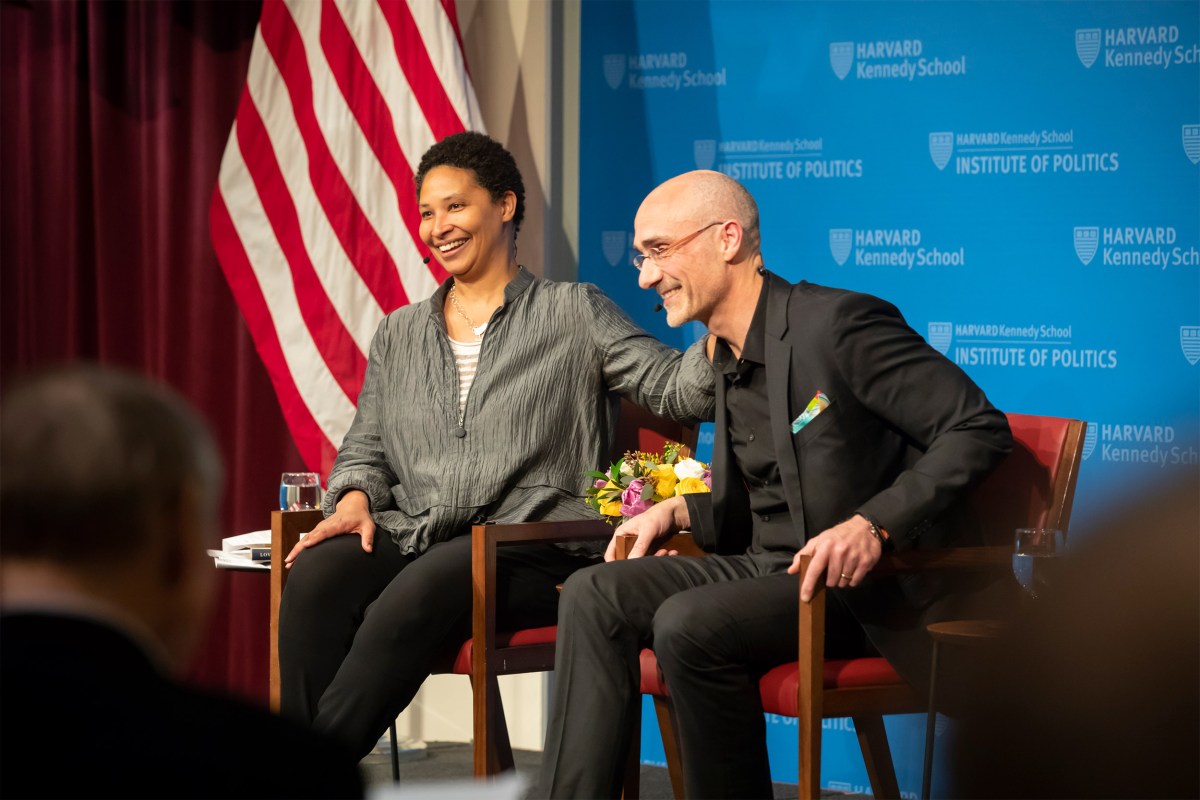
TED Danielle Allen: Here’s how we might save both lives and the economy

Harvard professors take a lively look at love and politics ...

As the coronavirus pandemic sweeps the globe, it’s hard to know where to turn or what to think. TED Connects is a free, live, daily conversation series featuring experts whose ideas can help us reflect and work through this uncertain time with a sense of responsibility, compassion and wisdom.

Danielle Allen serves as Director of the Edmond J. Safra Center for Ethics at Harvard University. The Center seeks to advance teaching and research on ethical issues in public life. Widespread ethical lapses of leaders in government, business, and other professions prompt demands for more and better moral education. More fundamentally, the increasing complexity of public life – the scale and range of problems and the variety of knowledge required to deal with them – make ethical issues more difficult, even for men and women of good moral character. Not only are the ethical issues we face more complex, but the people we face them with are more diverse, increasing the frequency and intensity of our ethical disagreements.

Given these changes in the United States and in societies around the globe, the Center seeks to help meet the growing need for teachers, scholars, and leaders who address questions of moral choice across many of the professions and in public life more generally, and promotes a perspective on ethics informed by both theory and practice. We explore the connection between the problems that professionals confront and the social and political structures in which they act. More generally, we address the ethical issues that all citizens face as they make the choices that profoundly affect the present and future of their societies in our increasingly interdependent world.

https://scholar.harvard.edu/danielleallen/edmond-j-safra-center-ethics


Coronavirus COVID-19 Global Cases by the Center for Systems Science and Engineering (CSSE) at Johns Hopkins University (JHU)

https://www.arcgis.com/apps/opsdashboard/index.html?fbclid=IwAR0_aL9oQ-cR8-7VSEQxs67k0l23vovw05NmdESU9cFFL7PveSEoWPyuwGU#/bda7594740fd40299423467b48e9ecf6

UPDATE: Over 1 million COVID-19 cases worldwide; U.S. now at 234 ...

Inside the epic White House fight over hydroxychloroquine

https://www.axios.com/coronavirus-hydroxychloroquine-white-house-01306286-0bbc-4042-9bfe-890413c6220d.html

Huge fight breaks out among White House coronavirus task force ...

The White House coronavirus task force had its biggest fight yet on Saturday, pitting economic adviser Peter Navarro against infectious disease expert Anthony Fauci. At issue: How enthusiastically should the White House tout the prospects of an antimalarial drug to fight COVID-19?

Behind the scenes: This drama erupted into an epic Situation Room showdown. Trump’s coronavirus task force gathered in the White House Situation Room on Saturday at about 1:30pm, according to four sources familiar with the conversation. Vice President Mike Pence sat at the head of the table.

  • Numerous government officials were at the table, including Fauci, coronavirus response coordinator Deborah Birx, Jared Kushner, acting Homeland Security Secretary Chad Wolf, and Commissioner of Food and Drugs Stephen Hahn.
  • Behind them sat staff, including Peter Navarro, tapped by Trump to compel private companies to meet the government’s coronavirus needs under the Defense Production Act.

Toward the end of the meeting, Hahn began a discussion of the malaria drug hydroxychloroquine, which Trump believes could be a “game-changer” against the coronavirus.

  • Hahn gave an update about the drug and what he was seeing in different trials and real-world results.
  • Then Navarro got up. He brought over a stack of folders and dropped them on the table. People started passing them around.
  • “And the first words out of his mouth are that the studies that he’s seen, I believe they’re mostly overseas, show ‘clear therapeutic efficacy,'” said a source familiar with the conversation. “Those are the exact words out of his mouth.”

Navarro’s comments set off a heated exchange about how the Trump administration and the president ought to talk about the malaria drug, which Fauci and other public health officials stress is unproven to combat COVID-19.

  • Fauci pushed back against Navarro, saying that there was only anecdotal evidence that hydroxychloroquine works against the coronavirus.
  • Researchers have said studies out of France and China are inadequate because they did not include control groups.
  • Fauci and others have said much more data is needed to prove that hydroxychloroquine is effective against the coronavirus.
  • As part of his role, Navarro has been trying to source hydroxychloroquine from around the world. He’s also been trying to ensure that there are enough domestic production capabilities inside the U.S.

Fauci’s mention of anecdotal evidence “just set Peter off,” said one of the sources. Navarro pointed to the pile of folders on the desk, which included printouts of studies on hydroxychloroquine from around the world.

  • Navarro said to Fauci, “That’s science, not anecdote,” said another of the sources.

Navarro started raising his voice, and at one point accused Fauci of objecting to Trump’s travel restrictions, saying, “You were the one who early on objected to the travel restrictions with China,” saying that travel restrictions don’t work. (Navarro was one of the earliest to push the China travel ban.)

  • Fauci looked confused, according to a source in the room. After Trump imposed the travel restrictions, Fauci has publicly praised the president’s restriction on travel from China.
  • Pence was trying to moderate the heated discussion. “It was pretty clear that everyone was just trying to get Peter to sit down and stop being so confrontational,” said one of the sources.
  • Eventually, Kushner turned to Navarro and said, “Peter, take yes for an answer,” because most everyone agreed, by that time, it was important to surge the supply of the drug to hot zones.
  • The principals agreed that the administration’s public stance should be that the decision to use the drug is between doctors and patients.
  • Trump ended up announcing at his press conference that he had 29 million doses of hydroxychloroquine in the Strategic National Stockpile.

Between the lines: “There has never been a confrontation in the task force meetings like the one yesterday,” said a source familiar with the argument. “People speak up and there’s robust debate, but there’s never been a confrontation. Yesterday was the first confrontation.”

  • In response to a request for comment on Axios’ reporting, Katie Miller, a spokesperson for the vice president, said: “We don’t comment on meetings in the Situation Room.”

The bottom line: The way to discuss the drug’s potential has become a fraught issue within the Trump administration.

  • Most members of the task force support a cautious approach to discussing the drug until it’s proven.
  • Navarro, on the other hand, is convinced based on his reading that the drug works against the coronavirus and speaks about it enthusiastically.
  • Some of Trump’s favorite TV hosts, including Fox’s Sean Hannity, and friends including Rudy Giuliani, have also been touting the malaria drug for the coronavirus. Trump has made no secret who he sides with.
  • “What do you have to lose? Take it,” the president said in a White House briefing on Saturday. “I really think they should take it. But it’s their choice. And it’s their doctor’s choice or the doctors in the hospital. But hydroxychloroquine. Try it, if you’d like.”


When will COVID-19 peak? A state-by-state analysis

https://www.beckershospitalreview.com/patient-flow/when-will-covid-19-peak-a-state-by-state-analysis.html?utm_medium=email

The Covid-19 coronavirus is not the flu. It's worse. - Vox

Peak demand for hospital resources due to COVID-19 is expected by mid-April in the U.S., according to an analysis from the University of Washington’s Institute for Health Metrics and Evaluation in Seattle. 

The study presents estimates of predicted health service utilization and deaths due to COVID-19 for each state in the U.S. if social distancing measures are maintained. Researchers used state-level hospital capacity data, data on confirmed COVID-19 deaths from the World Health Organization, and observed COVID-19 utilization from select locations.

While peak demand for resources, namely hospital beds and ventilators, will occur at the national level in two weeks, this varies by state. About a third of states, including New York, are projected to hit peak capacity in the first half of April, but some states will see the most demand for hospital resources in May.

Below is the projected date of peak hospital resource demand in each state according to the model, which uses data last updated April 1.

April 8
New Jersey

April 9
Louisiana
Michigan
New York
Vermont

April 11
Delaware
Washington

April 15
Alaska
Connecticut
District of Columbia

April 16
Massachusetts

April 17
Alabama
Colorado
Maine
New Hampshire

April 18
Pennsylvania

April 19
Indiana
Ohio
Tennessee

April 20
Illinois
Nevada
Rhode Island

April 21
Mississippi
North Dakota

April 22
Minnesota

April 23
Nebraska
Oklahoma
Utah

April 24
Georgia
New Mexico

April 26
Arkansas
California
Idaho
Montana
North Carolina

April 27
Arizona
Wisconsin

April 28
Kansas
South Carolina

April 29
Maryland

May 1
Iowa

May 3
Florida
Hawaii

May 4
South Dakota
West Virginia
Wyoming

May 5
Oregon

May 6
Texas

May 16
Kentucky

May 20
Virginia

May 21
Missouri


Fauci says it would be ‘false statement’ to say we have coronavirus under control

https://thehill.com/homenews/sunday-talk-shows/491228-fauci-says-it-would-be-false-statement-to-say-we-have-coronavirus

Fauci says it would be 'false statement' to say we have ...

National Institute of Allergy and Infectious Diseases Director Anthony Fauci said Sunday that it would be “a false statement” to say the government has the coronavirus pandemic under control.

“We are struggling to get it under control and that’s the issue that’s at hand right now,” Fauci said on CBS’ “Face the Nation” Sunday.

Trump has several times over the course of the pandemic claimed the outbreak was “under control,” including in mid-March as deaths rose in the U.S. He has, however, struck a more somber tone in the last week. He acknowledged Saturday “there will be a lot of death” in the coming week.

“This will be probably the toughest week,” Trump told reporters at a White House press briefing on COVID-19 Saturday afternoon.

Fauci noted that mitigation efforts are showing signs of success in hard-hit states such as New York.

“This next week is going to look bad because we’re still not at that apex,” he said of New York. “Within a week, eight, nine days or so we’re hopefully going to see that turning around.”

Host Margaret Brennan also asked Fauci if the eight states that have yet to impose stay-at-home orders — Arkansas, Iowa, Nebraska, North Dakota, South Dakota, South Carolina, Utah and Wyoming — are putting the nation at risk.

“It isn’t that they’re putting the rest of the country at risk as much as they’re putting themselves at risk,” Fauci responded. “Every time I get to that podium in the White House briefing room, I plead with people to take a look at those very simple guidelines of physical separation.”

The guidelines include maintaining six feet of distance between people and avoiding gatherings of 10 or more people.

Regardless of whether you live in a larger city or small town, “sooner or later, you’re going to see a surge of cases,”  Fauci added.

The data in the week ahead, Fauci said, will be “shocking to some,” and he added that Americans should “continue to mitigate, continue to do the physical separation, because we’ve got to get through this week that’s coming up.”


Religious groups battle orders to close services

https://thehill.com/homenews/state-watch/491019-several-religious-groups-challenge-stay-at-home-orders-calling?rnd=1586023992

Coronavirus | Hong Kong church streams mass online to prevent ...

Several places of worship across the country are holding religious services for their congregations, and some are directly challenging state and local stay-at-home orders amid the coronavirus pandemic.

Most of the country is under a stay-at-home order, but a few of the 38 states that have issued such statewide restrictions have designated religious services as “essential,” which allows people to gather in larger groups to worship.

While many religious denominations have transferred their services online, some leaders say their in-person gatherings should be considered “essential.” Two pastors who held services this week have been arrested.

Pastor Rodney Howard-Browne was charged with misdemeanor counts of unlawful assembly and violation of public health rules in Florida’s Hillsborough County after running services for hundreds of worshipers at the River at Tampa Bay Church.

The Liberty Counsel, which has represented evangelical Christians on the issue of religious liberty, is representing the pastor. Mat Staver, the group’s founder and chairman, said Hillsborough County’s stay-at-home order was unconstitutional.

The county’s order says businesses not listed as exempt can remain open if they can keep a physical distance of six feet between people, he said. The River enforced social distancing rules for its service and purchased a $100,000 purification system.

“So there are ways in which you can balance the constitutional right to exist with protecting the health and welfare and safety of the people. And this church did that and yet it got punished,” Staver said.

Staver also pointed out that some congregants do not have internet access, saying they need religious services and a community to deal with the stress of the pandemic.

Hillsborough County Sheriff Chad Chronister said during a Monday press conference that Howard-Brown was acting out of a “reckless disregard for human life.”

But two days after Howard-Browne’s arrest, Florida Gov. Ron DeSantis (R) issued a statewide stay-at-home order that specifically exempted religious services. 

Eleven states, out of the 38 that have issued statewide stay-at-home orders, have granted exemptions for religious gatherings: Arizona, Colorado, Delaware, Florida, Kentucky, Michigan, New Mexico, North Carolina, Pennsylvania, West Virginia and Wisconsin. 

Almost a fifth of respondents to a poll last week said they were still attending religious gatherings in person, BuzzFeed News reported.

Another pastor, Tony Spell, was arrested after operating services in Central, La., for the Life Tabernacle Church. He was charged with six counts of violating the governor’s executive order. Louisiana has not exempted religious gatherings.

Pastor Juan Bustamante of City On A Hill Church in Houston filed a petition in the Texas Supreme Court, along with two pastors and a conservative activist, asking for Harris County Judge Lina Hidalgo’s stay-at-home order to be adjusted to classify religious services as essential.

Bustamante said places of worship should be designated as essential at a time when people are losing jobs and some are on the verge of suicide. The pastor said he has taken precautions for his congregation of 100 to 120 people, such as splitting services into three services, with some outside, to limit the virus’s spread.

“When people say that the church isn’t essential, I mean, I don’t really believe they know the extremity or the effect that it has on our communities,” he said. “I believe that our community suffers most when our churches are closed.”

Days after the lawsuit was filed, Texas Gov. Greg Abbott (R) declared religious services essential in his order recommending people stay at home. 

Rachel Laser, the president and CEO of Americans United for Separation of Church and State, called the religious exemptions “unconstitutional” and ”immoral” because religious institutions in these states are being treated differently than secular groups. 

“They’ve got it backwards because the Constitution requires that religious and secular institutions be treated the same,” she said.

Religious freedom experts agreed that the state laws regulating religious meetings during a pandemic do not violate the First Amendment because the government has a “compelling interest” to protect the public health of the country.

Benjamin Marcus, a religious literacy specialist at the Religious Freedom Center at the Freedom Forum Institute, said executive orders would violate the First Amendment if they forbade groups from gathering online or if law enforcement “disproportionately targeted” certain groups.

“If they allowed nonreligious communities to gather in large groups but not religious communities or vice versa, then that would be a different kind of scenario where they would be favoring religion over nonreligion or vice versa,” he said.

Luke Goodrich, the vice president and senior counsel at the Becket Fund for Religious Liberty, said every constitutional right has its limits and that most courts would support the government in these cases as the orders appear not to target specific groups.

He cautioned that people should avoid “crying wolf” on religious freedom violations because it could inhibit freedom in the long run.

“It’s really important to be able to distinguish between a real threat to religious freedom and a mere shadow of a threat,” he said. 

Leana Wen, an emergency physician and public health professor at George Washington University, said the public health guidelines require more than solely staying six feet apart, with mandates of no gatherings of more than 10 people.

“Viruses do not — they do not distinguish between what kind of gatherings they are, so there should be no exceptions because there are no exceptions,” she said. “Nature does not offer exceptions either.”

More than 40 attendees of a March 15 service at one Pentecostal church in Illinois have developed coronavirus symptoms, with at least 10 testing positive for COVID-19 and at least one person dying, the Chicago Tribune and The Christian Post reported.

Vice President Pence, a devout Christian, has encouraged Americans to avoid church services with more than 10 people.

“We really believe this is a time when people should avoid gatherings of more than 10 people,” he said on ABC News’s “Nightline” on Wednesday. “We continue to urge churches around America to heed to that.”