


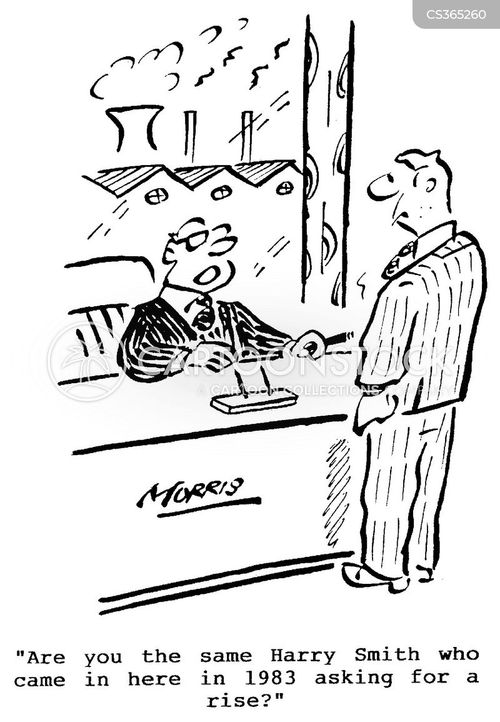
Cartoon – Patriotic Duty?

A union representing more than 150,000 registered nurses in hundreds of U.S. hospitals is disputing with Nashville, Tenn.-based HCA Healthcare regarding pay and benefits.
National Nurses United said HCA is demanding that the union choose between an undetermined number of layoffs and no 401(k) match for this year or no layoffs and no nurse pay increases for the rest of the year, according to ABC affiliate Kiii TV.
HCA Healthcare, which to date has avoided layoffs due to the pandemic, told Becker’s Hospital Review it is asking the union to give up their demand for wage increases this year, just as nonunion employees have. HCA executive leadership, corporate and division colleagues and hospital executives have also taken pay cuts.
The union said it takes issue with having to make this choice given HCA’s profits in the last decade, the additional funding the for-profit hospital operator received from the federal government’s Coronavirus Aid, Relief and Economic Security Act, and additional Medicare loans.
“It is outrageous for HCA to use the cover of the pandemic to swell its massive profits at the expense of its dedicated caregivers and the patients who will also be harmed by cuts in nursing staff,” Malinda Markowitz, RN, California Nurses Association/National Nurses United president, said in a news release.
HCA pointed to the pandemic pay program it implemented and recently extended through at least the end of June that allows employees who are called off or affected by a facility closure and cannot be redeployed to receive 70 percent of their base pay.
“It is surprising and frankly disappointing that unions would demand pay raises for their members and may reject the continuation of a generous pay program that is providing continued paychecks for more the 100,000 colleagues,” HCA said in a statement. “The goal of HCA Healthcare’s pandemic pay program is to keep our caregivers employed and receiving paychecks at a time when hospitals throughout the country are experiencing significant declines in patient volume and there is not enough work for them.”
HCA said more than 16,000 union members have participated in the pandemic pay program, even though it is not part of their contract.
The union that represents 1,300 resident physicians at Ann Arbor-based Michigan Medicine said the health system is exploiting its members as both sides negotiate a new contract, according to Michigan Radio.
The University of Michigan House Officers Association and Michigan Medicine are trying to reach an agreement before the current contract expires in late June. But compensation remains a key sticking point.
Ruth Bickett-Hickok, MD, a second-year anesthesiology resident, told reporters May 18 she’s been treating COVID-19 patients and seeks a cost-of-living raise, according to Michigan Radio.
“Frankly I’m here because, for lack of a better term, Michigan [Medicine] residents right now are being exploited for their labor. Especially during this crisis,” said Dr. Bickett-Hickok, who is on the union board. She also cited her debt load for undergraduate and medical school in her reasoning for seeking a cost-of-living raise.
Overall, the union says it wants fair wages that recognize the risks physician residents have been willing to take on during the pandemic.
In a statement provided to Becker’s Hospital Review, Michigan Medicine spokesperson Mary Masson said the health system “recognizes the important role of the [union] members” and amid the pandemic “has honored the compensation package previously proposed to the HOA, which includes salary increases.”
Ms. Masson said Michigan Medicine is undergoing a $400 million expense reduction plan with furloughs and layoffs affecting about 1,400 full-time employees. Physician residents’ salaries range from $58,500 to $82,900 annually based on experience. Ms. Masson said to provide even higher salary increases, Michigan Medicine would have to eliminate additional jobs.
The union proposes that the health system use part of the university’s endowment funds to help cover the new labor deal.
https://suneeldhand.com/2017/11/28/when-a-chart-speaks-a-thousand-words/

I happened to stumble across the above chart online the other day. It’s not new data, and was actually quoted in this major publication. I can write articles and parse the challenges we face till the cows come home, but nothing can really sum up what’s wrong with American healthcare more than this chart. It says everything and is quite obnoxious. What’s worse, it’s from 2009—and the curve has probably considerably diverged since then.
So that’s it, my blog post for the week. Just stare at this chart and take it all in. Feel free to comment below. I was going to write a long article on what these curves mean for healthcare. Then I thought to myself: absolutely nothing I write can possibly say more than the chart itself. It speaks not just a thousand words, but a million…..
https://mailchi.mp/f3434dd2ba5d/the-weekly-gist-december-20-2019?e=d1e747d2d8

For many employers, narrowing provider networks has been a bridge too far, despite unrelenting healthcare cost growth.
A recent Los Angeles Times profile of a Boston union that was able not only to lower costs but also nearly eliminate employee cost-sharing may make doubters reconsider. Unite Here Local 26, which represents 9,000 hotel workers and their families, implemented a narrow network health plan in 2013, when two-thirds of its members agreed to forego care at certain marquee academic hospitals, which charged two to three times more than others in the Boston area.
Today the union actually pays less in medical costs per member than it did six years ago, and premiums are ten percent lower than the national average, despite Boston being one of the highest-cost healthcare markets in the country. Employees pay no deductibles, and generic medications cost them only $1. Savings have translated into raises for many employees, with some low-income workers seeing a pay jump of up to 39 percent across six years.
As we’ve discussed in the past, employers are reaching a limit on how high they can push deductibles, especially in a tight labor market. Some are beginning to experiment with various network options that lower health care costs—but many have been reticent to change benefit design in any way that could be perceived as narrowing choice.
Local 26’s experience shows that well-designed narrow networks, implemented with employee education and buy-in, can provide cost relief for both businesses and individuals that can be sustained over time.
Stephen Forney, MBA, CPA, FACHE, excels in fixing “broken” organizations and he has built a track record of achieving financial turnarounds at seven healthcare facilities, he tells HealthLeaders in a recent interview.
Forney has over three decades of experience as a healthcare executive, with a primary focus on problem-solving. He began his career fixing problems in areas such as information technology and supply chain, an approach and skill he has carried over into financial operations in the C-suite.
“In finance, it wound up being the same thing. Pretty much every organization I’ve gone to has been broken in some way, shape, or form,” Forney says. “I’ve developed a specialty doing turnarounds and this will be my eighth.”
Forney speaks about his new CFO role at the Tewksbury, Massachusetts–based Catholic nonprofit health system Covenant Health, which he joined in mid-September, and how driving revenue and reducing expenses must go hand-in-hand to achieve financial balance.
This transcript has been lightly edited for brevity and clarity.
HealthLeaders: Covenant is coming off its fifth straight year of operating losses. What is contributing to those losses and how do you plan to address those financial challenges?
Forney: The thing is, most turnarounds—to a greater or lesser extent—look a lot alike. With organizations that have [financial] issues, there are obviously always unique aspects to every situation, but virtually every healthcare organization that’s not doing well is because of the same relatively small handful of issues.
[For example,] revenue cycle is probably No. 1. Productivity has not been well attended to; expenses haven’t had a lot of discipline around them in a broad sense. That’s not to say that all decisions are bad, but in a systematic fashion, things haven’t been looked at. Frequently, driving volume and growing the business needs a better focus.
In the case of Covenant … there has been a plan developed to address all those areas and we are addressing them already, even though we will be posting another operating loss in fiscal [year] 2019. But the trajectory is good and some of the things that we’re now looking at are what I would consider to be phase two–type initiatives. How do we accelerate and move them to the next level?
On October 1, we outsourced our revenue cycle. I’m pleased that we were able to get that accomplished. Obviously, it’s early but, at least anecdotally, initial trends look good.
HL: Where do you fall on the dynamic between focusing on expense control measures or revenue generation?
Forney: I always feel like you need to do both. Expense management and working towards expense strategies is easier, quicker, and more straightforward.
[Revenue growth strategies] take time, take effort, and tend to [have] a much higher degree of uncertainty around the volume projection. Those are necessary and they’re things that we need to invest in because, at some point, you can’t cut any more from your organization, you’ve got to grow the top line. To me, it’s sort of like step one is stabilize your revenue cycle and stabilize your expenses. Then while you’re doing that, work on growth that’s going to take place 12 to 18 months down the road.
HL: Are you optimistic about the federal government’s efforts to move the industry toward value-based care?
Forney: Going back about a decade, I thought the ACE program, which was [the federal government’s] bundled payment program, was a solid step in the right direction. It gave organizations a chance to collaborate in compliant fashion with physicians to bend the cost curve and have beneficiaries participate in the bending of the cost curve as well. I was with one of the pilot health systems that [participated], and it was a remarkable success.
Everybody got to win; CMS, patients, physicians, and systems won by creating value. Yes, I think that the government has a good role to play in [value-based care] because they have such a large group of patients that they’re willing to experiment like that. [The federal government] can come up with potentially novel ways to get people to buy into this.
HL: What is it like to be at the helm of a Catholic nonprofit system and how does it affect your leadership style?
Forney: From a philosophical standpoint, the principle of creating shareholder wealth and good stewardship are not significantly different. You’ve got an end goal in mind, which is, you’re taking care of the patients and a community. In one case, whatever excess is left goes to a private equity fund or shareholders. In the other case, [the excess] stays in your balance sheet and gets reinvested in the community.
HL: Given your three decades of healthcare experience, do you have advice for your fellow provider CFOs, especially some of the younger ones?
Forney: Focus on being that strategic right-hand person to the CEO. In my experience, that has been one of the things that marks a successful CFO from one that isn’t as successful.
CEOs are going to get ideas from everywhere. They’re outward and inward facing. They deal with the doctors and the community, and they’re going to get all sorts of great ideas.
The CFO needs to be that person [who is] grounded and says, ‘Well, what about this?’ That doesn’t mean saying no. The whole idea is how do you make it [sound] like a yes. To me, the CFO role just grounds all the discussions, from working with physicians to working with the community.
CFOs over the last couple of decades have been operationally oriented. Now they need to start becoming clinically oriented.
There’s a real benefit in being able to sit down and talk with a physician and understand [what] they’re doing. … It winds up becoming a way to help ground the clinicians in the hospital operations because now you’re having a dialogue with them instead of them just saying, ‘You don’t understand. You’re not a clinician.’ That would be something that I would have a young CFO try to stay focused on, even though it’s dramatically outside the comfort zone for people that typically go into accounting.
https://www.sacbee.com/news/local/health-and-medicine/article238378533.html

Kaiser Permanente’s behavioral health clinicians will be picketing Monday outside the health care giant’s Sacramento Medical Center on Morse Avenue, joining in a weeklong labor strike that will affect services at more than 100 facilities around California.
Roughly 4,000 psychologists, psychiatric nurses and other behavioral health workers — members of the National Union of Healthcare Workers — say they want the company to shorten wait times for return appointments and reduce therapist caseloads.
“I know of nowhere else but in the Kaiser system that there is literally no definition of a caseload or maximum number of patients for which one is responsible,” said Susan Whitney, a Kaiser therapist in Kern County. “There are about 35 therapists and social workers that serve Kaiser’s Kern County population of 109,000 members, only one mental health worker for every 3,000 members. In contrast, Kaiser primary care physicians have a panel, or caseload, of 1,500 patients, and also have staff such as nurses and medical assistants that support them.”
Kaiser executive Michelle J. Gaskill-Hames said that proposals made to the union would keep Kaiser therapists among the highest paid in California, with excellent benefits, as well as offering them more time in their schedules for patient appointments and to take care of administrative tasks. Rather than strike, she said, the company has asked the union’s leadership continue to work with a mediator and Kaiser Permanente.
“Like every other health care provider, we are seeing a significant demand for mental health care in the face of a national shortage of qualified professionals,” said Gaskill-Hames, Kaiser’s senior vice president for Northern California hospital and health plan operations. “Despite this shortage, we have hired nearly 500 new therapists in California this year alone.”
The clinicians had initially planned the strike for mid-November but postponed it out of respect for the family of the late Kaiser CEO Bernard Tyson, who died unexpectedly last month.
The strike is to compel Kaiser to make mental health care as much of a priority as physical health care, Whitney said. Treating mental health issues also improves physical health, she said, as numerous studies have shown.
Since Kaiser was fined several years ago for lengthy waits for first appointments, the company has worked under state supervision to improve its performance in this area, Whitney said, but as it has improved in that metric, return appointments have become more difficult to schedule.
Vicki Hoskins, a therapist in Orange County, said that if a patient completed an intake appointment today and wanted to return to see her, that patient would have to wait until March. There is a backlog of vacant positions in some offices, she said, so new hires are often filling those rather than adding to the workforce.
Kaiser has been jointly working with an external mediator to help reach a collective bargaining agreement with the union, Gaskill-Hames said.
She said the mediator recently delivered a proposed compromise to both sides, but the union has rejected it and announced plans to strike instead of working through the mediated process.
This is union’s sixth noticed strike within a single year, and the repeated call for short strikes is disruptive to patient access, operational care and service, said Gaskill-Hames, who described the union’s action as irresponsible.
A strike puts patients in the middle of bargaining, which is not fair to them, especially during the holidays when rates of depression can spike, she said.
Kaiser Permanente will try to minimize patient disruption, Gaskill-Hames said, but the company may be forced to reschedule appointments and devote resources from elsewhere in the organization to address the continuity of care.
In the Sacramento area, pickets will be out from 6 a.m. to 2 p.m. at Kaiser’s Sacramento Medical Center, 2025 Morse Ave., on Monday; at the Roseville Medical Center, 1600 Eureka Road, on Wednesday; and at the South Sacramento Medical Center, 6600 Bruceville Road, on Friday. On Thursday, they will rally at the State Capitol at 10th and L streets at 10:30 a.m. and at the Department of Managed Health Care, 990 Ninth St., at 11:30 a.m. Elsewhere in the Central Valley, pickets will be at Fresno Medical Center, 7300 N. Fresno St., Monday through Friday.

A five-day strike that was postponed last month after the sudden death of Kaiser Permanente Chairman and CEO Bernard J. Tyson is back on the calendar.
Thousands of psychologists, therapists, psychiatric nurses, and other healthcare professionals plan to strike December 16–20 at more than 100 Kaiser Permanente facilities across California, the National Union of Healthcare Workers (NUHW) said Wednesday.
“Mental health has been underserved and overlooked by the Kaiser system for too long,” said Ken Rogers, PsyD, MEd, a Kaiser Permanente clinical psychologist who serves as a vice president on the NUHW executive board, in a statement released by the union.
“We’re ready to work with Kaiser to create a new model for mental health care that doesn’t force patients to wait two months for appointments and leave clinicians with unsustainable caseloads,” Rogers said. “But Kaiser needs to show that it’s committed to fixing its system and treating patients and caregivers fairly.”
The union accuses Kaiser Permanente of refusing to negotiate unless mental health clinicians agree to “significantly poorer retirement and health benefits” than those received by its more than 120,000 other California employees.
Dennis Dabney, senior vice president of national labor relations and the Office of Labor Management Partnership at the Kaiser Foundation Health Plan and Hospitals, said the parties have been working together with an external mediator in pursuit of a collective bargaining agreement. The union rejected a compromise solution proposed last week by the mediator, Dabney said.
“The only issues actively in negotiation in Northern California are related to wage increases and the amount of administrative time that therapists have beyond patient time,” Dabney said. “We believe these issues are resolvable and there is no reason to strike.”
The mediator’s recommendation includes about 3% in annual wage increases for therapists in Northern California for four years, plus a $2,600 retroactive bonus, Dabney said
“In Southern California, the primary contract concern relates to wage increases and retirement benefits,” Dabney said.
The mediator’s recommendation includes about 3% in annual wage increases for therapists in Southern California for four years, plus a $2,600 retroactive bonus, even though the organization’s therapists in Southern California “are paid nearly 35% above market,” Dabney said.
“Rather than calling for a strike, NUHW’s leadership should continue to engage with the mediator and Kaiser Permanente to resolve these issues,” Dabney said.

University of Chicago Medical Center has closed its level 1 trauma center for adult and pediatric patients as it prepares for about 2,200 nurses to go on strike next week, medical center leaders announced.
Medical center leaders said UCMC closed its pediatric level 1 trauma program Nov. 18 and its adult trauma program Nov. 20. Its adult and pediatric emergency rooms continue to take walk-in patients.
Nurses are scheduled to strike Nov. 26, two days before Thanksgiving. The nurses also walked off the job Sept. 20 in a strike organized by National Nurses Organizing Committee/National Nurses United. They were allowed to return to work Sept. 25, after the medical center said it fulfilled its contract with temporary nurses to replace the striking ones for five days.
In preparation for the strike, UCMC announced earlier this week that it is moving about 50 babies and 20 children in its neonatal and pediatric intensive care units to other facilities.
UCMC President Sharon O’Keefe is also recruiting about 900 replacement nurses.
However, “it’s exceptionally difficult to hire people who are willing to leave their families during Thanksgiving,” she said in a news release. “At the same time, other hospitals in the city are already at or near capacity, which means they will not be able accept transfers of current inpatients if that need arises when nurses walk out. The combination of the two led us to take the step of temporarily closing our trauma program ahead of the strike.”
UCMC said the hospital was required to offer replacement nurses five days of work “to best recruit qualified and experienced replacement nurses.” Therefore, the nurses on strike will not be able to return to work until 7 a.m. Dec. 1.
Negotiations between UCMC and National Nurses Organizing Committee/National Nurses United began earlier this year. Medical center leaders say incentive pay — and whether the hospital should end the pay for newly hired nurses — is a sticking point in negotiations, according to the Chicago Tribune. The union has continued to express concerns about staffing levels.
The nurses said they plan to strike unless an agreement is reached.

 HENRY KOTULA