UnitedHealth CEO Sold $5.6 Million in Shares the Same Day as Ransomware Attack

Other senior executives also cashed out as the company faced a $1.6 billion threat that wreaked havoc throughout the health care system.

On February 21, the same day that a ransomware attack began to wreak havoc throughout UnitedHealth Group and the U.S. health care system, five of UnitedHealth’s C-suite executives, including CEO Andrew Witty and the company’s chief legal officer, sold $17.7 million worth of their stock in the company. Witty alone accounted for $5.6 million of those sales.

The company’s stock has not recovered since the ransomware attack and has underperformed the S&P 500 index of major stocks by 8% during that time. In the two weeks following the ransomware attack, the company’s stock slid by 10.4%, wiping out more than $46 billion in market cap and greatly reducing the value of shares held by non-insiders. The slide continued for several weeks. On the day Witty and the other executives sold their shares, the stock price closed at $521.97. By April 12, it had fallen to $439.20.

The ransomware attack is estimated to have cost the insurance giant as much as $1.6 billion in total. Witty would later confirm, during his appearance before the Senate Finance Committee on May 1, that the company paid $22 million in ransom to the hackers

“He (Witty) sold the shares on the same day that he learned of the ransomware attack,” said Richard Painter, a professor at the University of Minnesota School of Law who is also the vice chair of Citizens for Responsibility and Ethics in Washington. “That’s not good. For the SEC to prove a civil case of insider trading they just have to prove that it’s more probable than not that executives acted on inside information. CEOs have got to be a heck of a lot more careful.

You’re the CEO of a company, you should not be buying or selling the stock right in the middle of a material event like a ransomware attack. You’re asking for trouble. You’re going to end up with an SEC investigation. If that goes badly you could end up with a DOJ investigation.” 

How much UnitedHealth’s C-suite executives sold in company stock on February 21, 2024:

Brian Thompson, the CEO of UHG’s insurance arm, sold $1.5 million on the same day. John Rex, then the CFO and now the CFO and president, sold $4.4 million, as did Dirk McMahon, now the former president. Chief Legal Officer Rupert Bondy, who would likely have to have signed off on the sales, sold $750,000. 

HEALTH CARE un-covered is the first media outlet to report these disclosures. 

The ransomware attack was caused at least in part by negligence on UnitedHealth’s part, Witty admitted at the Finance Committee hearing. He acknowledged that the company had failed to use multi-factor authentication — requiring more than just a password to access information — to secure its data. The cyberattack exposed the personal health information of as much as a third of Americans’ health information. 

“This incident and the harm that it caused was, like so many other security breaches, completely preventable and the direct result of corporate negligence,”

Sen. Ron Wyden (D-Ore.) wrote to federal regulators on May 30. “UHG has publicly confirmed that the hackers gained their initial foothold by logging into a remote access server that was not protected with multi-factor authentication (MFA). MFA is an industry-standard cyber defense that protects against hackers who have guessed or stolen a valid username and password for a system.”

UnitedHealth exploited the crisis created by its own negligence to further entrench its position as the largest employer of doctors in the country, acquiring medical practices that were unable to pay their bills due at least in part to the chaos created by the ransomware attack. The American Medical Association is considering legal action against the company for the attack, with a proposal for its House of Delegates conference beginning June 8 stating that “Optum is the largest employer of physicians and has acquired practices when the ransomware disruption made those practices unable to survive without acquisition… Even the practices that survive will have ongoing damages including but not limited to denials related to giving therapy when it was impossible to obtain prior authorization, from using lines of credit and having to pay interest, from having billing departments and others work overtime to submit claims, to losing key employees from inability to make payroll.”

Other well-timed insider stock transactions

In April, Bloomberg reported that in the lead up to the disclosure of an FTC investigation into UnitedHealth’s monopolistic practices, other UnitedHealth insiders, including Chairman Stephen Hemsley, had sold $102 million worth of their shares.

News of that investigation and the stock sales led Sen. Elizabeth Warren (D-Mass.) and other lawmakers to call for an SEC investigation into the trading.

The disclosures revealed here, however, are potentially more incriminating: the executives sold the stock the same day the company became aware of the devastating ransomware attack. When Witty was supposed to be all hands on deck strategizing how to protect health care providers and millions of patients, he spent at least part of his day taking action to preserve his net worth.

EDITOR’S NOTE: 

This is not the first time UnitedHealth executives have engaged in questionable or illegal stock transactions. In 2007, former CEO William McGuire agreed to a record $468 million settlement with the SEC after it was learned that for more than a decade he had engaged in a scheme to inflate the value of his holdings in the company and, consequently, his net worth.

An SEC investigation that year found that over a 12-year period, “McGuire repeatedly caused the company to grant undisclosed, in-the-money stock options to himself and other UnitedHealth officers and employees without recording in the company’s books and disclosing to shareholders material amounts of compensation expenses as required by applicable accounting rules.” In other words, he was back-dating his stock options.

As the SEC explained: 

[F]rom at least 1994 through 2005, McGuire looked back over a window of time and picked grant dates for UnitedHealth options that coincided with dates of historically low quarterly closing prices for the company’s common stock, resulting in grants of in-the-money options.

According to the complaint, McGuire signed and approved backdated documents falsely indicating that the options had actually been granted on these earlier dates when UnitedHealth’s stock price was at or near these low points.

These inaccurate documents caused the company to understate compensation expenses for stock options, and were routinely provided to the company’s external auditors in connection with their audits and reviews of UnitedHealth’s financial statements.
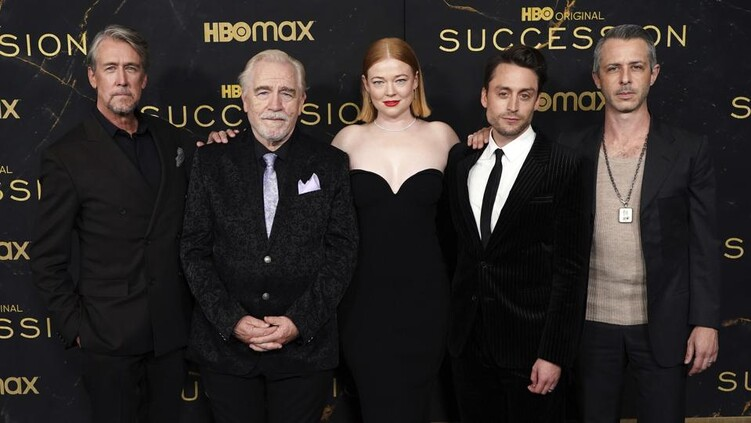
5 fatal flaws of healthcare leaders: inspired by HBO’s ‘Succession’

HBO’s critically acclaimed series Succession recently concluded its fourth and final season with a crescendo of family dramatics and falls from grace. If you haven’t seen the finale, bookmark this article for later. It contains spoilers.

Succession, for those unfamiliar, centers on the uber-wealthy Roy family, majority owners of the global media and entertainment subsidiary Waystar Royco. The plot revolves around the bullishly Machiavellian patriarch Logan Roy and his four adult children, each of them seeking (a) control of the family business and (b) their dad’s approval.

During its run, the show’s endless infighting and fascinating archetypes captivated viewers. But the 39-episode series also provided enduring lessons in dysfunctional leadership, which apply directly and saliently to U.S. healthcare.

As with Waystar Royko, the institutions of medicine (hospitals, medical groups, insurers, pharma and med-tech companies) need excellent leadership just to survive. With millions of dollars and hundreds or thousands of jobs resting on the decisions of top administrators, any major flaw can prove fatal—erasing decades of organizational success.

In any industry, poor leadership can undermine performance and threaten livelihoods. In healthcare, poor leadership puts lives at risk. Here are five dangerous types of leadership personalities, each inspired by a character from Succession

1. Connor Roy: the delusional leader

In the show’s second season, Connor, the eldest and oft-forgotten son of Logan Roy, launches his U.S. presidential campaign on a “no-tax” platform. When the eve of election arrives, he’s polling at less than 1%, yet he refuses to step aside, still convinced he is capable of doing the job.

Like Connor, healthcare’s delusional leaders overestimate their abilities. Their ideas are unrealistic and their vision for the future: pure fiction. But no matter how outlandish their outlook, delusional leaders will always find apostles among the disenfranchised who, themselves, feel undervalued and overlooked.

When confronted with the harshness of reality, deluded leaders and their followers double down, insisting that everyone else is myopic. “Just follow and you’ll see,” they demand.

Unless senior executives or board members step in to relieve this leader of power, the organization will be as doomed as Connor Roy’s bid for presidency.

2. Kendall Roy: the narcissistic leader

On the surface, Kendall is by far the most capable and experienced candidate to succeed his father. He’s a smart and articulate heir apparent who appears up to the task of CEO.

But underneath the gold plating, his every action is reflexively self-centered. As such, when the time comes to sacrifice something of himself for the good of the company, he freezes and falters, his decisions corrupted by the compulsion to put himself first.

Like Kendall, healthcare’s narcissistic leaders bask in praise and blind loyalty. They reject and punish those who provide honest feedback and fair criticism. Their obsession with status and self-importance blinds them to long-term threats and opportunities, alike.  

Unlike delusional leaders, who fail because their vision cuts against the grain of reality, the narcissistic leader’s passion for winning may advance an organization—in the short run. Long-term, however, their flaws will be exposed and weaknesses manipulated by seasoned competitors.

Across four seasons, Kendall can’t fathom that anyone else might be a better choice to run the company. As a result, he underestimates a rival CEO who’s seeking to acquire Waystar, and he overestimates the loyalty of his siblings. In the end, he’s left hopeless and broken.

3. Roman Roy: the immature leader

Roman, the youngest Roy, is brash and witty, but also unpredictable and unrestrained. His penchant for foul language and cutting insults make for good television, but they’re the telltale signs of insecurity and immaturity.

Like all immature leaders, Roman is addicted to novelty and excitement, often acting without regard for the consequences. He’s fast-talking and loud, which makes him likable enough for many to overlook his incompetence. But he’s incapable of filling his father’s shoes.

Immature leaders get promoted before they’re primed and polished. They often lack boundaries and excel at the sport of making others uncomfortable. At times, they seem more interested in causing a scene than creating results. They chase big ideas—if only for the adrenaline rush—but can’t accurately calculate whether the risk of failure is 20% or 80%. This makes them very dangerous as leaders.

4. Shiv Roy: the political leader

In a world of deluded and despotic men, Shiv comes across as the voice of reason. Smart and strategic, relaxed and composed, Shiv carefully cultivates new allies but never establishes an identity of her own. This makes her an excellent political consultant (the job she has) but a poor candidate for CEO (the job she wants). 

Political leaders are better at advancing within an organization than advancing the organization itself. Like chameleons, these leaders change with the scenery, shifting alliances and values as organizational power waxes and wanes. While they’re busy focusing on rumors and relationships, they fail to muster real-life business acumen and experience.

Colleagues rarely respect those who play organizational politics. Once political leaders have accrued enough power and advanced their careers to the max, their shallow alliance and inability to drive performance leaves them stranded at the top—with nowhere to go but down.

5. Tom Wambsgans: the compromised leader

Not technically a Roy, Tom is Shiv’s husband and an eager aspirant for CEO.

Once appointed head of Waystar’s struggling cruises division, Tom conceals damaging information to protect his father-in-law. He is a willing henchman, ready to sacrifice his ethics for a shot at the corner office. To advance his interest, Tom repeatedly compromises his integrity, first with Logan, then Kendall, and eventually Lukas Matsson, the incoming global CEO who completes the hostile takeover of Waystar.

In what proves to be Tom’s final interview for U.S. CEO, Matsson asks him whether he will be willing to play the role of “pain sponge,” absorbing any negative fallout the company may experience. After he responds positively, Matsson tests him further by mentioning that he’d like to have sex with Shiv. While viewers squirm in their seats, Tom doesn’t object. For him, every compromise is simply a means to an end.

Compromised leaders are skilled at making promises. They seek support by vowing to fulfill wants and palliate pains. Depending on who these leaders aim to please, they’re willing to slash budgets or raise salaries, regardless of the financial impact. Ultimately, they’ll do anything to keep people happy, even if they have to sink the business in the process.

The three attributes of excellent healthcare leaders

In the final season of Succession, Logan tells his offspring, “I love you, but you are not serious people.” He is both accurate and accountable. Logan was not a serious father and, as a result, his kids were poorly equipped for life and leadership.

The healthcare industry is replete with stories of once-successful institutions falling on hard times under poor leadership. Although there’s no one way to run an organization, all great healthcare leaders share three characteristics:

1. A clear mission and purpose

Leaders have three jobs. They must create a vision, align people around it and motivate them to succeed. To accomplish these tasks, executives may use carrots and sticks, incentives and disincentives, or positive and negative reinforcement. But these tactics will fail unless they reflect a clear mission and purpose.

Years ago, former CMS administrator Don Berwick started a program with an audacious goal of maximizing patient safety and preventing unnecessary deaths. He called it the 100,000 Lives Campaign. And when he spoke of the program, he leaned hard on its righteous mission. Instead of presenting metrics and statistics, he talked about the weddings and graduation ceremonies that parents and grandparents would attend, thanks to the program and the people behind it. Even hard-weathered clinicians in the audience had tears in their eyes.

Financial incentives drive change in healthcare, but rarely achieve the outcomes intended. Everyone engaged in the 100,000 Lives Campaign knew exactly what they needed to accomplish and were motivated to do so.

2. Experience and expertise

Bold ideas and glittering promises always capture attention. Words are powerful and relationships can take aspiring leaders far. But when it comes time to turn big plans into action, there is no substitute for a leader who has been there and done it well.

Exceptional performance, not promises, separate great leaders from the rest—and success from failure. In every industry, past performance is the best predictor of future success. Of course, poor leaders can get lucky and even great ones in bad circumstances may fail. But the odds always favor those who have achieved recurring success throughout their careers.

3. Personal integrity

Emerging leaders can work on their weaknesses. Coaching, training and even therapy can help them quell maladaptive behaviors.

But everything changes when an emerging leader becomes the head of an organization and faces a crisis. As risks and pressures intensify, people tend to fall back on approaches and habits they learned in the past, particularly problematic ones. Whenever tested, the Roy children did exactly that.

After Logan’s death early in the final season, the fatal flaws of each Roy child came into clear view. As a result, the Waystar board made the safest choice for successor: none of the above.

Like a true Shakespearean tragedy, the flaws of the characters in Succession exceeded their abilities.

In healthcare, that’s a guaranteed prescription for failure.

What Hospital Systems Can Take Away From Ford’s Strategic Overhaul

On today’s episode of Gist Healthcare Daily, Kaufman Hall co-founder and Chair Ken Kaufman joins the podcast to discuss his recent blog that examines Ford Motor Company’s decision to stop producing internal-combustion sedans, and talk about whether there are parallels for health system leaders to ponder about whether their traditional strategies are beginning to age out.

Companies mull benefits of interim CFOs

Interim CFOs can cut through politics to help navigate companies through murky waters, experts say.

As they face financial difficulties, leadership crises or other inter-company developments, many firms have ceded their financial reins to interim executives over recent months.

Retailer Bed, Bath & Beyond quickly named their chief accounting officer as interim CFO following the death of their previous financial head earlier in September, for example, while real estate investment trust (REIT) Tanger’s chief accounting officer also recently served a stint as their interim financial head after the REIT ousted their previous CFO, a 28-year company veteran.

One of the reasons to tap an interim CFO is simply to provide peace of mind for the company and its shareholders while the search to find a more permanent candidate is ongoing, said Shawn Cole, president of boutique executive search firm Cowen Partners in a recent interview.

While some searches are as short as 38 days, the majority of executive searches can take between four to six months, a period where remaining without financial leadership is untenable. Firms seeking interims must still consider several key factors when choosing such an executive, however, Cole said.

Companies seeking external candidates, for example — which can be due to inter-company turmoil or, as is often the case, because the company may lack the bench strength to pull forward an internal candidate, Cole noted — should take care to consider “professional interims” for the position as opposed to an unattached CFO, he advised.

“I would just be very cautious that you are not just hiring an unemployed CFO,” Cole said. “There’s plenty of wonderful professional interim CFOs out there that are excellent at consulting. You don’t necessarily want to get yourself into a position where you are engaging just an unemployed CFO, that needs a job.”

Getting a fresh perspective

Bringing in an external interim can also grant companies benefits they may not see with internal candidates, for that matter, explained Mike Harris, CEO of Patina Solutions. Patina, which focuses primarily on placing interim executvies, was acquired by fellow executive search company Korn Ferry this past April.

It can help other executives, notably the CEO, to get “fresh perspectives and viewpoints,” he said.

“If someone is coming in for six months they can tell it like it is, they can come in and make a quick assessment,” he said. “Candidly, it does take out the politics if you’re in there on a limited basis.”

Similar to Cole, Harris pointed to a growing population of what Harris terms as “career interims,” who are working in that capacity because they enjoy the flexibility of movement — they get to go in and get critical projects done for the company, he said.

Turning to an external interim can also help companies execute on particular goals such as a restructuring, said Harris, nothing that what companies need from someone taking on the position for six months could be “very different” than what firms may be looking for out of a permanent CFO. Their short tenure means interims can be “very objective” and have a “big impact” at a company in a short period of time, he said.

“The reason [interims are] usually coming in there is because they have something in their background that’s going to be very helpful for the situation that company is facing,” he said.

Companies may also take advantage of an interim CFOs’ skills as a sort of mentorship for their existing CFO — the executive in the permanent seat may lack M&A or other key experience, for example, that an interim may be able to provide during their short-term tenure.

Tapping insider knowledge

Pulling forward internal candidates to fill the CFO gap can also have benefits for firms if possible, as such candidates have intimate knowledge of the companies’ status and needs that outside executives may lack.  

This may be the case for struggling payment processor PayPal, another example of a firm who recently appointed an interim CFO — moving Gabrielle Rabinovitch, their SVP of capital markets into the seat for a second time after the newly-minted CFO departed for medical leave.

In PayPal’s case, the company needs “stability” in its financial chair, which has been lacking since the departure of its previous CFO John Rainey to retailer Walmart, said Josh Crist, managing director for Crist|Kolder Associates.

“It may be time to think about a young internal player as an interim,” Crist wrote in an email regarding PayPal’s CFO woes. “Institutional knowledge should be key given strategic issues the company faces.”

Such a candidate may prove to be a permanent fit at the company, for that matter, he said.

“I believe the current interim might actually be correct for the full time gig! I believe they need an internal player who has seen the nuts and bolts/knows the operating and strategic plan and can help execute,” Crist wrote in an email. “I don’t believe they need a high-level strategist.”

The future of the CFO seat

While companies must carefully consider what it is they are seeking out of an interim — or even a permanent — CFO candidate, qualified executives also have their pick of potential options as the market for executive talent grows more competitive.

CFOs who would have potentially retired or left their current roles years earlier, but were stymied by the pandemic, have now begun to do so, contributing to a narrowing of the potential talent pool. For that matter, the list of responsibilities handed to modern CFOs has grown over recent years, but companies may not have fully adjusted their leadership structure accordingly, Cole said.   

“The CFO is no longer the chief accounting officer,” Cole said. “They really effectively should be the right hand to the CEO. While many companies have increased demands of the CFO, they haven’t necessarily brought the CFO into that light. And so I think companies that can show a CFO candidate that they will have a position of significance of their organization, be that strategic business partner to the CEO, I think that goes a long way.”