Democratic Debate Turns Ferocious Over Health Care

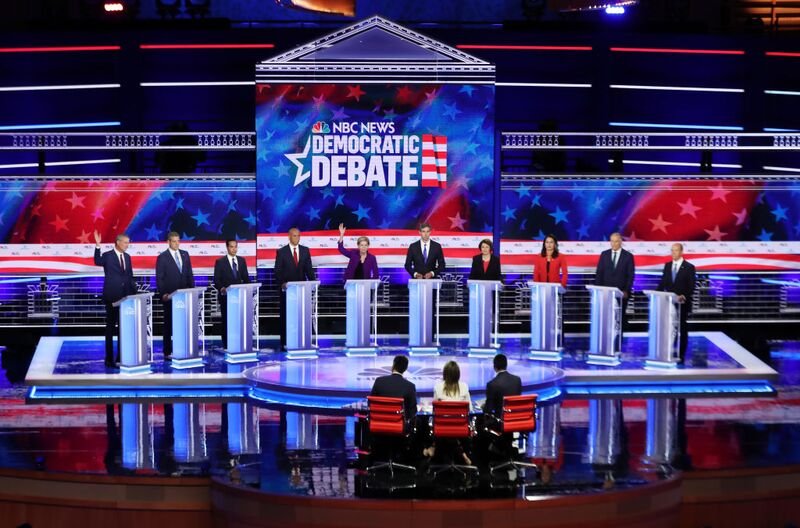
Candidates in the first night of this week’s Democratic presidential debates sparred over health care coverage.

It took only one question — the very first — in Tuesday night’s Democratic presidential primary debate to make it clear that the issue that united the party in last year’s congressional elections in many ways now divides it.

When Jake Tapper of CNN asked Senator Bernie Sanders whether his Medicare for All health care plan was “bad policy” and “political suicide,” it set off a half-hour brawl that drew in almost every one of the 10 candidates on the stage. Suddenly, members of the party that had been all about protecting and expanding health care coverage were leveling accusations before a national audience at some of their own — in particular, that they wanted to take it away.

“It used to be Republicans that wanted to repeal and replace,” Gov. Steve Bullock of Montana said in one of the more jolting statements on the subject. “Now many Democrats do as well.”

Those disagreements set a combative tone that continued for the next 90 minutes. The health care arguments underscored the powerful shift the Democratic Party is undergoing, and that was illustrated in a substantive debate that also included trade, race, reparations, border security and the war in Afghanistan.

In the end, it was a battle between aspiration and pragmatism, a crystallization of the struggle between the party’s left and moderate factions.

It is likely to repeat itself during Wednesday night’s debate, whose lineup includes former Vice President Joseph R. Biden Jr. and Senator Kamala Harris of California. He supports building on the Affordable Care Act by adding an option to buy into a public health plan. She released a proposal this week that would go further, eventually having everyone choose either Medicare or private plans that she said would be tightly regulated by the government.

Democrats know all too well that the issue of choice in health care is a potent one. When President Barack Obama’s promise that people who liked their health plans could keep them under the Affordable Care Act proved to be untrue, Republicans seized on the fallout so effectively that it then propelled them to majorities in both the House and Senate.

On Tuesday night, Representative Tim Ryan of Ohio evoked those Republican attacks of years ago on the Affordable Care Act, saying the Sanders plan “will tell the union members that give away wages in order to get good health care that they will lose their health care because Washington is going to come in and tell them they have a better plan.”

Republicans watching the debate may well have been smiling; the infighting about taking away people’s ability to choose their health care plan and spending too much on a pipe-dream plan played into some of President Trump’s favorite talking points. Mr. Trump is focusing on health proposals that do not involve coverage — lowering drug prices, for example — as his administration sides with the plaintiffs in a court case seeking to invalidate the entire Affordable Care Act, putting millions of people’s coverage at risk.

It was easy to imagine House Democrats who campaigned on health care, helping their party retake control of the chamber, being aghast at the fact that not a single candidate mentioned the case.

Mr. Sanders’s plan would eliminate private health care coverage and set up a universal government-run health system that would provide free coverage for everyone, financed by taxes, including on the middle class. John Delaney, the former congressman from Maryland, repeatedly took swings at the Sanders plan, suggesting that it was reckless and too radical for the majority of voters and could deliver a second term to Mr. Trump.

Mr. Sanders held firm, looking ready to boil over at time — “I wrote the damn bill,” he fumed after Mr. Ryan questioned whether benefits in his plan would prove as comprehensive as he was promising. Senator Elizabeth Warren of Massachusetts, the only other candidate in favor of a complete overhaul of the health insurance system that would include getting rid of private coverage, chimed in to back him up.

At one point she seemed to almost plead. “We are not about trying to take away health care from anyone,” she interjected. “That’s what the Republicans are trying to do.”

Mr. Delaney has been making a signature issue of his opposition to Medicare for all, instead holding up his own plan, which would automatically enroll every American under 65 in a new public health care plan or let them choose to receive a credit to buy private insurance instead. He repeatedly disparaged what he called “impossible promises.”

He was one of a number of candidates — including Beto O’Rourke, the former congressman from Texas; Senator Amy Klobuchar of Minnesota and Mayor Pete Buttigieg of South Bend, Ind. — who sought to stake out a middle ground by portraying themselves as defenders of free choice with plans that would allow, but not force, people to join Medicare or a new government health plan, or public option. (Some candidates would require people to pay into those plans, while others would not.)

The debate moderators also pressed Mr. Sanders and Ms. Warren on whether the middle class would have to help pay for a Sanders-style plan, which would provide a generous set of benefits — beyond what Medicare covers — to every American without charging them premiums or deductibles. One of the revenue options Mr. Sanders has suggested is a 4 percent tax on the income of families earning more than $29,000.

In defending his plan, Mr. Sanders repeatedly pointed out how many Americans are uninsured or underinsured, unable to pay high deductibles and other out-of-pocket costs and thus unable to seek care.

Analysts often point out that the focus on raising taxes to pay for universal health care leaves out the fact that in exchange, personal health care costs would drop or disappear.

“A health reform plan might involve tax increases, but it’s important to quantify the savings in out-of-pocket health costs as well,” Larry Levitt, executive vice president for health policy at the nonpartisan Kaiser Family Foundation, tweeted during the debate. “Political attacks don’t play by the same rules.”

A Kaiser poll released Tuesday found that two-thirds of the public supports a public option, though most Republicans oppose it. The poll also found about half the public supports a Medicare for all plan, down from 56 percent in April. The vast majority of respondents with employer coverage — which more than 150 million Americans have — rated it as excellent or good.

In truth, Mr. Delaney’s own universal health care plan could also face political obstacles, not least because it, too, would cost a lot. He has proposed paying for it by, among other steps, letting the government negotiate drug prices with pharmaceutical companies and requiring wealthy Americans to cover part of the cost of their health care.

Had Mr. Sanders not responded so forcefully to the attacks, it would have felt like piling on, though some who criticized his goals sounded more earnest than harsh.

“I think how we win an election is to bring everyone with us,” Ms. Klobuchar said, adding later in the debate that a public option would be “the easiest way to move forward quickly, and I want to get things done.”



How a Medicare Buy-In or Public Option Could Threaten Obamacare

Related image

Some Democrats are proposing a government alternative to private insurance. But allowing people to choose such a plan may destabilize the A.C.A., some experts say.

It seems a simple enough proposition: Give people the choice to buy into Medicare, the popular federal insurance program for those over 65.

Former Vice President Joseph R. Biden Jr. is one of the Democratic presidential contenders who favor this kind of buy-in, often called the public option. They view it as a more gradual, politically pragmatic alternative to the Medicare-for-all proposal championed by Senator Bernie Sanders, which would abolish private health insurance altogether.

A public option, supporters say, is the logical next step in the expansion of access begun under the Affordable Care Act, passed while Mr. Biden was in office. “We have to protect and build on Obamacare,” he said.

But depending on its design, a public option may well threaten the A.C.A. in unexpected ways.

A government plan, even a Medicare buy-in, could shrink the number of customers buying policies on the Obamacare markets, making them less appealing for leading insurers, according to many health insurers, policy analysts and even some Democrats.

In urban markets, “a public option could come in and soak up all of the demand of the A.C.A. market,” said Craig Garthwaite, a health economist at the Kellogg School of Management at Northwestern University.

And in rural markets, insurers that are now profitable because they are often the only choices may find it difficult to make money if they faced competition from the federal government.

Some insurers could decide that a smaller and uncertain market is not worth their effort.

If the public option program also matched the rates Medicare paid to hospitals and doctors, “I think it would be really hard to compete,” Mr. Garthwaite said. Even leading insurers do not have the leverage to demand lower prices from hospitals and other providers that the government has.

Whether to implement a public option or Medicare buy-in has become a defining question among Democratic presidential candidates and is likely to be a contentious topic at this week’s debates.

On Monday, Senator Kamala Harris took an alternate route, unveiling a plan that would allow private insurers to participate in a Medicare-for-all scheme, akin to their role currently offering private plans under Medicare Advantage.

The recent spate of proposals reprises some of the most difficult questions leading up to the passage of the A.C.A., in many ways a compromise over widely divergent views of the role of the government in ensuring access to care.

After a shaky start, the federal and state Obamacare marketplaces are surprisingly robust, despite repeated attempts by Republicans to weaken them. They provide insurance to 11 million customers, many of whom receive generous federal subsidies to help pay for coverage.

The A.C.A. is now a solidly profitable business for insurers, with several expanding options after earlier threats to leave. For example, Centene, a for-profit insurer, controls about a fifth of the market, offering plans in 20 states. It is expected to bring in roughly $10 billion in revenues this year by selling Obamacare policies.

In spite of stock drops because of investors’ concerns over Medicare-for-all proposals, for-profit health insurers have generally thrived since the law’s passage.

But a buy-in shift in insurance coverage could profoundly unsettle the nation’s private health sector, which makes up almost a fifth of the United States economy. Depending on who is allowed to sign up for the plan, it could also rock the employer-based system that now covers some 160 million Americans.

In a recent ad, Mr. Biden features a woman who wants to keep her current coverage. “I have my own private insurance — I don’t want to lose it,” she said.

A spokesman for Mr. Biden argued that a public option can extend the success of the Affordable Care Act.

“Joe Biden thinks it would be an egregious mistake to undo the A.C.A., and he will stand against anyone — regardless of their party — who tries to do so,” said Andrew Bates, a spokesman for Mr. Biden, in an email.

Major insurers and hospital chains, pharmaceutical companies and the American Medical Association have joined forces to try to derail efforts like Medicare-for-all and the public option. Mr. Sanders denounced these powerful interests in a recent speech.

“The debate we are currently having in this campaign and all over this country has nothing to do with health care, but it has everything to do with the greed and profits of the health care industry,” he said.

Other critics of the public option, including Seema Verma, the administrator of the Centers for Medicare and Medicaid Services, argue Democrats’ programs will lead to a “complete government takeover.”

“These proposals are the largest threats to the American health care system,” she said in a speech earlier this month.

Some experts predict that private insurers will adapt, while others warn that the government could wind up taking on the sickest customers with high medical bills, leaving the healthier, profitable ones to private insurers.

It’s uncertain whether hospitals, on the other hand, could thrive under some versions of the public option. If the nation’s 5,300 hospitals were paid at much lower rates by a government plan — rates resembling those of Medicare — they might lose tens of billions of dollars, the industry claims. Some would close.

One variant of the public option — letting people over 50 or 55 buy into Medicare — is often depicted as less drastic than a universal, single-payer program. But this option would also be problematic, experts said.

This consumer demographic is quite valuable to insurers, hospitals and doctors.

Middle-aged and older Americans have become the bedrock of the Obamacare market. Some insurers say this demographic makes up about half of the people enrolled in their A.C.A. plans and, unlike younger people who come and go, is a reliable and profitable source of business for the insurance companies.

The aging-related health issues of people in this group guarantee regular doctor visits for everything from rising blood pressure to diabetes, and they account for a steady stream of lucrative joint replacements and cardiac stent procedures.

The 55-to-64 age group, for example, accounts for 13 percent of the nation’s population, but generates 20 percent of all health care spending, according to the Kaiser Family Foundation.

Several experts said that designing a buy-in program that is compatible with the existing public and private plans could be daunting.

“You’d have to do it carefully,” said Representative Donna Shalala, a Florida Democrat who served as the secretary of health and human services under President Bill Clinton.

Linda Blumberg, a health policy expert at the Urban Institute, a nonpartisan think tank, agreed. “The idea of Medicare buy-ins was taken very seriously before there was an Affordable Care Act,” she said. “In the context of the A.C.A., it’s a lot more complicated to do that.”

Many dismiss concerns about whether insurers can compete.

“Any time a market shrinks in America, insurers don’t like it,” said Andy Slavitt, the former acting Medicare administrator under President Obama and a former insurance executive. Mr. Slavitt noted that insurers raised similar concerns about the federal law when it was introduced. “They’ll figure it out,” he said.

In Los Angeles County, five private insurers that sell insurance in the A.C.A. market already compete with L.A. Care Health Plan, which views itself as a kind of public option, said John Baackes, the plan’s chief executive.

The insurer offers the least expensive H.M.O. plan in the county by paying roughly Medicare rates. “We’ve proved that the public option can be healthy competition,” he said.

But the major insurance companies, which were instrumental in defeating the public option when Congress first considered making it a feature of the A.C.A., are already flexing their lobbying muscle and waging public campaigns.

In Connecticut, fierce lobbying by health insurers helped kill a state version of the public option this spring. Cigna resisted passage of the bill, threatening to leave the state. “The proposal design was ill-conceived and simply did not work,” the company said in a statement.

Blue Cross plans could lose 60 percent of their revenues from the individual market if people over 50 are shifted to Medicare, said Kris Haltmeyer, an executive with the Blue Cross Blue Shield Association, citing an analysis the company conducted. He said it might not make sense for plans to stay in the A.C.A. markets.

Siphoning off such a large group of customers could also lead to a 10 percent increase in premiums for the remaining pool of insured people, according to the Blue Cross analysis. More younger people with expensive medical conditions have enrolled than insurers expected, and insurers would have to increase premiums to cover their costs, Mr. Haltmeyer said.

Tricia Neuman, a senior vice president at the Kaiser Family Foundation, which studies insurance markets, said a government buy-in that attracted older Americans could indeed raise premiums for those who remained in the A.C.A. markets, especially if those consumers had high medical costs.

But some experts countered that prognosis, predicting that premiums could go down if older Americans, whose health care costs are generally expensive, moved into a Medicare-like program.

“The insurance companies are wrong about opposing the public option,” Ms. Shalala said.

Dr. David Blumenthal, the president of the Commonwealth Fund, a foundation that funds health care research, said a government plan that attracted people with expensive conditions could prove costly.

“You might, as a taxpayer, become concerned that they would be more like high-risk pools,” he said.

Jonathan Gruber, an M.I.T. economist who advised the Obama administration during the development of the A.C.A., likes Mr. Biden’s plan and argues there is a way to design a public option that does not shut out the private insurers.

“It’s all about threading the needle of making a public option that helps the failing system and not making the doctors and insurers go to the mat,” he said.

Many experts point to private Medicare Advantage plans, which now cover one-third of those eligible for Medicare, as proof that private insurers can coexist with the government.

But the real value of a public option, some say, would stem from the pressure to lower prices for medical care as insurers were forced to compete with the lower-paying government plans, like Medicare.

Washington State recently passed the country’s first public option, capping prices as part of its plan to provide a public alternative to all residents by 2021.

“It’s couched in this language in expanding coverage, but it does it by regulating prices,” said Sabrina Corlette, a health policy researcher at Georgetown University.

The hospital industry would most likely fight just as hard to defeat any proposal that would convert a profitable group of customers, Americans who are privately covered at present, into Medicare beneficiaries.

Private insurers often pay hospitals double or triple what Medicare pays them, according to a recent study from the nonprofit Rand Corporation.

While Ms. Shalala supports a public option as an alternative to “Medicare for All,” she is clear about how challenging it will be to preserve both Obamacare and the private insurance market. “You can’t do it off the top of your head,” she said.


Democrats are making Republican arguments about health care. Why?

https://www.washingtonpost.com/opinions/2019/07/26/democrats-are-making-republican-arguments-about-health-care-why/?fbclid=IwAR1mA1uEcNMiO12elygl_lSLxDD12kvHhzfYOO78Z50u7HAEv56yEVGL2Pc&utm_term=.e2f83bcb12ec

Image result for Democrats are making Republican arguments about health care. Why?

The Democratic argument over health care is beginning to get heated, which unfortunately means that things are becoming more problematic. In fact, the candidates making what is arguably the most sensible policy choice are justifying it with some absolutely abominable arguments — arguments that should warm the heart of the Republican Party.

Right now there’s a divide within the party, with some of the presidential candidates including Bernie Sanders and Elizabeth Warren supporting single payer (though Warren hasn’t been specific), and most of the others including Joe Biden, Amy Klobuchar and Pete Buttigieg suggesting some form of public option that would be voluntary, not Medicare For All but Medicare For All Who Want It.

I’ve come to believe that for all the benefits of a single payer system, trying to move immediately to one is a task with such overwhelming political obstacles and policy complications that it’s probably a better idea to achieve universal coverage through a dramatic expansion of public insurance while, for the moment, leaving substantial portions of the private system intact, even if that’s in many ways distasteful. I realize many readers will disagree with that, which is fine; we should continue to debate it.

But let’s at least grant that it’s a reasonable position to take. The problem with what’s happening now is that some advocates of the public option approach are sounding a lot like, well, Republicans.

Their most common talking point when defending their plan is some variation of “We can’t kick 150 million people off their insurance,” referring to the number of people who are covered by employer plans:

  • “We should have universal health care, but it shouldn’t be the kind of health care that kicks 150 million Americans off their health care,” says John Delaney.
  • Beto O’Rourke says Medicare-for-all “would force 180 million Americans off their insurance.”
  • “I am simply concerned about kicking half of America off their health insurance within four years, which is what [Medicare-for-all] would do,” says Amy Klobuchar.

The generous interpretation of this line is that it’s warning about widespread disruption; the other interpretation is that it’s meant to stoke the fear that if you now have coverage and single payer passes, you could be left with no insurance at all, which is just false. If we passed single payer, you’d move from your current plan to a different plan, one that depending on how it’s constructed would probably offer as good or better coverage at a lower cost.

The further danger is that that kind of talk inevitably leads one toward the promise that got Barack Obama into such trouble, “If you like your plan, you can keep it.” In fact, here’s O’Rourke saying that under his plan, “For those who have private, employer-sponsored insurance or members of unions who have fought for health care plans … they’ll be able to keep that.” And here’s Biden saying much the same thing: “If you like your health care plan, your employer-based plan, you can keep it. If in fact you have private insurance, you can keep it.”

Haven’t they learned anything?

While there may be political value in communicating to people that a public option would be voluntary, we have to tell them the truth, which is that if you’re going to open it to employers and not just individuals, some people will be moved to the public plan whether they want to or not, since their employers will make that choice for them. That’s how employer coverage works: What plan you’re on is seldom up to you, it’s a decision made by your employer.

And the broader truth is that no one, I repeat, no one gets to keep their plan if they like it even under the status quo. “If you like your plan, you can keep it” is a fantasy. If you have insurance through your employer, you’ve probably had the experience of your employer changing insurers or changing plans; many do it every year. Sometimes the new plan is better; often it’s not. But if you liked your plan, you didn’t get to keep it.

That’s even true of people on public insurance plans, though to a far lesser degree. Medicare and Medicaid go through changes, and benefits are added or taken away. It’s not up to you.

The trouble is that we have a situation where change is constant yet everyone is afraid of change, which makes it awfully tempting to encourage that fear. But the more we propagate the fiction that Americans, especially those with private insurance, aren’t vulnerable under the current system, the easier it will be to crush any reform effort.

Apart from the praise of the Affordable Care Act, this video could almost have been scripted by the Republican National Committee, with its paeans to private health insurance. Of particular note is the woman’s explanation of how she and her husband “earned” health coverage through decades of work, which implies that health care is not a right, as most Democrats believe, but a privilege one has to earn.

To top it off, Biden’s caption to the video says that “Because a union fought for their private health insurance plan, Marcy and her husband were able to retire with dignity and respect,” which is why Biden wants to let them stay on their existing insurance.

Let me suggest a crazy idea: What if retiring with dignity and respect wasn’t something you only got if you were lucky enough to be represented by a union (as a mere 1 in 10 American workers is, and 1 in 16 private sector workers), and only if that union happened to be successful in its fight to get you health benefits? What if everybody got dignity and respect? Isn’t that the world Joe Biden is trying to create?

You can make a strong case for both a single payer plan and one built around a public option. But please, Democrats, when you’re arguing for your preferred solution, don’t undermine the entire philosophical approach your party takes to health care. That only makes the job of reform more difficult.


UnitedHealth to jumpstart Q2 results with eyes on volume, ‘Medicare for All’

https://www.healthcaredive.com/news/unitedhealth-to-jumpstart-q2-results-with-eyes-on-volume-medicare-for-all/558855/

UnitedHealth Group on Thursday kicks off second quarter earnings as the first major healthcare firm to report results, setting the tone and expectations for the quarter. Wall Street analysts expect the insurance giant to post a strong showing, buoyed by its Optum business.

Volume trends, talk of “Medicare for All” on the campaign trail and emerging CMS payment models are among the topics likely to bubble up as payers begin reporting their earnings over the next few weeks.

Utilization subdued

Utilization is slowing in the second quarter, according to a June survey of 48 hospital administrators. SVB Leerink analysts noted this is a positive for payers and their medical cost trends and for hospital operators heavily invested in outpatient settings, including HCA and Tenet Healthcare with its outpatient surgical unit, USPI.

“Share of procedures in [inpatient] declined across all service lines except for spine, reinforcing the shift from [inpatient],” SVB Leerink analysts said.

Lab data is another good indicator of overall utilization and volume trends, Brian Tanquilut, an analyst with Jefferies, said. Tanquilut said he’ll be watching LabCorp and Quest closely next week to get a better idea of utilization trends for the quarter.

Drug rebate reform may not be dead

The White House last week pulled its proposal to ban drugmaker rebates to pharmacy benefit managers in Medicare and Medicaid in a win for payers. Stocks for UnitedHealth, CVS and Cigna rose sharply following the announcement.

That may not be the end for the proposal, however.

“It’s still alive and moving along in Congress,” Tanquilut said, referencing the Lower Health Care Costs Act sponsored by Sen. Lamar Alexander, R-Tenn., which was passed out of committee and is expected to be brought to the floor soon.

That legislation is broad reaching and includes efforts to ban surprise billing and boost price transparency, other payer hotspots.

With the rebate proposal, the administration had proposed to fundamentally alter the way drugs are paid for in the U.S. But federal budget forecasters warned it would increase spending by $177 billion over the next decade, given many of those rebates are used to lower premiums for Part D beneficiaries.

PBMs, most of which are owned by major payers, have come under fire as many grow skeptical of whether rebates really drive down drug spending.

The Alexander bill includes limitations on spread pricing — which have also garnered intense criticism — and would require PBMs to pass all of the rebates back to insurance plans.

Kidney overhaul positive for most payers

One issue on payers’ minds is the Trump administration’s recent effort aimed at overhauling the country’s approach to kidney care. The plan includes an executive order intended to incentivize home dialysis, increase prevention, make more organs available for transplant and spur development of artificial and wearable kidneys.

The Center for Medicare and Medicaid Innovation also introduced five new payment models, including one that’s mandatory. The center’s chief, Adam Boehler, told reporters the plan would “be broad and sweeping, impacting half the country.”

Analysts at SVB Leerink called the announcement a medium-term win for payers like CVS, Humana, UnitedHealth Group and Anthem. Humana in particular has upside potential because of its focus on Medicare Advantage and with Kindred at Home, which it acquired a year ago.

Cigna stands to benefit from its investment in Cricket Health, which aims to improve early detection of high-risk kidney patients, and UnitedHealth’s Optum arm continues to invest in home dialysis, analysts said.

They also noted CVS executives discussed early detection of kidney disease at the company’s recent investor day, saying home hemodialysis could drive as much as $1 billion in new business through 2022 (possibly accelerated by the CMS announcement). With CVS’ experience in complex patient home care and chronic disease management and the acquisition of Aetna, the company is “an ideal partner to manage chronic kidney disease.”

‘Medicare for All’ debate continues

With the 2020 campaign heating up among Democrats, Medicare for All was a hot topic during last quarter’s calls. A number of executives singled the idea out for criticism, sending payer stocks tumbling.

Since then, talk on the campaign trail of expanding government coverage has continued, although Medicare for All is just one of the ideas being discussed. This week, former Vice President Joe Biden rolled out a plan for building on the Affordable Care Act and increasing premium subsidies for people on the exchanges.

The issue will certainly resurface at the end of this month when candidates have their second primary debate.


Medicaid should be a bigger part of the “Medicare for All” debate

https://www.axios.com/medicare-for-all-bernie-sanders-medicaid-states-b3c5eceb-0f3c-4c4b-9317-6a1f9434232b.html?utm_source=newsletter&utm_medium=email&utm_campaign=newsletter_axiosvitals&stream=top

Illustration of a pills capsule opening with state-shaped pills falling out

The fact that “Medicare for All” would eliminate Medicaid hasn’t gotten nearly as much attention as its elimination of private insurance. But it’s a move that would largely eliminate states’ role in the health care system.

Why it matters: State Medicaid programs are leaders in experimenting with delivery and payment reforms, efforts to control drug costs, and addressing social causes of ill health, such as poverty and poor housing. All of those projects would still be important in a single-payer world.

How it works: Sen. Bernie Sanders’ bill would move most Americans into its new single-payer system, including people with private insurance but also virtually all of the 73 million people covered by Medicaid and the Children’s Health Insurance Program.

Winners: States would reap huge savings. Medicaid is the single largest item in most state budgets.

  • The effects on safety-net hospitals and clinics would vary, depending largely on how payment rates under the new plan compare to today’s Medicaid rates.
  • The uninsured in states that have not expanded Medicaid also would be big winners.

Yes, but: The change would all but eliminate states’ role in health care, where they have been leaders not just in providing coverage, but also driving efficiency and testing new models of care.

  • Those reforms — and the idea of states as laboratories of reform — would pretty much disappear, and the balance of federalism in health would fundamentally change.

The bottom line: For advocates of a single national plan, eliminating the patchwork of state Medicaid programs would be progress. For fans of a federal-state balance, it’s a big problem.

  • Either way, Medicaid is a large and generally popular program, and its future at least deserves a bigger role in the debate.


Does the United States Ration Health Care?

https://www.commonwealthfund.org/blog/2019/does-united-states-ration-health-care

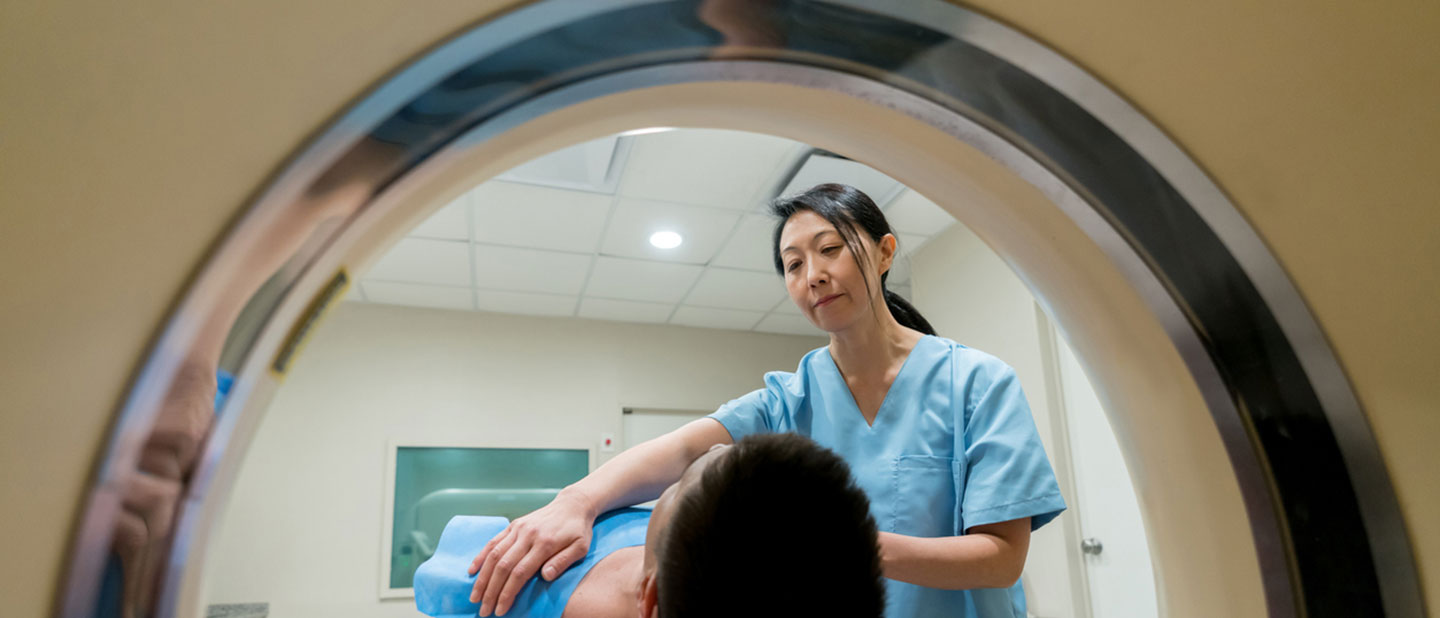
MRI taking place in the U.S.

As recent congressional hearings on Medicare for All proposals have illustrated, members of Congress and presidential candidates are looking outside the United States to find ways to achieve universal coverage. Some have suggested that other countries are able to provide universal coverage because they “ration” care — a term rife with negative connotations. This post examines the extent to which health care is rationed in Germany, the Netherlands, Sweden, Switzerland, and the United Kingdom — as compared to the U.S.

Examples of health care rationing tend to focus on long wait times for procedures —such as hip replacements, or MRIs — or limited access to the newest drugs. This happens in some (but not all) countries and can be a challenge for policymakers. But there are other ways in which health systems engage in rationing, by restricting access to insurance, through insurance benefit design, or by imposing high patient cost-sharing. While other countries may ration because of national budget constraints and supply-side factors, the United States’ lack of access to comprehensive insurance and affordable care represent a de facto form of rationing that leads people to delay getting care or going without it entirely.

Getting in the Door

In the five European countries we examined, all residents are entitled to health care through the national system. These range from tax-funded systems in Sweden or the U.K. to private insurance-based systems in Germany, the Netherlands, and Switzerland. In the latter, governments regulate premiums to be affordable and provide income-related subsidies to low-income families, which include 27 percent of Swiss and 30 percent of Dutch residents. Governments also mandate generous benefit packages that typically guarantee a minimum set of services: primary, specialty, and hospital care; prescription drugs; mental health; maternity; and palliative care.

In comparison, there are 30.4 million uninsured people in the U.S. Not having affordable, comprehensive insurance coverage often means that sick Americans do not even get in the door to see a doctor. For those who do have coverage, new rules that allow states to circumvent the Affordable Care Act’s mandated essential health benefits may mean skimpy coverage for some.

Waiting to Be Seen

Patients in some countries face longer wait times for specialty care than in the U.S., where only 25 percent of Americans need to wait longer than one month for a specialist appointment. Patients in Germany and Switzerland get in just as fast (27% and 26%, respectively) as their U.S. counterparts, but those in Sweden and the U.K. do not (45% and 43%, respectively). Similarly, very few U.S., Dutch, and Swiss patients (4% to 7%) who need elective surgery face wait times longer than four months, while 12 percent of Swedish and British patients do. It should be noted that in Sweden and the U.K., where wait times for specialty care are longer, people can buy supplemental insurance to gain quicker access to private specialists.

While Americans overall enjoy shorter wait times for specialty care, wait times for same- or next-day appointments when sick are around average compared to other countries. U.S. adults are among the most frequent users of emergency departments. Nearly half who do report doing so because they couldn’t get an appointment with their regular doctor.

Weighing Health Against Your Wallet

In a recent Commonwealth Fund survey, fewer than one of 10 patients in the U.K., Germany, the Netherlands, or Sweden reported skipping needed care or treatments because of cost. This contrasts sharply with the U.S., where one of three Americans reported the same. This is partly because of the rise in high deductibles, unpredictable and opaque copayments, and higher health care prices in the U.S. than in other countries. An estimated 44 million Americans who have insurance are effectively underinsured because their out-of-pocket costs and deductibles are very high relative to their incomes.

Other countries are more protective. In the U.K., Germany, and the Netherlands, patients have no out-of-pocket costs when they visit a primary care doctor, and Brits never pay for hospital care. In Germany, out-of-pocket costs are capped at 2 percent of annual household income and 1 percent for chronically ill people. In Sweden, out-of-pocket costs for physician visits and drugs are capped at $370 annually. No one in these five countries declares bankruptcy because of medical debt.

Paying for Value

A commitment to providing universal coverage means that other countries have to make hard choices to ensure that each health care dollar is spent effectively.

Countries aim to give patients access to the most clinically meaningful and cost-effective drugs. In the U.K., only drugs that are deemed cost-effective are covered, while in Germany, manufacturers have to demonstrate that their new drug adds clinical benefit to negotiate a higher price than other existing drugs. This doesn’t mean that new technologies aren’t available; in fact, 79 percent of new cancer drugs are approved for routine use in the U.K.

These kind of controls, coupled with fixed copayments and annual caps on patient drug spending, translate into better access. While nearly one of five U.S. adults skip doses or do not fill a prescription because of costs, just 2 percent to 9 percent of patients do so in the other countries discussed here.

Conclusion

It would be a missed opportunity for America to ignore lessons about universal coverage from other countries out of a fear that they ration health care more than we do. In reality, more people in the U.S. forgo needed health care because access to care is rationed through lack of access to adequate insurance or unaffordable services and treatments.


2020 Election’s Healthcare Debate: Truths, Half-Truths, And Falsehoods

https://www.forbes.com/sites/joshuacohen/2019/07/08/2020-elections-healthcare-debate-truths-half-truths-and-falsehoods/#57fb72076466

Image result for health policy

are may emerge as the number one issue in the 2020 election. In itself this isn’t surprising, given that for many decades the electorate has considered healthcare a key issue.

And, the truth is healthcare access continues to be a major problem in the U.S., along with inequalities in outcomes, relatively high prices for healthcare services, and high out-of-pocket spending. Democratic presidential candidates have weighed in on these issues.

Without more clarity, however, the debate runs the risk of unraveling into exercises in sophistry.

Politicians in America have had a knack for telling half-truths or even untruths about healthcare. For example, in 2012, John Boehner claimed that “the U.S. has the best healthcare delivery system in the world.” And, just prior to signing the Affordable Care Act (ACA) into law, President Obama stated “if you like your healthcare plan, you can keep it.”

Many constituents — myself included — are also confused by certain terms used in the current debate.

Democrats appear to all want universal coverage. Among the presidential candidates there are different ideas about how to achieve the objective. One group, led by Vermont Senator Bernie Sanders, wants a single payer system, misnamed “Medicare for All.” When Sanders and others talk about Medicare for All, they aren’t aiming to expand the currently existing Medicare program to include all U.S. residents. Rather, they’re talking about a government program that would replace all currently existing forms of insurance, both private and public. Sanders’s plan would also substitute premiums and out-of-pocket spending with taxes. Whether this single payer system would result in lower healthcare costs for individuals – paid in the form of premiums and out-of-pocket costs, or taxes – remains to be calculated.

When Sanders and others speak of eliminating private insurance and replacing it with Medicare for All they ignore the fact that private insurance is embedded in many aspects of the Medicare program. For example, more than a third of Medicare beneficiaries are enrolled in a Medicare Advantage plan, and over 60% have their prescription drug coverage managed in stand-alone fashion by a prescription drug plan. So, in addition to the abolition of commercial private insurance, Medicare for All would radically alter the Medicare program as it operates today, which makes the name of Sanders’ plan all the more curious.

There are of course some things that presumably Medicare for All would do that the currently existing Medicare program does not, including coverage of long-term care expenses, hearing, dental, vision and foot care.

A number of candidates have proposed tinkering with the existing system by expanding Medicare eligibility, i.e., Medicare for More, and still others have proposed including a “public option” to augment ACA. Regarding the former, certain groups of people — for example, those over age 50 — would be offered the opportunity to purchase Medicare. And, in the ACA-plus scenario, certain individuals could buy into existing programs, such as Medicaid, state employee health plans, or an entirely new health plan run by the state.

One area of apparent consensus across the Medicare for All, Medicare for More, and ACA-plus camps is establishing a system in which there are lower reimbursement rates for healthcare services, which would drive down costs. Currently, there is a very sizable gap between Medicare and private health insurer reimbursement rates to hospitals and physicians. Medicare for All goes furthest in ratcheting down payments to essentially a single rate. By abolishing private insurance the rates would be reduced to Medicare levels, which are at least 40% lower. This, however, could prove to be problematic as such measures could force hospitals to close if they had to accept the rates currently paid by Medicare. Physicians would also stand to lose under a drastic rate reduction.

The healthcare industry is particularly opposed to Medicare for All because of concerns about disruption to the system – even undermining insurers’ raison d’être – and much lower reimbursement rates.

A frank discussion would be welcome regarding the implications of all proposals across the political spectrum, including ramifications of undoing the ACA. For too long, the healthcare debate on both sides of the aisle has shied away from explaining the consequences of policy proposals, or inaction for that matter.


Here’s What’s Missing From the Health-Care Debate

https://www.bloomberg.com/opinion/articles/2019-06-28/democratic-2020-debate-medicare-for-all-and-health-care

Raise your hand if you want to debate health care.

There needs to be more frank talk and better explanations about the costs and trade-offs of plans like Medicare for All.

Health care took up a decent portion of the Democratic presidential debates this week. For all of the verbiage, we didn’t learn much new. Everybody wants universal coverage, but they have different ideas about how to get there. One group, led Vermont Senator Bernie Sanders, want a single-payer system like “Medicare for All”; others, including former Vice President Joe Biden, prefer various flavors of a public option that co-exists with elements of the status quo.

Nonetheless, there were a few moments that drew attention to important issues that could (or should) shape the health-care discussion going forward: 


THE BIG TRADE-OFF: People who have health under Medicare for All will have no premiums, no deductibles, no co-payments, no out-of-pocket expenses,” Sanders said during Wednesday’s debate. “Yes, they will pay more in taxes, but less in health care for what they get.” Sanders was responding to a question about whether his policies would mean higher taxes for middle-class Americans; his answer elucidated an essential truth that’s still lost on many voters.

Medicare for All is at its core a shift in how America finances health care. Right now, people pay big chunks of their health costs themselves – especially when they’re sick. Sanders’s plan would replace that out-of-pocket spending with taxes. There’s an appeal to that. It’s more equitable and would eliminate situations where health crises result in bankruptcy, or costs dissuades people from seeking care. Whether this shift will result in savings for individuals will depend on tax details as well as income and health status. If such a plan can lower costs by cutting prices and eliminating insurer profits, there’s a real possibility that many Americans come out ahead. Right now, polls suggest that broad support for Medicare for All drops when people hear about tax increases. Getting voters to understand what they get in return will be critical. 


RAISE YOUR HAND: On both nights, the debate moderators chose to boil the health-care debate down to one yes-or-no question. Candidates who support eliminating private health insurance in favor of a single-payer system were asked to raise their hands. This is a defining divide in the field, so it was notable that Elizabeth Warren raised hers on Wednesday. She places third in most polls behind Joe Biden and Sanders, and has been vague on health care in the past. If she’s a dogmatic supporter of Sanders’s specific plan, that tilts the race in the direction of Medicare for All. I’m not sure that’s the case, though. She could end up diverging on specifics of how the U.S. should transition to a single-payer system and structure it. As the field shrinks, it will probably benefit her to stake out a place between Sanders and Biden, who supports a milder public option. A lot of candidates want to be in that space, though none have defined it well or made it their own yet. Given ambivalent polling about the details of Medicare for All and the idea of killing private insurance, this feels like an opportunity for the person who seizes it. 


WHAT PRICE IS RIGHT?  America spends far more than other countries on services without getting better results. That might not change without price controls for providers. Former Maryland representative John Delaney claimed on Wednesday that these types of controls would have consequences, saying that many hospitals would be forced to close if they had to accept the rates currently paid by Medicare for all services. While the truth of that statement is a matter of some debate, what isn’t in doubt is that lower reimbursement would be necessary even for milder plans, and that this could put pressure on hospital systems.

Reform-minded candidates don’t like to talk about that, which is why Delaney’s point stood out. Instead, they preferred to focus their ire on insurers and drugmakers. Drug prices and insurer overhead are important issues too, but services eat up a far more significant portion of spending. The field won’t be able to ignore that issue and the potentially disruptive consequences of dealing with it. 

These first debates got the discussion going. The devil will be in the details.


The Lessons of Washington State’s Watered Down ‘Public Option’

Jay Inslee, the governor of Washington, signing a measure in May that puts the state on track to create the nation’s first “public option” health insurance.

Jay Inslee, the governor of Washington, signing a measure in May that puts the state on track to create the nation’s first “public option” health insurance.

A big health care experiment for Democrats shows how fiercely doctors and hospitals will fight.

For those who dream of universal health care, Washington State looks like a pioneer. As Gov. Jay Inslee pointed out in the first Democratic presidential debate on Wednesday, his state has created the country’s first “public option” — a government-run health plan that would compete with private insurance.

Ten years ago, the idea of a public option was so contentious that Obamacare became law only after the concept was discarded. Now it’s gaining support again, particularly among Democratic candidates like Joe Biden who see it as a more moderate alternative to a Bernie Sanders-style “Medicare for all.”

New Mexico and Colorado are exploring whether they can move faster than Congress and also introduce state-level, public health coverage open to all residents.

But a closer look at the Washington public option signed into law last month, and how it was watered down for passage, is a reminder of why the idea ultimately failed to make it into the Affordable Care Act and gives a preview of the tricky politics of extending the government’s reach into health care.

On one level, the law is a big milestone. It allows the state to regulate some health care prices, a crucial feature of congressional public option and single-payer plans.

But the law also made big compromises that experts say will make it less powerful. To gain enough political support to pass, health care prices were set significantly higher than drafters originally hoped.

“It started out as a very aggressive effort to push down prices to Medicare levels, and ended up something quite a bit more modest,” said Larry Levitt, senior vice president for health reform at the Kaiser Family Foundation.

So while Washington is on track to have a public option soon, it may not deliver the steep premium cuts that supporters want. The state estimates that individual market premiums will fall 5 percent to 10 percent when the new public plan begins.

“This bill is important, but it’s also relatively modest,” said David Frockt, the state senator who sponsored the bill. “When I see candidates talking about the public option, I don’t think they’re really grasping the level of opposition they’re going to face.”

During the Affordable Care Act debate, more liberal Democrats hoped a public option would reduce the uninsured rate by offering lower premiums and putting competitive pressure on private plans to do the same. President Obama backed it, saying in 2009 that such a policy would “keep the private sector honest.”

The public option came under fierce attack from the health care industry. Private health plans in particular did not look forward to competing against a new public insurer that offered lower rates, and fought against a government-run plan that they said “would significantly disrupt the coverage that people currently rely on.” The policy narrowly fell out of the health care law but never left the policy debate.

Congressional Democrats have started to revisit the idea in the past year, with health care as a top policy issue in the 2018 midterm elections.

“During the midterm elections, Medicare for all was gaining a lot of traction,” said Eileen Cody, the Washington state legislator who introduced the first version of the public option bill. “After the election, we had to decide, what do we want to do about it?”

Ms. Cody introduced a bill in January to create a public option that would pay hospitals and doctors the same prices as Medicare does, which is also how many congressional public option proposals would set fees. The Washington State Health Benefit Exchange, the marketplace that manages individual Affordable Care Act plans, estimates that private plans currently pay 174 percent of Medicare fees, making the proposed rates a steep payment cut.

“I felt that capping the rates was very important,” Ms. Cody said.“If we didn’t start somewhere, then the rates were going to keep going up.”

Doctors and hospitals in Washington lobbied against the rate regulation, arguing that they rely on private insurers’ higher payment rates to keep their doors open while still accepting patients from Medicaid, the public plan that covers lower-income Americans and generally pays lower rates.

“Politically, we were trying to be in every conversation,” says Jennifer Hanscom, executive director of the Washington State Medical Association, which lobbies on behalf of doctors. “We were trying to be in the room, saying rate setting doesn’t work for us — let’s consider some other options. As soon as it was put in the bill, that’s where our opposition started to solidify.”

Legislators were in a policy bind. The whole point of the public option was to reduce premiums by cutting health care prices. But if they cut the prices too much, they risked a revolt. Doctors and hospitals could snub the new plan, declining to participate in the network.

“The whole debate was about the rate mechanism,” said Mr. Frockt, the state senator. “With the original bill, with Medicare rates, there was strong opposition from all quarters. The insurers, the hospitals, the doctors, everybody.”

Mr. Frockt and his colleagues ultimately raised the fees for the public option up to 160 percent of Medicare rates.

“I don’t think the bill would have passed at Medicare rates,” Mr. Frockt said. “I think having the Medicare-plus rates was crucial to getting the final few votes.”

Other elements of the Washington State plan could further weaken the public option. Instead of starting an insurance company from scratch, the state decided to contract with private insurers to run the day-to-day operations of the new plan.

“It would have cost the state hundreds of millions of dollars just to operate the plan,” said Jason McGill, who recently served as a senior health policy adviser to Mr. Inslee. He noted that insurers were required to maintain large financial reserves, to ensure they don’t go bankrupt if a few patients have especially costly medical bills.

“Why would we do that when there are already insurers that do that? It just didn’t make financial sense. It may one day, and we’ll stay on top of this, but we’re not willing to totally mothball the health care system quite yet.”

Hospitals and doctors will also get to decide whether to participate in the new plan, which pays lower prices than private competitors. The state decided to make participation voluntary, although state officials say they will consider revisiting that if they’re unable to build a strong network of health care providers.

Most federal versions of the public option would give patients access to Medicare’s expansive network of doctors and hospitals.

Although Mr. Frockt is proud of the new bill, he’s also measured in describing how it will affect his state’s residents. After going through the process of passing the country’s first public option, he’s cautious in his expectations for what a future president and Democratic Congress might be able to achieve. But he does have a clearer sense of what the debate will be like, and where it will focus.

“This is a core debate in the Democratic Party: Do we build on the current system, or do we move to a universal system and how do we get there?” he said. “I think the rate-setting issue is going to be vital. It’s what this is all about.”


Why have Medicare costs per person slowed down?

https://usafacts.org/reports/medicare-cost-slowed-down-hospital-baby-boomers?utm_source=EM&utm_medium=email&utm_campaign=medicaredive

Image result for Why have Medicare costs per person slowed down? Baby boomers and fewer hospital stays

The 65+ population now makes up 16% of the US population, up from 11% in 1980. In response to an aging population, Medicare costs are going up. Benefits totaled $713 billion in 2018, 25% higher than in 2009, and Medicare spending accounts for a fifth of all healthcare spending as of the latest year of data.

However, while program costs are increasing, there is an interesting counter-trend – the per person cost for insuring someone through Medicare has actually decreased.

In 2018, the overall cost of Medicare per enrollee was $13,339 per year, about $30 less than it was in 2009, adjusting for inflation. That’s even as benefits across Medicare totaled $713.4 billion, $144.4 billion more than in 2009.

Why are the costs of insuring someone through Medicare going down? A combination of demographics and policy changes may point to an answer.

THE AVERAGE MEDICARE BENEFICIARY IS GETTING YOUNGER

The average age fell from 76 to 75 between 2007 and 2017Enrollment in all types of Medicare increased 29% during that period from 44.4 million to 58.5 million.

That one year drop in average age is significant for Medicare costs.

An influx of Baby Boomers enrolling in Medicare is playing a role in slowing down an increase in costs for Medicare Part A, which funds hospital stays, skilled nurse facilities, hospice and parts of home health care. In 2008, the share of Original Medicare (Part A or B) beneficiaries who were 65 to 74 years old was 43%. In 2017, 65- to 74-year-olds made up 48% of beneficiaries, the group’s highest share in the 21st century.

A 2015 Congressional Budget Office study showed that we spend 73% more on an enrollee in the 75 to 84 bracket than we do on those in the 65 to 74 bracket.

Our analysis below show how demographics factor into Medicare costs, especially age.

In 2017, there were 38,347,556 Medicare Part A enrollees, making up 100.0% of total enrollees. The federal government spent $188,093,274,340 on program payments for this group, 100.0% of the total Total Part A program payments for this type of enrollee changed from $5,052 in 2013 to $4,905 in 2017, a -2.9% change.

With Medicare Part B there were 33,562,359 enrollees, making up 100.0% of total enrollees. The federal government spent $188,886,121,627 on program payments for this group, 100.0% of the total Total Part B program payments for this type of enrollee changed from $5,287 in 2013 to $5,628 in 2017, a 6.4% change.