


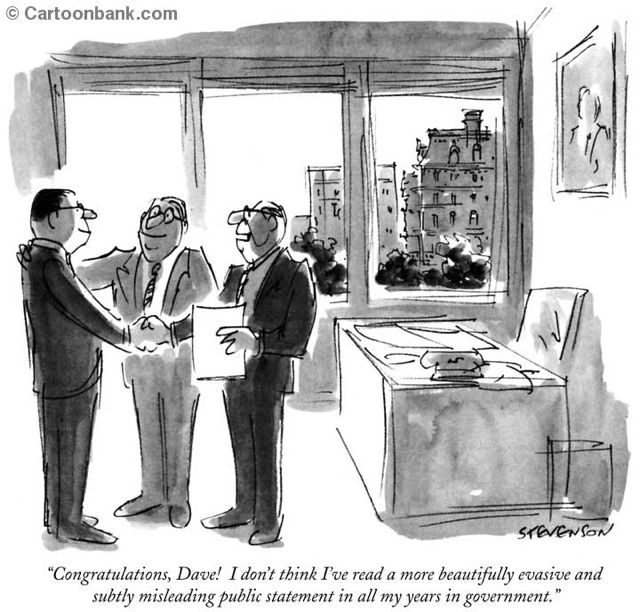
Cartoon – Rebuilding Trust

An unpublished document prepared for the White House Coronavirus Task Force and obtained by the Center for Public Integrity suggests more than a dozen states should revert to more stringent protective measures, limiting social gatherings to 10 people or fewer, closing bars and gyms and asking residents to wear masks at all times.
The document, dated July 14, says 18 states are in the “red zone” for COVID-19 cases, meaning they had more than 100 new cases per 100,000 population last week. Eleven states are in the “red zone” for test positivity, meaning more than 10 percent of diagnostic test results came back positive.
It includes county-level data and reflects the insistence of the Trump administration that states and counties should take the lead in responding to the coronavirus. The document has been shared within the federal government but does not appear to be posted publicly.
It’s clear some states are not following the task force’s advice. For instance, the document recommends that Georgia, in the red zone for both cases and test positivity, “mandate statewide wearing of cloth face coverings outside the home.” But Gov. Brian Kemp signed an order Wednesday banning localities from requiring masks.

A pandemic would normally be a time when public health expertise and data are in urgent demand — yet President Trump and his administration have been going all out to undermine them.
Why it matters: There’s a new example almost every day of this administration trying to marginalize the experts and data that most administrations lean on and defer to in the middle of a global crisis.
Here’s how it has been happening just in the past few weeks:
The impact: The result is that the CDC — which is supposed to be the go-to agency in a public health crisis — is distracted by constant public critiques from the highest levels. And Fauci, “America’s Doctor,” is the subject of yet another round of stories about whether Trump is freezing him out.
The other side: The White House insists there’s no problem. “President Trump has always acted on the science and valued the input of public health experts throughout this crisis,” said White House deputy press secretary Sarah Matthews.
Between the lines: Murtaugh deflected several times when asked whether there was a deliberate strategy to marginalize the CDC and the experts: “The President and the White House have consistently advised Americans to follow CDC guidelines. The President also believes we can open schools safely on time and that we must do so.”
Our thought bubble, by Axios White House reporter Alayna Treene: The responses make it clear that the White House and the Trump campaign don’t want to advance the narrative that they’re deliberately battling with America’s health experts, or that there’s any kind of strategy behind it.
The bottom line: When the history of this pandemic is written, it will show that the public health experts who were trying to fight it also had to deal with political fights that made their jobs harder.

Hospitals will begin sending coronavirus-related information directly to the Department of Health and Human Services (HHS), not the Centers for Disease Control and Prevention (CDC), under new instructions from the Trump administration.
The move will take effect on Wednesday, according to a new guidance and FAQ document for hospitals and clinical labs quietly posted on the HHS website.
Previously, hospitals reported to the CDC’s National Healthcare Safety Network, which the agency describes as the nation’s most widely used health care-associated infection tracking system.
The CDC tracked information including how many beds are available, the number of ventilators available and how many COVID-19 patients the hospitals have.
Beginning Wednesday, hospitals will report the same data but will bypass the CDC and send it to HHS directly.
According to HHS, the goal is to streamline data collection, which will be used to inform decisions at the federal level such as allocation of supplies, treatments and other resources.
But the move comes amid concerns that the White House has been sidelining the CDC and after Trump administration officials attacked Anthony Fauci, the nation’s top infectious disease expert and a member of the White House coronavirus task force.

The United States is being ravaged by a deadly pandemic that is growing exponentially, overwhelming health care systems and costing thousands of lives, to say nothing of an economic recession that threatens to plague the nation for years to come.
But the American public seems to be over the pandemic, eager to get kids back in schools, ready to hit the bar scene and hungry for Major League Baseball to play its abbreviated season.
The startling divergence between the brutal reality of the SARS-CoV-2 virus and the fantasy land of a forthcoming return to normalcy has public health experts depressed and anxious about what is to come. The worst is not behind us, they say, by any stretch of the imagination.
“It’s an absolute disconnect between our perceived reality and our actual reality,” said Craig Spencer, a New York City emergency room doctor who directs global health in emergency medicine at New York Presbyterian/Columbia University Medical Center. “To look at the COVID case count and the surge in cases and to think that we can have these discussions as we have uncontrolled spread, to think we can have some national strategy for reopening schools when we don’t even have one for reopening the country, it’s just crazy.”
The number of dead from the virus in the United States alone, almost 136,000, is roughly equal to the populations of Charleston, S.C., or Gainesville, Fla. If everyone in America who had been infected lived in the same city, that city would be the third-largest in the country, behind only New York and Los Angeles. More people in the United States have tested positive for the coronavirus than live in the state of Utah. By the weekend, there are likely to be more confirmed coronavirus cases than there are residents of Connecticut.
There are signs that the outbreak is getting worse, not better. The 10 days with the highest number of new coronavirus infections in the United States have come in the past 11 days.
Case counts, hospitalizations and even deaths are on the rise across the nation, not only in Southern states that were slow to embrace lockdowns in March and April.
California, the first state to completely lock down, has reported more than 54,000 new cases over both of the last two weeks. Nevada, about one-thirteenth the size of California, reported 5,200 new cases last week. States where early lockdowns helped limit the initial peak like Pennsylvania, Illinois and Ohio are all seeing case counts grow and hospital beds fill up.
Only two states — Maine and New Jersey — have seen their case counts decline for two consecutive weeks.
“We are nearing the point where pretty much most of the gains we had achieved have been lost,” said Christine Petersen, an epidemiologist at the University of Iowa. “All of us are hoping we magically get our acts together and we can look like Europe in two months. But all the data shows we are not doing that right now.”
It is in that dismal context that schools are preparing some sort of return to learning, whether in person or remote. President Trump and Education Secretary Betsy DeVos have threatened schools that do not fully reopen.
But even though the coronavirus appears to have less severe consequences among children, sending them back to schools en masse does not carry zero risk. Children have died from the virus, and the more who are exposed mean more opportunities for the virus to kill again, even before considering the millions of teachers who may be vulnerable or the parents and grandparents asymptomatic children might be exposed to.
Already, school districts in Los Angeles and San Diego have delayed reopening plans as case counts rise.
“We do know that kids can get sick and they can even die. It’s definitely a much lower number,” Petersen said. “Even if they aren’t as infectious, if there are millions of them gathering in schools not having great hygiene, it’s a multiplier effect.”
The painful lockdowns that were supposed to reduce viral transmissions bought time to bolster testing and hospital capacity, to speed production of the equipment needed to test patients and protect front-line health care workers.
But that hasn’t happened; laboratories in the United States have tested as many as 823,000 people in a day, a record number but far shy of the millions a day necessary to wrestle the virus under control. Arizona and Los Angeles have canceled testing appointments for lack of supplies. Hospitals are reporting new shortages of protective gear and N95 masks.
The Trump administration used the Defense Production Act to order meat processing plants to stay open; it has only awarded contracts sufficient to produce 300 million N95 masks by the end of the year, far short of what health experts believe will be necessary to protect health care workers.
“A failure of national leadership has led us to a place where we are back where we were before, no national testing strategy, no national strategy for supply,” said Kelli Drenner, who teaches public health at the University of Houston. “States are still on their own to scramble for reagents and swabs and PPE and all of that, still competing against each other and against nations for those resources.”
There are troubling signs that the promise of a vaccine may not be the cure-all for which many had hoped. Early studies suggest that the immune system only retains coronavirus antibodies for a few months, or perhaps a year, raising the prospect that people could become reinfected even after they recover. A growing, if still fringe, movement of anti-vaccination activists may refuse a vaccine altogether, putting others at risk.
“A vaccine is not going to solve this. People die of vaccine-preventable diseases every day. All the failures with testing and diagnostics and all the inequities and access to care with those are going to be the same things that are going to be magnified with a vaccine,” said Nita Bharti, a biologist at Penn State’s Center for Infectious Disease Dynamics.
More than a dozen states hit hardest by the latest wave of disease have paused or reversed their reopening processes. But only 24 states and the District of Columbia have ordered residents to wear masks in public, and compliance varies widely by both geography and political affiliation.
“This is the critical time. If we are going to try to reverse this, we have to get back to the mental space and the resolute action we had in March. I’m not sure we have the energy and the wherewithal to do it,” Petersen said.
Without a dramatic recommitment to conquering the virus, health officials warn, the new normal in which the country exists will be one of serious and widespread illness, and a steady drumbeat of death.
“None of this was inevitable. None of this should be acceptable. There are ways we can do better,” Spencer said. “This will continue to be our reality for as long as we don’t take it seriously.”
But after months of repeating the same warnings — wear a mask, stay socially distant, stay home if possible, avoid places where people congregate in tight quarters — some health experts worry their message has been lost amid a sea of doubt, skepticism and mixed signals.
“It’s like a learned helplessness when we’re not helpless,” Drenner said. “There are some pretty effective strategies, but we don’t seem to have the political will to do it.”
https://www.cnn.com/world/live-news/coronavirus-pandemic-07-15-20-intl/index.html
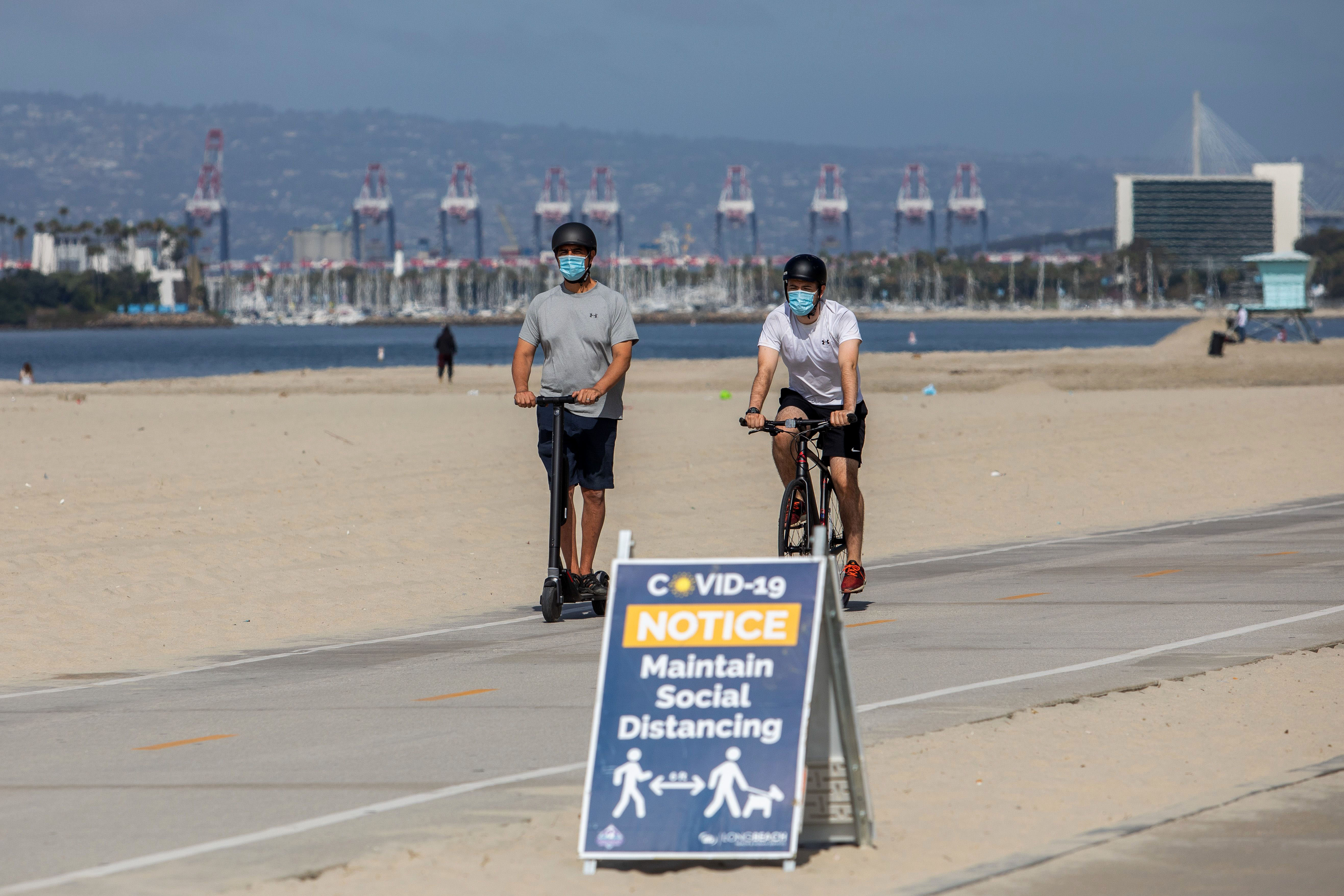
The United States saw a record number of new cases Tuesday with 67,417, according to data from Johns Hopkins University. As of Tuesday, more than 3.4 million people in the US have been infected, and 38 states are reporting an increase in the number of new cases from the week before.
With Covid-19 cases soaring in the US South and Southwest, the nation’s public health experts fear the end is not yet in sight and wonder what normal will look like as the pandemic stretches on through the rest of the year.
While New York and New Jersey were the early virus hotspots, California, Florida, Arizona and Texas now have become the states to watch, Dr. Anthony Fauci, the nation’s top infectious disease doctor, said Tuesday.
The states continue to report new records:
Meanwhile, at least 27 states have paused or rolled back plans to reopen their economies. Among them is Nevada, where 37 bars have filed a lawsuit to fight Gov. Steve Sisolak’s order to revert back to Phase 1 of the state’s reopening plan.
But Fauci cautioned that relaxed restrictions in California, Florida, Arizona and Texas are partly to blame for rising cases in those states, particularly among young people.
Addressing the climb in the number of cases overall and among young people, US Centers for Disease Control and Prevention Director Dr. Robert Redfield said Tuesday the nation is in a much better place than it was in the spring, because the mortality rate is lower, but said “we’re not out of the woods for this.”




 HENRY KOTULA