


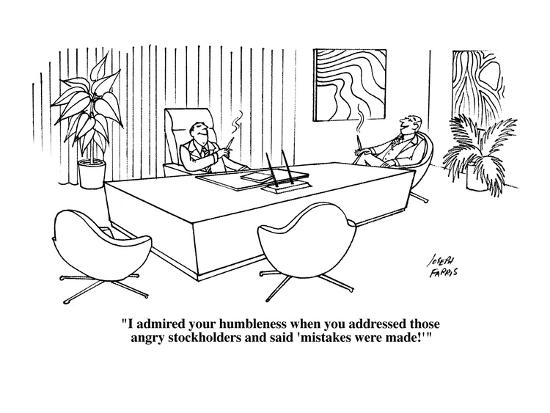
Cartoon – Rebuilding Trust

President Trump said Friday the U.S. would halt its funding of the World Health Organization and pull out of the agency, accusing it of protecting China as the coronavirus pandemic took off. The move has alarmed health experts, who say the decision will undermine efforts to improve the health of people around the world.
In an address in the Rose Garden, Trump said the WHO had not made reforms that he said would have helped the global health agency stop the coronavirus from spreading around the world.
“We will be today terminating our relationship with the World Health Organization and redirecting those funds to other worldwide and deserving urgent global public health needs,” Trump said. “The world needs answers from China on the virus.”
It’s not immediately clear whether the president can fully withdraw U.S. funding for the WHO without an act of Congress, which typically controls all federal government spending. Democratic lawmakers have argued that doing so would be illegal, and House Speaker Nancy Pelosi threatened last month that such a move would be “swiftly challenged.”
The United States has provided roughly 15% of the WHO’s total funding over its current two-year budget period.
The WHO has repeatedly said it was committed to a review of its response, but after the pandemic had ebbed. Last month, Robert Redfield, the director of the Centers for Disease Control and Prevention, also said the “postmortem” on the pandemic should wait until the emergency was over.
As the Trump administration’s response to pandemic has come under greater scrutiny, with testing problems and a lack of coordination in deploying necessary supplies, Trump has sought to cast further blame on China and the WHO for failing to snuff out the spread when the virus was centered in China.
During his remarks, Trump alleged, without evidence, that China pressured WHO to mislead the world about the virus. Experts say that if the U.S. leaves the WHO, the influence of China will only grow.
“The world is now suffering as a result of the malfeasance of the Chinese government,” Trump said. “China’s coverup of the Wuhan virus allowed the disease to spread all over the world, instigating a global pandemic that has cost more than 100,000 American lives, and over a million lives worldwide.” (That last claim is not true; globally, there have been about 360,000 confirmed deaths from Covid-19, the disease caused by the coronavirus.)
When Trump earlier this month threatened to yank U.S. funding in a letter, Tedros Adhanom Ghebreyesus, the WHO director-general, would only say during a media briefing that the agency was reviewing it. But he and other officials stressed that the agency had a small budget — about $2.3 billion every year — relative to the impact the agency had and what it was expected to do.
Mike Ryan, head of the WHO’s emergencies program, said the U.S. funding provided the largest proportion of that program’s budget.
“So my concerns today are both for our program and … working on how we improve our funding base for WHO’s core budget,” Ryan said. “Replacing those life-saving funds for front-line health services to some of the most difficult places in the world — we’ll obviously have to work with other partners to ensure those funds can still flow. So this is going to have major implications for delivering essential health services to some of the most vulnerable people in the world and we trust that other donors will if necessary step in to fill that gap.”

Trump faces criticism over lack of national plan on coronavirus
The Trump administration is facing intense criticism for the lack of a national plan to handle the coronavirus pandemic as some states begin to reopen.
Public health experts, business leaders and current administration officials say the scattershot approach puts states at risk and leaves the U.S. vulnerable to a potentially open-ended wave of infections this fall.
The White House has in recent days sought to cast itself as in control of the pandemic response, with President Trump touring a distribution center to tout the availability of personal protective equipment and press secretary Kayleigh McEnany detailing for the first time that the administration did have its own pandemic preparedness plan.
Still, the White House lacks a national testing strategy that experts say will be key to preventing future outbreaks and has largely left states to their own devices on how to loosen restrictions meant to slow the spread of the virus. Trump this week even suggested widespread testing may be “overrated” as he encouraged states to reopen businesses.
The Centers for Disease Control and Prevention (CDC) on Thursday night issued long-awaited guidance intended to aid restaurants, bars and workplaces as they allow employees and customers to return, but they appeared watered down compared to previously leaked versions.
Some experts said the lack of clear federal guidance on reopening could hamper the economic recovery.
“A necessary condition for a healthy economy is a healthy population. This kind of piecemeal reopening with everyone using different criteria for opening, we’re taking a big risk,” said Mark Zandi, chief economist at Moody’s Analytics.
The lack of coherent direction from the White House was driven home this week by damaging testimony by a former top U.S. vaccine official who claims he was ousted from his post improperly.
“We don’t have a single point of leadership right now for this response, and we don’t have a master plan for this response. So those two things are absolutely critical,” said Rick Bright, who led the Biomedical Advanced Research and Development Authority until he was demoted in late April.
The U.S. faces the “darkest winter in modern history” if it does not develop a more coordinated national response, Bright said. “Our window of opportunity is closing.”
From the start, the White House has let states chart their own responses to the pandemic.
The administration did not issue a nationwide stay-at-home order, resulting in a hodgepodge of state orders at different times, with varying levels of restrictions.
Facing a widespread shortage, states were left to procure their own personal protective equipment, ventilators and testing supplies. Trump resisted using federal authority to force companies to manufacture and sell equipment to the U.S. government.
Without clear federal guidance, state officials were competing against each other and the federal government, turning the medical supply chain into a free-for-all as they sought scarce and expensive supplies from private vendors on the commercial market.
“The fact that we had questions about our ability to have enough mechanical ventilators, and you had states basically bidding against each other, trying to secure personal protective equipment … it shouldn’t be happening during a pandemic,” said Amesh Adalja, a senior scholar at the Johns Hopkins University Center for Health Security.
Internally, the administration struggled to mount a unified front as various agencies jockeyed for control. Multiple agencies have been providing contradictory instructions.
At first, Department of Health and Human Services (HHS) Secretary Alex Azar led the White House coronavirus task force.
Roughly a month, later he was replaced by Vice President Pence. The Federal Emergency Management Agency (FEMA) was later tasked with leading the response to get supplies to states, while senior White House adviser Jared Kushner led what has been dubbed a “shadow task force” to engage the private sector. Now, FEMA is reportedly winding down its role, and turning its mission back over to HHS.
The CDC has been largely absent throughout the pandemic. Director Robert Redfield has drawn the ire of President Trump as well as outside experts, and he has been seen infrequently at White House briefings.
“I think seeing the nation’s public health agency hobbled at a time like this and looking over its shoulder at its political bosses is something I hoped I would never see, and I’ve been working with the CDC for over 30 years,” said Lawrence Gostin, a professor of public health at Georgetown University.
“I think that people will die because the public health agency has lost its visibility and its credibility and that it’s being politically interfered with,” he added.
The administration recently has taken some steps to improve on the initial response to the pandemic.
Ventilator production has increased, and the U.S. is no longer seeing a shortage of the devices.
Testing has improved dramatically as well, though experts think the U.S. needs to be testing thousands of more people per day before the country can reopen.
The administration also unveiled plans to expand the Strategic National Stockpile’s supply of gowns, respirators, testing supplies and other equipment, after running out of supplies early in the pandemic.
Adalja said the administration’s positive steps are coming way too late.
“It’s May 15, we should have been in this position January 15,” he said.
McEnany on Friday for the first time detailed the White House’s preparedness plan that replaced the Obama-era pandemic playbook, an acknowledgement that Trump’s predecessor did leave a road map, despite claims to the contrary from some of the president’s allies.
She did not give many specifics on the previously unknown plan. Instead, McEnany declared the Trump administration’s handling of the virus had been “one of the best responses we’ve seen in our country’s history.”
Yet as states look to reopen businesses and get people back to work, the White House is taking a back seat as governors set their own guidelines for easing stay-at-home orders and restrictions on social activities.
The White House in April issued a three-step plan for states to reopen their economies, but it has largely been ignored by states and by the president.
Dozens of governors have begun easing restrictions on businesses and social activities without meeting the White House guidelines. Trump has been urging them to move even faster, backing anti-lockdown protesters in Michigan, Virginia, Minnesota and Pennsylvania.
Even scaled-down guidance from federal agencies is critical for providing a road map for state and local leaders, and for businesses considering how best to resume operations, said Neil Bradley, chief policy officer with the U.S. Chamber of Commerce.
“We need guidance because it helps instill confidence about the right types of approaches to take, but when you begin to move away from guidance and into either regulations or very strict approach, then that’s increasingly going to be unworkable in lots of different locations,” Bradley said.

Rick Bright, the former director of the U.S. Biomedical Advanced Research and Development Authority (BARDA), filed a whistleblower complaint Tuesday alleging that the Department of Health and Human Services failed to take early action to mitigate the threat of the novel coronavirus.
Flashback: Bright said last month he believes he was ousted after clashing with HHS leadership over his attempts to limit the use of hydroxychloroquine to treat the coronavirus.
What’s new: In his complaint, Bright claims he was excluded from an HHS meeting on the coronavirus in late January after he “pressed for urgent access to funding, personnel, and clinical specimens, including viruses” to develop treatments for the coronavirus should it spread outside of Asia.
The White House declined to comment. HHS did not immediately respond to a request for comment.
https://www.documentcloud.org/documents/6882494-NEW-R-Bright-OSC-Complaint-Redacted.html
%2Farc-anglerfish-washpost-prod-washpost%2FCKHPZTEE3EI6VANDS2IMTCARCE.jpg&w=908)
Gradually opening things up will take even longer — and probably will vary considerably from state to state.
Governors are feeling pressure from two sides. Many troubling questions about the coronavirus remain unanswered, such as how to get more Americans tested and whether the United States even has enough capacity to track and isolate virus cases. At the same time, they’re feeling immense pressure to restart economic activity, with tens of millions of Americans out of work and the country stuck in a deepening economic crater.
Yesterday the National Governors Association released a 10-point guide for states. The first point is to make coronavirus testing broadly available. It urges states to improve surveillance to detect outbreaks, ensure hospitals are equipped to respond to surges and create a plan to reopen in stages.
%2Farc-anglerfish-washpost-prod-washpost%2FOHHEEKEE2UI6VANDS2IMTCARCE.jpg&w=908)
Maryland Gov. Larry Hogan, chair of the National Governors Association. (Salwan Georges/The Washington Post)
The plan also warns states against opening prematurely.
“Opening without the tools in place to rapidly identify and stop the spread of the virus … could send states back into crisis mode, push health systems past capacity and force states back into strict social distancing measures,” it says.
Then there’s guidance from the Trump administration, which says states should first see a decrease in confirmed coronavirus cases over a 14-day period. That guidance is in line with what public health experts have recommended — although Trump has also frequently suggested he’d like to see states open sooner.
Some, like Trump, are chomping at the bit. Georgia Gov. Brian Kemp (R) is allowing businesses including gyms and barber shops to reopen on Friday. Colorado Gov. Jared Polis (D) has said some businesses may reopen on Monday, and retailers can have a limited number of in-store shoppers starting May 1.
%2Farc-anglerfish-washpost-prod-washpost%2FYJLSDFUDMQI6VANDS2IMTCARCE.jpg&w=908)
Polis puts on a Denver Broncos face mask during a news conference on Monday. (David Zalubowski/AP)
Other governors are much more cautious. Virginia Gov. Ralph Northam (D), for example, has issued a stay-at-home order in effect until June 10. California Gov. Gavin Newsom (D) declined yesterday to name a date for easing restrictions, saying the state hasn’t reached its six goals before reopening the economy.
Newsom, however, did indicate progress has been made with his detailed playbook for reopening the state. After a phone conversation with Trump, the governor said the two had agreed to significantly ramp up testing across California, with hundreds of thousands of new swabs on the way and 86 new testing sites opening.
But virtually every governor is working on plans, some in coordination with other governors, on how to shape the post-quarantine world.
Georgia: Certain businesses may open on Friday; theaters and restaurants can reopen on Monday. Bars, nightclubs and music venues will remain closed; schools have been closed through the end of the school year.
Kemp explained his decision to reopen tanning salons, barber shops, massage parlors and bowling alleys, saying on Monday: “I see the terrible impact of covid-19 on public health as well as the pocketbook.” Kemp said he will urge businesses to take precautions, such as screening for fevers, spacing workstations apart and having workers wear gloves and masks “if appropriate,” my Washington Post colleagues William Wan, Carolyn Y. Johnson and Joel Achenbach report.
“Georgia, according to some models, is one of the last states that should be reopening,” they write. “The state has had more than 830 covid-19 deaths. It has tested fewer than 1 percent of its residents — low compared with other states and the national rate. And the limited amount of testing so far shows a high rate of positives, at 23 percent.”
Trump blasted Kemp’s decision during his briefing last night, saying it violates his administration’s phase 1 guidelines for when to reopen.
Colorado: Polis is allowing the state’s stay-at-home order to expire Sunday, after which the state will gradually reopen businesses. Starting May 4, nonessential offices may have 50 percent of their workforce at the site, although large workplaces will be advised to conduct symptom and temperature checks.
Polis has warned the restrictions won’t all be lifted at the same time.
“The virus will be with us,” he said earlier this month. “We have to find a sustainable way that will be adapted in real time to how we live with it.”
South Carolina: Gov. Henry McMaster (R) said Monday he was allowing nonessential businesses such as department stores and retailers to open, followed by beaches on Tuesday.
But businesses must follow three rules for operating: They must limit the number of customers in the store; require patrons to be six feet apart; and follow sanitation guidelines from the Centers for Disease Control and Prevention.
“I urge everyone to remember we are still in a very serious situation,” McMaster said at a news conference. “We know that this disease, this virus, spreads easily, and we know it is deadly. So we must be sure that we continue to be strict and disciplined with our social discipline and taking care not to infect others.”
Tennessee: Gov. Bill Lee (R) said he plans to allow some businesses to reopen once his “safer-at-home” order expires in one week. But the state’s biggest cities will make their own reopening determinations. Lee has appointed a 30-member economic recovery group to create a plan.
Lee, along with Kemp and McMaster, have met with the governors of Mississippi, Alabama and Florida to consider how to reopen their economies in a coordinated way in the country’s southeast region. The number of new cases and deaths in Florida has leveled off somewhat — something the state’s governor, Ron DeSantis (R), has been pointing to as he urges a speedy reopening in his state.
The president took issue with the portrayal of comments from Redfield following an interview with our Post colleague Lena H. Sun. In that interview, Redfield warned that a second wave of the coronavirus could be worse than the current one.
“There’s a possibility that the assault of the virus on our nation next winter will actually be even more difficult than the one we just went through,” Redfield told Lena. He added: “We’re going to have the flu epidemic and the coronavirus epidemic at the same time.”
The president again repeated the claim at his daily White House coronavirus task force briefing – this time, with Redfield standing awkwardly next to him.
But Redfield also sought to “soften his words as the president glowered next to him,” Lena, Ashley Parker, Josh Dawsey and Yasmeen Abutaleb write.
“The remarkable spectacle provided another illustration of the president’s tenuous relationship with his own administration’s scientific and public health experts, where the unofficial message from the Oval Office is an unmistakable warning: Those who challenge the president’s erratic and often inaccurate coronavirus views will be punished — or made to atone,” they write.
It’s apparent “Trump is again bristling at a health official offering too dire a scenario,” our colleague Aaron Blake writes. He points out that Trump was set off a previous time when another top CDC official warned in February that the spread of the coronavirus was inevitable.
Rick Bright, previously the director of the Biomedical Advanced Research and Development Authority, said he was dismissed and pushed into a narrower role after he called for strictly vetting supposed treatments like anti-malarials repeatedly embraced publicly by the president.
“I believe this transfer was in response to my insistence that the government invest the billions of dollars allocated by Congress to address the Covid-19 pandemic into safe and scientifically vetted solutions, and not in drugs, vaccines and other technologies that lack scientific merit,” Bright said in a statement, according to the New York Times’s Michael D. Shear and Maggie Haberman.
He added: “I am speaking out because to combat this deadly virus, science — not politics or cronyism — has to lead the way.”
The president was asked about Bright during last night’s briefing and whether the official was pushed out.
“Maybe he was and maybe he wasn’t. I don’t know who he is,” Trump responded.
In late January, days after the first coronavirus case was confirmed in the United States, Azar told Trump in a meeting the coronavirus spread was “under control,” the Wall Street Journal’s Rebecca Ballhaus and Stephanie Armour report. Azar also told the president more than a million diagnostic tests would be available in weeks and that it was the “fastest we’ve ever created a test.”
These promises didn’t pan out.
“Six weeks after that Jan. 29 meeting, the federal government declared a national emergency and issued guidelines that effectively closed down the country,” Rebecca and Stephanie write. “Mr. Azar, who had been at the center of the decision-making from the outset, was eventually sidelined.”
There were numerous factors that slowed the administration’s initial coronavirus response, but “interviews with more than two dozen administration officials and others involved in the government’s coronavirus effort show that Mr. Azar waited for weeks to brief the president on the threat, oversold his agency’s progress in the early days and didn’t coordinate effectively across the health-care divisions under his purview,” they report.
Earlier this year, Azar tapped an aide to lead HHS’s day-to-day coronavirus response who had joined the agency after running a dog-breeding business for six years.
The aide, Brian Harrison, was derisively called “the dog breeder” by some within the White House, Reuters’s Aram Roston and Marisa Taylor report.
“Azar’s optimistic public pronouncement and choice of an inexperienced manager are emblematic of his agency’s oft-troubled response to the crisis,” they add. “… Harrison, 37, was an unusual choice, with no formal education in public health, management, or medicine and with only limited experience in the fields. In 2006, he joined HHS in a one-year stint as a ‘Confidential Assistant’ to Azar, who was then deputy secretary. He also had posts working for Vice President Dick Cheney, the Department of Defense and a Washington public relations company.”
Doctors are learning that covid-19, once believed to be a straightforward respiratory virus, is much more frightening. Since the earlier waves of coronavirus cases, doctors have learned that the disease attacks not just lungs but kidneys, the heart, intestines, liver and the brain. Autopsies also have shown that some coronavirus patients lungs were filled with hundreds of microclots, our Post colleague Ariana Eunjung Cha reports.
“The problem we are having is that while we understand that there is a clot, we don’t yet understand why there is a clot,” said Lewis Kaplan, a University of Pennsylvania physician and head of the Society of Critical Care Medicine. “We don’t know. And therefore, we are scared.”
“In hindsight, there were hints blood problems had been an issue in China and Italy as well, but it was more of a footnote in studies and on information-sharing calls that had focused on the disease’s destruction of the lungs,” Ariana writes.
A study found 88 percent of 320 coronavirus patients on ventilators in New York state’s largest health system died.
It’s an uptick from pre-pandemic figures. “That compares with the roughly 80 percent of patients who died on ventilators before the pandemic, according to previous studies — and with the roughly 50 percent death rate some critical care doctors had optimistically hoped when the first cases were diagnosed,” Ariana reports.
The research, published in the journal JAMA, also notes many of the hospitalized had other conditions.
“The paper also found that of those who died, 57 percent had hypertension, 41 percent were obese and 34 percent had diabetes, which is consistent with risk factors listed by the Centers for Disease for Control and Prevention,” she adds. “Noticeably absent from the top of the list was asthma. As doctors and researchers have learned more about covid-19, the less it seems that asthma plays a dominant role in outcomes.”
There’s a growing chance of a second economic downturn if there’s another surge of the coronavirus or if there’s an increase in bankruptcies and defaults, our Post colleague Heather Long reports.
Instead of a V-shaped recovery, economists say, it is increasingly likely that the recovery will be W-shaped, in which there are improvements before another downturn later this year or in the following year. That possibility is “in part because creating a vaccine is likely to take at least a year and millions of Americans and businesses are piling up debt without an easy ability to repay it,” Heather writes.
“It could be triggered by reopening the economy too quickly and seeing a second spike in deaths from covid-19, the disease the coronavirus causes,” she adds. “… This could cause many businesses, which were barely hanging on, to close again. Many Americans could become even more afraid to venture out until a vaccine is found.”
“Pretending the world will return to normal in three months or six months is just wrong,” said Diane Swonk, chief economist at Grant Thornton, told The Post. “The economy went into an ice age overnight. We’re in a deep freeze. As the economy thaws, we’ll see the damage done as well. Flooding will occur.”


 HENRY KOTULA