Pay Cuts, Furloughs, Redeployment for Doctors and Hospital Staff

https://www.medpagetoday.com/infectiousdisease/covid19/85827?xid=nl_mpt_investigative2020-04-08&eun=g885344d0r&utm_source=Sailthru&utm_medium=email&utm_campaign=InvestigativeMD_040820&utm_term=NL_Gen_Int_InvestigateMD_Active

Pay Cuts, Furloughs, Redeployment for Doctors and Hospital Staff ...

— Health systems see massive disruption from COVID-19

In Michigan, Trinity Health is furloughing 2,500 of its 24,000 employees. In Florida, Sarasota Memorial Health Care is taking “immediate steps to reduce costs, including temporary furloughs and reduced hours” for workers.

In less than 1 month, COVID-19 has made swift, deep cuts in hospital billings. Despite high volumes in the first 2 weeks, March revenue plunged by $16 million at Sarasota Memorial. Surgery cases fell by more than 50%, and volumes dropped by 45% at two emergency care centers and by 66% at seven urgent care centers.

Squeezed by plummeting income and climbing COVID-19 expenses, hospitals and health systems are bracing themselves for system-wide disruption by announcing temporary layoffs, reassignments, and pay cuts.

Many changes, like Trinity’s furloughs in Michigan, affect mainly non-clinical workers. Some alter compensation or duties for doctors, nurses, and other healthcare providers.

“In all parts of the country, physicians are being asked to sign agreements or acknowledgments for pay cuts ranging from 20% to 75%, depending on what their specialty is, where they are, and what the institutions are doing,” said Scott Weavil, JD, a California lawyer who counsels physicians nationwide about employment contracts.

“Many of these providers are not on the front lines of COVID, but they are still working,” Weavil noted. “Babies are being born. People are having accidents and visiting emergency departments. Urgent surgeries are happening. Physicians are at work or on call and ready to help if needed. And in most of these environments, there are patients who have tested positive for COVID-19,” he told MedPage Today.

“Ob/gyns aren’t doing a lot of elective procedures like hysterectomies, but they are delivering babies for COVID-positive patients, wearing donated cloth masks that may or may not be effective,” Weavil added.

In some cases, doctors have been sidelined and face the prospect of dwindling income as patient volumes fall. “We have 2,600 physicians and advanced-practice providers,” said Mark Briesacher, MD, senior vice president and chief physician executive of Intermountain Healthcare in Salt Lake City. “About 800 of them are on a patient volume-related type of contract, similar to what you would have in private practice.”

Because non-urgent and elective procedures are being delayed, some of these clinicians now see 30% to 50% fewer patients and could face big income drops, Briesacher told MedPage Today. “But we’ve put a floor in place,” he said: these providers will receive their usual pay until May 30, then 85% of that amount until normal patient volumes resume.

Redeployment can help practitioners make up lost income, Briesacher added. “A general surgeon often has critical care training,” he noted. “When this increase in patient care needs due to COVID-19 does come to Utah, we can deploy that surgeon to work in our ICUs with a critical care doctor, and if they’re working fulltime, they’ll get paid the same as they were before.”

Reassignment does not stop with doctors at Intermountain: hospital nurses can be deployed to screening desks, drive-through testing sites, or telehealth centers and will keep their current rate of pay, spokesperson Daron Crowley said.

“I recently reviewed a COVID-19 compensation plan of a health system in Florida that would give physicians their base or draw, or a midpoint between their 2019 base and their 2019 overall compensation,” noted Weavil, the attorney. “That seemed pretty good, but it came at a cost: the physicians had to agree to practice outside of their normal setting, as long as they were credentialed for the work.”

“At first blush, the credentialing requirement sounded like a protection; if you are a psychiatrist, you’d think ‘they’re not going to send me to the ICU,’ and normally, that’s correct,” Weavil continued.

But hospitals are adopting emergency credentialing provisions during COVID-19 and “doctors can be forced to practice pretty far afield of their specialty,” he said. In some ways, the situation resembles residency, he pointed out: “You have an attending physician who knows what she’s doing directing fish-out-of-water physicians who have been conscripted into service beyond their specialties.”

The list of hospital systems announcing major changes — including pay cuts for hospital executives, as Trinity Health in Michigan has done — grows each day. Boston Medical Center Health System has furloughed 700 employees; Cincinnati-based Bon Secours Mercy Health has announced it will do the same. Kentucky’s Appalachian Regional Healthcare will furlough about 500 staff members. South Carolina’s Prisma Health will lay off an undisclosed number of clinical, corporate, and administrative workers. Tenet Healthcare in Dallas has furloughed 500 fulltime positions.

Furloughing staff “was an extremely difficult decision, and one that we did not make lightly,” Sarasota Memorial CEO David Verinder wrote in a letter to employees.

“Staff have gone above and beyond to care for our patients throughout this crisis, even as they have been anxious about the health and well-being of themselves and their families,” he continued. “But as the health care safety net for the region, we must do all we can to continue fulfilling that critical role in the weeks ahead and for the long-term.”


$100B federal hospital aid won’t fully compensate lost revenue, Moody’s says

https://www.beckershospitalreview.com/finance/100b-federal-hospital-aid-won-t-fully-compensate-lost-revenue-moody-s-says.html?utm_medium=email

Moodys | HENRY KOTULA

The $2 trillion federal coronavirus aid package signed into law that includes $100 billion for nonprofit hospitals won’t completely cover the revenue hospitals will lose as a result of the pandemic, Moody’s Investors Service wrote in an April 3 note.

While the aid package includes several provisions like compensation for lost revenue, increased Medicare reimbursement and advances on future Medicare reimbursement, cash flow at nonprofit hospitals will still likely be materially lower for the next several months. Postponed services alone are likely to reduce hospital revenue by 25 percent to 40 percent a month on average, Moody’s said, a reduction that is affecting even hospitals that aren’t treating large COVID-19 case loads.

“The $100 billion aid package provides some relief to hospitals by supporting their operations and providing access to critical supplies,” Dan Steingart, vice president at Moody’s, said. “However, it is unlikely to fully compensate the sector for the two main financial challenges facing providers as a result of the coronavirus outbreak. The first is a material decline in revenue and cash flow as profitable elective surgeries, procedures and other services are postponed to preserve resources and avoid spreading the virus. The second is difficulty curbing expenses as surge preparation costs offset any expense reductions from postponed or canceled services.”

Moody’s maintained its negative outlook on nonprofit hospitals. 


MUSC Health lays off 900 due to COVID-19 financial strain

https://www.beckershospitalreview.com/finance/musc-health-lays-off-900-due-to-covid-19-financial-strain.html?utm_medium=email

The Agenda: MUSC laying off 900 amid financial strain; McMaster's ...

MUSC Health, an eight-hospital system based in Charleston, S.C., is laying off about 900 employees and reducing pay for salaried workers to help offset financial damage caused by the COVID-19 pandemic.

Like many other health systems across the U.S., MUSC Health is facing financial pressure from canceling elective procedures and other nonemergent care. As a result, the health system has experienced a significant decline in surgical volumes, inpatient visits and ambulatory encounters.

MUSC Health announced April 6 that it has taken several steps to diminish continued financial damage caused by the pandemic. Those steps include delaying capital expenditures, reducing contractual services, transitioning 80 percent of outpatient visits to telehealth, reducing employee compensation and layoffs.

MUSC Health is laying off about 900 employees, roughly 5 percent of its more than 17,000-person workforce. The layoffs, which the health system described as “temporary,” were effective April 7, according to The Post and Courier. The layoffs will not affect frontline healthcare workers, MUSC Health CEO Patrick Cawley, MD, said during an April 6 press conference, according to the report.

The health system is also reducing pay for full-time salaried workers and its leadership team by 15 percent and 20 percent, respectively. Salary adjustments take effect next week.

“It is also important to emphasize that at this time, frontline health care team members, who have already seen fewer work hours due to COVID-19 response, will not see any additional pay cuts so that MUSC Health can continue to be prepared to face the public health crisis as it unfolds,” the health system said April 6.

MUSC Health said it is evaluating state and federal COVID-19 aid proposals, but not all of the proposed benefits apply to MUSC Health. “There are no guarantees on the timing or amount of these funds that MUSC Health may receive,” the system said.


Nonprofit hospitals vulnerable to coronavirus-related market fallout, Fitch says

https://www.beckershospitalreview.com/finance/nonprofit-hospitals-vulnerable-to-coronavirus-related-market-fallout-fitch-says.html

I Like Boats Dump- Especially Boats Crashing Into Waves - Album on ...

Continued market losses prompted by the COVID-19 pandemic will likely weaken key liquidity metrics and pressure the ratings of some nonprofit hospitals, according to a new Fitch Ratings report. 

About half of Fitch’s rated nonprofit hospitals have 10 percent to 40 percent of their portfolios invested in equities, but other nonprofit hospitals exceed this range by a wide margin, Fitch noted.

Throughout the last month, the stock market suffered historic losses, which caused hospitals with more aggressive asset allocation to underperform their more conservative counterparts by 10 percent to 25 percent, Fitch said. 

Fitch said that hospitals in the last few weeks have seen a median loss of about 30 days of cash on hand. It noted this metric is not “an immediate concern yet, given the ample liquidity these hospitals have.”

But Fitch said most hospitals have cash on hand to fund about 200 days of operations.

The ratings agency said the market likely will remain volatile, and “time will tell if and how the stock market declines eat into a hospital’s reserves.”


Quorum says it may have to file for bankruptcy

https://www.healthcaredive.com/news/quorum-10k-delay-bankruptcy-warning/575491/

Dive Brief:

  • For-profit hospital operator Quorum Health said in a recent filing with the Securities and Exchange Commission that it may have to file for Chapter 11 bankruptcy to address current liquidity needs while continuing to care for patients and keep its hospitals operating.
  • The company said it’s in ongoing discussions with certain debt holders concerning a recapitalization or financial reorganization transaction.
  • Quorum also announced in the SEC filing that it will be late to file its annual 10-K report, covering financials for its fiscal year ending December 31, 2019.

Dive Insight:

COVID-19 has upended hospitals’ typical operations, prompting many to halt lucrative elective surgeries and cancel doctors visits to preserve staff and resources. Some worry those patients and revenue may never come back as unemployment claims go up and people lose their employer-sponsored health coverage. 

Tennessee-based Quorum Health, which operates 24 hospitals in 14 states, may have already been more ill-positioned financially than other systems for such a pandemic.

Quorum missed Wall Street earnings expectations in its most recent financials for the third quarter of 2019, posting a net loss of almost $76 million and a revenue decline almost 9% year over year. The company now said it’s delaying its 10K report with its most recent financials due to restructuring talks, but has 15 days to do so.

The for-profit chain went public in May 2016 with 38 hospitals – 14 of which have since shuttered. In 2017 private equity firm KKR took a 5.6% stake in the system for $11.3 million. 

Beyond being Quorum’s largest debt-holder today, KKR also owns about 9% of its public shares. In December, the firm offered to buy Quorum out and take the hospital chain private at $1 a share.

While negotiating with debt holders and weighing its options, Quorum intends to maintain all operations at its hospitals without any interruption in service, CEO Robert Fish said in a statement.

“Our facilities play a critically important role in their communities and the fight against COVID-19,” Fish said. “We are intensely focused on ensuring our employees have the resources they need to provide quality care to the patients and communities they serve, now and well into the future.”


Trinity Health to furlough 2,500 employees in Michigan

https://www.beckershospitalreview.com/finance/trinity-health-to-furlough-2-500-employees-in-michigan.html?utm_medium=email

Home - Trinity Health System

The two health systems that comprise Trinity Health’s Michigan region will furlough 2,500 employees at eight hospitals, according to MLive.com.

Livonia-based Saint Joseph Mercy Health System and Muskegon-based Mercy Health said the furloughs will occur over the next few weeks and will mostly affect nonclinical workers.

The furloughs, which represent 10 percent of the workforce at the two systems, will enable the hospitals to “focus resources on the functions directly related to essential COVID-19 patient care needs, while protecting people and helping to prevent the spread of the virus,” according to the report.

Livonia-based Trinity Health said the goal is for the furloughs to be temporary. 

To help offset financial losses from the COVID-19 pandemic, Trinity’s executive leaders are taking up to 25 percent pay cuts, and performance-based bonuses are being eliminated, according to the report. 


Bon Secours Mercy Health to furlough 700, estimates $100M monthly operating loss

https://www.beckershospitalreview.com/finance/bon-secours-mercy-health-to-furlough-700-estimates-100m-monthly-revenue-loss.html?utm_medium=email

Bon Secours Mercy Health Sells $1.2B Majority Stake in Ensemble ...

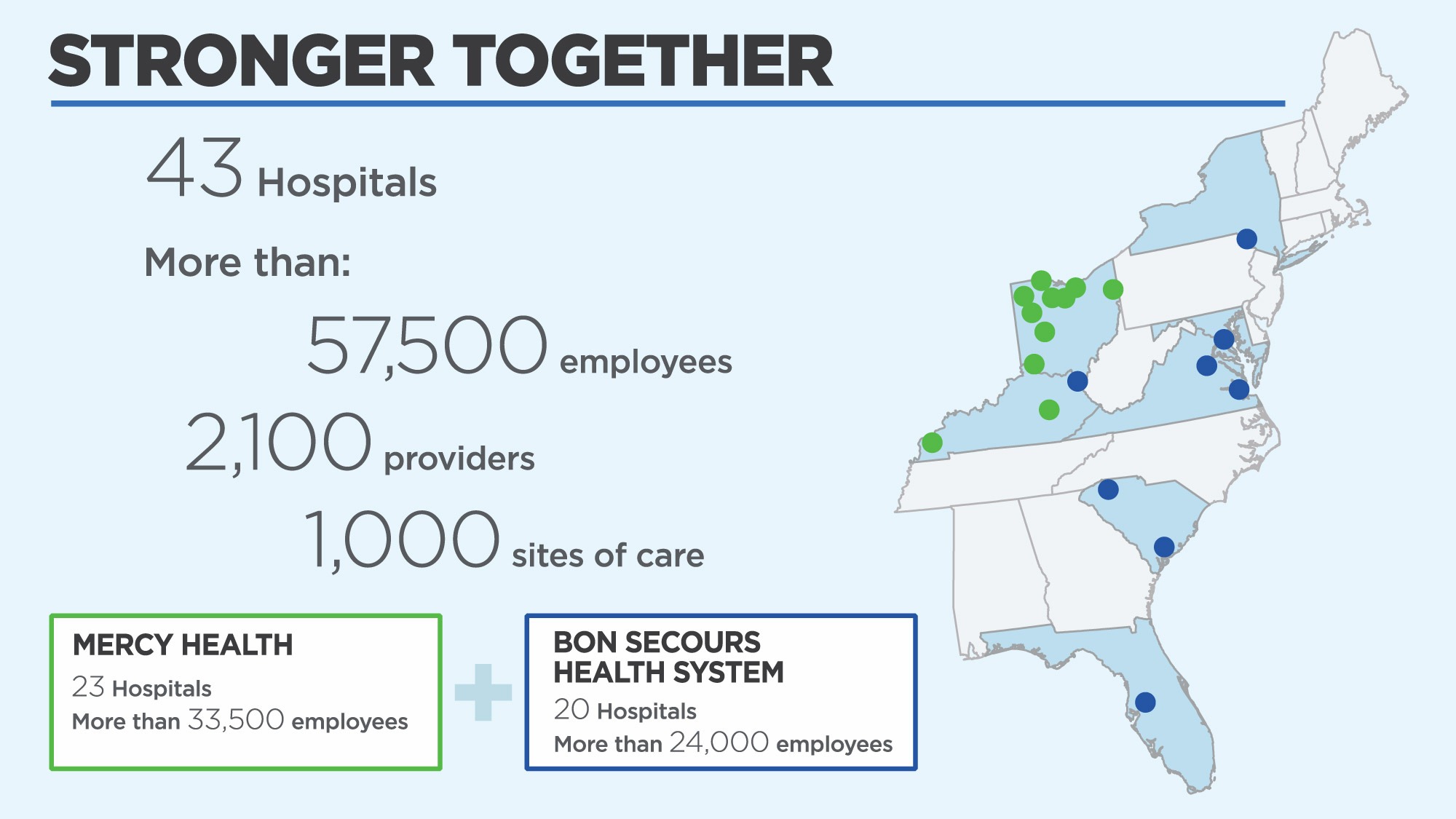
Citing a revenue hit from the COVID-19 pandemic, Cincinnati-based Bon Secours Mercy Health will furlough 700 employees and freeze wages of all nonclinical personnel, according to The Cincinnati Business Journal

The furloughs will affect workers in the system’s shared services business office, which includes entry-level workers and those who are senior vice presidents. No caregiver, pharmacy or supply chain jobs will be affected.

The furloughs are expected to begin next week and last 30 to 90 days, depending on how long the pandemic lasts, according to Bon Secours Mercy Health CEO John Starcher.

The cost-cutting measures are a result of an anticipated decline in revenue due to government-imposed bans on elective procedures. Bon Secours Mercy Health estimates it will see an operating loss of at least $100 million per month while the pandemic lasts.

In addition to the furloughs and wage freeze, the health system is freezing hiring for all noncritical care positions.

“We don’t shy away from making the difficult decisions, and this certainly is one of those, because we always have a mind’s eye on what the long-term ramifications and implications are,” Mr. Starcher told the Business Journal. “We’re laser-focused on making sure this ministry is as successful and vibrant for the next 150 years as it’s been for the last 150.”


Hospital leaders plead for financial help, warn of closures, missing payroll

https://www.healthcaredive.com/news/hospital-leaders-plead-for-financial-help-warn-of-closures-missing-payrol/574625/

Hospital executives from across the country sounded the alarm Saturday about the dire need for federal financial aid as their cash on hand continues to erode amid the coronavirus pandemic.

“We’ll exhaust all avenues to make payroll in the next few weeks,” Scott Graham, CEO of Three Rivers and North Valley Hospitals in rural Washington said of Three Rivers during a call with reporters Saturday morning.

The American Hospital Association is urging lawmakers on Capitol Hill to consider deploying at least $100 billion to aid hospitals fight against the outbreak of the novel coronavirus. The relief package would fund medical personnel, supplies and infrastructure, and expenses related to COVID-19, Rick Pollack, CEO of AHA, told reporters.

Without a relief package, Pollack warned it “could mean that many hospitals won’t survive.” The pleas came as Congress debates a stimulus package this weekend.

American life has ground to halt as experts urge the public to distance themselves from others in an attempt to slow the spread of the virus. Many states closed bars and restaurants with virtually all group events canceled. Likewise, hospitals have been asked — or required in some locales — to halt all elective procedures to free up resources for an expected surge of patients.

But hospitals rely on those typically lucrative procedures to drive revenue. Some hospitals are starting to wonder how they’ll keep the lights on after facing the reality of canceled procedures and the need to increase staff and supplies to combat the pathogen.

On top of that, hospitals are unable to get much needed supplies as some vendors are requiring payment on delivery, funds they do not have.

There is no time to waste, hospital leaders warned, citing less than two weeks cash on hand.

“We need to get this done now,” Pollack said of an emergency funding package from the federal government.

Despite the dire financial strain, hospitals are still preparing to increase capacity to meet a surge in demand. It’s unclear whether they will be reimbursed for all expenses related to increasing the amount of beds, capacity and supplies.

Some areas were already facing a shortage of nurses and physicians before the outbreak and anticipate that to become worse.

“In spite of our existing financial challenges, we are planning to increase capacity because that is what we must do,” LaRay Brown, CEO of One Brooklyn Health System in New York, said Saturday. One Brooklyn​ operates three hospitals, nursing homes and community health centers in New York, serving about 2 million.

Brown said all hospitals in New York were asked Friday by state health officials to submit plans for the upping of capacity by 50% of existing bed count.

Brown anticipates receiving some support from the state of New York but seemed wary of the state’s future financial footing as it battles the pathogen as well, and with a weakened tax base as businesses have shuttered.

“This is why I’m on this call,” Brown said. “We need immediate cash relief from the federal government.”


Financial updates from Scripps, Providence, 5 more health systems

https://www.beckershospitalreview.com/finance/financial-updates-from-scripps-providence-5-more-health-systems.html?utm_medium=email

The following seven health systems recently released financial updates:

1. Phoenix-based Banner Health saw its revenue climb 10.6 percent year over year to $9.4 million in 2019. The revenue growth was attributed to a 7 percent growth in care delivery revenue and a 29 percent increase in revenue from its insurance division. Overall, Banner saw its net income climb from $44 million in 2018 to $726.8 million in 2019 due to strong investment gains.

2. Henry Ford Health System, based in Detroit, recorded a net income of $354.5 million in 2019, more than four times the $86.8 million reported in 2018. In 2019, the health system generated $6.3 billion in revenue, up from $5.9 billion the same period one year prior. Part of the revenue increase was attributed to a rise in net patient revenue from outpatient visits and expanded specialty pharmacy activity.

3. Portland-based MaineHealth reported an operating gain of $82.8 million in the year ended Sept. 30, 2019, a 21.9 percent increase from an operating gain of $67.9 billion reported in the same period in 2018. MaineHealth’s revenue increased to $2.7 billion, compared to $2.5 billion reported in the same period one year prior. Overall, the system recorded a net income of $119.1 million, up slightly from the $118.2 million reported in fiscal 2018.

4. New York-based Montefiore Health System posted an operating revenue of $6.24 billion in 2019, which compares to an operating revenue of $5.91 billion in 2018. After factoring expenses, nonoperating gains and the revenue it generated from a vital access provider program, the health system ended the year with a net income of $8.67 million, down from the $53.48 million reported in 2018. Montefiore attributed the financial setback in net income to participation in some value-based contracts and underpayments from government-run insurance programs.

5. Renton, Wash.-based Providence posted a net income of $1.36 billion in 2019, compared to a deficit of $445 million in 2018. The health system reported revenue of $25.03 billion in 2019, up 2 percent from the $24.43 billion reported in 2018. The revenue increase was largely attributed to patient volume increases. The system’s operating expenses rose to $24.65 billion in 2019. This compares to $24.26 billion in 2018.

6. Trinity Health, based in Livonia, Mich, recorded an operating income of $102.6 million in the first half of fiscal year 2020, which ended Dec. 31. That’s compared to the same period of fiscal 2019, when the health system recorded operating income of $113.4 million. After factoring in nonoperating gains, Trinity reported a net income of $805.7 million in the first half of fiscal 2020, compared to an operating loss of $301.5 million in the same period one year prior.

7. San Diego-based Scripps Health reported revenue of $780.2 million in the first quarter of fiscal year 2020, which ended Dec. 31. This compares to the same period in fiscal 2019, in which Scripps recorded revenue of $747.2 million. The health system’s expenses also increased 4.3 percent year over year in the first quarter of fiscal 2020. In the first quarter of fiscal 2020, Scripps posted an operating income of $1.9 million, more than triple the $607,000 in operating income posted in the same quarter in fiscal 2019. Scripps ended the first quarter of fiscal 2020 with a net income of $141.5 million, compared to a net loss of $171 million in the same period a year earlier.


Nonprofit hospital outlook negative as COVID-19 restricts cash flow, Moody’s says

https://www.beckershospitalreview.com/finance/nonprofit-hospital-outlook-negative-as-covid-19-restricts-cash-flow-moody-s-says.html?utm_medium=email

Image result for Nonprofit hospital outlook negative as COVID-19 restricts cash flow, Moody's says

Moody’s Investor Services changed its outlook for nonprofit hospitals from stable to negative because of how the coronavirus outbreak is expected to affect cash flow.

Four things to know:

1. While Moody’s previously expected 2-3 percent growth in cash flow for 2020, this is no longer the case. Moody’s said the coronavirus situation is changing too quickly to estimate a specific range for this year, but nonprofit hospitals will likely see lower cash flow compared to 2019.

2. Moody’s said nonprofit hospitals will take a revenue hit as they cancel lucrative elective surgeries and procedures to prepare for a surge in COVID-19 patients. 

3. Revenue declines will be paired with higher expenses as the need for equipment and supplies increases.

4. Moody’s predicts the containment of the outbreak will come in 2020, and the economy will start to gradually recover. Still, analysts note there is a high degree of uncertainty and a risk that the outbreak could last longer than predicted.