


Cartoon – A Bitter Pill to Swallow

Livonia, Mich.-based Trinity Health recorded higher revenue and net income in the first half of fiscal year 2020 than in the same period a year earlier, according to unaudited financial documents released March 6.
During the first half of fiscal 2020, which ended Dec. 31, Trinity reported operating revenue of $9.7 billion, a 2.4 percent increase over the same period of fiscal 2019. Operating expenses climbed 2.5 percent year over year to $9.6 billion.
Trinity ended the first two quarters of fiscal 2020 with operating income of $102.6 million and an operating margin of 1.1 percent. That’s compared to the same period of fiscal 2019, when the health system recorded operating income of $113.4 million and a 1.2 percent operating margin.
The health system said increases in patient volume, higher payment rates and the divestiture of Camden, N.J.-based Lourdes Health System in June helped margins in the first half of fiscal 2020. Those improvements were offset by higher operating expenses and, to a lesser extent, $25 million in costs related to Trinity’s conversion to the Epic EHR platform.
After factoring in nonoperating items, including an increase in investment returns, Trinity reported net income of $805.7 million in the first half of fiscal 2020, compared to an operating loss of $301.5 million in the same period a year earlier.

Here are 14 health systems with strong operational metrics and solid financial positions, according to reports from Fitch Ratings, Moody’s Investors Service and S&P Global Ratings.
Note: This is not an exhaustive list. Health system names were compiled from credit rating reports and are listed in alphabetical order.
1. Roanoke, Va.-based Carilion Clinic has an “Aa3” rating and stable outlook with Moody’s and an “AA-” rating and stable outlook with S&P. The health system has a leading market position, strong operating cash flow and healthy debt metrics, according to Moody’s.
2. Wilmington, Del.-based ChristianaCare has an “AA+” rating and stable outlook with S&P, and an “Aa2” rating and stable outlook with Moody’s. The health system has excellent cash flow and a light debt burden, according to S&P. The credit rating agency expects ChristianaCare’s operational performance to remain near recent levels over the next two years, as the health system capitalizes on its cost containment initiatives and strong business position.
3. Santa Barbara, Calif.-based Cottage Health has an “AA-” rating and stable outlook with Fitch. The health system has a leading market position and strong profitability and cash flow, according to Fitch. Going forward, the rating agency expects Cottage Health to see moderate revenue growth.
4. Honolulu-based Hawaii Pacific Health has an “AA-” rating and stable outlook with Fitch. The health system has a solid market position and healthy operating profitability, according to Fitch. The credit rating agency expects the health system to sustain continued capital and strategic investments without the need for incremental debt in the foreseeable future.
5. Baltimore-based Johns Hopkins Health System has an “Aa2” rating and stable outlook with Moody’s. The six-hospital system has a national and international brand that supports resilient clinical demand, according to Moody’s. The rating agency expects the health system to continue to see benefits from its strong regional market position.
6. Philadelphia-based Main Line Health has an “Aa3” rating and stable outlook with Moody’s and an “AA” rating and stable outlook with S&P. The health system, which operates four acute care hospitals and a rehabilitation hospital, is a leading provider in the Philadelphia suburbs, according to Moody’s. The credit rating agency expects the health system to maintain recently improved cash flow margins, which are driven by better patient volume trends.
7. Dallas-based Methodist Health System has an “Aa3” rating and stable outlook with Moody’s. The health system has healthy balance sheet measures and operating performance as well as favorable leverage metrics, according to Moody’s. The credit rating agency expects Methodist Health System’s expense control initiatives and revenue growth opportunities to continue to drive sustainable operating performance.
8. Evanston, Ill.-based NorthShore University HealthSystem has an “AA-” rating and stable outlook with S&P and an “Aa3” rating and stable outlook with Moody’s. The health system has a strong balance sheet, good market presence and a management team that continues to execute its strategic plan, according to S&P. The rating agency expects NorthShore to maintain strong balance sheet metrics and low leverage.
9. Columbus-based OhioHealth has an “AA+” rating and stable outlook with Fitch. The 12-hospital system has a leading market position and solid liquidity, profitability and leverage metrics, according to Fitch.
10. Fort Wayne, Ind.-based Parkview Health System has an “AA-” rating and stable outlook with S&P. The nine-hospital system has stable operating performance and an excellent liquidity profile, according to S&P.
11. Chicago-based Rush University System for Health has an “AA-” rating and stable outlook with Fitch. The health system has a broad reach for high-acuity services as a leading academic medical center and its operating risk profile is strong, according to Fitch. The credit rating agency expects Rush to maintain strong capital-related ratios over the next five years.
12. Norfolk, Va.-based Sentara Healthcare has an “Aa2” rating and stable outlook with Moody’s. The health system has a leading market position in its core service area, strong patient demand, and solid margins, according to Moody’s. The credit rating agency expects Sentara’s liquidity and debt metrics to remain at recent levels.
13. Livonia, Mich.-based Trinity Health has an “AA-” rating and stable outlook with Fitch and S&P. The health system has a significant market presence in several states and a strong financial profile, according to Fitch. The credit rating agency expects the health system’s operating margins to continue to improve.
14. Madison, Wis.-based UW Health has an “Aa3” rating and stable outlook with Moody’s. UW Health has healthy margins from a large and growing clinical footprint, according to Moody’s. The rating agency expects UW Health’s margins to remain strong.

Hospitals are complex, high-volume and low-margin enterprises that often experience operational volatility. The latest report by Kaufman Hall confirmed the uneasy environment in which they operate.
Operating earnings were up 2% in 2019 compared to the prior year, and overall operating margin was up 7.4%. That was driven primarily by small bumps in revenue and patient volume. Net patient revenue per adjusted discharge rose 3.7%, and was up 1.5% per adjusted patient day.
Yet both pre-tax and overall operating margin were down 1.7% and 0.3%, respectively, when hospital budget forecasts were factored in. However, that drop was all attributable to hospitals in the Northeastern U.S.
Nevertheless, overall margins fell into the red in August and November, although they rebounded strongly in December, up 20% in that month compared to December 2018.
However, cost pressures were significant. Total expenses per adjusted discharge were up 3.4%, while labor expenses rose 2.6%. Non-labor expenses per adjusted discharge was up 4%. Adjusted discharges themselves were up only 0.7%, and showed year-over-year declines not only for the first quarter of 2019 but in June, August and November. And overall discharges declined among hospitals compared to budget forecasts in the Midwest and Northeast, down nearly 6% and 4%, respectively. Adjusted patient days were up 2.5%, although the average length of stay rose 1.9%.
While operating room minutes were up 2.2%, they were 0.3% below budget forecasts. Emergency department visits were down 0.4% compared to 2018, and were a full percentage point below forecasts.
“While it was good to see improvements in many financial areas, the long-term trendlines indicate that this is not a time for the C-suite to relax,” said Kaufman Hall Managing Director Jim Blake.
“These modest gains were made during a time when the economy was strong, unemployment was historically low, and government regulations favored business. There also were no existential health threats, such as the COVID-19 coronavirus outbreak nor the risks that come any time there is a national election,” Blake continued.

After the stock market closed yesterday, Community Health Systems disclosed it lost $675 million in 2019, still has $13.4 billion of long-term debt and will sell even more hospitals than it already has, Axios’ Bob Herman reports.
The intrigue: The company’s stock was up 12% in after-hours trading.
The bottom line: CHS owns a lot of hospitals in rural and small communities. Putting aside CHS’ specific business flops, it’s become tougher to operate hospitals in areas where the population is stagnating or declining because hospitals still rely on filling their clinics and beds.
https://www.beckershospitalreview.com/finance/7-health-systems-with-strong-finances-01072020.html
Here are seven health systems with strong operational metrics and solid financial positions, according to reports from Fitch Ratings, Moody’s Investors Service and S&P Global Ratings.
1. Durham, N.C.-based Duke University Health System has an “Aa2” rating and stable outlook with Moody’s. The three-hospital system benefits from its role as the academic medical center of Duke University’s School of Medicine and is a nationally recognized and leading provider of tertiary and quaternary services, according to Moody’s. The credit rating agency expects the health system to maintain operating cash flow margins in the double-digit range.
2. Edison, N.J.-based Hackensack Meridian Health has an “AA-” rating and stable outlook with S&P and Fitch. The health system has a solid financial profile and a strong presence in a large and demographically favorable market, according to Fitch. S&P expects the health system’s depth of clinical services and operations to contribute to its stable financial performance.
3. Fountain Valley, Calif.-based MemorialCare has an “AA-” rating and stable outlook with Fitch and S&P. The health system has a strong balance sheet and financial profile, according to Fitch. The credit rating agency expects MemorialCare’s cash flow to improve due to its market strategy, which focuses on revenue diversification.
4. Portland-based Oregon Health & Science University has an “Aa3” rating and stable outlook with Moody’s and an “AA-” rating and stable outlook with S&P. OHSU, which is the only academic medical center in Oregon, has favorable operating performance, strong philanthropy and its clinical offerings draw patients from across Oregon and neighboring states, according to Moody’s. The credit rating agency expects OHSU’s revenue to continue to grow.
5. Boston-based Partners HealthCare, which is changing its name to Mass General Brigham, has an “Aa3” rating and stable outlook with Moody’s. The health system has an excellent reputation in clinical care and research, a seasoned management team, large size and diversity of revenue sources across several locations and lines of business, according to Moody’s. The credit rating agency expects Partners to achieve an operating surplus in fiscal 2020.
6. Norfolk, Va.-based Sentara Healthcare has an “Aa2” rating and stable outlook with Moody’s. The health system has a leading market position in its core service area, strong patient demand, and solid margins, according to Moody’s. The credit rating agency expects Sentara’s liquidity and debt metrics to remain at recent levels.
7. Livonia, Mich.-based Trinity Health has an “AA-” rating and stable outlook with Fitch and S&P. The health system has a significant market presence in several states and a strong financial profile, according to Fitch. The credit rating agency expects the health system’s operating margins to continue to improve.
Stephen Forney, MBA, CPA, FACHE, excels in fixing “broken” organizations and he has built a track record of achieving financial turnarounds at seven healthcare facilities, he tells HealthLeaders in a recent interview.
Forney has over three decades of experience as a healthcare executive, with a primary focus on problem-solving. He began his career fixing problems in areas such as information technology and supply chain, an approach and skill he has carried over into financial operations in the C-suite.
“In finance, it wound up being the same thing. Pretty much every organization I’ve gone to has been broken in some way, shape, or form,” Forney says. “I’ve developed a specialty doing turnarounds and this will be my eighth.”
Forney speaks about his new CFO role at the Tewksbury, Massachusetts–based Catholic nonprofit health system Covenant Health, which he joined in mid-September, and how driving revenue and reducing expenses must go hand-in-hand to achieve financial balance.
This transcript has been lightly edited for brevity and clarity.
HealthLeaders: Covenant is coming off its fifth straight year of operating losses. What is contributing to those losses and how do you plan to address those financial challenges?
Forney: The thing is, most turnarounds—to a greater or lesser extent—look a lot alike. With organizations that have [financial] issues, there are obviously always unique aspects to every situation, but virtually every healthcare organization that’s not doing well is because of the same relatively small handful of issues.
[For example,] revenue cycle is probably No. 1. Productivity has not been well attended to; expenses haven’t had a lot of discipline around them in a broad sense. That’s not to say that all decisions are bad, but in a systematic fashion, things haven’t been looked at. Frequently, driving volume and growing the business needs a better focus.
In the case of Covenant … there has been a plan developed to address all those areas and we are addressing them already, even though we will be posting another operating loss in fiscal [year] 2019. But the trajectory is good and some of the things that we’re now looking at are what I would consider to be phase two–type initiatives. How do we accelerate and move them to the next level?
On October 1, we outsourced our revenue cycle. I’m pleased that we were able to get that accomplished. Obviously, it’s early but, at least anecdotally, initial trends look good.
HL: Where do you fall on the dynamic between focusing on expense control measures or revenue generation?
Forney: I always feel like you need to do both. Expense management and working towards expense strategies is easier, quicker, and more straightforward.
[Revenue growth strategies] take time, take effort, and tend to [have] a much higher degree of uncertainty around the volume projection. Those are necessary and they’re things that we need to invest in because, at some point, you can’t cut any more from your organization, you’ve got to grow the top line. To me, it’s sort of like step one is stabilize your revenue cycle and stabilize your expenses. Then while you’re doing that, work on growth that’s going to take place 12 to 18 months down the road.
HL: Are you optimistic about the federal government’s efforts to move the industry toward value-based care?
Forney: Going back about a decade, I thought the ACE program, which was [the federal government’s] bundled payment program, was a solid step in the right direction. It gave organizations a chance to collaborate in compliant fashion with physicians to bend the cost curve and have beneficiaries participate in the bending of the cost curve as well. I was with one of the pilot health systems that [participated], and it was a remarkable success.
Everybody got to win; CMS, patients, physicians, and systems won by creating value. Yes, I think that the government has a good role to play in [value-based care] because they have such a large group of patients that they’re willing to experiment like that. [The federal government] can come up with potentially novel ways to get people to buy into this.
HL: What is it like to be at the helm of a Catholic nonprofit system and how does it affect your leadership style?
Forney: From a philosophical standpoint, the principle of creating shareholder wealth and good stewardship are not significantly different. You’ve got an end goal in mind, which is, you’re taking care of the patients and a community. In one case, whatever excess is left goes to a private equity fund or shareholders. In the other case, [the excess] stays in your balance sheet and gets reinvested in the community.
HL: Given your three decades of healthcare experience, do you have advice for your fellow provider CFOs, especially some of the younger ones?
Forney: Focus on being that strategic right-hand person to the CEO. In my experience, that has been one of the things that marks a successful CFO from one that isn’t as successful.
CEOs are going to get ideas from everywhere. They’re outward and inward facing. They deal with the doctors and the community, and they’re going to get all sorts of great ideas.
The CFO needs to be that person [who is] grounded and says, ‘Well, what about this?’ That doesn’t mean saying no. The whole idea is how do you make it [sound] like a yes. To me, the CFO role just grounds all the discussions, from working with physicians to working with the community.
CFOs over the last couple of decades have been operationally oriented. Now they need to start becoming clinically oriented.
There’s a real benefit in being able to sit down and talk with a physician and understand [what] they’re doing. … It winds up becoming a way to help ground the clinicians in the hospital operations because now you’re having a dialogue with them instead of them just saying, ‘You don’t understand. You’re not a clinician.’ That would be something that I would have a young CFO try to stay focused on, even though it’s dramatically outside the comfort zone for people that typically go into accounting.
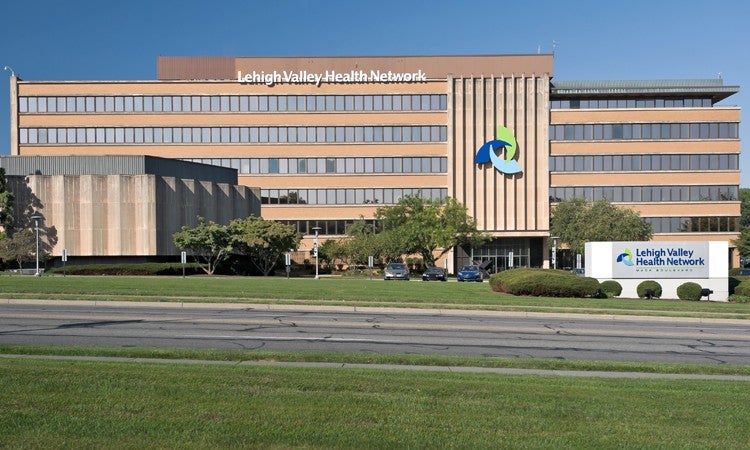
Allentown, Pa.-based Lehigh Valley Health Network saw its net income more than triple from $35.1 million in fiscal year 2018 to $115.3 million in fiscal year 2019, according to financial documents released Dec. 4.
The health system saw its revenue increase year over year to $2.96 billion in the 12 months ended June 30. In the same period in 2018, the system reported revenue of $2.73 billion.
In fiscal year 2019, Lehigh Valley Health reported expenses of $2.86 billion, up from $2.68 billion in 2018.
Expense growth resulted from several factors, including an increase in salaries and wages and supply costs.
Lehigh Valley Health System attributed the net income increase to cutting back on contract workers and overtime and reducing costs on readmissions and contracts, according to The Morning Call.

UnitedHealth Group projected it will generate $242 billion in revenue in 2019 and expects to report another 7% to 8% increase in top-line growth in 2020.
The insurance group presented updated figures during its investor conference that kicked off Tuesday with officials saying they expect to increase the company’s 2020 revenue to between $260 billion and $262 billion.
They project between $21 billion and $22 billion in operating earnings in 2020.
In comparison, UnitedHealth Group generated $17.3 billion in profits on $226 billion in revenue in 2018. The company is projecting to report $19 billion in profits in 2019.
The biggest driver of growth this year has been UnitedHealth’s Optum, the company’s pharmacy benefit management and care services group. Optum revenue is projected to have increased by 11% from 2018 to 2019, earning UnitedHealth $112 billion in revenue compared to $101 billion in 2018.Optum is expected to continue to be a major growth driver for the company in its 2020 earnings projection, with UnitedHealth pegging growth to increase again between 13% and 14%. UnitedHealth executives said that Optum is expected to make up 50.5% of the company’s total after tax operating earnings this year..
Optum could also be the key for UnitedHealth to improve its Medicare Advantage business.
“We don’t like being third, that’s fundamentally where we landed for the year,” said UnitedHealth Group CEO David Wichmann, “Over time I think we will continue to grow and outpace the market.”
Executives said that the key to growth is to keep its networks consistent as well as pharmacists and pharmacies consistent for seniors.
“We believe we maintain in the Medicare market a strategic cost advantage because of the capacities we have as an organization,” Wichmann said.
UnitedHealth pointed to the success of OptumCare, the company’s primary and specialty care provider. The highest performing Medicare Advantage plans were in markets that had an OptumCare presence. Wichmann said that growing the OptumCare platform is a majority priority for UnitedHealth over the next seven years.
Trinity Health recorded higher revenue and operating income in the first quarter of fiscal year 2020 than in the same period a year earlier, but the Livonia, Mich.-based system ended the quarter with lower net income, according to unaudited financial documents.
During the first quarter of fiscal 2020, which ended Sept. 30, Trinity reported operating revenue of $4.8 billion, a 1.8 percent increase over the same period of the year prior. Operating expenses climbed 1.7 percent year over year to $4.7 billion.
Trinity ended the first quarter of fiscal 2020 with operating income of $94 million, up from $87 million in the first quarter of last year.
The system reported an operating margin of 2 percent in the first quarter of fiscal 2020, compared to an operating margin of 1.8 percent in the same period of the year prior. Margin growth was partially attributable to Trinity’s divestiture of Camden, N.J.-based Lourdes Health System in June. Growth in patient volumes and payment rates also supported margin growth.
After factoring in nonoperating items, including a decline in investment returns, Trinity reported net income of $166.4 million in the first quarter of fiscal 2020. That’s compared to the first quarter of fiscal 2019, when the system posted net income of $419.9 million.
 HENRY KOTULA