Kaufman Hall: Hospital revenue, margins improved in 2019, but warning signs ahead

https://www.healthcaredive.com/news/kaufman-hall-hospital-revenue-margins-improved-in-2019-but-warning-signs/573192/

Dive Brief:

  • U.S. hospital finances experienced a comparatively strong 2019, according to Kaufman Hall’s 2019 Year In Review Flash Hospital Report, which labeled the performance as “cautiously optimistic.”
  • While revenue and margins increased for the hospitals surveyed, inpatient volumes were weaker and more uneven.
  • The report from the management consultancy and data provider did unearth some potential warning signs for 2020, including a trend in rising expenses. The report also warned of a slowing economy and the potential economic impact from the coronavirus.

Dive Insight:

Hospitals are complex, high-volume and low-margin enterprises that often experience operational volatility. The latest report by Kaufman Hall confirmed the uneasy environment in which they operate.

Operating earnings were up 2% in 2019 compared to the prior year, and overall operating margin was up 7.4%. That was driven primarily by small bumps in revenue and patient volume. Net patient revenue per adjusted discharge rose 3.7%, and was up 1.5% per adjusted patient day.

Yet both pre-tax and overall operating margin were down 1.7% and 0.3%, respectively, when hospital budget forecasts were factored in. However, that drop was all attributable to hospitals in the Northeastern U.S.

Nevertheless, overall margins fell into the red in August and November, although they rebounded strongly in December, up 20% in that month compared to December 2018.

However, cost pressures were significant. Total expenses per adjusted discharge were up 3.4%, while labor expenses rose 2.6%. Non-labor expenses per adjusted discharge was up 4%. Adjusted discharges themselves were up only 0.7%, and showed year-over-year declines not only for the first quarter of 2019 but in June, August and November. And overall discharges declined among hospitals compared to budget forecasts in the Midwest and Northeast, down nearly 6% and 4%, respectively. Adjusted patient days were up 2.5%, although the average length of stay rose 1.9%.

While operating room minutes were up 2.2%, they were 0.3% below budget forecasts. Emergency department visits were down 0.4% compared to 2018, and were a full percentage point below forecasts.

“While it was good to see improvements in many financial areas, the long-term trendlines indicate that this is not a time for the C-suite to relax,” said Kaufman Hall Managing Director Jim Blake.

“These modest gains were made during a time when the economy was strong, unemployment was historically low, and government regulations favored business. There also were no existential health threats, such as the COVID-19 coronavirus outbreak nor the risks that come any time there is a national election,” Blake continued.


A slightly less bad year for CHS

https://www.axios.com/newsletters/axios-vitals-35da8519-cdfe-4d19-bd99-7befbe4bbbea.html?utm_source=newsletter&utm_medium=email&utm_campaign=newsletter_axiosvitals&stream=top

Image result for community health systems

After the stock market closed yesterday, Community Health Systems disclosed it lost $675 million in 2019, still has $13.4 billion of long-term debt and will sell even more hospitals than it already has, Axios’ Bob Herman reports.

The intrigue: The company’s stock was up 12% in after-hours trading.

  • That’s because CHS expects 2020 to be better — but still lose upwards of $150 million.

The bottom line: CHS owns a lot of hospitals in rural and small communities. Putting aside CHS’ specific business flops, it’s become tougher to operate hospitals in areas where the population is stagnating or declining because hospitals still rely on filling their clinics and beds.


7 health systems with strong finances

https://www.beckershospitalreview.com/finance/7-health-systems-with-strong-finances-01072020.html

Here are seven health systems with strong operational metrics and solid financial positions, according to reports from Fitch Ratings, Moody’s Investors Service and S&P Global Ratings.

1. Durham, N.C.-based Duke University Health System has an “Aa2” rating and stable outlook with Moody’s. The three-hospital system benefits from its role as the academic medical center of Duke University’s School of Medicine and is a nationally recognized and leading provider of tertiary and quaternary services, according to Moody’s. The credit rating agency expects the health system to maintain operating cash flow margins in the double-digit range.

2. Edison, N.J.-based Hackensack Meridian Health has an “AA-” rating and stable outlook with S&P and Fitch. The health system has a solid financial profile and a strong presence in a large and demographically favorable market, according to Fitch. S&P expects the health system’s depth of clinical services and operations to contribute to its stable financial performance.

3. Fountain Valley, Calif.-based MemorialCare has an “AA-” rating and stable outlook with Fitch and S&P. The health system has a strong balance sheet and financial profile, according to Fitch. The credit rating agency expects MemorialCare’s cash flow to improve due to its market strategy, which focuses on revenue diversification.

4. Portland-based Oregon Health & Science University has an “Aa3” rating and stable outlook with Moody’s and an “AA-” rating and stable outlook with S&P. OHSU, which is the only academic medical center in Oregon, has favorable operating performance, strong philanthropy and its clinical offerings draw patients from across Oregon and neighboring states, according to Moody’s. The credit rating agency expects OHSU’s revenue to continue to grow.

5. Boston-based Partners HealthCare, which is changing its name to Mass General Brigham, has an “Aa3” rating and stable outlook with Moody’s. The health system has an excellent reputation in clinical care and research, a seasoned management team, large size and diversity of revenue sources across several locations and lines of business, according to Moody’s. The credit rating agency expects Partners to achieve an operating surplus in fiscal 2020.

6. Norfolk, Va.-based Sentara Healthcare has an “Aa2” rating and stable outlook with Moody’s. The health system has a leading market position in its core service area, strong patient demand, and solid margins, according to Moody’s. The credit rating agency expects Sentara’s liquidity and debt metrics to remain at recent levels.

7. Livonia, Mich.-based Trinity Health has an “AA-” rating and stable outlook with Fitch and S&P. The health system has a significant market presence in several states and a strong financial profile, according to Fitch. The credit rating agency expects the health system’s operating margins to continue to improve.


NEW COVENANT HEALTH CFO AIMS TO LEAD ORGANIZATION’S FINANCIAL TURNAROUND

https://www.healthleadersmedia.com/finance/new-covenant-health-cfo-aims-lead-organizations-financial-turnaround

Image result for turnaround


The Tewksbury, Massachusetts–based health system strives to post its first positive balance sheet in more than five years.

Stephen Forney, MBA, CPA, FACHE, excels in fixing “broken” organizations and he has built a track record of achieving financial turnarounds at seven healthcare facilities, he tells HealthLeaders in a recent interview.

Forney has over three decades of experience as a healthcare executive, with a primary focus on problem-solving. He began his career fixing problems in areas such as information technology and supply chain, an approach and skill he has carried over into financial operations in the C-suite.

“In finance, it wound up being the same thing. Pretty much every organization I’ve gone to has been broken in some way, shape, or form,” Forney says. “I’ve developed a specialty doing turnarounds and this will be my eighth.”

Forney speaks about his new CFO role at the Tewksbury, Massachusetts–based Catholic nonprofit health system Covenant Health, which he joined in mid-September, and how driving revenue and reducing expenses must go hand-in-hand to achieve financial balance.

This transcript has been lightly edited for brevity and clarity.

HealthLeaders: Covenant is coming off its fifth straight year of operating losses. What is contributing to those losses and how do you plan to address those financial challenges?

Forney: The thing is, most turnarounds—to a greater or lesser extent—look a lot alike. With organizations that have [financial] issues, there are obviously always unique aspects to every situation, but virtually every healthcare organization that’s not doing well is because of the same relatively small handful of issues.

[For example,] revenue cycle is probably No. 1. Productivity has not been well attended to; expenses haven’t had a lot of discipline around them in a broad sense. That’s not to say that all decisions are bad, but in a systematic fashion, things haven’t been looked at. Frequently, driving volume and growing the business needs a better focus. 

In the case of Covenant … there has been a plan developed to address all those areas and we are addressing them already, even though we will be posting another operating loss in fiscal [year] 2019. But the trajectory is good and some of the things that we’re now looking at are what I would consider to be phase two–type initiatives. How do we accelerate and move them to the next level?

On October 1, we outsourced our revenue cycle. I’m pleased that we were able to get that accomplished. Obviously, it’s early but, at least anecdotally, initial trends look good.

HL: Where do you fall on the dynamic between focusing on expense control measures or revenue generation?

Forney: I always feel like you need to do both. Expense management and working towards expense strategies is easier, quicker, and more straightforward.

[Revenue growth strategies] take time, take effort, and tend to [have] a much higher degree of uncertainty around the volume projection. Those are necessary and they’re things that we need to invest in because, at some point, you can’t cut any more from your organization, you’ve got to grow the top line. To me, it’s sort of like step one is stabilize your revenue cycle and stabilize your expenses. Then while you’re doing that, work on growth that’s going to take place 12 to 18 months down the road.

HL: Are you optimistic about the federal government’s efforts to move the industry toward value-based care?

Forney: Going back about a decade, I thought the ACE program, which was [the federal government’s] bundled payment program, was a solid step in the right direction. It gave organizations a chance to collaborate in compliant fashion with physicians to bend the cost curve and have beneficiaries participate in the bending of the cost curve as well. I was with one of the pilot health systems that [participated], and it was a remarkable success.

Everybody got to win; CMS, patients, physicians, and systems won by creating value. Yes, I think that the government has a good role to play in [value-based care] because they have such a large group of patients that they’re willing to experiment like that. [The federal government] can come up with potentially novel ways to get people to buy into this.

HL: What is it like to be at the helm of a Catholic nonprofit system and how does it affect your leadership style?

Forney: From a philosophical standpoint, the principle of creating shareholder wealth and good stewardship are not significantly different. You’ve got an end goal in mind, which is, you’re taking care of the patients and a community. In one case, whatever excess is left goes to a private equity fund or shareholders. In the other case, [the excess] stays in your balance sheet and gets reinvested in the community.

HL: Given your three decades of healthcare experience, do you have advice for your fellow provider CFOs, especially some of the younger ones?

Forney: Focus on being that strategic right-hand person to the CEO. In my experience, that has been one of the things that marks a successful CFO from one that isn’t as successful.

CEOs are going to get ideas from everywhere. They’re outward and inward facing. They deal with the doctors and the community, and they’re going to get all sorts of great ideas.

The CFO needs to be that person [who is] grounded and says, ‘Well, what about this?’ That doesn’t mean saying no. The whole idea is how do you make it [sound] like a yes. To me, the CFO role just grounds all the discussions, from working with physicians to working with the community. 

CFOs over the last couple of decades have been operationally oriented. Now they need to start becoming clinically oriented.

There’s a real benefit in being able to sit down and talk with a physician and understand [what] they’re doing. … It winds up becoming a way to help ground the clinicians in the hospital operations because now you’re having a dialogue with them instead of them just saying, ‘You don’t understand. You’re not a clinician.’ That would be something that I would have a young CFO try to stay focused on, even though it’s dramatically outside the comfort zone for people that typically go into accounting.


Provider of the Year: Providence St. Joseph Health

https://www.healthcaredive.com/news/provider-providence-st-joseph-health-dive-awards/566477/

The 51-hospital system, which traces its roots back to the 1850s,​ has maintained a stable ratings outlook amid industry headwinds and pursued tech partnerships this year to bolster its portfolio.

Providence St. Joseph Health, the fourth-largest U.S. nonprofit health system by number of hospitals, marked a busy 2019 with multiple efforts to dive into the tech sector and seek out partnerships to tackle the industry’s biggest challenges.

The Catholic system now operates 51 hospitals in eight states as the result of a July 2016 merger of Providence Health and Services and St. Joseph Health. While the organization is the dominant inpatient provider in all its markets, no single area accounts for more than 30% of its net operating revenue, showing good portfolio diversification, ratings agency have noted.

The system, which can trace its roots back to the 1850s when the Sisters of Providence set up hospitals, schools and orphanages throughout the Northwest, posted $24 billion in operating revenue last year. That metric has shown year-over-year increases since the $18 billion posted in 2014.

Providence CEO Rod Hochman told Healthcare Dive the health system hasn’t shied away from seeking partnerships as the industry swings toward value based care and other systemic changes.

“I think the message is: ‘You can’t do it alone,'” he said. “You can’t go out there and just do it yourself — you don’t have the scale to do it.”

In that vein, the system (which is formally rebranding to Providence over the next few years) was one of the founding members of generic drug company Civica Rx, which opened its headquarters and made its first delivery this year. That’s a coalition of hospitals working to make their own drugs, starting with antibiotics.

It’s also grouping up with One Medical to increase access to primary care and teaming with Cedars-Sinai to build a patient tower in southern California. And in February, the organization launched the population health management company Ayin Health Solutions to provide benefits management as well as risk evaluation and care coordination tools.

Providence has maintained a stable outlook from the three main ratings agencies even as other nonprofits struggled to stay above water. Kevin Holloran, senior director at Fitch Ratings, said the system has managed to think about margins the way a public company must while still adhering to the mission-driven thought process nonprofit organizations trumpet.

“Blending those two thoughts together sounds easy, but it’s not,” Holloran told Healthcare Dive. “It’s hard to do.”

Moody’s Investors Service issued a credit opinion recently on Providence, finding the system’s integrated structure that includes a health plan and 7,600 employed physicians creates “further cashflow diversification, and strengthens the organization’s competitive position.”

The analysts wrote they expect operating margins to continue to improve going into next year as it implements dozens of initiatives updating operating practices, cost structures and revenue systems. They note, however, the organization faces a challenge in transitioning disparate EHRs and its numerous joint ventures “may also entail a certain amount of execution and integration risk.”

Holloran pointed to two relatively recent hires as leading the way for Providence — both poaches from Microsoft. CFO Venkat Bhamidipati joined the organization two years ago and CIO B.J. Moore came on in January.

They migrated from the tech world to the traditionally loathe-to-change healthcare landscape, and have made a difference for Providence.

It puts the company in a strategic place for growth, Holloran said. “Now they’re sort of adding that missing piece, which is optimizing what they’ve got,” he said. “And a big piece of that is the technology, and they’re doing it in a unique and interesting way.”

This year, Providence acquired Lumedic, which uses blockchain tools for revenue cycle management, and Bluetree, an Epic consultancy. The health system also allows patients to schedule appointments through Amazon’s smart speaker Alexa.

In July, the health system announced an agreement with Microsoft to use the tech giant’s cloud and artificial intelligence tools in an effort to foster interoperability, improve outcomes and drive down costs.

The organization still has traditional struggles, however. Hochman, who is also the incoming chairman of the American Hospital Association, said the ongoing litigation surrounding the Affordable Care Act, coupled with payment changes and other CMS changes, creates a chaotic environment for providers.

“Every day they come up with something new, and it’s been the lack of predictability that’s been the biggest problem for us,” he said.


9 health systems with strong finances

https://www.beckershospitalreview.com/finance/9-health-systems-with-strong-finances-120919.html

Here are nine health systems with strong operational metrics and solid financial positions, according to recent reports from Fitch Ratings, Moody’s Investors Service and S&P Global Ratings.

Note: This is not an exhaustive list. Health system names were compiled from recent credit rating reports and are listed in alphabetical order.

1. Advocate Aurora Health, a 27-hospital system with dual headquarters in Downers Grove, Ill., and Milwaukee, has an “Aa3” rating and positive outlook with Moody’s. The health system has a favorable liquidity position, low leverage, and healthy margins, according to Moody’s. The credit rating agency expects the health system to continue to benefit from its position as a market leader within two large service areas.

2. Morristown, N.J.-based Atlantic Health System has an “Aa3” rating and stable outlook with Moody’s. The five-hospital system has healthy liquidity and solid operating margins, according to Moody’s. The credit rating agency expects strong patient volume, low reliance on governmental funding and other factors to continue to support Atlantic Health System’s financial metrics.

3. Fountain Valley, Calif.-based MemorialCare has an “AA-” rating and stable outlook with Fitch and S&P. The health system has a strong balance sheet and financial profile, according to Fitch. The credit rating agency expects MemorialCare’s cash flow to improve due to its market strategy, which focuses on revenue diversification.

4. Portland-based Oregon Health & Science University has an “Aa3” rating and stable outlook with Moody’s and an “AA-” rating and stable outlook with S&P. OHSU, which is the only academic medical center in Oregon, has favorable operating performance, strong philanthropy and its clinical offerings draw patients from across Oregon and neighboring states, according to Moody’s. The credit rating agency expects OHSU’s revenue to continue to grow.

5. Albuquerque, N.M.-based Presbyterian Healthcare Services has an “Aa3” rating and stable outlook with Moody’s. The health system has strong revenue growth, good market share for acute care services and a favorable balance sheet. The credit rating agency expects the health system’s insurance plan, which is already a dominant health plan in New Mexico, to continue to grow.

6. Appleton, Wis.-based ThedaCare has an “AA-” rating and stable outlook with Fitch. The health system has solid cash flow and a leading market position in a stable service area, according to Fitch. The credit rating agency expects ThedaCare’s operating performance to continue to improve.

7. Livonia, Mich.-based Trinity Health has an “AA-” rating and stable outlook with Fitch and S&P. The health system has a significant market presence in several states and a strong financial profile, according to Fitch. The credit rating agency expects the health system’s operating margins to continue to improve.

8. Chapel Hill-based University of North Carolina Hospitals has an “Aa3” rating and stable outlook with Moody’s. UNC Hospitals, part of UNC Health Care System, has an excellent market position and strong financial performance, according to Moody’s. The credit rating agency expects UNC Hospitals to continue to grow patient volumes and maintain strong financial performance.

9. Philadelphia-based University of Pennsylvania Health System has an “Aa3” rating and stable outlook with Moody’s. The health system has a strong market position, and substantial investments in facilities will allow the health system to capitalize on its prominent reputation and wide patient draw, according to Moody’s.


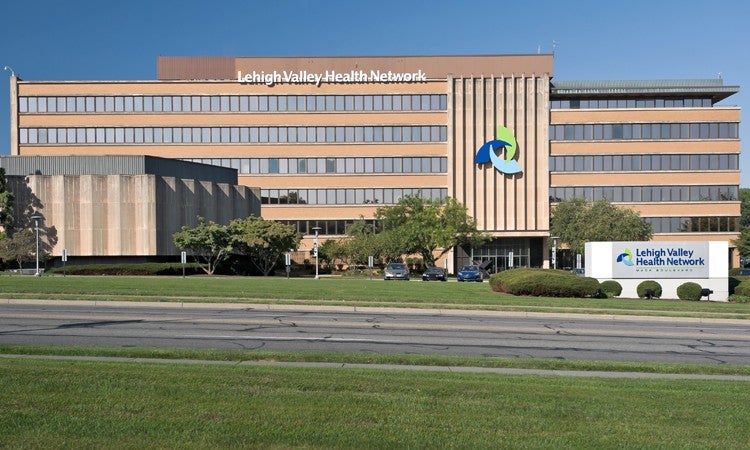
Lehigh Valley Health Network’s net income more than triples to $115M

https://www.beckershospitalreview.com/finance/lehigh-valley-health-network-s-net-income-more-than-triples-to-115m.html

Image result for lehigh valley health network headquarters

Allentown, Pa.-based Lehigh Valley Health Network saw its net income more than triple from $35.1 million in fiscal year 2018 to $115.3 million in fiscal year 2019, according to financial documents released Dec. 4. 

The health system saw its revenue increase year over year to $2.96 billion in the 12 months ended June 30. In the same period in 2018, the system reported revenue of $2.73 billion.

In fiscal year 2019, Lehigh Valley Health reported expenses of $2.86 billion, up from $2.68 billion in 2018.

Expense growth resulted from several factors, including an increase in salaries and wages and supply costs.

Lehigh Valley Health System attributed the net income increase to cutting back on contract workers and overtime and reducing costs on readmissions and contracts, according to The Morning Call. 


UnitedHealth projects major revenue boost in 2020 on the back of continued Optum growth

https://www.fiercehealthcare.com/payer/unitedhealth-projects-242b-2019-revenue-offers-2020-guidance-262b-revenue?mkt_tok=eyJpIjoiWkdObE5HRTJNMlptT0RkayIsInQiOiJiaFk3K2s2TDl5OGNrMmJ5XC9EWWEyb3VacEVjUGpOUVhrdE5wQmxkaTN6TUNTbkVJaUJlTnl3eldXcmRaVU1nN3k4UUhKRFEzb1B3XC9pYWNJaHVcL0NqS29QSmI4RFR1aWEwWlNNRUE2QmdqaVJINkNIa090XC9lUzMxUUpUbG1yY24ifQ%3D%3D&mrkid=959610

The outside of Optum's headquarters

UnitedHealth Group projected it will generate $242 billion in revenue in 2019 and expects to report another 7% to 8% increase in top-line growth in 2020.

The insurance group presented updated figures during its investor conference that kicked off Tuesday with officials saying they expect to increase the company’s 2020 revenue to between $260 billion and $262 billion.

They project between $21 billion and $22 billion in operating earnings in 2020.

In comparison, UnitedHealth Group generated $17.3 billion in profits on $226 billion in revenue in 2018. The company is projecting to report $19 billion in profits in 2019.

The biggest driver of growth this year has been UnitedHealth’s Optum, the company’s pharmacy benefit management and care services group. Optum revenue is projected to have increased by 11% from 2018 to 2019, earning UnitedHealth $112 billion in revenue compared to $101 billion in 2018.Optum is expected to continue to be a major growth driver for the company in its 2020 earnings projection, with UnitedHealth pegging growth to increase again between 13% and 14%. UnitedHealth executives said that Optum is expected to make up 50.5% of the company’s total after tax operating earnings this year.. 

Optum could also be the key for UnitedHealth to improve its Medicare Advantage business.

“We don’t like being third, that’s fundamentally where we landed for the year,” said UnitedHealth Group CEO David Wichmann, “Over time I think we will continue to grow and outpace the market.”

Executives said that the key to growth is to keep its networks consistent as well as pharmacists and pharmacies consistent for seniors. 

“We believe we maintain in the Medicare market a strategic cost advantage because of the capacities we have as an organization,” Wichmann said.

UnitedHealth pointed to the success of OptumCare, the company’s primary and specialty care provider.  The highest performing Medicare Advantage plans were in markets that had an OptumCare presence. Wichmann said that growing the OptumCare platform is a majority priority for UnitedHealth over the next seven years.


Fitch says 2020 healthcare environment bumpy but negotiable

https://www.healthcaredive.com/news/fitch-says-2020-healthcare-environment-bumpy-but-negotiable/568158/

Dive Brief:

  • Demand for healthcare services will remain stable next year, but profitability will become more of a challenge, according to a new forecast from Fitch Ratings. The continued move from volume to value is encouraging the evolution of traditional business models, the analysis found.
  • The legal fate of the Affordable Care Act is one of several uncertainties, according to the report. Ongoing opioid litigation is another. And healthcare itself will be an important political issue during the election season.
  • Fitch said that credit downgrades in the sector are likely to outweigh upgrades, but that ongoing discord in Washington means that most companies will be insulated from significant change.

Dive Insight:

The healthcare sector seems to be entering a volatile period, although the chances for a major upheaval are far more remote, according to Fitch Ratings.

The biggest risk to healthcare is currently the uncertainty regarding the ACA, which as it nears its 10th anniversary remains embroiled in litigation, currently awaiting a decision from the U.S. Fifth Circuit Court of Appeals in New Orleans.

Fitch noted that if the law is struck down with no replacement waiting, “it may result in a disorderly wind down of the insurance expansion elements of the legislation, which could have negative ramifications for cash flow and profitability of segments most exposed to patient liabilities.”

While there are legal uncertainties surrounding the ACA, Fitch believes the gridlock in the nation’s capital remains a plus for the sector, noting that “progress on major pieces of healthcare legislation, due to political discord in Washington, will insulate issuers from the effects of any new policy measures on profitability during 2020.”

Meanwhile, those companies caught up in litigation over the opioid crisis will likely have to negotiate years of lawsuits, but Fitch believes it will be manageable over the long-term. “We expect investment-grade issuers to navigate the litigation with credit profiles intact, given the ability to redirect a portion of cash flow from operations from shareholder returns to litigation payments,” the rating firm noted. “Moreover, early indications are issuers will pay cash settlements over a period of years rather than in lump sums, which limits the effect on credit metrics.”

Healthcare ventures are also navigating the shift from volume to value. “A slow changing payment environment tying profits to high value, rather than high volume care, will continue to encourage gradual evolution of business models across the sector,” Fitch observed. “The convergence of business models via strategic M&A is viewed as constructive to credit profiles since it could help companies align value propositions with shifting consumer and payer preferences, despite its potential to reshape issuers’ balance sheets.”