One question still dogs Administration: Why not try harder to solve the coronavirus crisis?

https://www.washingtonpost.com/politics/trump-not-solve-coronavirus-crisis/2020/07/26/7fca9a92-cdb0-11ea-91f1-28aca4d833a0_story.html?utm_source=ActiveCampaign&utm_medium=email&utm_content=Republicans+Roll+Out+%241+Trillion+Coronavirus+Relief+Plan&utm_campaign=TFT+Newsletter+07272020

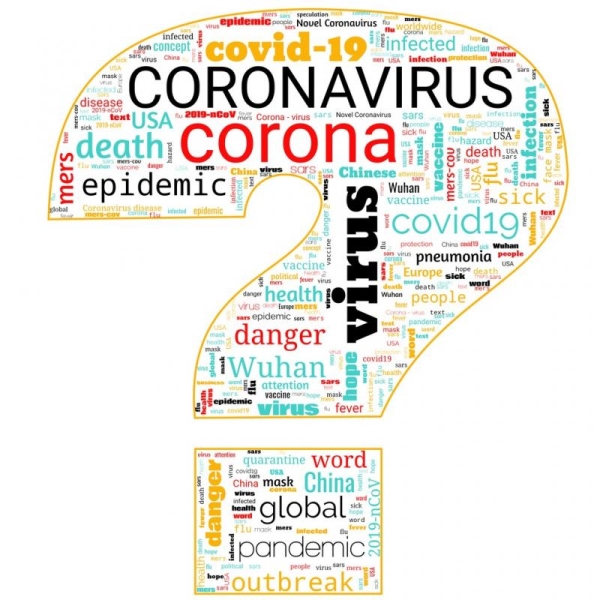
Questions to ask students in class to help them deal with the ...

Both President Trump’s advisers and operatives laboring to defeat him increasingly agree on one thing: The best way for him to regain his political footing is to wrest control of the novel coronavirus.

In the six months since the deadly contagion was first reported in the United States, Trump has demanded the economy reopen and children return to school, all while scrambling to salvage his reelection campaign.

But allies and opponents agree he has failed at the one task that could help him achieve all his goals — confronting the pandemic with a clear strategy and consistent leadership.

Trump’s shortcomings have perplexed even some of his most loyal allies, who increasingly have wondered why the president has not at least pantomimed a sense of command over the crisis or conveyed compassion for the millions of Americans hurt by it.

People close to Trump, many speaking on the condition of anonymity to share candid discussions and impressions, say the president’s inability to wholly address the crisis is due to his almost pathological unwillingness to admit error; a positive feedback loop of overly rosy assessments and data from advisers and Fox News; and a penchant for magical thinking that prevented him from fully engaging with the pandemic.

In recent weeks, with more than 145,000 Americans now dead from the virus, the White House has attempted to overhaul — or at least rejigger — its approach. The administration has revived news briefings led by Trump and presented the president with projections showing how the virus is now decimating Republican states full of his voters. Officials have also set up a separate, smaller coronavirus working group led by Deborah Birx, the White House coronavirus response coordinator, along with Trump son-in-law and senior adviser Jared Kushner.

For many, however, the question is why Trump did not adjust sooner, realizing that the path to nearly all his goals — from an economic recovery to an electoral victory in November — runs directly through a healthy nation in control of the virus.

“The irony is that if he’d just performed with minimal competence and just mouthed words about national unity, he actually could be in a pretty strong position right now, where the economy is reopening, where jobs are coming back,” said Ben Rhodes, a deputy national security adviser to former president Barack Obama. “And he just could not do it.”

Many public health experts agree.

“The best thing that we can do to set our economy up for success and rebounding from the last few months is making sure our outbreak is in a good place,” said Caitlin Rivers, an epidemiologist at the Johns Hopkins Center for Health Security. “People are not going to feel comfortable returning to activities in the community — even if it’s allowed from a policy perspective — if they don’t feel the outbreak is under control.”

Some aides and outside advisers have tried to stress to Trump and others in his orbit that before he could move on to reopening the economy and getting the country back to work — and life — he needed to grapple with the reality of the virus.

But until recently, the president was largely unreceptive to that message, they said, not fully grasping the magnitude of the pandemic — and overly preoccupied with his own sense of grievance, beginning many conversations casting himself as the blameless victim of the crisis.

In the past couple of weeks, senior advisers began presenting Trump with maps and data showing spikes in coronavirus cases among “our people” in Republican states, a senior administration official said. They also shared projections predicting that virus surges could soon hit politically important states in the Midwest — including Michigan, Minnesota and Wisconsin, the official said.

This new approach seemed to resonate, as he hewed closely to pre-scripted remarks in a trio of coronavirus briefings last week.

“This could have been stopped. It could have been stopped quickly and easily. But for some reason, it wasn’t, and we’ll figure out what that reason was,” Trump said Thursday, seeming to simultaneously acknowledge his predicament while trying to assign blame elsewhere.

In addition to Birx and Kushner, the new coronavirus group guiding Trump includes Kushner advisers Adam Boehler and Brad Smith, according to two administration officials. Marc Short, chief of staff to Vice President Pence, also attends, along with Alyssa Farah, the White House director of strategic communications, and Stephen Miller, Trump’s senior policy adviser.

The working group’s goal is to meet every day, for no more than 30 minutes. It views its mission as half focused on the government’s response to the pandemic and half focused on the White House’s public message, the officials said.

White House spokeswoman Sarah Matthews defended the president’s handling of the crisis, saying he acted “early and decisively.”

“The president has also led an historic, whole-of-America coronavirus response — resulting in 100,000 ventilators procured, sourcing critical PPE for our front-line heroes, and a robust testing regime resulting in more than double the number of tests than any other country in the world,” Matthews said in an email statement. “His message has been consistent and his strong leadership will continue as we safely reopen the economy, expedite vaccine and therapeutics developments, and continue to see an encouraging decline in the U.S. mortality rate.”

For some, however, the additional effort is too little and far too late.

“This is a situation where if Trump did his job and put in the work to combat the health crisis, it would solve the economic crisis, and it’s an instance where the correct governing move is also the correct political move, and Trump is doing the opposite,” said Josh Schwerin, a senior strategist for Priorities USA, a super PAC supporting former vice president Joe Biden, the presumptive Democratic nominee.

Other anti-Trump operatives agree, saying he could make up lost ground and make his race with Biden far more competitive with a simple course correction.

“He’s staring in the mirror at night: That’s who can fix his political problem,” said John Weaver, one of the Republican strategists leading the Lincoln Project, a group known for its anti-Trump ads.

One of Trump’s biggest obstacles is his refusal to take responsibility and admit error.

In mid-March, as many of the nation’s businesses were shuttering early in the pandemic, Trump proclaimed in the Rose Garden, “I don’t take responsibility at all.” Those six words have neatly summed up Trump’s approach not only to the pandemic, but also to many of the other crises he has faced during his presidency.

“His operating style is to double- and triple-down on positions and to never, ever admit he’s wrong about anything,” said Anthony Scaramucci, a longtime Trump associate who briefly served as White House communications director and is now a critic of the president. “His 50-year track record is to bulldog through whatever he’s doing, whether it’s Atlantic City, which was a failure, or the Plaza Hotel, which was a failure, or Eastern Airlines, which was a failure. He can never just say, ‘I got it wrong and let’s try over again.’ ”

Another self-imposed hurdle for Trump has been his reliance on a positive feedback loop. Rather than sit for briefings by infectious-disease director Anthony S. Fauci and other medical experts, the president consumes much of his information about the virus from Fox News and other conservative media sources, where his on-air boosters put a positive spin on developments.

Consider one example from last week. About 6:15 a.m. that Tuesday on “Fox & Friends,” co-host Steve Doocy told viewers, “There is a lot of good news out there regarding the development of vaccines and therapeutics.” The president appears to have been watching because, 16 minutes later, he tweeted from his iPhone, “Tremendous progress being made on Vaccines and Therapeutics!!!”

It is not just pro-Trump media figures feeding Trump positive information. White House staffers have long made upbeat assessments and projections in an effort to satisfy the president. This, in turn, makes Trump further distrustful of the presentations of scientists and reports in the mainstream news media, according to his advisers and other people familiar with the president’s approach.

This dynamic was on display during an in-depth interview with “Fox News Sunday” anchor Chris Wallace that aired July 19. After the president claimed the United States had one of the lowest coronavirus mortality rates in the world, Wallace interjected to fact-check him: “It’s not true, sir.”

Agitated by Wallace’s persistence, Trump turned off-camera to call for White House press secretary Kayleigh McEnany. “Can you please get me the mortality rates?” he asked. Turning to Wallace, he said, “Kayleigh’s right here. I heard we have one of the lowest, maybe the lowest mortality rate anywhere in the world.”

Trump, relying on cherry-picked White House data, insisted that the United States was “number one low mortality fatality rates.”

Fox then interrupted the taped interview to air a voice-over from Wallace explaining that the White House chart showed Italy and Spain doing worse than the United States but countries like Brazil and South Korea doing better — and other countries that are doing better, including Russia, were not included on the White House chart. By contrast, worldwide data compiled by Johns Hopkins University shows the U.S. mortality rate is far from the lowest.

Trump is also predisposed to magical thinking — an unerring belief, at an almost elemental level, that he can will his goals into existence, through sheer force of personality, according to outside advisers and former White House officials.

The trait is one he shares with his late father and family patriarch, Fred Trump. In her best-selling memoir, “Too Much and Never Enough,” the president’s niece, Mary L. Trump, writes that Fred Trump was instantly taken by the “shallow message of self-sufficiency” he encountered in Norman Vincent Peale’s 1952 bestseller, “The Power of Positive Thinking.”

Some close to the president say that when Trump claims, as he did twice last week, that the virus will simply “disappear,” there is a part of him that actually believes the assessment, making him more reluctant to take the practical steps required to combat the pandemic.

Until recently, Trump also refused to fully engage with the magnitude of the crisis. After appointing Pence head of the coronavirus task force, the president gradually stopped attending task force briefings and was lulled into a false sense of assurance that the group had the virus under control, according to one person familiar with the dynamic.

Trump also maintained such a sense of grievance — about how the virus was personally hurting him, his presidency and his reelection prospects — that aides recount spending valuable time listening to his gripes, rather than focusing on crafting a national strategy to fight the pandemic.

Nonetheless, some White House aides insist the president has always been focused on aggressively responding to the virus. And some advisers are still optimistic that if Trump — who trails Biden in national polls — can sustain at least a modicum of self-discipline and demonstrate real focus on the pandemic, he can still prevail on Election Day.

Others are less certain, including critics who say Trump squandered an obvious solution — good governance and leadership — as the simplest means of achieving his other goals.

“There is quite a high likelihood where people look back and think between February and April was when Trump burned down his own presidency, and he can’t recover from it,” Rhodes said. “The decisions he made then ensured he’d be in his endless cycle of covid spikes and economic disruption because he couldn’t exhibit any medium- or long-term thinking.”


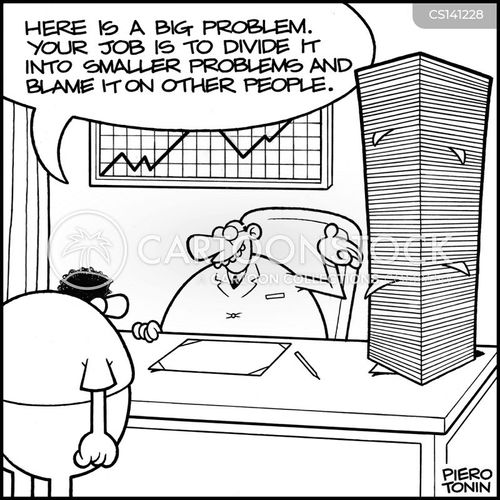
Cartoon – Under Control

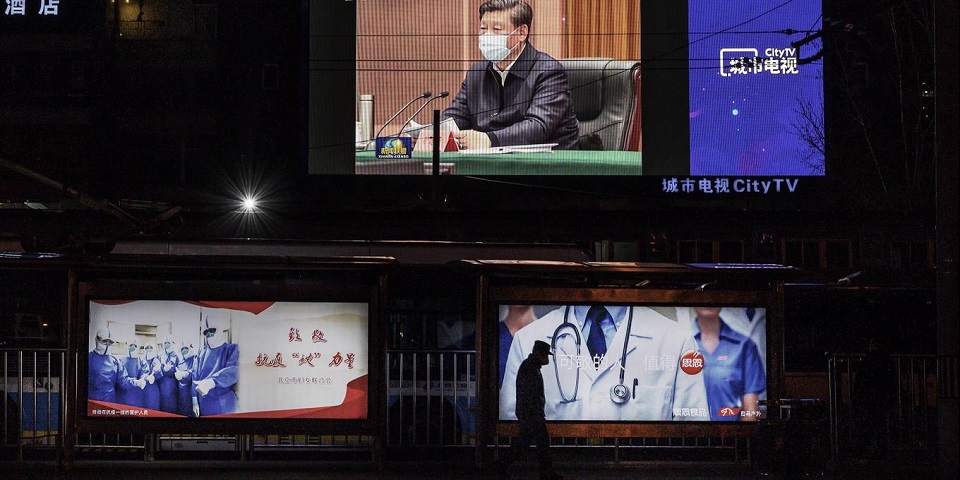
Coronavirus | The Manchester Journal | Manchester Breaking News ...

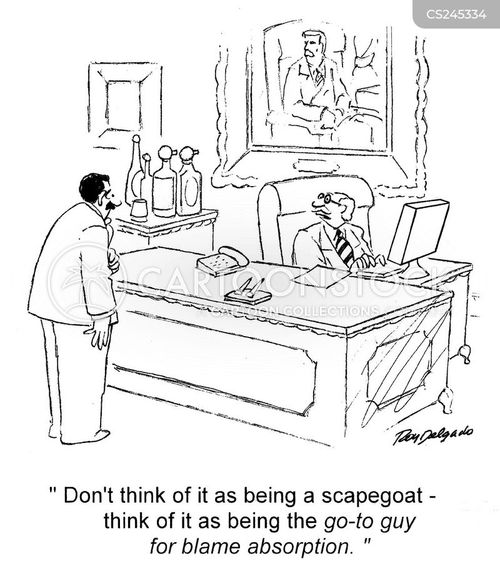
Cartoon – We’re way beyond Rational Thinking

Management Cartoon # 7684: We're way beyond rational thinking. You ...

Fauci has been an example of conscience and courage.

https://www.washingtonpost.com/opinions/fauci-has-been-an-example-of-conscience-and-courage-trump-has-been-nothing-but-weak/2020/07/13/7c9a7578-c52b-11ea-8ffe-372be8d82298_story.html?fbclid=IwAR0n0o67FMhhUjxqU11cfrd4daMkW0ZWZtIg–I1P3ioLPA7ka7Ew0XT_EA&utm_campaign=wp_main&utm_medium=social&utm_source=facebook

Opinion | Fauci has been an example of conscience and courage ...

When historians try to identify the most shameful documents from the Trump administration, a few are likely to stand out. For unconstitutional bigotry, it is hard to beat the initial executive order banning travel to the United States from Muslim countries. For cruelty and smallness, there is the “zero tolerance” directive to federal prosecutors that led to family separations at the border. For naked corruption, there is the transcript of the quid-pro-quo conversation between President Trump and the president of Ukraine.

But for rash, foolish irresponsibility, I’d nominate the opposition research paper recently circulated by the White House in an attempt to discredit the National Institute of Allergy and Infectious Diseases’ Anthony S. Fauci. As reported by The Post, the document recounted a number of instances — on community transmission, asymptomatic transmission and mask wearing in particular — where Fauci’s views have shifted over time. As far as I know, this official record is unique: A White House attack on the government’s leading infectious-disease specialist during a raging pandemic. It indicates an administration so far gone in rage, bitterness and paranoia that it can no longer be trusted to preserve American lives.

From a purely political standpoint, it is understandable that the administration would want to divert attention from its covid-19 record. Trump’s policy of reopening at any cost is exacting a mounting cost. Five months into the greatest health crisis of modern U.S. history, there are still serious problems with supply chains for protective equipment. There are still long wait times for testing results in many places. The contact tracing process in many communities remains (as one health expert described it to me) “a joke.” More than 132,000 Americans have died.

Rather than addressing these failures, Trump has chosen to sabotage a public official who admits their existence. Rather than confronting these problems, Trump wants to ensure his whole administration lies about them in unison. The president has surveyed America’s massive spike in new infections and thinks the most urgent matter is . . . message discipline.

It is true that a number of Fauci’s views on the novel coronavirus have evolved (though some of the administration’s charges against him are distorted). But attacking a scientist for making such shifts is to willfully misunderstand the role of science in the fight against disease. We do not trust public health officials during an emerging pandemic because they have fully formed scientific views from the beginning. We trust them because 1) they are making judgments based on the best available information and 2) they have no other motive than the health of the public. If, say, health officials were initially mistaken about the possibility of asymptomatic transmission, it is not failure when they change their views according to better data. It is the nature of the scientific method and the definition of their duty.

In the inch-deep world of politics, amending your view based on new information is a flip-flop. In epidemiology, it is known as, well, epidemiology.

Meanwhile, the president is failing according to both requirements of public trust. Trump is not making judgments based on the best available information. And he clearly has political goals that compete with (and often override) his commitment to public health. The president is hoping against hope that the public will forget about the virus until November, or at least about the federal role in fighting it. To apply a veneer of normalcy, he is holding public events that endanger his staff and his audience and is planning a Republican convention that will double as a petri dish.

It now seems likely that the most decisive moment of the American pandemic took place in mid-April when new cases began to stabilize around 25,000 a day. Even four or six more weeks of firm presidential leadership — urging the tough, sacrificial application of stay-at-home orders — might have reduced the burden of disease to more sustainable levels, as happened in Western Europe. And this would have relieved stress on systems of testing, tracing and treatment.

But Trump’s nerve failed him. Instead of holding firm, he began siding with populist demands for immediate opening, pressuring governors to take precipitous steps and encouraging skepticism about basic public health information and measures. This may well have been the defining moment of the Trump presidency. And he was weak, weak, weak.

It is typical for Trump to shift blame. But in this case, the president has selected his fall guy poorly. Fauci has been an example of conscience and courage in an administration that values neither. When Trump encourages a contrast to his own selfishness and cravenness, he only damages himself.


Battling the ‘pandemic of misinformation’

Battling the ‘pandemic of misinformation’

During COVID-19 Pandemic It Isn't Just Fake News But Seriously Bad ...

Ubiquity of social media has made it easier to spread or even create COVID-19 falsehoods, making the work of public health officials harder.

This is part of our Coronavirus Update series in which Harvard specialists in epidemiology, infectious disease, economics, politics, and other disciplines offer insights into what the latest developments in the COVID-19 outbreak may bring.

When a disease outbreak grabs the public’s attention, formal recommendations from medical experts are often muffled by a barrage of half-baked advice, sketchy remedies, and misguided theories that circulate as anxious people rush to understand a new health risk.

The current crisis is no exception. The sudden onset of a new, highly contagious coronavirus has unleashed what U.N. Secretary-General António Guterres last week called a “pandemic of misinformation,” a phenomenon that has not gone unnoticed as nearly two-thirds of Americans said they have seen news and information about the disease that seemed completely made up, according to a recent Pew Research Center study.

What distinguishes the proliferation of bad information surrounding the current crisis, though, is social media. Kasisomayajula “Vish” Viswanath, Lee Kum Kee Professor of Health Communication at the Harvard T.H. Chan School of Public Health, said the popularity and ubiquity of the various platforms means the public is no longer merely passively consuming inaccuracies and falsehoods. It’s disseminating and even creating them, which is a “very different” dynamic than what took place during prior pandemics MERS and H1N1.

The sheer volume of COVID-19 misinformation and disinformation online is “crowding out” the accurate public health guidance, “making our work a bit more difficult,” he said.

Misinformation could be an honest mistake or the intentions are not to blatantly mislead people,” like advising others to eat garlic or gargle with salt water as protection against COVID-19, he said. Disinformation campaigns, usually propagated for political gain by state actors, party operatives, or activists, deliberately spread falsehoods or create fake content, like a video purporting to show the Chinese government executing residents in Wuhan with COVID-19 or “Plandemic,” a film claiming the pandemic is a ruse to coerce mass vaccinations, which most major social media platforms recently banned.

In order to be effective, especially during a crisis, public health communicators have to be seen as credible, transparent, and trustworthy. And there, officials are falling short, said Viswanath.

“People are hungry for information, hungry for certitude, and when there is a lack of consensus-oriented information and when everything is being contested in public, that creates confusion among people,” he said.

“When the president says disinfectants … or anti-malaria drugs are one way to treat COVID-19, and other people say, ‘No, that’s not the case,’ the public is hard-pressed to start wondering, ‘If the authorities cannot agree, cannot make up their minds, why should I trust anybody?’”

Mainstream media coverage has added to the problem, analysts say. At many major news outlets, reporters and editors with no medical or public health training were reassigned to cover the unfolding pandemic and are scrambling to get up to speed with complex scientific terminology, methodologies, and research, and then identify, as well as vet, a roster of credible sources. Because many are not yet knowledgeable enough to report critically and authoritatively on the science, they can sometimes lean too heavily on traditional journalism values like balance, novelty, and conflict. In doing so, they lift up outlier and inaccurate counterarguments and hypotheses, unnecessarily muddying the water.

“That’s a huge challenge,” said Ashish Jha, K.T. Li Professor of Global Health and Director of the Harvard Global Health Institute, during an April 24 talk about COVID-19 misinformation hosted by the Technology and Social Change Research Project at the Shorenstein Center for Media, Politics and Public Policy.

“People are hungry for information, hungry for certitude, and when there is a lack of consensus-oriented information and when everything is being contested in public, that creates confusion among people.”
— Kasisomayajula Viswanath

“What I have found is a remarkable degree of consensus among people who understand the science of this disease around what the fundamental issues are and then disagreements about trade-offs and policies,” said Jha, who is a frequent commentator on news programs. “The idea of covering the science in a two-sided way on areas where there really isn’t any disagreement has struck me as very, very odd, and it keeps coming up over and over again.”

Then there is the problem of political bias. This has been especially true at right-leaning media outlets, which have largely repeated news angles and viewpoints promoted by the White House and the president on the progress of the pandemic and the efficacy of the administration’s response, boosting unproven COVID-19 treatments and exaggerating the availability of testing and safety equipment and prospects for speedy vaccine development.

Tara Setmayer, a spring 2020 Resident Fellow at the Institute of Politics and former Republican Party communications director, said what’s coming from Fox News and other pro-Trump media goes well beyond misinformation. Whether downplaying the views of government experts on COVID-19’s lethality, blaming China or philanthropist Bill Gates for its spread, or cheering shutdown protests funded by Republican political groups, it’s all part of “an active disinformation campaign,” she said, aimed at deflecting the president’s responsibility as he wages a reelection campaign.

But turning around those who buy into false information is not as simple as piercing epistemic bubbles with facts, said Christopher Robichaud, senior lecturer in ethics and public policy at Harvard Kennedy School (HKS) who teaches the Gen Ed course “Ignorance, Lies, Hogwash and Humbug: The Value of Truth and Knowledge in Democracies.”

Over time, bubble dwellers can become cocooned in a media echo chamber that not only feeds faulty information to audiences, but anticipates criticisms in order to “prebut” potential counterarguments that audience members may encounter from outsiders, much the way cult leaders do.

“It’s not enough to introduce new pieces of evidence. You have to break through their strategies to diminish that counterevidence, and that’s a much harder thing to do than merely exposing people to different perspectives,” he said.

While Facebook, Twitter, and YouTube have all recently ramped up efforts to take down COVID-19 misinformation following public outcry, social media platforms “fall short” when it comes to curbing the flow, said Joan Donovan, who leads the Technology and Social Change Project at HKS.

Since the national shift to remote work, many social media firms are relying more heavily on artificial intelligence to patrol misinformation on their platforms, instead of human moderators, who tend to be more effective, said Donovan. So many users suddenly searching and posting about one specific topic can “signal jam search algorithms, which cannot tell the difference usually between truth and lies.”

These firms are reluctant to spark a regulatory backlash by policing their platforms too tightly and angering one or both political parties.

“So they are careful to take action on content that is deemed immediately harmful (like posts that say to drink chemicals), but are reticent to enforce moderation on calls for people to break the stay-at-home orders,” said Donovan.

Viswanath said public health officials cannot, and should not, chase down and debunk every bit of misinformation or conspiracy theory, lest the attention lends them some credence. The public needs to more closely scrutinize and be “much more skeptical” about what they’re reading and hearing, particularly online, and not try to keep up with the very latest COVID-19 research. “You don’t need to know everything,” he said.

Putting the onus entirely on the public, however, is “unfair and it won’t work,” said Viswanath. Institutions, like social media platforms, have to take more responsibility for what’s out there.

Public health organizations should be running effective communication surveillance of social media to monitor which rumors, ideas, and issues most worry the public, what is understood and misunderstood about various diseases and treatments, and what myths are circulating or being actively promoted in the community. And they need to have a strategy in place to counter what they’re picking up. “You cannot control this, but you can at least manage some of this,” Viswanath said.

Though some COVID-19 misinformation and conspiracy theories are outlandish or even dangerously inaccurate, Robichaud said it’s a mistake to dismiss those who believe them as people who don’t care about the truth.

Many cognitive biases get in the way of even the best truth-seeking strategies, so perhaps we could all benefit from a little more intellectual humility in this time of such great uncertainty, he said.

“Most of us are, at best, experts in a tiny, tiny area. But we don’t navigate the world as if that were true. We navigate the world as if we’re experts about a whole bunch of things that we’re not,” he said. “A little intellectual humility can go a long way. And I say that as a professor: It’s true of us, and it’s also true of the public at large.”


Blaming China Is a Dangerous Distraction

https://www.project-syndicate.org/commentary/trump-blaming-china-dangerous-distraction-by-jim-o-neill-2020-04?utm_source=Project+Syndicate+Newsletter&utm_campaign=5b31132e51-sunday_newsletter_19_04_2020&utm_medium=email&utm_term=0_73bad5b7d8-5b31132e51-105592221&mc_cid=5b31132e51&mc_eid=5f214075f8

Blaming China is a dangerous distraction - myRepublica - The New ...

Nobody denies that Chinese officials’ initial effort to cover up the coronavirus outbreak in Wuhan at the turn of the year was an appallingly misguided decision. But anyone who is still focusing on China’s failings instead of working toward a solution is essentially making the same mistake.

LONDON – As the COVID-19 crisis roars on, so have debates about China’s role in it. Based on what is known, it is clear that some Chinese officials made a major error in late December and early January, when they tried to prevent disclosures of the coronavirus outbreak in Wuhan, even silencing health-care workers who tried to sound the alarm. China’s leaders will have to live with these mistakes, even if they succeed in resolving the crisis and adopting adequate measures to prevent a future outbreak.

What is less clear is why other countries think it is in their interest to keep referring to China’s initial errors, rather than working toward solutions. For many governments, naming and shaming China appears to be a ploy to divert attention from their own lack of preparedness. Equally concerning is the growing criticism of the World Health Organization, not least by US President Donald Trump, who has attacked the organization for supposedly failing to hold the Chinese government to account. At a time when the top global priority should be to organize a comprehensive coordinated response to the dual health and economic crises unleashed by the coronavirus, this blame game is not just unhelpful but dangerous.

Globally and at the country level, we desperately need to do everything possible to accelerate the development of a safe and effective vaccine, while in the meantime stepping up collective efforts to deploy the diagnostic and therapeutic tools necessary to keep the health crisis under control. Given that there is no other global health organization with the capacity to confront the pandemic, the WHO will remain at the center of the response, whether certain political leaders like it or not.

Having dealt with the WHO to a modest degree during my time as chairman of the UK’s independent Review on Antimicrobial Resistance (AMR), I can say that it is similar to most large, bureaucratic international organizations. Like the International Monetary Fund, the World Bank, and the United Nations, it is not especially dynamic or inclined to think outside the box. But rather than sniping at these organizations from the sidelines, we should be working to improve them. In the current crisis, we should be doing everything we can to help both the WHO and the IMF to play an effective, leading role in the global response.

As I have  before, the IMF should expand the scope of its annual Article IV assessments to include national public-health systems, given that these are critical determinants in a country’s ability to prevent or at least manage a crisis like the one we are now experiencing. I have even raised this idea with IMF officials themselves, only to be told that such reporting falls outside their remit because they lack the relevant expertise.

That answer was not good enough then, and it definitely isn’t good enough now. If the IMF lacks the expertise to assess public-health systems, it should acquire it. As the COVID-19 crisis makes abundantly clear, there is no useful distinction to be made between health and finance. The two policy domains are deeply interconnected, and should be treated as such.

In thinking about an international response to today’s health and economic emergency, the obvious analogy is to the 2008 global financial crisis. Everyone knows that crisis started with an unsustainable US housing bubble, which had been fed by foreign savings, owing to the lack of domestic savings in the United States. When the bubble finally burst, many other countries sustained more harm than the US did, just as the COVID-19 pandemic has hit some countries much harder than it hit China.

And yet, not many countries around the world sought to single out the US for presiding over a massively destructive housing bubble, even though the scars from that previous crisis are still visible. On the contrary, many welcomed the US economy’s return to sustained growth in recent years, because a strong US economy benefits the rest of the world.2

So, rather than applying a double standard and fixating on China’s undoubtedly large errors, we would do better to consider what China can teach us. Specifically, we should be focused on better understanding the technologies and diagnostic techniques that China used to keep its (apparent) death toll so low compared to other countries, and to restart parts of its economy within weeks of the height of the outbreak.

And, for our own sakes, we also should be considering what policies China could adopt to put itself back on a path toward 6% annual growth, because the Chinese economy inevitably will play a significant role in the global recovery. If China’s post-pandemic growth model makes good on its leaders’ efforts in recent years to boost  and imports from the rest of the world, we will all be better off.