White House prohibits coronavirus task force members from testifying before Congress in May

https://thehill.com/homenews/administration/496016-white-house-prohibits-coronavirus-task-force-members-from-testifying?userid=12325

White House prohibits coronavirus task force members from ...

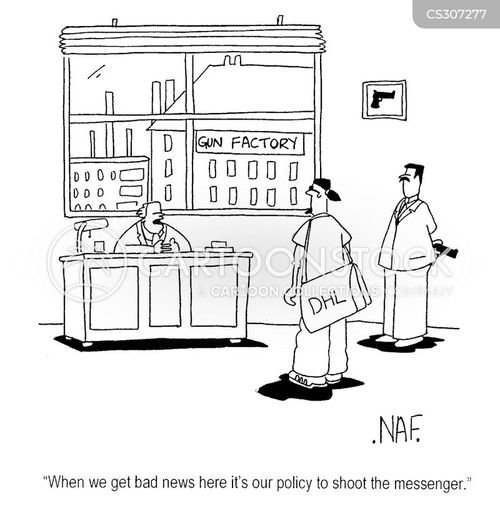
White House coronavirus task force members are prohibited from testifying before Congress this month under new guidance issued by the Trump administration Monday.

Task force members and key deputies have been instructed not to accept invitations to participate in congressional hearings in May, while other agencies responding to the pandemic are being advised to limit the number of hearings they attend.

Top administration officials argue the coronavirus task force and the primary agencies responding to the pandemic need to focus their attention and resources on response efforts, and that having them testify could use up critical hours.

“We’re telling agencies that during this unprecedented time our resources need to be dedicated toward the coronavirus. At this stage we really need everybody manning their stations and prioritizing coronavirus response work,” a senior administration official told The Hill.

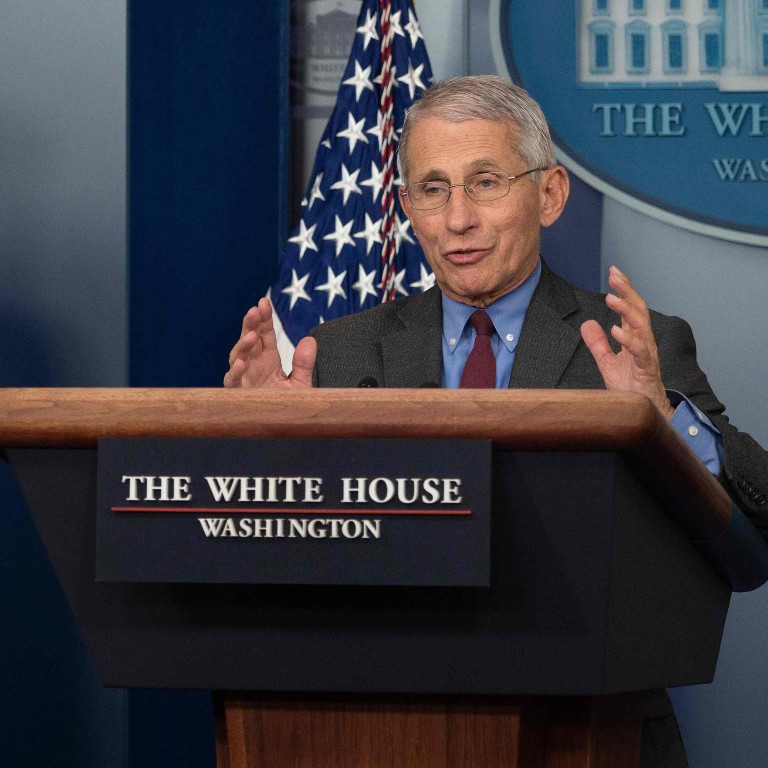
The move comes just days after the White House blocked Anthony Fauci, the nation’s top infectious disease expert and a task force member, from testifying before a House panel.

The White House shot back at allegations it was attempting to silence officials, arguing it will allow for testimony at a later date.

“While the Trump Administration continues its whole-of-government response to COVID-19, including safely opening up America again and expediting vaccine development, it is counter-productive to have the very individuals involved in those efforts appearing at Congressional hearings,” White House deputy press secretary Judd Deere said in a statement last week.

According to the new guidance, “no more than one COVID-related hearing should be agreed to with the department’s primary House and Senate authorizing committee and appropriations subcommittee for the Department of Health and Human Services, Department of Homeland Security and the State Department” with a cap of four coronavirus-related hearings departmentwide through the end of the month.

White House chief of staff Mark Meadows is authorized to approve exemptions to the new protocol, and administration officials noted the guidance will be revisited and could change depending on the circumstances.

The new guidance comes as the Senate comes back into session and the House grapples with how to best bring members back to Washington safely amid the pandemic.

Fauci is currently slated to appear before the Senate Health, Education, Labor and Pensions Committee for a coronavirus-related hearing on May 12.

Other agencies and departments are permitted to accept hearing invitations but have been advised that they should prioritize putting resources toward pandemic response efforts.

“The demands on agencies’ staff and resources are extraordinary in this current crisis. Agencies must maximize their resources for COVID-19 response efforts and treat hearing requests accordingly,” the guidance says.

“Given these competing demands in these unprecedented times, it is reasonable to expect that agencies will have to decline invitations to hearings to remain focused on implementing of COVID-19 response, including declining to participate in multiple hearings on the same or overlapping topics.”

The administration previously issued guidance pulling back on hearings related to COVID-19 in March.


Truth dies in silence. Sadly, so do people.

https://www.kevinmd.com/blog/2020/04/truth-dies-in-silence-sadly-so-do-people.html

UNESCO launches “Truth Never Dies” campaign to tackle crimes ...

I have been writing columns for physicians for twenty years.  And year after year, I have had physicians say this: “I’m glad you said what you did. If I said it, I’d be fired.” There are variations on the theme, but they’re much the same.  Twenty years, and far more than 20 years, during which the alleged health care leaders in America have been routinely muzzled because they aren’t supposed to speak the truth.  Open discussions shut down because they might embarrass someone or upset an administrator. Because it might, heaven forbid, shine a light on a genuine problem.

Some years ago, as the mental health crisis was gathering steam across the emergency departments of the land, I was contacted by a news show in France.  The producers wanted to come to South Carolina and follow me on some shifts in my ED. They wanted to see how mental health was working out here. “We have socialized care, but mental health is also a huge problem in our country,” the producer said.

I dutifully, and appropriately, went to administration. “No, we can’t do that,” I was informed. I was given this explanation when everyone knew the mental health system was at the breaking point: “What if they uncover a problem?” Here was a chance for publicity, for potential grant money or to demonstrate that a political solution was in order.  How dare we let in fresh air? How dare we suggest that things were not perfect?

The same thing is happening in the midst of the pandemic.  Physicians, nurses, and other assorted health care professionals are being threatened for wearing masks.  Administrators say, “They make the patients nervous.” Also likely, administrators have realized they don’t have adequate equipment.  Facilities and systems with enormous budgets caught unprepared in a pandemic.

I see the stories of these professionals as I follow online forums.  Physicians, nurses, and others, threatened with firing because they dared to speak out on the issue of PPE (personal protective equipment).

Like police officers without ballistic vests, these physicians don’t want to go into the rooms of COVID-19 patients without the masks and respirators, gloves, gowns, and face shields that will keep them safe. The equipment that will allow them to return home to their loved ones and prevent them from infecting their families.  This isn’t a good look.  A hospital that refuses to acknowledge the concerns and safety of its professionals is a hospital that ultimately doesn’t deserve them.

The same veil of silence pervades dialogue on the treatment of coronavirus.  When I follow discussions, I see a lot of shaming. “There just isn’t enough evidence to try hydroxychloroquine, Zithromax, convalescent plasma, an untried vaccine, HIV drugs, etc.” Those who suggest we might try are considered reckless or ignorant.  As the battle rages and lives are lost, innovation and risk are viewed with disdain.  And our medical establishment is locked into the paradigm of double-blinded, placebo-controlled studies involving tens of thousands of people and lasting years. Here’s a view of the same from the U.K. Unfortunately, to suggest that we may need to react faster is only met with ridicule, and often tied to political views instead of expediency. Worse,  it ignores the deep, fundamental need to offer hope, any hope, to hundreds of millions of professionals and citizens who are living in fear.

There is a tragic irony here; a painful coincidence.  Physicians silenced. Let’s see.  Where did we see that sort of thing resulting in a worldwide pandemic?  Does China come to mind? The Chinese Communist Party threatened (and who knows what else) physicians who dared to speak out about coronavirus, even when they knew its danger.  Even when they knew how easily and widely it spread.

They continued to soft-peddle numbers about total cases and case fatality.  The party continued to allow travel to and from China long after the problem was known. They even suggested that Italians have a “hug a Chinese person” campaign to combat alleged racism; a charge delightfully accepted and repeated by gullible Western journalists in pursuit of a narrative.

Truth dies in silence.  Sadly, so do people.  And certainly when we tell dedicated health care professionals to keep their mouths shut when they have identified problems, offered solutions and simply asked for help.  Whether it’s a private business, a totalitarian government, or anything in between, we should insist that the truth be spoken; freely and without fear of punishment.

Because, for the foreseeable future, lives will depend on it.


Fauci at center of conservative storm

Fauci at center of conservative storm

Health Official condemns Senator Ron Johnson's false equivalency ...

Criticism of Anthony Fauci from the right has picked up in recent days, with some conservatives calling for Trump to dump the infectious disease expert after he made comments about how imposing social distancing rules earlier could have slowed the spread of the novel coronavirus in the United States.

Fauci has become a national name with his regular presence at the daily coronavirus task force briefings and in other media appearances, and poll numbers show he’s trusted by a majority of Americans. It would set off a political storm if Trump were to sideline him in the middle of a pandemic.

Yet the criticism of Fauci by two conservative lawmakers in a Saturday op-ed and Trump’s own retweet of a conservative’s call to “#FireFauci” were unmistakable signs that the public health official is coming under pressure from some on the right to be loyal to the president. 

Tensions between Fauci and Trump have been evident at times in recent weeks. The doctor put his head in his hand at one March briefing where the president quipped about the “Deep State Department,” and Trump stepped in at a briefing this month before Fauci could give his opinion on hydroxychloroquine.

The president had publicly praised Fauci as “extraordinary” and dismissed speculation about a rift between the two, joking on Friday that Fauci is so popular he could run against Rep. Alexandria Ocasio-Cortez (D-N.Y.) and “win easily.” For the most part Fauci has seemed to successfully walk the line between contradicting Trump without outright criticizing him. 

But Trump’s tweet on Sunday marked a shift and coincided with a fresh groundswell of conservative push-back toward the doctor as Trump comes under intense criticism for his slow response to the virus.

Some of the more pointed criticism of Fauci came after he said on CNN Sunday that more lives could have been saved if stay-at-home measures were implemented earlier than mid-March.

The comments irked Trump allies who viewed them as revisionist history given how Fauci’s own public statements evolved throughout January and February as scientists learned more about the virus and it spread through the U.S.

Jason Miller, a former Trump adviser who now hosts a radio show focused on the pandemic, said Fauci must be careful with how he talks about the crisis, but also described “finger pointing” as media chatter seeking to pull the administration apart.

“This talk of potential removal from the team is unnecessary media chatter trying to draw a divide where one doesn’t exist,” Miller said.

“I think what this is about is about the accuracy with which Dr. Fauci is communicating with both the president and the American people,” he added. “It’s critical as the lead scientist and health expert advising the president on the coronavirus pandemic that he be spot on with his details. I think the recent finger pointing and revisionist history whether intentional or accidental doesn’t help anybody.”

One source close to the administration said, while some inside would like to see Fauci gone, most recognize there is more value to keeping him on.

“I don’t sense there’s a monolithic view,” the person said. “There are some who dislike him and want him out of the [administration] but I think most recognize it’s better for him to be in the tent than outside of it.” 

Fauci’s CNN remarks followed a New York Times article detailing how Trump ignored early warnings about the virus and initially resisted recommendations to implement social distancing recommendations, reporting that Trump has dismissed as “fake.”

One of Trump’s many tweets Sunday night defending his response quoted a former GOP congressional candidate who said it was “time to #FireFauci,” citing his Feb. 29 comments that there was not yet a need for Americans to alter their day-to-day lives.

Fauci has been clear that his realm of expertise is public health, and he has suggested at times that social distancing guidelines will be needed for weeks or months to limit the spread of the virus.

Others inside and outside the administration are advocating that it take steps to open up the economy soon, and emphasizing that health experts can’t be the only voices involved in the decision.

“Anthony Fauci should be deferring to the President when answering questions about timing of economic reopening,” Fox News host Laura Ingraham tweeted on Sunday.

Reps. Andy Biggs (R-Ariz.) and Ken Buck (R-Colo.) penned an op-ed in the Washington Examiner over the weekend arguing that Fauci should not be a primary voice speaking on the coronavirus outbreak after the public health official late last month described social distancing as an “inconvenient” from societal and economic standpoint.

The criticism of Fauci comes amid a concerted effort among Trump and his supporters to shift blame away from the White House for its handling of the coronavirus, which has infected more than 557,000 people in the U.S. and killed more than 22,000 in the country. The president has at various points blamed governors for failing to prepare for the pandemic, deflected criticism toward the World Health Organization (WHO) and accused Democrats of using impeachment as a distraction.

Fauci, director of the National Institute of Allergy and Infectious Diseases since 1984, has been a ubiquitous presence during the coronavirus outbreak, appearing on political talk shows, sports podcasts and Instagram live chats.

He has emerged as something of a beacon for liberals in particular for his willingness to gently correct Trump on matters like a timetable for a vaccine and the efficacy of hydroxychloroquine, an anti-malaria drug the president has touted as a potential treatment for the coronavirus.

But his prominence has made him a target of criticism, so much so that he was given added security at the end of March.

One feature of Trump’s presidency has been his distrust of long-time government officials, particularly those who have served in previous administrations. Another has been Trump’s tendency to tire of aides and advisers who garner more of a spotlight than he does, putting Fauci in a precarious position even at a time when his expertise is most relevant.

Trump would have difficulty firing Fauci, who is not a political appointee, without cause. Attempting to do so would cause a firestorm among even some Republicans who have urged the president to listen to his health experts.

But one former administration official suggested Fauci could see his influence reduced. The official likened it to the way Health and Human Services (HHS) Secretary Alex Azar has been diminished after he warned Trump in January and February about the threat of a pandemic but was dismissed as too alarmist.

“What happens when somebody repeatedly tells the president something he doesn’t want to hear?” said the former administration official, who requested anonymity to speak candidly. “He won’t fire [Fauci], but he’ll just sideline him.”

But doing so could risk damaging public confidence in the administration’s response to the virus. 

Monmouth University poll released last week found that 35 percent of Americans named Fauci when asked who they trust the most among public officials who discuss the outbreak on television, whereas 20 percent named Trump. 

“Regardless of the issue, [Trump is] not always his most disciplined messenger,” said GOP strategist Doug Heye. “The more that he’s able to rely on the expertise of scientists, the more credibility that it gives him in this entire process.”


Trump reportedly squandered 3 crucial weeks to mitigate the coronavirus outbreak after a CDC official’s blunt warnings spooked the stock market

https://www.businessinsider.com/trump-wasted-3-weeks-coronavirus-mitigation-time-february-march-nyt-2020-4

Dow closes with decline of 950 points as coronavirus continues to ...

  • President Donald Trump’s administration wasted three key weeks between February and March that could have been spent enacting mitigatory measures against COVID-19, The New York Times reported on Saturday.
  • By the end of February, top officials knew that time was running out to stem the virus spread, and wanted to present Trump with a plan to enact aggressive social distancing and stay-at-home measures.
  • But on February 26, a top CDC official issued stark warnings about the virus’ spread right before the stock market plummeted, which angered Trump for being, in his view, too alarmist. 
  • The Times reported that the entire episode killed off the efforts to persuade Trump to take aggressive, action to mitigate the virus’ spread. In the end, Trump didn’t issue stay-at-home guidance until March 16. 

President Donald Trump’s administration stalled three key weeks in February that could have been spent enacting mitigatory measures against COVID-19 after Trump was angered by a public health official issuing a dire warning about the virus, The New York Times reported on Saturday.

On Saturday,The Times published a lengthy investigation of all the instances Trump brushed aside warnings of the severity of the coronavirus crisis, failed to act, and was delayed by significant infighting and mixed messages from the White House over what action to take and when. 

The Times wrote: “These final days of February, perhaps more than any other moment during his tenure in the White House, illustrated Mr. Trump’s inability or unwillingness to absorb warnings coming at him.”

The Times conducted dozens of interviews with current and former officials and obtained 80 pages of emails from a number of public health experts both within and outside of the federal government who sounded the alarm about the severity of the crisis on an email chain they called “Red Dawn.”

One of the members of the email group, Health & Human Service disaster preparedness official Dr. Robert Kadlec, became particularly concerned about how rapidly the virus could spread when Dr. Eva Lee, a Georgia Tech researcher, shared a study with the group about a 20-year-old woman in China who spread the virus to five of her family members despite showing no symptoms.

“Eva is this true?! If so we have a huge [hole] on our screening and quarantine effort,” he replied on February 23. 

At that point, researchers and top officials in the federal government determined that since it was way too late to try to keep the virus out of the United States, the best course of action was to introduce mitigatory, non-pharmaceutical interventions (NPIs) like social distancing and prohibiting large gatherings.

As officials sounded the alarm that they didn’t have any time to waste before enacting aggressive measures to contain the virus, top public health officials including Dr. Robert Kadlec concluded that it was time to present Trump with a plan to curb the virus called “Four Steps to Mitigation.”

The plan, according to The Times, included canceling large gatherings, concerts, and sporting events, closing down schools, and both governments and private businesses alike ordering employees to work from home and stay at home as much as possible, in addition to quarantine and isolating the sick.

But their entire plan was derailed by a series of events that ended up delaying the White House’s response by several weeks, wasting precious time in the process.

Trump was on a state visit to India when Dr. Kadlec and other experts wanted to present him with the plan, so they decided to wait until he came back.

But less than a day later, Dr. Nancy Messonnier, the director of the National Center for Immunization and Respiratory Diseases at the CDC, publicly sounded the alarm about the severity of the coronavirus outbreak in a February 26 press conference, warning that the outbreak would soon become a pandemic.

“It’s not so much a question of if this will happen anymore but rather more a question of exactly when this will happen and how many people in this country will have severe illness,” Messonnier said, bluntly warning that community transmission of the virus would be inevitable.

The Times reported that Trump spent the plane ride stewing in anger both over Messonnier’s comments and the resulting plummet of the stock market they caused, calling Secretary of Health & Human Services Alex Azar “raging that Dr. Messonnier had scared people unnecessarily,” The Times said. 

The Times reported that the entire episode effectively killed off any efforts to persuade Trump to take aggressive, decisive action to mitigate the virus’ spread and led to Azar being sidelined, writing, ” With Mr. Pence and his staff in charge, the focus was clear: no more alarmist messages.” 

In the end, Dr. Kadlec’s team never made their presentation. Trump did not issue nationwide social distancing and stay-at-home guidelines until March 16, three weeks after Messonnier warned that the US had limited time to mitigate community transmission of the virus, and several weeks after top experts started calling for US officials to implement such measures.

In those nearly three weeks between February 26 and March 16, the number of confirmed COVID-19 cases rose from just 15 to 4,226, The Times said. As of April 12, there are over half a million confirmed cases in the United States with over 21,000 deaths.


Trump retweeted a threat to fire Fauci after he said the US’s slow response to COVID-19 has cost lives

https://www.businessinsider.com/trump-retweets-threat-fire-fauci-2020-4

Coronavirus: Trump retweets call to fire Dr Fauci who said US ...

  • On Sunday, President Trump retweeted a call to fire Dr. Anthony Fauci to his 76.8 million followers.
  • Earlier in the day, Fauci had told CNN that “no one is going to deny” that lives could’ve been saved if the US had implemented containment measures earlier in the novel coronavirus outbreak.
  • A week ago, at a White House briefing, Trump stopped Fauci from weighing in on using hydroxychloroquine, a malaria drug, for people with COVID-19, the illness caused by the coronavirus.
  • It’s unclear whether his retweet was more than a vague threat, but Trump has fired several government officials over the past few weeks.

President Donald Trump on Sunday retweeted a call to fire Dr. Anthony Fauci, the US government’s top infectious-disease expert who has so far lasted six presidential administrations, to his 76.8 million followers.

The Trump administration has been in damage-control mode over the slow response to dealing with the coronavirus outbreak. Fauci, who has been the director of the National Institute of Allergy and Infectious Diseases since 1984, helping to tackle AIDS, Zika, and Ebola outbreaks, is one of the top experts on the White House’s coronavirus task force.

The tweet, written by DeAnna Lorraine, a Republican who ran for Congress in California, said: “Fauci is now saying that had Trump listened to the medical experts earlier he could’ve saved more lives. Fauci was telling people on February 29th that there was nothing to worry about and it posed no threat to the US public at large. Time to #FireFauci.”

It’s been about two months since the US’s first coronavirus case was reported. According to data from Johns Hopkins University, as of Sunday night more than 22,000 people had died from the virus in the US and more than 555,300 had been infected.

A week ago, during a White House briefing, Trump stopped Fauci from telling reporters what he thought about using hydroxychloroquine, a antimalaria drug, for people with COVID-19, the illness caused by the virus. Trump has been vocal about his support for the drug — though it is not approved for treating COVID-19 — repeatedly saying, “What do you have to lose?”

It’s unclear whether Trump’s retweet was more than a vague threat, but he has fired several government officials in the past few weeks.

Five days ago, he got rid of Glenn Fine, the acting inspector general at the Department of Defense, who had been tasked with overseeing the implementation of the $2 trillion coronavirus stimulus package. On April 3, he fired Michael Atkinson, the intelligence community inspector general who alerted Congress about the whistleblower complaint that accused Trump of soliciting election interference from Ukraine.

Fauci had spoken to CNN earlier on Sunday, and he was quoted in a New York Times report on Saturday that outlined recommendations he backed on February 21.

The Times reported that — in stark contrast to Lorraine’s tweet — Fauci, along with the Trump administration’s other top public-health experts, said on February 21 that the administration needed to announce aggressive social-distancing policies, even at the cost of disrupting normal life and the US economy.

On Sunday, Fauci said on CNN’s “State of the Union” that “no one is going to deny” that lives could have been saved if the US had implemented containment measures earlier in the novel coronavirus outbreak.

Fauci suggested that fewer people would have died if the Trump administration had announced isolation measures in February instead of in mid-March after warnings from public-health officials.

“As I’ve said many times, we look at it from a pure health standpoint,” he said. “We make a recommendation. Often, the recommendation is taken. Sometimes it’s not. But it is what it is. We are where we are right now.”


White House reverses position after blocking health officials from appearing on CNN

https://www.cnn.com/2020/04/09/media/pence-office-tv-bookings-coronavirus/index.html?utm_medium=social&utm_content=2020-04-09T18%3A50%3A06&utm_source=twCNN&utm_term=link&fbclid=IwAR3vThr8ecjeeG6VqkgR6s1blEbkkOK6ocqYTUof8cVVQKMByXoKMhBXfuw

White House reverses position after blocking health officials from ...

Vice President Mike Pence’s office reversed course on Thursday afternoon, after declining for days to allow the nation’s top health officials to appear on CNN and discuss the coronavirus pandemic, in what was an attempt to pressure the network into carrying the White House’s lengthy daily briefings in full.

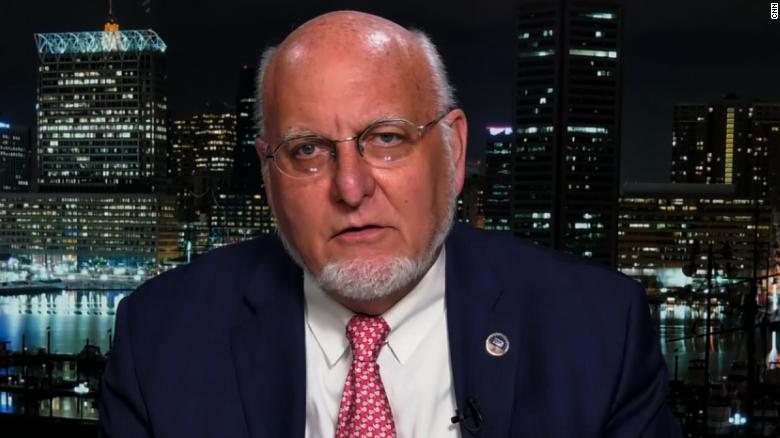
After this story was published, Pence’s office allowed for the booking of Centers for Disease Control and Prevention Director Dr. Robert Redfield for CNN’s Thursday night coronavirus town hall. Dr. Anthony Fauci was also booked for Friday on “New Day.”
Previously, Pence’s office, which is responsible for booking the officials on networks during the pandemic, said it would only allow experts such as Fauci or Dr. Deborah Birx to appear on CNN if the network televised the portion of the White House briefings that includes the vice president and other coronavirus task force members.
CNN often only broadcasts President Donald Trump’s question and answer session, which sometimes includes the health care officials, live on-air.
After Trump leaves the podium, CNN frequently cuts out of the White House briefing to discuss and fact-check what the President has said. A CNN executive said that the network usually returns to such programming because of the extensive length of the full briefing that includes Pence, which can run in excess of two hours.
CNN did, however, air the vice president’s portion of the briefing Wednesday night.
Regardless, Pence’s office for several days declined to make the nation’s top health care officials available to CNN for the last seven days.
“When you guys cover the briefings with the health officials then you can expect them back on your air,” a Pence spokesperson told CNN Thursday morning.
Fauci, Birx, FDA Commissioner Stephen Hahn and Surgeon General Jerome Adams have all appeared on NBC, CBS, ABC and Fox during the last week, despite the fact that the broadcast networks have generally not covered the briefings that have included the vice president and health officials.
But the Vice President’s office had blocked all CNN appearances since last Thursday night.
Fauci appeared on the last five weekly CNN Town Halls, with Anderson Cooper and Dr. Sanjay Gupta. Until this story was published, Vice President’s office has refused to make him, or anyone, available for Thursday’s town hall.
The White House has made two non health care officials available to CNN in the last week. Secretary of Defense Mark Esper appeared on “State of the Union” on Sunday and Peter Navarro appeared on Anderson Cooper’s show on Friday and “New Day” on Monday.
Trump has declined CNN’s repeated requests for an interview, instead appearing only on Fox News for softball interviews multiple times during the national emergency.
A CNN spokesperson declined to comment for this story.